A legacy of the Revolution
Napoleon's army did not come from nowhere. It inherited the reforms of the last years of the monarchy, such as General de Gribeauval's standardised artillery, and above all the armies of the Revolution: the mass levy of 1793, promotion open to commoners, the habit of waging war with large forces on the move. Many of its commanders were NCOs or young officers of 1792 who had become generals within a few years.
The Jourdan Law of 5 September 1798 made conscription the normal means of recruitment: young men aged twenty to twenty-five were registered and called up as needed. Under the Consulate, well-off families won the right to pay for a substitute, which made conscription a blood tax falling mainly on the poor. In all, according to the most common estimates, more than two million men were called up under the Empire. Bonaparte also reformed what did not work. In January 1800 he militarised the artillery train: until then, the horses that pulled the guns had been driven by civilian carters under contract, who had an unfortunate habit of running off at the first shot.
Boulogne, school of the Grande Armée
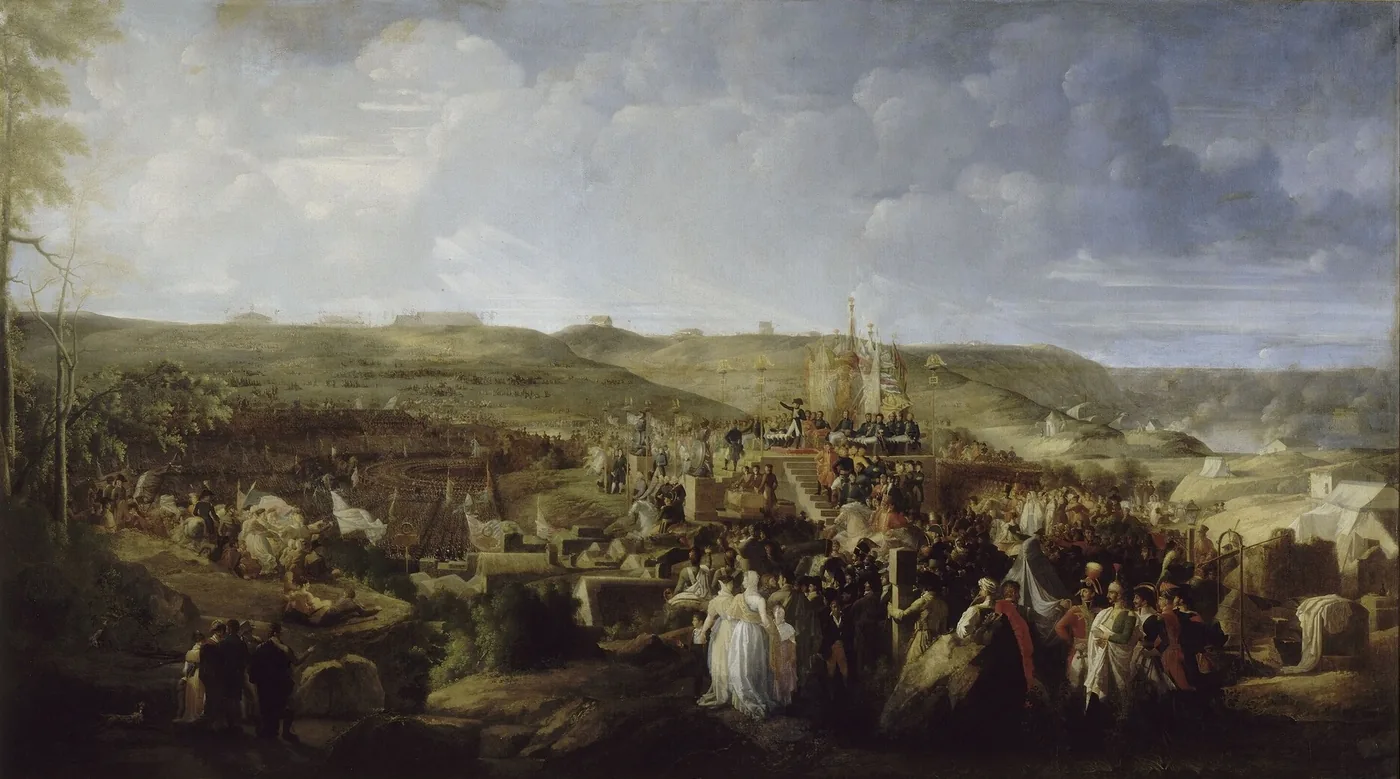
From 1803 to 1805, with a view to invading England, some two hundred thousand men were gathered in camps along the Channel coast around Boulogne. The invasion never happened, but those two years made these troops the best-trained army in Europe: they drilled tirelessly, from battalion level up to whole army corps, and the officers learned to work together. On 16 August 1804, Napoleon handed out the first crosses of the Legion of Honour to the soldiers there with great ceremony.
At the end of August 1805, as Austria and Russia prepared to attack, Napoleon broke camp and hurled his army towards the Rhine. The name "Grande Armée" first appears in a letter to Berthier dated 29 August. The bulletins recounting Ulm and Austerlitz made it famous. An often forgotten detail: the name officially disappeared in the autumn of 1808, when the army was split between Spain and Germany, and only returned in 1812, for the immense army assembled against Russia.
The army corps, key to the system
The major innovation was not a new weapon but an organisation. The Grande Armée was divided into army corps, true armies in miniature: each brought together two to four infantry divisions, a brigade or division of light cavalry, its own artillery, engineers and services, usually twenty to thirty thousand men, sometimes far more. A corps was strong enough to hold out alone for a day against a superior enemy while the others came up.
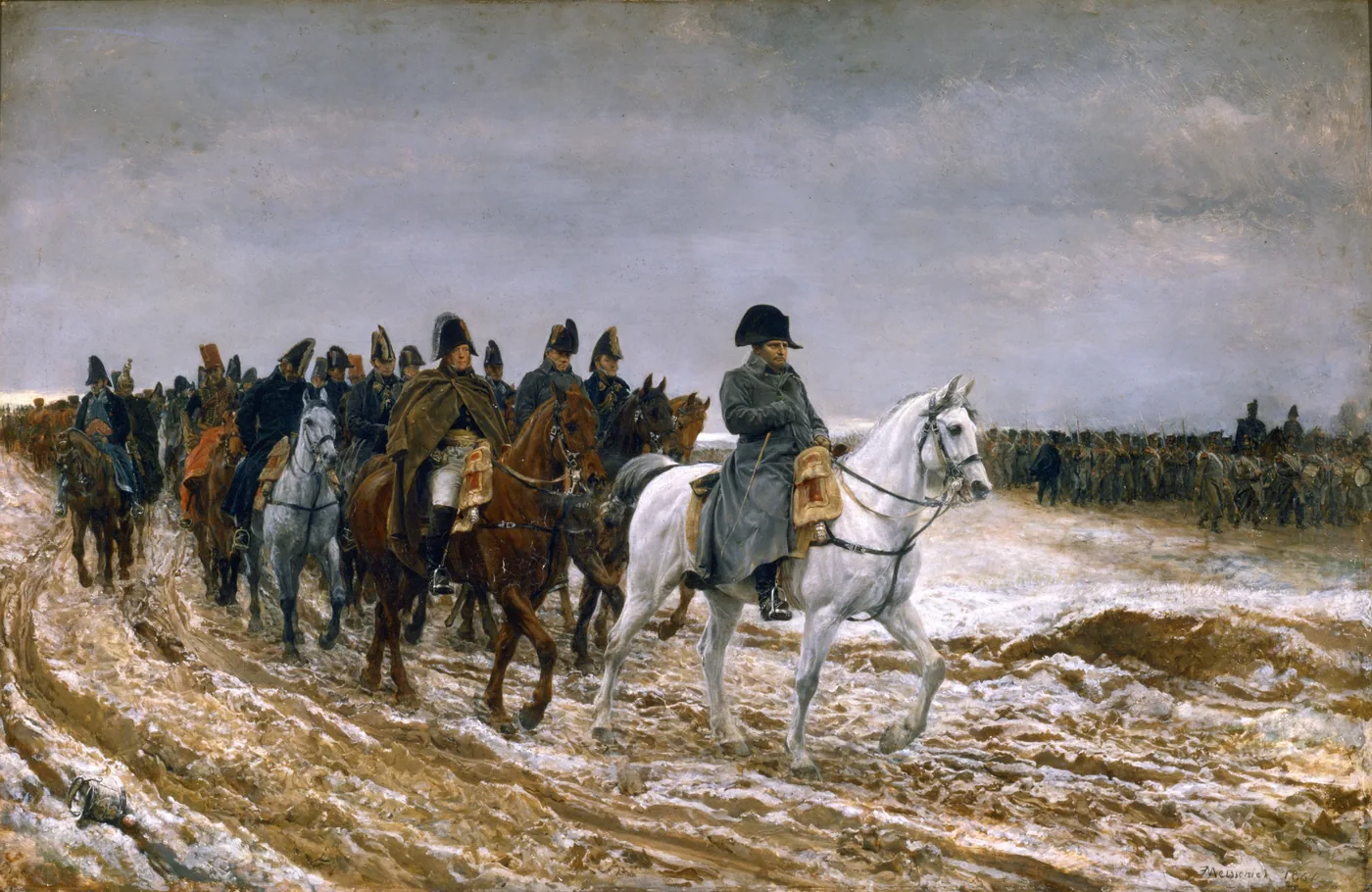
This flexibility changed the way war was waged. The corps marched separately, on parallel roads, which allowed them to live off the land and move fast; they stayed close enough to concentrate within a day or two on the chosen battlefield. In 1805, seven corps set off from the Rhine for the Danube under Bernadotte, Marmont, Davout, Soult, Lannes, Ney and Augereau, together with Murat's cavalry reserve and the Guard. They enveloped the Austrian army at Ulm before it understood what was happening. "The Emperor has found a new way of making war," the soldiers said, in an often-quoted remark: "he makes it with our legs." In 1806, against Prussia, the corps advanced in a "battalion square", arranged so as to face in any direction.
Everything depended on marching. A corps commonly covered twenty-five to thirty kilometres a day, more in an emergency. On the eve of Austerlitz, Friant's division of Davout's corps reached the battlefield from Vienna after covering some 110 kilometres in 48 hours, and went straight into the line. Such feats required young, hardened men, commanders who knew where they were going, and an Emperor who calculated distances to the day.
Marshals and staff
Above the corps stood the marshals. On 19 May 1804, the day after the proclamation of the Empire, Napoleon appointed eighteen: fourteen serving generals and four former generals of the Revolution for whom the dignity was largely honorary. Twenty-six men would hold the baton by 1815. Many came from humble backgrounds: Ney was a cooper's son, Murat an innkeeper's, Lefebvre a miller's. Three of them, Lannes, Bessières and Poniatowski, were killed in action. The saying that "every soldier carries a marshal's baton in his cartridge pouch" sums up this ideal of promotion by merit. Yet it is not Napoleon's: it was Louis XVIII who said it, in 1819, to cadets of Saint-Cyr.
Behind the Emperor, a discreet body kept the machine running: the staff. Imperial Headquarters comprised on one side Napoleon's military household, his aides-de-camp, his cabinet and his topographical office; on the other, the general staff, Berthier's exclusive domain. Chief of staff of the Grande Armée from 1805 to 1814, Berthier turned the Emperor's decisions, often dictated in a few sentences, into precise orders, written out and dispatched at all hours. Many historians believe his absence weighed heavily at Waterloo.
The three arms
The infantry formed the bulk of the army. By the end of the Empire it numbered more than a hundred and thirty line regiments and some thirty light infantry regiments. After the reform of 1808, a battalion had six companies of about 140 men: four of fusiliers, one of grenadiers, the tallest and most seasoned, and one of voltigeurs, small and agile, whose task was to harass the enemy as skirmishers. The foot soldier carried the model 1777 musket and had to be able to march for days on end.
The cavalry made up, depending on the period, between a fifth and a sixth of the army. The heavy cavalry, cuirassiers and carabiniers, was used to break enemy lines; the dragoons, versatile, fought on horseback or on foot; the light cavalry, hussars, chasseurs à cheval and, from 1811, lancers, scouted ahead, screened the army and pursued a beaten enemy. Napoleon, a former artillery officer, made his guns a decisive arm: divisional batteries of six cannon and two howitzers, horse artillery able to keep up with the cavalry, and grand batteries of dozens of pieces concentrated on one point of the front, as at Wagram. The engineers and pontoniers, who bridged rivers and opened roads, completed the whole.
On the battlefield, the strength of the Grande Armée lay less in any new tactic than in the combination of arms. The infantry manoeuvred and charged in column, fired in line, often mixed the two in an "ordre mixte", and formed squares against cavalry; the voltigeurs deployed as skirmishers in front. The artillery prepared the attack by pounding one point of the enemy line, the infantry poured into it, and the cavalry exploited the breach and then pursued. When this mechanism worked, as at Austerlitz or Jena, no army in Europe could resist it; when one of the cogs was missing, as the cavalry was in 1813, victories led nowhere.
The Guard
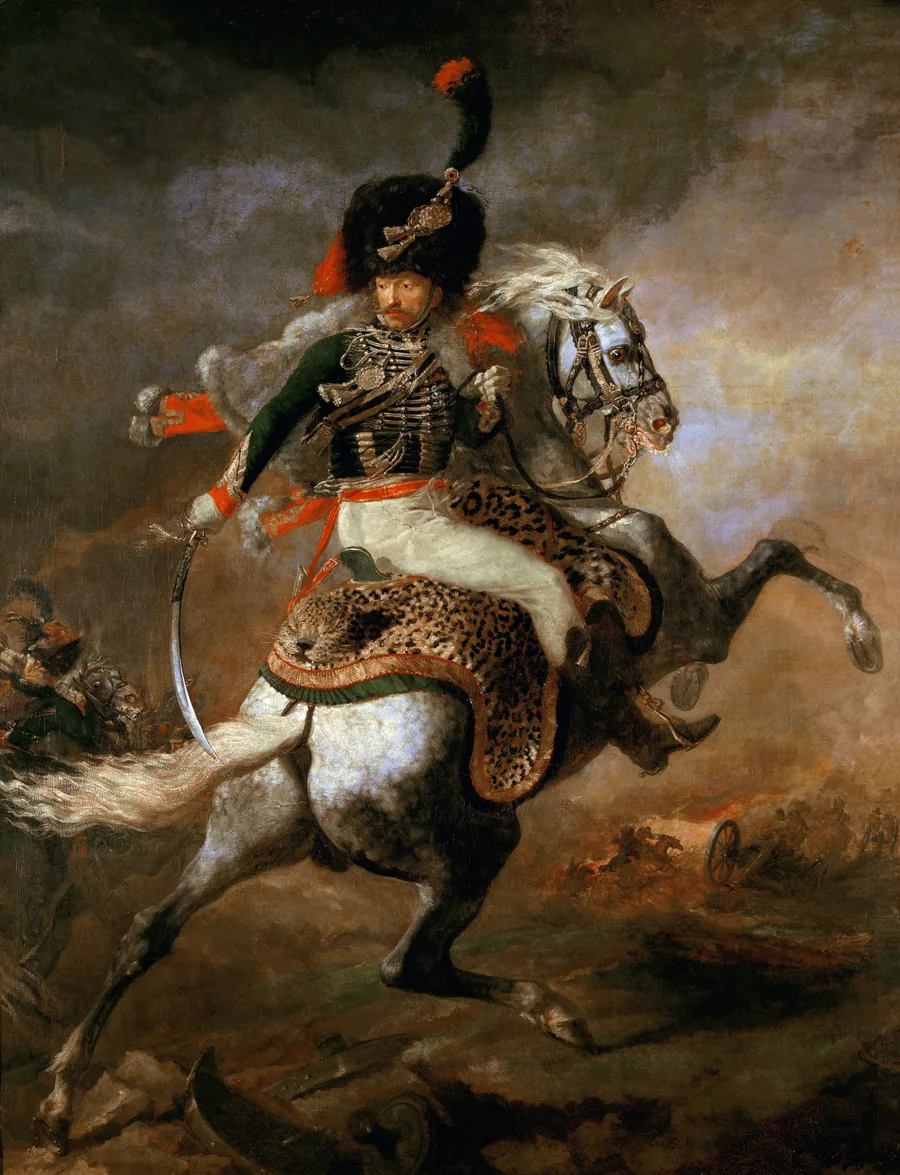
Apart from the rest stood the Imperial Guard. Heir to the Consular Guard, it formed a complete corps with its own infantry, cavalry and artillery. Men entered it after several campaigns and deeds of distinction; the pay was better, the uniform finer, the prestige immense. The veterans of the Old Guard, known as the grognards, the grumblers, because they complained about everything without ever ceasing to follow the Emperor, were its heart.
Napoleon husbanded this reserve and committed it sparingly, to the point of refusing to throw it in at Borodino. From 1809 he added a Young Guard, recruited from the best conscripts, and then a Middle Guard. Its numbers swelled: according to estimates, some 50,000 men in 1812, 90,000 in 1813 and more than 100,000 in 1814. The Guard became an army within the army, and the fate of the last battles often rested on it.
Feeding, transporting, healing
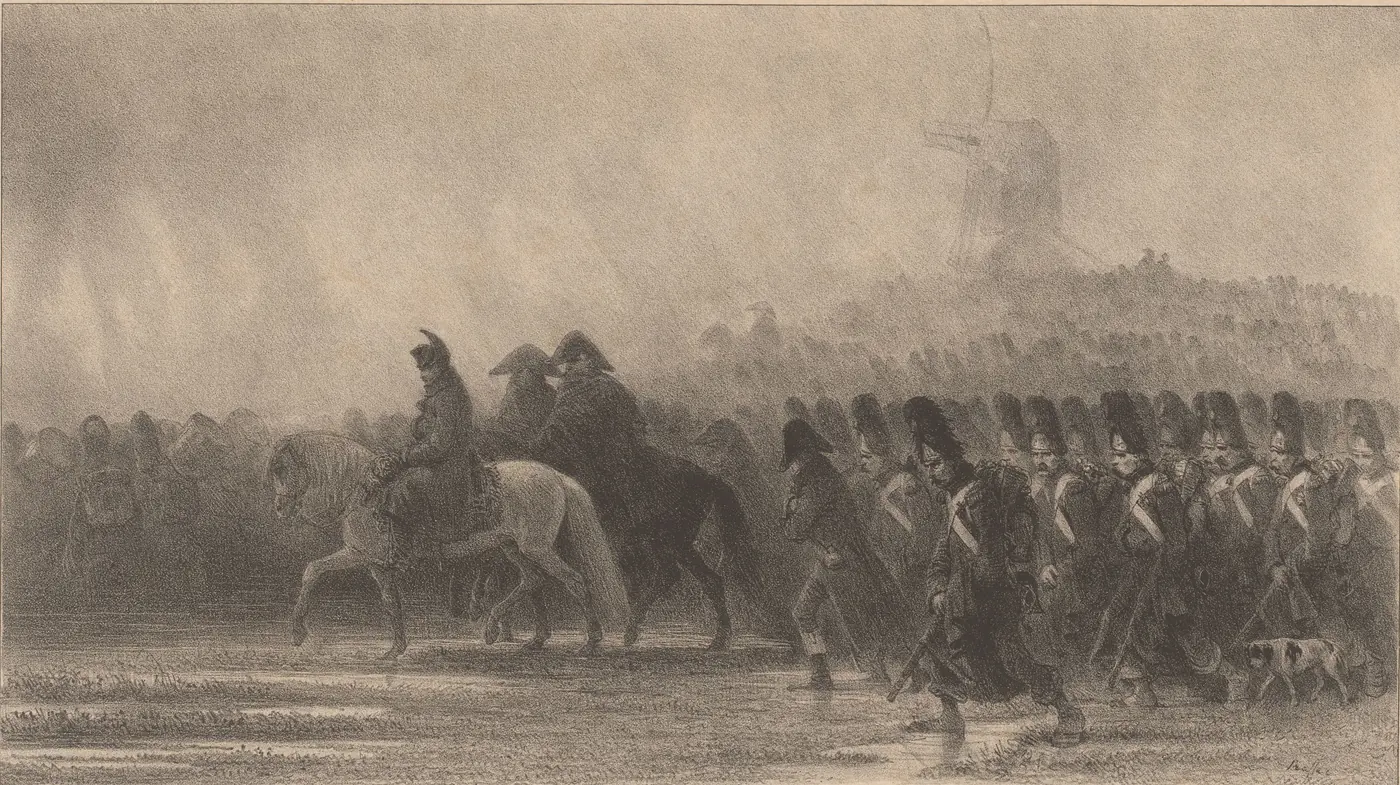
The speed of the corps came at a price: the army could not drag behind it everything it consumed. Depots were set up, but the army also relied on requisitions and on supplies found locally. The system worked in the rich countryside of Italy and Germany; it failed in poor countries, in Poland in the winter of 1806-1807, in Spain, and catastrophically in Russia. Napoleon tried to remedy this by creating in 1807 a military transport train, the train des équipages, run by soldiers rather than contractors, but it was never equal to the need.
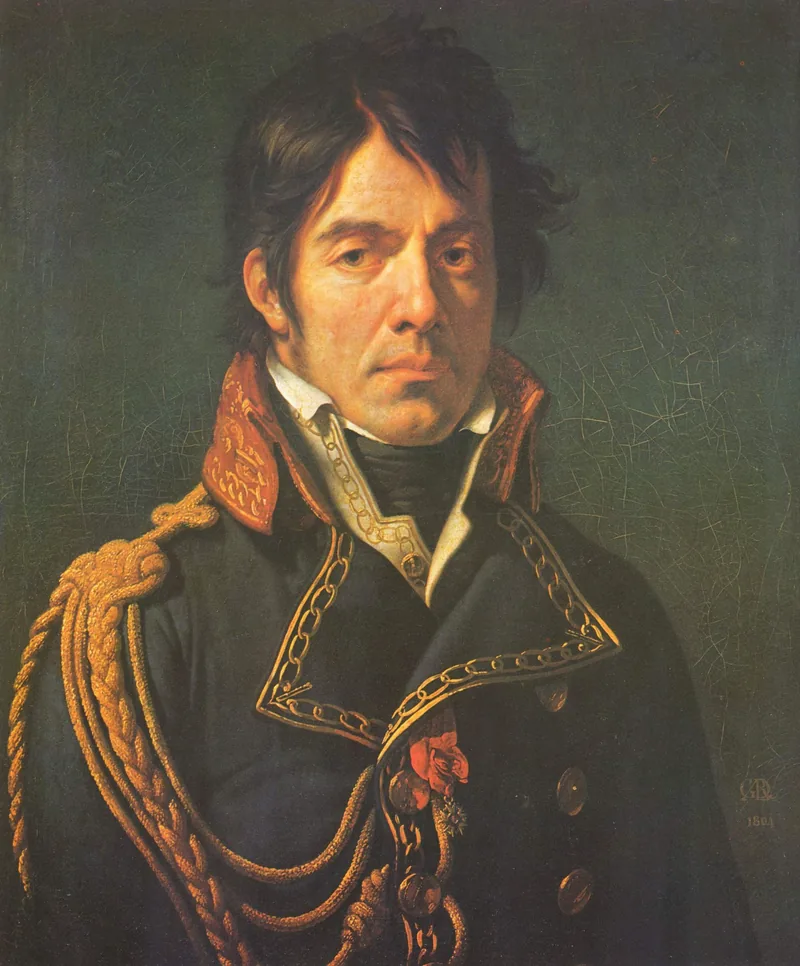
The medical service faced the same strain. Surgeons such as Dominique-Jean Larrey, surgeon-in-chief of the Guard, and Pierre-François Percy innovated: as early as the Revolutionary wars, Larrey had devised "flying ambulances" that went to fetch the wounded close to the fighting instead of waiting for the battle to end. But the means remained pitiful compared with the numbers involved, and disease, dysentery and typhus killed far more soldiers than cannonballs.
An increasingly European army
The Grande Armée of 1805 was a French army of veterans. That of 1812 was a coalition. Alongside the French, some of whom came from the annexed departments, from Belgium to the Rhineland and from Piedmont to Holland, stood the contingents of allies and vassal states: Poles from the Duchy of Warsaw, Germans from the Confederation of the Rhine, Italians, Swiss, Croats, Spaniards and Portuguese. Even the Guard took in Polish light horse, Dutch lancers and a squadron of Mamelukes. In Russia, fewer than half the soldiers were French.
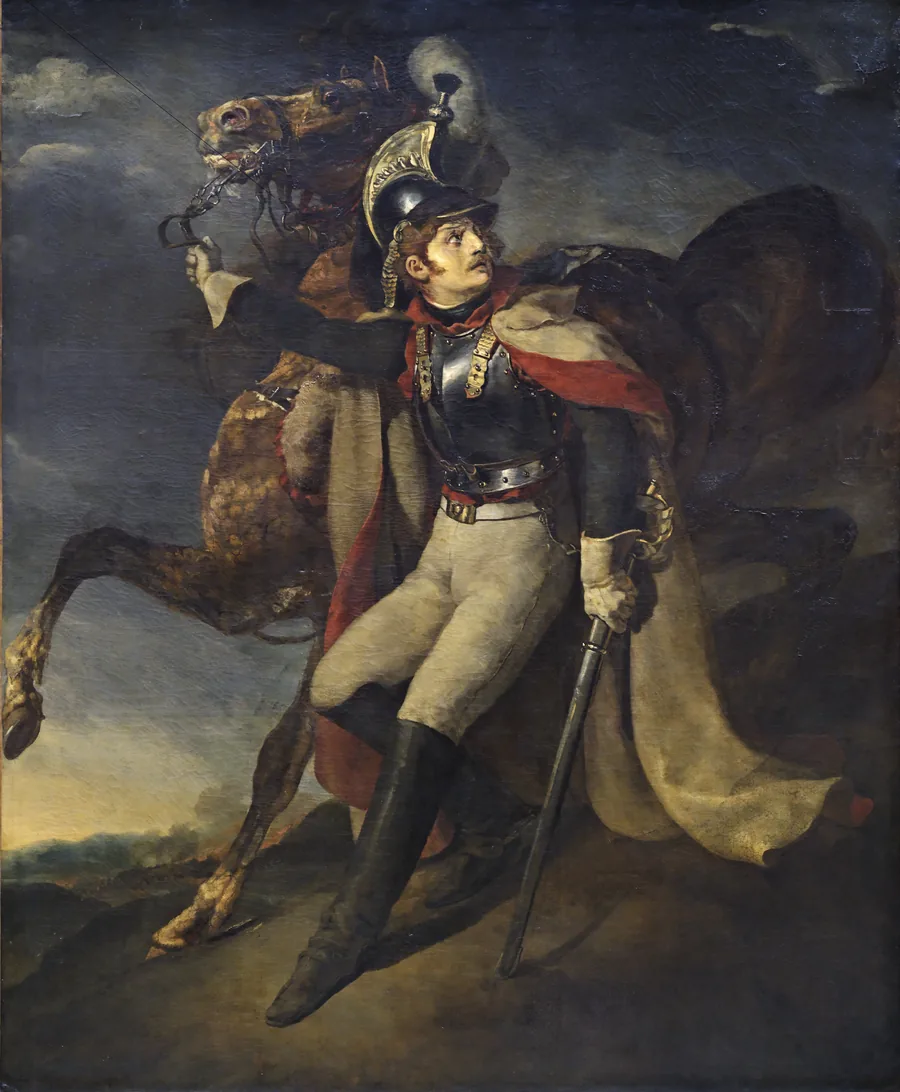
Each campaign wore the instrument down a little more. From 1808 Spain swallowed hundreds of thousands of men, and in 1812 Russia destroyed the veterans and almost all the cavalry. The conscripts of 1813 and 1814 fought bravely, but without their elders' experience, and the Empire never recovered the horses it had lost. At the Salon of 1814, a few months after the fall of the Empire, Géricault exhibited a wounded cuirassier leaving the fire and looking back towards the battle: the image of an army that had given everything.
What remains
After Waterloo the imperial army was disbanded, and many of its officers lived on half pay under the watchful eye of the new regime. But its organisation outlived it. In the nineteenth century the major European armies adopted the army corps and the permanent general staff; officers studied its campaigns in the writings of Jomini, who had served in its ranks, and of Clausewitz, who had fought against it. The legend, meanwhile, took hold of the grognards, the Guard and the marshals, often to the point of obscuring the reality: that of a remarkably organised army, but also of a machine that consumed whole generations of young Europeans.
Further reading
- John R. Elting, Swords Around a Throne. Napoleon's Grande Armée, Free Press, 1988.
- Alain Pigeard, L'Armée de Napoléon. Organisation et vie quotidienne, Tallandier, 2000.
- Thierry Lentz and Jean Lopez (eds), Les Mythes de la Grande Armée, Perrin, 2022.
- David G. Chandler, The Campaigns of Napoleon, Macmillan, 1966.