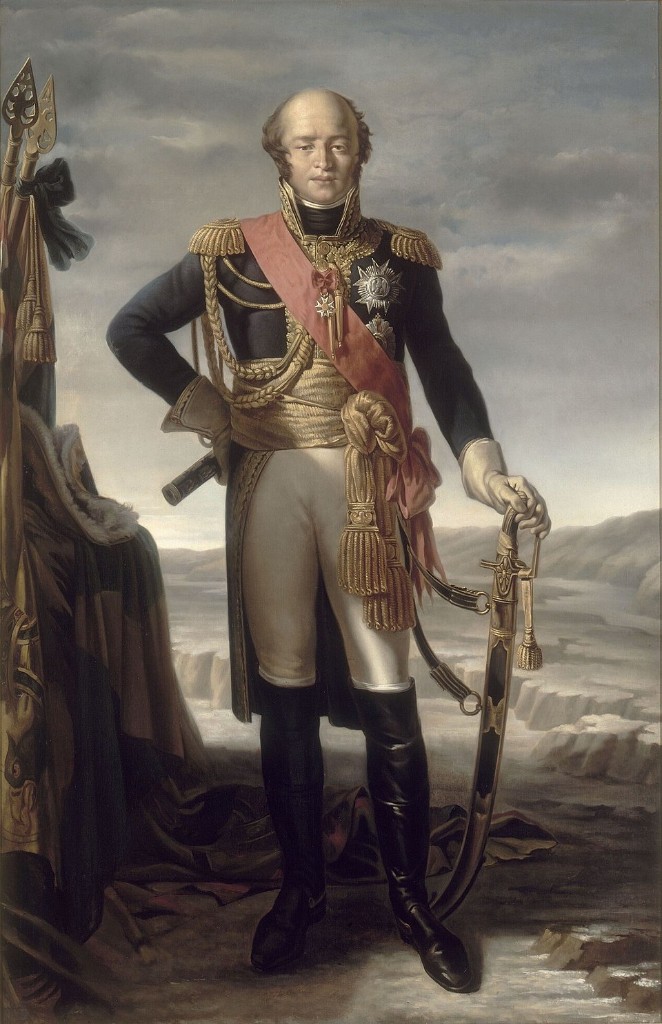
Louis-Nicolas Davout (1770-1823), Duke of Auerstedt and Prince of Eckmühl, embodied the marshal as tactician and administrator: discipline, execution, and rigour Napoleon summed up as « my Bayard. » From the Rhine and Egypt to the marshalate of 1804, he distinguished himself at Austerlitz then at Auerstedt (14 October 1806), where the III Corps, almost alone, defeated the main Prussian army — the Grand Army's « Iron Marshal. » Eckmühl, the Moskova, the siege of Hamburg and, during the Hundred Days, the Ministry of War completed a career as a peer of France; he died of cholera in Paris in 1823.
Youth, Revolution, Egypt, and the marshalate
Louis-Nicolas d'Avout was born at Annoux, Burgundy, on 10 May 1770, into a family of minor sword nobility: father and grandfather had served the monarchy in cavalry; the milieu early imprinted a sense of duty and the military craft. In 1788 he entered the Paris military school and left a second lieutenant in the Royal-Champagne-Cavalry regiment, as the Old Regime crisis accelerated changes in careers.
The Revolution forced his choice: in 1793, suspected because of noble birth, he was suspended; he then attached himself to the most determined republicans, served under Dumouriez then under Desaix in Alsace and on the Rhine, and formed with the latter a field friendship only Desaix's death at Marengo (1800) would break. Those years forged the disciplined republican officer, little given to showy display but demanding on execution.
In 1798 he followed Bonaparte to Egypt: the naval battle of Abukir illustrated French limits against the Royal Navy; expeditions in Syria, sieges and retreat, then capitulation of the Army of the East in 1801 brought back to France a core of seasoned officers who would form part of the imperial cadres. Davout there confirmed his steadiness under fire and his organisational ability in extreme conditions.
The Consulate accelerated his rise: divisional general in 1800, commander of the consular guard, he imposed discipline through drill, inspections, and sanctions that built reliable troops but earned him a reputation for harshness. In 1804, aged thirty-four, he was among the first eighteen Marshals of the Empire. His bearing — modest height, gaunt face, piercing gaze — contrasted with the brilliance of Murat or Lannes; Napoleon nonetheless cited him as a model executor: « Davout is my Bayard. » At Austerlitz (2 December 1805), the III Corps he led into action helped decide the day on the Pratzen plateau. The figure was set: tactician of terrain, organiser, little given to the systematic pillage sometimes tolerated elsewhere in the Grand Army.
Auerstedt: the III Corps alone against the Prussians
On 14 October 1806, the twin battles of Jena and Auerstedt unfolded in a scheme of two simultaneous manoeuvres: Napoleon crushed a Prussian fraction at Jena while the main army commanded by the Duke of Brunswick marched north-west and collided with Davout on the Auerstedt plateau — the same day, fog and muddy roads, not a mere « pursuit after Jena ».
Bernadotte, theoretically a neighbour, did not bring the decisive mass some imperial orders might have led one to expect; historiography still debates disobedience, interpretation of instructions, or march constraints. Davout remained with Friant, Morand, Gudin, and the divisions of the III Corps against Prussian columns superior in number, in wedges of villages and echelons, under particularly deadly line artillery.
Brunswick was mortally wounded; Prussian cohesion cracked; by nightfall victory belonged to the III Corps at the cost of a heavy human toll for Davout. The Emperor, himself victorious that day, measured the strategic feat of the double Jena-Auerstedt view; the nickname Iron Marshal stuck. In 1808 Davout received the title of Duke of Auerstedt and entered Warsaw in November 1806 within an army that redrew Germanic and Polish Europe.
A romanticised scene of the Egyptian campaign (1798-1801), when Davout served under Bonaparte, uses Oriental setting and melee to evoke the kind of fighting to which the future marshal accustomed his troops before the tactical test of Auerstedt.
Warsaw, Eckmühl, Wagram, and the Moskova
After Tilsit, Davout commanded French forces in Poland and assumed military government of the Grand Duchy of Warsaw: reorganisation of levies, policing of garrisons, steering a society torn between national hopes and French tutelage. Witnesses often noted his relative financial probity compared with exactions other military circles tolerated.
In April 1809, in the War of the Fifth Coalition, Davout operated on the southern flank of the great Bavarian-Austrian manoeuvre: after Abensberg and Eggmühl, the Battle of Eckmühl (21-22 April) saw Napoleon and the III Corps close pincers on the Austrian rear guard; the Emperor created Davout Prince of Eckmühl on the field. In July, at Wagram, the III Corps again took part in a mass battle on the Marchfeld alongside other wings of the Grand Army.
In 1812, at the head of the Grand Army's 1st Corps, Davout crossed the Niemen, took part in stages of the Russian campaign — Smolensk, then the great day of 7 September. At the Moskova, his infantry renewed assaults against the fleches and redoubts of the southern sector; losses were enormous; Davout was wounded (sources differ on leg or head). Empty, burned Moscow hastened the decision to retreat; the 1st Corps, exhausted, still took part in withdrawals and critical crossings, including the Berezina.
Hamburg, Hundred Days, Restoration, and death
In 1813 Napoleon gave Davout northern Germany: based at Hamburg, he turned the Hanseatic city into a stronghold, organised blockade and civil defence, and refused capitulation after the defeat at Leipzig (October 1813). Prussians, Russians, and Swedes besieged him; the siege ran until 31 May 1814 — weeks after the abdication at Fontainebleau — before a negotiated surrender that preserved the garrisons' honour. Davout returned to Bourbon France, swore allegiance to Louis XVIII, and kept his marshal's rank.
On Napoleon's return from Elba, Davout was appointed Minister of War (March 1815): mobilisation decrees, fortresses, liaison with the field headquarters — he remained in Paris during Waterloo, which still feeds debate on orders to Grouchy and coordination of the Army of the North. After the defeat, he took part in the capital's defence commission under political uncertainty, then in capitulation; the second Restoration briefly struck him from the rolls and threatened trial before his status as peer and negotiation allowed withdrawal then limited public life again.
The July Monarchy kept him a hereditary peer without great political influence. In 1819, before the Chamber of Peers, he argued without success for a moral rehabilitation around Ney's memory — a gesture showing personal loyalty to a battlefield rival as much as the weight of post-1815 polemic.
He died of cholera in Paris on 1 June 1823, aged fifty-three, in the rue de l'Université, and was buried at Père-Lachaise Cemetery. Remarks attributed to Napoleon on Saint Helena — a captain who might have won « twenty battles » — sum up the esteem for a commander who made tactical and administrative rigour an almost systematic hallmark. From the nineteenth to the twenty-first century, historiography has swung between the harsh disciplinarian and the model of operational execution; Auerstedt and the Moskova remain the two fixed points of any military biography of Davout.
Discover other characters
Napoleon Bonaparte
Emperor of the French
Louis-Alexandre Berthier
Marshal of the Empire, Prince of Neuchâtel and of Wagram, major-general of the Grande Armée (1805–1814)
Michel Ney
Marshal of the Empire, Prince of the Moskova
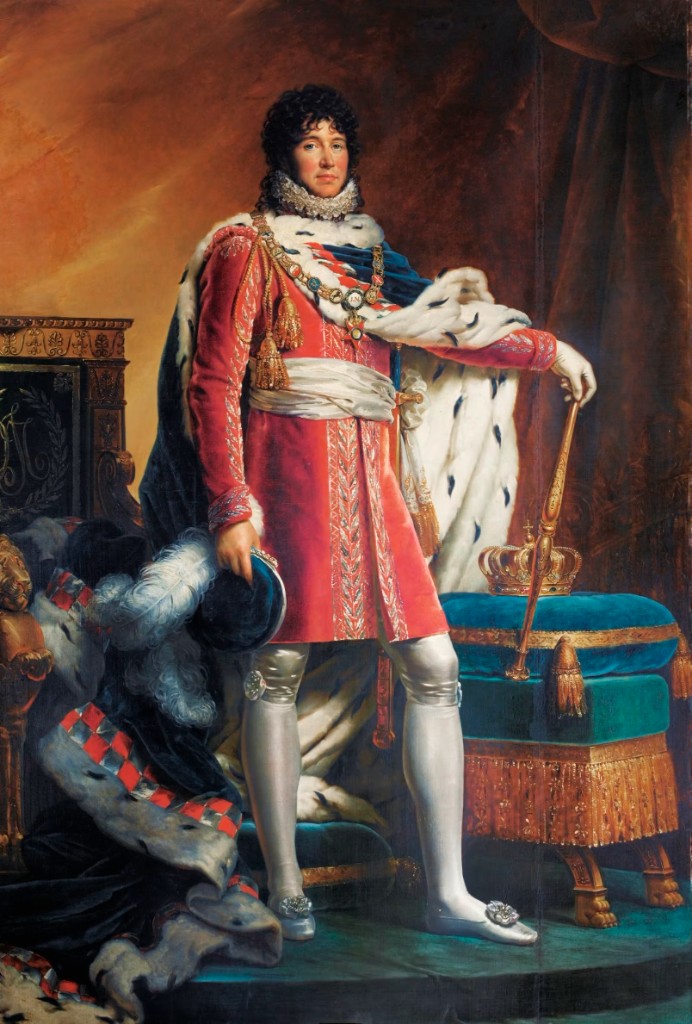
Joachim Murat
Marshal of the Empire, King of Naples
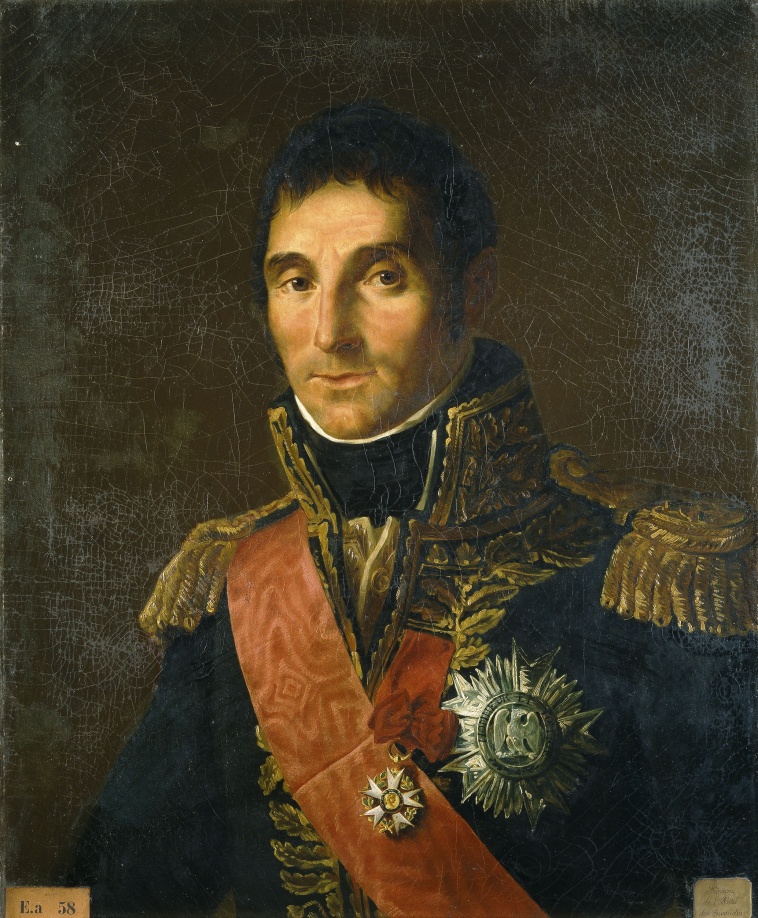
André Masséna
Marshal of the Empire, Prince of Essling
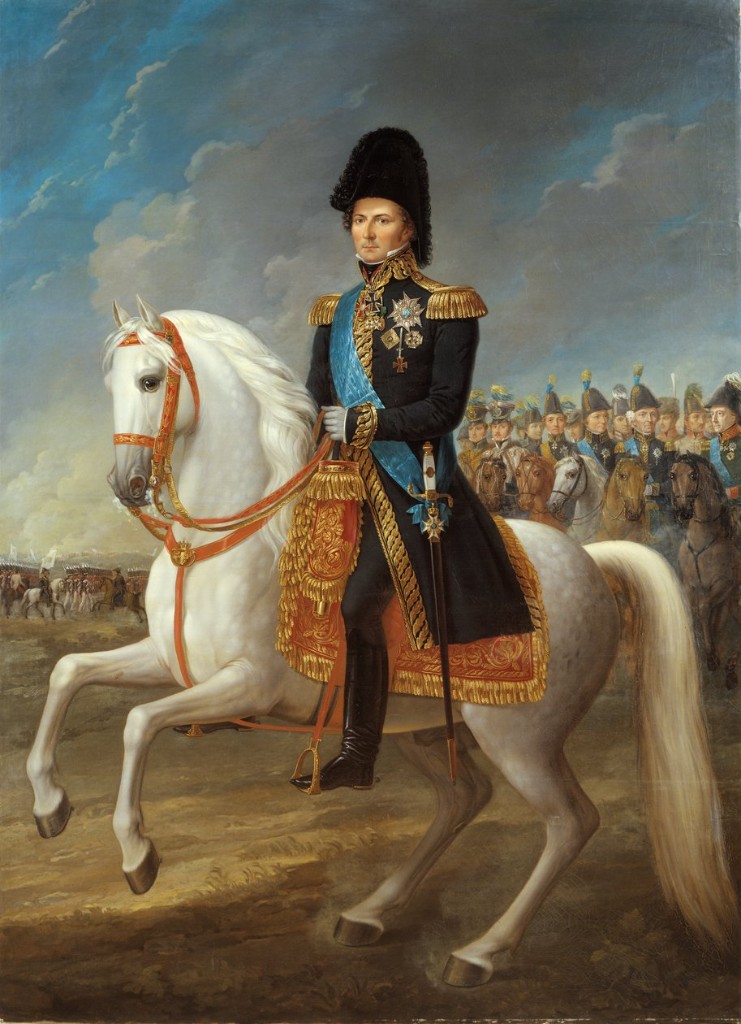
Jean-Baptiste Bernadotte
Marshal of the Empire, King of Sweden and Norway (Charles XIV John)
Go further
Recommended books to dig deeper (affiliate links)
Napoleon the Great
Andrew Roberts · 2014
A monumental biography drawing on Napoleon’s 33,000 surviving letters, admiring but rigorous.
See on Amazon
Napoléon ou le mythe du sauveur
Jean Tulard · 1977
The book that reshaped how the man is read: how France gave itself a saviour, and what it cost.
See on Amazon
Nouvelle histoire du Premier Empire
Thierry Lentz · 2002-2010
Four reference volumes on institutions, diplomacy and collapse: the scholarly synthesis of the subject.
See on AmazonAs an Amazon Associate, this site earns from qualifying purchases.
Support the encyclopedia
Napoleon Empire is an independent project. Your contribution helps grow the content and keep the site running.
DonateSecure payment on the platform you choose.