Origins and place within artillery
Napoleonic artillery divided into complementary branches: foot artillery, horse artillery, and the train proper, responsible for material transport. This distinction, inherited from Consular reforms, separated gun crews from drivers and draught teams.
The artillery train was not a combat arm in the strict sense: its men handled limbers, caissons and horses rather than guns in battery. Without them, however, a battery remained immobile on the road and useless on the battlefield.
Under the Empire the train organisation was rationalised to match the pace of great manoeuvres. Each field battery relied on a supply system for round shot, canister and powder, carried in specialised wagons drawn by numerous teams.
Train drivers formed a separate corps with its own ranks, regulations and traditions. Their trade required knowledge of roads, bridges, convoy dimensions and horse management over long stages.
Organisation and strength
The train was distributed among armies, corps and divisions according to precise strength tables. An infantry or cavalry division carried its divisional artillery; behind it moved the train feeding the guns and ensuring basic repair of rolling stock.
Horses were the system's most fragile resource. An 8- or 12-pounder required several teams; a complete battery mobilised dozens of animals. Loss of horses — through combat, exhaustion or enemy seizure — paralysed artillery faster than destruction of the guns themselves.
Ammunition caissons followed batteries at regulated distance, ready to resupply crews during action. Napoleonic doctrine of artillery concentration at the decisive point assumed the train could keep pace with rapid moves on the battlefield.
Train officers coordinated movement with divisional artillery chiefs and corps staffs. This coordination is invisible in heroic accounts, yet decisive for marching tempo and availability of fire.
Uniform and role in the field
Train men wore artillery or auxiliary service uniform by period: coats often blue-grey or dark blue with branch insignia. Their silhouette was that of the driver on his seat, whip or reins in hand, rather than the gunner at the sponge.
On the battlefield the train stood behind engaged batteries, ready to advance as soon as guns changed position. Crews fired; the train moved, resupplied and sometimes evacuated damaged pieces.
On the march the train formed long, heavy columns, vulnerable to light cavalry attack and ambush. Protecting artillery convoys became a constant staff concern, especially in hostile territory or during retreats.
From Austerlitz to Waterloo
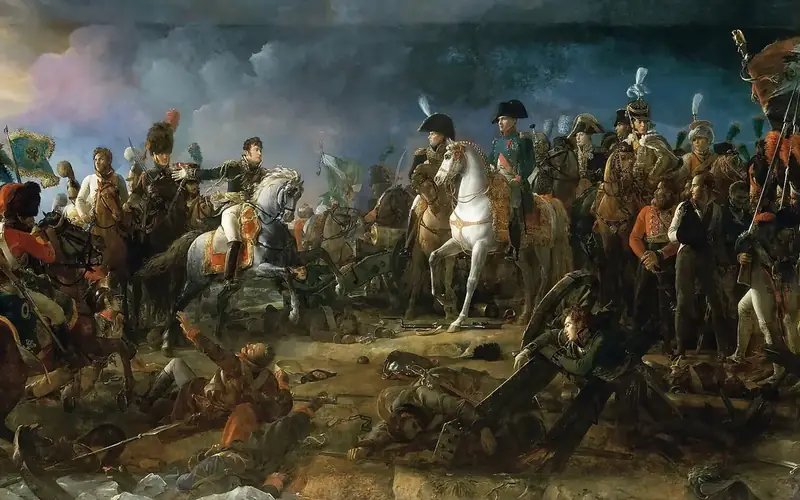
At Austerlitz (2 December 1805), French artillery mobility — towed guns, caissons close behind — contributed to fire concentration on the Pratzen Heights. The train allowed Soult's and other corps' batteries to be where manoeuvre required.
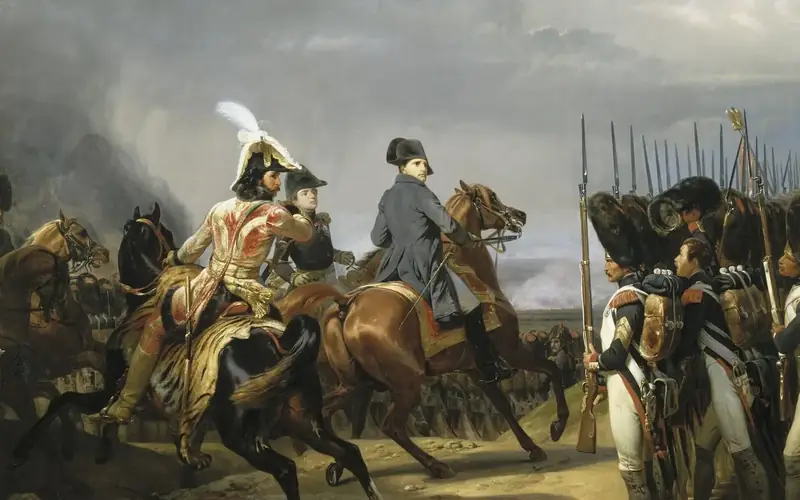
At Jena and Auerstedt (14 October 1806), Prussian columns suffered artillery sustained by efficient trains on still passable roads. The pace of French advance depended on drivers as much as guns.
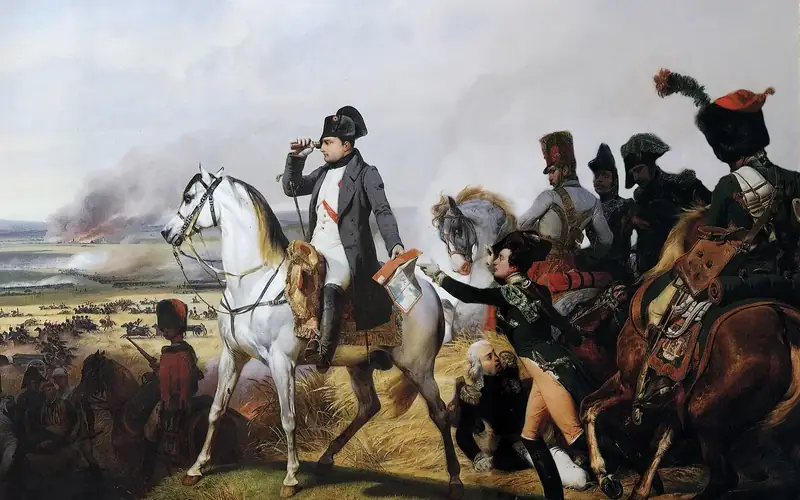
At Wagram (5-6 July 1809), fire density reached peaks; caissons had to supply batteries through two days of intense fighting. The train worked there under indirect fire and in the dust of tactical advances and withdrawals.
The 1812 Russian campaign revealed the train's vulnerability in retreat. On roads consumed by hundreds of thousands of men, horses died in thousands; caissons were abandoned, guns sacrificed for lack of teams. Train breakdown worsened the Grande Armée catastrophe as much as combat.
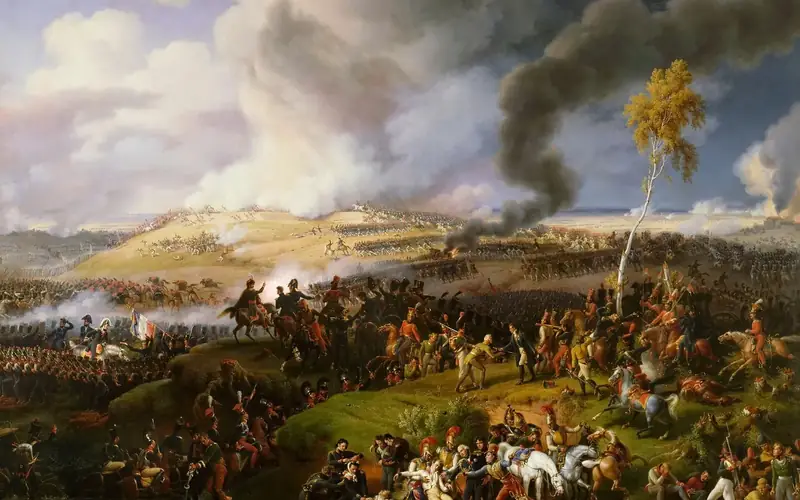
At Borodino (7 September 1812), trains had functioned to bring the massive artillery of the day; during the retreat their collapse left artillery parks beside frozen roads.
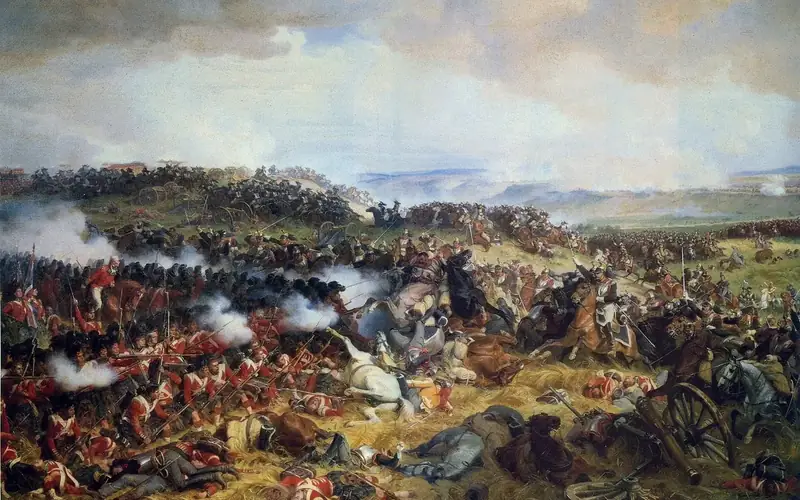
At Waterloo (18 June 1815), the last imperial batteries still depended on exhausted drivers and horses. Rain, mud and animal losses limited gun movement when fire concentration might have been decisive.
Logistical legacy
The Napoleonic artillery train foreshadowed modern support services: without parade glory, it conditioned armies' real power. Military historians remind us that "artillery marches on its wheels" as much as on its crews.
For Empire Napoléon this entry links the site's great battles to the reality of convoys, caissons and horses — the invisible part without which the legend of 120 guns at Wagram or Guard batteries would remain abstraction.