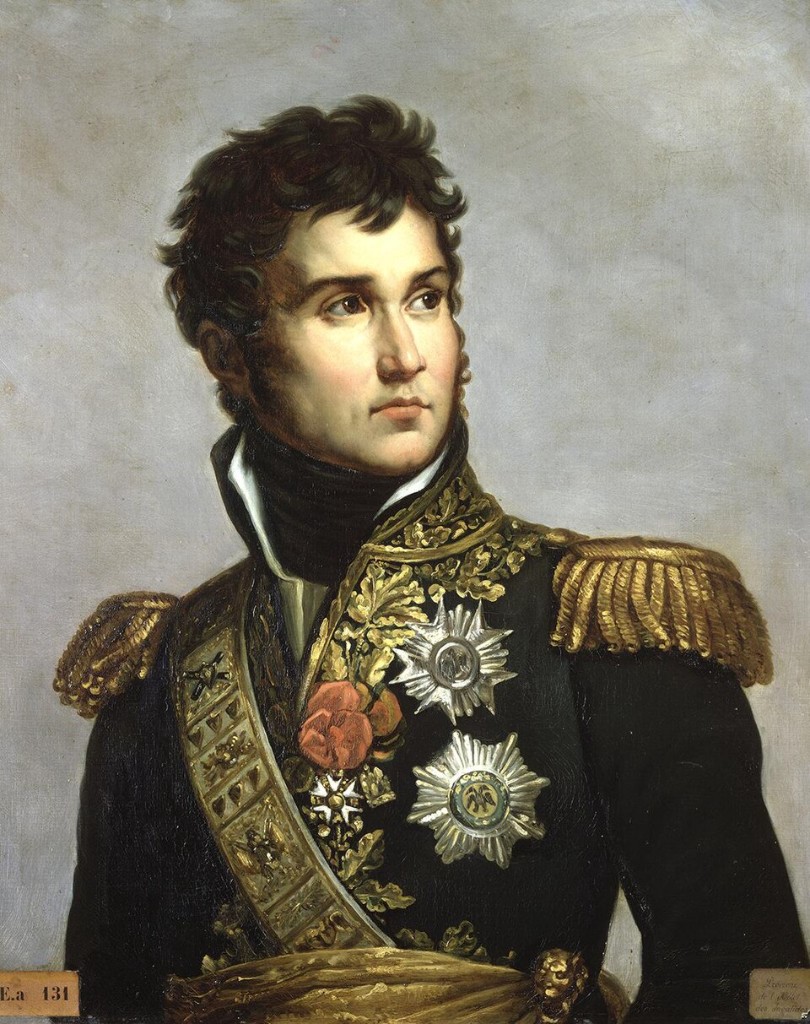
Jean Lannes (1769-1809), Duke of Montebello, ranks among the marshals closest to Napoleon by friendship as much as by the profession of arms. Son of a dyer from Lectoure, he rose through the Revolution's ranks to the Army of Italy, won fame at Arcola, in Egypt and at Montebello, became one of the first eighteen marshals in 1804, and commanded the main weight of the decisive battles from 1805 to 1807. His outspoken manner and refusal of courtiership made him a rare interlocutor for the Emperor. Mortally wounded on the field at Essling in May 1809, he lingered some ten days; state funeral and Pantheon burial honoured the officer Napoleon mourned as « the bravest » and, it is said, as one of his few true confidants.
Lectoure, Revolution, Italy and Egypt — forging the bond with Bonaparte
Jean Lannes was born on 10 April 1769 at Lectoure, in Gascony, into a family of dyers. His father, also named Jean, died when he was thirteen; the boy learned the trade, knew want and manual labour before the glory of uniforms. In 1792 he enlisted in the 2nd battalion of Gers volunteers. The Revolution opened a career the Old Regime would hardly have offered him: sub-lieutenant then officer, he first fought on the Pyrenean front, then shifted to the Italian theatre where in 1796 he joined the army commanded by General Bonaparte.
The campaigns of 1796-1797 forged the soldier Lannes's legend. At Dego, at Lodi, he matched the spearhead attacks Bonaparte's tactics demanded. On 15-17 November 1796, at Arcola, he distinguished himself in repeated assaults on the bridge and dykes where the Austrians held firm; wounded, he nonetheless embodied the officer who leads grenadiers under fire — the spectacular gesture bulletins and regimental memory fed on. He was not yet the Empire's marshal, but already the man of example Bonaparte needed to turn Italian mobility into victory.
The Egyptian expedition (1798-1799) extended colonial and Oriental learning: battle of the Pyramids, rearguard actions, siege of Acre where Lannes was seriously wounded. Campaign fever and harsh climate marked his body as much as his sense of the limits of distant operations. When Bonaparte decided to break off the siege and return to France, Lannes was among the generals who crossed the Mediterranean with the future First Consul — a political wager as much as a strategic withdrawal.
On 18 Brumaire Year VIII, Lannes was present at Saint-Cloud in the confused sequence where the coup took shape. He was neither constitutional theorist nor cabinet man; he was the one whose military presence reassured the grenadiers and gave the operation a soldier's face. From this period dated a personal friendship the imperial years would confirm: the calculating Corsican and the impetuous Gascon shared neither origin nor temperament, but the fire of the Italian campaigns and taste for risk drew together two destinies the sequel would render almost symbiotic.
Antoine-Jean Gros's painting of Bonaparte at the Bridge of Arcola (Palace of Versailles) fixes for the public the heroic image of the 1796 campaign: standard, bridge, smoke. For Lannes's biography it evokes less an individual portrait than a moment when the young Republic and its best general tested audacity to the edge of the plausible — the soil in which the future Duke of Montebello forged his reputation.
Montebello, marshalcy, Austerlitz and the Prussian campaign
The Consulate confirmed Lannes as one of the military architects of European recovery. On 9 June 1800, at Montebello, in Lombardy, he won an advance-guard victory over General Ott's Austrian forces — a bayonet affair that psychologically prepared the manoeuvre of Marengo a few days later. Napoleon, now First Consul, granted him in 1801 the title of Duke of Montebello: a rare honour for a commoner still a general, symbol of the merger between revolutionary merit and rebuilt hierarchies.
The senatus-consulte of 1804 enrolled Lannes in the first promotion of the eighteen Marshals of the Empire. At thirty-five, he was among the youngest; his path — dyer, volunteer, general of the Revolution — contrasted with the more « classical » careers of some colleagues. He had neither Masséna's fortune nor Davout's administrative coldness; his asset remained direct contact with the troops and imperial trust in moments that called for breaking through rather than long manoeuvre.
At Austerlitz, on 2 December 1805, Lannes commanded the V Corps on the French left wing, tasked with holding the Santon and anchoring the line while the imperial plan drew the Coalition onto the centre then struck on the Pratzen plateau. His steadiness in the morning cold and fog helped the solidity of the disposition; the « Battle of the Three Emperors » was less an individual duel than a symphony of corps, of which his played a bass line — essential so Soult and the centre could sound the Austrian and Russian knell.
The Prussian campaign (1806) saw the V Corps at work at Jena: Lannes, in early contact with the enemy, contributed to pinning then breaking the Prussian front that opened the road to pursuit toward Berlin and the Polish plain. Forced marches, billets in the cold, and repeated skirmishes marked an autumn where the Grand Army turned tactical surprise into strategic dislocation of Frederick the Great's kingdom.
Between great battles Lannes also took governor or inspector roles according to phases of armed peace; these administrative interludes were never his favourite métier, but they introduced him to occupation demands and civil-military trade-offs — skills that prepared him, without attracting him, for the logistical nightmare of the Spanish war.
Eylau, Friedland and the first Spanish war
The Napoleonic spring in Poland and East Prussia culminated in February 1807 at Eylau, in snow, in a melee where losses and weather sometimes blur the tactical narrative. Lannes, still heading a heavy corps, held his part of the disposition on a day contemporaries called both glorious and appalling: there the Empire learned French superiority did not cancel the price of Russian blood. A few months later, at Friedland in June, revenge was clearer: destruction of Bennigsen's Russian wing closed the campaign and opened the way to the Tilsit talks.
Those years tight around Napoleon wore the marshals at inhuman pace: illness, riding, endless correspondence. Lannes, though tried by Acre and by winters, remained among those the Emperor called for the most exposed breakthroughs. His reputation as a soldier without airs — who ate with his men, sometimes swore like an NCO — strengthened regimental loyalty as he passed; it also fed hostile salons' black legend, seeing there the symbol of democratised violence of revolutionary armies.
In 1808 the Peninsular War pulled Lannes from Poland to Spain. At Tudela on 23 November he took part in a French victory that broke part of the Spanish forces and opened strategic prospects for the occupier. Then came the siege of Saragossa: a determined city, house-to-house fighting, huge losses on both sides. There Lannes measured the gap between continental grand manoeuvre war and war of streets, fortified churches, and hostile or resigned populations.
Excesses, fires, and nascent guerrilla finally bred disgust he did not hide from the Emperor. His recall, granted after he voiced reluctance to command in what he saw as a spiral of atrocities, shows rare leeway for a marshal: Napoleon knew he lost an executor in Spain but kept a spearhead for the Danube. This sequence foreshadowed moral fractures other generals would know in the peninsula, with choices less honourable than the Gascon's.
In strictly operational terms, Tudela and Saragossa nonetheless showed Lannes's versatility: capable of pitched battle as of tight urban siege, he embodied the shift from the Italian-German model to the Iberian theatre where logistics and popular hostility changed the rules.
Frankness, imperial court and loyalty without flattery
Lannes was no man of ceremony. At the imperial coronation in 1804, he is said to have exclaimed, seeing the Pope crown Napoleon: « All this for a priest! » — anecdote reported by several witnesses, always to be read with salon-memory caution, but revealing the tone he allowed himself. Napoleon, who accepted no familiarity from most marshals, tolerated from Lannes phrases that would have meant disgrace elsewhere. « He is the only one who speaks to me as a friend », he reportedly confided — a phrase that sums a statutory as much as an emotional exception.
When divorce from Josephine became a political prospect, Lannes stood among the few voices advising caution or delay, less from marital mystique than lucidity about the symbolic cost of a public break with the woman who still embodied, for the army, part of the legitimacy of the Italian campaigns. It was not principled opposition to the dynastic project; it was the bivouac comrade's view of affairs of the heart become affairs of state.
In Spain, the remark attributed to Lannes — « I will not command an army of bandits » — sums up, even if the exact wording varies by source, the unease of an officer trained in pitched battle before the moral fracture of an occupation war. Napoleon, by recalling him, implicitly validated that some arguments of conscience could outweigh simple rotation of commands.
Lannes's loyalty did not run through bulletin flattery or accumulation of secondary titles: it ran through presence under fire, acceptance of the hardest missions, ability to rally an attack after partial failure. Nineteenth-century historians readily made him the anti-model of the courtier marshal; recent work stresses the gradual construction of that myth as much as the realities of discipline and violence shared by the whole Grand Army.
In the gallery of marshals, Lannes thus holds a unique place: neither minister nor satrap of a modelled Europe, but companion in arms whose premature death freezes the image of a golden age of relations between the Emperor and his lieutenants — an image no doubt idealised, but powerful in French memory.
Essling, last days and Pantheon burial
In May 1809 the War of the Fifth Coalition brought Lannes back to the Danube. Napoleon wanted to cross the river and strike Archduke Charles before diplomacy froze the theatre. Boat bridges linked Lobau to the north bank; Masséna, Lannes and others crossed with packed masses. On 21 and 22 May the Battle of Aspern-Essling pitted repeated Austrian assaults against a French bridgehead that floods, enemy fire, and fragile crossings made perilous to supply.
Lannes commanded the central sector around the village of Essling, cornerstone of the layout. Loft and street fighting merged with field artillery; losses rose on both banks. Around noon on the 22nd, a cannonball shattered his knee. Evacuated rearward, he underwent amputation; fever and infection spread despite the army surgeons' care. For several days he raved and suffered while the Emperor, between battle orders, came to his bedside.
Tradition has Lannes murmur to Napoleon that he was losing his best friend — a phrase that sums political as much as personal affection. On 31 May 1809 he died at Ebersdorf, aged forty. State funeral honoured the soldier; his body was buried in the Pantheon beside the great names of the nation. Napoleon wrote Josephine a letter where grief shows through the formula: he had lost the general he loved most. The news ran through the army; many witnesses reported a rare silence in the bivouacs.
Essling remains in manuals as warning that Napoleonic tactical genius neither cancels the chance of roundshot nor the friction of river ground. For Lannes's posterity it fixes a brutally symbolic end: the officer who had survived Arcola and Acre fell not in total defeat but in the deadlock of an enemy bank held too long without secure bridges — the bloody counterpoint to the brilliant victories of 1805-1807.
Charles Thévenin's « Marshal Lannes at the Battle of Ratisbon, 23 April 1809 » (Versailles) captures another day of the Austrian spring: the storming of Regensburg's walls. It is not death at Essling, but the marshal in the van — a complementary visual memory of his audacity on the Danube in 1809.
Discover other characters
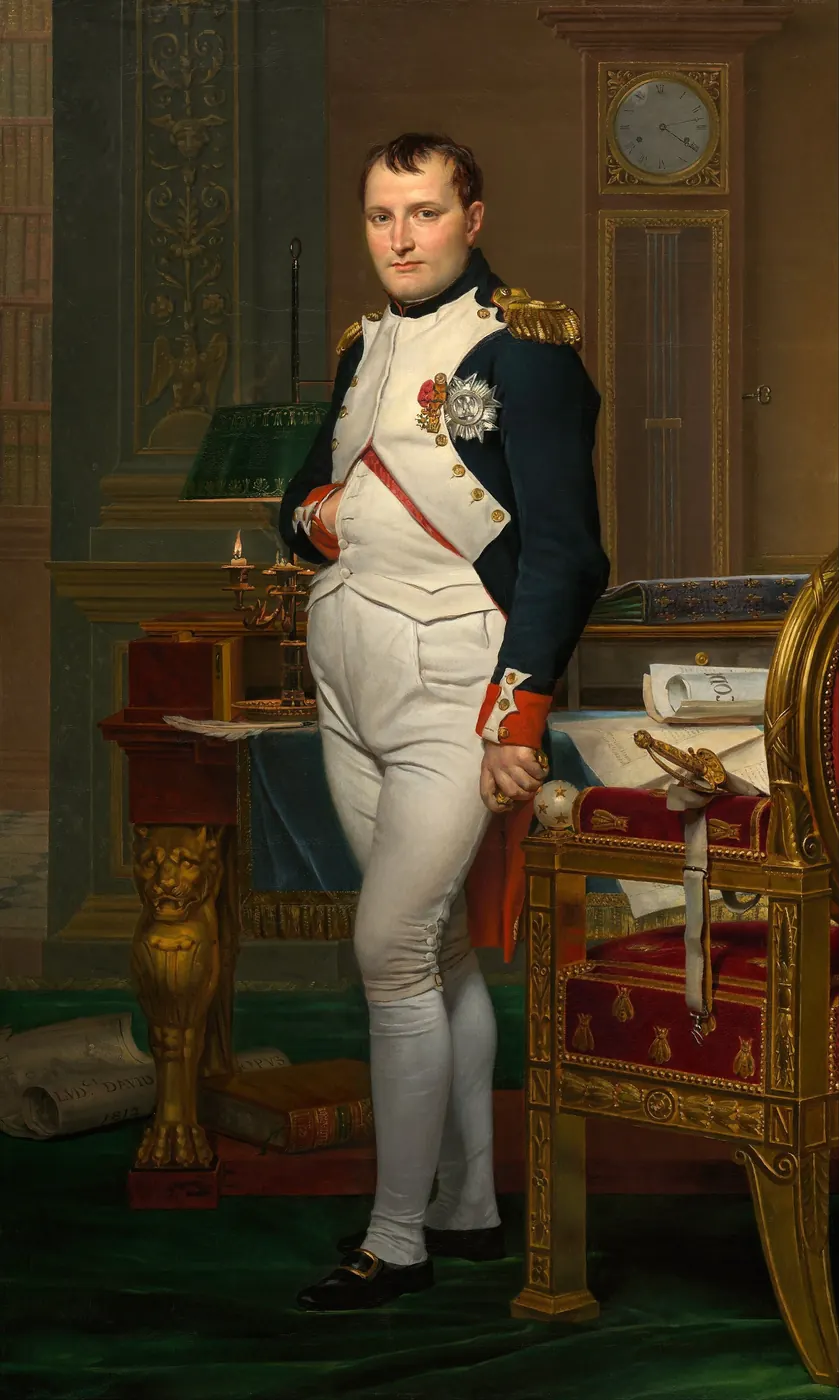
Napoleon Bonaparte
Emperor of the French
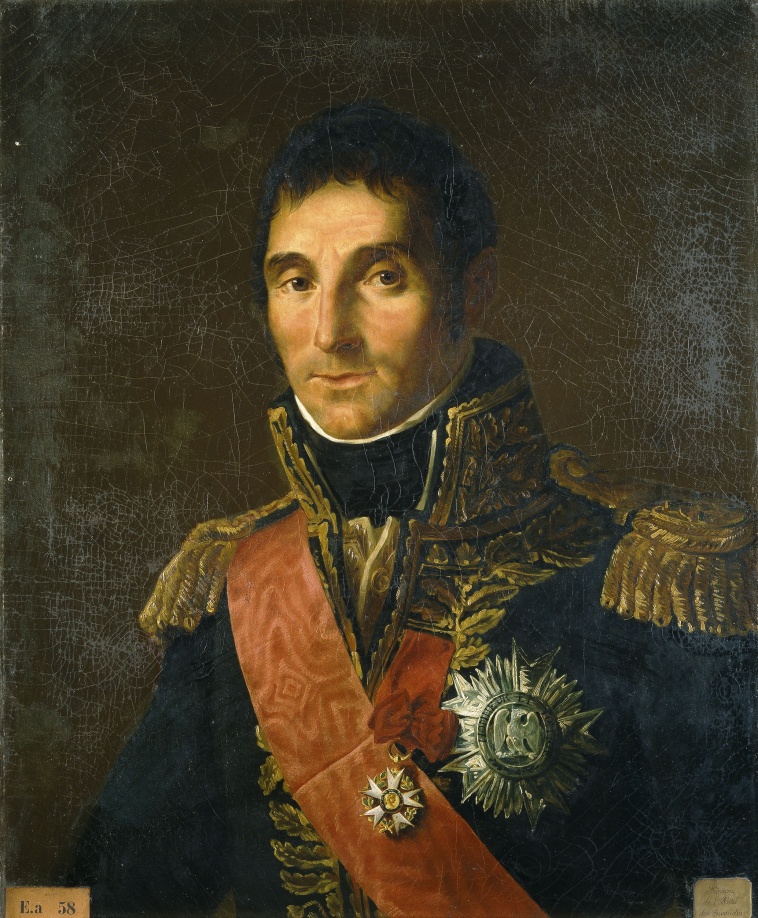
André Masséna
Marshal of the Empire, Prince of Essling
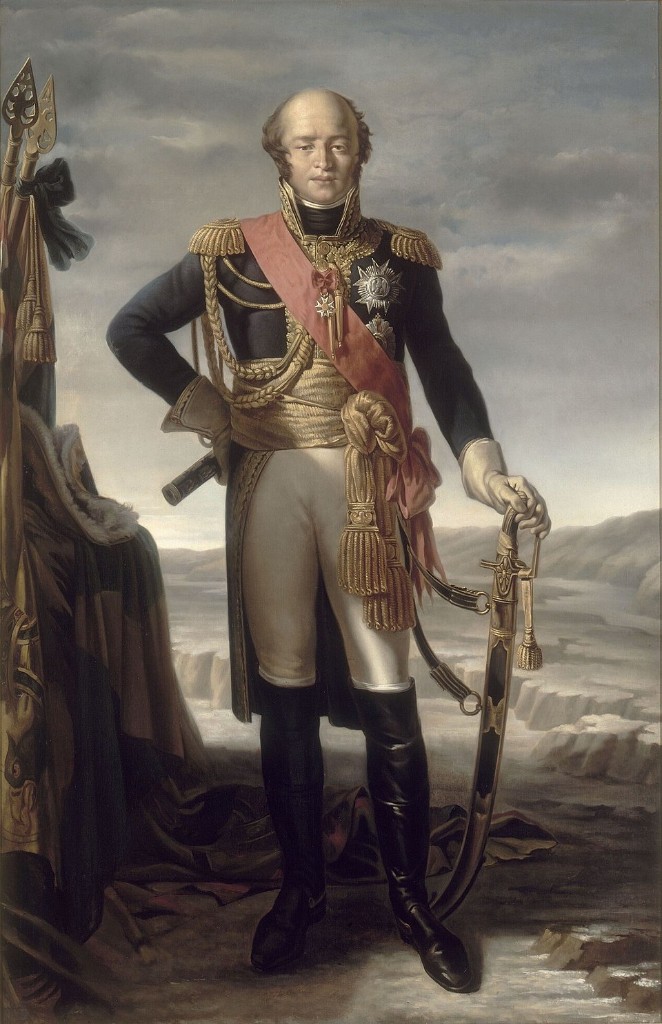
Louis-Nicolas Davout
Marshal of the Empire, Prince of Eckmühl
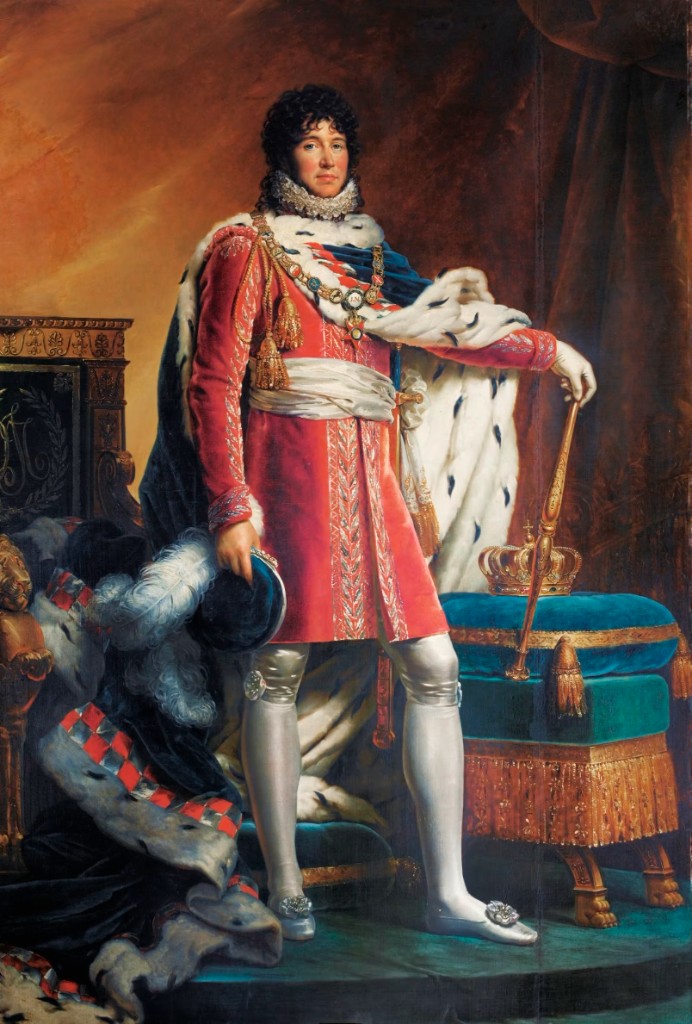
Joachim Murat
Marshal of the Empire, King of Naples
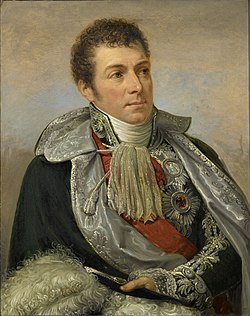
Louis-Alexandre Berthier
Marshal of the Empire, Prince of Neuchâtel and of Wagram, major-general of the Grande Armée (1805–1814)
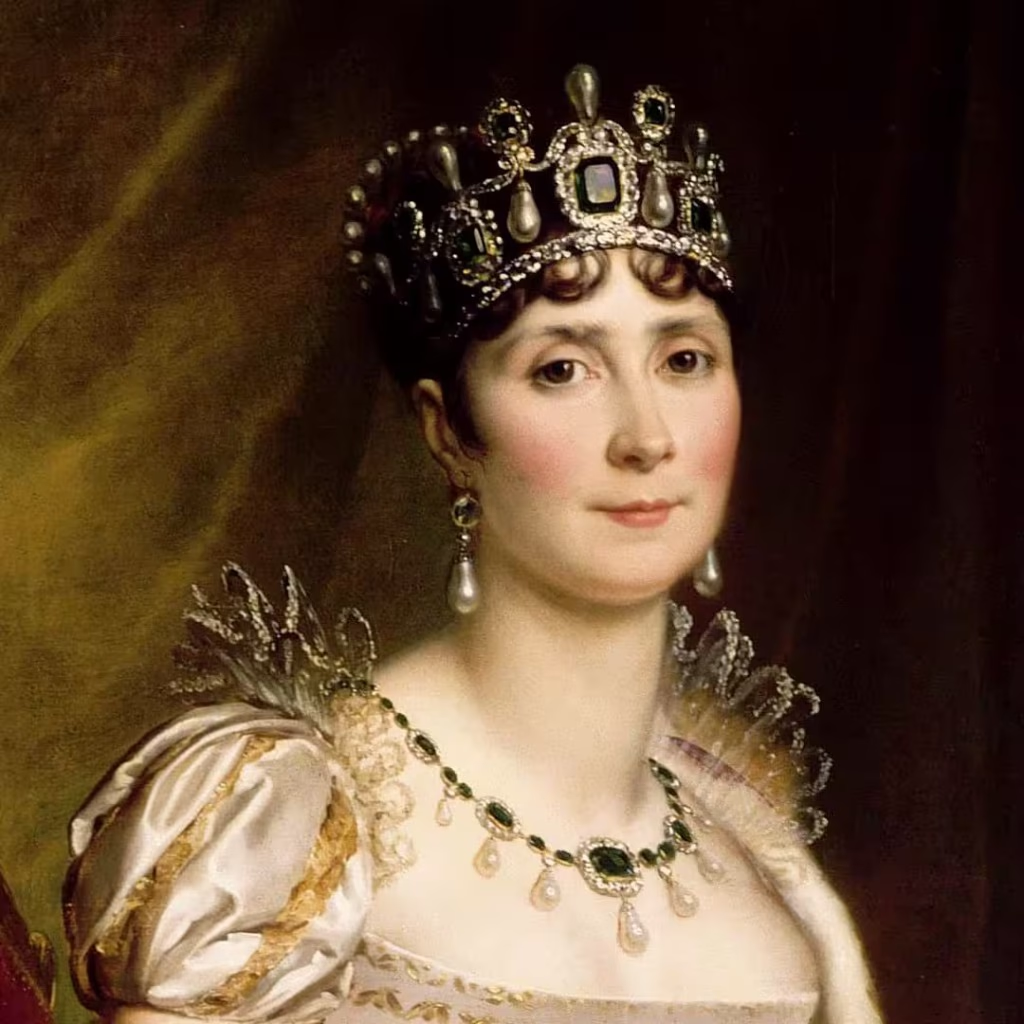
Joséphine de Beauharnais
Empress of the French
Go further
Recommended books to dig deeper (affiliate links)
Napoleon the Great
Andrew Roberts · 2014
A monumental biography drawing on Napoleon’s 33,000 surviving letters, admiring but rigorous.
See on Amazon
Napoléon ou le mythe du sauveur
Jean Tulard · 1977
The book that reshaped how the man is read: how France gave itself a saviour, and what it cost.
See on Amazon
Nouvelle histoire du Premier Empire
Thierry Lentz · 2002-2010
Four reference volumes on institutions, diplomacy and collapse: the scholarly synthesis of the subject.
See on AmazonAs an Amazon Associate, this site earns from qualifying purchases.
Support the encyclopedia
Napoleon Empire is an independent project. Your contribution helps grow the content and keep the site running.
DonateSecure payment on the platform you choose.