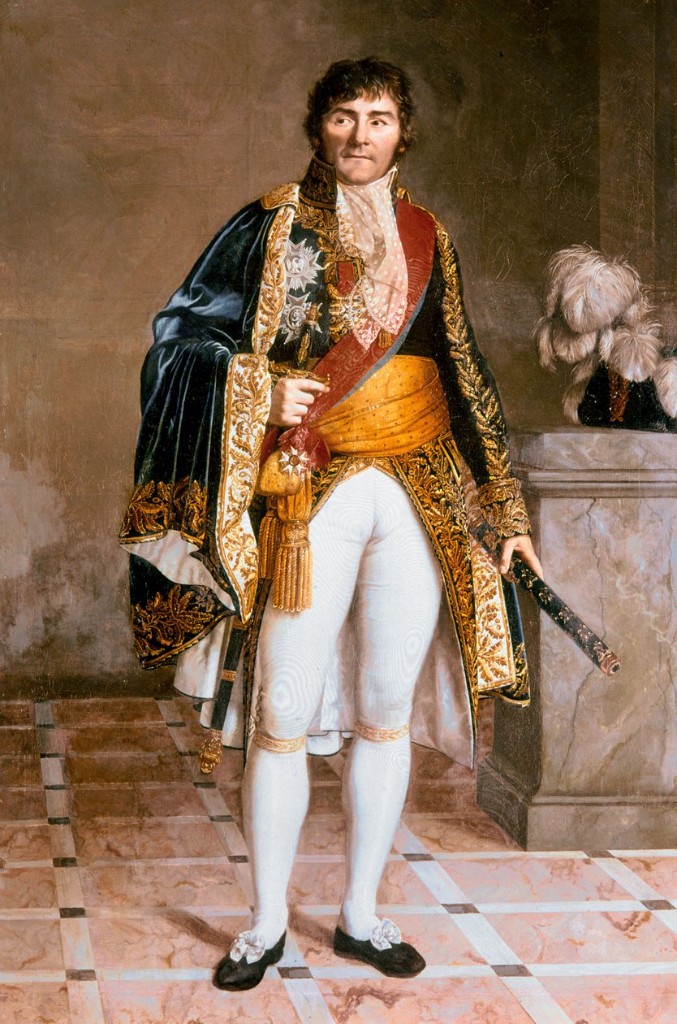
François Joseph Lefebvre (1755-1820), son of a modest Alsatian town sergeant, embodied the Old Regime foot soldier turned pillar of the Napoleonic regime: from the French Guards through the Revolution and Rhine armies to 18 Brumaire, when he snatched Lucien Bonaparte from hostile deputies of the Council of Five Hundred. A marshal in 1804 alongside Kellermann as an « honorary » figure of the first imperial bayonet peerage, he earned his title of Duke of Danzig in the field: the March–May 1807 siege against a stubborn Prussian and Russian-held fortress, careful artillery and Vauban-style trenches, and the famous remark about making a « hole » to get through. Commander of the Old Guard at the Borodino plateau at sixty-seven, he endured the Russian retreat then the 1814 campaign in France; having rallied to the Bourbons, he returned for the Hundred Days and charged at Waterloo with the grenadiers. Struck from the peerage after the final defeat, he died in Paris in 1820, leaving Catherine Hubscher — the future « Madame Sans-Gêne » of the stage — witness to a couple in which the laundress and the marshal defied Tuileries etiquette without ever breaking loyalty to the flag.
Rouffach, French Guards and Revolutionary apprenticeship
François Joseph Lefebvre was born on 25 October 1755 at Rouffach, in Alsace, into a family of minor military bourgeoisie: his father held the office of town sergeant — urban guard, local authority, modest income. Alsatian childhood, bilingual and turned toward Rhine roads, shaped a boy used to barracks noise and Old Regime hierarchies rather than Parisian salons.
In 1773, aged eighteen, he enlisted in the French Guards, an elite regiment stationed in Paris and symbol of the armed monarchy. The trade he learned there was that of the line, parade discipline, and palace service — rigid training that would outlast him when, later, the Revolutionary whirl demanded political flexibility as much as bravery.
In 1783 he married Catherine Hubscher, a laundress — a commoner of blunt speech and reputation for standing up to anyone, whom theatrical posterity would turn into « Madame Sans-Gêne ». The couple lived in a Paris where etiquette cracked: a royal guardsman wed to a washerwoman, a mingling of worlds the Empire would formalise without ever fully softening it in courtiers' eyes.
The Revolution erupted; the French Guards tipped into the crisis of July 1789. Lefebvre followed the patriotic movement, moved into the National Guard then volunteer and line battalions holding the Rhine against the coalition. The years 1792-1794 forged the tactician of open-field manoeuvre: he rose from captain to divisional general, distinguished himself at Fleurus and on the northern fronts, absorbed the lessons of Republican mass war.
In 1798 the Directory gave him the military governorship of Mainz — a strategic Rhine city, former fortress, crossroads of federalist intrigue and Austrian ambition. There he mixed administration, garrison policing, and preparation for a possible eastern theatre; the experience brought him closer to the circles where Bonaparte, back from Egypt, prepared the coup of Year VIII.
In 1799, appointed commander of the 17th military division in Paris, Lefebvre held one of the keys to the capital: barracks, depots, regulation of troops in the city. From that post he would move to the decisive role of 19 Brumaire at Saint-Cloud — not as orator, but as the man of action able to execute the order at the right moment.
On the eve of the Consulate, Lefebvre already embodied the « unlabelled » Revolutionary general: loyal to lawful power while it held, ready to shift when the Directory faltered — not through calculating cynicism, but from conviction that only strong authority could settle wars and civil discord.
Paris, 18 Brumaire and consolidation of the Consulate
On the morning of 18 Brumaire Year VIII in Paris, the coup teetered: Bonaparte harangued at the Tuileries, threatened, forced to withdraw. The real shock came the next day at Saint-Cloud, in the orangery where the Council of Five Hundred sat. Deputies cried treason; a motion of outlawry against the general circulated. Without muscular intervention, the consuls' plot would have tipped into bloody failure.
Lefebvre was neither assembly president like Lucien Bonaparte nor tribune like Sieyès; he was the trusted officer who could bring force to bear without letting it slide into massacre. At the head of a small detachment of grenadiers — tradition says twenty-five men — he entered the chamber where a hostile crowd surrounded the president. In the scuffle he snatched Lucien from deputies who tried to hold or intimidate him, allowing Bonaparte's brother to reach the courtyard where Murat drew up bayonets.
The gesture was brief, confused, eminently risky: a deputy torn away, mingled uniforms, shouts. Yet it broke the paralysis of the decisive moment. When the grenadiers finally occupied the hemicycle, Republican legality yielded to the fait accompli; the Directory collapsed and the Consulate was born amid criticism and hope.
Bonaparte did not forget the man who had held Paris on a tight rein. Lefebvre remained military division commander in the Consulate's first months, watching barrack calm and neutralising the last Jacobin or royalist hotbeds as orders shifted. His profile — professional soldier without loud ministerial ambition — made him a credible go-between for street and palace.
The years 1800-1803 saw him alternate inspection duties, local riot control, and logistical preparation for armies fighting in Italy and on the Rhine. He was not the victor of Arcola nor Ulm's strategist; he was the cog holding rear lines, convoys, and the discipline of Parisian reserves.
Bouchot's painting of Bonaparte before the Council of Five Hundred fixed for the public the dramatic image of the torn coat and theatrical gesture. For Lefebvre's biography it chiefly evokes the setting where his grip let Lucien escape the parliamentary riot — the material link between rhetoric and bayonet.
Marshal of the Empire, Kellermann and the campaigns before Danzig
The senatus-consultum of 1804 created the eighteen marshals of the young Empire. Lefebvre was listed alongside Kellermann, another veteran of revolutionised monarchy, often called « honorary » marshals in historiography — not from contempt, but because their fire-glory partly predated Austerlitz and they were tied to the Republican transition as much as to the brilliant imperial age.
Yet Lefebvre was no parade extra: he commanded corps in Germany, took part in continental manoeuvre against the Third Coalition, carried out siege and occupation missions where patience counted as much as the brilliance of a cavalry charge. His NCO temperament risen through the ranks earned him the respect of line regiments more than the salons of the rue Saint-Honoré.
Catherine, now « Madame Lefebvre » for etiquette, still clashed with court ladies by speech and habit. Napoleon, credited with sharp remarks on the couple, did not withdraw his trust from the marshal: the split between noisy private life and military competence stayed clear in the master's mind.
In 1806-1807 the War of the Fourth Coalition set the French army against Prussians then Russians. Lefebvre was not the hero of Jena-Auerstedt in the sense of public bulletins; he held flanks, secondary sieges, lines of communication. That very experience of prolonged siege prepared the decisive assignment: the fortress of Danzig, Prussian Baltic port, bitterly defended, logistical key to locking down Napoleonic Poland.
Historians note Lefebvre had not previously directed a siege of such scale. He compensated with operational humility: he surrounded himself with engineers, listened to gunners, respected sapper rhythms. The legend of the remark about the « hole » sums a philosophy — force the decision without getting lost in technical debates a general was not meant to master.
The Siege of Danzig and the ephemeral duchy
On 19 March 1807 the Siege of Danzig opened: fortress, arsenal, trading port, defended by General Kalkreuth with a mix of Prussian, Russian, and local militia troops. Napoleon entrusted nominal command of the siege corps to Lefebvre, backed by specialists of engineers and siege artillery. The strategic goal was clear: keep the garrison from disrupting the main manoeuvre against Bennigsen while starving Prussian resistance on the Baltic.
Operations stretched through spring mud: parallel trenches, batteries gnawing at ramparts, defenders' night counter-attacks. Lefebvre multiplied reconnaissances, settled quarrels among subordinate generals, kept moral pressure on the city. Losses mounted on both sides; famine and disease began to bite inside the walls.
The remark attributed to the marshal — that he did not grasp engineers' subtleties but should be given a « hole » to get through — expresses a salutary bluntness against procrastination. It entered Napoleonic legend as antidote to military paperwork; whether literally authentic or not, it fits Lefebvre's public persona.
On 24 May, after more than two months, the garrison capitulated with honours. Napoleon immediately granted Lefebvre the title of Duke of Danzig — the first ducal promotion to a marshal for a victory won in the field rather than by court decree alone. The duchy, erected on annexed Prussian lands, remained a fragile legal construct; it chiefly symbolised imperial recognition of the siege's merit.
Contemporary depictions of the bombardment evoke smoke, breaches, and coastal fleet: the visual of siege, more than an open-field battle, matches fortress warfare. For Lefebvre, Danzig remains the peak of his independent military standing — before age and the role of watchdog of the Old Guard drew him toward less personal battlefields.
The years 1807-1811 saw him alternate inspections, honour duties, and discreet presence on Austrian and Spanish campaigns in the rear. The body aged; the marshal knew he would no longer command a decisive wing like Davout or Masséna, yet he still embodied the link between the paid Revolution and the Empire of ceremony.
Old Guard, Russian retreat, 1814 and the Hundred Days
In 1812 at Borodino Lefebvre nominally commanded the Old Guard foot — grenadiers and chasseurs Napoleon kept as ultimate reserve. In practice the Emperor committed them sparingly; their presence behind the line reassured more than it tipped the day. The marshal, sixty-seven, endured like an exceptional foot soldier the heat, then dust, then cold foreshadowing disaster.
The retreat turned the Guard into a prestige rear guard: less glory than suffering, muddy roads, Cossacks, frozen bivouacs. Lefebvre held his rank without publicly reporting strategic errors; loyalty to the colours trumped open criticism — typical of a generation that had survived Robespierre and the Directory.
In 1814 the campaign in France put him back on the decisive stage: Champaubert, Montmirail, Montereau — names where the Guard and worn marshals tried to plug the gap against the Coalition. Lefebvre was no longer the man of the brilliant siege; he was witness to collapse, present when Napoleon abdicated at Fontainebleau.
He swore to the Bourbons, kept part of his titles, accepted the Restoration as necessary closure. Then came Elba and the Emperor's return: Lefebvre, despite age and political reason, rallied without hesitation — a gesture that betrayed Consular fibre more than courtier calculation.
At Waterloo he led the Guard grenadiers in the final phase attempting to pierce the Allied centre. Defeat sealed the end of the imperial dream; the marshal returned to Paris exhausted. The Bourbons struck him from the peerage: the price of the last rally.
He died on 14 September 1820 in his capital, aged sixty-four — not on a battlefield but in the bed of a veteran wars had worn out. Catherine survived him until 1835, kept the couple's memory, and fed the theatrical legend of « Madame Sans-Gêne », where marshal and laundress once more triumphed over etiquette through the audience's laughter.
Discover other characters
Napoleon Bonaparte
Emperor of the French
Lucien Bonaparte
French prince
François Christophe Kellermann
Marshal of the Empire, Duke of Valmy
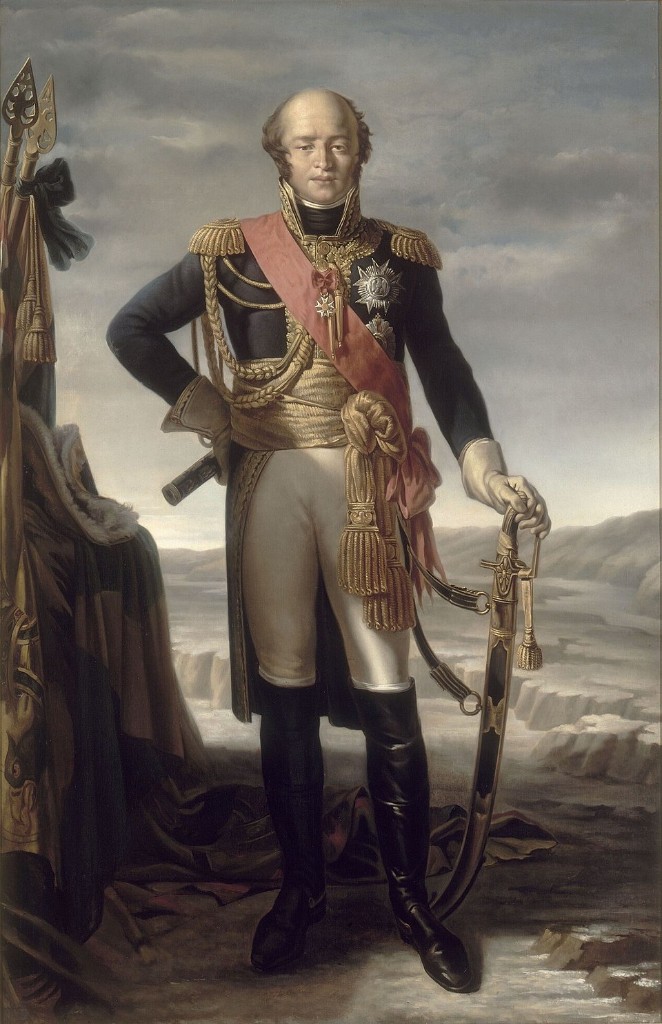
Louis-Nicolas Davout
Marshal of the Empire, Prince of Eckmühl
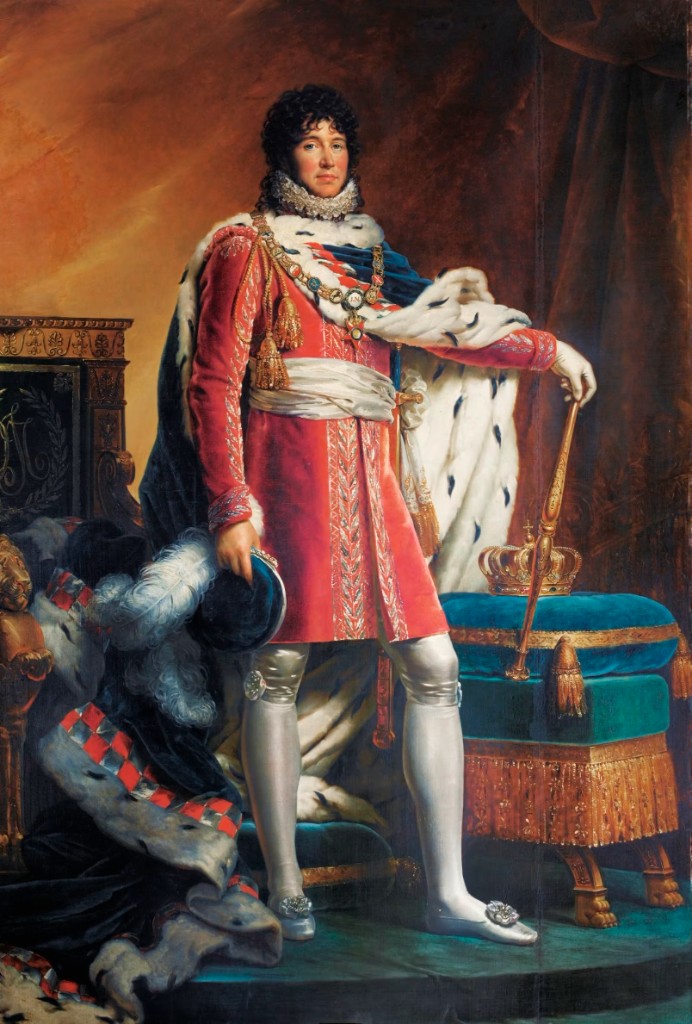
Joachim Murat
Marshal of the Empire, King of Naples
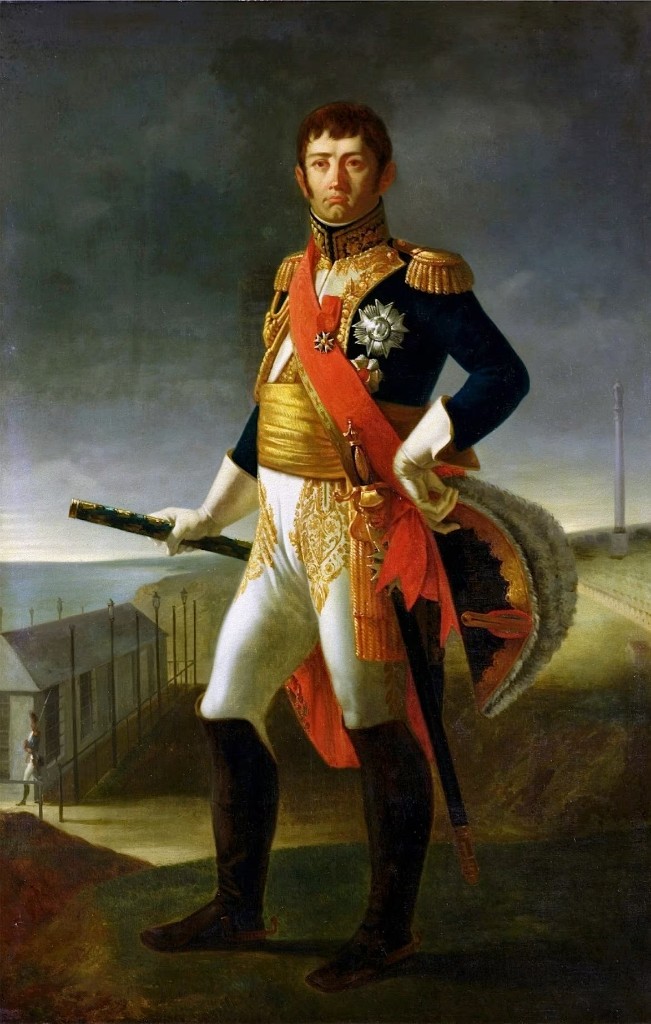
Jean-de-Dieu Soult
Marshal of the Empire, Duke of Dalmatia
Go further
Recommended books to dig deeper (affiliate links)
Napoleon the Great
Andrew Roberts · 2014
A monumental biography drawing on Napoleon’s 33,000 surviving letters, admiring but rigorous.
See on Amazon
Napoléon ou le mythe du sauveur
Jean Tulard · 1977
The book that reshaped how the man is read: how France gave itself a saviour, and what it cost.
See on Amazon
Nouvelle histoire du Premier Empire
Thierry Lentz · 2002-2010
Four reference volumes on institutions, diplomacy and collapse: the scholarly synthesis of the subject.
See on AmazonAs an Amazon Associate, this site earns from qualifying purchases.
Support the encyclopedia
Napoleon Empire is an independent project. Your contribution helps grow the content and keep the site running.
DonateSecure payment on the platform you choose.