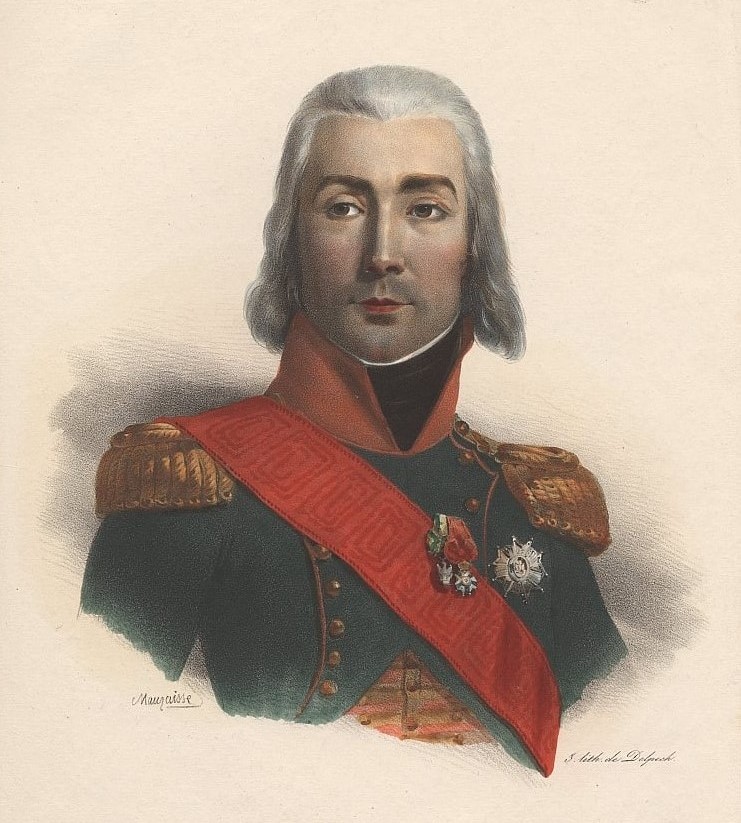
Jean-Baptiste Bessières (1768-1813), son of a Quercy surgeon who became a marshal of the First Empire, embodied the Guards cavalryman: discreet, fearless, wholly devoted to Napoleon. A volunteer in 1792, he rose through the Army of the Pyrenees then under Bonaparte in Italy, distinguishing himself among the guides — the elite corps that led the Emperor from Montenotte to Rivoli. In Egypt he was wounded before Saint-Jean-d'Acre; at Aboukir he charged alongside Murat. On 19 May 1804 he was among the first eighteen marshals; the same day Napoleon appointed him colonel general of the horse chasseurs and horse grenadiers of the Imperial Guard, a post he held until his death. At Austerlitz, Jena, Eylau and Friedland his squadrons formed the army's moral and tactical reserve. Created Duke of Istria in 1809, he commanded in Spain at Medina de Rioseco. In 1812 he accompanied the Grand Army into Russia; the Emperor husbanded his Guard cavalry as a final lever. On 1 May 1813 a cannonball killed him at Rippach in Saxony on the eve of Lützen: Napoleon wept for a companion he would liken to Bayard and Turenne. Dead at forty-five, Bessières left the image of a marshal without political ambition, a symbol of absolute loyalty to the Emperor as a person.
From Prayssac to Bonaparte’s guides — the making of a soldier without ostentation
Jean-Baptiste Bessières was born at Prayssac in the Lot on 6 August 1768. His father practised surgery; the family belonged to the minor provincial bourgeoisie, educated enough to contemplate study, close enough to the military world for a son to choose arms without betraying a predictable social path. The boy grew up in the Quercy of the 1770s-1780s, amid fairs, transhumance roads and revolutionary rumours spreading from Paris to the south-west.
In 1792 he enlisted as a volunteer in the Lot's 2nd battalion, grenadier company. The endangered nation called thousands of young men; Bessières was neither noble nor a parade commoner: a provincial who chose the uniform from conviction and liking for the trade. Early campaigns took him to the Western Pyrenees front, where the Republican army faced the Spanish in thankless operations of outposts, skirmishes and long mountain lines.
The bulletins did not yet celebrate him; promotion followed the rhythm of engagements and losses. Bessières gained a reputation for calm under fire, able to hold a platoon without needless noise. It was this profile — discipline, discretion, bravery without swagger — that inspectors noted when in 1796 he was posted to the Army of Italy.
There began the romantic part of his military legend, lived from within as a series of forced marches and short charges. Bonaparte, newly arrived commander-in-chief, formed a small corps of guides for reconnaissance, fast liaison and sometimes raids before the enemy. Bessières entered as a sub-lieutenant: he was not in the circle of star generals but among those sent forward when the road was uncertain.
From Montenotte to Rivoli, the Italian campaigns of 1796-1797 forged lasting complicity between the Corsican general and this cavalryman from the Midi. Bonaparte valued officers who executed without speeches; Bessières, for his part, found in that constantly moving army a frame where his talent — combining equestrian daring with personal restraint — could show without the court jealousy that would later gnaw so many marshals.
When Bonaparte left for Egypt, the guides followed. For Bessières, the orientalism of later paintings hides a reality of heat, dysentery and sieges: yet there he became one of the future First Consul's trusted men, the one always within reach of the imperial stirrup.
Egypt, Syria and the Mediterranean trials
The Egyptian expedition, which sailed in 1798, placed Bessières in a theatre where cavalry did not dominate sieges but where the speed of the light horse mattered as much as the infantry line. He took part in the march on Cairo, the clashes after the Battle of the Pyramids, the military administration of an occupation as spectacular as it was ephemeral on the European strategic plane.
In 1799, during the siege of Saint-Jean-d'Acre, held by the Turks aided by Sidney Smith's British fleet, French assaults were repeated against walls strengthened by European engineers in Ottoman service. Bessières was seriously wounded there: in Bonapartist legend the wound marks the price paid by the guides for an venture that would ultimately fail before Acre's walls.
On 25 July of the same year, at Aboukir, Murat led the decisive charge against the landed Turkish forces; Bessières fought at his side. The affair, sometimes presented as a mere cavalry episode, carried major psychological weight for the French army: it showed that, even cornered in the East, the armed Revolution retained a brutal capacity for battlefield initiative.
Bonaparte, returning to France for 18 Brumaire, did not take every officer; Bessières followed those who rejoined the new Consular structures. He was no man of offices; he remained the executor of elite light cavalry, whose presence reassured because it announced the possibility of a decisive thrust at the critical moment.
The years 1800-1804 alternated garrisons, inspections and preparation of the future Consular then Imperial Guard. Bessières wrote no treatises; he shaped squadrons. When the regime shifted to Empire, his place was already drawn: not a marshal of independent grand manoeuvre but the institutional pillar of the Guard cavalry — supreme reserve of the battlefield.
Marshal of 1804, colonel general of the Horse Guard
The senatus-consultum of 18 May 1804 created the Empire and, on 19 May, promoted eighteen marshals. Bessières was in that first promotion alongside names that would make Napoleonic legend — Berthier, Murat, Masséna, Davout, Lannes… His nomination surprised later historians more than contemporaries: he had not singly commanded a major pitched battle before 1804, but he embodied the living continuity of the Italian and Egyptian campaigns, the figure of the absolutely loyal soldier.
The same day Napoleon appointed him colonel general of the horse chasseurs and horse grenadiers of the Imperial Guard. The function went beyond a mere title: it made him intermediary between the Emperor and the most prestigious cavalry reserve of the French army. The Guard squadrons were not only a combat mass; they were a visible symbol, uniforms recognisable at the edge of the Austerlitz plateau as on the roads of Poland.
At Austerlitz on 2 December 1805, the Horse Guard intervened when the Russo-Austrian centre wavered. Tactical details remain debated by specialists, but collective memory holds the idea of a reserve released at the right instant, completing the enemy rout on the frozen ponds. Bessières was not Murat: he did not seek the spectacular charge for its own sake; he saw to it that the imperial reserve stayed coherent, available, feared.
The Prussian (1806) and Polish (1807) campaigns confirmed the pattern. At Jena and Auerstedt the Guard followed the breakthrough; at Eylau in February 1807, in the snow and wind of the Prusso-Polish plain, Bessières's squadrons intervened to plug breaches opened by Russian cavalry. The battle, indecisive and bloody, showed the limits of Napoleonic superiority but also the vital role of a Guard cavalry able to absorb then riposte.
At Friedland in June 1807 the decisive victory over the Russians closed the campaign. Bessières took part in the wake of the preceding months: always near the Emperor, always ready to commit the reserve when Napoleon judged it necessary. Marshals commanding independent corps sometimes envied his proximity; he answered only with service.
By late 1807 the Treaty of Tilsit froze a Europe dominated by France. Bessières, for his part, had acquired a particular aura: not that of the victor of a battle published in his name alone, but that of the silent guarantor of imperial military presence at the moment of the hammer blow.
Duke of Istria, Spain, Wagram and the Russian campaign
In 1808 Napoleon raised Bessières to Duke of Istria — a title of imperial nobility tying the marshal to an Adriatic peninsula then within the Napoleonic sphere. The duchy was not mere reward: it marked the Guard cavalryman's entry into the major-fief system while keeping him in active military functions rather than distant territorial administration.
The Spanish War, launched the same year, gave Bessières the rare chance of independent command on a major theatre. On 14 July 1808 at Medina de Rioseco he defeated General Joaquín Blake's Spanish army alongside Cuesta and La Peña, in a manoeuvre where French cavalry exploited the weaknesses of an opponent still poorly hardened to Napoleonic war. The victory, brilliant on paper, did not end peninsular pacification: guerrilla, sieges and Iberian coalitions would turn Spain into a strategic quagmire.
In 1809, during the campaign against Austria, Bessières commanded a reserve cavalry corps on the Danube theatre. At Wagram on 5 and 6 July the Guard and cavalry masses supported the colossal effort against Archduke Charles. Bessières coordinated brigades that had to hold under Austrian artillery fire on the heights; the battle, bloodier than Austerlitz, confirmed French superiority at enormous cost.
The following months returned the marshal to imperial proximity. He was no man of Vienna chancelleries or dynastic negotiation: he remained colonel general of the Horse Guard, present at reviews, parades, moments when the Emperor wished to show Europe the bearing of his cuirassiers and mounted grenadiers.
In 1812 the Grand Army set out for Russia. Bessières led the Imperial Guard cavalry — chasseurs, grenadiers, Mamelukes, Polish Guard — in an advance that from June to September seemed irresistible until the taking of Moscow. Napoleon husbanded this reserve: he knew a premature splurge of the Horse Guard could irreplaceably cost cadres and mounts before the decisive battle that on paper should close the campaign.
The retreat turned the Guard into a prestigious rear guard, less exposed than some line divisions but tested by cold and marches. Bessières brought back what remained of his squadrons, silent witness to the collapse of an army cavalry alone could not save. He returned to Central Europe with the image of a marshal morally intact but aware that the golden age of easy victories was over.
Rippach, 1 May 1813 — death of the « Bayard of the Guard »
In spring 1813 Napoleon, returned from Russia, tried to rebuild a Grand Army from young recruits, tested veterans and Rhenish contingents. The German campaign opened in uncertainty: the Coalition had learned from past failures; Blücher and Prussian generals now mixed Russian tenacity with renewed tactics.
On 1 May, the eve of the Battle of Lützen, Bessières was near the village of Rippach in Saxony, a few kilometres south-east of Leipzig. He was reconnoitring or moving between posts — accounts vary on detail — when a cannonball, probably fired by a Russian or Prussian battery at range, struck him in the chest. Death was instant. The marshal was forty-five.
Word reached Napoleon at the bivouac. Witnesses and memorialists — several willingly embellishing — claim the Emperor, little given to public tears, broke down weeping. He dictated to Berthier a phrase that became famous: « Bessières lived like Bayard, he died like Turenne. » The comparison with the knight without fear or reproach and with the marshal killed by a cannonball before Sasbach in 1675 summed both the chivalric ideal and the mute brutality of modern war.
The Grand Army bulletin announced the loss in solemn terms; Guard officers went into mourning. In the following days Lützen gave Napoleon a tactical victory without strategic decisiveness; Bautzen confirmed French fighting spirit; yet Bessières's death deprived the Emperor of an irreplaceable link between himself and the reserve cavalry.
Historians often stress the contrast between Bessières and other marshals more political or more enterprising territorially. He had sought neither a kingdom nor spectacular fortune: he had wished to be the Emperor's trusted officer. His disappearance at the very opening of the 1813 campaign symbolises for romantic posterity the beginning of the end — the moment when the elite of the Italian and Egyptian wars is extinguished cannonball by cannonball on the Saxon roads, before Leipzig and the fall of Paris.
Discover other characters
Napoleon Bonaparte
Emperor of the French
Joachim Murat
Marshal of the Empire, King of Naples
Louis-Alexandre Berthier
Marshal of the Empire, Prince of Neuchâtel and of Wagram, major-general of the Grande Armée (1805–1814)
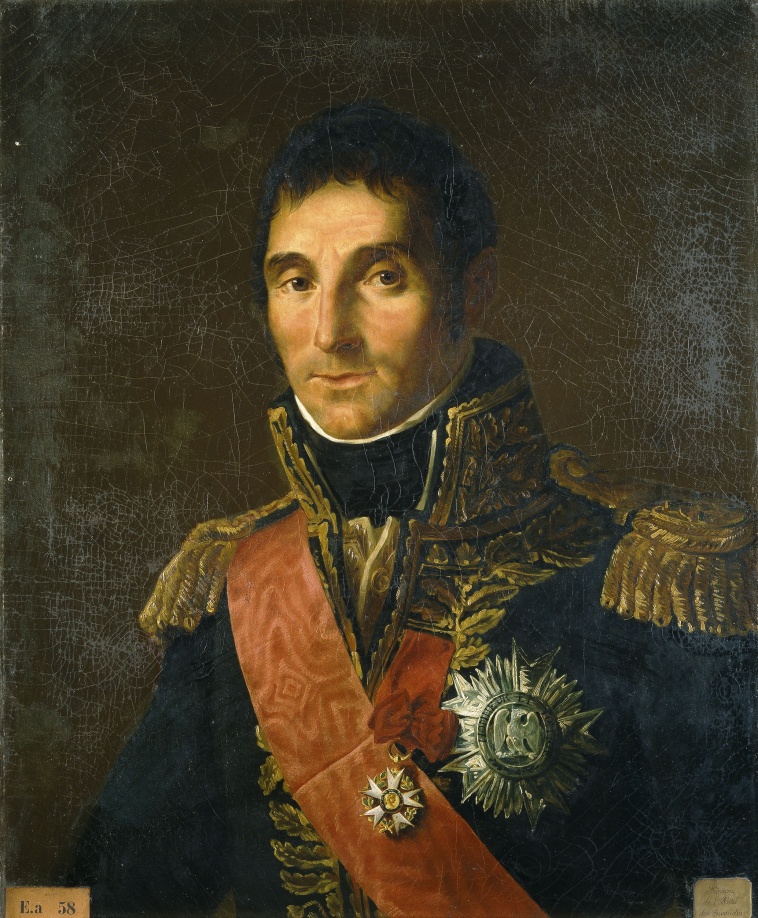
André Masséna
Marshal of the Empire, Prince of Essling
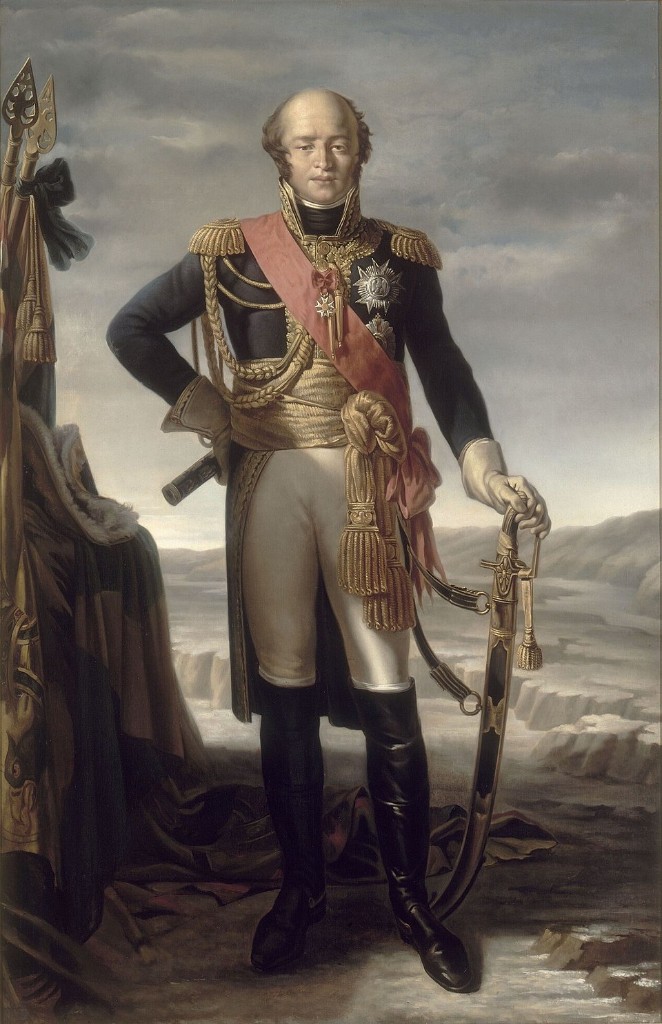
Louis-Nicolas Davout
Marshal of the Empire, Prince of Eckmühl
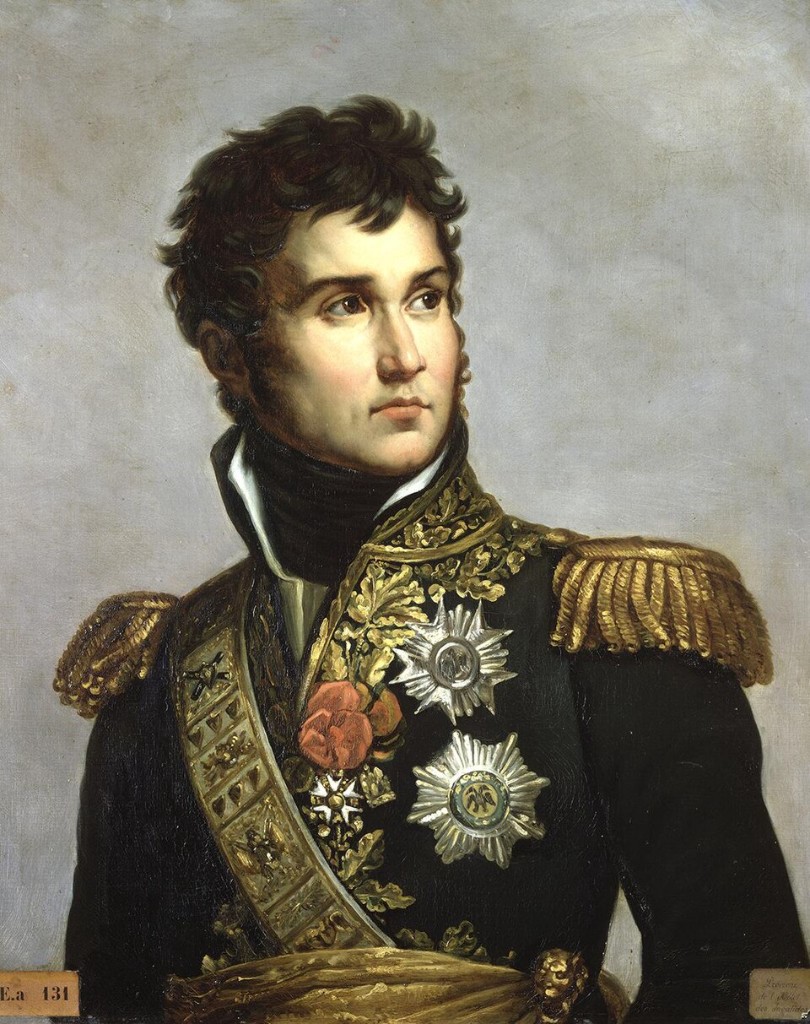
Jean Lannes
Marshal of the Empire, Duke of Montebello
Go further
Recommended books to dig deeper (affiliate links)

Napoleon the Great
Andrew Roberts · 2014
A monumental biography drawing on Napoleon’s 33,000 surviving letters, admiring but rigorous.
See on Amazon
Napoléon ou le mythe du sauveur
Jean Tulard · 1977
The book that reshaped how the man is read: how France gave itself a saviour, and what it cost.
See on Amazon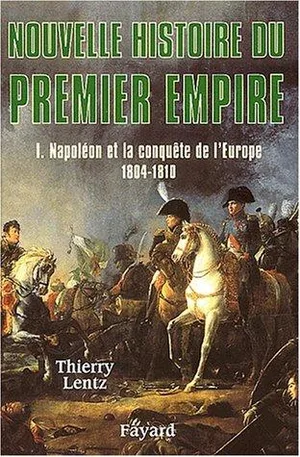
Nouvelle histoire du Premier Empire
Thierry Lentz · 2002-2010
Four reference volumes on institutions, diplomacy and collapse: the scholarly synthesis of the subject.
See on AmazonAs an Amazon Associate, this site earns from qualifying purchases.
Support the encyclopedia
Napoleon Empire is an independent project. Your contribution helps grow the content and keep the site running.
DonateSecure payment on the platform you choose.