Origins and creation under the Empire
Before the Empire, subsistence and baggage convoys followed armies in a more artisanal way, entrusted to contractors, quartermasters or local services. Napoleonic rationalisation aimed to integrate these functions into a permanent military organisation controlled by general staff.
The supply train was distinct from the artillery train: it carried neither guns nor ammunition wagons, but food, tents, administrative crates, rolling hospitals and camp equipment. It was the logistical backbone of campaigning marches.
Under the Empire train battalions were created and attached to major units. Their mission was to move supplies from base depots to troops on the move, along routes fixed by command.
This creation answered the new scale of operations: hundreds of thousands of men could no longer live solely on local requisition without an organised convoy system.
Train battalions and command
Supply train battalions comprised drivers, workers, intendants and auxiliary personnel. They did not fight in the front line, but their presence conditioned an army's ability to sustain several days' march from its bases.
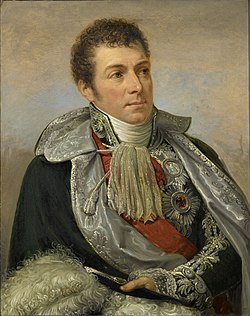
Major General Berthier and the Imperial staff played a central role in movement orders: route instructions, passage priorities, coordination between combat columns and baggage columns. Without this discipline armies clogged the roads.
Each army corps carried part of the train; large convoys often followed a day's march behind, protected by cavalry or light infantry detachments. Separation between advance troops and baggage was a constant source of vulnerability.
Rolling hospitals — wagons, fitted vans — formed an integral part of the supply train. They evacuated lightly wounded and moved surgical material rearward, in liaison with the medical service.
Uniform and daily missions
Train men wore auxiliary service uniform, often plain, distinct from line infantry. Their equipment included wagon repair tools, harness, whips and light arms for convoy defence.
Daily, the train loaded and unloaded food — biscuit, salt meat, forage for horses — organised halts and watched losses from marauding or pillage. A poorly guarded convoy could be emptied in one night.
Train officers negotiated with intendants, prefects and local authorities to supplement stocks. In foreign territory legal requisition and uncontrolled pillage coexisted; staff tried to discipline the system, not always successfully.
Wagram and the Russian campaign
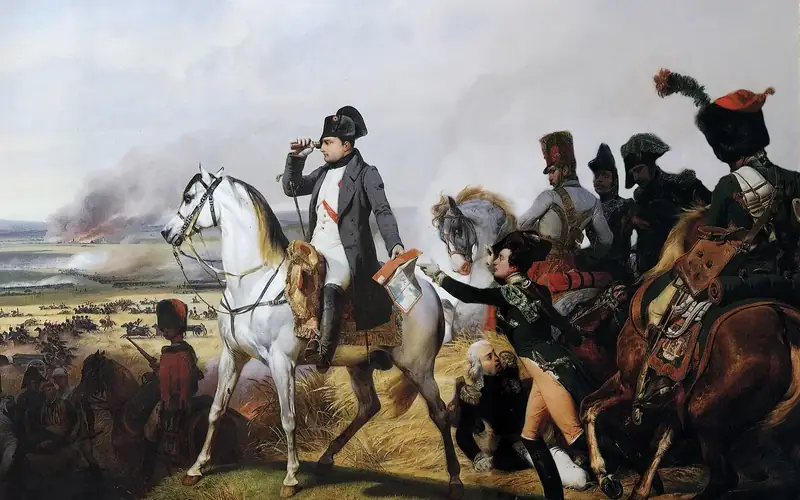
At Wagram (5-6 July 1809) the French army committed massive strength on a wide front; the supply train had to feed columns exhausted by two days of fighting. Proximity of Austrian depots eased supply, but coordination remained a challenge.
The 1812 Russian campaign tested the supply train to the extreme. Hundreds of kilometres of road, burned towns, hostile population: convoys lengthened, slowed and became targets for partisans and Cossacks.
Movement orders from Berthier and staff had to reconcile battle corps speed with baggage slowness. In practice disconnection between advance guard and convoys worsened famine and equipment breakdown during the retreat.
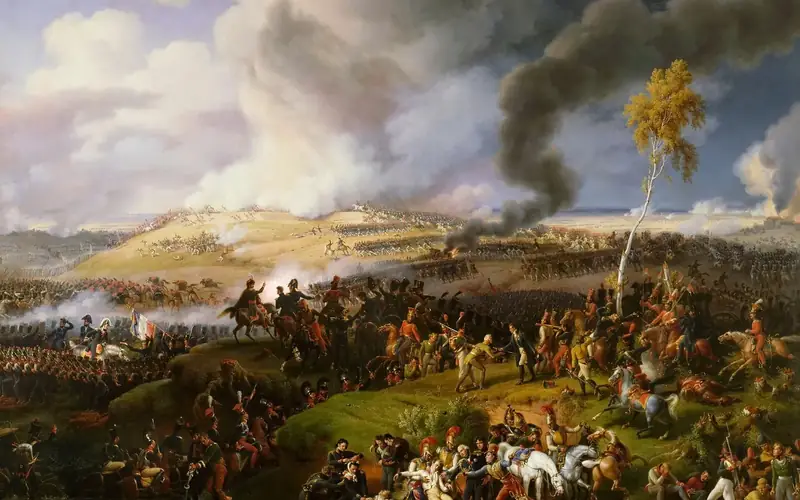
At Borodino (7 September 1812) troops fought far from depots; the train struggled to keep up. After Moscow and especially during the retreat, collapse of equipages left thousands of wounded without evacuation and soldiers without food.
Rolling hospitals, overwhelmed, sometimes abandoned patients beside the roads. This logistical catastrophe is one of the least glorious yet most decisive faces of the Grande Armée's fall.
Legacy and lessons
The Napoleonic supply train shows that large-scale war rests on supply columns as much as attack columns. Wagram's successes also depended on functioning convoy lines; 1812's failure, on their rupture.
For Empire Napoléon this entry links Berthier and staff to the reality of baggage, food and rolling hospitals — the indispensable reverse of battlefield glory.