A state born at Tilsit
Napoleon never proclaimed the restoration of Poland. Yet he needed it: the French army had been welcomed at Posen and Warsaw in the winter of 1806-1807, and the Poles had supplied whole regiments. At Tilsit he had the territories Prussia held from the second and third partitions detached and made into a duchy. This was a courtesy to Alexander I, who wanted no kingdom of Poland: the ducal title did not utter the word.
A constitution in the French manner
The crown went to Frederick Augustus I, King of Saxony, grandson of Augustus III and thus heir to a dynasty that had reigned at Kraków. Dresden, where he resided, was the place of the constitution, signed on 22 July 1807. It abolished serfdom, proclaimed equality before the law and introduced a Civil Code adapted from the Code Napoléon, in force since 1 May 1808. A governing commission chaired by Stanisław Małachowski administered the country from Warsaw.
1809: enlargement
When Austria attacked in April 1809, Józef Poniatowski, who commanded the duchy's army, held his ground at Raszyn and occupied part of Galicia. The Treaty of Schönbrunn on 14 October rewarded the effort: the duchy grew from about 101,500 to 155,000 km², and from 2.6 to 4.3 million inhabitants.
A client of the Empire
The duchy's freedom was nevertheless limited: its foreign policy depended on Paris, and it kept an army it paid for itself, which the Emperor used in Spain and then in Russia. When the Russian army entered at the start of 1813, it no longer had a sovereign free to choose, and Poniatowski, still commanding its forces, died at Leipzig on 19 October. The Congress of Vienna divided what remained in 1815: a Kingdom of Poland joined to Russia, a Prussian Grand Duchy of Posen, and the Free City of Kraków. Napoleon's memory in Poland owes a great deal to these eight years.
See also
Go further
Recommended books to dig deeper (affiliate links)
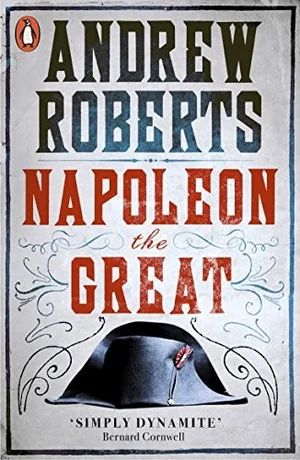
Napoleon the Great
Andrew Roberts · 2014
A monumental biography drawing on Napoleon’s 33,000 surviving letters, admiring but rigorous.
See on Amazon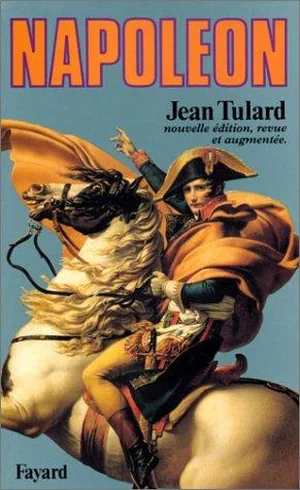
Napoléon ou le mythe du sauveur
Jean Tulard · 1977
The book that reshaped how the man is read: how France gave itself a saviour, and what it cost.
See on Amazon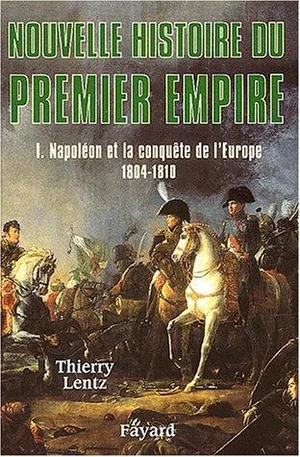
Nouvelle histoire du Premier Empire
Thierry Lentz · 2002-2010
Four reference volumes on institutions, diplomacy and collapse: the scholarly synthesis of the subject.
See on AmazonAs an Amazon Associate, this site earns from qualifying purchases.
Support the encyclopedia
Napoleon Empire is an independent project. Your contribution helps grow the content and keep the site running.
DonateSecure payment on the platform you choose.