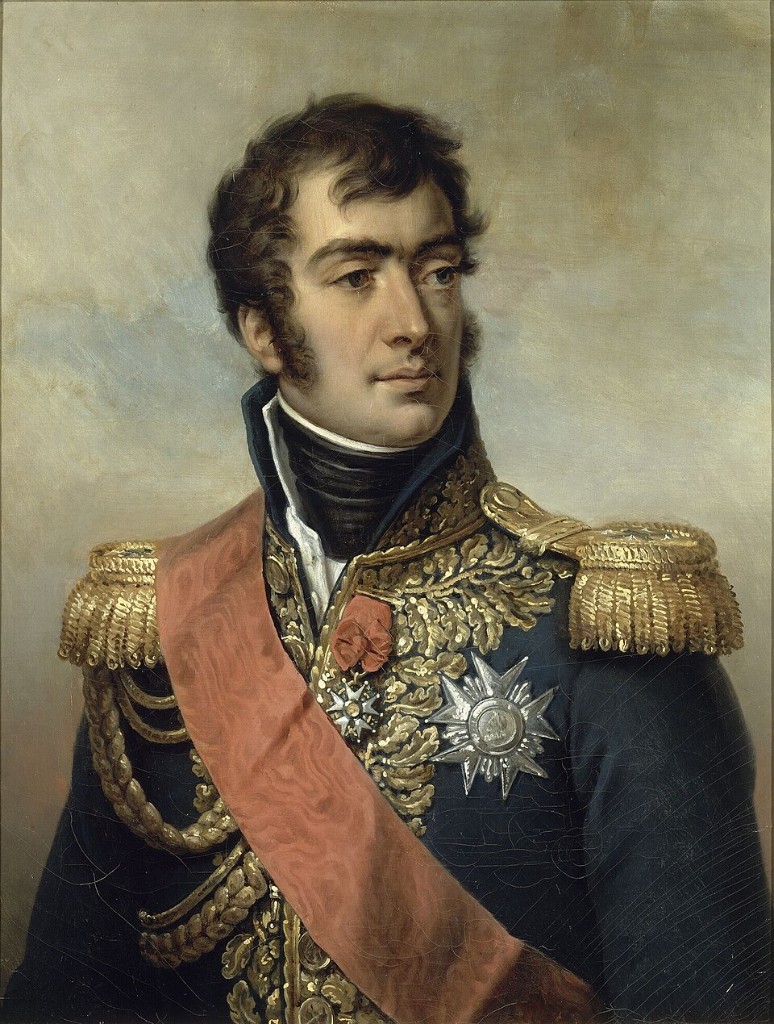
Auguste Frédéric Louis Viesse de Marmont (1774-1852), Duke of Ragusa and Marshal of the Empire, compresses like few others the passage from Revolutionary companionship to the imperial machine, then to lasting opprobrium. Son of minor Burgundian nobility, he entered the Châlons artillery school and met Bonaparte at the siege of Toulon: the Corsican general chose him as aide-de-camp, a role he kept through Italy, Egypt and 18 Brumaire. At Marengo, his reserve artillery, brought forward under fire, helped reverse the battle that saved the Consulate. The following years cast him onto the Dalmatian coast: as governor-general he pacified, built, negotiated with local notables and British squadrons cruising the Adriatic; the title of Duke of Ragusa, then the baton of July 1809, crowned the career of a soldier-administrator more than of a winner in set-piece battles. The Spanish war changed the terms: commanding the Army of Portugal, he faced Wellington in campaigns of exhaustion where logistics, guerrillas and terrain handicapped the French; on 22 July 1812 at the Arapiles, an ill-synchronised flank manoeuvre and a wound that felled him opened a gap the enemy exploited mercilessly. In 1814, while Napoleon fought in Champagne, Marmont commanded a corps near Paris: in the night of 3-4 April he moved some twelve thousand men into the Allied camp, depriving the Emperor of a critical reserve and hastening the capital's fall. Napoleon's reported words — Marmont alone had betrayed him — and the popular verb raguser fixed for generations the image of the perjured marshal, beyond the nuances his Memoirs would seek. Peer of France, Bourbon servant, Governor of Paris in 1830, exiled after the Three Glorious Days, he died in Venice in 1852 watching the Napoleonic cult from afar. Archives and military historiography now allow his path to be read as that of a loyal technician turned isolated decision-maker in strategic collapse, without reducing the 1814 controversy to a closed equation.
Châtillon, Toulon and the making of the First Consul
Auguste Marmont was born at Châtillon-sur-Seine on 20 July 1774, into a family of provincial nobility modest enough that a military future depended more on merit than on connections. He entered the Châlons artillery school in 1792, as the Revolution redistributed ranks and responsibilities: artillery, a technical and costly arm, drew methodical minds rather than drawing-room courtiers.
The siege of Toulon in December 1793 is the biographical pivot. Bonaparte, appointed to command the republican artillery, found in Marmont a lieutenant able to execute complex fire missions, organise batteries and hold crews under fire from Anglo-Provençal fortifications. The city's capture raised the young Corsican general's prestige; taking Marmont as aide-de-camp bound a daily proximity — orders, maps, night moves, camp confidences — few officers would know to that degree.
The Italian (1796-1797) and Egyptian (1798-1799) campaigns extended this schooling in direct contact with Bonapartist strategic thought. Marmont transcribed, relayed, sometimes tempered; he saw victories at Lodi or the Pyramids, the crises of Abukir, the tense return from Fructidor to Brumaire. On 18 Brumaire Year VIII he was in Paris among the officers supporting the coup: loyalty was not only political but personal, built on years of shared danger.
Under the Consulate the promotion curve steepened. Marmont was not yet the imperial marshal he would become; he was the trusted man for artillery, inspections, delicate missions requiring both the language of divisional generals and that of the First Consul. Salons reported rare signs of affection from Bonaparte towards « his » Auguste — anecdotes to treat with the caution of second-hand testimony, but reflecting an exception in Napoleonic hierarchical relations.
On 14 June 1800 at Marengo the French army seemed beaten: Mélas had driven the troops back, defeat looked sealed. Desaix's arrival and the last-chance manoeuvre opened a breach; Marmont, commanding the reserve artillery, brought his guns forward at the double over ground still swept by Austrian fire. Roundshot at close range shredded the enemy columns as Kellermann's cavalry and Desaix's infantry — the latter killed in the assault — completed the reversal. Historians still debate each arm's exact share in the victory, but contemporaries credited Marmont's artillery with a role in the swing that founded the Consulate's military legitimacy.
Dalmatia, the baton and the Duke of Ragusa
After Marengo, Marmont left the exclusive sphere of the First Consul's military cabinet for commands mixing civil administration and naval presence. The Dalmatian coast, broken into ports, islands and mountain roads, became his theatre: he had to frame local militias, negotiate with Venetian or Slavic notables, contain British incursions from the sea while feeding operations further north.
In 1806, general command of Dalmatia gave him a mission of pacification and modernisation: roads, bridges, stores, military justice, relations with civil authorities improvised under occupation. War Ministry reports stressed regular accounts as much as limited tactical successes: Marmont appeared as a long-term organiser, aware that the Adriatic empire held as much by the engineer as by the sabre.
The War of the Fifth Coalition folded these forces into a wider geography. Marmont conducted operations in liaison with the main army; after Wagram, on 12 July 1809, he received the marshal's baton — a promotion that sometimes shocked older titans of the marshalate, but which Napoleon justified by combining Dalmatian services with the battlefield. The title of Duke of Ragusa, tied to the city of Ragusa (Dubrovnik), symbolically anchored his authority on a maritime front where trade, diplomacy and war intersected.
The years 1809-1811 were no rest: inspections, garrison reorganisation, endless correspondence with Paris and with Napoleonic allied fleets. Marmont had to arbitrate between imperial fiscal demands and local population fatigue, between purges of suspects and the need not to break elites still holding municipalities. This administrative experience distinguished him from purely « battle » marshals and paradoxically prepared his future Iberian mission, where one wins not only skirmishes but weeks of supply.
Historians of the Empire stress the contrast between the Adriatic image — relative order, planning — and the Spanish quagmire awaiting him: Marmont left a closed sea for a continental plateau where Wellington, guerrillas and Portuguese insurrection would twist the logic of Napoleonic campaigns. Transfer to the Army of Portugal in 1811 thus marked a change of scenery as much as an operational promotion; the marshal brought meticulous staff habits, but the theatre would demand other improvisations.
Army of Portugal, Wellington and the Arapiles
In 1811 Marmont succeeded Masséna at the head of the Army of Portugal, a heterogeneous force caught between Anglo-Portuguese lines, Castilian bands and Madrid's impossible demands. The mission was to hold an immense belt with insufficient strength, convoys harassed, hospitals overwhelmed: each local victory bought a few weeks, each retreat cost prestige.
The manoeuvres of spring and summer 1812 pitted two elite staffs. Wellington, a patient observer, waited for the mistake; Marmont tried to cut British lines of retreat towards Ciudad Rodrigo and Almeida by extending his left wing on the heights of the Arapiles near Salamanca. For several days the two armies sparred without decisive engagement, in crushing heat and dust that hampered tactical vision.
On 22 July the configuration shifted. French divisions stretched to follow the perceived Allied movement; a dangerous gap opened between two corps. Wellington, posted on a height, spotted the flaw and launched a general attack. Almost simultaneously a shell fragment shattered Marmont's left forearm; the marshal collapsed unconscious. General Bonnet, called to replace him, was wounded shortly after: the chain of command broke at the worst moment. The French centre gave way; losses exceeded ten thousand men in a very short time.
Salamanca — or the Battle of the Arapiles — remains one of Wellington's greatest victories in the peninsula; it forced the French temporarily to yield Madrid and redistributed strategic credit to the Coalition. For Marmont the physical wound — long convalescence, empty sleeve beneath the uniform — came with moral damage: critics in the army and Allied press accused him of stretching his dispositions with reckless audacity.
In his Memoirs Marmont shifted some blame to Clausel's slowness in supporting the move quickly enough; modern specialists stress rather the combination of a small geometric error and a biographical stroke of fate — the commander's wound — amplified by the quality of the enemy riposte. Either way, public image of the marshal shifted: Marengo's protégé became, in part of opinion, the general who had « given » Salamanca to Wellington.
April 1814 — Capitulation, raguser and the fall of the Empire
In 1814 France was invaded on several axes. Napoleon, from Fontainebleau, attempted a last series of masterstrokes in Champagne; the Coalition, in superior numbers, closed the net. Marmont commanded VI Corps on the southern approaches to Paris: his mission was to delay the inevitable, preserve forces able to negotiate capitulation with relative honour rather than massacre before the fortifications.
The marshals were exhausted; cabinet debates mixed military honour with political calculations about the imperial dynasty's survival. In this climate Marmont engaged secret talks with Schwarzenberg's emissaries and agents of the future Louis XVIII. The exact chronology of contacts remains debated, but the night of 3-4 April saw the passage of about twelve thousand men — artillery included — to the Allied lines, without Napoleon or several peers having been fully informed.
The strategic effect was immediate: the Coalition gained a decisive bridgehead towards Paris; the Emperor lost a reserve he still counted on deploying. According to testimony recorded by Caulaincourt, Napoleon, when informed, said Marmont alone had betrayed him — a phrase that sums personal wound as much as political judgment. Abdication followed in the coming days; the verb raguser, an ironic derivative of the title Duke of Ragusa, circulated in speech to mean betray or surrender without loyalty — popular usage not always recorded in academic dictionaries, but showing the emotional charge of the event.
Marmont, in later writings, presented the operation as a military necessity: avoid a bloody siege of the capital, save the army, prepare the monarchical transition. His enemies saw premeditated treason, even a personal deal with the Bourbons. Historians still divide: no consensus separates « defensive » realism from breach of the officer's oath to the Emperor in person.
What is established is symbolic weight: for Bonapartist memory Marmont became the marshal who opened the door; for royalists a useful servant never fully cleansed of his imperial past. This duality followed the man to his death and fuelled controversy around his Memoirs, where every sentence on 1814 is read as plea or disguised confession.
Restoration, July 1830, exile and Memoirs
After the First Restoration Marmont remained in Bourbon frameworks: peer of France, governor, inspector, the useful but unloved marshal. His Napoleonic past — too close to the founder — irked ultras; his 1814 betrayal prevented imperial nostalgics from fully readmitting him to the military pantheon. He navigated between two mistrusts, partly explaining a relatively narrow political career despite his titles.
During the Hundred Days Marmont accompanied Louis XVIII in flight to Ghent: he did not swing to the returned Emperor, unlike Ney whose tragic fate would always contrast with his. After Waterloo he kept honorary offices; Charles X gave him military governance of Paris. In July 1830, facing barricades, Marmont hesitated then ordered troops to withdraw to limit bloodshed — a decision that earned him neither revolutionary glory nor indulgence from strict royalists.
Exile began: Prague, Vienna, London, Italian cities — a gentleman's wandering ruined by reputation more than by purse. He watched from afar the return of Napoleon's ashes to the Invalides in 1840, an event that reinforced for French opinion the contrast between imperial apotheosis and his own stained figure. The eight volumes of Memoirs, published after his death, multiplied defensive chapters on Spain, Salamanca, 1814: polished prose could not erase judgment already crystallised.
Marmont died in Venice on 22 March 1852, almost forgotten by the wider public. Under Napoleon III his remains were repatriated to Châtillon-sur-Seine, his native soil as he had requested for his last resting place. The epitaph insists on titles — Marshal of France, Duke of Ragusa — and avoids words that would spark debate: betrayal, Salamanca, Wellington. Recent historians place the man within the continuity of 1814's logics — logistical collapse, exhaustion of military elites, parallel negotiations — without whitewashing the brutal form of VI Corps' crossing.
The record of a marshal like Marmont thus reminds us that the Napoleonic epic is read not only through the heroic arches of Austerlitz or Jena: it also passes through back-room decisions, April nights and memoirs that vainly seek to renegotiate with History. Military and diplomatic sources from the early nineteenth century allow some episodes of 1814 to be traced almost hour by hour; they bring no simple moral answer to the question legend still poses: treason or ultimate realism?
Discover other characters
Napoleon Bonaparte
Emperor of the French
Arthur Wellesley, 1st Duke of Wellington
British general, victor of Waterloo, Prime Minister
Louis-Nicolas Davout
Marshal of the Empire, Prince of Eckmühl
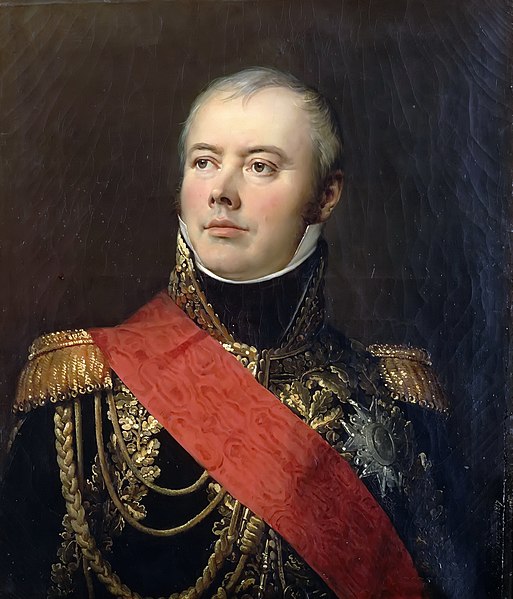
Jacques Macdonald
Marshal of the Empire, Duke of Taranto
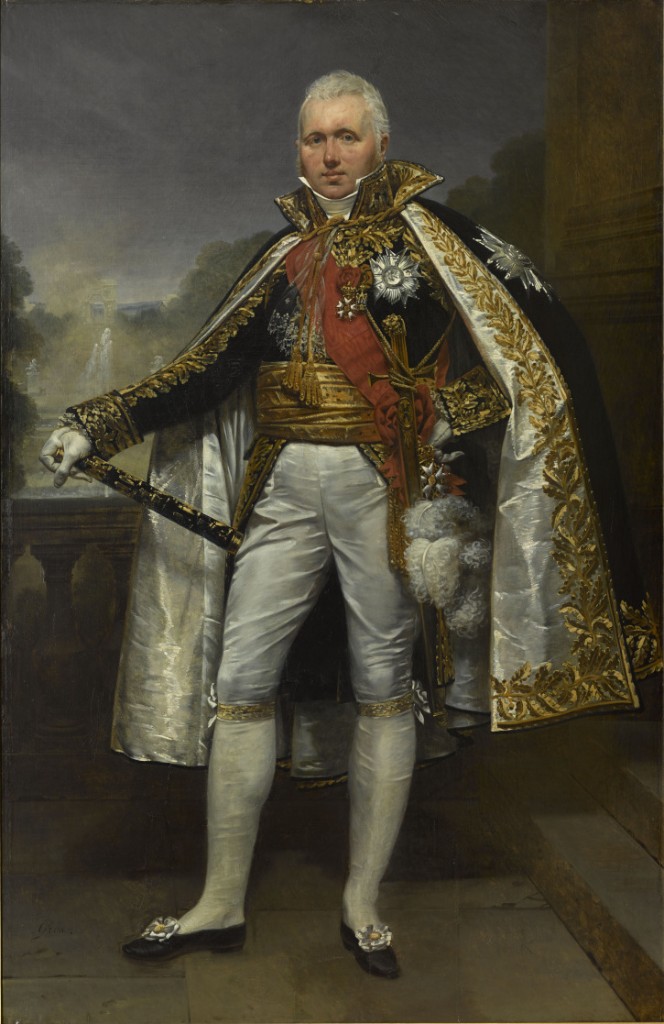
Claude Victor-Perrin
Marshal of the Empire, Duke of Bellune
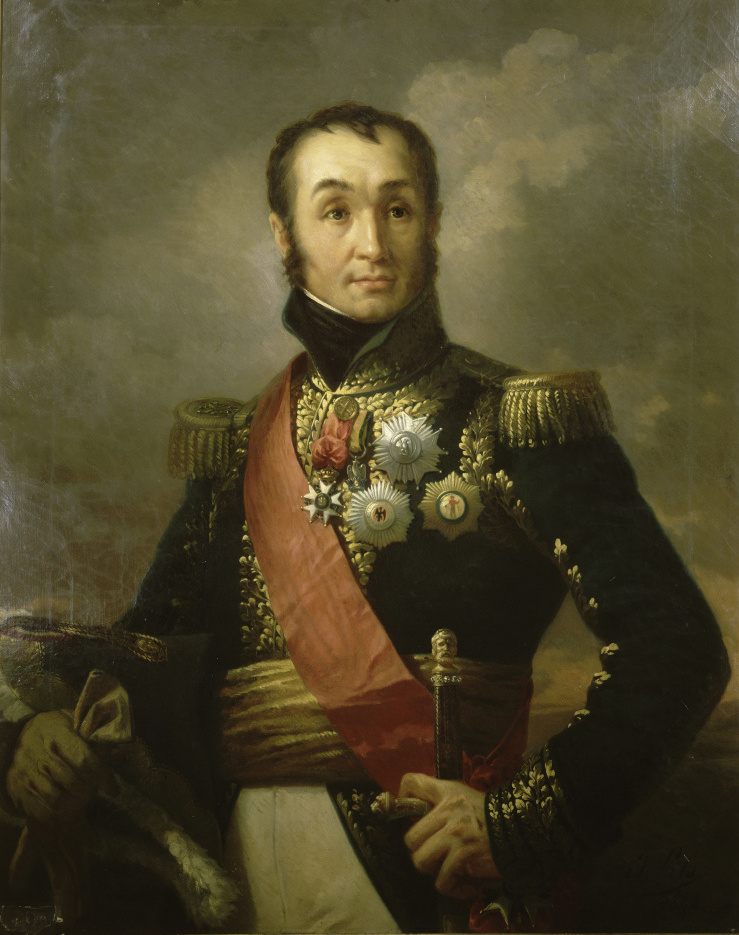
Nicolas Charles Oudinot
Marshal of the Empire, Duke of Reggio
Go further
Recommended books to dig deeper (affiliate links)

Napoleon the Great
Andrew Roberts · 2014
A monumental biography drawing on Napoleon’s 33,000 surviving letters, admiring but rigorous.
See on Amazon
Napoléon ou le mythe du sauveur
Jean Tulard · 1977
The book that reshaped how the man is read: how France gave itself a saviour, and what it cost.
See on Amazon
Nouvelle histoire du Premier Empire
Thierry Lentz · 2002-2010
Four reference volumes on institutions, diplomacy and collapse: the scholarly synthesis of the subject.
See on AmazonAs an Amazon Associate, this site earns from qualifying purchases.
Support the encyclopedia
Napoleon Empire is an independent project. Your contribution helps grow the content and keep the site running.
DonateSecure payment on the platform you choose.