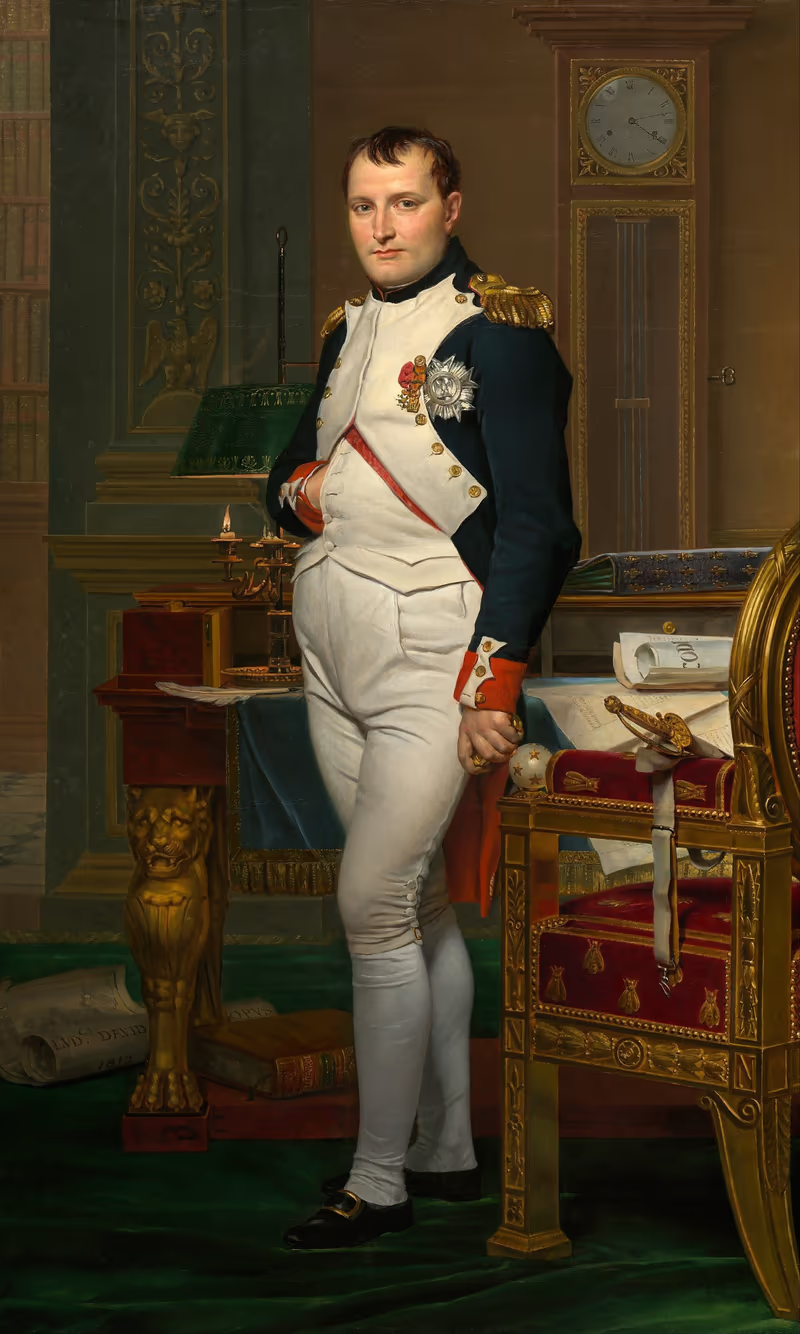
He was born the subject of a French king who had just bought his island; he died a British prisoner on a rock in the South Atlantic. In between, Napoleon Bonaparte governed France for fifteen years, redrew the map of Europe, wrote a civil code that hundreds of millions of people still live under, and left behind battlefields whose dead are counted in millions. This biography follows the thread year by year, giving the figures where they are known and the ranges where the sources disagree.
An island that had just changed hands
In May 1768, by the Treaty of Versailles, the Republic of Genoa handed the administration of Corsica to France. Pascal Paoli's Corsicans refused. On 8 May 1769 they were crushed at Ponte-Novu. Three months later, on 15 August 1769, in a house on the rue Malerba in Ajaccio, Letizia Ramolino gave birth to a boy named Napoleone after an uncle who had died two years earlier. He was baptised privately at home and formally only on 21 July 1771, in Ajaccio cathedral.
His father, Carlo Buonaparte — Charles, once frenchified — was a lawyer at the island's Conseil supérieur. The family belonged to the minor island gentry that had sat on Ajaccio's council of Elders since 1616, as Jean Tulard notes: notaries, lawyers, men of law, connected by marriage to older seigneurial families. They were not rich. Napoleon later called the family house "wretched", which is an exaggeration, but the household lived on harvests and a few rents.
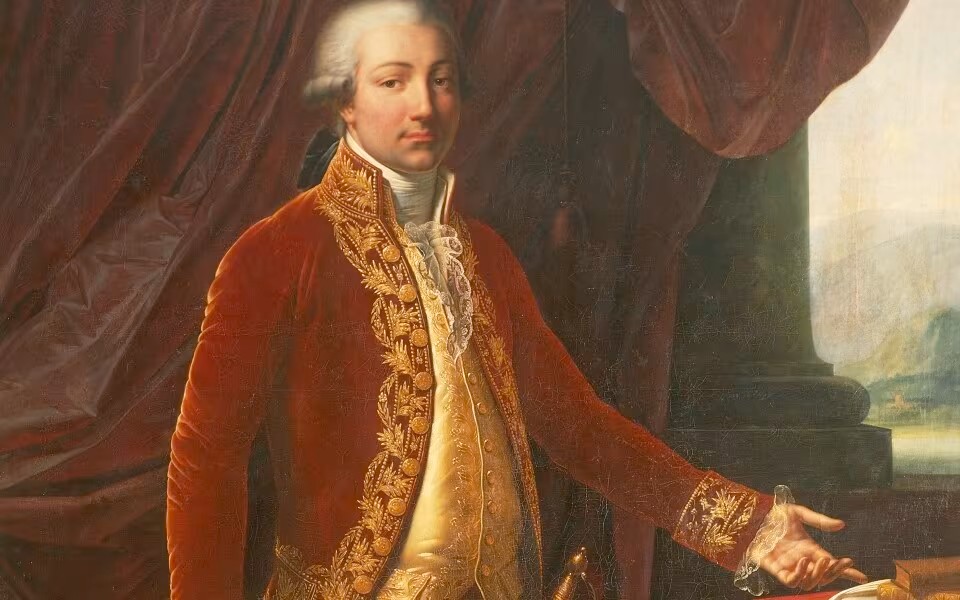
Charles played his hand well. Elected deputy for the nobility to the Corsican Estates on 8 June 1777, he travelled to Versailles in December 1778 and, through the protection of the comte de Marbeuf, governor of the island, obtained a royal scholarship for his second son. It required proof of nobility over four generations. Charles produced it. That bundle of parchments, rather than any destiny, opened the doors of a French military school to a nine-year-old Corsican.
The scholarship boy
On 1 January 1779 Joseph and Napoleon entered the college at Autun. The younger stayed three months and twenty days, long enough to learn enough French to follow lessons — until then he had spoken only a Corsican dialect. Legend has him mastering the language in three months; that is hardly credible, and he kept the accent and a shaky spelling all his life.
On 15 May 1779 he entered the royal military school at Brienne-le-Château, one of twelve colleges for the sons of the lesser nobility. He stayed five years. The accounts of that time contradict one another — the historian Jacques Godechot thought them unreliable — but they agree on two points: the pupil was average in everything except mathematics, where he shone, and he was mocked for his accent, which left him isolated. The famous snowball battle he supposedly commanded one winter belongs to legend rather than to the archives.
On 17 October 1784, aged fifteen, he left Brienne for the Royal Military School in Paris, where he devoured in ten months the mathematical treatise by Bézout that others took three years to digest. On 24 February 1785 his father died of stomach cancer at thirty-eight, leaving the family without income; Napoleon always judged his elder brother Joseph too weak to head it. In September he sat his final examination and came forty-second out of fifty-eight. On 3 November 1785, at sixteen, he joined the La Fère artillery regiment at Valence as a second lieutenant.
The Corsican lieutenant
What followed looks nothing like a model officer's career. Between 1786 and 1793 Napoleon spent more time in Corsica than with his regiment: six-month leaves renewed, late returns, long absences. He first set foot on the island again in September 1786, seven years and nine months after leaving it, and did not rejoin his garrison for another thirteen months. In between he read voraciously — Plutarch, Livy, Rousseau, Raynal — and filled notebooks.
The Revolution found him a lieutenant at Auxonne, aged nineteen. He chose his side without hesitation: the Bonapartes were for the Revolution, Paoli's followers for a Corsica under British protection. On 1 April 1792, in decidedly murky circumstances — 522 votes were counted for 492 registered electors — he had himself elected second lieutenant-colonel of the Corsican volunteers. He was in Paris on 20 June 1792 when the crowd invaded the Tuileries, and became a captain on 13 July. In February 1793 the expedition to La Maddalena, where he commanded the artillery, ended in fiasco.
The break with Paoli was brutal. On 24 May 1793 the Bonaparte house was ransacked and burned by Paoli's partisans; on 11 June the family fled the island; on the 13th it landed in France, penniless and without prospects. Napoleon was twenty-three, with a family to support and a captain's pay. On 29 July 1793, at Beaucaire, he wrote Le Souper de Beaucaire, a pro-Jacobin pamphlet in which a soldier explains to federalist merchants that they are wrong. The Convention had it printed. It was his first political soundings, and they carried.
Toulon, or the chance taken
On 28 August 1793 Toulon, held by federalists and royalists, surrendered to the British and Spanish fleets. France lost its arsenal and part of its navy there. The army sent to retake the town was commanded by Carteaux, a former painter. On 7 September his artillery commander Dommartin was wounded; the representatives on mission — including Saliceti, a fellow Corsican, and Augustin Robespierre — forced the young captain who was hanging about the sector on Carteaux.
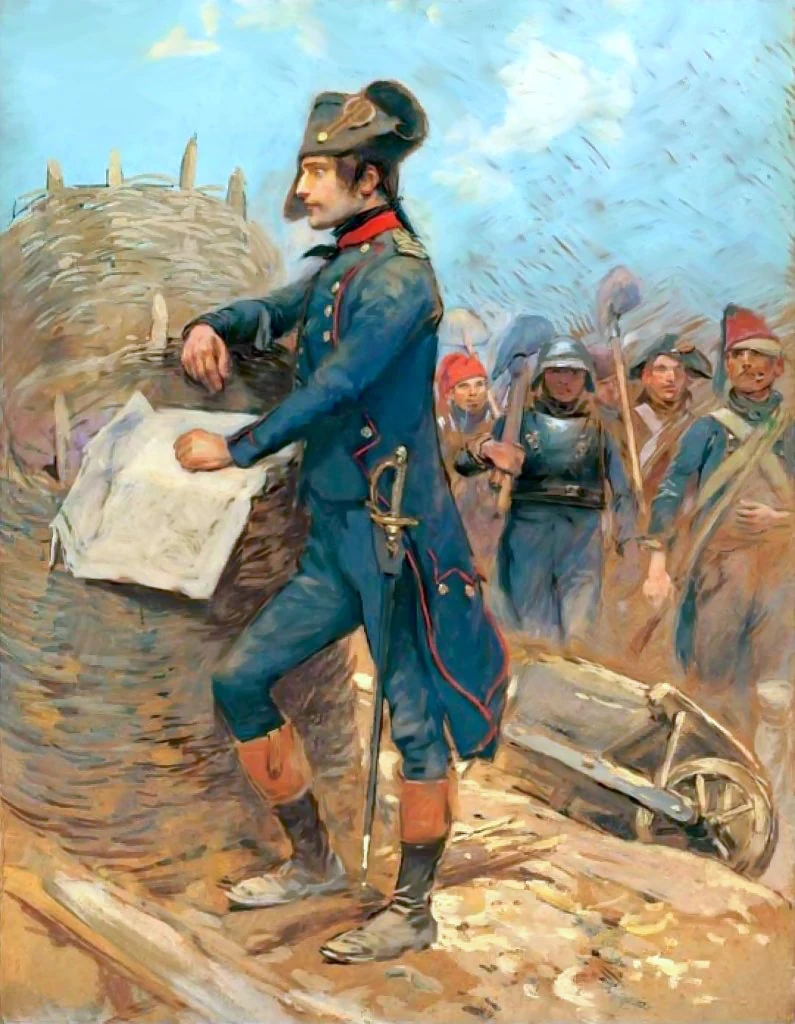
His plan was simple and correct: do not attack the town, but take the heights of the Caire peninsula to deny the roadstead to the allied fleet. Cut off from supply by sea, the defenders would have to leave. The British saw the danger and fortified the position, which they nicknamed "Little Gibraltar". Bonaparte requisitioned guns across the region, built some fifty batteries and was promoted chef de bataillon on 19 October. General Dugommier, who arrived in November, recognised the plan's value and carried it out.
On the night of 16-17 December 1793 the assault went in under rain. The hand-to-hand fighting lasted all night; Bonaparte took a spontoon thrust in the thigh. By morning the position was taken, the artillery was installed, and the British evacuated the roadstead. Toulon fell on 18 December. On the 22nd, at twenty-four, Napoleon Bonaparte was made a brigadier general.
Vendémiaire, or the second chance
Favour is a dangerous trade. On 9 Thermidor Year II (27 July 1794) Robespierre fell; on 9 August Bonaparte was arrested at Antibes, in the Fort Carré, for his friendship with Augustin Robespierre. He was released within days, but his career stalled. He was offered the Vendée, refused, reported sick, and on 15 September 1795 found himself struck off the rolls — or resigned; the sources hesitate. At twenty-six he was jobless and unpaid, and dined with friends so as not to dine alone.
On 13 Vendémiaire Year IV (5 October 1795) seven Paris sections rose against the Convention, which had just imposed the "two-thirds" decrees to guarantee a republican majority. Some 25,000 insurgents marched on the Tuileries. Barras, charged with the defence, called five generals to his side, Bonaparte among them — and it was Bonaparte who ran the operation. He sent a young squadron commander named Joachim Murat to fetch the forty guns parked at Les Sablons, placed them at the head of the streets and opened fire with grapeshot. The cannonade lasted three-quarters of an hour. Some three hundred dead were counted on the steps of Saint-Roch.
Eleven days later he was a general of division; on 25 October, commander-in-chief of the Army of the Interior. They called him "General Vendémiaire". It was at Barras's house that he met, on 15 October 1795, a Creole from Martinique, widow of a guillotined general, mother of two and deep in debt: Marie Josèphe Rose Tascher de la Pagerie, whom he renamed Joséphine.
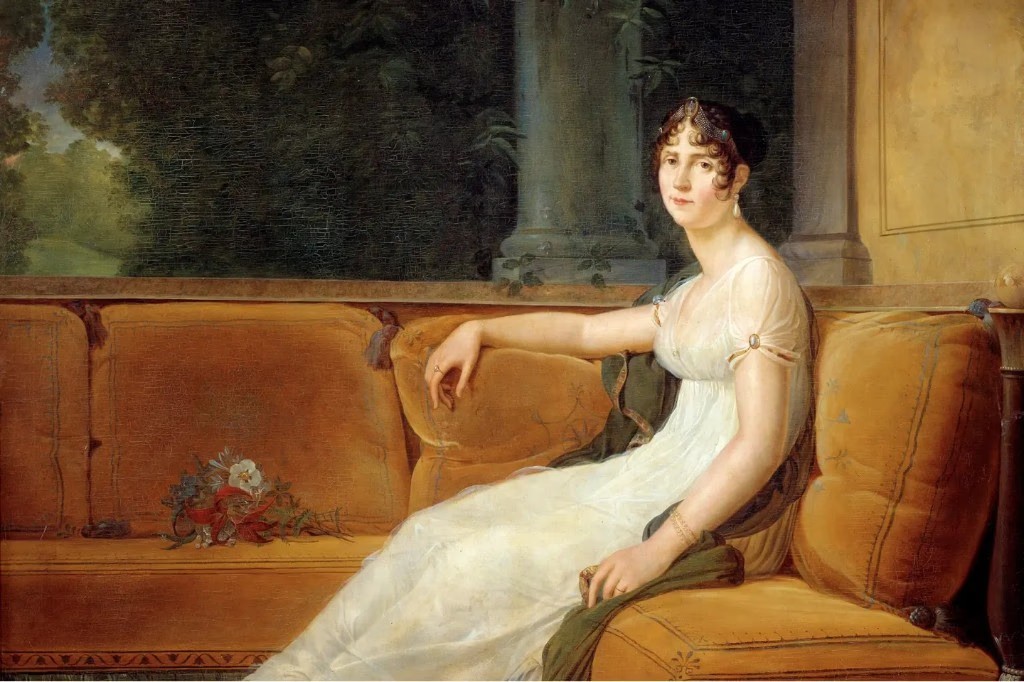
They married on 9 March 1796 before a registrar who had no authority to conduct the ceremony, with no religious rite and with Barras as witness. On the certificate both lied: she took four years off, he added eighteen months, which all but erased their six-year gap. Two days later he left for Nice. On 2 March he had been appointed commander-in-chief of the Army of Italy.
Italy invents Bonaparte
He was given a secondary front. The two great armies on the Rhine were to deliver the decisive blow; the Army of Italy, badly paid and badly shod, was there merely to keep the Austrians busy. In a single year it beat five successive Austrian armies and decided the war on its own.
The method, which he would repeat all his life, was to march fast, slip between two enemy armies and beat them one after the other before they could join. Montenotte, Millesimo and Lodi in April and May 1796; entry into Milan on 15 May; Castiglione in August; Arcole from 15 to 17 November, where he exposed himself on the causeway with a flag; Rivoli on 14 and 15 January 1797; Mantua capitulated on 2 February.
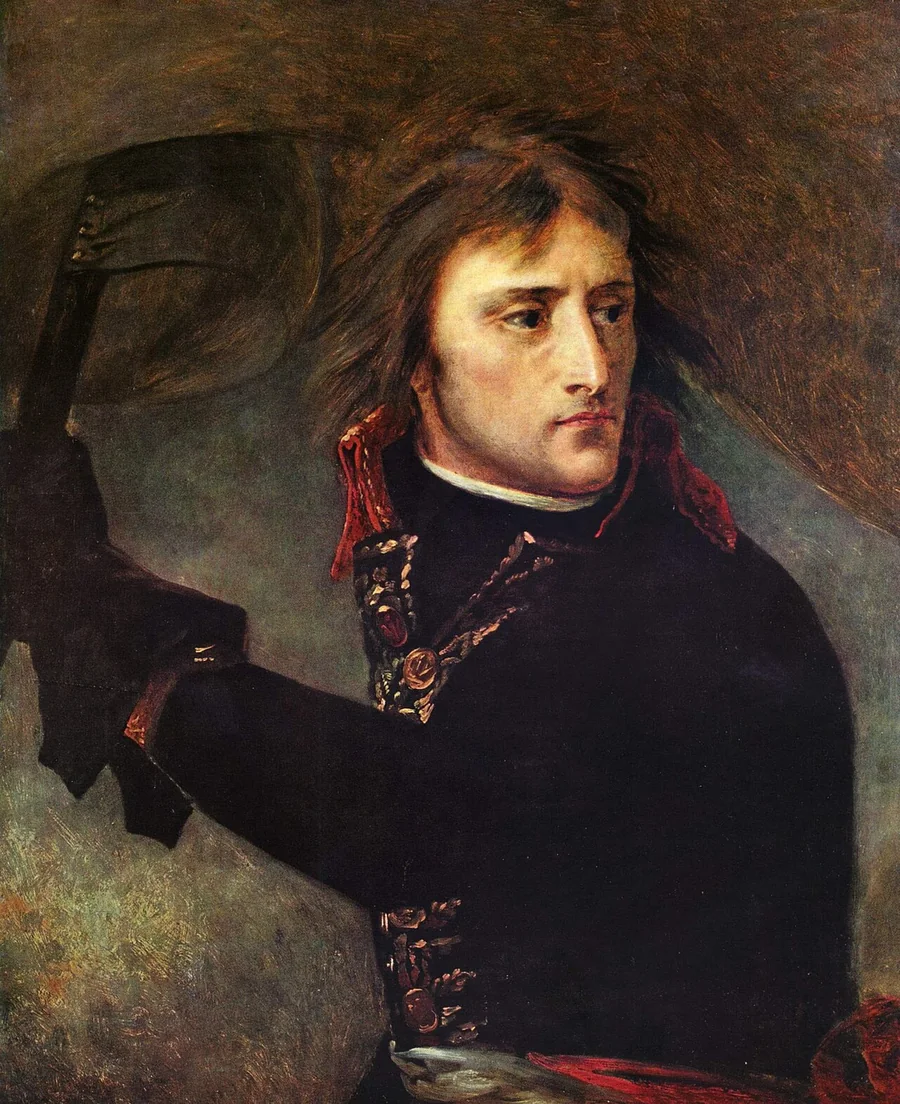
But Italy was more than a military affair. Bonaparte governed there: he signed the armistices, created sister republics, levied contributions, shipped millions and masterpieces taken from Italian collections back to Paris, and negotiated the preliminaries of Leoben and then the Treaty of Campo Formio, on 18 October 1797, himself. A general making peace in his government's place: the Directory cashed the money and let it pass.
He also manufactured his own persona. Two army newspapers, bulletins he wrote himself, proclamations that spoke to soldiers as no general had before: at thirty, the man was already a public image, and that image belonged to him.
The eastern mirage
Back in Paris a hero, elected to the Institut on 25 December 1797, he inspected the Channel coast with a landing in England in mind — and concluded it was impossible. He proposed Egypt instead: cut the route to India, plant France in the eastern Mediterranean. The Directory agreed on 5 March 1798, only too pleased to send an over-popular general far away.
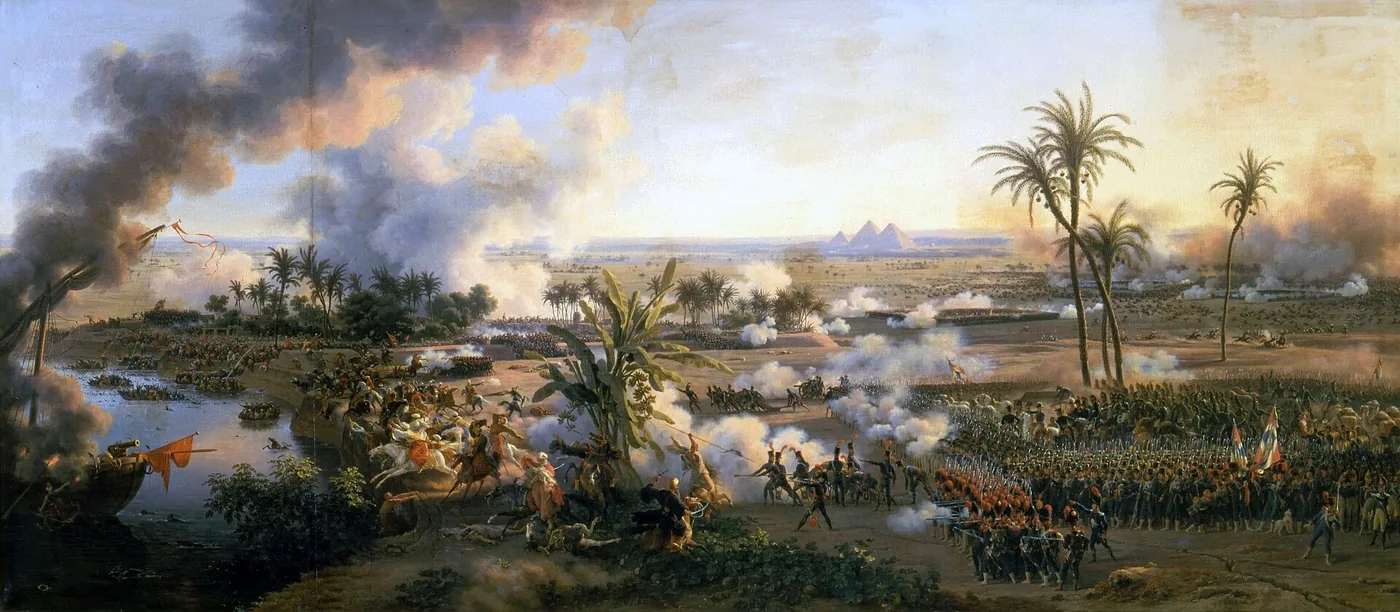
The fleet sailed from Toulon on 19 May 1798 with the Army of the Orient and a commission of scholars. Malta fell on 10 and 11 June, Alexandria on 1 and 2 July, the Mamluks were beaten at Shubra Khit on the 13th and at the Pyramids on the 21st. Cairo fell on 24 July. Eleven days after the landing everything changed: on 1 and 2 August, at Aboukir, Nelson destroyed the French fleet. The army was a prisoner of its own conquest.
The scholarly side of the expedition endured. The Institut d'Égypte was founded in Cairo on 22 August 1798, the Rosetta Stone was unearthed in July 1799, and the monumental Description de l'Égypte appeared between 1809 and 1829. Modern Egyptology was born there — Champollion would decipher the hieroglyphs from a copy of the Rosetta inscription.
The military side is darker. The Cairo revolt of 21 October 1798 was put down in blood. In Syria, Jaffa was stormed and sacked on 7 March 1799: Bonaparte had some 2,500 to 3,000 Ottoman prisoners executed, shot or knifed for want of ammunition. Plague thinned the ranks. The siege of Acre, begun on 19 March, was lifted on 17 May with nothing to show for it. On 25 July a last victory at Aboukir saved appearances.
On 23 August 1799 Bonaparte boarded the frigate La Muiron, leaving command to Kléber, who learned of his departure from a letter. He landed at Saint-Raphaël on 9 October. In military law this is called abandoning your army; in the France of 1799 it was called arriving at exactly the right moment. Kléber was assassinated in Cairo on 14 June 1800 and his successor Menou capitulated on 31 August 1801.
Brumaire: the Republic confiscated
The Directory was finished: ruined finances, renewed war, coup after coup. Sieyès, one of the directors, wanted a new constitution and was looking for a sword. Bonaparte would do, he thought.
On 18 Brumaire Year VIII (9 November 1799), on the pretext of a Jacobin plot, the assemblies were moved to Saint-Cloud and Bonaparte was given command of the troops in Paris. The next day almost everything went wrong. Before the Council of Five Hundred his speech was confused, the deputies jeered, cries of dictatorship went up, there was talk of outlawing him. It was his brother Lucien, president of the chamber, who saved the day: he stalled the vote, went outside, told the soldiers that deputies had tried to stab the general, and sent Murat's grenadiers into the hall. A parliamentary coup became a military one.
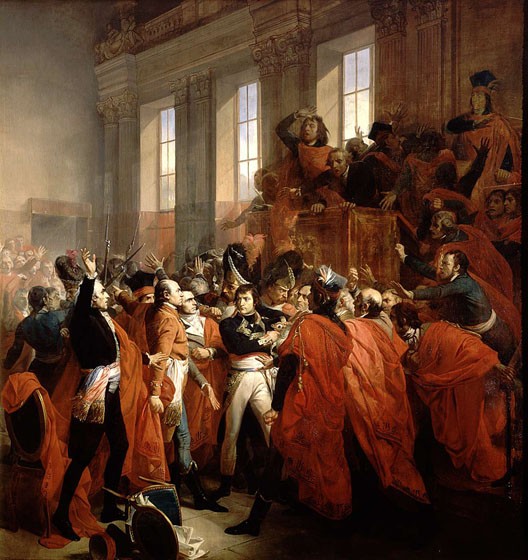
That evening the deputies still present voted the end of the Directory and handed power to three provisional consuls: Bonaparte, Sieyès and Ducos. "The Revolution is fixed upon the principles that began it: it is over," Bonaparte proclaimed on 20 Brumaire. The Constitution of Year VIII, adopted on 13 December 1799, organised an overwhelming executive behind a parliamentary facade: three assemblies with no real power and a First Consul who governed. Sieyès, pushed aside, was given the presidency of the Senate.
The plebiscite that ratified the text officially returned 3,011,007 yes against 1,562 no. In 1972 the historian Claude Langlois demonstrated that Lucien Bonaparte, then minister of the interior, had simply doubled the yes votes to hide massive abstention. The regime was born on a false figure.
The builder consul
Power was consolidated by a victory. On 14 June 1800 at Marengo, the reserve army that had crossed the Great St Bernard pass was beaten first: about 22,000 French against 30,000 Austrians, the line broken, the day lost. It was saved late in the afternoon by the return of Desaix's division — Desaix was killed — and a cavalry charge by Kellermann. French losses came to some 5,600 men, Austrian losses to more than 14,000 including prisoners. Bonaparte returned to Paris a victor and had the official account of the battle rewritten three times.
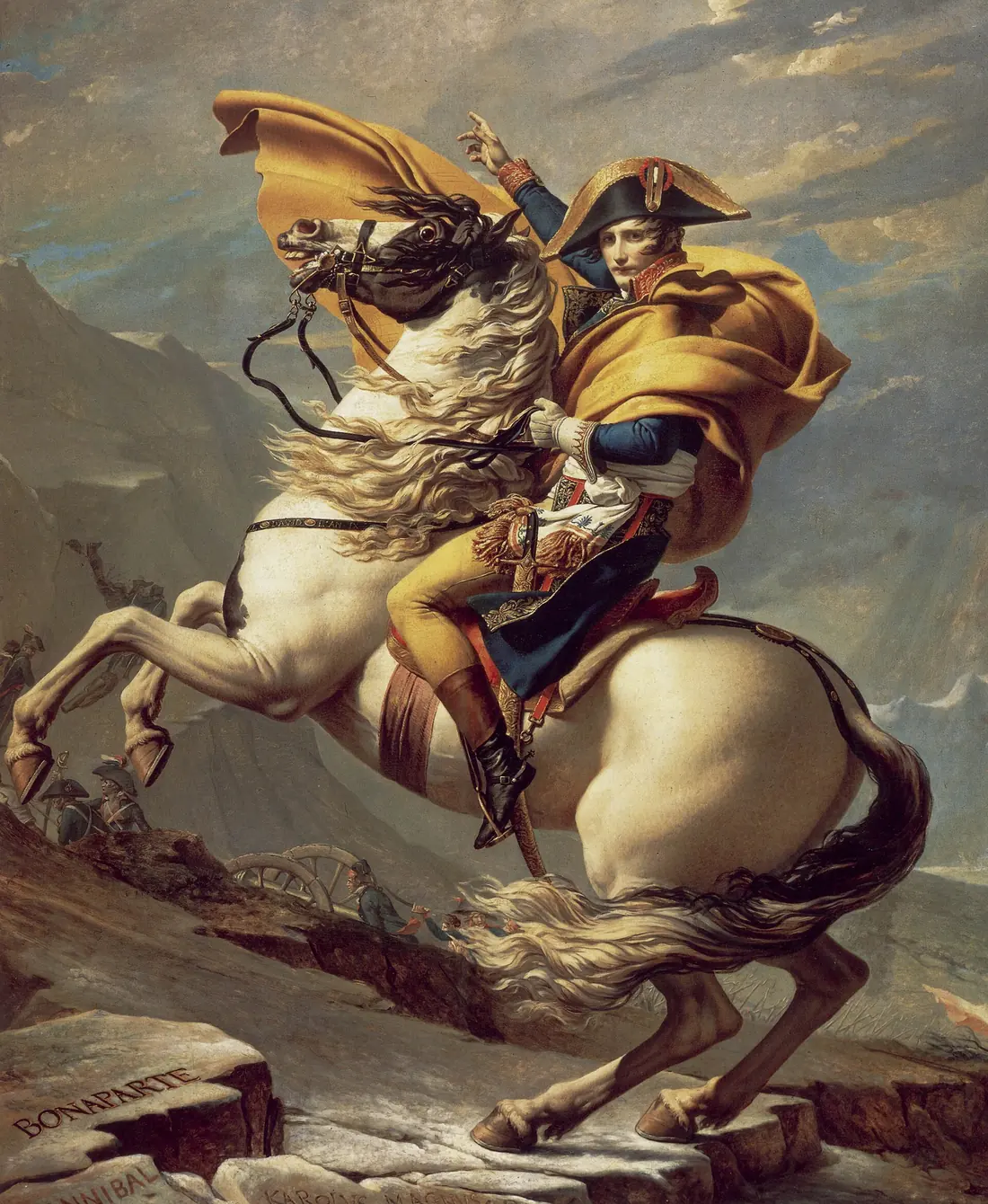
There followed four years that did more for France than any battle. The Bank of France was created on 13 February 1800; on 17 February the law of 28 Pluviôse Year VIII installed prefects at the head of the departments; the Council of State, created by the Constitution, drafted the laws. On 15 July 1801 the Concordat signed with Pius VII ended ten years of religious war by recognising Catholicism as the religion "of the great majority of French citizens" — not as a state religion — and by paying the clergy. The lycées were created on 1 May 1802, the Legion of Honour on 19 May, the franc germinal on 7 April 1803. The land registry was launched, chambers of commerce restored, law schools reopened.
Violence stalked the building site. On 24 December 1800, in the rue Saint-Nicaise, an "infernal machine" exploded seconds after the First Consul's carriage had passed: twenty-two dead and about a hundred wounded. Bonaparte blamed the Jacobins and had one hundred and thirty deported; Fouché would prove the plot was royalist.
The monument of the period remains the Civil Code. A commission of four jurists — Tronchet, Portalis, Bigot de Préameneu and Maleville — drafted the text from August 1800. It was discussed article by article in the Council of State, across roughly a hundred sessions, more than half of which Bonaparte chaired with a persistence that astonished the magistrates. The thirty-six titles were voted one by one between March 1803 and March 1804, then gathered by the law of 21 March 1804 into a single body of 2,281 articles.
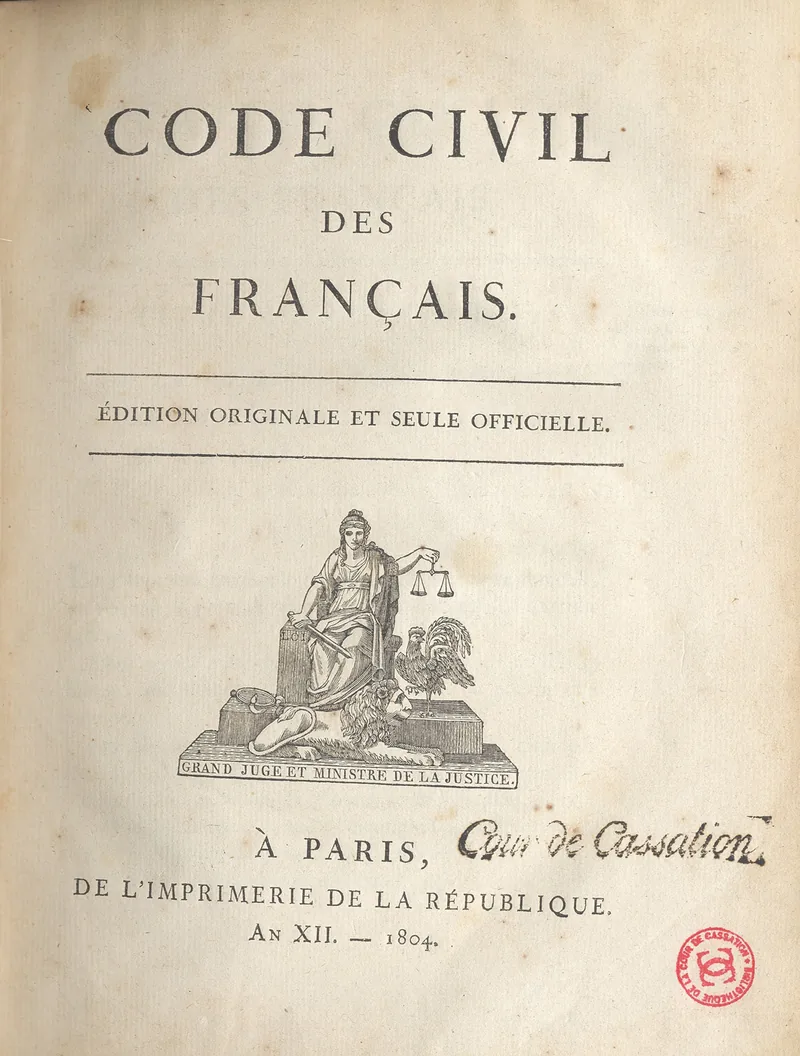
The Code enshrined civil equality, property, freedom of contract, secular marriage and the divorce inherited from the Revolution. It also enshrined paternal authority and the legal incapacity of married women, placed under their husbands' authority for most acts of civil life: it would take more than a century and a half to erase the traces. On that same 21 March 1804, in the dead of night, the duc d'Enghien was shot in the moat at Vincennes, seized on Baden territory and tried in a few hours by a military commission. Code and execution share a date: the whole Consulate in a single day.
The stain: slavery restored
On 4 February 1794 the Convention had abolished slavery in the colonies. The measure was applied only in Saint-Domingue, Guadeloupe and Guyane; elsewhere British occupation or planter resistance had blocked it. The Peace of Amiens returned Martinique, Tobago and Saint Lucia to France, where slavery had never stopped. The consular government chose the status quo — that is, slavery.
The law of 20 May 1802 maintained slavery and the slave trade in the restored colonies, "in accordance with the laws and regulations in force before 1789". In Guadeloupe, General Richepance landed on 5 May 1802 with 3,500 men; the resistance led by Louis Delgrès ended on 28 May at Matouba, where the insurgents blew themselves up rather than surrender. A consular decree of 16 July 1802 — whose original was only rediscovered in the French National Archives in 2007 — officially restored slavery there. In Guyane a decree of December 1802 did the same.
In Saint-Domingue, the expedition of General Leclerc, Bonaparte's brother-in-law, landed with some twenty thousand men. Toussaint Louverture, seized on 7 June 1802 despite the promises made at his surrender, was deported to France and died on 7 April 1803 in the fort de Joux, in the Doubs. Yellow fever carried off Leclerc on 2 November 1802 along with much of his force; the war turned into mutual extermination; Haitian independence was proclaimed on 1 January 1804. Meanwhile, on 30 April 1803, Bonaparte sold Louisiana to the United States for eighty million francs: the American dream died with the army of Saint-Domingue.
The human cost was not the only one. From 1802 black and mixed-race officers were pushed out of the army — General Thomas-Alexandre Dumas, father of the novelist, was retired at forty — and citizenship closed around skin colour. Historians have qualified the intentions without softening the facts: Jean-Joël Brégeon recalls that Bonaparte was not initially in favour of restoration and had considered transitional statuses, while Jean-François Niort describes a First Consul "manipulated by the slaveholding lobby". On 29 March 1815, during the Hundred Days, Napoleon abolished the slave trade — not slavery — under British pressure; the decree never had time to take effect.
The coronation: founding a dynasty
Cadoudal's conspiracy in 1804 provided the decisive argument: if the First Consul were assassinated, everything would collapse. The answer was heredity. The senatus consultum of 18 May 1804 entrusted "the government of the Republic" to an Emperor of the French — the wording says everything about the ambiguity, and the coinage bore "Napoleon Emperor, French Republic" until 1808.
The coronation took place on 2 December 1804 in Notre-Dame de Paris. Pius VII had made the journey; Napoleon had met him in the forest of Fontainebleau on 25 November, on horseback and in hunting dress, as if by chance. In the cathedral the emperor crowned himself, then crowned Joséphine kneeling before him. Everything was manufactured for the occasion: Merovingian bees, the Roman and Carolingian eagle, a so-called crown of Charlemagne forged for the day. Napoleon meant to be the fourth dynasty, after the Merovingians, the Carolingians and the Capetians.
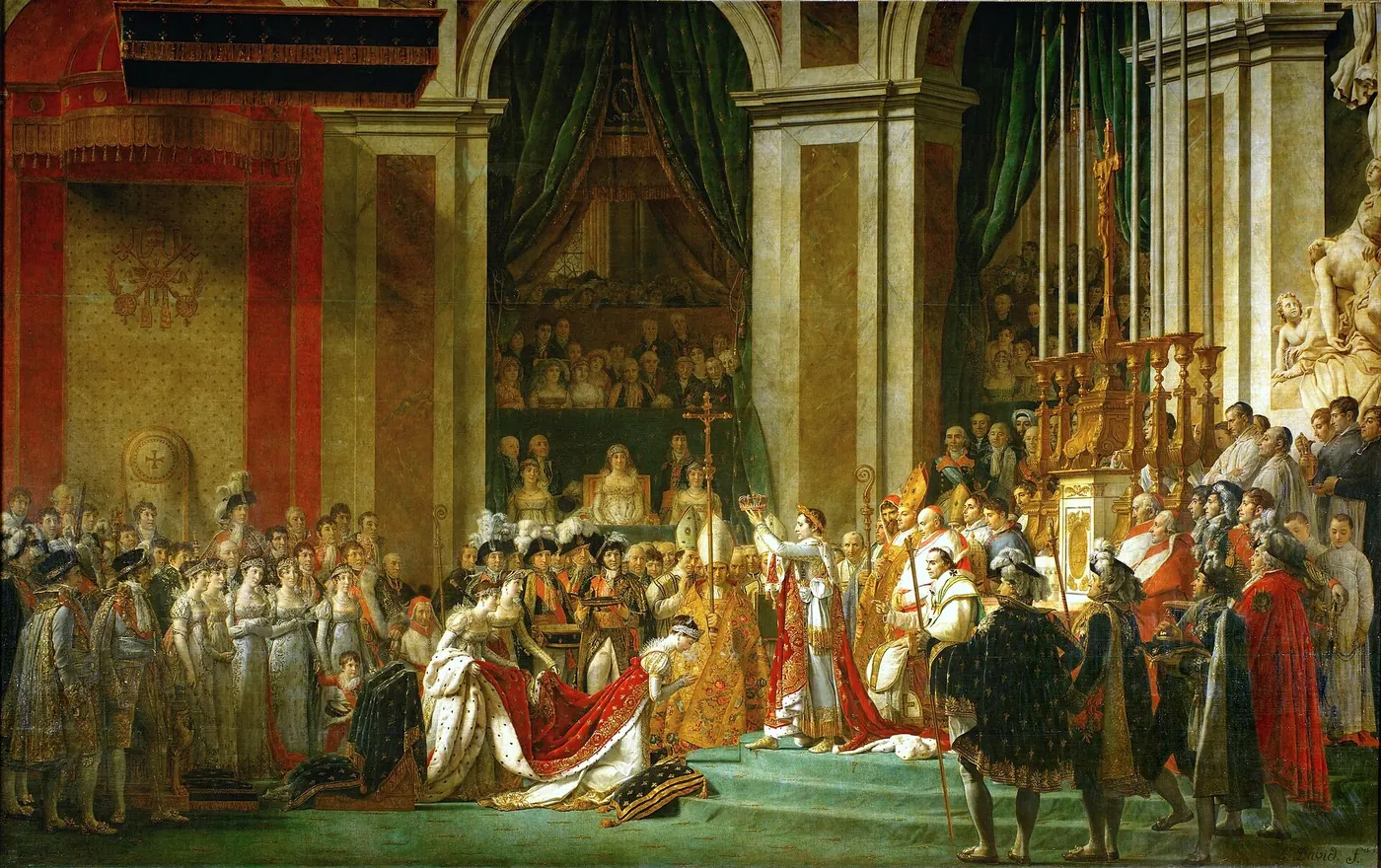
On 26 May 1805, in Milan, he placed the iron crown of the Lombard kings on his own head and became King of Italy. David's painting, finished in 1807, did the rest: for two centuries the coronation has been seen through it, and what it shows is not quite what happened.
1805: Trafalgar and Austerlitz
For two years the future Grande Armée camped around Boulogne facing England, training as no French army had trained before. The plan — draw the British fleet to the Caribbean and clear the Channel for a few days — failed; in August 1805 the army left the camp and marched for the Danube. On 20 October Mack capitulated at Ulm with his army, surrounded without a battle. The next day, 21 October 1805, off Cape Trafalgar, Nelson destroyed Villeneuve's Franco-Spanish fleet: eighteen ships taken or sunk, between 2,458 and more than 4,000 dead depending on the count, and command of the sea secured for Britain for a century. Nelson died in his hour of glory.
On 2 December 1805, the anniversary of his coronation, Napoleon fought at Austerlitz the battle that is still studied today. He deliberately gave up the Pratzen heights to draw the Austro-Russians towards his weakened right, then cut through their stripped centre. Against 85,000 to 89,000 allies, his 72,000 to 75,000 men lost 1,305 killed, 6,940 wounded and 573 prisoners; the Austro-Russians left between 24,000 and 36,000 men behind, including more than 11,000 prisoners, along with 45 colours and some 180 guns.
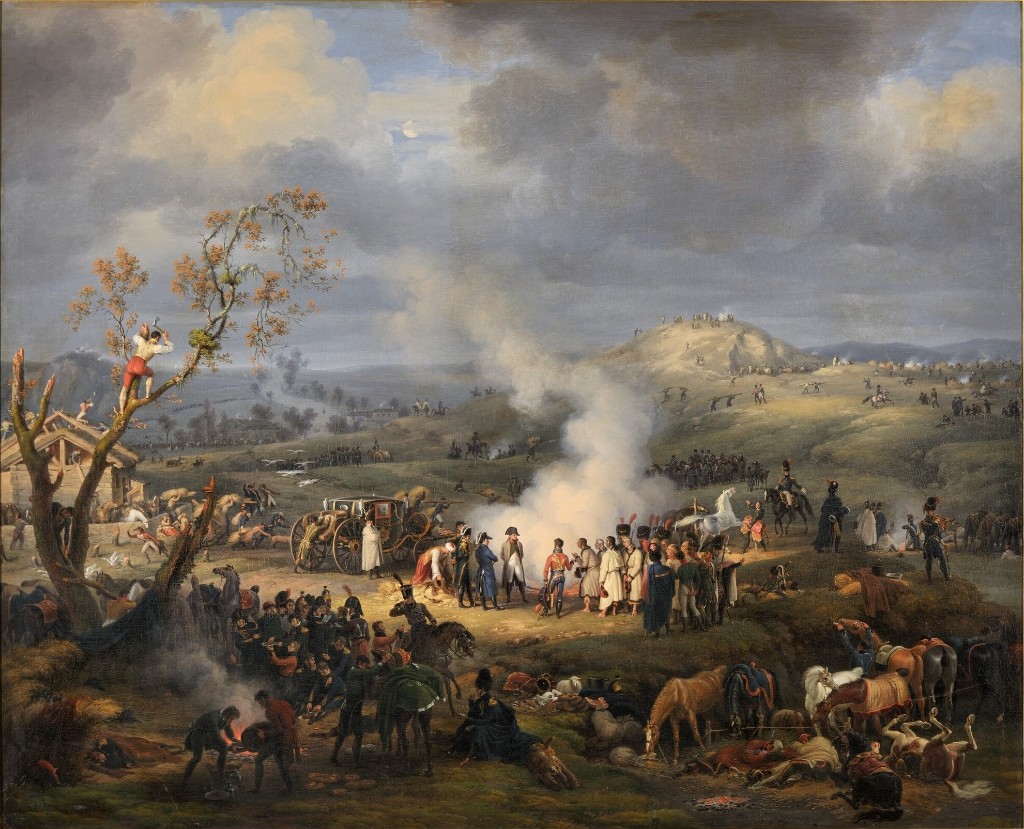
The Treaty of Pressburg, on 26 December, drove Austria out of Italy and Germany. As for the Satschan ponds, where Russian fugitives went under the French roundshot, the army bulletin spoke of thousands drowned: historians suggest between 200 and 2,000 dead, and local accounts report that the ponds, drained a few days after the battle, yielded only two or three bodies and about 150 horses. The legend begins there, in the bulletins.
Europe at his feet
On 12 July 1806 sixteen German princes formed the Confederation of the Rhine under Napoleon's protection; on 6 August Francis II laid down the crown of the Holy Roman Empire, which ceased to exist after eight centuries. Humiliated Prussia took up arms.
On 14 October 1806 two battles were fought on the same day a few leagues apart. At Jena, Napoleon believed he was crushing the Prussian army and faced only part of it; at Auerstedt, Davout, with his III Corps alone, beat the main Prussian force under the Duke of Brunswick. The army of Frederick the Great collapsed within days. Napoleon entered Berlin on 27 October and went to stand before Frederick II's tomb at Potsdam.
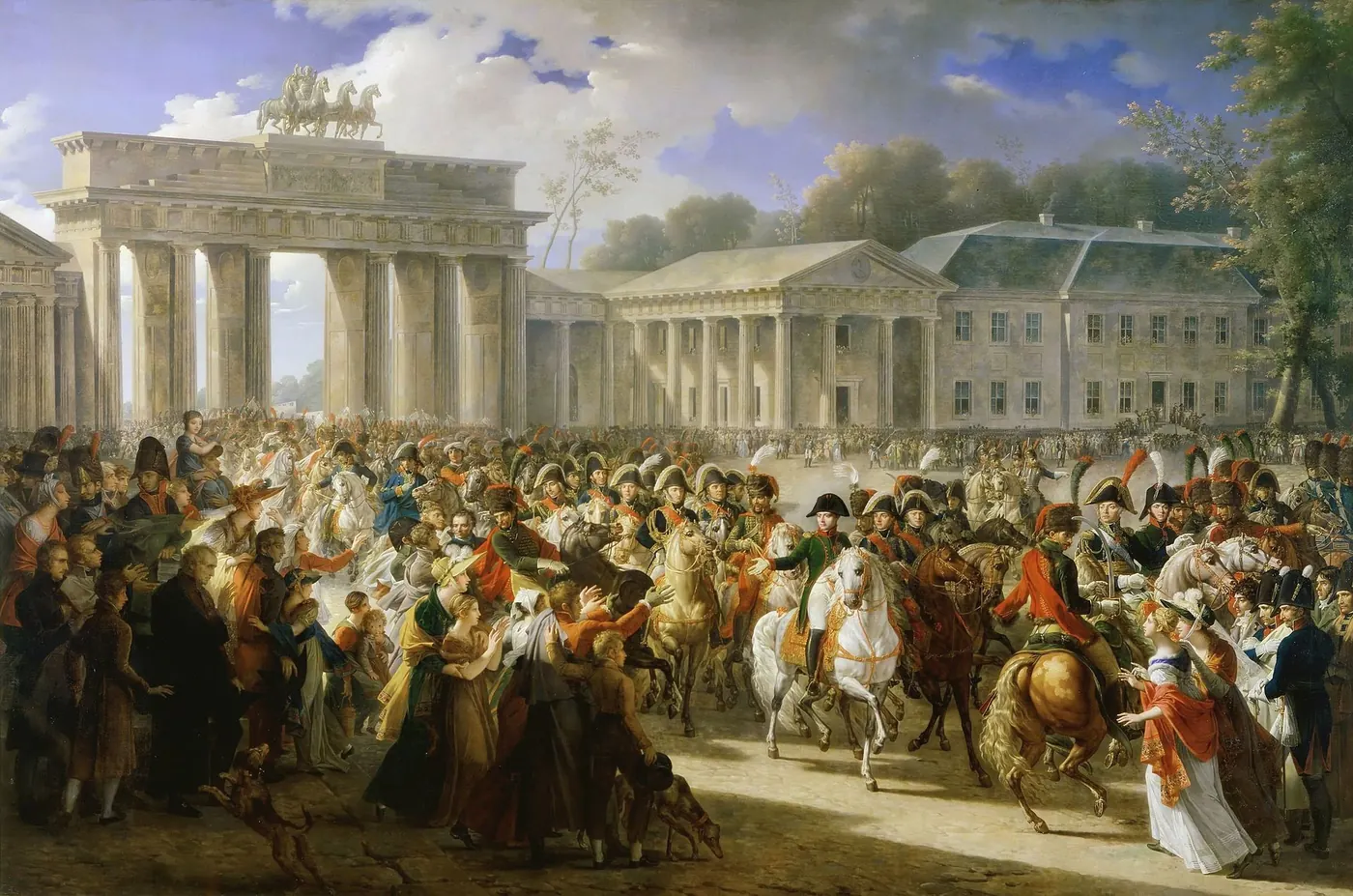
It was from Berlin that he signed, on 21 November 1806, the decree establishing the Continental Blockade: no ship coming from England was to enter a continental port. The weapon was economic, and it would turn against its inventor. Enforcing it meant controlling Portugal, Spain, Russia and Holland — that is, making war everywhere.
The Polish winter delivered his first real shock. At Eylau, on 7 and 8 February 1807, in the snow, the battle became an indecisive slaughter: between 10,000 and 25,000 French casualties depending on the source, 15,000 to 20,000 on the Russian side, twenty-three French generals out of action. On 14 June, Friedland put everything right: about 10,000 French casualties against 20,000 to 25,000 Russians according to non-Russian historians.
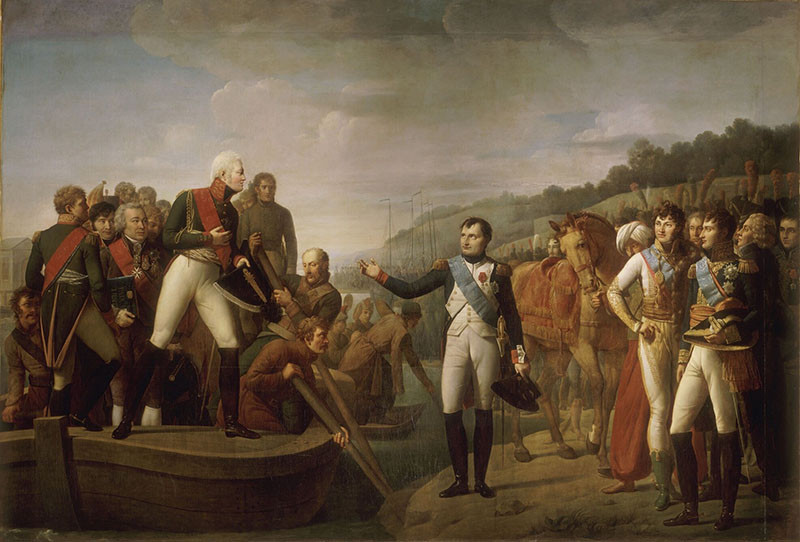
On 7 and 9 July 1807, on a raft moored in the middle of the Niemen, Napoleon and Alexander I divided Europe between them. Tilsit created the Duchy of Warsaw and the Kingdom of Westphalia, stripped Prussia of half its territory and made the tsar an ally. This was the summit. Thrones were handed out within the family: Joseph to Naples then Spain, Louis to Holland, Jérôme to Westphalia, Murat to Naples, Eugène de Beauharnais as viceroy of Italy. In 1808 an imperial nobility was created, with its dukes of Montebello, Auerstaedt and Danzig.
The Spanish ulcer
It began with Portugal, which refused the blockade and which Junot invaded in November 1807. To get there, French troops crossed allied Spain. Napoleon then used the quarrel between Charles IV and his son Ferdinand to summon them to Bayonne and extract, in May 1808, a double abdication. He put his brother Joseph on the Spanish throne.
The whole country rose. On 2 May 1808 Madrid revolted; the next day's repression would give Goya his most famous painting. In July, General Dupont capitulated at Bailén with nearly 18,000 men — the first surrender of an imperial army in the open field, and a signal that the eagle was not invincible. Napoleon came in person in the autumn, retook Madrid, drove the British to the sea, and left again: Austria was stirring.
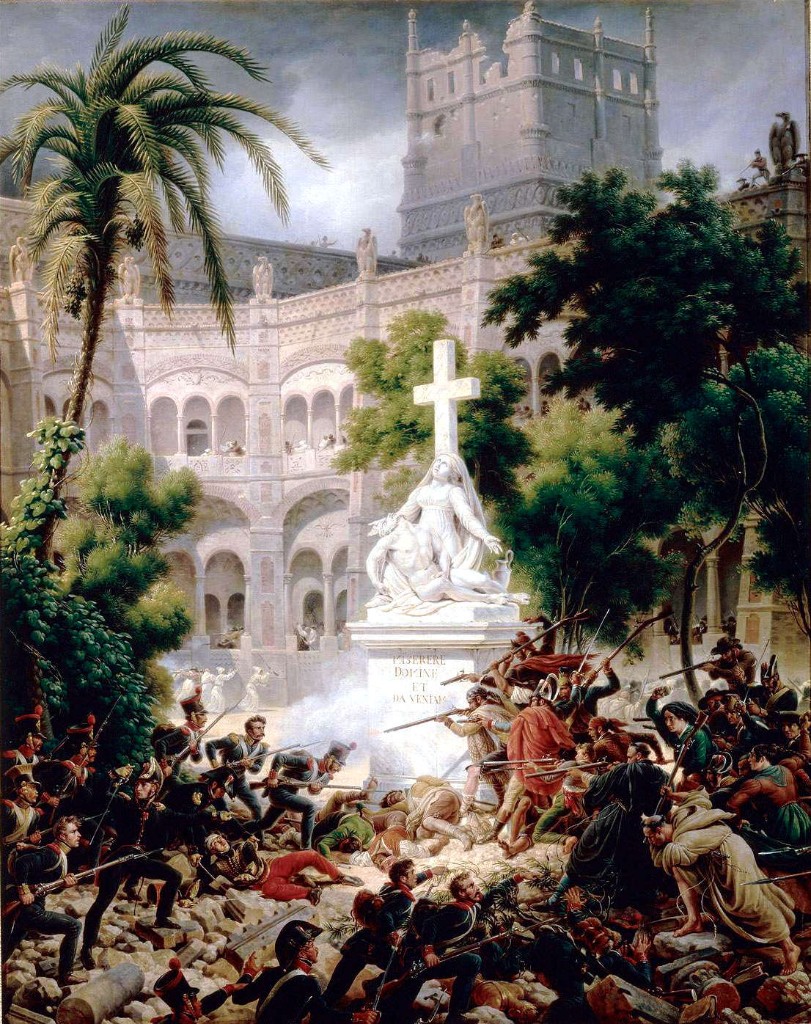
What remained was a war without a front, made of ambushes, appalling sieges — Saragossa twice — and reprisals. The word guerrilla entered the European military vocabulary. Wellington landed and never let go. For six years the peninsula pinned down hundreds of thousands of soldiers whom Napoleon would miss everywhere else. He admitted it at Saint Helena: "That unhappy war destroyed me; all the circumstances of my disasters are bound up in that fatal knot."
Wagram, the divorce and the King of Rome
In April 1809 Austria attacked in Bavaria. Napoleon recovered the initiative in five days, but the campaign was hard: he was slightly wounded in the foot before Ratisbon on 23 April. Vienna taken, he crossed the Danube and, on 21 and 22 May at Aspern-Essling, suffered his first defeat in a pitched battle. Marshal Lannes, one of his few friends, was mortally wounded there.
He tried again six weeks later with overwhelming force. On 5 and 6 July 1809 at Wagram, more than 150,000 French and allied troops faced more than 130,000 Austrians: nearly 900 guns, a front several leagues wide, and casualties to match — 6,901 killed and 26,757 wounded according to the official French returns, 41,250 men on the Austrian side according to the historian Ian Castle. War had changed scale.
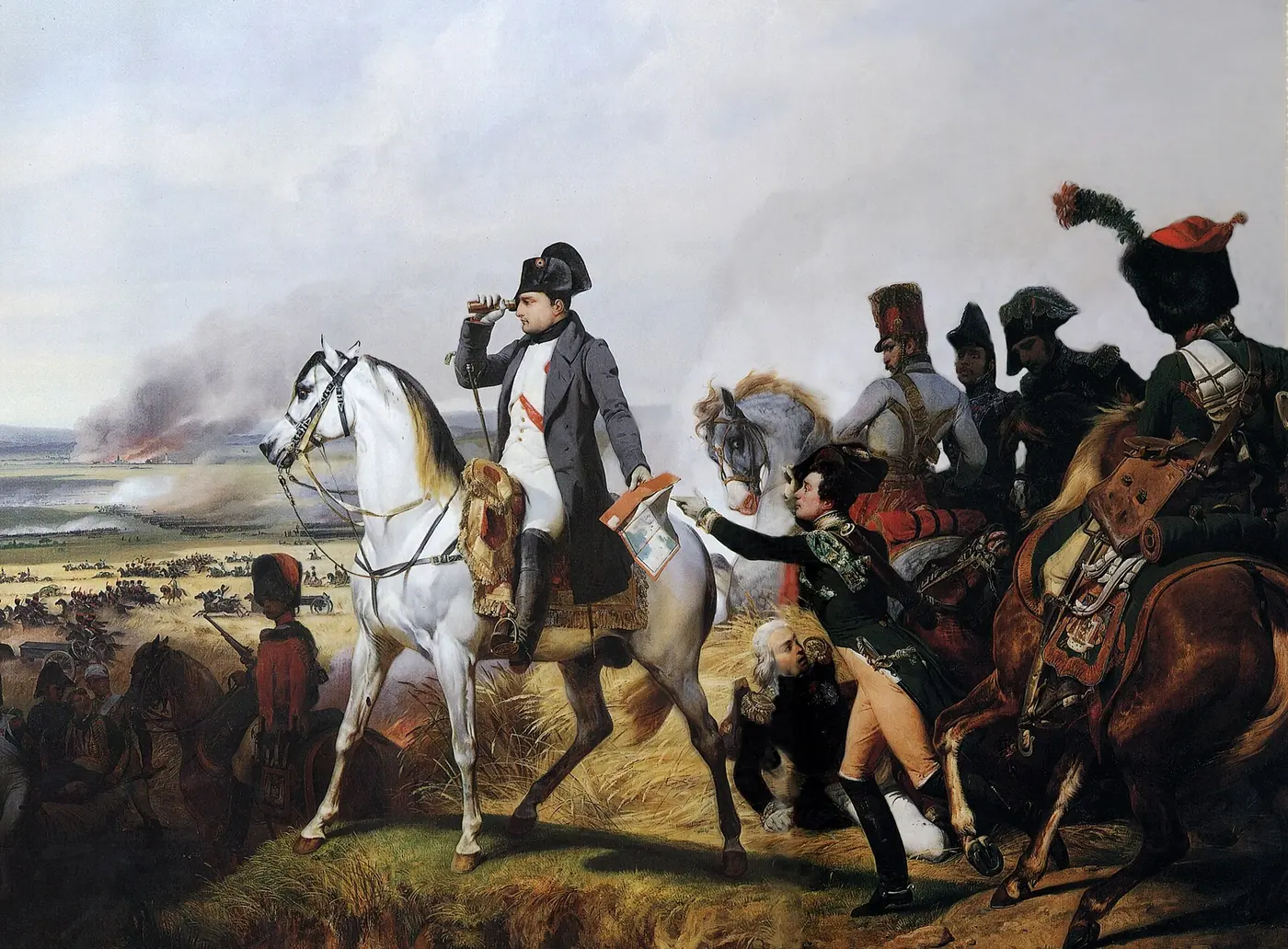
On 12 October 1809 at Schönbrunn a seventeen-year-old German student, Friedrich Staps, tried to stab him during a review. The episode struck home: he was mortal, and he had no heir. He now knew the couple's childlessness was not his doing — little Léon had been born in 1806, and Marie Walewska was pregnant. The divorce from Joséphine was pronounced on 15 December 1809, the religious annulment following in January 1810.
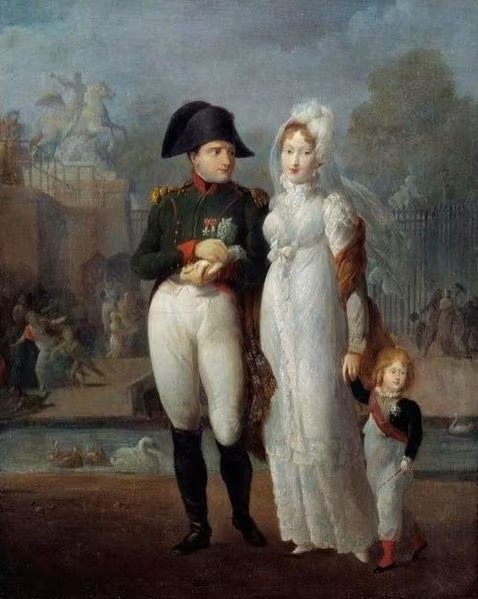
On 2 April 1810 he married Archduchess Marie Louise, daughter of the Emperor of Austria, eighteen years old and great-niece of Marie-Antoinette. On 20 March 1811 Napoleon François Charles Joseph was born, King of Rome. The Grand Empire then counted 134 departments, from Hamburg to Rome, and with its vassal states dominated a Europe of some seventy million people. In the same movement the Papal States were annexed, Pius VII excommunicated the emperor and found himself a prisoner at Savona and then at Fontainebleau.
The Russian abyss
The alliance of Tilsit did not last four years. Russia could not live with a blockade that ruined its trade, the existence of the Duchy of Warsaw alarmed it, and the annexation of the Duke of Oldenburg's states — the tsar's brother-in-law — supplied the pretext. On the night of 23-24 June 1812 the Grande Armée crossed the Niemen near Kovno. More than 600,000 men would enter Russia over the course of the campaign, most of them not French: Germans, Italians, Poles, Swiss, Austrians, Prussians.
The Russians refused battle and burned everything behind them. The army melted away without fighting: sickness, heat, dead horses, stragglers. Smolensk was taken in ruins on 17 August. On 7 September, at the Moskva — Borodino to the Russians — about 130,000 French faced 103,000 to 115,000 Russian regulars reinforced by Cossacks and militia. The day cost the French 28,000 to 35,000 men, including forty-nine generals, and the Russians 44,000 to 45,000: the bloodiest single day of all the Napoleonic wars. Napoleon, unwell, refused to commit the Guard. Kutuzov withdrew in good order.
On 14 September the Grande Armée entered Moscow, a city emptied of its inhabitants: of some three hundred thousand, a few thousand remained. Fires broke out the following night in several places at once; the governor, Rostopchin, had had the fire pumps removed. The city, built largely of wood, burned for four days and lost two-thirds of its houses, along with the supplies the army had counted on for the winter. Napoleon waited five weeks for a reply from Alexander that never came.
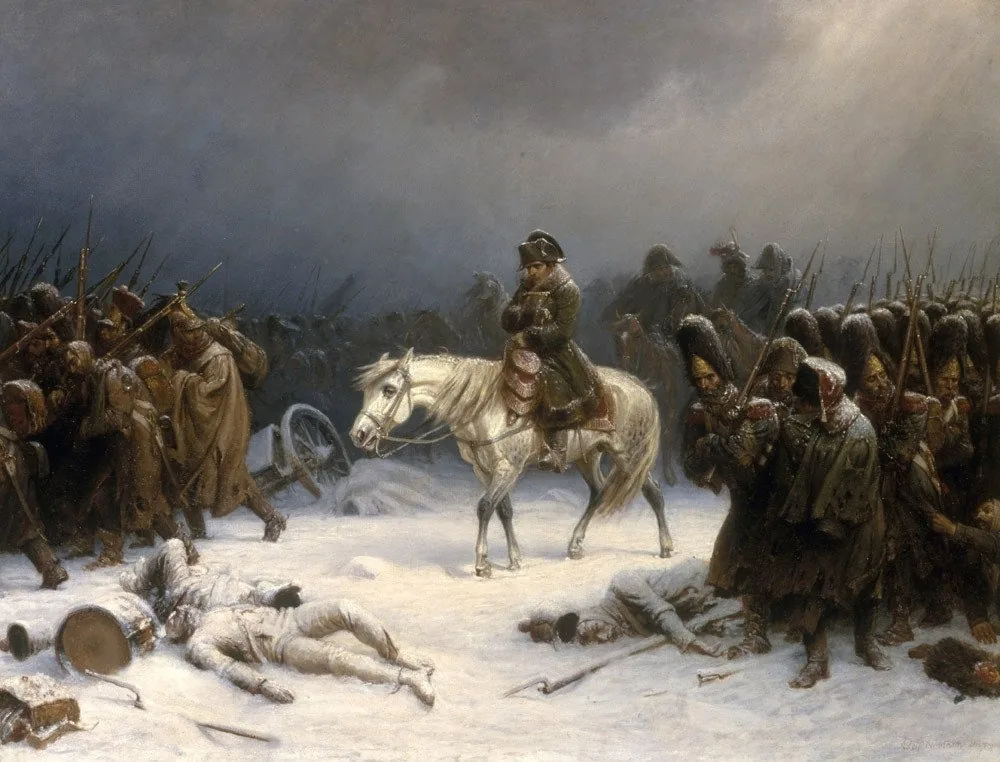
The order to leave came on 19 October. Blocked at Maloyaroslavets, the army had to take the outward road again, already stripped bare. The cold arrived at the end of October, the cavalry disappeared for want of horses, discipline dissolved. From 26 to 29 November, at the crossing of the Berezina, General Éblé's pontoneers threw two bridges across the freezing water; the army escaped encirclement, but thousands of stragglers left on the far bank were killed or captured. On 5 December, learning of General Malet's attempted coup in Paris, Napoleon left the army and returned by sleigh.
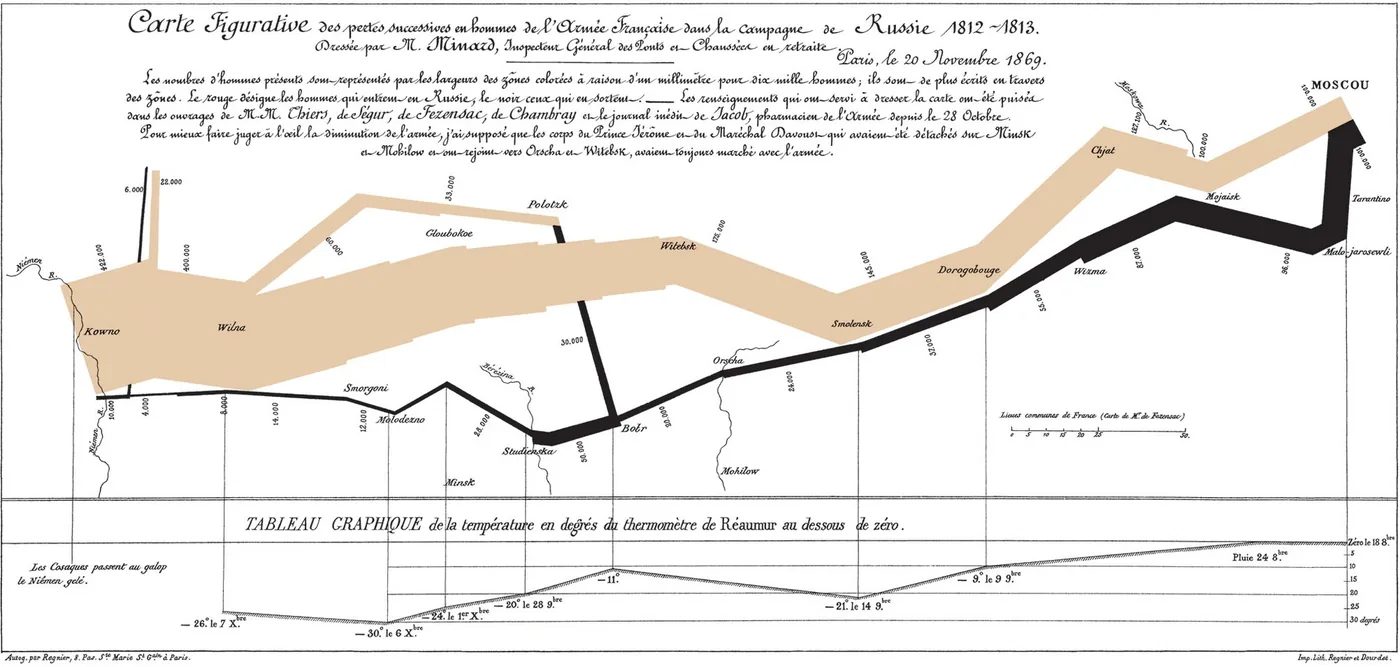
In January 1813 about 23,000 men regrouped behind the Vistula. The rest — five hundred thousand men, perhaps more — were dead, captured or scattered. The Russians had lost as many, but they were at home.
Germany lost
What followed compels the admiration of even the harshest historians: within months Napoleon rebuilt an army. A senatus consultum of 11 January 1813 put 350,000 men at his disposal — conscripts called up early, national guards folded into the line, naval gunners turned into infantry. The essential thing was missing: the horses, dead in Russia. Without cavalry you win battles but cannot exploit them.
Lützen on 2 May, Bautzen on 20 and 21 May: two costly successes that settled nothing. The June armistice, which Napoleon accepted, gave the allies time to receive Russian reinforcements and to win over Austria, which declared war in August. Dresden, on 26 and 27 August, was his last great victory on German soil.
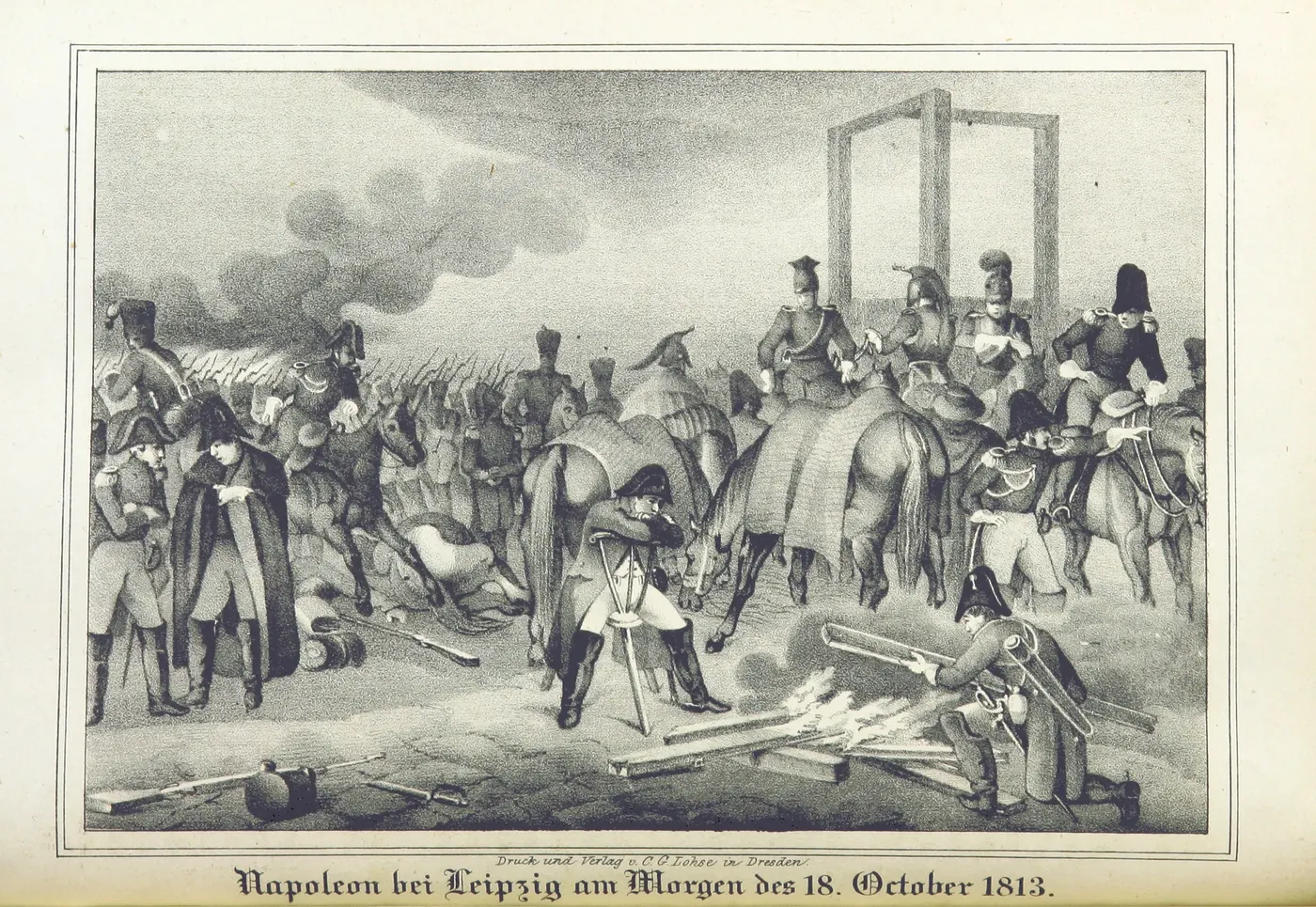
From 16 to 19 October 1813, around Leipzig, 190,000 to 210,000 French faced some 200,000 allies on the first day and more than 300,000 on the third. The Saxon contingents changed sides in mid-battle. The retreat turned to disaster when the Elster bridge was blown too soon: Marshal Poniatowski, made a marshal three days earlier, drowned trying to cross. French losses reached 38,000 to 45,000 killed and wounded, at least 15,000 prisoners and more than 20,000 wounded abandoned in the town's hospitals. Germany was lost; on 30 October, at Hanau, the army had to cut its way through the Bavarians, allies the day before.
The campaign in France
On 1 January 1814 the allies crossed the Rhine. Napoleon had about 70,000 men to set against them, many of them twenty-year-old conscripts known as the "Marie-Louises", facing forces three to five times larger. And he fought what specialists consider his finest campaign: Brienne, Champaubert, Montmirail, Vauchamps, Montereau — a series of blows struck at Blücher's army in a single week by a man of forty-four who slept in the saddle.
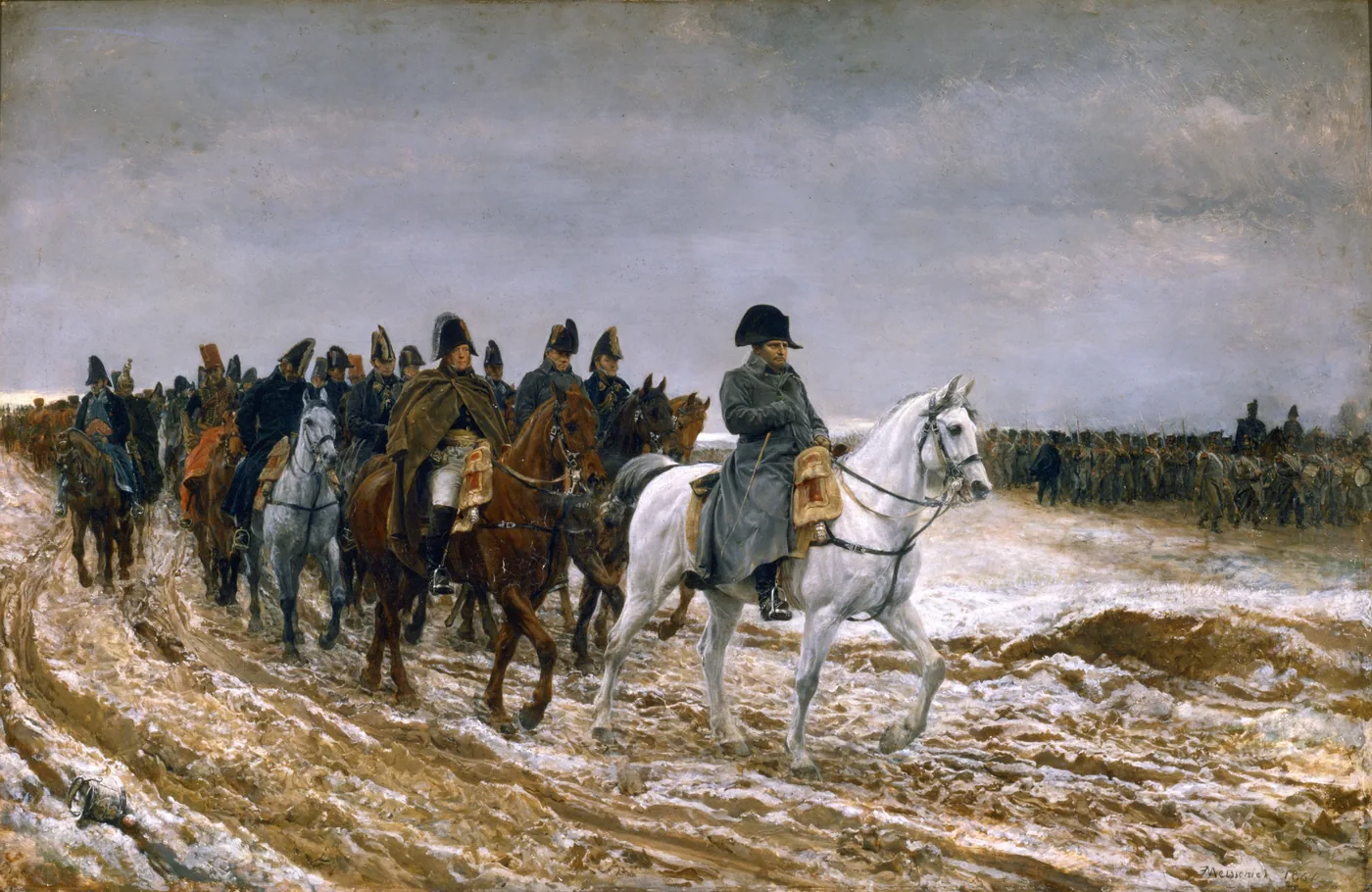
It was not enough. On 9 March the Treaty of Chaumont bound the allies together for twenty years. They stopped chasing the emperor and marched straight on Paris, which capitulated on 31 March. The Senate deposed him on 3 April. His marshals refused to go on; on 6 April 1814, at Fontainebleau, he abdicated unconditionally. On the night of 12-13 April he swallowed a poison prepared during the Russian campaign; he vomited and survived.
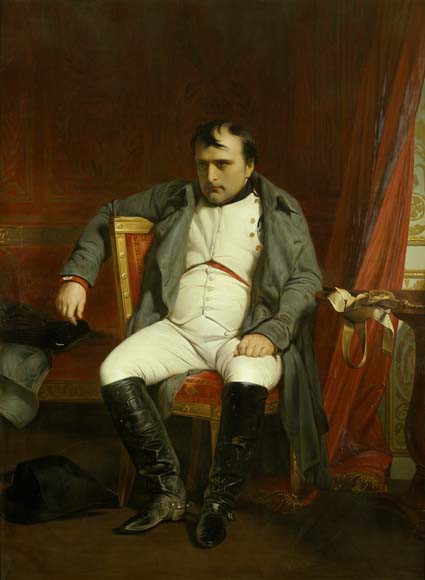
The Treaty of Fontainebleau left him the title of emperor, sovereignty over the island of Elba, an annual pension of two million francs and a guard. Marie Louise received Parma. On 20 April, in the courtyard of the White Horse, he took leave of the Guard and kissed its flag. On the road south, through royalist Provençal villages, he had to put on an Austrian uniform to avoid recognition.
Elba and the flight of the eagle
On Elba he governed as he had always governed: he opened roads, reorganised the administration and the mines, took up town planning, inspected everything. But the promised pension was never paid, his wife and son were held in Austria, Joséphine died at Malmaison on 29 May 1814, and rumours of deportation to an Atlantic island circulated. In France the Restoration was making enemies: officers on half pay, returning émigrés, peasants afraid of losing the national lands they had bought.
On 26 February 1815 he embarked on the brig l'Inconstant with about a thousand men. On 1 March he landed at Golfe-Juan. Avoiding the royalist Rhône valley, he took to the Alps: Grasse, Castellane, Digne, Sisteron, Gap. On 7 March, at Laffrey, a battalion sent from Grenoble blocked the road. He walked forward alone and opened his greatcoat: the soldiers came over without firing a shot.
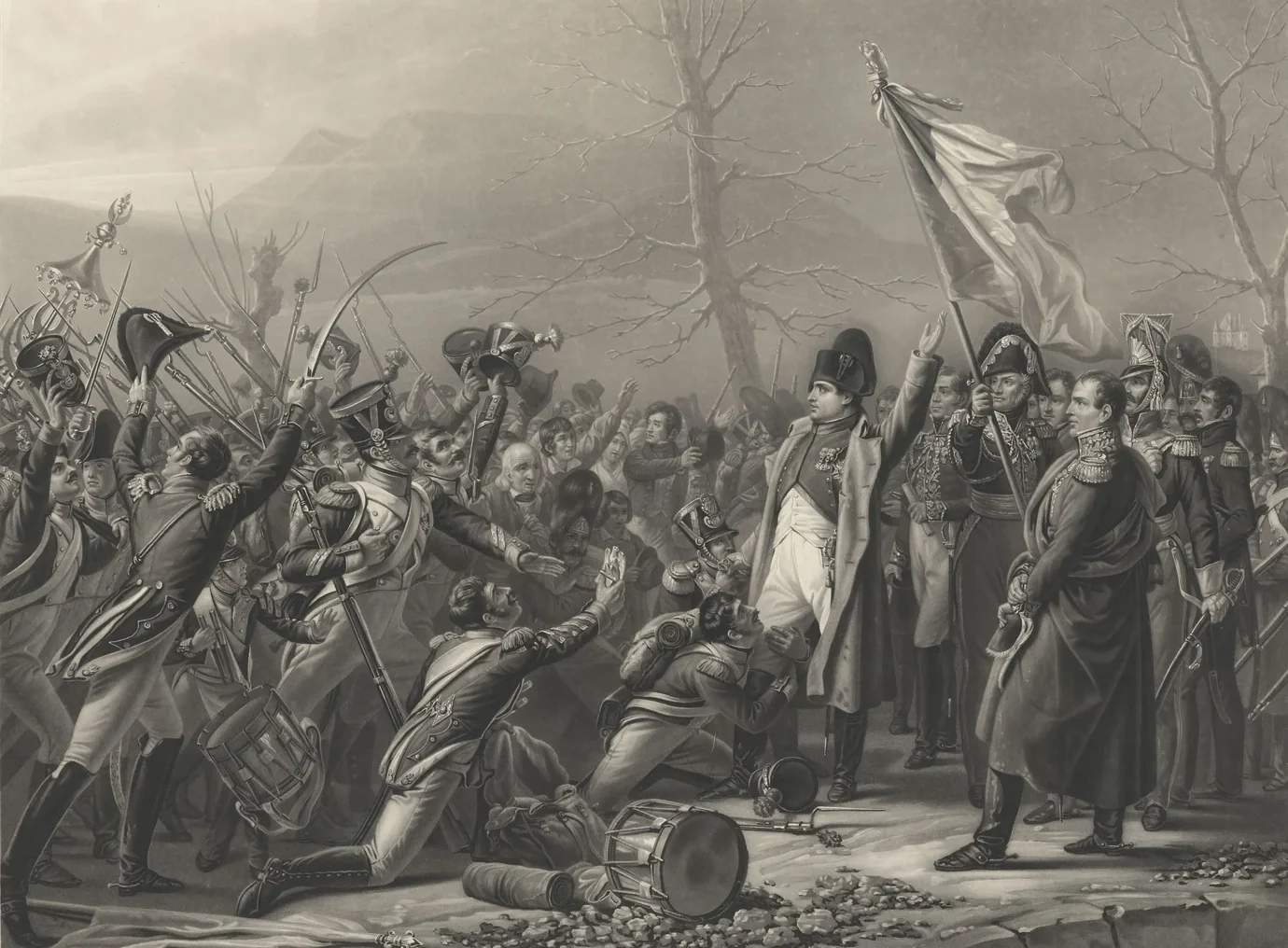
Grenoble, Lyon, then Ney — who had promised to bring him back "in an iron cage" — rallied to him in turn. On 20 March 1815 he slept in the Tuileries that Louis XVIII had left the day before. On 13 March the Congress of Vienna had outlawed him. To widen his base he had Benjamin Constant draft an Additional Act liberalising the Empire; the plebiscite approving it drew few votes and a great many abstentions. France was tired.
Waterloo
He chose to attack before the allies could concentrate. In Belgium the Army of the North slipped between Blücher's Prussians and Wellington's Anglo-allied force. On 16 June he beat Blücher at Ligny while Ney held on at Quatre Bras; but the Prussians withdrew in good order northwards, not eastwards as he believed. Grouchy, sent after them with a third of the army, spent the whole of the 18th looking for them without success.
On Sunday 18 June 1815, south of Brussels, 72,000 to 74,000 French attacked Wellington's roughly 68,000 men holding the ridge of Mont-Saint-Jean. Overnight rain delayed the attack by several hours. Hougoumont swallowed a whole division, the great cavalry charges broke on the British squares, La Haye Sainte fell too late. In late afternoon the Prussians came in on the right flank and took Plancenoit; at about seven in the evening the Guard attacked and fell back for the first time in its history. The army disintegrated.
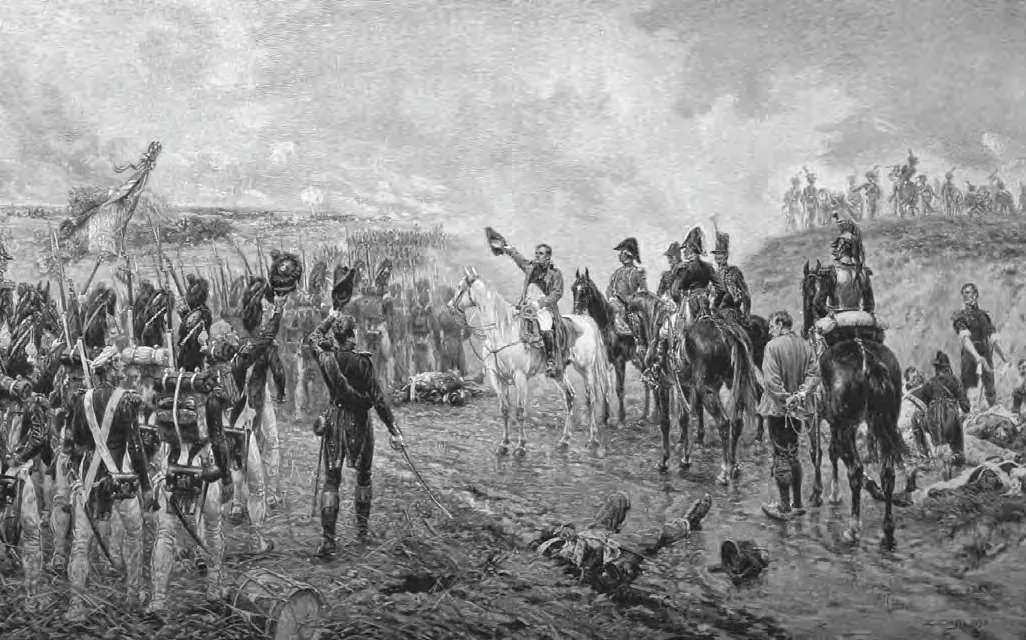
The French left 24,000 to 26,000 killed and wounded, including 6,000 to 7,000 prisoners; Wellington lost about 17,000 men and Blücher 7,000. The line "the Guard dies but does not surrender", attributed to Cambronne, was a journalist's invention: the man himself denied it all his life.
On 22 June Napoleon abdicated a second time in favour of his son. He reached Rochefort hoping to sail for the United States, found the roadstead blockaded, wrote to the Prince Regent asking asylum of the "most constant" of his enemies, and on 15 July went aboard the Bellerophon. British ministers refused to let him set foot in England, where he would have invoked habeas corpus. On 7 August he was transferred to the Northumberland, course set south.
Saint Helena
The island lies some 1,900 kilometres off the African coast, in the middle of the Atlantic. He arrived on 15 October 1815 and moved on 10 December into Longwood, a damp former farm on a windswept plateau six kilometres from Jamestown. The household was small: Grand Marshal Bertrand and his wife, Montholon and his, Gourgaud, Las Cases and a few servants.
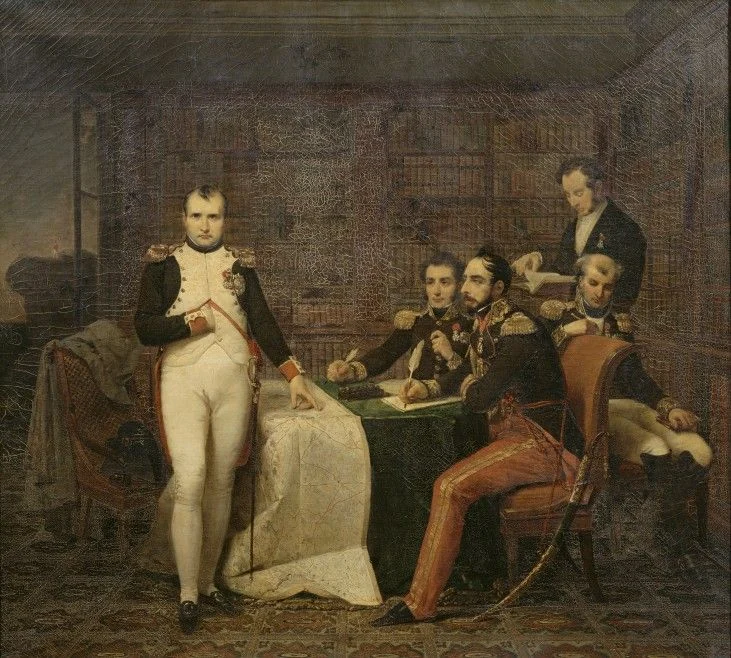
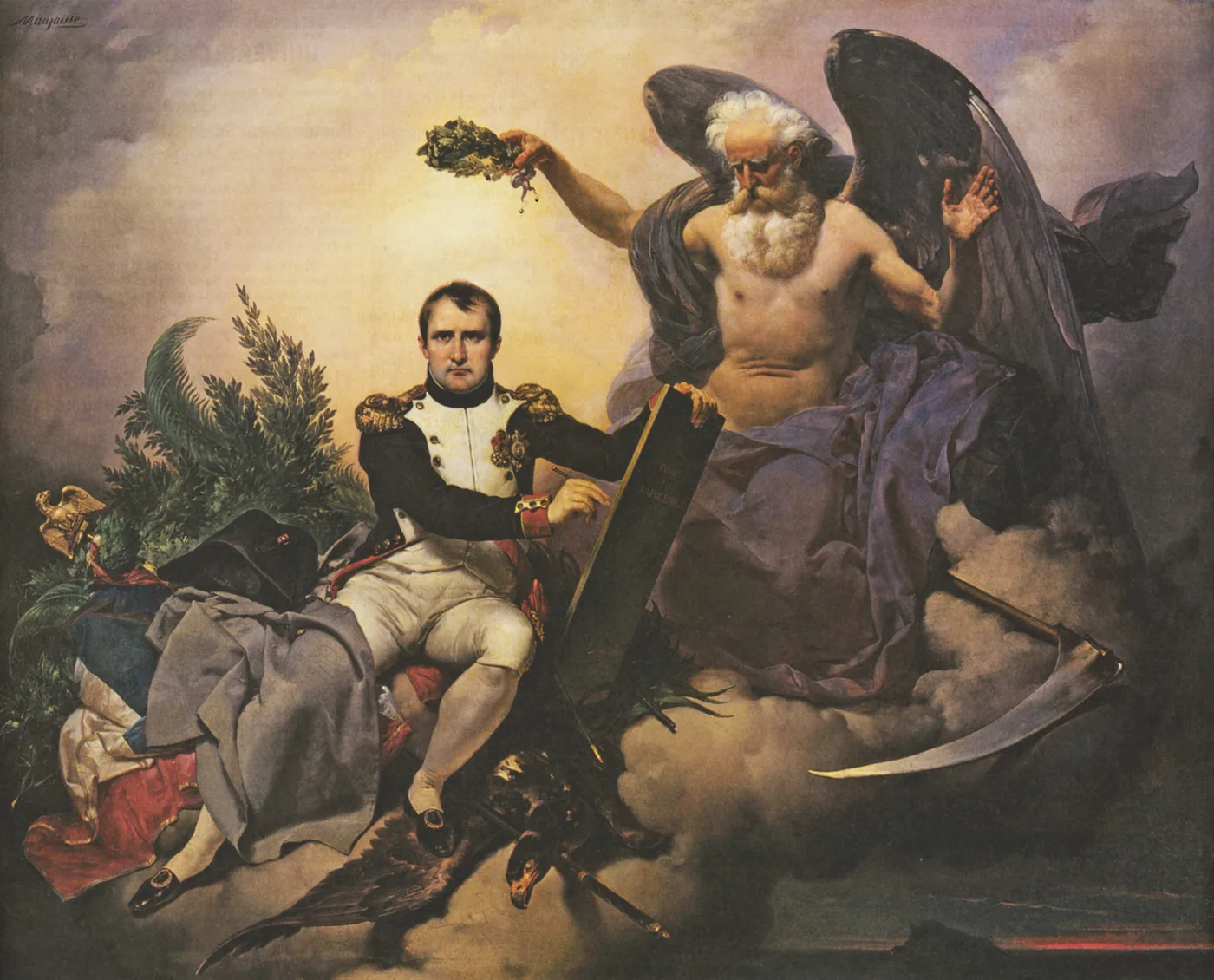
With Governor Hudson Lowe, who arrived in April 1816, it was a war of pinpricks: titles refused, movements watched, letters opened. Napoleon turned it to account. For hours on end he dictated the story of his life and reign. Las Cases, expelled at the end of 1816, took his notes away and published the Mémorial de Sainte-Hélène in 1823. The book invented the liberal Napoleon, heir of the Revolution, champion of nationalities, victim of kings: for Jean Tulard it became "the breviary of Bonapartism". No campaign served him better than that one, fought without a single soldier.
The death and its controversies
His health declined from 1817. In April 1821 he wrote his will and some forty pages of codicils. He died on Saturday 5 May 1821 at 5.49 p.m., aged fifty-one. His last words are reported in three different ways by the witnesses — "France, army, head of the army, Joséphine" in the commonest version, "head... army..." in another: we shall not know.
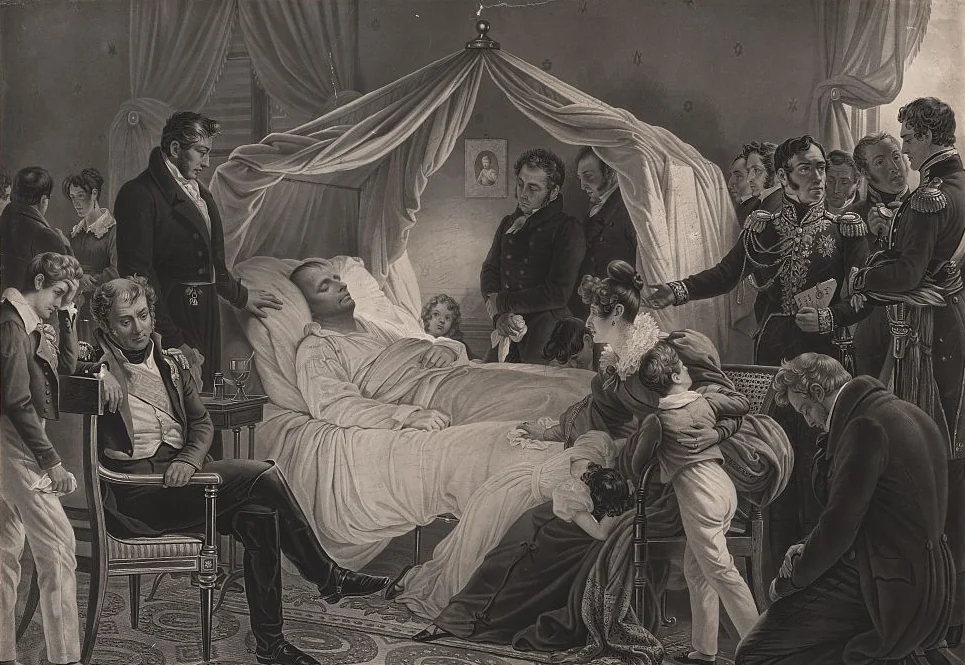
The autopsy was performed the next day by Dr Antommarchi, assisted by British physicians. It described a ravaged stomach, a perforated ulcer plugged by the liver, and a mucous membrane covered with ulcerations. The official compromise settled on stomach cancer — the disease that had killed his father at thirty-eight. The historians Thierry Lentz and Jacques Macé regard that version, the one in the original reports, as the most credible; other doctors point out that the word "tumour" appears in none of the reports and argue for chronic digestive haemorrhage aggravated by dreadful treatment, notably a massive dose of calomel given the day before he died.
There remains the arsenic poisoning thesis, launched in 1961 by the Swedish dentist Sten Forshufvud from hair analyses. Specialists of the period reject it: arsenic turns up in locks taken at every stage of his life, including childhood, and it was everywhere in the nineteenth century — dyes, green wallpaper, medicines. Chronic exposure is not murder.
For want of agreement on the inscription — London refused "Napoleon" without the name Bonaparte — his tombstone in the Geranium valley stayed blank for nineteen years.
The return of the ashes
In 1840 Louis-Philippe obtained the return of the body from London. His son, the prince de Joinville, went to fetch it with the frigate La Belle Poule. The exhumation took place on 15 October 1840; the body, remarkably well preserved, left the island on the 18th. By way of Cherbourg and Le Havre, the coffin came up the Seine aboard the steamer La Dorade and moored at Courbevoie on 14 December.
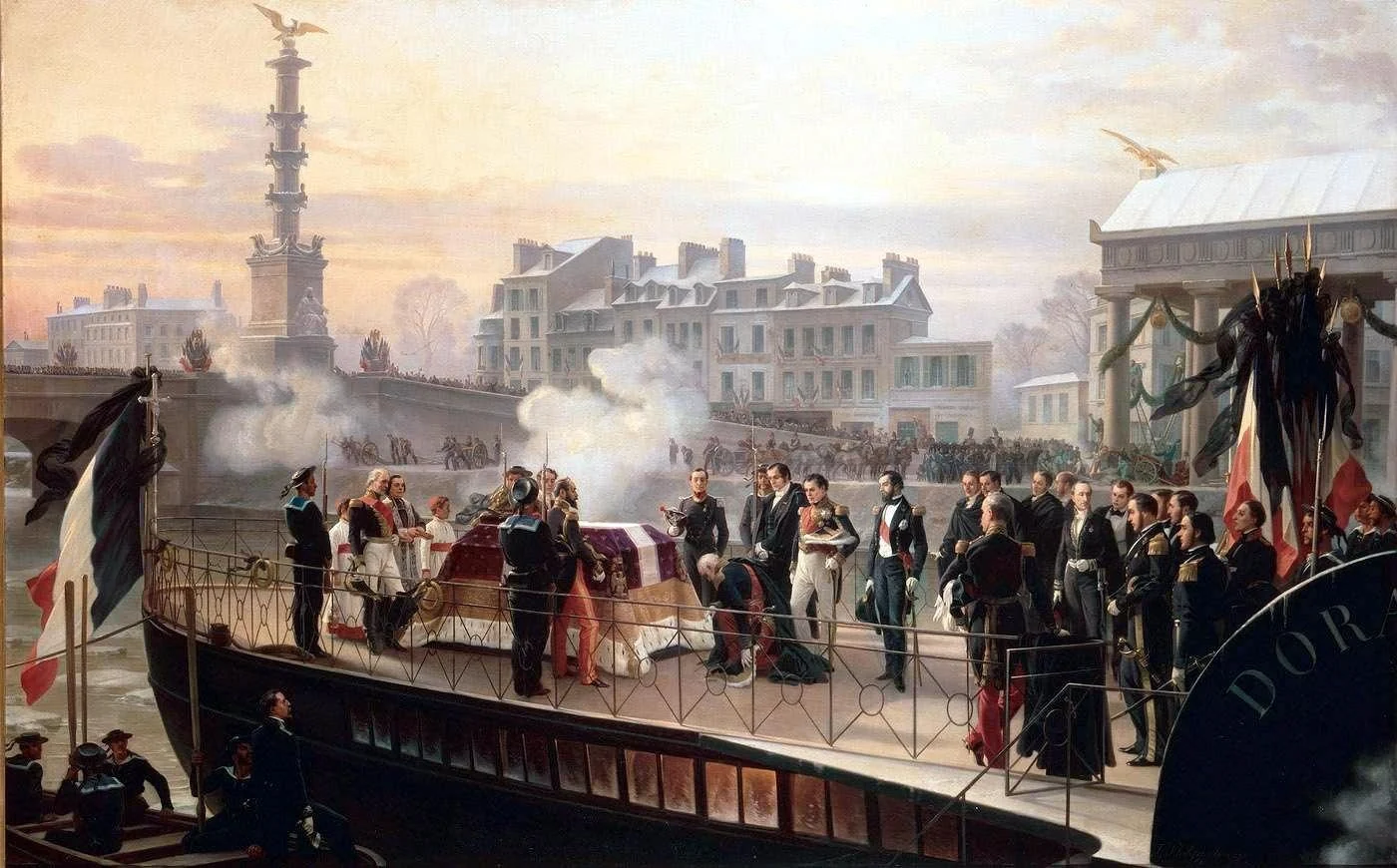
On 15 December 1840, in bitter cold, the funeral car came down the Champs-Élysées before an immense crowd and reached the Invalides. Victor Hugo, who was there, drew famous pages from it. The tomb designed by Louis Visconti was not completed until 1861: a sarcophagus often described as red porphyry, in fact an aventurine quartzite from Finland, set on a base of green Vosges granite at the bottom of an open circular crypt beneath the dome.
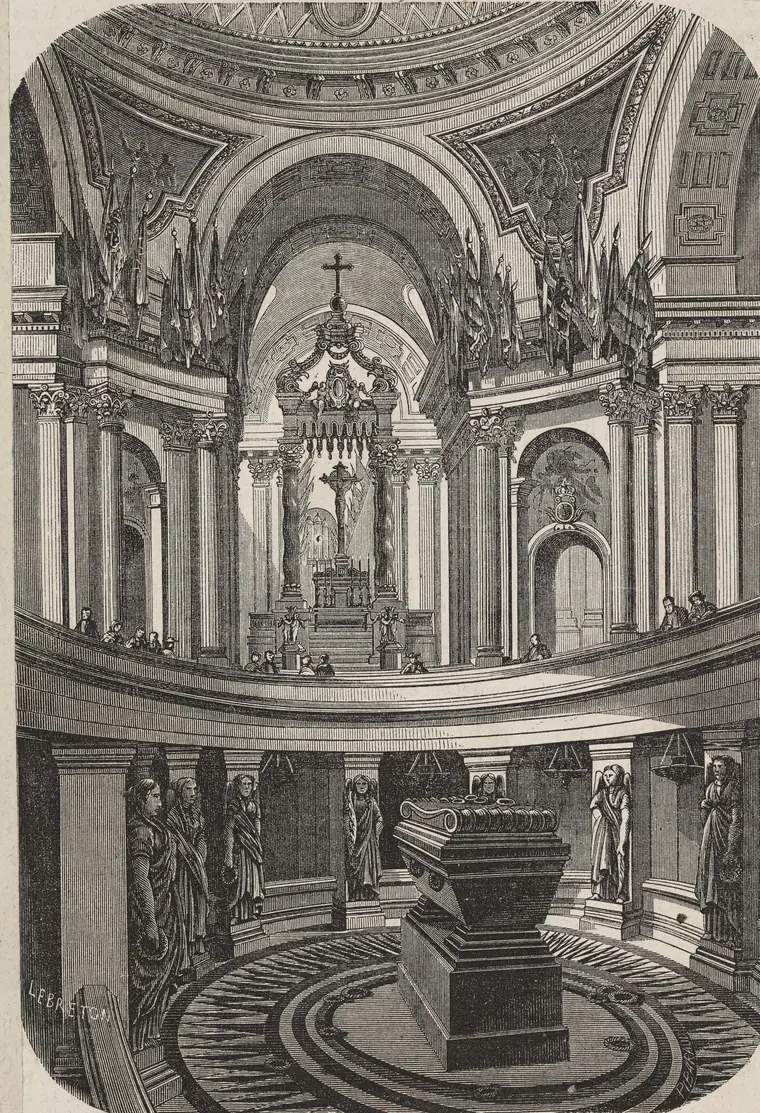
Longwood and the Valley of the Tomb became French property in 1858, bought by Napoleon III: two hectares of France in the middle of the Atlantic, still looked after today by a curator appointed from Paris.
What he left behind
The France of 1815 was smaller than that of 1792, occupied, in debt, stripped of its remaining colonies and of its fleet. The human cost of the Revolutionary and Napoleonic wars runs into millions: estimates range from 3.5 to 6.5 million dead, and the survey published in 2023 by Vincent Haegele and Frédéric Bey puts the total at 4.5 million between 1792 and 1815, of whom about 3,135,000 were soldiers and 1,365,000 civilians. Across twenty-three years of war, nearly 2.8 million Frenchmen served in the army.
And yet the French state still lives inside the walls he built. The Civil Code, the Council of State, the Court of Auditors, the Bank of France, the prefects, the lycées, the baccalauréat, the Legion of Honour, the chambers of commerce, the industrial tribunals, the land registry: all date from him, some from a single month of Year VIII. The Civil Code is still in force; in the early 2000s more than 1,100 of its original 2,281 articles were still standing. It travelled with the armies to Belgium, the Netherlands, the Rhineland, Italy and Poland, and it inspired codes from Quebec to Latin America and from Japan to Egypt.
The balance sheet also carries what went long unsaid: slavery restored in 1802, the press reduced to a handful of supervised sheets, a political police, state prisons, a married woman made a legal minor, and war as a permanent form of government. The bicentenary of his death in 2021 showed that the French argument is not over: one can commemorate without celebrating, and the exercise remains uncomfortable.
As for the legend, it was born on Saint Helena and has never died. The Mémorial supplied the story, Romanticism sang it, the Second Empire institutionalised it, and publishing keeps it alive: by 2014 the number of books devoted to the emperor was put at around 80,000. Historians, for their part, have stopped choosing between the golden legend and the black one. Georges Lefebvre placed Napoleon within the social history of the Revolution, Jean Tulard described the "myth of the saviour" and made Napoleonic studies a discipline, Thierry Lentz has reopened the institutional file piece by piece, and English-speaking historians such as Steven Englund, David A. Bell and Michael Broers have set the Empire within the history of total war and European domination. The man resists them all: which may be the best definition of his importance.
Further reading
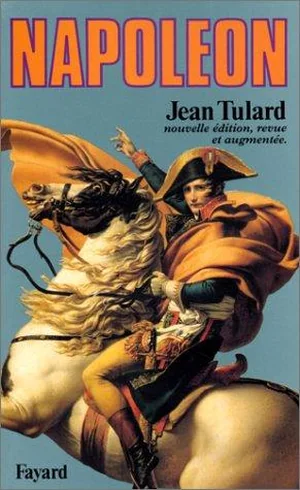
- Jean Tulard, Napoléon ou le mythe du sauveur, Fayard, 1977 (several later editions) — the book that renewed the reading of the man.
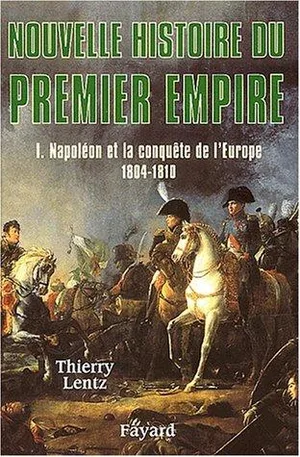
- Thierry Lentz, Nouvelle histoire du Premier Empire, Fayard, 2002-2010, four volumes — the standard synthesis on institutions and diplomacy.
- Georges Lefebvre, Napoléon, PUF, 1935 — the classic of social and economic history for the period.
- Steven Englund, Napoleon. A Political Life, Scribner, 2004 — a political biography written from the United States.
- Patrice Gueniffey, Bonaparte (1769-1802), Gallimard, 2013 — the rise, as far as the Consulate.
- Emmanuel de Las Cases, Mémorial de Sainte-Hélène, 1823 — the source of the legend, to be read as such.