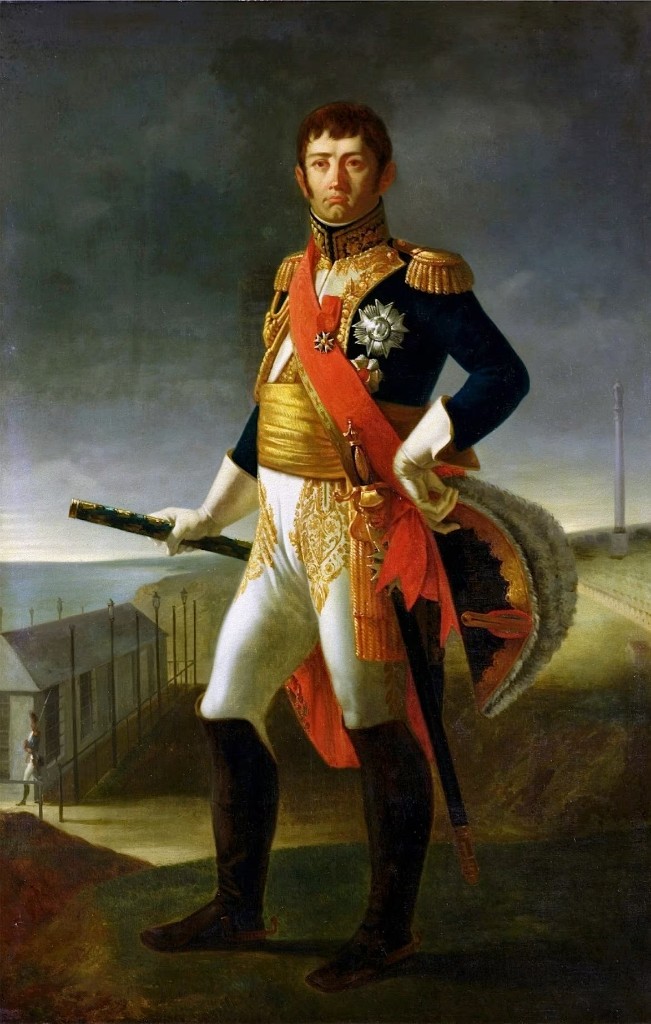
Nicolas Jean-de-Dieu Soult (1769-1851), Duke of Dalmatia, ranks among the Grand Army's great tacticians: at Austerlitz his IV Corps climbed the Pratzen plateau and cut the Coalition army. A notary's son who became a soldier at sixteen, he rose through the Revolution to the marshalate of 1804, fought in Germany, Italy and at Marengo, then in Spain where he governed Andalusia, besieged Cadiz, and faced Wellington at Albuera. Recalled for the Saxon campaign, he commanded the Guard at Leipzig; in 1814 he defended south-west France against the Allies. Faithful to the Bourbons during the Hundred Days, he became a peer, Minister of War, then three times President of the Council under Louis-Philippe, leaving his mark on Algeria and military reform. A rare case of a Napoleonic marshal who reached the summit of constitutional political life, he died in 1851 after more than half a century serving France in war and peace. Detractors stress plunder and personal enrichment; admirers stress operational constancy and longevity at the summit of the state — two readings an honest biography should confront rather than erase.
Saint-Amans, Revolution, Rhine and Marengo
Nicolas Jean-de-Dieu Soult was born on 29 March 1769 at Saint-Amans-la-Bastide, in the Tarn — today Saint-Amans-Soult in his honour. His father was a royal notary; the family embodied provincial petty bourgeoisie rather than sword nobility. At sixteen Soult enlisted as a private in the Royal Infantry regiment; the Revolution opened rapid promotion: sergeant-major in 1792, brigadier general in 1794 at twenty-five. He served on the Rhine under Moreau then under Jourdan, mixing skirmishes, ordered retreats and first lessons of mass war against coalition monarchies.
In 1799, at Stockach, he was taken prisoner by the Austrians; freed, he joined the Army of Italy. In 1800, at Marengo, he fought under Desaix in the phase where fortune turned for the First Consul. That day fixed his reputation as an officer able to execute tight movements under pressure — a quality Napoleon, now in power, would exploit. The Consulate made him divisional general in 1802; the imperial senatus-consulte of 1804 listed him among the first eighteen marshals. Soult was not yet thirty-six: his path mixed Old Regime formation (barrack discipline) and Revolutionary culture (merit measured in fire).
Contemporaries stressed his sense of terrain, his care for staffs and timings: neither bivouac rebel nor salon courtier, but a professional bulletins cited for clarity of dispositions. That image would be confirmed at the scale of a whole army corps when the Grand Army left the Boulogne coast for the German then Austrian campaign.
Between campaigns Soult held inspection or occupation commands that introduced him to hinterlands, supply, and relations with civil authorities — skills useful later, in the Peninsula as in defensive France in 1814.
Early Revolutionary ranks also taught him the politics of committees and representatives on mission: war was no longer only a cabinet generals' affair but requisitioners, municipalities, and decrees. That administrative layer, often neglected in heroic tales, partly explains how easily he later moved from imperial armies to Restoration ministries — the same man could read a store return and an uncertain parliamentary majority.
His stance during the coup of 18 Brumaire stayed in the shadow of Murat's or Lannes's limelight; yet, like most useful generals, he aligned with the new consular power without public drama. That pragmatism — neither principled opposition nor early flattery — would mark his long career.
Austerlitz, Jena and the Grand Army at its height
On 2 December 1805, at Austerlitz, Soult commanded the IV Army Corps. Napoleon had drawn a lure: the French right wing seemed vulnerable to induce the Russians and Austrians to strip the centre and move onto the Pratzen plateau. As the fog lifted, the coalition made the mistake the Emperor awaited. Soult, slightly to the rear, received the order to assault: in about an hour his divisions climbed the plateau, broke enemy regiments and cut the opposing army in two. The « Battle of the Three Emperors » turned before noon; it consecrated both Napoleonic plan and the marshal's execution.
Military historians remember Soult as the archetype of the « good executor »: masses deployed on time, communications held, geometric objectives reached. That reputation distinguished him from more unpredictable or political marshals; it explains why Napoleon gave him critical sectors in later campaigns. In 1806, at Jena, the IV Corps took part in envelopment and annihilation of the Prussian machine inherited from Frederick II; autumn and winter in Silesia and Poland continued the march and battle sequence where the Grand Army seemed invincible.
The 1805-1807 period fixed the image of a European empire built on decisive victories in a few months. Soult held a leading place without occupying the media foreground like Murat or Lannes: his style was regularity and sustained pressure on the enemy. Rewards followed: titles, fortune, prestigious commands — and soon assignment to a theatre where regular war would not suffice.
Charles Thévenin's painting of the surrender at Ulm (Palace of Versailles) dramatises the capitulation of 20 October 1805: Austrian columns, Bavarian plains, stormy sky. It does not show Soult in portrait, but embodies the autumn campaign in which the IV Corps took part in Mack's envelopment — visual prelude to the Austerlitz clash where Soult, with the precision that became legendary in the staff colleges of the following century, would execute the order on the Pratzen.
Spain, Andalusia, Albuera and the British front
In 1808 Napoleon sent Soult to the Iberian Peninsula. Facade victories — Gamonal, entry into Madrid, pursuit of Moore's army to Corunna — hid precarious logistics and social hostility Italian manoeuvres had not prepared. Soult became a pillar of occupation: governor-general of Andalusia, he held Seville, organised military administration, tried to finance the war effort on an exhausted local economy. The siege of Cadiz, liberal and British bastion on the Atlantic coast, became a strategic sore: years of trenches and blockade for an uncertain outcome.
On 16 May 1811, at Albuera, near Badajoz, Soult faced a Spanish-Portuguese army backed by Wellington's British. The battle, bloody and indecisive in immediate outcome, is often seen as a French setback: losses were huge on both sides; Wellington kept strategic room. For Soult, the affair illustrated the limits of classical Napoleonic tactics when the enemy held dry ground, Allied cavalry was professional, and guerrilla kept gnawing communications.
Witnesses also denounced brutal requisitions, levying of artworks from Andalusian convents and palaces — practices that fed Paris collections and sometimes the marshal's own cabinet while feeding popular hatred. Soult was not solely responsible for the system; he was its face in a region where the Empire sought to look civilising while living off war contributions.
Between 1808 and 1813 the Peninsula consumed veterans, ammunition, and political credit. Soult stayed longer than many marshals; he returned with experience of hybrid conflict — line armies, partidas, coastal sieges — that foreshadowed nineteenth-century wars more than Hohenlinden manoeuvre.
William Barnes Wollen's painting of the Battle of Albuera (National Army Museum) fixes the image of British squares and shock under the Extremaduran sun. For Soult's biography it evokes the Peninsular counterpoint to Austerlitz glory: the same marshal in a theatre where Wellington and line infantry redrew the price of victory.
Leipzig, France 1814 and the Bourbon order
Recalled from Spain in 1813, Soult joined the Saxon campaign. At Leipzig in October he commanded the Old Imperial Guard in the « battle of the nations » where coalition Europe numerically crushed the Grand Army. Defeat was a turning point: retreat to the Rhine, corps disintegration, loss of German allies. Soult, like other marshals, now had to fight on French soil with exhausted reserves and wavering opinion.
In 1814 Napoleon gave Soult command of the Army of the Western Pyrenees. Against Wellington, fighting at Orthez then Toulouse (April 1814) showed stubborn defence while the Emperor had already abdicated at Fontainebleau: political and military news crossed on the battlefield. Soult ceased fighting on the provisional government's orders; he swore to Louis XVIII and received the king's marshal's baton — institutional continuity within a regime redistributing favour.
During the Hundred Days Soult chose fidelity to the Bourbons: he refused to join Napoleon back from Elba. That line, unpopular with Empire nostalgics, nonetheless earned Restoration trust: peer of France, Minister of War in 1815, he helped reorganise the royal army. Ultras suspected him of being too « Napoleonic » in structures; liberals saw him as conservative. In 1819 he left the ministry without leaving public life.
This sequence raises marshals' loyalty beyond a single sovereign: Soult embodied the long, adaptable career across successive oaths that others — Ney, by contrast — would pay for more dearly in collective memory.
Memoirs and pamphlets of the 1820s-1830s endlessly debated the « right » rallying: for moderate royalists Soult embodied military stability; for Bonapartists, the bourgeois caution of a man who refused the return from Elba. Ministerial archives show above all circulars on strength, depots, and gendarmerie — the daily work of a minister who knew public opinion was also won through safe roads and weapons permits.
President of the Council, Algeria and end under the Second Republic
Under the July Monarchy Soult enjoyed a second political career of the first rank. Louis-Philippe appointed him President of the Council (head of government) in 1832, then again in 1839 and 1840 — a record for a former Marshal of the Empire in a parliamentary regime. He presided over coalition cabinets, negotiated with the chambers, defended military budgets and conscription suited to juste milieu society. Republicans hated him as a symbol of « militarism » and the Napoleonic past; legitimists despised him as renegade to Charles X's throne.
On the colonial front his influence tied to the Algerian expedition: after 1830 conquest spread; Soult, as minister or president according to phase, backed costly operations and « pacification » policies the metropole funded belatedly and amid debate. Historians argue his exact role in each decision; his name remains attached to the era when the French army durably anchored its presence south of the Mediterranean.
He died on 26 November 1851 at Saint-Amans-Soult, in the Tarn, aged eighty-two — on the eve of Louis-Napoleon Bonaparte's coup that would shift the Second Republic toward the Second Empire. Thus closed a trajectory that had begun under Louis XVI, crossed three republics, two empires, and two Bourbon restorations. Soult is named on the Arc de Triomphe; nineteenth-century schoolbooks cited him for Austerlitz as much as for the July presidencies.
His political longevity raises questions: cynical adaptation or continuous service to the French state whatever the charters? The nuanced answer is probably both: the soldier of the Revolution became artisan of constitutional monarchical stability without ever fully renouncing command methods forged under Napoleon.
Twentieth-century historians sometimes caricatured Soult as « marshal-bureaucrat » or precursor of the soldier in civilian dress; recent work rather restores a demanding manager aware that post-Napoleonic France had to pay in cash and parliamentary votes what the Empire had thought could be drawn from glory alone. His death in 1851, at the hinge of the Second Empire, symbolically closed the century of revolutions and charters he had almost entirely crossed.
Discover other characters
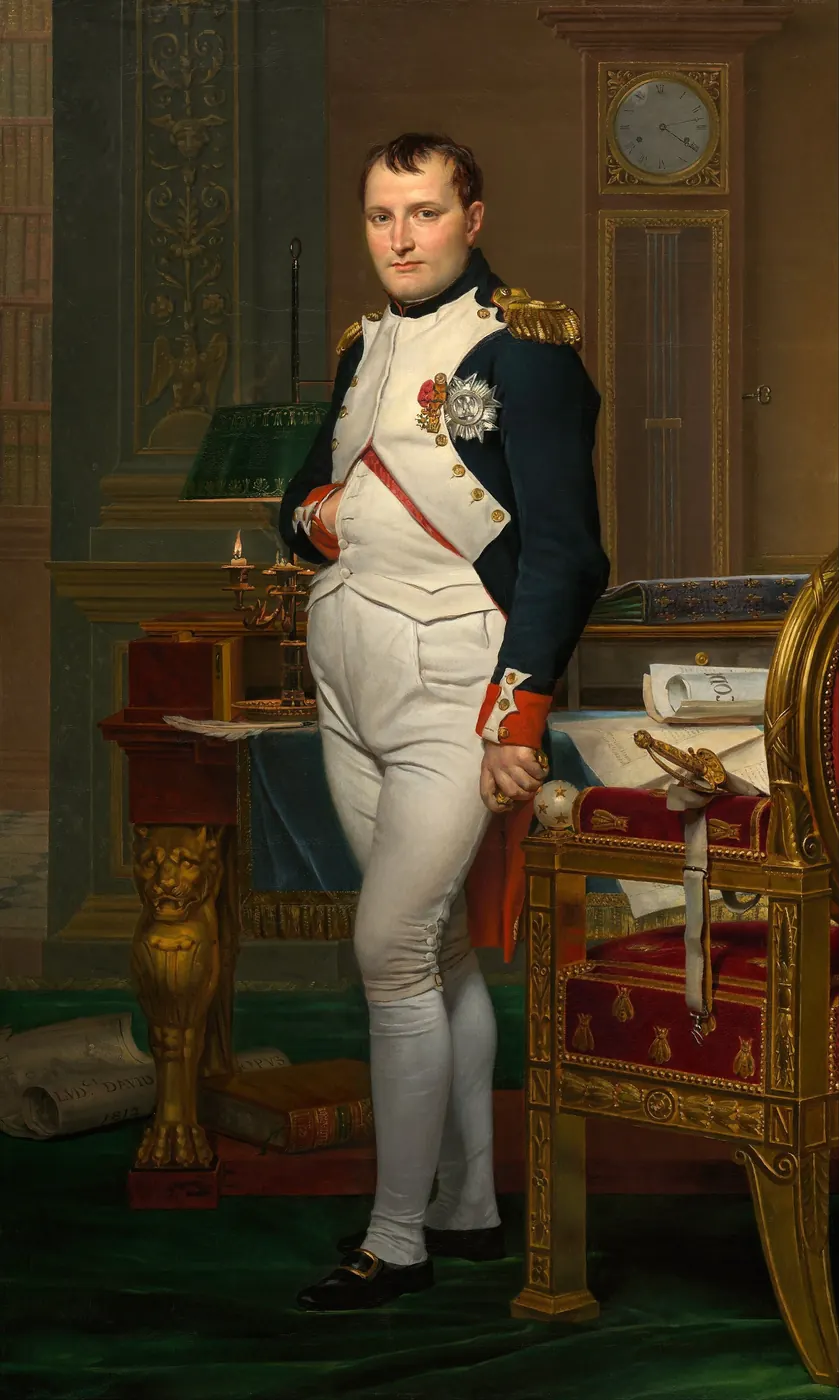
Napoleon Bonaparte
Emperor of the French
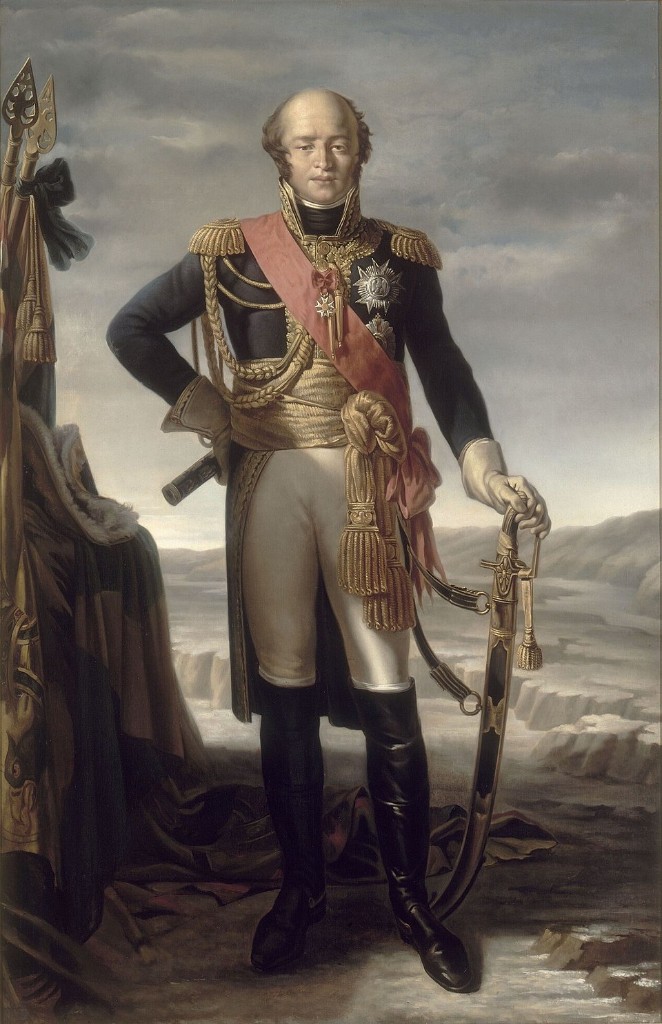
Louis-Nicolas Davout
Marshal of the Empire, Prince of Eckmühl
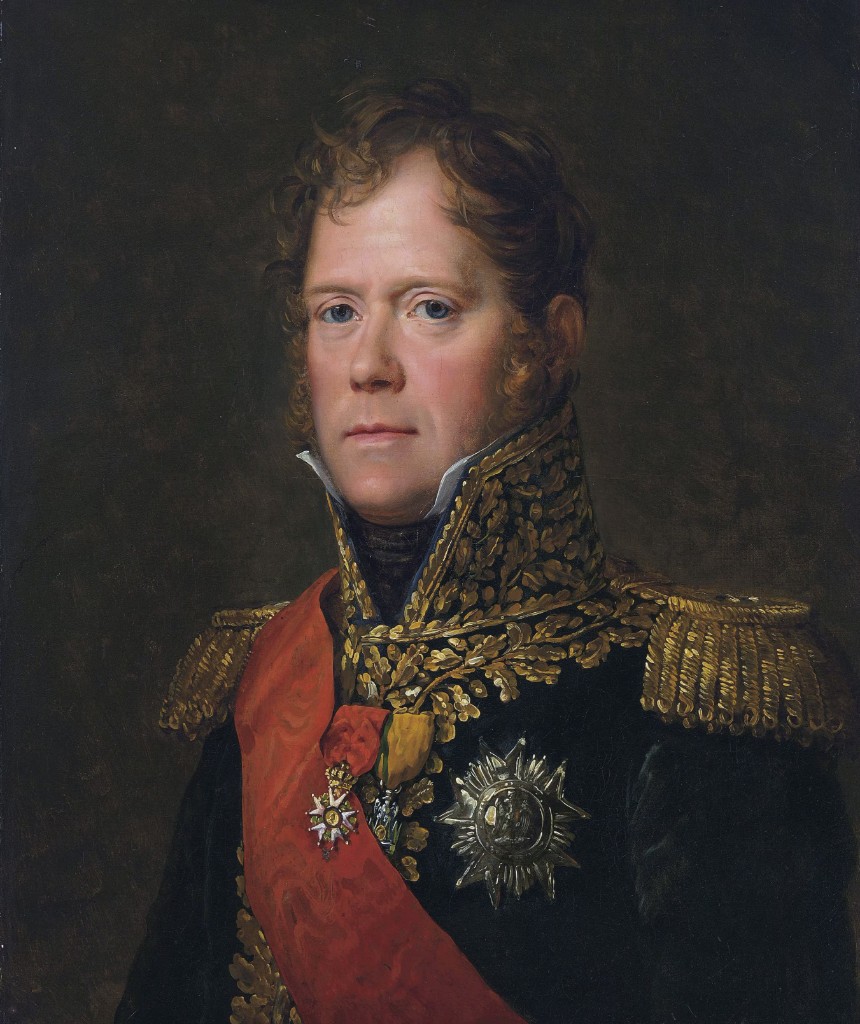
Michel Ney
Marshal of the Empire, Prince of the Moskova
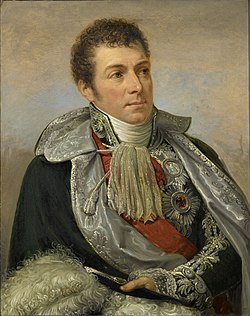
Louis-Alexandre Berthier
Marshal of the Empire, Prince of Neuchâtel and of Wagram, major-general of the Grande Armée (1805–1814)
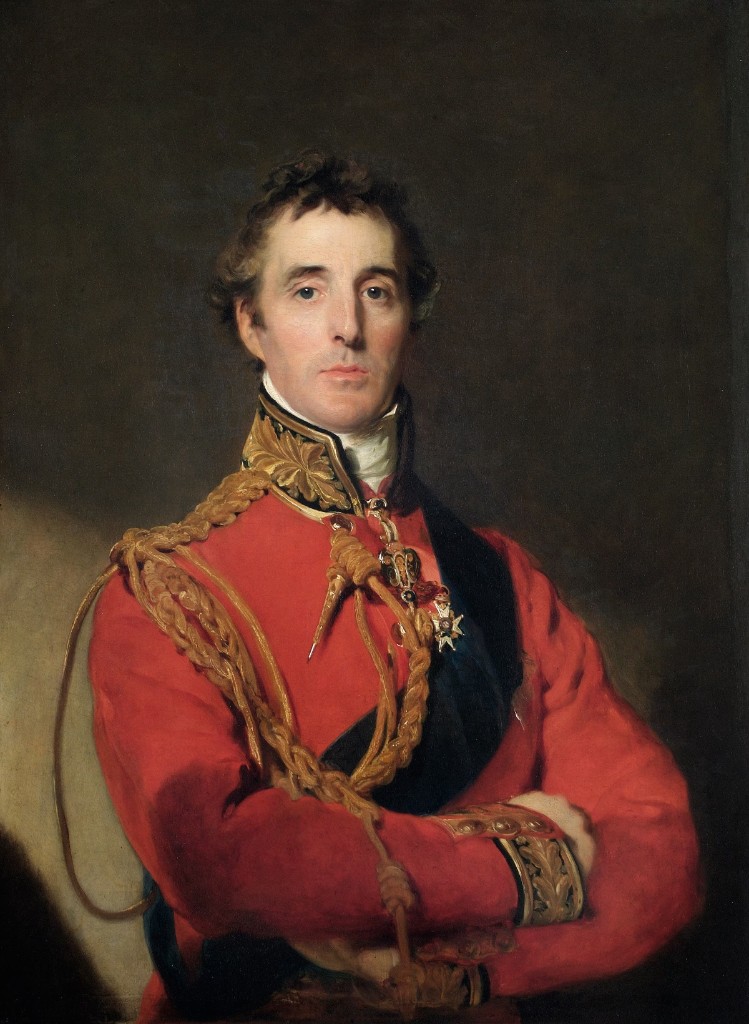
Arthur Wellesley, 1st Duke of Wellington
British general, victor of Waterloo, Prime Minister
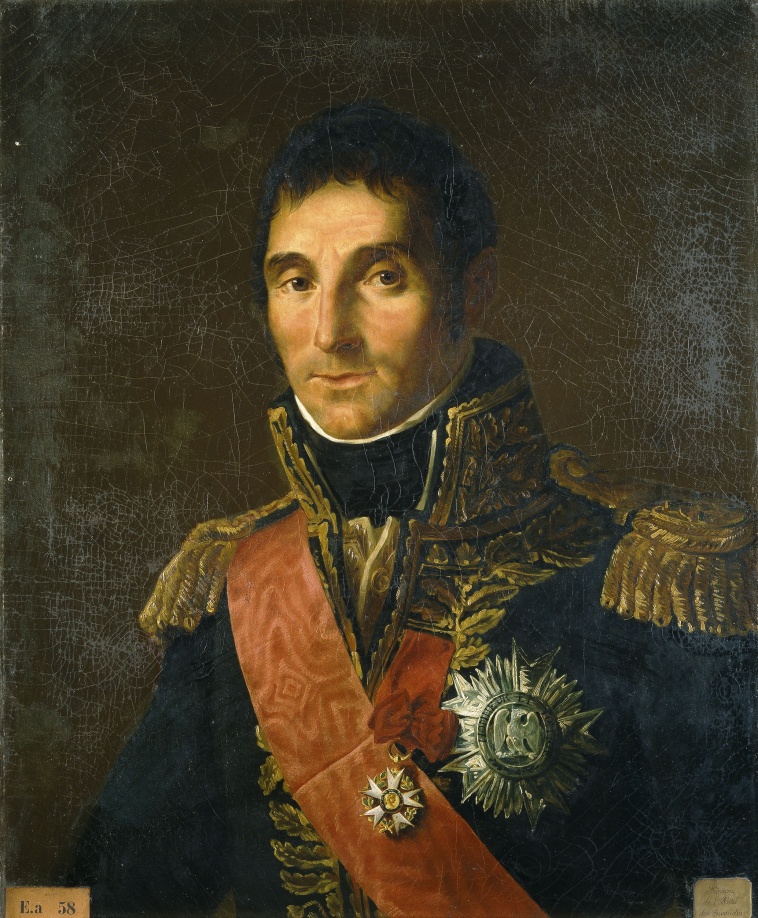
André Masséna
Marshal of the Empire, Prince of Essling
Go further
Recommended books to dig deeper (affiliate links)

Napoleon the Great
Andrew Roberts · 2014
A monumental biography drawing on Napoleon’s 33,000 surviving letters, admiring but rigorous.
See on Amazon
Napoléon ou le mythe du sauveur
Jean Tulard · 1977
The book that reshaped how the man is read: how France gave itself a saviour, and what it cost.
See on Amazon
Nouvelle histoire du Premier Empire
Thierry Lentz · 2002-2010
Four reference volumes on institutions, diplomacy and collapse: the scholarly synthesis of the subject.
See on AmazonAs an Amazon Associate, this site earns from qualifying purchases.
Support the encyclopedia
Napoleon Empire is an independent project. Your contribution helps grow the content and keep the site running.
DonateSecure payment on the platform you choose.