Origins and revolutionary inheritance
The Revolution had already laid foundations for a more rational military medical service, gradually separating civilian hospitals from armies' campaigning needs. Under the Consulate then Empire Napoleon pushed this organisation toward operational logic: heal faster to return men to the line, or at least limit human losses.
Military surgeons were not mere attendants: they followed columns, set aid posts near firing lines and performed on the ground interventions that civilian medicine still often reserved for fixed hospitals.
Dominique Larrey, chief surgeon of the Guard, became the emblematic figure of this sanitary revolution. His experience in the Italian, Egyptian and Austrian campaigns fed concrete reforms in evacuation and triage of the wounded.
The medical service was not a combat arm, but an institution without which no mass army could sustain long, bloody campaigns.
Sanitary organisation under the Empire
Organisation distinguished doctors, surgeons, military pharmacists and ambulance personnel. Field hospitals were planned to the rear; advanced posts approached the battlefield to intervene in the period's "golden hour" — the first hours after wounding.
Flying ambulances, designed by Larrey, were light, manoeuvrable wagons drawn by horses, able to move between lines to collect wounded without waiting for day's end. This was a major innovation over eighteenth-century practice.
Triage — a concept Larrey theorised and applied — classified wounded by severity and operative urgency. Hopeless or light cases were treated differently from urgent amputations that saved life.
The service depended on intendance and command for movement; it borrowed transport from the supply train and relied on stocks of lint, alcohol, instruments and medical stores.
Uniform, equipment and practice
Military surgeons wore branch uniform or practical dark dress, with essential tools: saws, knives, forceps, probes. The field surgeon's kit was equipment as vital as a musket.
Amputation was the most frequent procedure for fractures opened by round shot or canister. It was performed without modern anaesthesia, often in minutes, on a camp table or even a door. Speed here mattered more than comfort.
Flying ambulances carried wounded to shelters where other surgeons continued care. The sanitary chain — before, during and after battle — aimed to prevent men dying on the field for lack of evacuation.
From Austerlitz to Waterloo
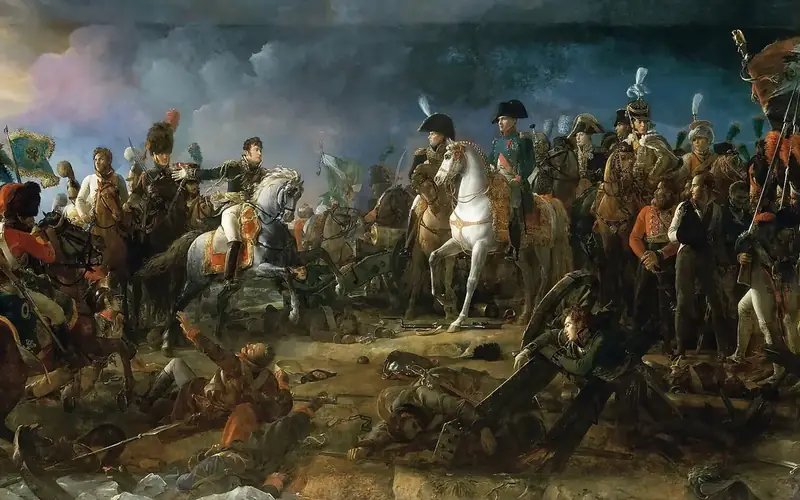
At Austerlitz (2 December 1805) aid posts treated hundreds of wounded in the Moravian winter cold. Larrey and colleagues worked relentlessly; ambulance organisation impressed even foreign observers.
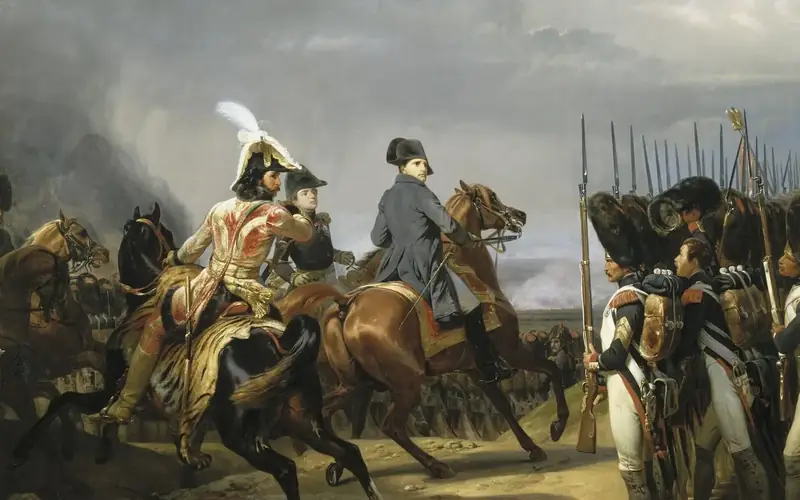
At Jena and Auerstedt (14 October 1806) the speed of victory did not prevent thousands of Prussian and French wounded. The medical service had to follow an army in constant movement, with field hospitals in requisitioned villages.
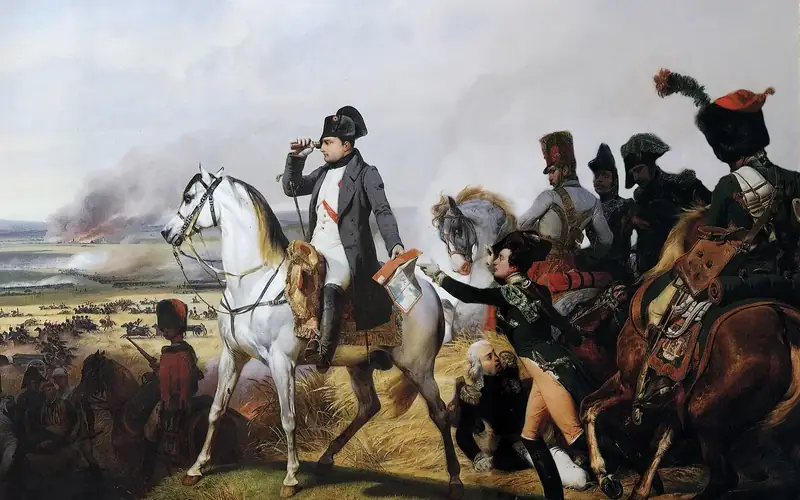
At Wagram (5-6 July 1809) two days of fighting generated massive wounded influx. Surgeons operated near the Danube; flying ambulances moved under residual fire. It was one of the most spectacular demonstrations of Napoleonic medicine.
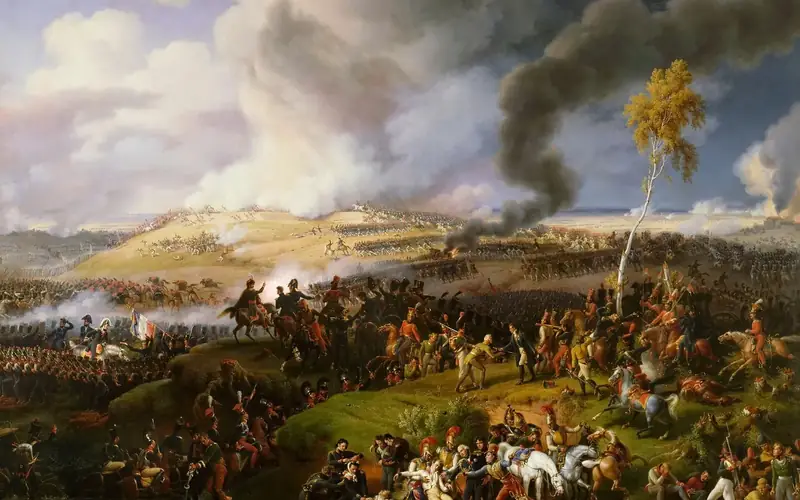
The 1812 Russian campaign overwhelmed the system: cold, typhus, dysentery and combat killed more than surgery alone could address. At Borodino (7 September 1812) wounded filled posts; during the retreat the service collapsed with the rest of logistics.
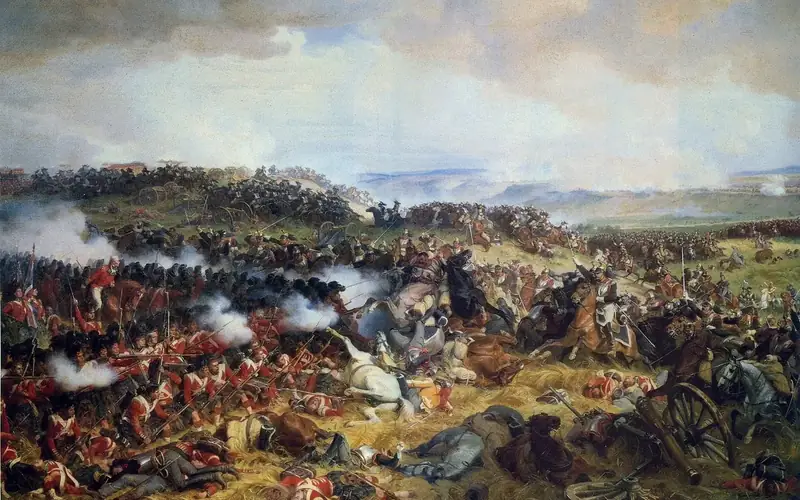
At Waterloo (18 June 1815) Larrey himself was present; ambulances still evacuated according to methods perfected under the Empire. French defeat did not erase the sanitary system's relative efficiency by period standards.
Medical and military legacy
The Napoleonic medical service durably influenced European military medicine: ambulances, triage, rapid surgery became references. Larrey, made a baron of the Empire, remains a major figure in medical history.
For Empire Napoléon this entry reminds us that behind each site battle stand thousands of wounded, amputations and men the sanitary organisation tried to save — another face of war as real as cavalry charges.