Origins and creation
After the Polish campaign and the creation of the Duchy of Warsaw, Napoleon admitted into his Guard a regiment of Polish light horse (1807). The unit was not French in origin: it embodied the alliance between the Emperor and Polish military elites who saw in him the possible restorer of a homeland erased by the partitions.
The regiment was placed under Count Wincenty Krasiński. It quickly gained a reputation for dash and fidelity. After Wagram (1809), the widespread adoption of the lance turned these light horsemen into Guard lancers, a weapon formidable against disordered infantry and certain opposing cavalry.
In the Guard establishment they held a place of honour: an elite foreign troop, yet fully integrated into imperial ceremony and campaigns.
Organisation and strength
The regiment was articulated in squadrons. Strengths evolved; at Somosierra the most famous charge involved only a fraction of the corps — about one hundred and twenty-five troopers according to the most widespread accounts, under squadron commander Kozietulski — not the whole regiment.
Krasiński remained the corps’ tutelary figure. Other Polish officers forged the unit’s daily legend. On the French side Napoleon and Bessières watched over this cavalry’s use within the Guard reserve.
Later a French lancer regiment (Red Lancers) would coexist in the Guard; the Poles nonetheless remained the prototype and symbol of the imperial lance.
Uniform, arms and recruitment
The Polish-inspired uniform — kurtka, czapka — immediately distinguished the regiment. After the switch to the lance, arms combined lance, sabre and pistols. The plated, plumed czapka became one of the era’s most recognisable headdresses.
Recruitment drew on Polish volunteers and soldiers, often from the military nobility or formations of the Duchy of Warsaw. Political motivation — serving the Emperor to serve Poland — fed a particular esprit de corps.
Lance training required coordination of horse, arm and shock. Against solid infantry in square the lance worked no miracles; against a surprised column or poorly supported battery it could be decisive — as at Somosierra.
Deeds of arms
On 30 November 1808, in the Somosierra pass in Spain, a troop/squadron of Polish light horse charged the Spanish batteries blocking the road to Madrid. Despite severe losses the charge opened the way. Napoleon drew immediate glory for his Poles from the affair; historiography still debates details of strength and course, but not the essential success.
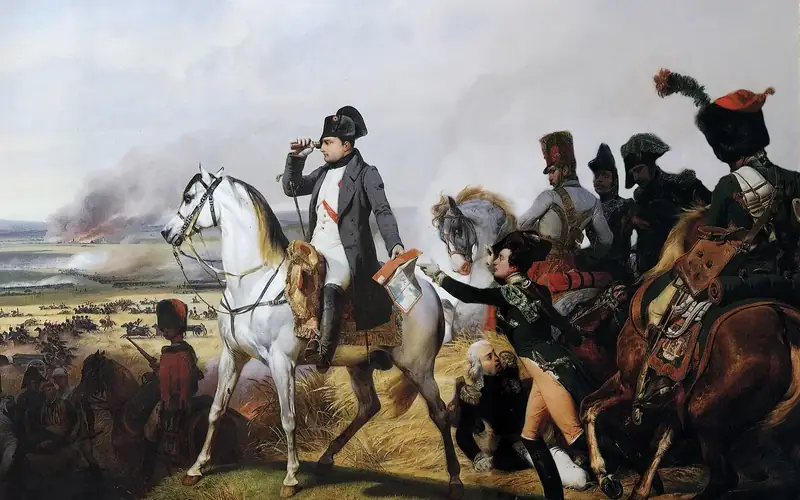
At Wagram in July 1809 the Polish light horse took part in Guard cavalry actions. It was after that campaign that the lance became lastingly fixed in their panoply.
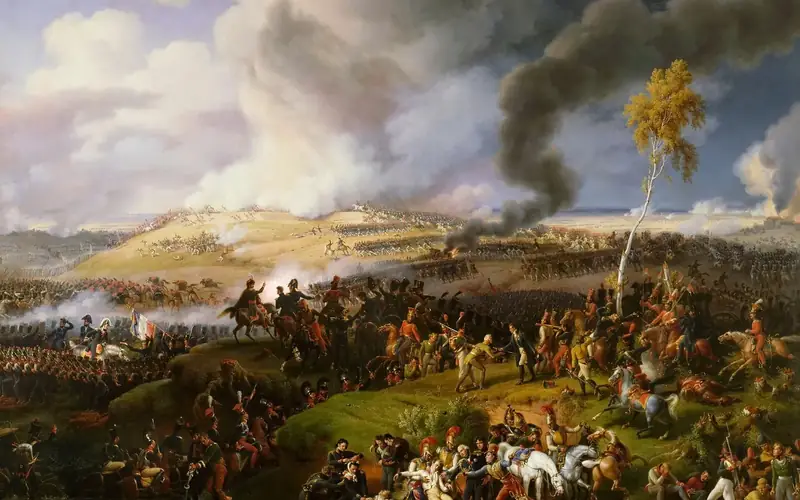
At Borodino and throughout the Russian campaign they fought in Guard cavalry. The retreat tested them like the others: cold, famine, loss of horses. In 1813-1814 survivors and reinforcements returned to service.
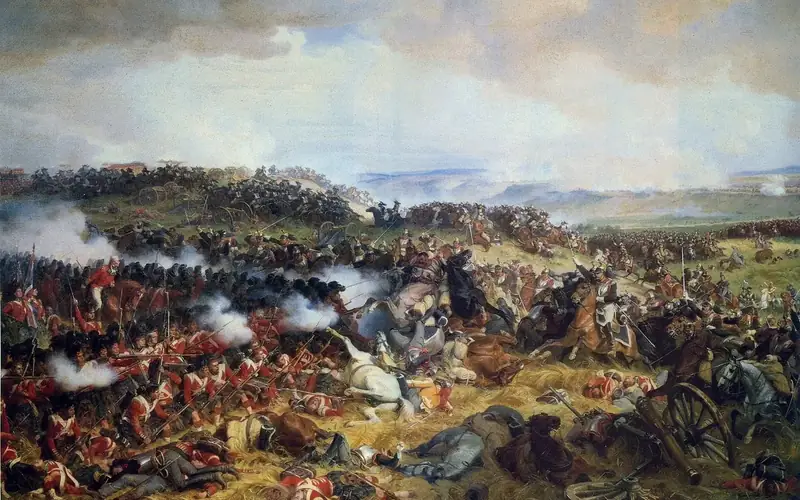
At Waterloo the Polish Guard lancers were still present in the mounted deployment. Their fidelity to Napoleon to the end became a central theme of Polish memory of the First Empire.
Legacy and memory
In Poland as in France, Somosierra became a site of memory. Paintings, poems and schoolbooks fixed the image of the Polish lancer galloping under cannon fire.
The regiment also embodies the ambiguity of the Napoleonic alliance: Polish national hope and instrument of the Emperor’s European policy. Dissolved after 1815, it left a lasting mark on nineteenth-century Polish military identity.