An arm of mobility
Horse artillery appeared and developed in the late eighteenth century to match cavalry's pace. Under the Consulate and Empire, the line fielded companies beside foot artillery.
It must be distinguished from Guard horse artillery: same tactical principle, different status, recruitment and matériel priority. This entry concerns the line.
Its existence let army corps dispose of mobile fire without awaiting the slow deployment of heavier foot pieces.
Organisation
Companies attached to cavalry divisions or available at corps/army level by order of battle. Mounted gunners, crews and train adapted to rapid movement.
Pieces were generally lighter than the heaviest reserve foot calibres. The trade-off was sometimes lesser long-range shot power.
Like all horse-drawn artillery, it depended cruelly on horses: after 1812 the remount crisis struck line horse batteries too.
Matériel
Within the Gribeauval framework and its evolutions, light field guns (4 or 6 pounders by issue and period, sometimes 8) suited the mobile role. Ammunition — shot, canister — followed in caissons.
Unlimbering had to be rapid: unhitch, lay, fire, possibly limber up again. Crew training made the difference between a useful battery and a battlefield obstruction.
Line horse artillerymen's uniform featured cavalry elements (boots, sabre) while belonging to artillery's learned arm.
Tactics
Supporting a charge of chasseurs, hussars or dragoons; moving onto an open flank; harassing a marching column: missions where line horse artillery excelled.
It could also temporarily reinforce a point of the infantry front before moving on. Its vulnerability remained that of teams exposed to counter-battery fire.
In a "grand battery" it could coexist with foot artillery, but its natural employment remained movement.
Battle honours
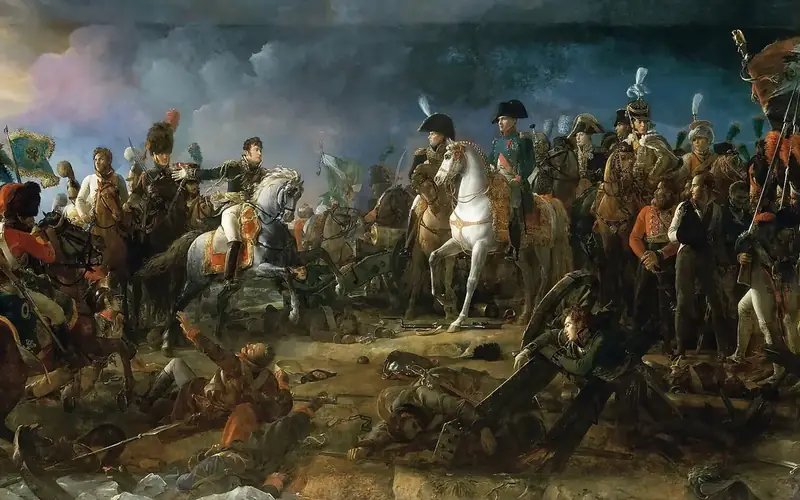
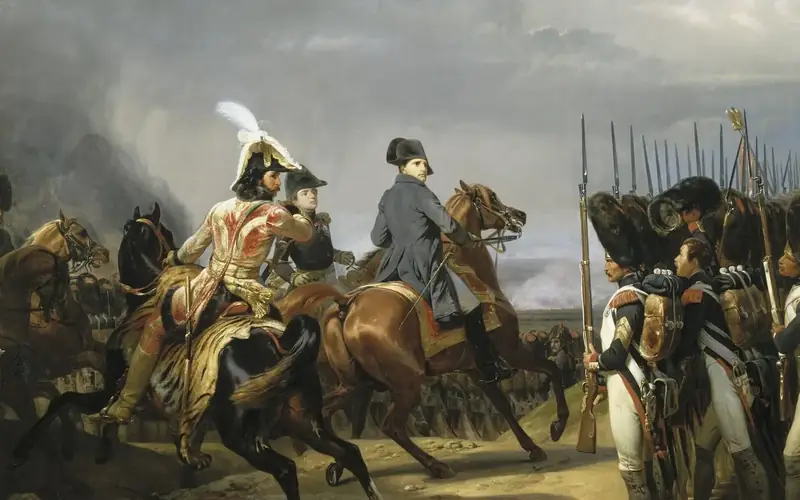
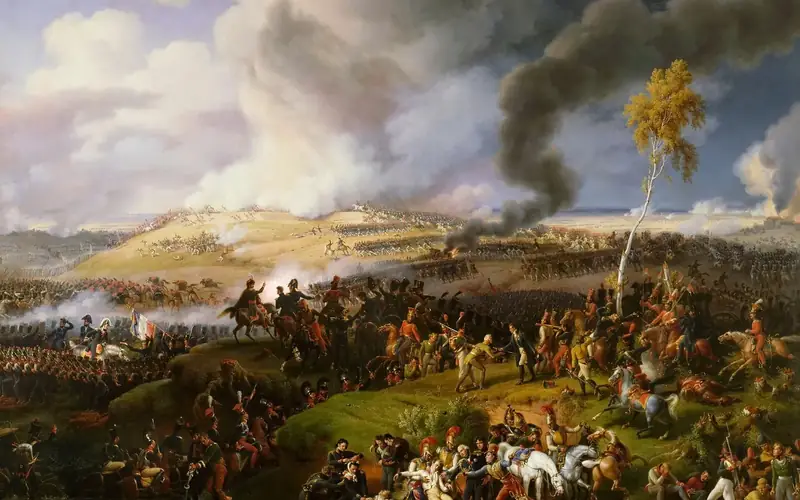
The Austerlitz, Jena and Eylau campaigns saw line horse artillery accompany the Grande Armée's rapid manoeuvres. At Eylau, chaos and snow tested every artillery train.
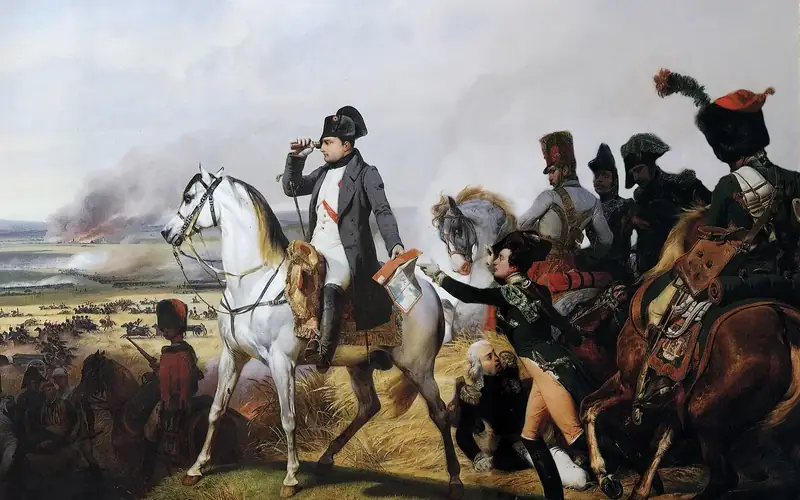
At Wagram and on German fields it supported flank offensives and pursuits. In Russia, mobility was paid for in the retreat when horses and caissons ran short.
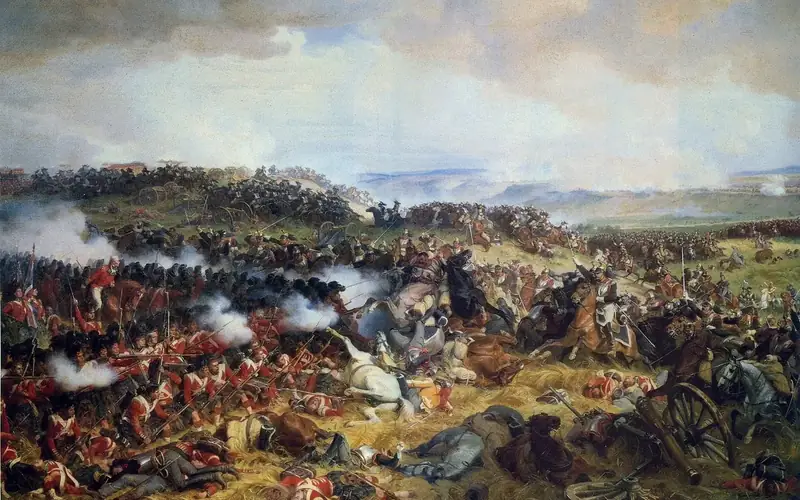
At Waterloo, line horse batteries engaged in the artillery duel and attack support; they shared the army's fate.
Legacy
Line horse artillery normalised the idea of fire as mobile as cavalry. Nineteenth-century armies kept "horse" or "mounted" batteries in that spirit.
On Empire Napoléon it recalls that fire mobility was not the Guard's monopoly — the line too knew how to gallop its guns.