Origins and creation
After the Egyptian expedition (1798-1801), Bonaparte brought Mameluke troopers and Oriental auxiliaries back to France. Under the Consulate then the Empire a Mameluke squadron was formed and attached to the Guard — in practice often associated with the horse chasseurs. The unit combined symbolic function and combat capacity.
Roustam Raza, Napoleon’s personal Mameluke, belonged to the Emperor’s household more than to squadron command; he nonetheless embodied for the public ‘Napoleon’s Mameluke’. The fighting squadron itself followed the Grande Armée’s campaigns.
Oriental dress — turban, caftan, baggy trousers, curved weapons — made these horsemen immediately legible in battle paintings and propaganda engravings.
Organisation and strength
It was a reduced formation: strengths cited often turn around one hundred and fifty to two hundred and fifty men according to period, far from full Guard regiments. A squadron, not a brigade.
Administratively linked to Guard light cavalry, the squadron manoeuvred in the wake of the horse chasseurs. French officers gradually framed the unit as recruitment widened beyond native Egyptians alone — Syrians, Greeks, and later Europeans ‘Orientalised’ as needed.
In the Guard’s symbolic hierarchy the Mamelukes occupied a unique niche: assumed exoticism, displayed fidelity to the Emperor, limited strength.
Uniform, arms and recruitment
The uniform was not an adapted French coat: it was dress of Ottoman and Mameluke inspiration — bright colours, ample drapery, turban or Oriental cap. Arms mixed scimitars, daggers, pistols, sometimes lances, in a panoply that struck the Western imagination.
Initial recruitment drew on men brought from the East and volunteers from the Mediterranean basin. Over time the ‘authentically Mameluke’ character diluted; the unit remained identifiable by costume and name.
Training had to reconcile Oriental equestrian traditions with French Guard discipline. The result, according to witnesses, was a picturesque troop yet able to charge effectively.
Deeds of arms
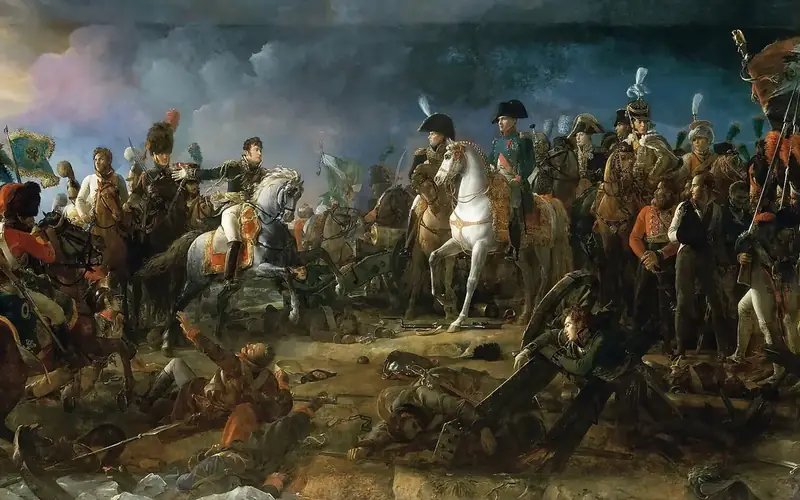
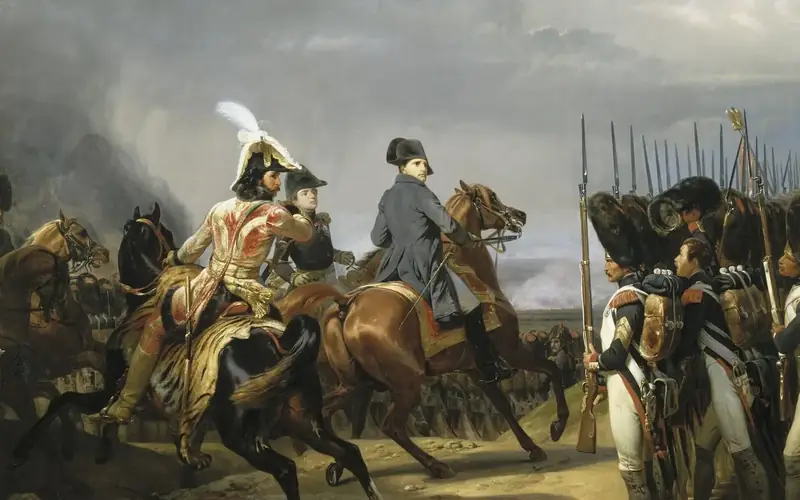
The Mamelukes were present in the great campaigns of the early Empire: Austerlitz, Jena, the Polish affairs. Their small strength limited their strategic role but not their visibility: where they charged, the chronicles noted it.
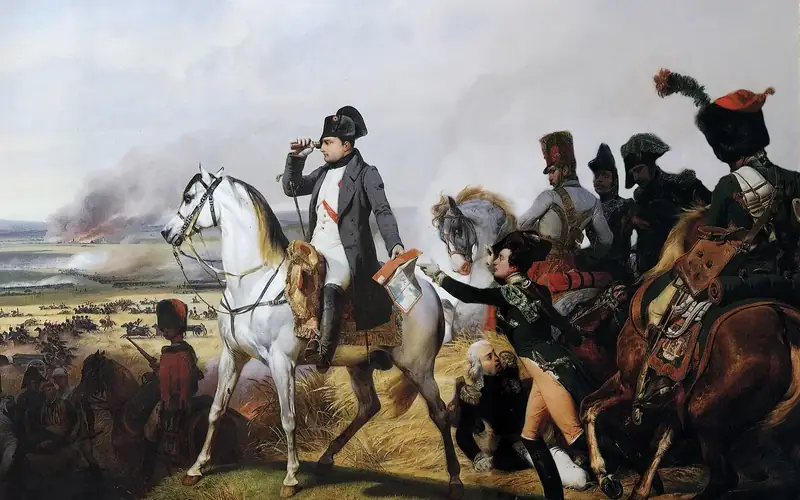
At Wagram and during the 1809 campaign they accompanied Guard cavalry. In Spain and elsewhere detachments appear in escort and elite columns.
The Russian campaign exposed them to the same trials as the rest of the cavalry. Survivors continued to serve in 1813-1814.
Under the Hundred Days the squadron was again reconstituted in the Guard’s orbit. Waterloo closed, for them as for the others, the imperial cycle.
Legacy and memory
In collective memory the Guard Mameluke became an Orientalist motif as much as a military fact. Géricault, Vernet and other painters fixed silhouettes mixing uniformological accuracy and fantasy.
Historically the squadron recalls that the Napoleonic Empire was also a Mediterranean product: Egypt was not only a failed adventure but a lasting source of men, images and legends.