Capital of the Habsburgs, Vienna is the only major European capital Napoleon entered twice: on 13 November 1805, then on 13 May 1809. It is also the city where, in 1814, the Congress set about undoing his work.
Historical context
On 13 November 1805 Vienna fell without a fight — and without glory for its defenders. Murat and Lannes rode alone to the Danube bridge, assured the Austrian officers that an armistice had just been signed, kept them talking while grenadiers closed in behind, and seized the crossing intact. The trick spared the Grande Armée a winter siege. Napoleon did not lodge in the Hofburg: he settled at Schönbrunn, at the city gates. Three weeks later he won Austerlitz.
He came back in 1809, less easily. This time Vienna was shelled through the night of 11-12 May — a shell fell near the room where Haydn lay dying, three weeks before his death — and capitulated on the 13th. The occupation lasted until November. In between, Napoleon suffered his first personal defeat at Essling, a few kilometres away, before erasing it at Wagram in July.
The city was more than a conquest: it was the nerve centre of European diplomacy. From Vienna, Metternich watched, played for time, and finally turned the alliance around. The 1810 marriage to Marie Louise was negotiated there like a treaty; the 1813 declaration of war was decided with the same composure. Napoleon occupied the capital twice without ever winning the game being played inside it.
From September 1814 to June 1815 the Congress of Vienna redrew the continent, methodically erasing fifteen years of conquest. The Empire ended in the city it thought it had subdued. The Habsburgs kept their dead: in the Capuchin Crypt lie Marie Louise and Napoleon II, the wife and son of the defeated.
Go further
Recommended books to dig deeper (affiliate links)
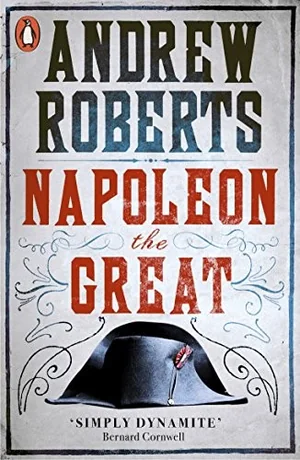
Napoleon the Great
Andrew Roberts · 2014
A monumental biography drawing on Napoleon’s 33,000 surviving letters, admiring but rigorous.
See on Amazon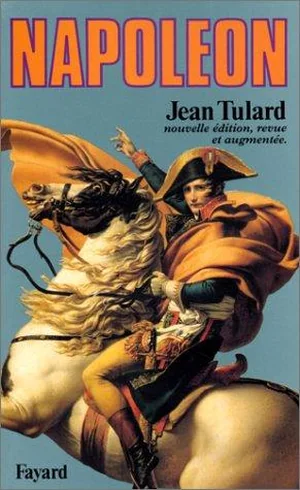
Napoléon ou le mythe du sauveur
Jean Tulard · 1977
The book that reshaped how the man is read: how France gave itself a saviour, and what it cost.
See on Amazon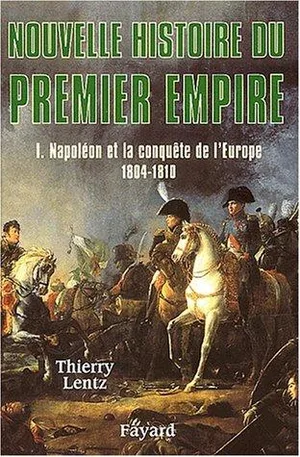
Nouvelle histoire du Premier Empire
Thierry Lentz · 2002-2010
Four reference volumes on institutions, diplomacy and collapse: the scholarly synthesis of the subject.
See on AmazonAs an Amazon Associate, this site earns from qualifying purchases.
Support the encyclopedia
Napoleon Empire is an independent project. Your contribution helps grow the content and keep the site running.
DonateSecure payment on the platform you choose.