Origins
Armoured heavy cavalry existed in France long before Napoleon; the Empire modernised its organisation, uniform and mass employment. Cuirassier regiments became the preferred tool of mounted rupture.
Under the Consulate then Empire, the number of regiments grew with campaign needs. With the carabiniers they formed the core of the cavalry reserve.
Their prestige was considerable: joining the cuirassiers often required stature, solidity and, as far as possible, a good horse — a scarce resource after the great campaigns.
Organisation
Cuirassier regiments organised in squadrons; mounted strength ready for battle was almost always below theoretical tables, especially after 1812.
On the battlefield they were frequently grouped in heavy-cavalry brigades and divisions, held in reserve until the moment judged decisive. Murat, Nansouty, Latour-Maubourg and other cavalry chiefs made them a manoeuvre instrument at battle scale.
The support train — smiths, saddlers, forage — struggled to follow forced marches; cuirass and heavy horse imposed particular logistics.
Uniform and armament
The cuirass (breastplate and often backplate), crested helmet, coat and heavy boots composed the heavy silhouette. Steel protected against thrusts and many bullets, without making a man invulnerable under artillery fire.
The main weapon was the straight heavy-cavalry sabre, made for the point in the charge. Holster pistols completed the kit; the carbine was not central to their shock doctrine.
The horse, preferably tall and robust, mattered as much as the man. Horse losses — Eylau, Russia, 1813 — weakened heavy cavalry as much as human losses.
Tactics
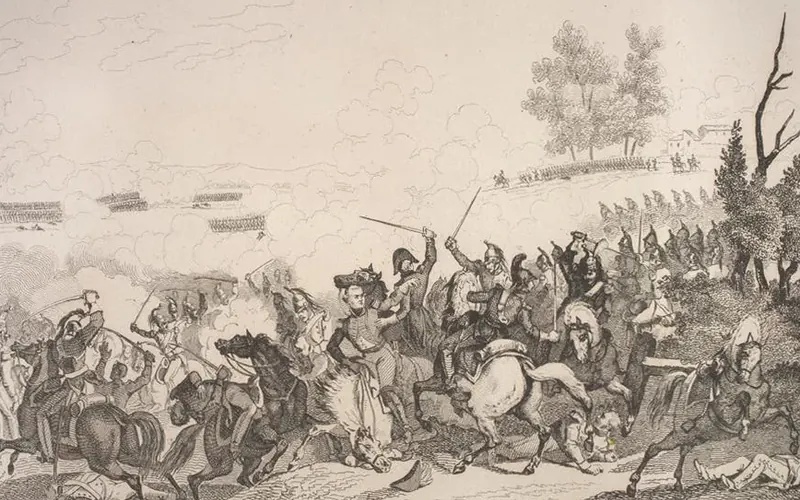
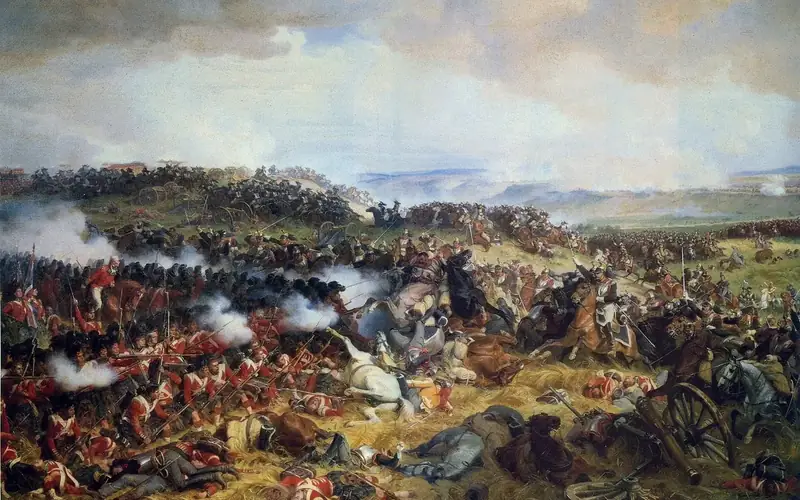
The charge in line or echelon aimed to break already shaken infantry, overthrow opposing cavalry or exploit a breach. Against a firm square and sustained fire it could fail with heavy loss.
Cuirassiers often struck late in the day, when guns and infantry had prepared the ground. Once launched, their mass was hard to stop — and hard to reform if the charge scattered.
Ground mattered: mud, slopes, tall crops slowed the heavy horse. Heavy cavalry's great successes often coincided with practicable soil and an already tried enemy.
Battle honours
At Eylau (8 February 1807), the massed charge of the cavalry reserve — in which cuirassiers held a central place — restored a critical situation under snow and Russian fire. The cost in men and horses was enormous.
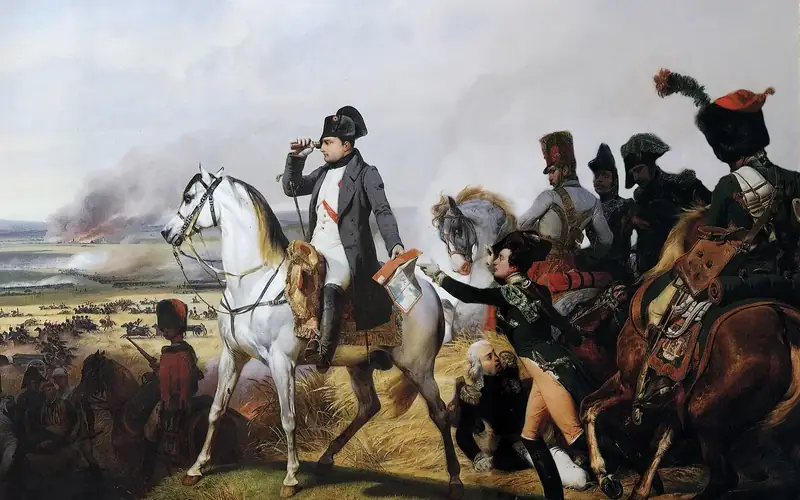
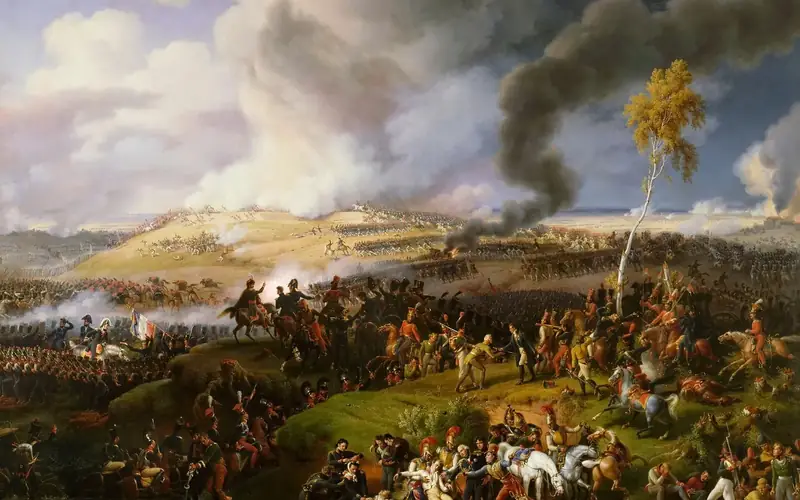
At Wagram (1809), heavy cavalry took part in rupture and pursuit actions. At Borodino (1812), it engaged in costly fighting around Russian redoubts and positions.
At Waterloo (18 June 1815), repeated French cavalry charges against Anglo-Allied squares — including cuirassiers — marked the day without finally breaking the enemy infantry. Mud and defensive fire weighed heavily.
Legacy
The Empire cuirassier remained Europe's archetype of the nineteenth-century armoured horseman. Paintings, prints and uniformology froze the image: helmet, cuirass, sabre drawn.
For Empire Napoléon he embodies the mounted shock — splendid and costly — of Napoleonic battle.