One against five
On 1 January 1814 Blücher crossed the Rhine at Mannheim and Schwarzenberg came through Switzerland: more than three hundred and fifty thousand Allies entered France. Napoleon had some seventy thousand men to oppose them, for want of armed conscripts and horses. The Legislative Body demanded peace; the Emperor dismissed it and left to join the army at Châlons on 25 January.
The campaign of six victories
Beaten at La Rothière on 1 February, he turned against the Army of Silesia, strung out along the Marne, and broke it piece by piece: Champaubert on the 10th, Montmirail on the 11th, Château-Thierry on the 12th, Vauchamps on the 14th. He then wheeled south and threw Schwarzenberg back at Montereau on the 18th.
Six victories in eight days with soldiers of twenty: military textbooks see in it the summit of his art. But every success was local; the Allies had signed at Chaumont on 9 March a pact binding them never to treat separately, and the Châtillon congress broke down over the refusal of the 1792 frontiers.
The march on Paris
At the end of March the Emperor moved onto the enemy's rear towards Saint-Dizier, to cut their communications and raise the eastern garrisons. The Allies, informed by an intercepted despatch and by Talleyrand's reports on the mood in Paris, took the opposite gamble: they ignored him and marched straight on the capital.
Paris capitulated on 31 March after a day of fighting at Romainville and Montmartre. The gamble paid: the most brilliant campaign ended with the fall of the regime, six days later, at Fontainebleau.
See also
Go further
Recommended books to dig deeper (affiliate links)

Napoleon the Great
Andrew Roberts · 2014
A monumental biography drawing on Napoleon’s 33,000 surviving letters, admiring but rigorous.
See on Amazon
Napoléon ou le mythe du sauveur
Jean Tulard · 1977
The book that reshaped how the man is read: how France gave itself a saviour, and what it cost.
See on Amazon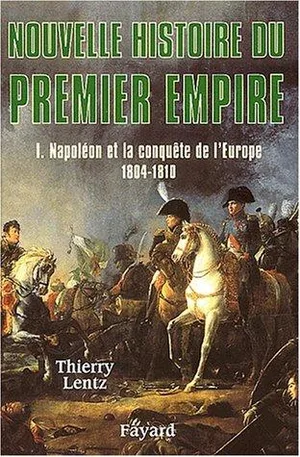
Nouvelle histoire du Premier Empire
Thierry Lentz · 2002-2010
Four reference volumes on institutions, diplomacy and collapse: the scholarly synthesis of the subject.
See on AmazonAs an Amazon Associate, this site earns from qualifying purchases.
Support the encyclopedia
Napoleon Empire is an independent project. Your contribution helps grow the content and keep the site running.
DonateSecure payment on the platform you choose.