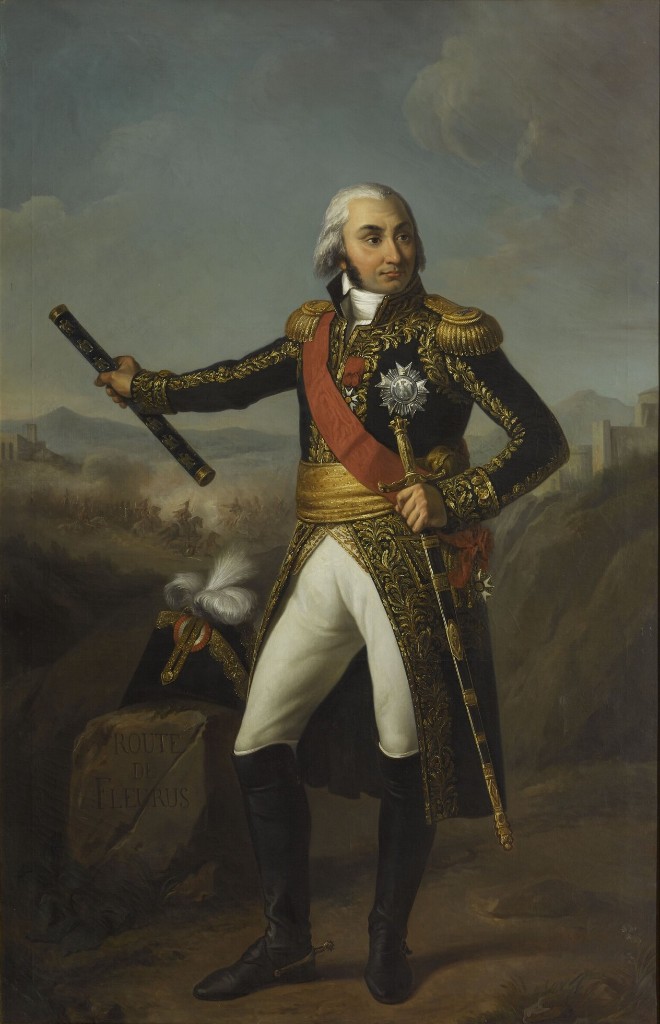
Jean-Baptiste Jourdan (29 April 1762-23 November 1833), Limousin surgeon's son raised by family after losing his parents, embodies the rise of an American War of Independence soldier turned Limoges haberdasher, then battalion commander and finally commander-in-chief of the Army of Sambre-and-Meuse when the Republic wavered on its northern borders. Wattignies, Hondschoote, 1794 dismissal and return to trade were only episodes before Fleurus: on 26 June 1794 victory over the Coalition opened Belgium, showcased captive-balloon tactical intelligence and earned Jourdan the unofficial « saviour of the fatherland » title shared with few others. Sprimont, Aldenhoven and the push to the Rhine cemented republican glory; the Jourdan-Delbrel law of 5 September 1798, organising conscription by age classes, earned him the other popular title of « father of conscripts » and structured the nation in arms for a century. Yet German campaigns against Archduke Charles — Amberg, Würzburg, Ostrach, Stockach — revealed limits of the divisional general promoted too fast to cabinet marshal: failed coordination with Moreau, contradictory Directory orders, nocturnal timidity Napoleon would criticise at St Helena. Rallied without zeal to the Consulate after a Brumaire he tried to block, protected by Lefebvre, inspector then Cisalpine ambassador, Piedmont administrator and councillor of state, he was raised Marshal of the Empire on 19 May 1804 — fourth in order of precedence, more to cement Jacobin generals than forthcoming Napoleonic victories. The Emperor kept him at arm's length: few dotations, peripheral postings, friendship with Joseph at Naples then Iberian nightmare as major-general of an Army of Spain where Soult, Victor and Joseph himself contradicted his plans; Talavera showed the gap between his vision and marshals' impatience; Vitoria in 1813 cost him symbolically his baton without his actually commanding the battle, ill and set aside by the king who rejected retreat advice. Restoration recycled him peer, military division governor, president of the war council on Ney that declared incompetence — a gesture of dignity toward the later tribunal he refused to preside. Count-peer in 1819, defender of the Charter in the upper house, he crossed the July Monarchy: brief Foreign Minister 1 August 1830, then governor of the Invalides until death. Buried under the dome he received posthumous Napoleonic tribute from the St Helena prisoner — « true patriot », « elevation of soul » after the fall. For Empire Napoléon Jourdan links the Republic of mass levies to the Empire measuring generals by Austerlitz, the glory of 26 June 1794 to the shadow of Spanish bulletins.
Limoges, Auxerrois Regiment, and Entry into Revolutionary Turmoil
Born at Limoges, Jourdan apprenticed with a silk-merchant uncle in Lyon before enlisting in 1778 as a private in the Auxerrois Regiment: American campaign, Siege of Savannah, discipline of monarchy’s last fires before 1784 discharge and return to trade — haberdasher married in 1788, patriotic bourgeois when the National Guard reorganised the town.
The Revolution opened rapid responsibility: organising Haute-Vienne volunteers, election to the 2nd Battalion, Belgian campaign under Dumouriez, Jemappes then Neerwinden where arms' fortune turned. Promotions followed — brigadier May 1793, divisional general July — in a context where the Committee of Public Safety demanded immediate victories and forgave little strategic restraint.
At Hondschoote, wounded taking entrenchments, he proved individual courage bulletins expected; on 26 September 1793 he replaced Houchard at the head of the Army of the North, moved to Army of the Ardennes then back to the North for Wattignies: two days of bitter fighting beside Carnot, lifting the siege of Maubeuge, victory over Cobourg saving the Sambre line.
His winter caution facing ill-equipped recruits displeased the Committee: recalled to Paris, he argued defence before spring offensive; plans were adopted but mistrust remained — Pichegru replaced him, a decree aimed at arrest and dismissal, representatives on mission intervened, Jourdan returned to Limoges trade early 1794.
This early disgrace foreshadowed the dominant motif of his career: man of system and organisation, he displeased political urgency when he refused to promise the impossible; Fleurus' soldier was born of recall as much as of sudden genius.
For Empire Napoléon this Limousin illustrates the Revolutionary social chain — educated commoner, trade then sword — feeding Carnot's armies without passing royal school for purple generals.
Fleurus, Rhine, and Jourdan-Delbrel Law: Republican High Point
Reemployed at the head of the Army of the Moselle, Jourdan opened 1794 with Arlon then junction before Charleroi: birth of the Army of Sambre-and-Meuse, impressive mass symbolising levy in numbers. On 26 June at Fleurus, facing Coalition forces, he committed reserves and artillery with tenacity compensating lack of Napoleonic virtuosity; for the first time a captive balloon reported enemy moves and guided French fire — technical anecdote become emblem of Republican science serving the battlefield.
Victory allowed annexation of Belgium, restored Directory confidence and fixed for two decades the image of « victor of Fleurus » — legitimacy base neither Archduke Charles nor Wellington would erase in popular opinion, even when imperial bulletins later muted his successes.
Sprimont and Aldenhoven extended the push; Namur, Charleroi, Maastricht, junction with Pichegru at Brussels, flags planted on the Rhine from Cleves to Koblenz — map of a conquering Republic before financial exhaustion and treason on interior lines.
The 1795 Rhine campaign with Pichegru aborted: presumed treason, impossible coordination, withdrawal to the left bank. That of 1796 against Archduke Charles turned to disaster at Amberg then Würzburg; Moreau, further south, pursued partial successes without cutting Austrian retreat — the Directory paid strategic incoherence, Jourdan the media bill.
In 1797 the Haute-Vienne department sent him to the Council of Five Hundred: presidency, secretaryship, legislative manoeuvres announcing the politician as much as the soldier. On 5 September 1798, with Delbrel, he secured vote of the law instituting compulsory conscription of men twenty to twenty-five by successive classes — masterpiece of the modern state, object of debate, resistance and national pride into the twentieth century.
For Empire Napoléon this block fixes what the Grand Army would industrialise: mass, law, citizen-soldier — of whom Jourdan is both hero of 26 June 1794 and legislator of recruitment.
Archduke Charles, Exhausted Directory, and Passage to Consulate
In 1799 the Army of the Danube crossed the Rhine again; Jourdan faced Charles at Ostrach then Stockach with inferior numbers — retreat toward Black Forest, disgrace, replacement by Masséna on 9 April. The 14 July toast « to the resurrection of pikes » displayed Jacobinism the Consulate would not fully forgive.
Re-elected to the Five Hundred, he resisted Brumaire in vain; exclusion from legislative body, constrained stay in Charente-Inférieure, Lefebvre's intervention with Bonaparte: inspector-general of infantry and cavalry January 1800, ambassador to Cisalpine Republic, Piedmont administrator, councillor of state in 1802 — administrative recycling of a domesticated political opponent.
Conservative Senate eluded him: Napoleon rejected his candidature after public remarks for maintaining the Republic. In January 1804 he commanded Army of Italy replacing Murat, sensitive post on the eve of coronation.
On 19 May 1804, fourth marshal in order of precedence, he learned the news on the Italian stage; at coronation he escorted the imperial carriage — protocol visibility compensating master's mistrust, who raised Fleurus' victor to rally Revolutionary officers more than to entrust future grand manoeuvres.
Grand Eagle of the Legion February 1805, Castiglione manoeuvres for Napoleon's coronation as King of Italy, then marginalisation: Masséna replaced him at hostilities' opening; complaints to throne, intermittent postings until Neapolitan post beside Joseph.
For Empire Napoléon this phase draws the « politically incorrect » marshal: too tied to laws and assemblies to please personal authority, too titled to be struck, too Fleurus to be forgotten.
Naples, Joseph, and the Spanish War: Talavera, Vitoria, Disgrace
Governor of Naples March 1806, Jourdan tied his fate to Joseph Bonaparte: aborted Sicilian projects, decorations and subsidies when the brother-in-law became King of Spain — transition toward Peninsular nightmare.
Major-general of Army of Spain in 1808, he had to coordinate Soult, Victor, English captains and a hesitant sovereign. His enveloping manoeuvre plan against Wellington and La Cuesta collided with Joseph's authorisation for Victor to attack prematurely at Talavera: three days of assaults, disciplined British withdrawal, missed chance Jourdan blamed on marshals' indiscipline.
Recall October 1809, retirement to Coudray in Seine-et-Oise: the soldier finally tasted family life before the Emperor, preparing Russia, sent him back in 1811 to soothe Joseph and counter Soult — second Iberian posting.
Governor of Madrid from July 1811, he urged caution and evacuation of royal train before battle; Joseph wanted confrontation. On 21 June 1813 at Vitoria Jourdan was ill, denied effective command; decisive French defeat handed Spain to Coalition. Marshal's baton vanished in confusion of king's flight — heavy symbolic loss Napoleon blamed on Jourdan despite witnesses' nuances.
Retirement request, relative isolation until fall: historiography split between « ignored advice » and « failing major-general » reflects reality of broken chain of command between Paris, Joseph and rival marshals.
For Empire Napoléon this chapter opposed Jourdan's map geometry to Napoleonic friction in the Peninsula — where Empire paid for absence of single command as much as Spanish and English resistance.
Restoration, Hundred Days, Peers, and Defence of the Charter
After Vitoria Jourdan returned to France; 19th military division then Restoration gave him territorial command titles again — Bourbon recycling of a marshal too famous for complete ostracism.
On 3 April 1814 he adhered to provisional government acts; Saint-Louis cross June, country retirement after March 1815 until imperial recall: peer in Hundred Days, governor of Besançon and 6th division — technical fidelity to return without strategic illusion.
Second Restoration: monarchical rally, presidency of war council charged with Marshal Ney — tribunal declared incompetent; Jourdan then refused to preside body condemning old comrade, rare gesture in tragic comedy of 1815 trials.
1817: 7th military division; 5 March 1819 elevation count-peer without constituted majorat — entry to upper house where he defended Charter of 1814 liberties beside constitutionalists, voted and spoke with voice of domesticated yet unabased Republican officer.
Commander of Holy Spirit May 1825: Bourbon crown on former toast to pikes — irony of successive regimes carved on single career.
For Empire Napoléon this political path softens simplistic « weathercock » image: Jourdan chose institutions — Council of Five Hundred, Chamber of Peers — more than men, and sometimes paid that choice in Napoleonic disgrace.
July 1830, Invalides, and Posterity: From Father of Conscripts to Tomb under the Dome
The Three Glorious Days thrust him Foreign Minister 1 August 1830 in provisional ministry — marshal's flash passage at Quai d'Orsay, symptom of crisis seeking consensus names.
On 11 August he became governor of the Invalides: function he held until death, maintaining cult of arms and memory of maimed like Sérurier before him, but under July Monarchy — symbol of domesticated Republican continuity.
He died in Paris 23 November 1833; funeral at Invalides church, burial in dome vaults — national necropolis where Limousin of Fleurus neighbours imperial tombs he served and survived.
Napoleon at St Helena rendered paradoxical justice: ill-treated in life, « true patriot » after fall, « elevation of soul » for bearing no grudge — testimony weighing in posthumous legend as much as criticism of nocturnal timidity.
Modern historians stress organiser more than genius tactician; boulevard Jourdan, Limoges square, name on Arc de Triomphe extend civic memory of conscription's legislator as much as victor of 1794.
For Empire Napoléon Jourdan embodies France passing from Revolutionary mass lever to legal state of charters — never erasing 26 June date on military milestones of nascent Republic.
Discover other characters
Napoleon Bonaparte
Emperor of the French
François Christophe Kellermann
Marshal of the Empire, Duke of Valmy
Bon-Adrien Jannot de Moncey
Marshal of the Empire, Duke of Conegliano
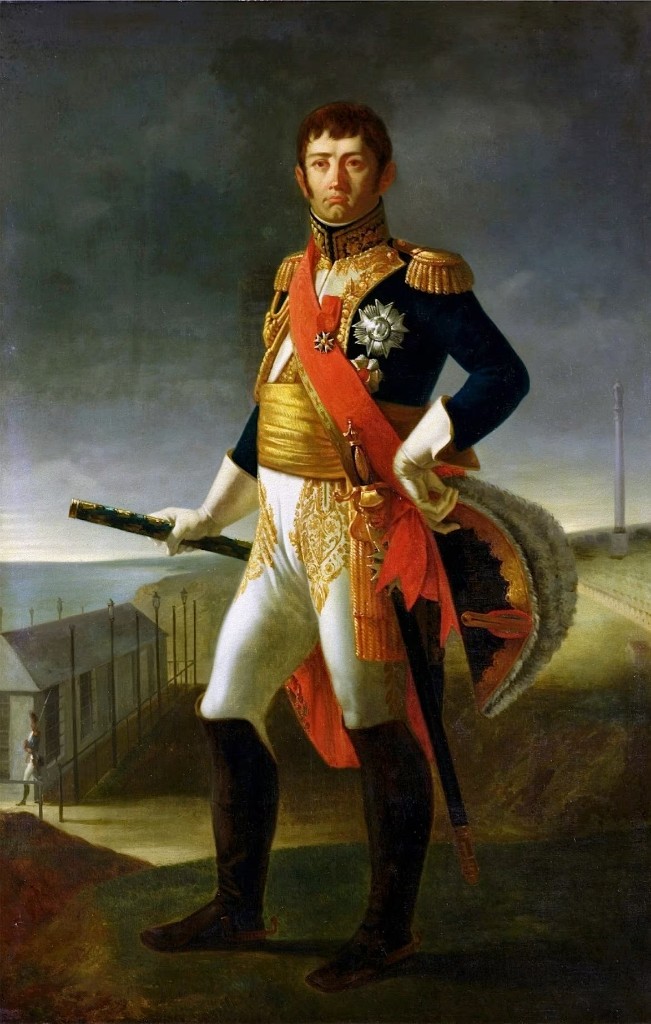
Jean-de-Dieu Soult
Marshal of the Empire, Duke of Dalmatia
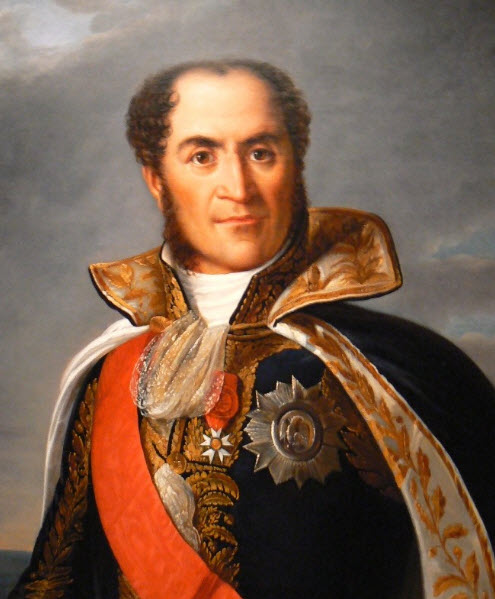
Guillaume Marie-Anne Brune
Marshal of the Empire, Count of Brune
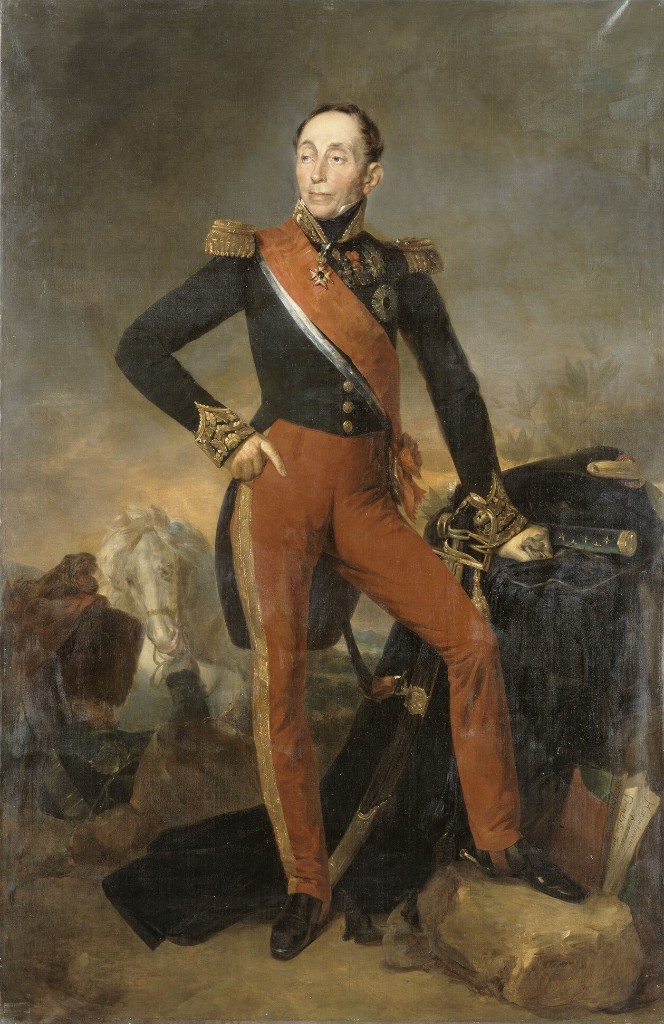
Emmanuel de Grouchy
Marshal of the Empire, Count of Grouchy
Go further
Recommended books to dig deeper (affiliate links)
Napoleon the Great
Andrew Roberts · 2014
A monumental biography drawing on Napoleon’s 33,000 surviving letters, admiring but rigorous.
See on Amazon
Napoléon ou le mythe du sauveur
Jean Tulard · 1977
The book that reshaped how the man is read: how France gave itself a saviour, and what it cost.
See on Amazon
Nouvelle histoire du Premier Empire
Thierry Lentz · 2002-2010
Four reference volumes on institutions, diplomacy and collapse: the scholarly synthesis of the subject.
See on AmazonAs an Amazon Associate, this site earns from qualifying purchases.
Support the encyclopedia
Napoleon Empire is an independent project. Your contribution helps grow the content and keep the site running.
DonateSecure payment on the platform you choose.