Origins and creation
The Imperial Guard did not appear overnight on coronation day: it prolonged the Consular Guard, itself heir to the guides and grenadiers who had escorted Bonaparte since Italy and Egypt. After 18 Brumaire Year VIII (9 November 1799), the new regime gave the executive an elite force under the First Consul’s direct eye.
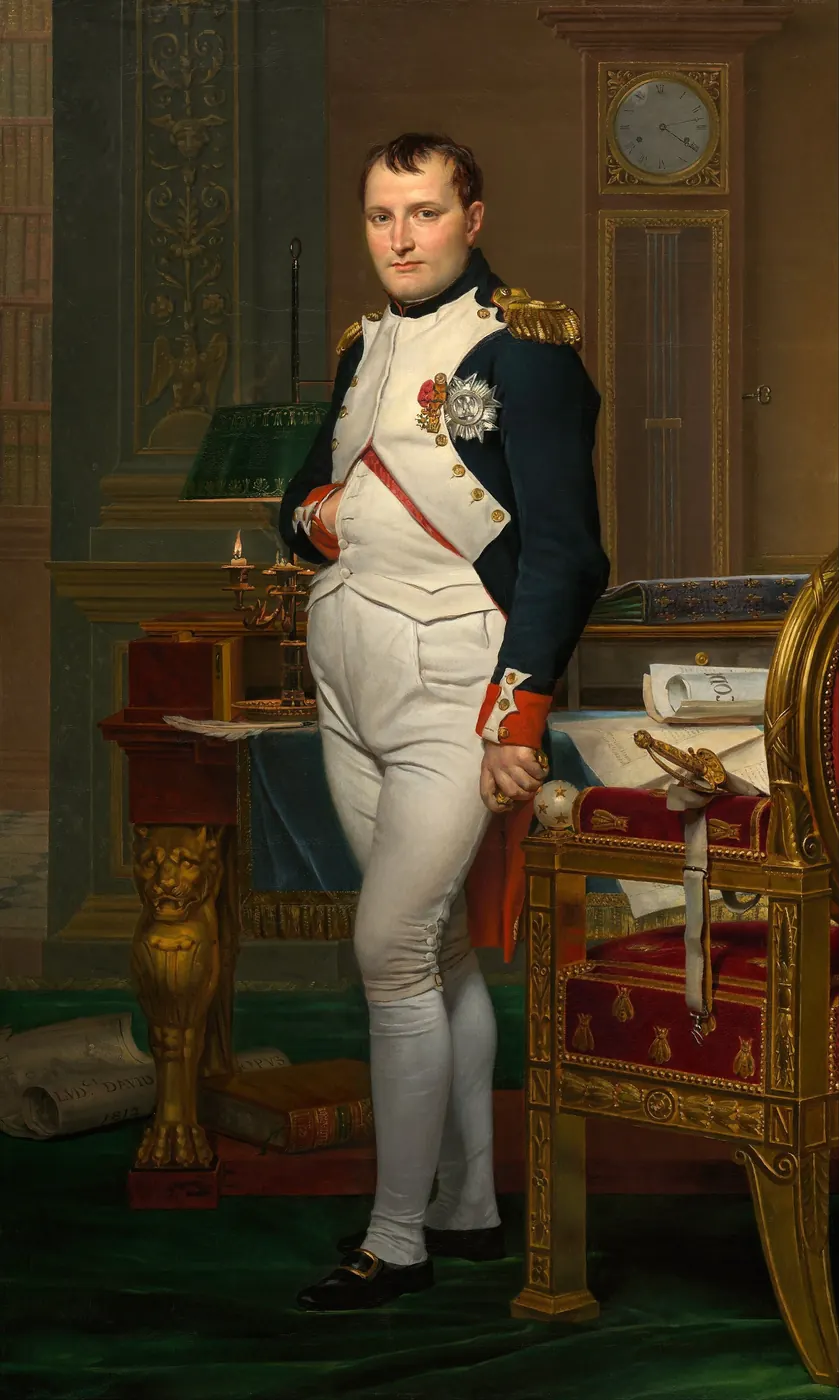
The senatus-consultum of 18 May 1804 turned the Consular Republic into the French Empire. The same day, the Consular Guard became the Imperial Guard. The change of name tied the corps explicitly to Napoleon I. The ceremonies of 1804 — distribution of eagles, coronation on 2 December — made these regiments the visible mirror of the new legitimacy.
In the following years the Guard grew by successive additions: heavy and light cavalry, artillery, sailors, elite foreign units, then, from 1806-1809, Middle and Young Guard formations. The institution became a true army corps.
Organisation and strength
Organisation distinguished the Old Guard, Middle Guard and Young Guard. The Old Guard grouped the oldest and most selective regiments — foot grenadiers and chasseurs, horse grenadiers and chasseurs, plus prestigious units such as the Empress’s Dragoons or the Polish light horse.
Strength varied sharply by campaign. On the eve of Russia (1812), careful estimates place the whole around fifty to sixty thousand men. In 1813-1814 the massive creation of Young Guard battalions pushed total strength, according to several historians, toward levels near one hundred thousand — a figure to handle cautiously.
On the battlefield Napoleon long husbanded his reserve. When the Guard moved — Eylau, Wagram, Borodino, Waterloo — the whole army understood the Emperor was playing his decisive card.
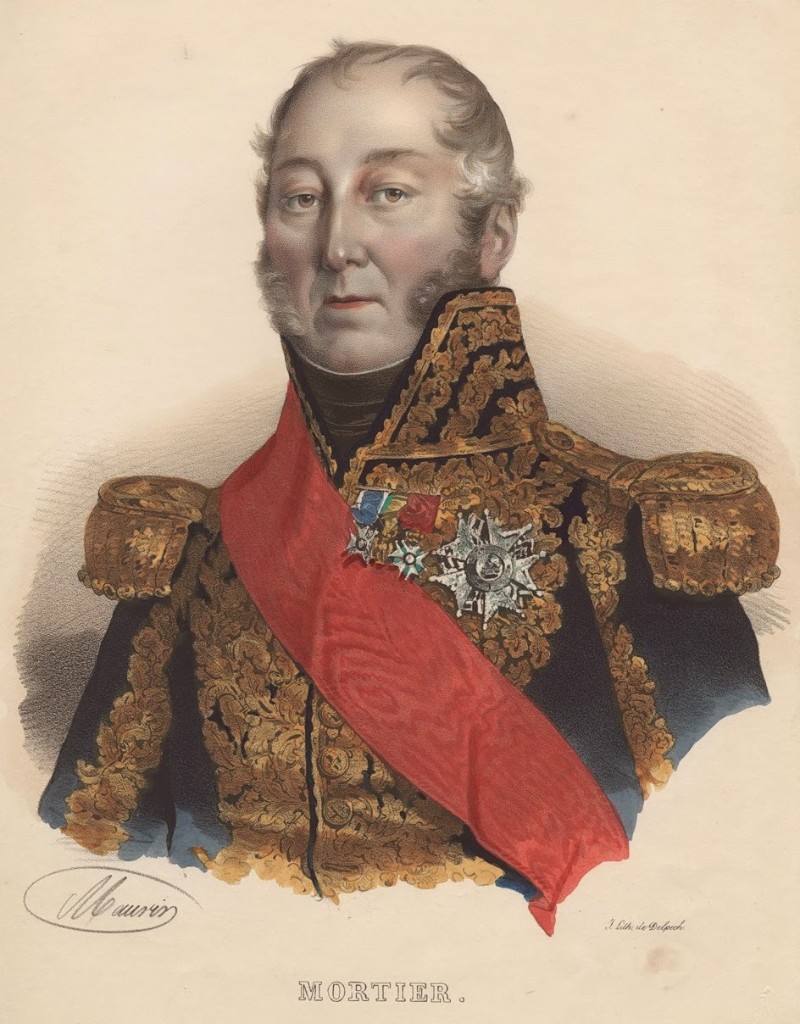
Superior command of the Guard cavalry long rested with Marshal Bessières. Guard infantry was often placed under trusted marshals — Mortier in particular — while Duroc embodied the link between the imperial household and the elite troops.
Uniform, arms and recruitment
Old Guard recruitment rested on strict criteria: length of service (often at least ten years), minimum height for grenadiers, exemplary conduct. Admission among the ‘grognards’ meant higher pay and lasting prestige.
Uniforms varied by arm, but the visual language remained common: dark blue, gold or scarlet ornaments, bearskins for part of the infantry and heavy cavalry. Arms followed French standards, with a standard of upkeep the line could not always match.
Internal discipline mixed martial demand with relative familiarity toward the Emperor. Guard soldiers sometimes dared to ‘grumble’, yet that freedom of tone underlined a contract of personal loyalty Napoleon deliberately cultivated.
Deeds of arms
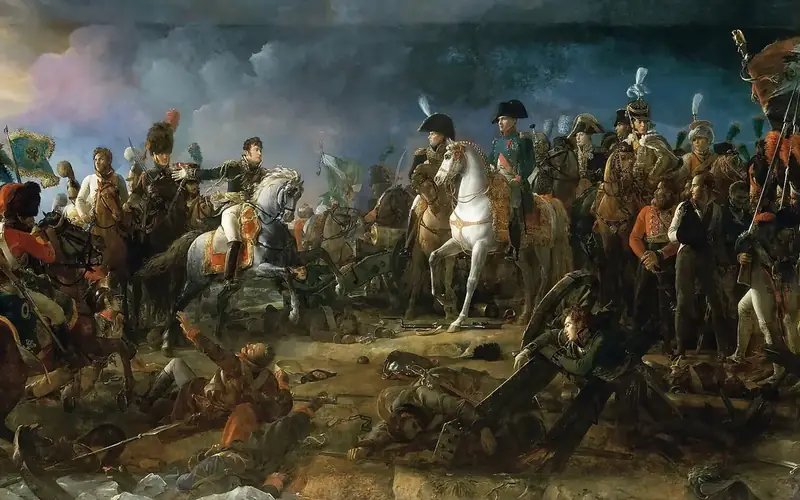
At Austerlitz on 2 December 1805 the Guard formed the central reserve. It did not alone deliver the decisive blow, but its presence fixed enemy attention and completed victory when the Coalition centre collapsed.
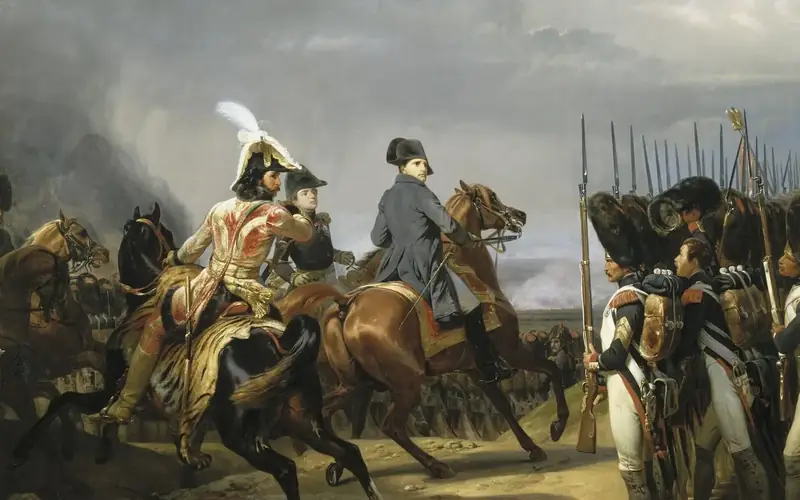
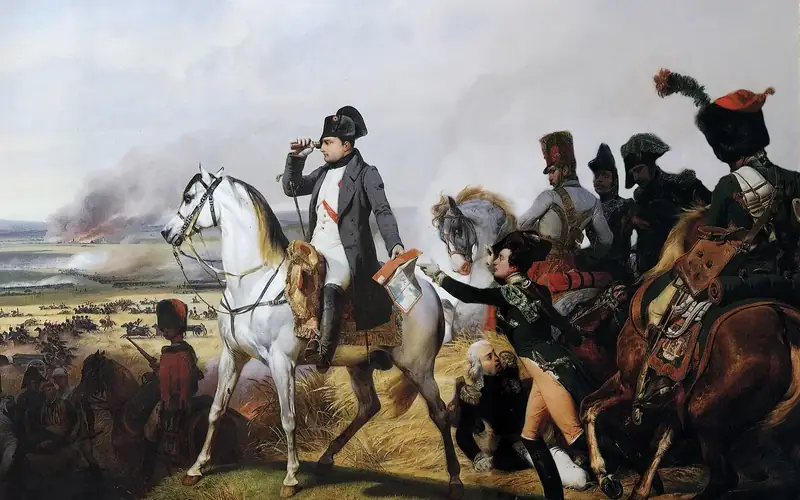
At Jena (14 October 1806) and during the Polish campaign the Guard followed the Grande Armée. At Eylau (8 February 1807), in the snow, Guard cavalry intervened in an indecisive, bloody fight. At Wagram (5-6 July 1809) it helped consolidate victory after Essling.
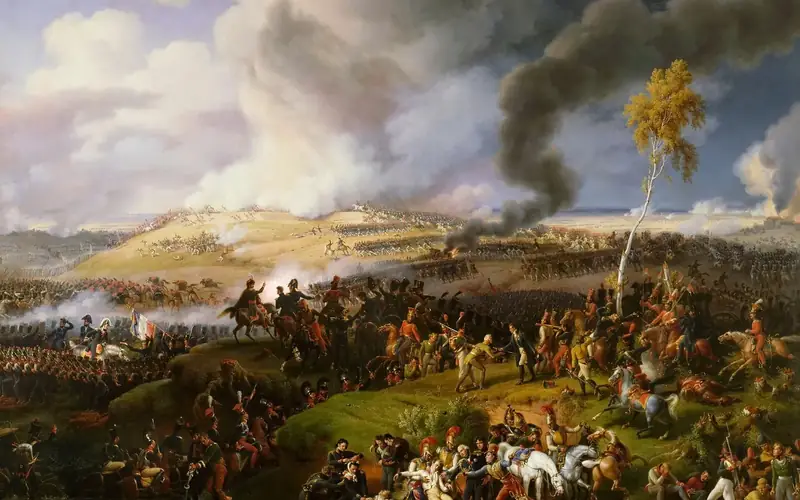
At Borodino (7 September 1812) Napoleon long refused to commit his Guard fully despite line losses: a strategic choice debated for two centuries. In 1813-1814 the Young Guard fought almost without respite.
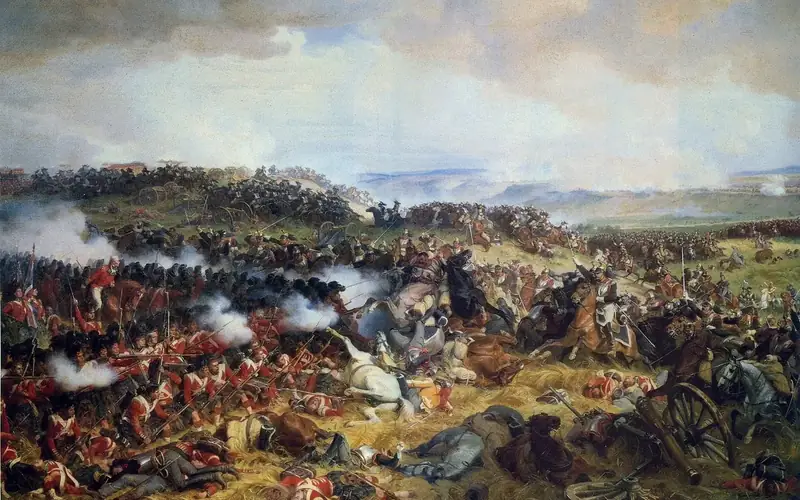
At Waterloo on 18 June 1815 the failure of the Middle Guard assault and the Old Guard’s withdrawal crystallised the Empire’s fall. The apocryphal phrase ‘The Guard dies but does not surrender’ summarises a memory more than an exact report.
Legacy and memory
After 1815 the Imperial Guard was dissolved. Its cadres scattered into retirement, exile or provincial silence. Yet the institution survived in culture: engravings, memoirs, uniformology. The Second Empire would deliberately revive some of its codes.
For historiography the Guard remains the laboratory of the Napoleonic system: reward of merit, strategic reserve, propaganda instrument. To understand the Guard is to understand how Napoleon sought to hold together total war and the myth of the elite soldier.