The Battle of Borodino, known in France as the Battle of the Moskova, fought on 7 September 1812 some 125 kilometres west of Moscow, was the bloodiest day of the Napoleonic Wars. The Grande Armée, about 130,000 men, attacked Kutuzov's Russian army entrenched behind the Great Redoubt and the Bagration flèches. Through fierce frontal assaults the French carried the Russian earthworks, but Napoleon refused to commit his Guard and the Russian army withdrew in good order. Some 70,000 men were killed or wounded in a single day. The road to Moscow lay open, yet the victory decided nothing.
Forces at play
Outcome: French tactical victory, strategically indecisive


France · Duchy of Warsaw · Italy · Confederation of the Rhine
- Napoléon
- Davout
- Ney
- Murat
- Eugène de Beauharnais
- Poniatowski
- Junot
~130,000 men and 587 guns, including the Guard (18,500 men), not committed
Casualties: 28,000 to 35,000 killed and wounded depending on the estimate, including 49 generals

Russia
- Koutouzov
- Barclay de Tolly
- Bagration
- Bennigsen
- Raïevski
- Dokhtourov
103,000 to 115,000 regulars, 7,000 to 11,000 Cossacks, 10,000 to 30,000 militia; ~640 guns
Casualties: 44,000 to 45,000 killed, wounded and missing according to historians (39,300 in surviving returns)
Flags: TRAJAN 117, CC BY-SA 3.0; Sodacan, CC BY-SA 3.0, Wikimedia Commons
Battle coordinates
Borodino (Battle of the Moskva)
Coordinates 55.5187° N · 35.8275° E
Interactive tactical map
Follow the battle hour by hour — hover over or tap a unit for its details.
The fight at Shevardino
The French advance guard runs into the pentagonal redoubt built in front of the Russian left near Shevardino. Murat throws in Nansouty’s and Montbrun’s cavalry with Compans’s division, while Poniatowski’s Poles come up from the south. The redoubt changes hands several times until nightfall.
At nightfall Kutuzov orders Gorchakov to abandon the redoubt: the Russian left will now rest on the flèches.
Positions reconstructed from the West Point Military Academy maps and accounts of the battle, and placed on the actual locations of the villages, earthworks and monuments of the battlefield. Timings, on which French and Russian sources often disagree, are indicative.
Battle narrative
A campaign without a battle
On 24 June 1812 the Grande Armée crossed the Niemen and entered the Russian Empire. Napoleon wanted a swift, resounding victory that would force Tsar Alexander I back into the Continental System. His Grand Equerry Armand de Caulaincourt, a former ambassador in Saint Petersburg, had tried to talk him out of this war; the Emperor did not listen.
Yet the decisive battle kept slipping away. Heavily outnumbered, the Russian armies fell back eastwards under the command of the Minister of War, Michael Barclay de Tolly. His method was to trade space for time: slow the enemy down, inflict losses, but never let himself be pinned. Whenever the Russians tried to establish a defensive line, the speed of the French advance forced them to move on. In mid-August Smolensk was taken and burned.
The march wore down the victor first. The central group that Napoleon led in person had entered Russia with some 286,000 men; hunger and disease reduced it more surely than combat. Its nearest logistical base, Kovno, lay 925 kilometres from Moscow, and the depot at Smolensk 430 kilometres. The balance of forces, three to one at the start of the campaign, was no more than five to four by the end of August.
Kutuzov takes command
In Russia the retreat was increasingly resented. Barclay, of Scottish descent, was accused at court and in the army of refusing to fight, and his generals were at each other's throats. On 20 August Alexander I appointed a new commander-in-chief, Prince Mikhail Kutuzov, a veteran who had already commanded the Austro-Russian army at Austerlitz. Kutuzov joined the army on 29 August at Tsarevo-Zaimishche.
The new commander knew Barclay had been right to retreat. But neither the Tsar, nor the army, nor public opinion would accept giving up Moscow without a fight: a battle was needed, if only for the morale of the soldiers and the nation. After a further retreat beyond Gzhatsk, Kutuzov halted on 3 September near the village of Borodino, some 125 kilometres west of Moscow, and immediately had the position fortified.
The battlefield of Borodino
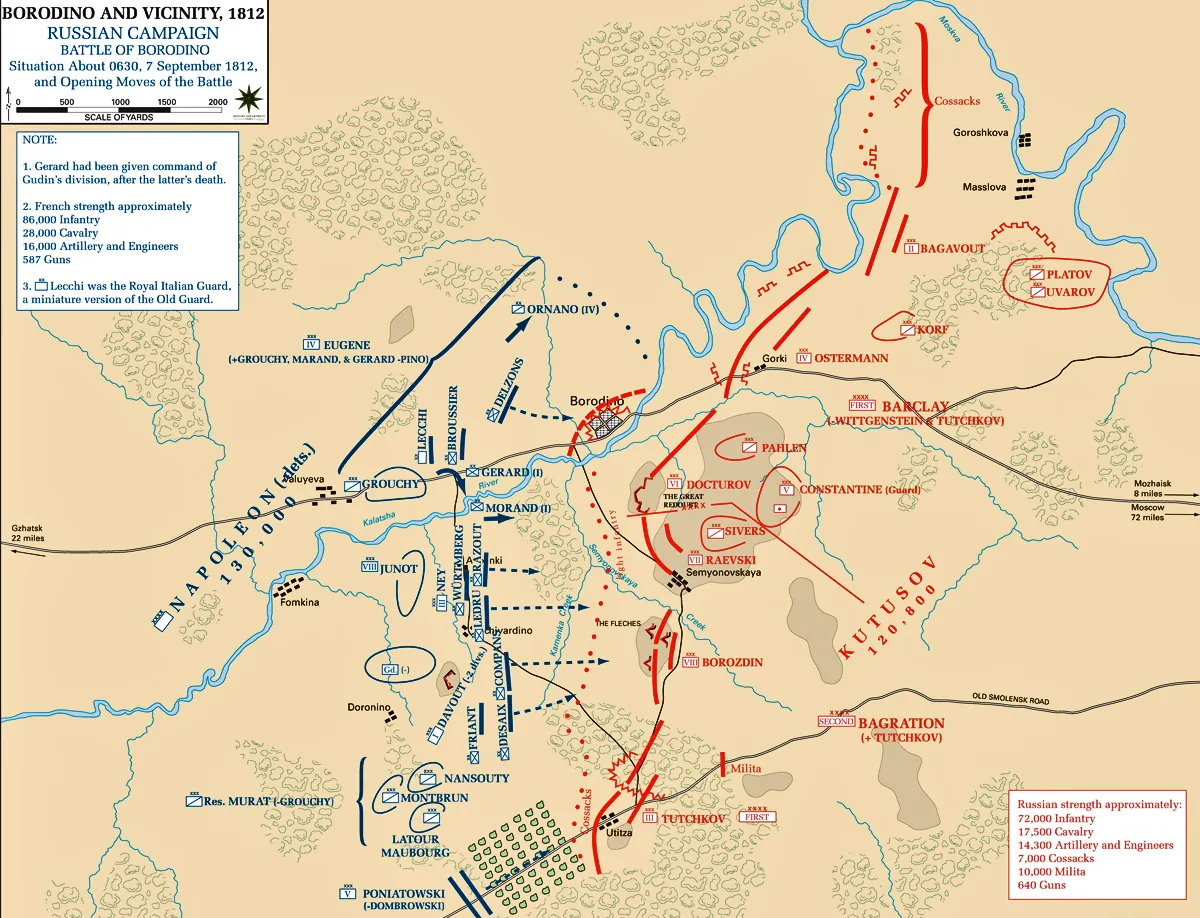
The ground was no natural fortress. It is an undulating plateau cut by ravines and woods, crossed by two roads from Smolensk to Moscow: the new road, running through Borodino and Gorki, and the old one, further south, through Utitsa. Kutuzov chose the site because it blocked both roads, and because there was no better one on the approaches to the capital.
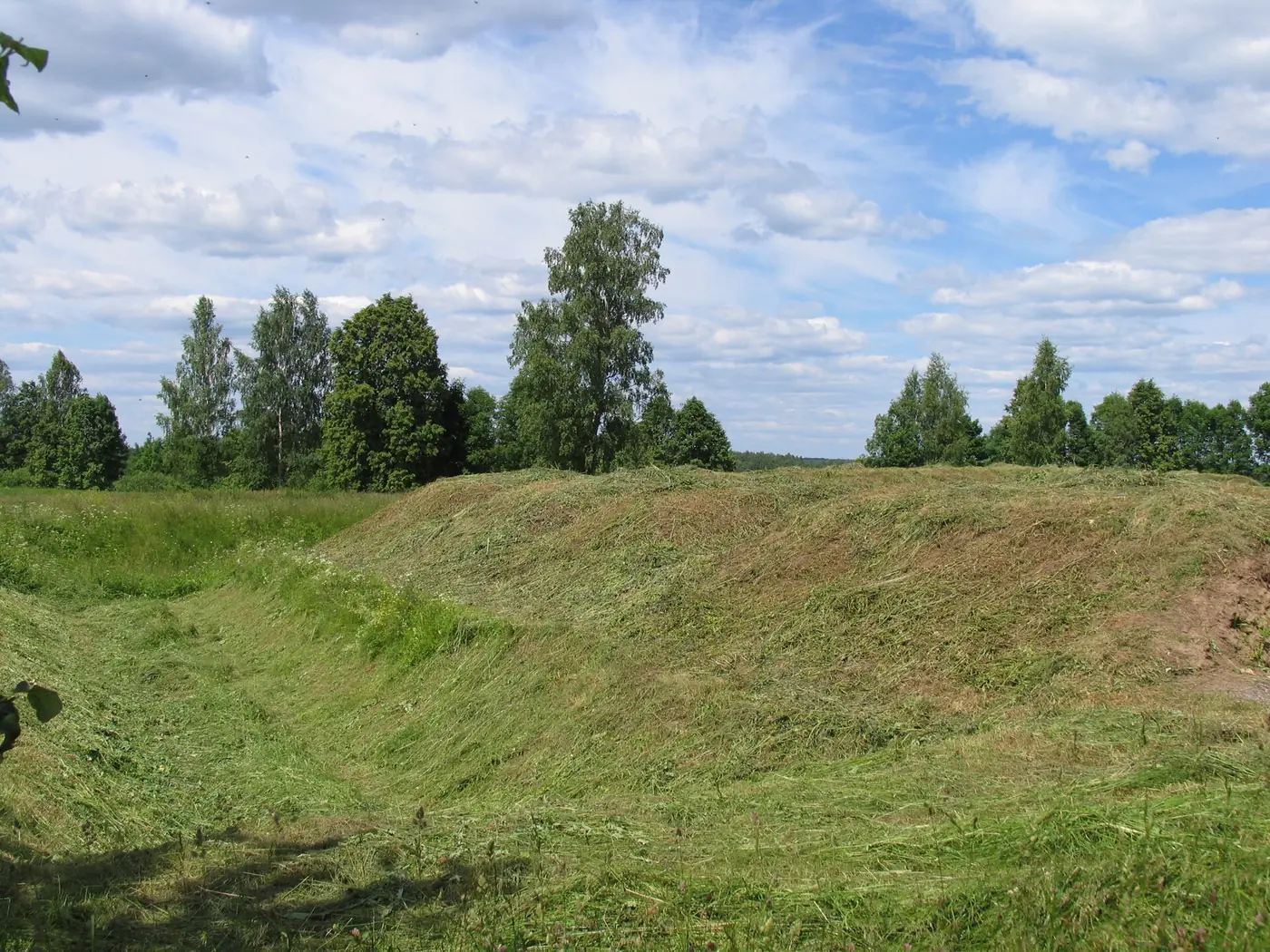
The Russian line ran for about eight kilometres. In the north it rested on the Kolocha, a tributary of the Moskva with steep banks that made the right wing almost unassailable. In the centre, on a height the Russians called the Kurgan, stood the Raevsky battery, named after the general responsible for defending it: a large earthwork open at the rear, mounting 18 or 19 guns depending on the source, which the French would call "the Great Redoubt". In the south, in front of the village of Semyonovskoye, three arrowhead-shaped works, two lunettes and a redan mounting 24 guns, protected the left: these were the "Bagration flèches". Built in haste, for want of enough engineer officers, they had ditches that were too shallow and faces that were too wide, exposing their defenders. Further south still, the Russian left faded into the thick woods around Utitsa.
Kutuzov entrusted the right and centre to Barclay's 1st Army, some 76,000 men, and the left to Prince Pyotr Bagration's 2nd Army, about 34,000 strong. This distribution is one of the great debates of the battle. Clausewitz, who fought there in the Russian ranks, and many historians saw it as a mistake: the right, protected by the river, would never be attacked, and much of the Russian artillery would stand idle there. Russian historiography, on the contrary, saw it as a deliberate arrangement, designed to cover the new Moscow road while keeping reserves to strike the attacker's flank.
Shevardino, the prelude of 5 September
The original Russian position was anchored in the south on a pentagonal redoubt built on a mound near the village of Shevardino, in front of the main line. On 5 September the French advance guard ran into General Konovnitsyn's rearguard, which fell back. The redoubt itself was held by Prince Gorchakov's detachment, some 11,000 men and 46 guns.
Murat threw Nansouty's and Montbrun's cavalry corps against it, supported by Compans's division of Davout's corps, while Poniatowski's Poles came at it from the south. The fighting lasted until nightfall. The redoubt changed hands several times, General Neverovsky's infantry twice driving the French out, before Kutuzov ordered Gorchakov to withdraw to the main line. Losses, variously estimated in the sources, were in the order of 4,000 men on the French side and 6,000 on the Russian side. Deprived of this anchor, the Russian left now rested on the flèches and the Utitsa woods, where the next day Kutuzov sent General Nikolay Tuchkov's III Corps and thousands of Moscow and Smolensk militiamen.
Two exhausted armies
Estimates of strength differ. On the French side, a roll call on 2 September counted 133,815 men; it is generally accepted that about 130,000 men and 587 guns were present on the battlefield. The army was thoroughly European: alongside the French fought Poles, Italians, Westphalians, Württembergers, Saxons, Bavarians and Croats. The Imperial Guard, some 18,500 men and 109 guns, formed the reserve. The heavy cavalry was numerous and formidable, but the horses suffered as much as the men from the lack of forage.
The Russian army numbered, according to historians, between 103,000 and 115,000 regular soldiers, joined by 7,000 to 11,000 Cossacks and between 10,000 and over 30,000 militiamen, the opolchenie, often armed with nothing more than pikes and used mainly for labour and carrying away the wounded. It fielded about 640 guns, a clear superiority in artillery. Reformed since the defeats of Austerlitz, Eylau and Friedland, it had many recruits, but it was fighting on its own soil, entrenched, and with a determination that would surprise its enemies.
The plans
On 6 September Napoleon reconnoitred the ground and spotted the weakness of the Russian left. Davout proposed turning it from the south. The Emperor refused: in such wooded country he judged an envelopment too difficult and preferred a frontal attack on a narrow sector, between the Great Redoubt and the flèches, where he concentrated the bulk of his forces.
The plan was as follows. In the north, the IV Corps of Prince Eugène de Beauharnais, Viceroy of Italy, was to take Borodino to draw the Russians' attention; it was reinforced by two divisions of Davout's corps, Morand's and Gérard's, to attack the Great Redoubt afterwards. In the centre-right, Davout's and Ney's corps, supported by Murat's reserve cavalry and Junot's Westphalian VIII Corps, were to carry the flèches. In the south, Poniatowski's Polish V Corps was to advance along the old road to outflank the Russian left at Utitsa. The Guard remained in reserve near the Shevardino redoubt, where Napoleon set up his command post.
Kutuzov, for his part, spent the night in the village of Tatarinovo and set up his command post at Gorki, behind the centre. He reinforced his left during the night. According to several Russian historians, he meant to keep Tuchkov's corps hidden in the Utitsa woods to strike the attackers' flank; his chief of staff Bennigsen moved it forward into the front line in the morning, ruining the element of surprise.
The eve: the portrait of the King of Rome
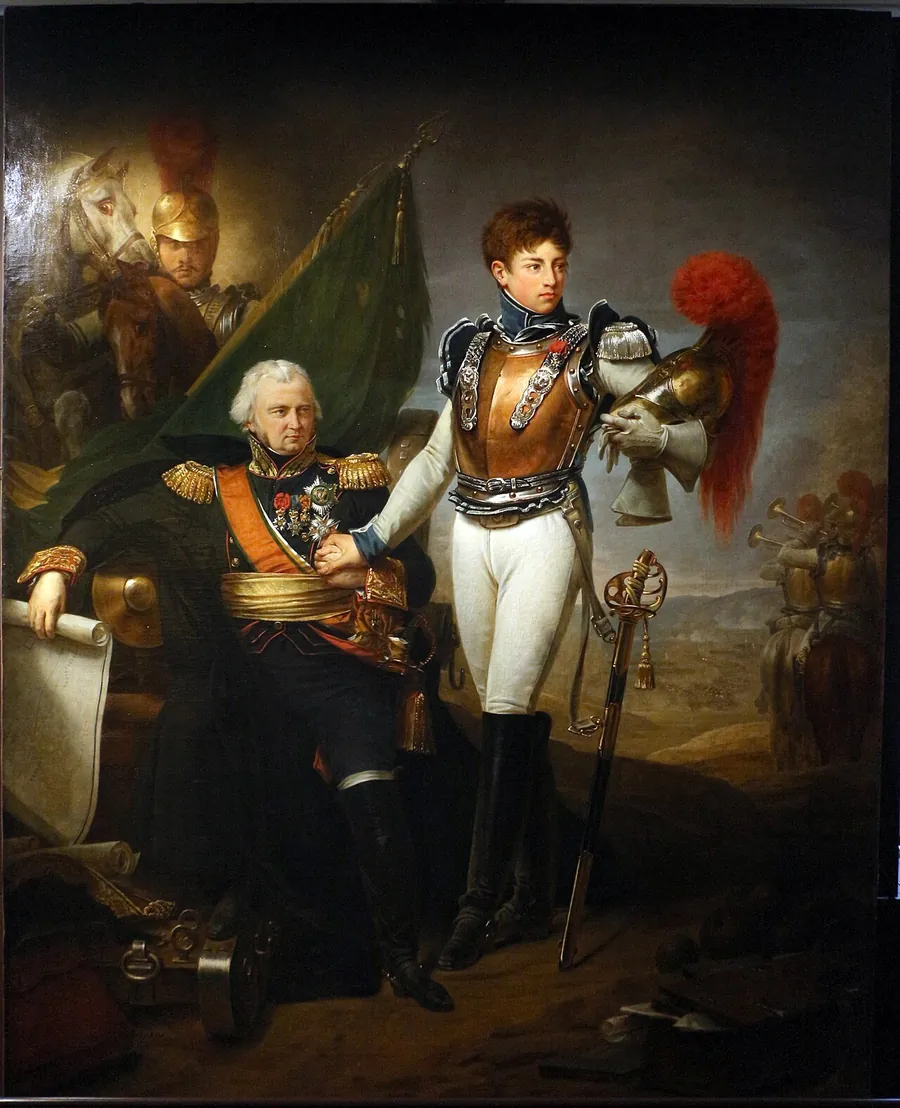
On 6 September Louis-François de Bausset, Prefect of the Palace, arrived at headquarters from Paris with a portrait of the King of Rome painted by François Gérard. Napoleon showed it to those around him, then, according to witnesses, had it taken away: "Remove it, he should not see a battlefield so early." That evening he wrote to Marie-Louise: "I am very tired. Bausset has given me the portrait of the King. It is a masterpiece."
That day the Emperor was suffering from a heavy cold and, according to some witnesses, from fever and pains. In his History of Napoleon and the Grand Army in 1812, Philippe de Ségur would make this one of the explanations for the indecision he attributed to Napoleon during the battle; Gaspard Gourgaud, the Emperor's orderly officer throughout the campaign, fiercely disputed that account.
In the Russian camp the same day, the icon of Our Lady of Smolensk, carried away when the city was evacuated, was paraded along the lines. Soldiers knelt as it passed and Kutuzov prayed before it.
At two in the morning on 7 September, Napoleon signed a proclamation that officers read to the troops at dawn: "Soldiers, here is the battle you have so longed for! From now on victory depends on you: we need it. It will give us plenty, good winter quarters and a swift return home! Conduct yourselves as you did at Austerlitz, at Friedland, at Vitebsk, at Smolensk, and may the most distant posterity cite your conduct on this day with pride; may it be said of you: he was at that great battle beneath the walls of Moscow!"
Six o'clock: the grand battery and Borodino
Legend has it that as the sun rose into a cloudless sky, the Emperor exclaimed: "There is the sun of Austerlitz!" Around 6 a.m. a battery of about a hundred guns opened fire. It had been placed too far from the Russian lines, and precious time had to be lost moving it forward.
In the north, under cover of the mist, Delzons's division of Eugène's corps threw itself on the village of Borodino. It was held by the Life Guard Jäger Regiment, which lost more than a third of its men and had to fall back across the Kolocha. Carried away by its momentum, the French 106th Line followed it over the bridge; but the Jägers, reinforced, counter-attacked with the bayonet and wiped out the French who had crossed to the right bank. The bridge was destroyed, and the French made no further attempt to cross at that point for the rest of the day.
The Bagration flèches
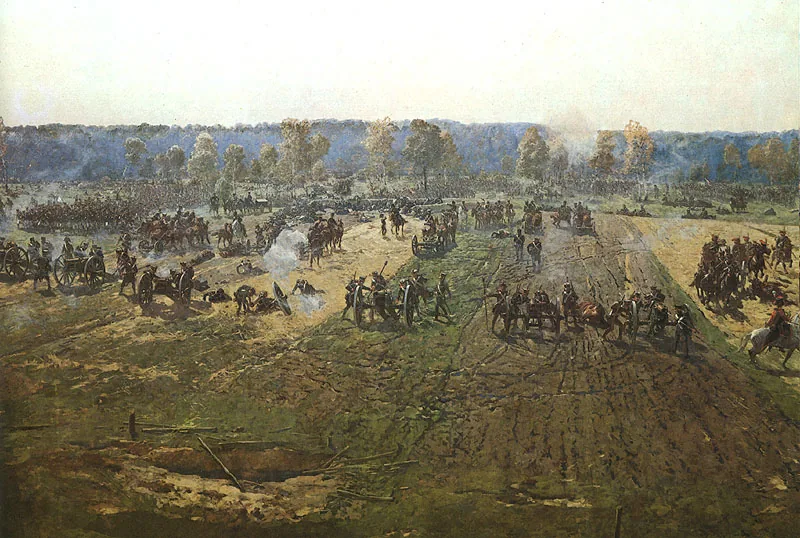
At the same moment, Compans's and Dessaix's divisions of Davout's corps emerged from the Utitsa woods opposite the southernmost flèche. They had barely begun to deploy along the edge of the woods when they came under canister fire. Compans was wounded, then Dessaix. Davout led the 57th Line forward himself; his horse was killed under him and he fell so heavily that he was thought dead. General Rapp, sent to replace him, found him alive, concussed and at the head of his troops; Rapp then led the 61st Line into the assault and received the twenty-second wound of his career.
Napoleon committed Ney's corps, with Ledru's and Razout's divisions and Marchand's Württemberg division. At about 7.30 the French held all three flèches. Bagration counter-attacked at once with Neverovsky's 27th Division, the Akhtyrka Hussars and the Novorossiya Dragoons, and threw them out of the works. He called for help without going through Kutuzov, and Barclay responded quickly: Guard regiments, grenadier battalions, 12-pounders and soon Baggovut's entire II Corps left the right wing for the left.
There followed a struggle of unheard-of violence, even by the standards of the time. The works were taken and retaken: seven or eight assaults are counted depending on how they are reckoned. Columns advanced into impenetrable smoke and ran into canister and point-blank musketry; infantry and cavalry struggled to manoeuvre over heaps of corpses and wounded. Generals Vorontsov and Neverovsky were wounded at the head of their divisions, which melted away under fire. Charged by Duka's Russian cuirassiers, Murat narrowly escaped capture by taking refuge in the ranks of the Württemberg infantry. Around 10 a.m. Ney retook the flèches; Konovnitsyn's 3rd Division drove him out, and General Alexander Tuchkov was killed leading the Revel and Murom regiments in the counter-attack. Junot's Westphalians, trying to emerge from the woods behind the flèches, were driven back by a horse battery and by Baggovut's regiments.
Napoleon was surprised by the stubbornness of the Russian infantry, who fought on in lost positions where Austrians and Prussians would have surrendered; he compared them to fortresses that had to be demolished with cannon. He brought an ever-growing mass of artillery to bear on the flèches, up to nearly 400 guns by some counts.
Bagration's wound
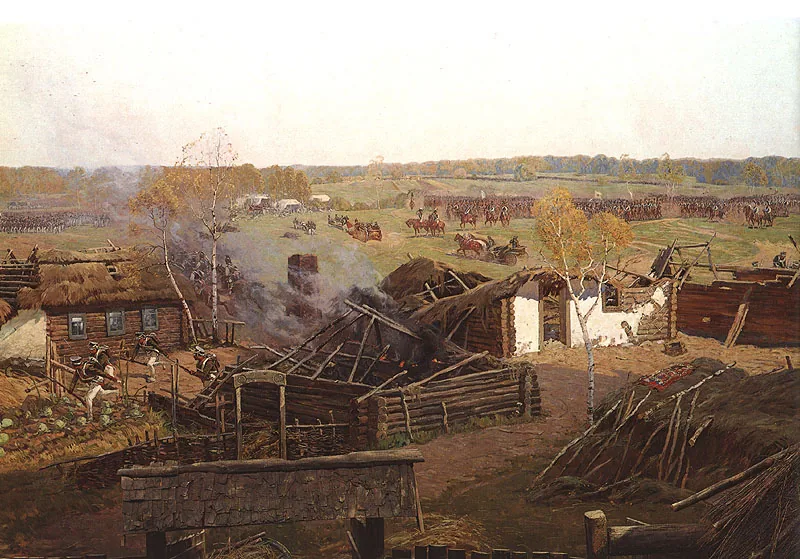
Around 11 a.m. the French launched a decisive assault on the flèches. Bagration, seeing that his guns could no longer stop the columns, did not wait for them: he threw everything left of the left wing into a general counter-attack. A furious mêlée followed and lasted nearly an hour. It was then that a shell splinter struck Bagration in the leg. He tried to stay on the field, then fell from his horse and had to be carried away.
The news spread through the ranks and broke the morale of the 2nd Army, whose command fell into disarray. Konovnitsyn took charge of the troops, abandoned the flèches for good and led the survivors back behind the Semyonovka ravine, where the Lithuanian and Izmailovsky Guard regiments were waiting; Kutuzov then gave command of the whole left to General Dokhturov. At about 11.30, Friant's division held the Russian forward positions and attacked the ruins of Semyonovskoye, which would remain bitterly contested.
The breach was open, but the French commanders could not see it. Dust, smoke and exhaustion prevented Davout, Ney and Murat from grasping how badly shaken the Russian left was. Nansouty's and Latour-Maubourg's cuirassiers charged the Russian Guard regiments formed in squares behind the ravine: for hours they drove back the attacks without breaking, supported by Duka's cuirassiers and Sievers's cavalry.
Utitsa: the Poles in the woods
Far to the south, the outflanking manoeuvre entrusted to Poniatowski bogged down. His 10,000 or so men, advancing along the old Smolensk road, could not get their columns and guns through a dense, marshy forest held by Russian Jägers. The Poles seized the village of Utitsa, which the Russians set on fire; Tuchkov fell back to a mound, the Utitsa kurgan, which commanded the road.
During the morning Poniatowski, supported by elements of Junot's corps and some forty guns, took the mound. Tuchkov counter-attacked at the head of the Pavlovsk Grenadiers, retook the position and fell mortally wounded in the chest. Baggovut replaced him. Weakened by the regiments sent to help at the flèches, this sector would see little more than skirmishing and cannonades, and the Poles never managed to turn the Russian left.
The first assault on the Great Redoubt
While the struggle for the flèches went on, Eugène sent his divisions across the Kolocha and attacked the Great Redoubt in the morning. The Raevsky battery had been weakened: Bagration had taken its second line to defend the flèches. Morand's division advanced under heavy artillery support, and its Bonamy brigade, led by the 30th Line, broke into the work. Barclay had to rally Paskevich's routed troops in person.
Two generals happened to be near the Kurgan at that moment: the 1st Army's chief of staff, Yermolov, and its chief of artillery, the young Kutaisov, both sent by Kutuzov towards the left. They took command of a battalion of the Ufa Regiment and of Jäger regiments and charged with the bayonet, while Paskevich's and Vasilchikov's divisions attacked the flanks. According to Yermolov, the fight lasted no more than half an hour. The redoubt was retaken; Bonamy, riddled with bayonet wounds, was taken prisoner. But Kutaisov was killed, and his death deprived the Russian artillery of its chief: a large part of the reserve guns would never be engaged, while the French artillery wrought havoc. Exhausted, Raevsky's corps was relieved by General Likhachev's 24th Division.
Noon: Uvarov's and Platov's raid
At about 7.30 a.m., Cossack patrols had discovered a ford on the Kolocha, at the far end of the Russian right, with ground free of enemies beyond. Ataman Platov proposed turning the French left. Colonel Toll of the staff suggested adding General Uvarov's I Cavalry Corps and presented the plan to Kutuzov, who approved it without setting any precise objective.
Around noon, some 8,000 horsemen and 12 guns, without infantry, crossed the river. Near Bezzubovo Uvarov ran into Ornano's cavalry and an infantry regiment; Platov's Cossacks pushed further west, towards the rear of Eugène's corps. The appearance of these masses of horsemen near the supply trains and the imperial headquarters caused alarm. Eugène suspended the attack he was about to renew on the Great Redoubt and led the Italian Royal Guard and Grouchy's cavalry back north. Without infantry, the Russians could achieve little more, and they returned to their lines in the afternoon.
Kutuzov and his staff regarded the operation as a failure. Many historians nonetheless give it real importance: it delayed the assault on the Great Redoubt by about two hours. The Russians used the time to shift Ostermann-Tolstoy's IV Corps and Korff's II Cavalry Corps towards the centre. Meanwhile the French II Cavalry Corps, whose commander Montbrun had been killed by a cannonball earlier in the day, stood motionless under murderous fire. According to several historians, the raid also weighed on Napoleon's refusal to commit his Guard.
The fall of the Great Redoubt
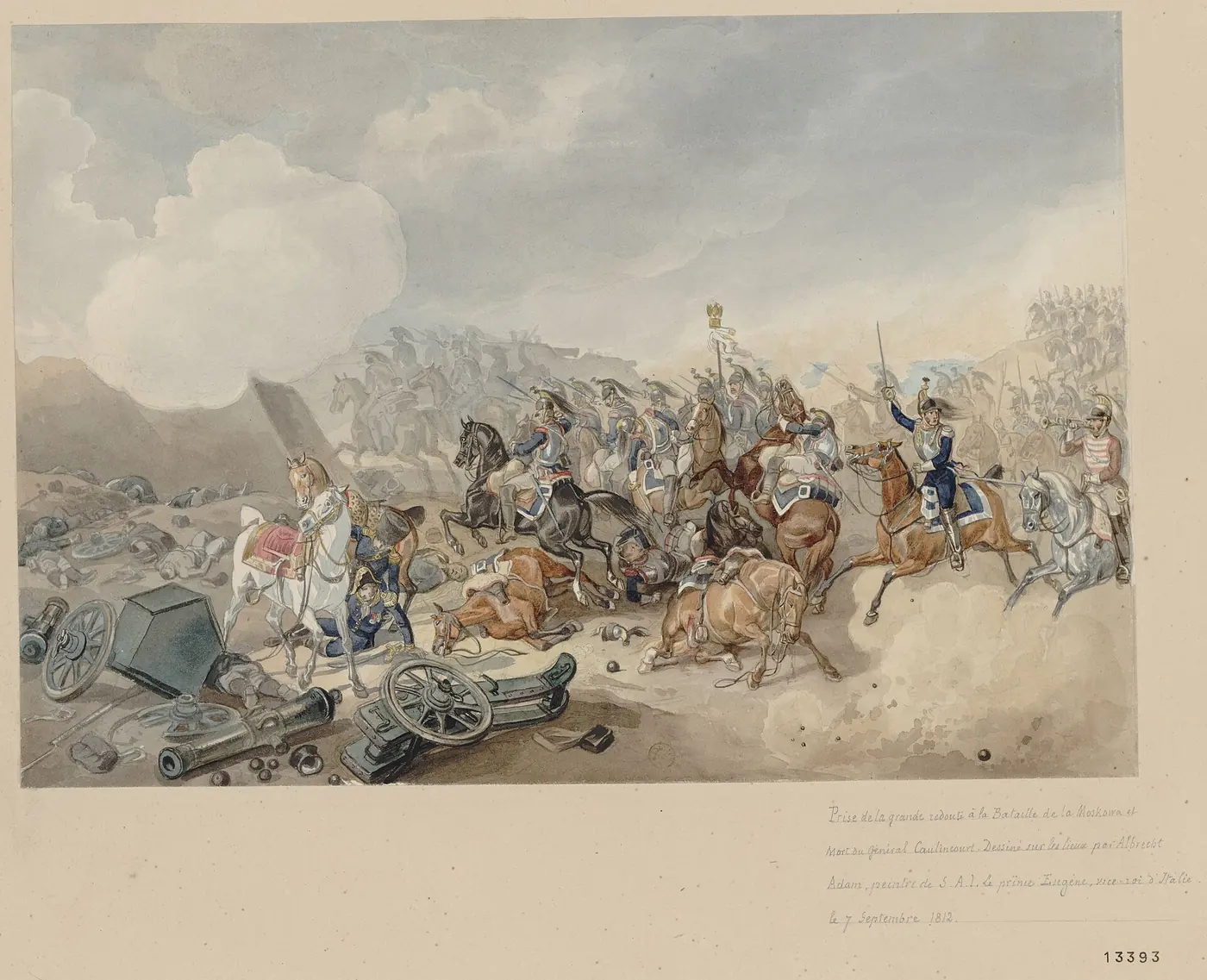
At about 2 p.m. Napoleon ordered a general assault on the Raevsky battery. An enormous concentration of artillery caught it in a crossfire: Eugène's batteries, those posted on the heights of Semyonovskoye, and the guns that General Sorbier, commander of the Guard artillery, brought forward. Broussier's, Morand's and Gérard's divisions marched straight at the work, while the cavalry was to outflank it.
To replace Montbrun, Napoleon had appointed General Auguste de Caulaincourt, the Grand Equerry's younger brother and Governor of the Pages. At the head of Wathier's cuirassiers, Caulaincourt rode round the height and charged the open rear of the redoubt. He was killed there. Meanwhile General Thielmann launched eight Saxon and two Polish squadrons against the rear of the work: some riders forced their horses through the embrasures and spread confusion among the defenders. Eugène's infantry scaled the parapet from the front.
Inside, the mêlée was terrible. The Russian 24th Division was almost entirely destroyed. General Likhachev, wounded, flung himself sword in hand at the attackers and was taken prisoner. Ostermann-Tolstoy was wounded in the shoulder but stayed at his post. Between 3.30 and 4 p.m., the Great Redoubt was finally in French hands. It had cost the cavalry so dearly that it would be nicknamed "the tomb of the French cavalry".
The breakthrough stopped there. Behind the redoubt, the French cavalry ran into Russian dragoons, hussars and Guard cuirassiers, who drove it back. Grouchy was wounded; Barclay, caught in the mêlée with his staff, had to draw his sword to defend himself. On learning of Caulaincourt's death, Napoleon is said to have told his brother Armand: "He died like a brave man, deciding the battle."
The Guard stands idle
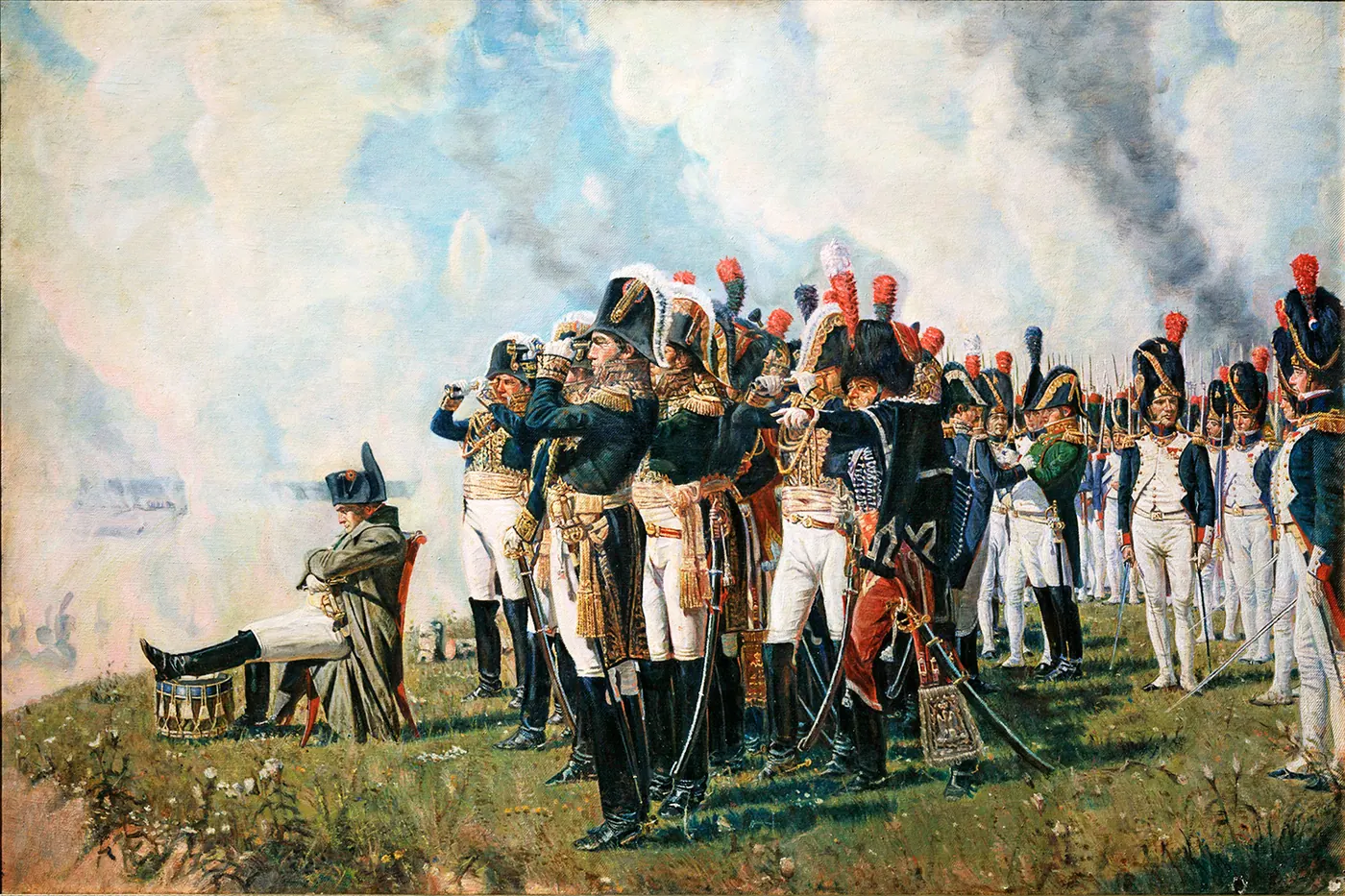
Over the course of the day the marshals in action repeatedly called for the Guard to finish off the Russian army. According to Ségur's account, General Belliard, Murat's chief of staff, came to tell the Emperor that the Russian line was broken, that the Mozhaysk road could be seen behind it crowded with fugitives and vehicles, and that one last effort would be enough. Daru, Dumas and Berthier backed the request; so did Rapp, brought back wounded from the field. Ney insisted too.
Bessières, who commanded the Guard cavalry, was one of the few to advise against it: one does not risk one's last reserve so far from France. Napoleon refused. According to witnesses, he did not want to see his Guard "demolished" and declared himself certain of winning the battle without it. He merely ordered Mortier, commanding the Young Guard, to hold the ground without advancing or retreating, and had the cannonade stepped up. Having gone to observe the situation from the former Russian positions, he saw that the enemy had re-formed on the next ridge in close order: nothing told him victory was within reach.
This refusal is one of the most debated decisions of his career. The historian Oleg Sokolov, following Marshal Gouvion Saint-Cyr, believed that the Guard's intervention would have torn the Russian army to pieces and spared Napoleon a victory without a future. Others, such as Digby Smith, consider on the contrary that the rest of the campaign proved the Emperor right to keep his last elite troops intact, hundreds of leagues from his base.
The evening of 7 September
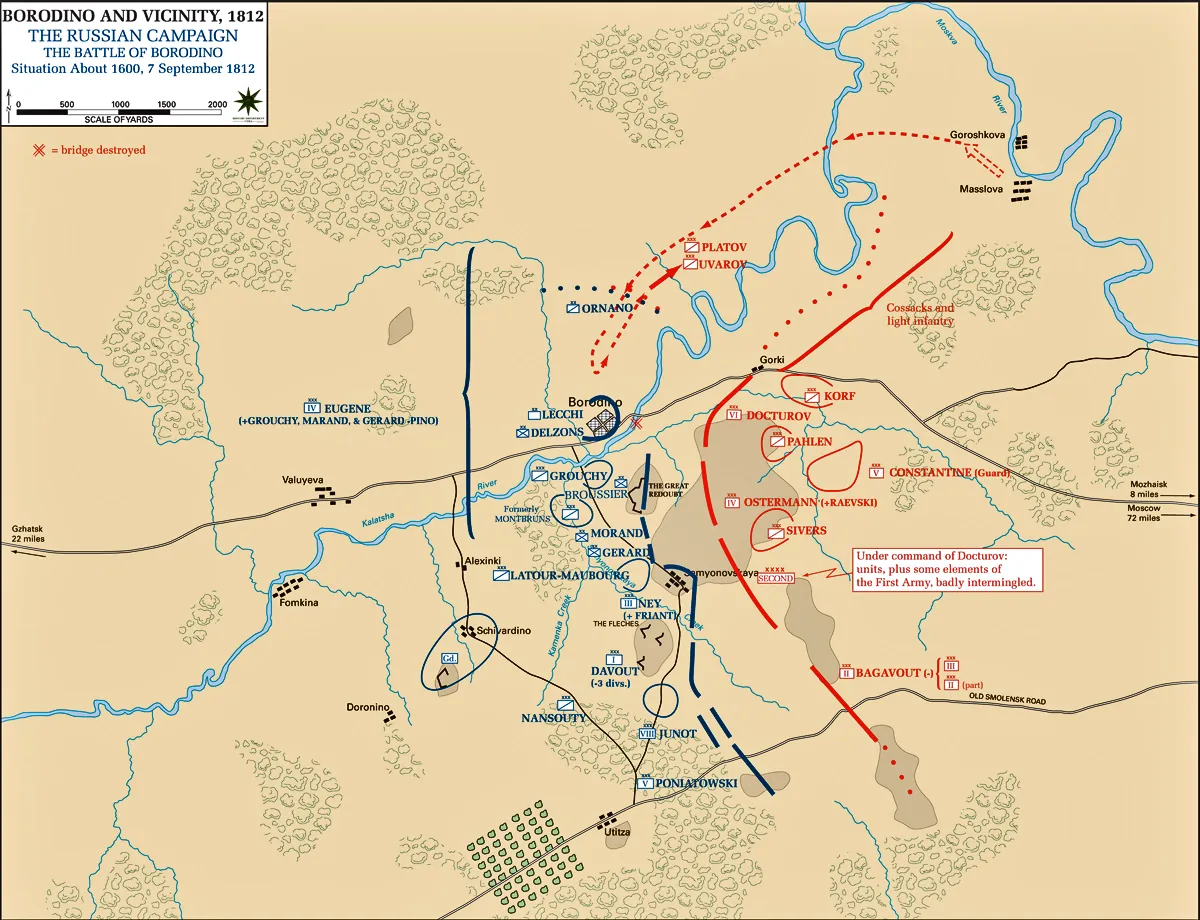
After the fall of the Great Redoubt, the battle gradually died down. The Russians had withdrawn about a kilometre, to a line running from Gorki to the old Smolensk road. From 4 to 6 p.m. the Russian Guard stood motionless under French artillery fire, formed in compact squares that made easy targets. In the south, Poniatowski still launched attacks to no effect. In the centre and on the right, the cannonade went on until about 7 p.m.
During the night neither side yet knew whether it would fight the next day. According to Russian historiography, some French units fell back at dusk towards their starting positions. Kutuzov at first ordered preparations to resume the fight. But the reports reaching him revealed the scale of the losses, and at around midnight he ordered a retreat. On 8 September the Russian army left the battlefield in good order, in two columns, towards Mozhaysk.
Napoleon was master of the field, but the spoils disconcerted him. Armand de Caulaincourt records in his memoirs that the Emperor kept asking where the prisoners were, and could not understand why positions carried with such daring had yielded him so few. Ségur speaks of 700 to 800 prisoners and about twenty guns. Yet on 8 September Napoleon wrote to Marie-Louise: "Yesterday I beat the Russians; their whole army, 120,000 strong, was there. The battle was hot: by 2 in the afternoon victory was ours. I took several thousand prisoners and 60 guns." He added: "Caulaincourt, the Governor of the Pages, has been killed."
The bloodiest day of the Napoleonic Wars
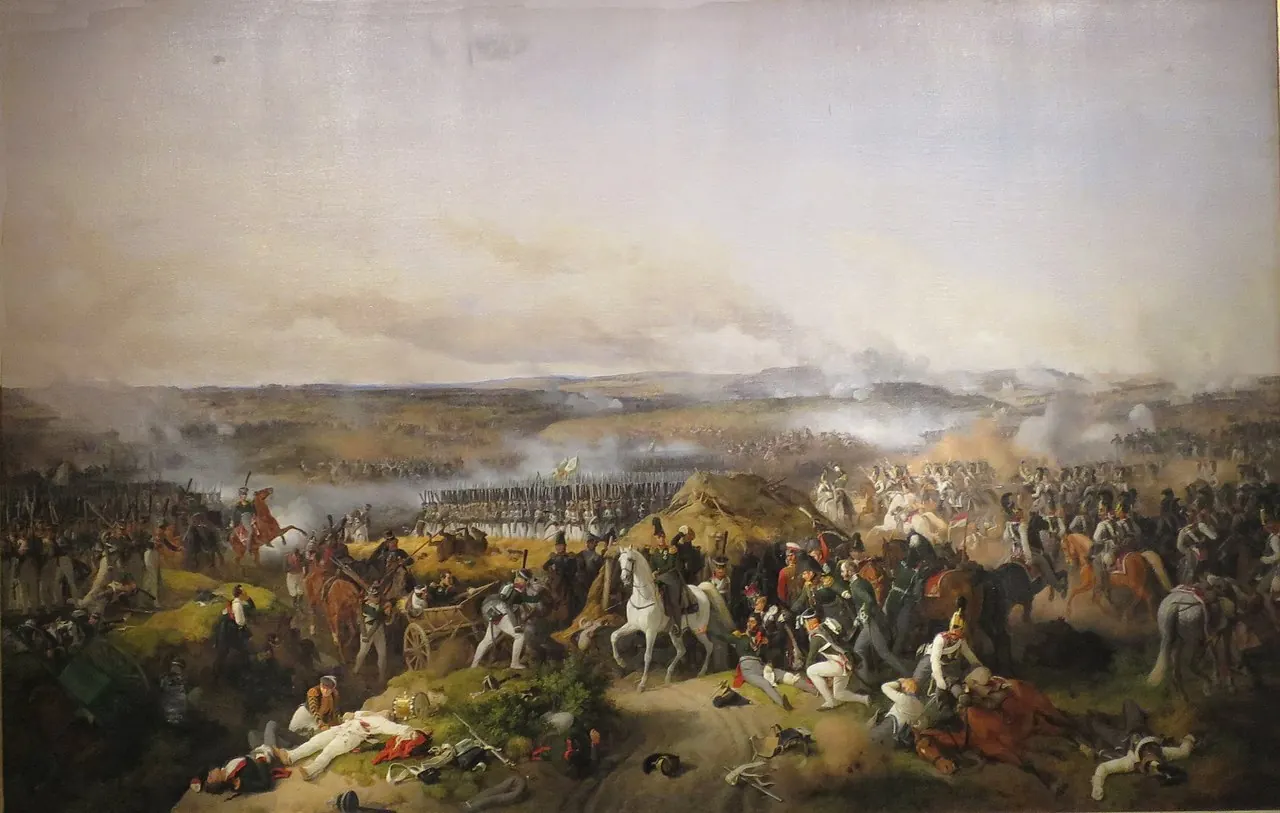
No single-day battle had yet claimed so many victims. Some 250,000 men took part; around 70,000 were killed or wounded in about twelve hours, which by the most cautious estimates means nearly 6,000 men an hour. The French artillery is said to have fired some 60,000 rounds, the Russian artillery about 50,000.
French losses are hard to establish, as much of the army's paperwork was lost during the retreat. The returns of the inspector of reviews Denniée give 6,562 killed, including 269 officers, and 21,450 wounded, some 28,000 men in all; they were kept secret and only published in 1842. These figures are too low: the historian Aristide Martinien found the names of at least 460 officers killed, and Vladimir Zemtsov's research arrives at 1,928 officers and 49 generals killed or wounded between 5 and 7 September. Historians most often put French casualties at 28,000 to 35,000 men. Among the dead were the divisional generals Montbrun and Auguste de Caulaincourt; Tharreau and several brigade generals died of their wounds. Short of food even for able-bodied men, the French could barely feed or care for their wounded: at the Kolotsky monastery, turned into a hospital, a great many died in the days that followed. Chief surgeon Larrey performed some 200 amputations during the battle and in the hours after it.
On the Russian side, the returns preserved in the military archives list 39,300 killed, wounded and missing; as they are incomplete, historians generally put losses at 44,000 to 45,000 men, the figure of 45,000 being carved on the monument raised on the battlefield in 1839. Bagration died of his wound on 24 September in the village of Sima. Nikolay Tuchkov also succumbed to his; his brother Alexander and General Kutaisov had been killed on the field. In all, some fifty French and nearly thirty Russian generals were killed or wounded, hence the name "the battle of the generals" given to it by the Briton Sir Robert Wilson.
During the following winter and spring, the Russian authorities had the bodies left on the field burned and buried. According to the Russian military historian Mikhailovsky-Danilevsky, 58,521 bodies were buried or burned in this way; researchers at the Borodino museum put the number of dead buried on the battlefield at between 48,000 and 50,000.
Who won?
Both sides claimed victory. Kutuzov wrote to the Tsar that the battlefield had remained in Russian hands and that the enemy had withdrawn to the positions from which it had come to attack. Alexander I, who was not fooled, had a victory announced to sustain the country's morale: Kutuzov was promoted field marshal and received 100,000 roubles. The Grande Armée's bulletin, for its part, played down French losses, and on 9 September Napoleon wrote to the Emperor of Austria that he had lost 8,000 to 10,000 killed or wounded.
Most historians today speak of a French tactical victory that was strategically indecisive, or even a Pyrrhic victory. The French had taken the flèches and the Great Redoubt, pushed the Russians back about a kilometre and held the field, and the road to Moscow lay open. But they had not destroyed the Russian army, which withdrew in good order and would rebuild, whereas Napoleon, more than a thousand kilometres from his bases, could not replace his losses. Clausewitz counted Borodino among the battles that had not been fought to their full development. For Christopher Duffy it was a new Torgau, where each side bled itself white without reaching its goal; Frederick Kagan sees it as a Russian victory dearly paid for; the Russian historian Nikolai Troitsky as an indecisive fight whose aftermath turned against the French. Soviet historiography had made Kutuzov the master of every movement of the day; the Russian encyclopedia devoted to the War of 1812 now judges the claim that Napoleon was defeated to be unfounded.
Napoleon himself, dictating his recollections on Saint Helena, presented it as his greatest battle, a combat of giants. A much-quoted phrase is attributed to him: "Of all my battles, the most terrible was the one I fought before Moscow. The French showed themselves worthy of victory, and the Russians earned the right to be invincible."
From Borodino to Moscow
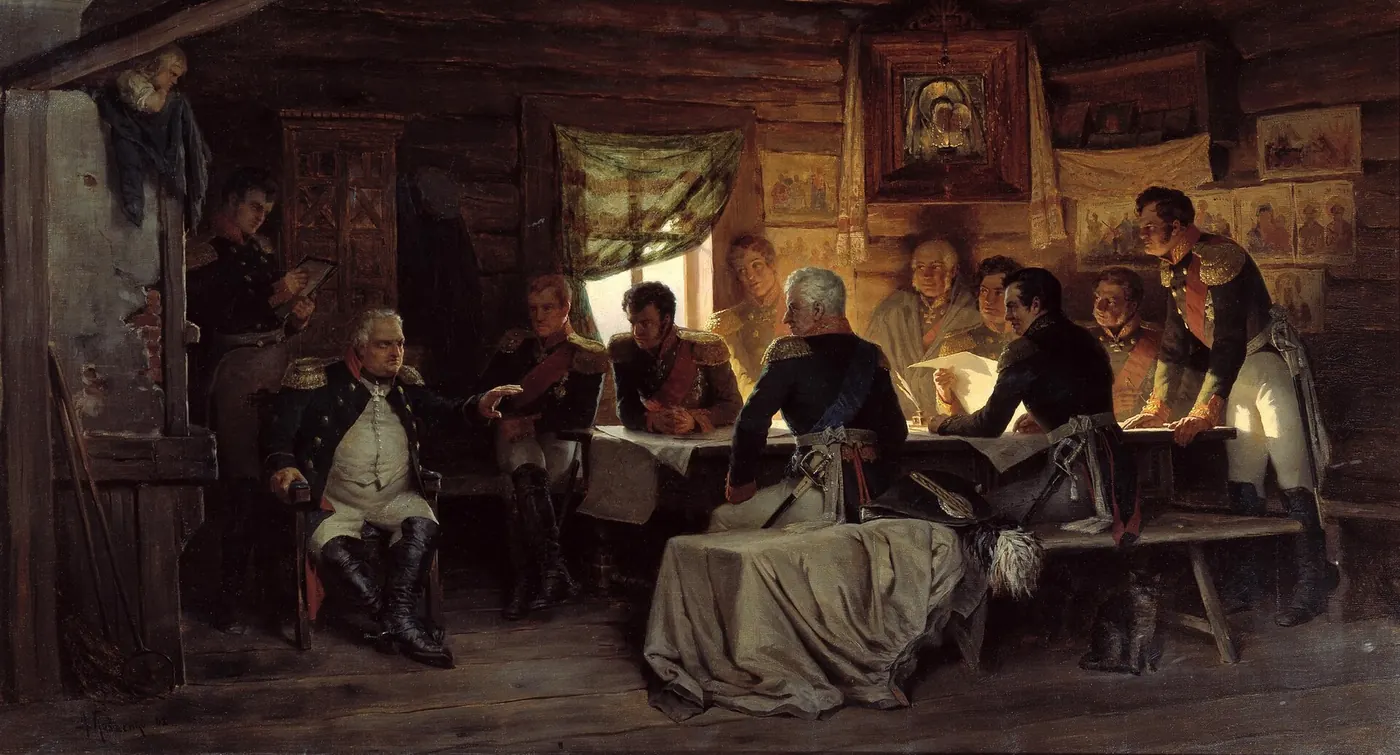
For several days Kutuzov promised to fight another battle beneath the walls of Moscow. But the position chosen in front of the city was poor and reinforcements were lacking. On 13 September, in the village of Fili, he held a council of war. Bennigsen argued for battle, backed by several generals; Barclay for retreat. Kutuzov decided: the point was not to save Moscow, but the army. The Russian army marched through the city during the night and day of 14 September, followed by a large part of the population.
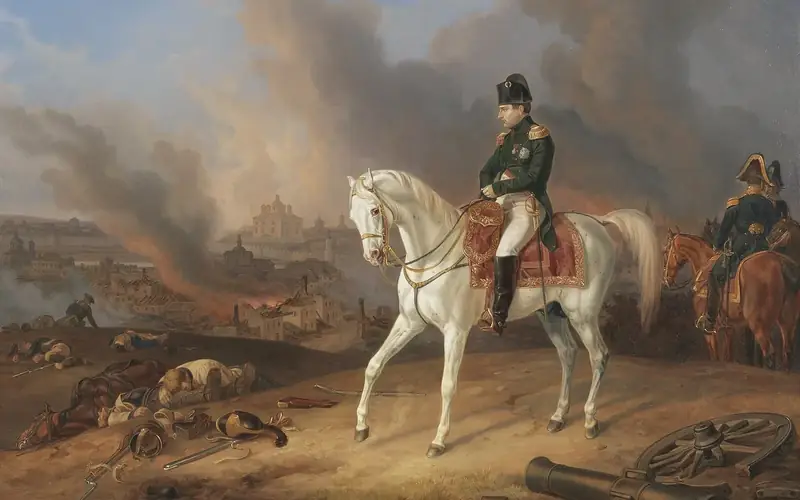
That same day, on the Poklonnaya Hill, Napoleon waited in vain for the deputation of notables he hoped to receive. The first fires broke out that evening; they ravaged the city until 18 September and destroyed three-quarters of it. Governor Rostopchin is often held responsible for the fire of Moscow, which remains debated. The Emperor waited five weeks for an answer from Alexander I to his peace overtures; it never came. On 19 October the Grande Armée left Moscow: the retreat from Russia had begun.
The memory of Borodino
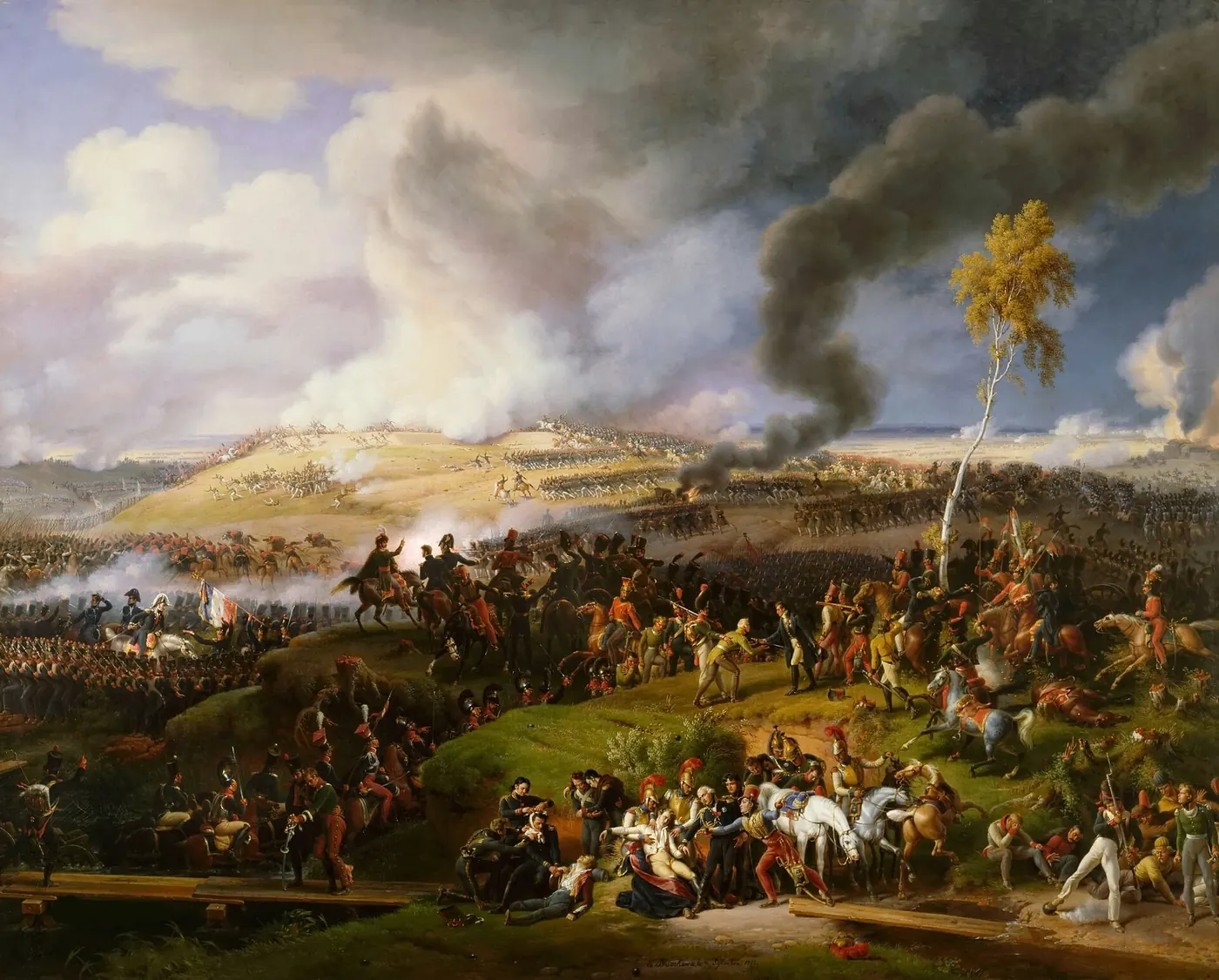
In France the battle kept the name of the Moskova, the river flowing several kilometres from the battlefield, which Napoleon chose as more evocative than the name of a village. In 1813 Marshal Ney received the title of Prince of the Moskva. Two painters who lived through the day left images of it: Louis-François Lejeune, a staff officer, and the German Albrecht Adam, attached to Eugène de Beauharnais's staff.
In Russia, Borodino became a founding site of national memory. In 1837 Mikhail Lermontov devoted his poem Borodino to it, an old soldier's story told to a young man. Leo Tolstoy made it one of the peaks of War and Peace: for him the French army, mortally wounded at Borodino, could still drag itself to Moscow but was doomed there. In 1880 Tchaikovsky composed the 1812 Solemn Overture, first performed in Moscow in 1882, celebrating Russia's defence against the invasion. For the centenary, Franz Roubaud painted a gigantic panorama of the battle measuring 15 by 115 metres, unveiled in Moscow on 11 September 1912 in the presence of Nicholas II; since 1962 it has been displayed in a rotunda built for it on Kutuzovsky Prospekt.
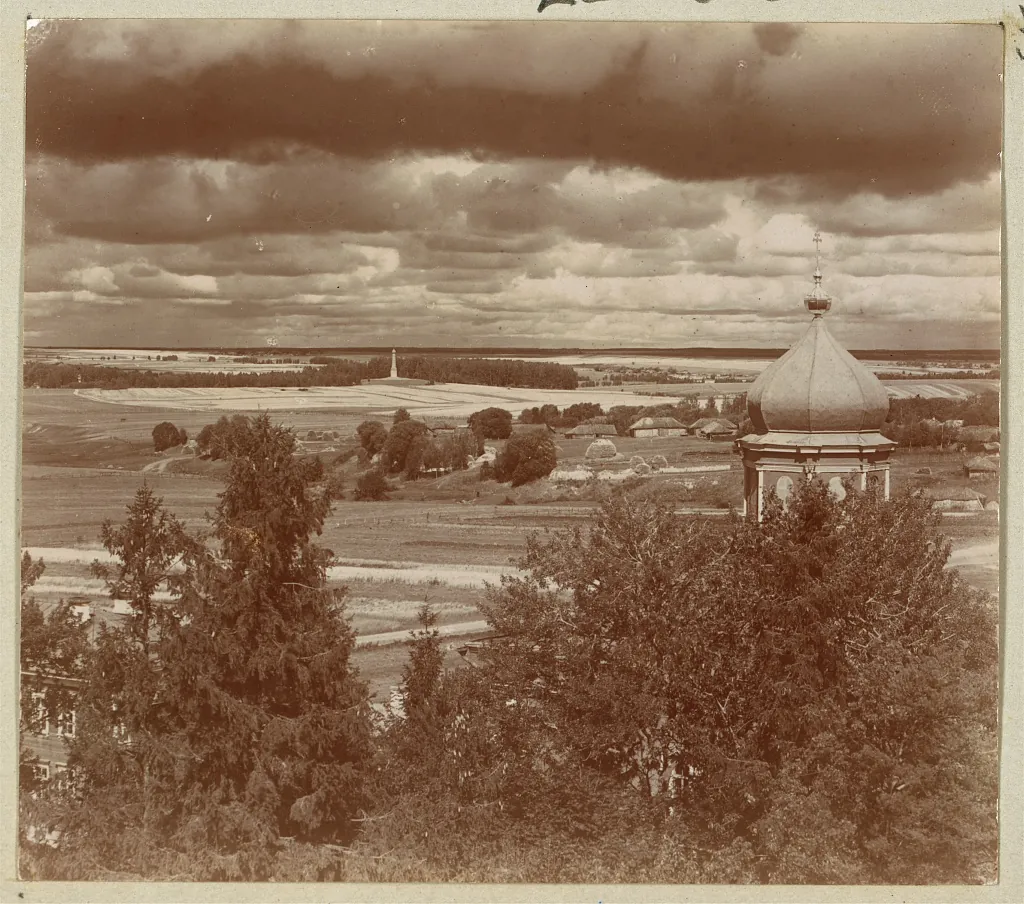
The battlefield, west of Mozhaysk, now has more than fifty monuments. In 1820 Margarita Tuchkova, widow of General Alexander Tuchkov, had a church built on the presumed spot of his death, near the flèches; it would become the Spaso-Borodinsky Monastery. In 1839 a large monument to the defenders of Russia, designed by Antonio Adamini, was unveiled on the height of the Raevsky battery, and Bagration's remains were buried at its foot. The monument was pulled down in 1932, then reconstructed in 1987 along with the general's tomb. For the centenary in 1912, 32 new monuments were put up, most of them dedicated to the divisions and regiments that had fought there.
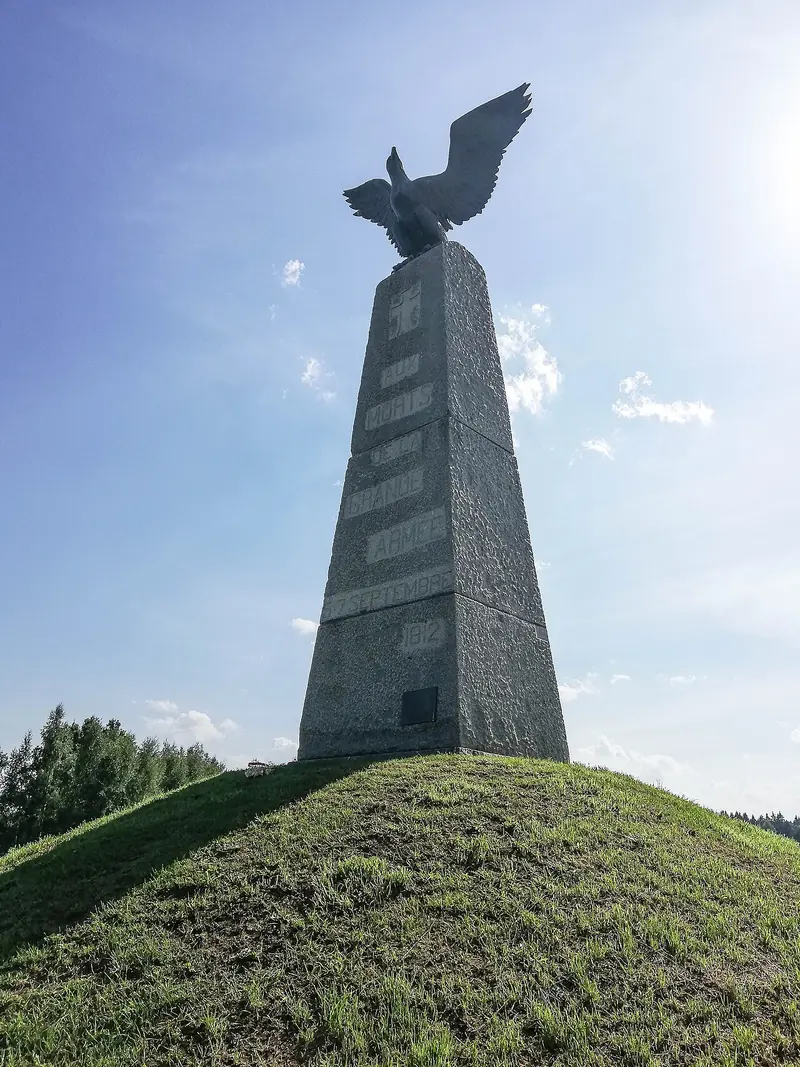
On the site of Napoleon's command post, near the Shevardino redoubt, France raised in 1913 a granite obelisk topped by an eagle with outstretched wings, dedicated "Aux morts de la Grande Armée" (To the dead of the Grande Armée); destroyed, it was re-erected in the 1980s. It is one of the few monuments on Russian soil raised to the memory of former enemies.
The battlefield saw a second war. In October 1941 Colonel Polosukhin's 32nd Rifle Division held the Moscow defence line there for several days against the Wehrmacht; the museum and several monuments were damaged, and the ground was not liberated until January 1942. Made a museum-reserve in 1961, the Borodino field hosts a large re-enactment of the battle every year in early September, and 8 September is a Day of Military Glory in Russia.
Discover other battles
 Victory
 Read the account
Smolensk
16-18 August 1812
Smolensk, Russia
 Inconclusive
 Read the account
The Berezina
26-29 November 1812
Studianka, near Borisov
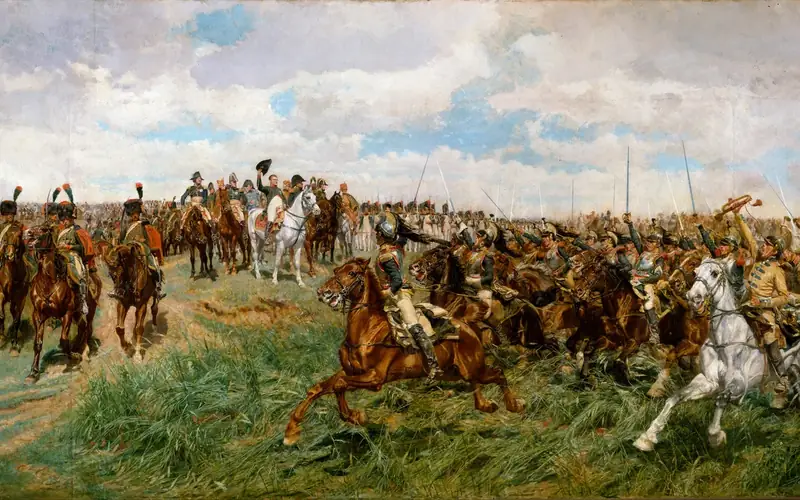 Victory
 Read the account
Friedland
14 June 1807
Friedland (Pravdinsk), East Prussia
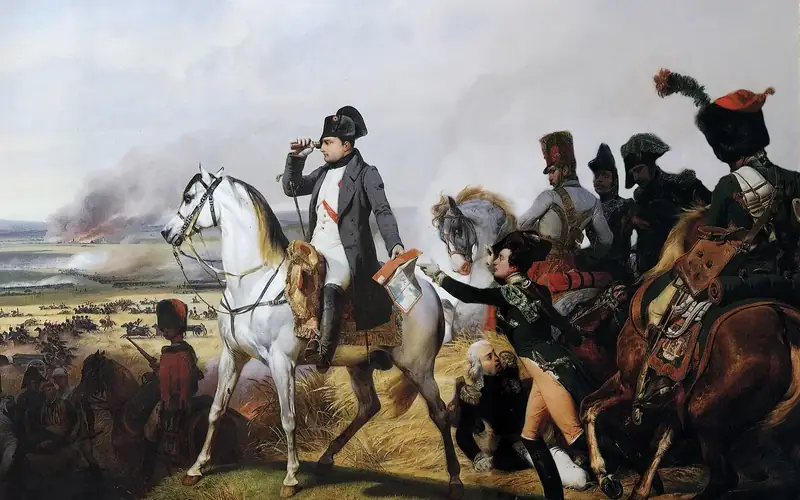 Victory
 Read the account
Wagram
5-6 July 1809
Deutsch-Wagram, north-east of Vienna (Lower Austria)
Go further
Recommended books to dig deeper (affiliate links)

Napoleon the Great
Andrew Roberts · 2014
A monumental biography drawing on Napoleon’s 33,000 surviving letters, admiring but rigorous.
See on Amazon
Napoléon ou le mythe du sauveur
Jean Tulard · 1977
The book that reshaped how the man is read: how France gave itself a saviour, and what it cost.
See on Amazon
Nouvelle histoire du Premier Empire
Thierry Lentz · 2002-2010
Four reference volumes on institutions, diplomacy and collapse: the scholarly synthesis of the subject.
See on AmazonAs an Amazon Associate, this site earns from qualifying purchases.
Support the encyclopedia
Napoleon Empire is an independent project. Your contribution helps grow the content and keep the site running.
DonateSecure payment on the platform you choose.