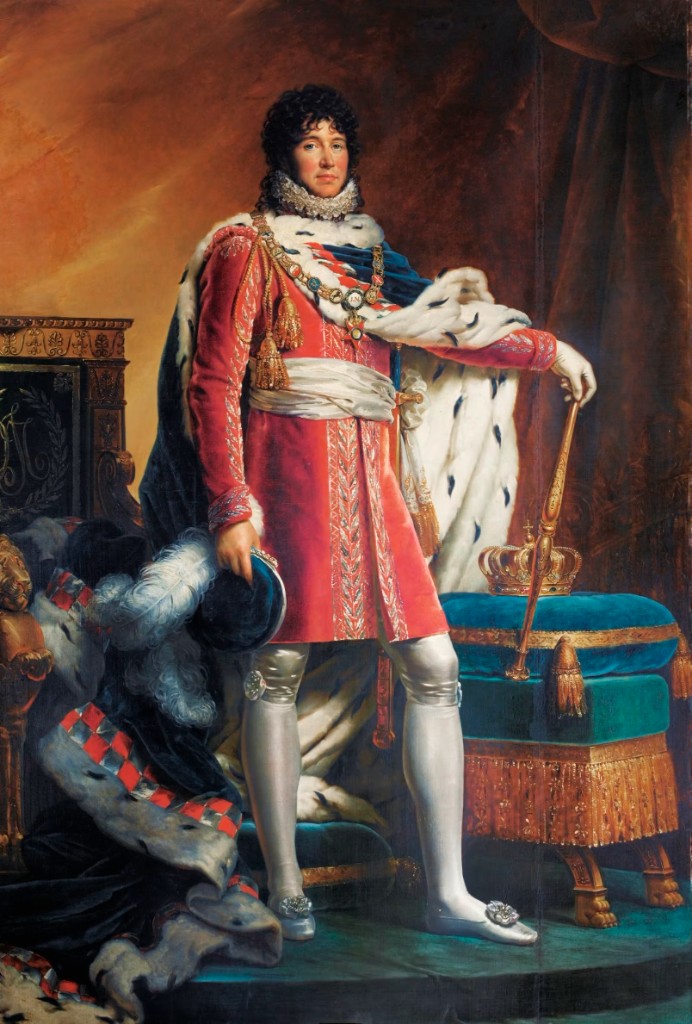
Joachim Murat (1767-1815), Napoleon's brother-in-law through his marriage to Caroline Bonaparte, ranks among the most spectacular marshals of the First Empire: a figurehead of cavalry at Jena, Eylau, and Austerlitz, Grand Duke of Berg then King of the Two Sicilies as Gioacchino Napoleone, he embodied the soldier raised to sovereignty by imperial will. His flamboyant bearing — gaudy uniforms, plumes, public charges — fed popular legend as much as European chancelleries' mistrust, which saw in him the symbol of a sword nobility raised too fast to dynasty. His Neapolitan rule mixed administrative reform, cultural policy, and strategic subservience to Paris; his fate turned with the Russian campaign, the secret treaty with Austria in January 1814 — earning Napoleon's scorn as a coward — then the wild gamble of the Hundred Days and defeat at Tolentino. Captured in Calabria, shot at Pizzo on 13 October 1815 after a theatrical end, he left a memory split between the bulletins' « saber of the army » and the turncoat king of Bourbon pamphlets, summed also in Napoleon's harsh but lucid judgment on Saint Helena: « brave, but lacking judgement » — an epilogue closing one of the most visible paths from Revolutionary soldier to theatrical sovereign, between military prestige and political fragility.
From Quercy to the Empire's cavalry: Italy, 13 Vendémiaire, Egypt, the marshalate
Joachim Murat was born on 25 March 1767 at Labastide-Fortunière in Quercy, son of Pierre Murat-Jordy, an innkeeper, and Jeanne Loubières, from farming stock. The seminary at Toulouse, the usual path for a boy without means, bored him: he left and enlisted in 1787 with the Chasseurs of the Ardennes. The Revolution opened ranks to talent: in 1792 he was a second lieutenant, captain the next year, and rose through the Army of the North and then Italy, where chance — and merit — placed him under General Bonaparte in the 1796 campaign.
On 13 Vendémiaire Year IV (5 October 1795), Murat played a still-debated yet decisive technical part in legend: sent to fetch artillery at the Camp des Sablons, he brought the guns at a gallop toward the Louvre quay and Saint-Roch church, allowing Bonaparte to scatter the royalist insurrection with cannon. That service forged lasting trust between the two men. In Egypt, at the Battle of Abukir (25 July 1799), he led a cavalry charge that helped rout Mourad Bey's Mamelukes; the bulletins celebrated the thrust of « France's saber ».
Brumaire and the Consulate drew Murat closer to power: he married Caroline Bonaparte in January 1800 at Mortefontaine at Joseph's estate, becoming the First Consul's brother-in-law. Under the Consulate he commanded the Paris garrison cavalry, oversaw the Republican Guard, embodied the trusted officer who could parade on the Champs-Élysées yet leave the capital at the first strategic summons. The Empire's advent in 1804 counted him among the eighteen marshals: at thirty-seven, the former seminarian wore the grand embroidery. The campaigns of 1805 and 1806 gave him scope: at Austerlitz his cavalry enveloped and finished the enemy; at Jena and Auerstedt squadrons pursued the Prussian rout for dozens of kilometres. On 8 February 1807, at Eylau, in snow and shot, he launched the mass charge of ten thousand sabres that broke Bennigsen's Russian squares and saved a day that threatened disaster; Napoleon cried that Murat had worked wonders.
In March 1806 the Emperor created for him the Grand Duchy of Berg and Cleves on annexed Prussian lands: an administrative laboratory where Murat tried recruitment, finances, and Napoleonic justice before the southern throne. Antoine-Jean Gros's painting of Napoleon on the field of Eylau fixes for posterity the atmosphere of that Polish campaign where French cavalry — Murat at its head — remains the visual symbol of winter endurance and sacrifice in the open field.
Caroline, Berg, and the throne of Naples: Gioacchino Napoleone
Marriage to Caroline Bonaparte, Napoleon's younger sister, anchored Murat in the imperial kin: no longer merely a favourite general, but a prince of the house. At Berg between 1806 and 1808 he ruled with energy mixing military theatre and legislative experiment; Caroline accompanied him, refined protocol, wove diplomatic networks that would serve later in crisis. Spain upended the board: in 1808 Napoleon moved Joseph from Naples to the Madrid throne after Bayonne; the Neapolitan kingdom stood vacant.
Murat coveted it openly: military titles, marital alliance, campaign loyalty. The Emperor hesitated — Eugene or Louis had backers too — but Caroline pleaded with her brother. The decree of 1 August 1808 proclaimed Joachim Murat King of the Two Sicilies; Bourbon Ferdinand IV took refuge in Sicily under British protection. The triumphal entry into Naples on 6 September 1808, popular acclamation tinged with elite mistrust, sealed a new identity: the marshal adopted the Italian name Gioacchino Napoleone and ruled with a queen who meant to be political as much as decorative.
The couple modernised the state: codes drawn from the French model, fight against brigandage, renewed excavations at Pompeii, artistic patronage — they frequented the Teatro San Carlo, drew musicians and court painters, sought to make Naples a Mediterranean showcase of the imperial model without breaking with local elites who held jurisdictions and tax collection. Sicily still eluded French armies; the English fleet and insurgents reminded them the kingdom was not sealed. Murat constantly had to balance requisitions for northern campaigns and local needs; his dream of a unified Kingdom of Italy clashed with Napoleonic strategy that meant to keep the peninsula in hand. Tensions with Paris rose — never enough to break while the Empire held.
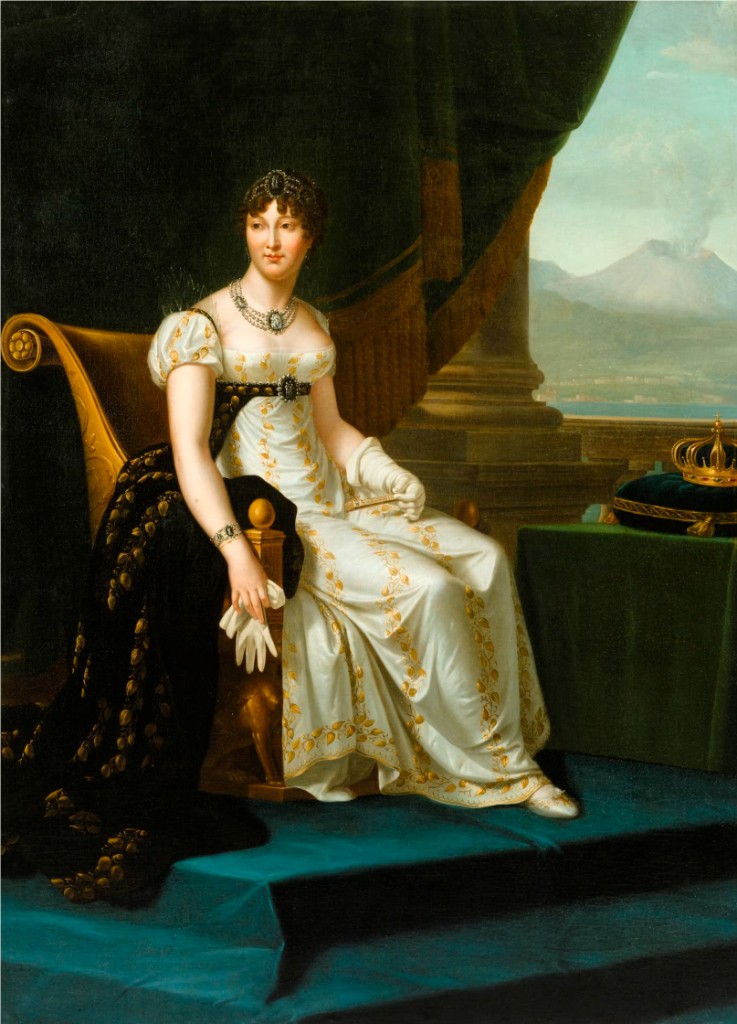
This grand portrait of Caroline as Queen of Naples — Empire gown and Neapolitan bay with Vesuvius on the horizon — offers a visual counterpoint to the marshal's uniform: a Bonaparte sovereign in the South, symbol of an imported monarchy draped in European court splendour, between Mediterranean ambition and dependence on the Emperor of the French.
At the heart of the campaigns: from Central Europe to the Russian retreat
Between 1809 and 1812 Murat alternated service in southern Italy with presence on northern battlefields. At Wagram (1809) the cavalry he led joined the decisive effort against Archduke Charles; repeated charges against Austrian lines confirmed his style — extreme daring, personal exposure, seeking psychological effect on enemy and own troops alike. In Spain he briefly commanded the army of the centre; guerrillas, terrain, and Wellington imposed a pace unlike the great manoeuvres of Germany or Poland, without erasing his reputation as a leader of squadrons.
The Russian campaign put him at the head of nearly all the Grand Army's cavalry: a hundred and forty thousand men at the start, including an impressive mass of horsemen. Taking Moscow did not end the war; from October 1812 the retreat began. Murat, until the final weeks, covered movements, tried delaying actions, endured cold and desertions. In late November he left the army to return to Naples in January 1813, officially to defend the kingdom against British and Bourbon schemes — a choice memorialists and enemy propaganda would read as desertion or dynastic priority.
Back in southern Italy he reorganised troops, watched Sicily, negotiated with notables. The corps he had left in Russia melted away; the bulletins no longer told the same victories. Yet in spring and summer 1813 he went north into Germany at the head of a Neapolitan corps: he joined the Saxon campaign, crossed paths with the Empire's marshals on ground where cavalry alone could no longer decide battles, witnessed the gigantic « battle of the nations » at Leipzig without personal glory. The Elster bridge collapse and general retreat showed him the Napoleonic system cracking.
Leipzig in October 1813 finished convincing European courts that the Empire was faltering; in Naples Caroline kept contacts with Metternich while Murat hesitated between oath to Napoleon and political survival on the throne. The storm approached.
The reversals of 1814-1815: Austrian treaty, Italian proclamation, Tolentino
On 11 January 1814 Joachim Murat signed a secret treaty with Austria: thirty thousand Neapolitan men in exchange for a guarantee of his throne in a post-Napoleonic Europe. Napoleon, still fighting in Champagne, learned the news and raged: « Murat! The basest of men! » The April abdication did not strip him of Naples at once: the Allies delayed, the Congress of Vienna debated the fate of the Sicilian Bourbons while diplomats weighed whether a Murat king could buffer against revolutionaries or whether Ferdinand IV must be restored at any price. Murat kept a fragile crown, Caroline a stubborn influence in diplomatic antechambers; every audience in Vienna or Paris reshuffled the cards of a kingdom become a bargaining chip.
On 26 February 1815 Napoleon left Elba; on 1 March he landed at Golfe-Juan. Murat, convinced a Bourbon victory would cost him everything, changed camp again: on 15 March from Rimini he issued a proclamation to the Italians — « Italians! The hour of destiny has struck! » — a call for unity against foreigners, raising an army, marching north against the Austrians. The venture was a political as much as military gamble: Neapolitan troops lacked experience of continental great war; coordination with liberals and Carbonari remained uneven.
On 2 May 1815 at Tolentino, Austrian general Bianchi crushed Murat's army. The rout was total; the kingdom collapsed. Austrian columns advanced on Naples while, further north, Napoleon faced Wellington and Blücher: two distinct theatres, two French failures that same spring, the second sealing Europe for a generation. Murat had no state, no alliance: he became a fugitive in a Calabria hostile to the French, hunted by peasants and contingents loyal to the restored Bourbons. The Hundred Days played out without him at Waterloo; his personal epilogue would be Calabrian.
Pizzo, firing squad, and memory: between sabre and betrayal
Disguised as a sailor, Murat wandered between Cannitello and Pizzo, hoping to reach France or at least escape a vengeance he knew would be relentless. On 8 October 1815 locals recognised him on the beach at Pizzo Calabro; he tried to flee by swimming, was captured. A Bourbon court-martial sentenced him to death: he had betrayed the Emperor in 1814, the Allies in 1815, taken up arms against Austria. On 13 October, at the castle of Pizzo facing the Tyrrhenian, he refused the blindfold and set his last theatrical stance: « Soldiers, do your duty. Aim at the heart, spare the face. » The shots rang out; Murat fell at forty-eight.
Caroline, in refuge in Austria with her children, received from Francis I the title of Countess of Lipona — an anagram of « Napoli » — and a pension. She never saw France again. Bonapartists cultivated the image of the heroic marshal betrayed by circumstance; royalists celebrated the fall of the « renegade king ». Nineteenth-century historians swung between moral condemnation and fascination for the condottiere turned king; recent scholarship stresses the kingdom's administrative modernisation and the strategic dead end of a sovereign too tied to Paris to be fully Neapolitan, too Neapolitan to remain a docile tool of the Empire.
Napoleon, on Saint Helena, judged: Murat was brave but lacked judgement — a phrase that sums the gap between the tactical brilliance of Eylau and the political choices that made him both satellite and gravedigger of his own throne. His name remains inscribed on the Arc de Triomphe among the generals of the Revolution and the Empire: there too national memory separates battlefield glory from the outcome of October 1815 on a Calabrian beach.
Discover other characters
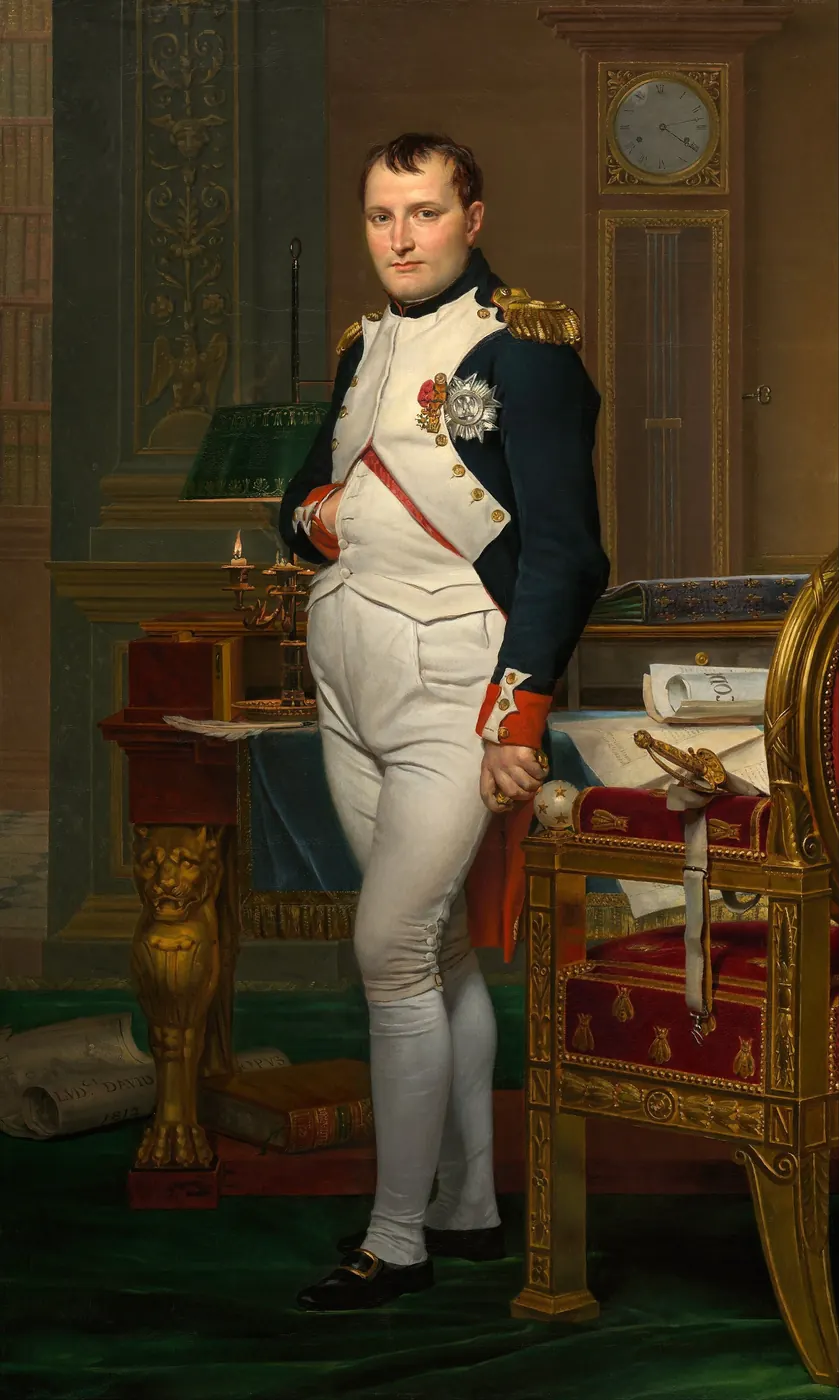
Napoleon Bonaparte
Emperor of the French
Caroline Bonaparte
Queen of Naples
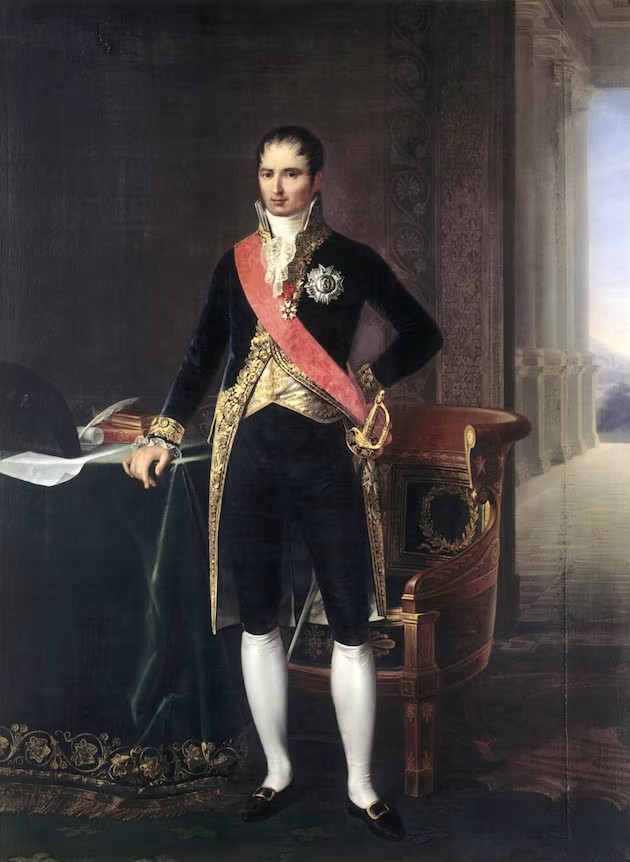
Joseph Bonaparte
King of Naples, then of Spain
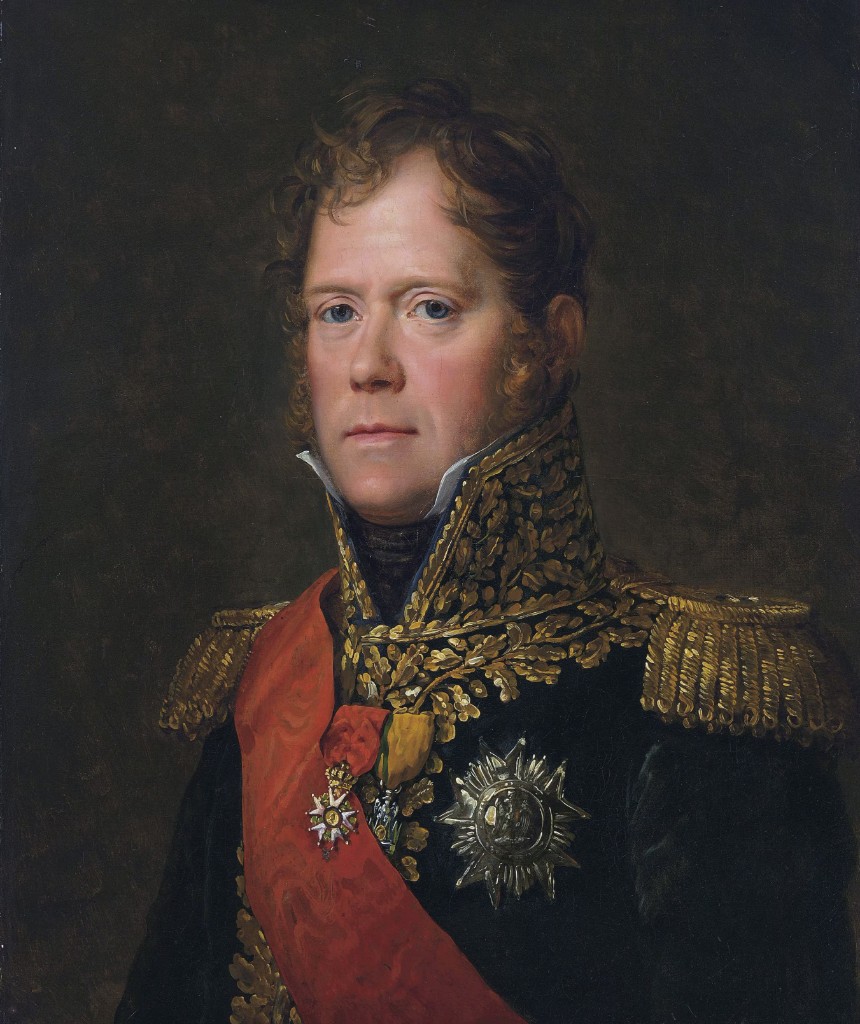
Michel Ney
Marshal of the Empire, Prince of the Moskova
Eugène de Beauharnais
Viceroy of Italy
Louis-Alexandre Berthier
Marshal of the Empire, Prince of Neuchâtel and of Wagram, major-general of the Grande Armée (1805–1814)
Go further
Recommended books to dig deeper (affiliate links)

Napoleon the Great
Andrew Roberts · 2014
A monumental biography drawing on Napoleon’s 33,000 surviving letters, admiring but rigorous.
See on Amazon
Napoléon ou le mythe du sauveur
Jean Tulard · 1977
The book that reshaped how the man is read: how France gave itself a saviour, and what it cost.
See on Amazon
Nouvelle histoire du Premier Empire
Thierry Lentz · 2002-2010
Four reference volumes on institutions, diplomacy and collapse: the scholarly synthesis of the subject.
See on AmazonAs an Amazon Associate, this site earns from qualifying purchases.
Support the encyclopedia
Napoleon Empire is an independent project. Your contribution helps grow the content and keep the site running.
DonateSecure payment on the platform you choose.