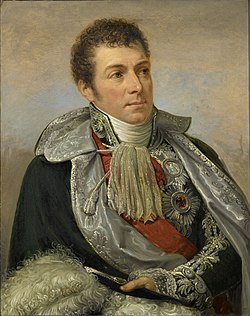
Born at Versailles on 20 November 1753, son of engineer-geographer Jean-Baptiste Berthier, Louis-Alexandre embodied the continuity of topographical genius and monarchical general staff refashioned by the Revolution then magnified under Bonaparte. Chief of staff of the Army of Italy from 1795, he forged with the Corsican general the most productive pairing of the Republic’s wars: instant translation of strategic intuition into marching orders, couriers, situation tables. In Egypt, under the Consulate and Empire, he combined ministerial duties with the post of major-general — logistical and administrative « brain » of the Grand Army. Marshal in 1804, Prince of Neuchâtel in 1806, Prince of Wagram in 1809 after the huge battle against the Austrians, he remained the man without whom, in a famous phrase, « there is no army » — not chief tactician in the field, but architect of the passage from imperial will to mass movements. In 1814 he followed Napoleon until the last victories of the French campaign, then rallied to Louis XVIII. During the Hundred Days he remained faithful to the Bourbons and died violently at Bamberg on 1 June 1815, in circumstances still debated. Napoleon, on Saint Helena, would acknowledge his absence as decisive at Waterloo. His name remains tied to the professionalisation of the modern general staff.
Versailles, the genius of the map, and the Revolution (1753–1795)
Louis-Alexandre Berthier was born into the technical world of military Versailles: his father, Jean-Baptiste Berthier, royal engineer-geographer and officer of the Corps of Engineers, trained his sons in surveying, fortress plans, and calculated marches. Cartography was not ornament: it was the tool by which the state measured its territory and projected its armies. The young Louis-Alexandre entered the military career early — second lieutenant at thirteen in the Royal-Rousillon-Infantry regiment, then engineer-geographer: he saw the monarchy’s campaigns, notably in America under Rochambeau, and was present at the Siege of Yorktown in 1781, a distant but real witness to the Franco-American victory.
Back in France, he rose through staff officer ranks under the Old Regime; the Revolution shook hierarchies without abolishing the need for men who could read a map, set a battle order, and move information. In 1791 he was a maréchal de camp; the next year he became chief of staff of the Army of the North under Lafayette then under Dumouriez. The latter’s defection in April 1793 tested every officer’s loyalty; Berthier stayed with the Republic, served in the Vendée, then in the Army of the Alps, and pursued a rise founded on competence rather than political eloquence.
In 1795 his promotion to divisional general coincided with a decisive posting: he was appointed chief of staff of the Army of Italy. There he met Bonaparte, newly charged with conducting the campaign. The commander-in-chief brought vision and energy; Berthier brought the chain of transmission: drafting daily orders, synchronising columns, anticipating road times. The victories of Lodi, Arcola, Rivoli were not mere heroic charges: they were mechanisms in which each brigade arrived on time because someone in the rear had calculated the junction.
The Berthier style set in these years: extreme availability, taste for detail, technical authority over bureaux. He was not the salons’ favourite; he was the man of maps folded on the campaign table. Future marshals already met him; some would find his instructions fussy, others — like Davout — would recognise that he alone fully « understood » the Emperor’s operational language.
The Italian campaign forged a model the Consulate and Empire would extend: the general staff was not a passive chancery but the command’s nervous extension. Berthier embodied the modern quartermaster-general, halfway between royal engineer tradition and the industrial scale of Revolutionary armies.
In 1798, when the Directory entrusted the Egyptian expedition to Bonaparte, Berthier followed: organising landing, supply lines, bases. After the commander-in-chief’s secret departure in 1799, he remained in the East and negotiated capitulation facing the British — an inglorious but necessary epilogue to bring thousands of soldiers home. That sequence completed proof of his ability to manage administrative as well as tactical surprise. Henceforth no Republican commander-in-chief would contemplate a major overseas operation without entrusting him with top logistical responsibility.
Consulate, Ministry of War, and Marshal of the Empire
Back in France after Egypt, Berthier rallied to the coup of 18 Brumaire and found Bonaparte at the summit of power. From 1800 to 1807 he held the post of Minister of War — where paperwork, strength returns, uniform regulations, and appointments crossed strategy. Under the Consulate, the army became the regime’s privileged instrument; Berthier was its central manager, relaying the First Consul’s will to divisions, depots, fortresses.
Meanwhile he never left operational proximity: whenever a campaign opened — Marengo in 1800, then successive rebuilds — he resumed the itinerant general-staff logic. The Empire’s proclamation in 1804 brought him into the first circle of marshals: supreme honour for a man who had hardly commanded a great battle in his own name. Napoleon knew what he bought: not a rival on the field, but the guarantor of coherence between his thought and the movements of ten scattered corps.
In 1806, after creation of the Principality of Neuchâtel within the Confederation of the Rhine, Berthier received the title of sovereign prince — political as much as military reward, anchoring him in the new European geography of vassal states. The title flattered; the work stayed the same: ensure every imperial dispatch became executable instruction before nightfall.
The years 1805–1807 marked the apogee of the Napoleonic machine: Ulm, Austerlitz, Jena, Eylau, Friedland. Each time the pattern repeated with variants: the Emperor conceived the envelopment or central blow; Berthier split marches, set timings, recalled laggards, held liaison between wings. The Grand Army bulletins, drafted under Napoleon’s impulse, passed through his bureaux: they fed legend but also informed subordinate generals.
On 5 and 6 July 1809, the Battle of Wagram closed the Austrian campaign on a gigantic scale: two hundred thousand men clashed on the plateau. Napoleon used the name Wagram to crown Berthier: the Prince of Wagram was not vanity — it materialised the link between the organiser-marshal and one of the greatest collisions of the Napoleonic era.
Privately, marriage in 1808 to a Bavarian princess — Maria Elisabeth, allied by marriage to the Beauharnais house — tied Berthier to the dynastic web the Empire wove through princely unions. The Château de Grosbois, near Paris, symbolised his fortune: luxury that did not erase white nights nor the burden of serving as permanent interface between court and general staff.
Major-general: order, contradiction, and the system’s limits
Between 1805 and 1814 Berthier officially held the title of major-general of the Grand Army — in practice, Napoleon’s chief of staff in almost every major campaign. His tent was an office: maps, copies of orders, couriers leaving before dawn. Each instruction went in several copies by different routes to limit loss; the system rested on courier speed and corps discipline, not the electric telegraph.
Berthier was not a mere transcriber: he sometimes dared contradict the Emperor when an order seemed materially impossible — at the Moskova he argued for delaying engagement until reserves were in place; Napoleon decided otherwise and the day was costly. The episode illustrates the pair’s two poles: the commander-in-chief’s audacity and the major-general’s logistical caution, rarely reconciled on equal terms.
In Spain Berthier did not follow Napoleon in the field: kept in Paris by the ministry, he left others to coordinate multiple theatres — Joseph on his throne, jealous marshals guarding autonomy, a guerrilla that broke communication lines. The usual « brain’s » absence was felt: the Iberian peninsula became the laboratory where the Napoleonic machine showed structural flaws, regardless of any one chief’s talent.
The 1812 Russian campaign pushed the apparatus to extremes: hundreds of leagues, hostile climate, a Russian army that refused the prolonged decisive battle. Orders left « on time »; distance made them obsolete almost in departure. Berthier could not magically shorten the steppe nor force Kutuzov into the classic Napoleonic game. The retreat finished dissolving the corps: no staff held the complete map — each marshal saved what he could.
In 1813 the German campaign tried to patch the tool: Leipzig became the « Battle of the Nations », too vast for perfect coordination. Berthier still watched, exhausted, witness to Rhineland allies’ wear and the coalition’s rising power. The Napoleonic system, built around one genius and his interpreter, struggled when several fronts exploded at once.
Marshals murmured: Ney and Murat found instructions « fussy »; Davout, closer to Berthierian rigour, praised plan clarity when applied without deviation. That polarisation states the major-general’s truth: he embodied the norm against which fiery temperaments measured themselves — sometimes for the best, sometimes for friction.
1814: French campaign and rally to Louis XVIII
France’s invasion in January 1814 placed Berthier at the heart of a desperate defence. Napoleon fought a series of tactical victories — Champaubert, Montmirail, Montereau — that did not offset strategic emptiness: threatened Paris, multiple allies, exhausted marshals. Berthier followed the Emperor to the end of that sequence, still drafting orders, trying to hold the chronology of corps scattered between the Marne and the capital.
On 31 March, Paris’s capitulation sealed the political outcome. Berthier withdrew to Grosbois; on 2 April, the Senate pronounced forfeiture. Like most marshals, he swore to Louis XVIII: not a late ideological conversion, but recognition that his trade had always been loyalty to the lawful state — imperial or royal — rather than personal cult of the sovereign.
The Bourbons treated the Prince of Wagram with deference: the king’s marshal’s baton, honours retained, integration into Restoration nomenclature. Berthier had never been a Bonapartist pamphleteer; he had been supreme executor of a machine whose chief had just left the throne. His stance was understandable to royalists and old grognards alike, who knew what they owed his rigour.
This phase poses the moral question historians still debate: betrayal or loyalty to an office? Berthier chose legal continuity as proclaimed by the new regime — a choice Napoleon would bitterly qualify from exile, while recognising his major-general’s irreplaceable competence.
The Hundred Days and death at Bamberg (1815)
Napoleon’s landing at Golfe-Juan on 1 March 1815 did not bring Berthier back into the imperial orbit: he remained faithful to Louis XVIII and refused to rejoin the eagle. The king left Paris; Berthier accompanied the royal family to Béthune, then obtained permission to go to Bamberg in Bavaria, where his in-laws lived — a choice of physical withdrawal to avoid being caught between fires in a France again in latent civil war.
On 1 June 1815, at the family castle in Bamberg, he watched military manoeuvres from a first-floor window in the courtyard — or gardens, according to versions. He fell heavily and died instantly or from immediate injury consequences, aged sixty-one. Testimony diverges: accident (loss of balance, seizure), suicide under shock of depression — worsened by rumours of proscription or news that Napoleon had called him traitor — or even fantasy of political murder. The Bavarian inquest concluded accident; controversy does not exhaust the psychological mystery of a man crushed between two legitimacies.
Buried at Bamberg, Berthier left an immediate void the Belgian campaign did not fill: at Waterloo, the general staff recovered neither the mechanism nor the tacit familiarity built over twenty years. Napoleon, on Saint Helena, would frame the paradoxical tribute: without Berthier as major-general, the battle of 18 June would not have taken the disastrous form it did. The posthumous compliment, whatever its strictly military merit, fixed for posterity the image of the invisible marshal — the one without whom plans remained dreams on paper.
Modern historians nuance: Berthier was neither supreme strategist nor battle general; he was the great organiser of the Napoleonic age. His work lies in thousands of archived orders, in the staff culture he helped crystallise, in the demonstration that a mass army needs a bureaucratic brain as much as tactical genius. Between Versailles and Bamberg, Louis-Alexandre Berthier’s trajectory traces the arc of a France that passed from king-geographer to Emperor-cartographer — with, as sole thread, the line of roads traced on maps folded in the saddle.
Discover other characters
Napoleon Bonaparte
Emperor of the French
Louis-Nicolas Davout
Marshal of the Empire, Prince of Eckmühl
Michel Ney
Marshal of the Empire, Prince of the Moskova
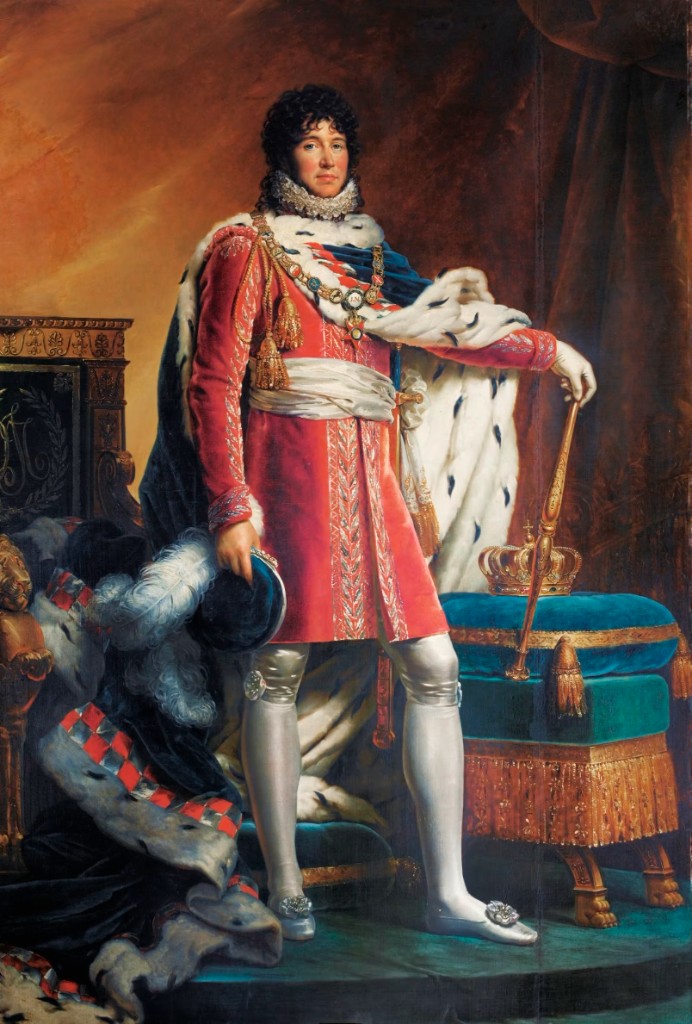
Joachim Murat
Marshal of the Empire, King of Naples
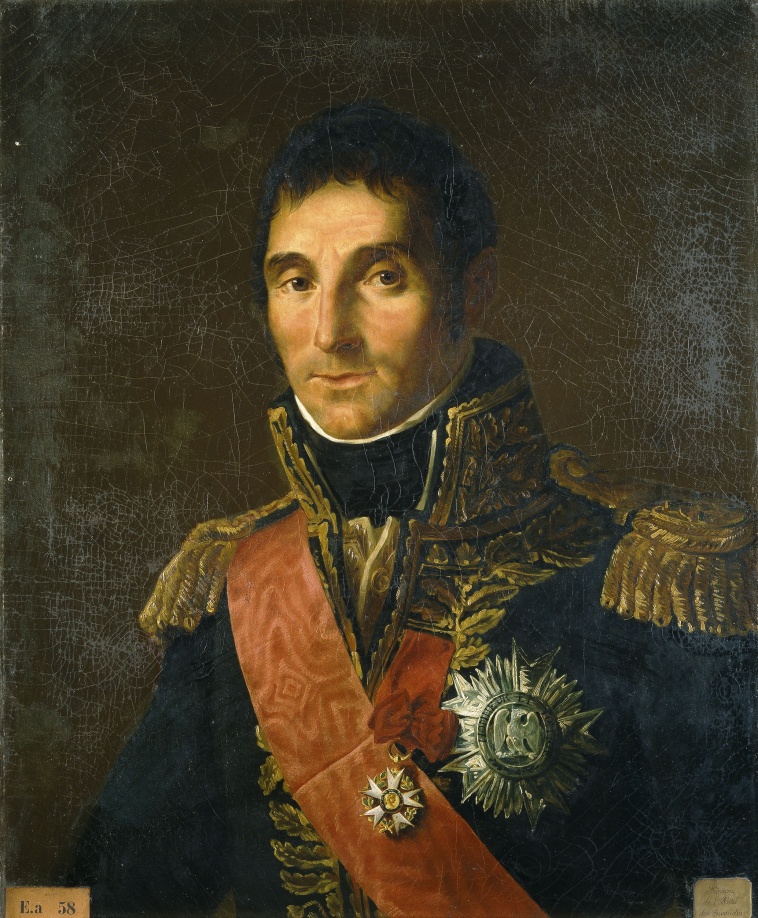
André Masséna
Marshal of the Empire, Prince of Essling
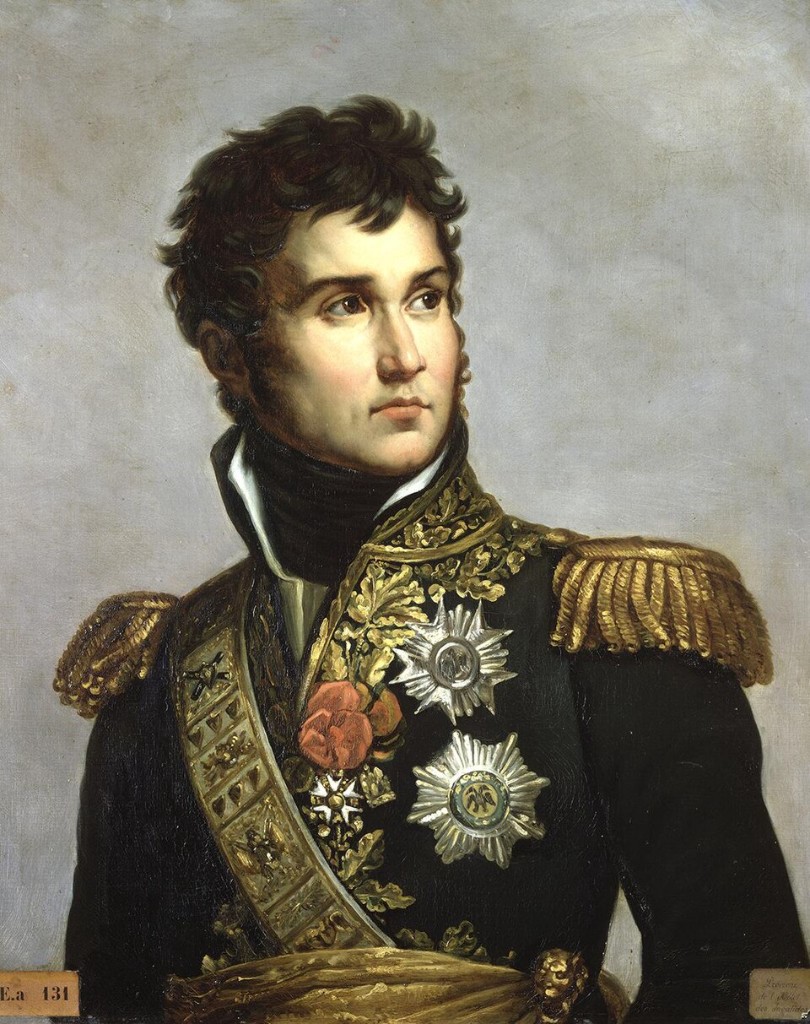
Jean Lannes
Marshal of the Empire, Duke of Montebello
Go further
Recommended books to dig deeper (affiliate links)

Napoleon the Great
Andrew Roberts · 2014
A monumental biography drawing on Napoleon’s 33,000 surviving letters, admiring but rigorous.
See on Amazon
Napoléon ou le mythe du sauveur
Jean Tulard · 1977
The book that reshaped how the man is read: how France gave itself a saviour, and what it cost.
See on Amazon
Nouvelle histoire du Premier Empire
Thierry Lentz · 2002-2010
Four reference volumes on institutions, diplomacy and collapse: the scholarly synthesis of the subject.
See on AmazonAs an Amazon Associate, this site earns from qualifying purchases.
Support the encyclopedia
Napoleon Empire is an independent project. Your contribution helps grow the content and keep the site running.
DonateSecure payment on the platform you choose.