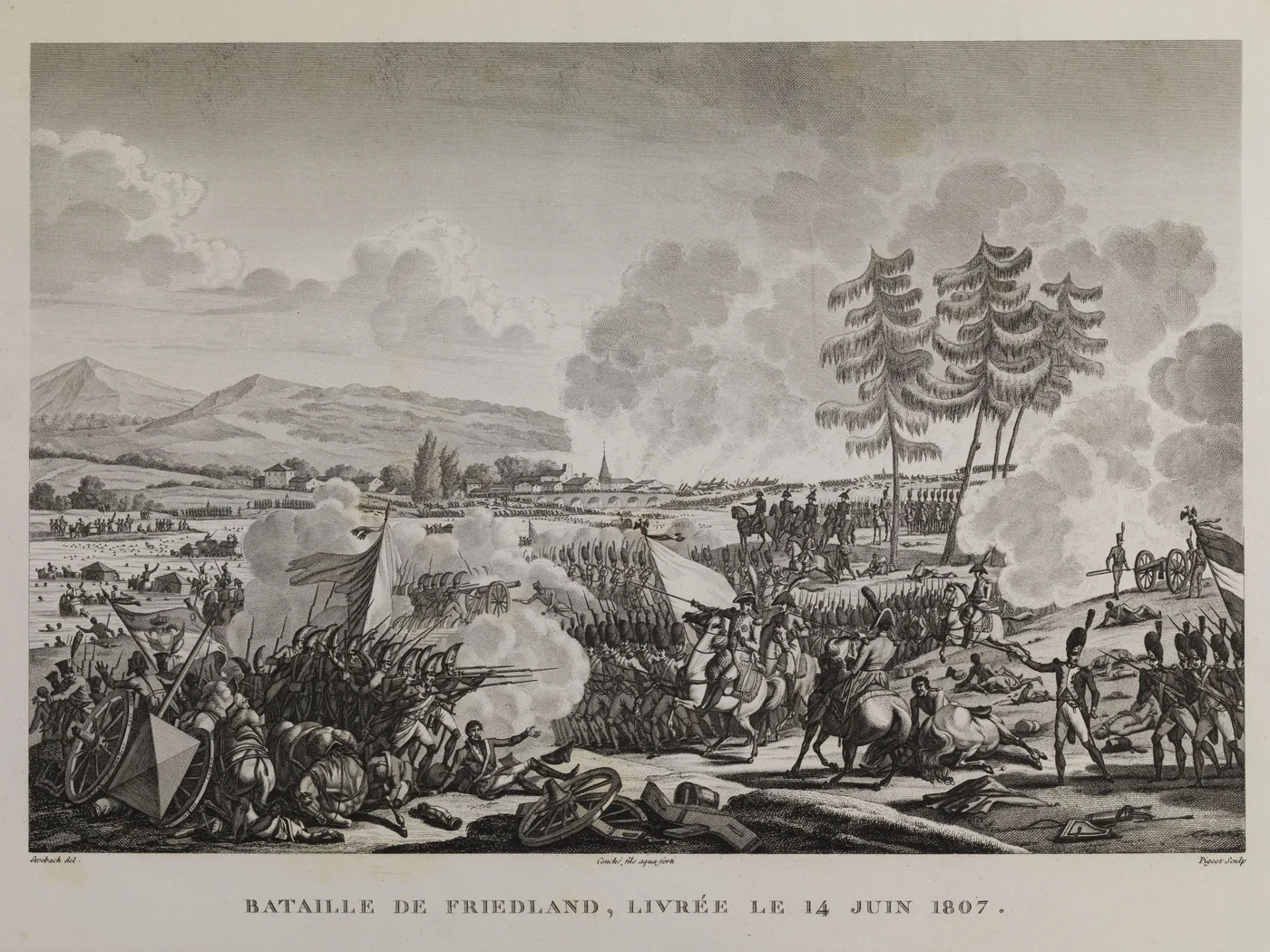
The Battle of Friedland, fought on 14 June 1807 in East Prussia, ended the War of the Fourth Coalition. Believing he could crush Marshal Lannes’s isolated corps, the Russian general Bennigsen brought his army over to the left bank of the Alle and shut himself up in a bend of the river, with his back to the bridges of Friedland. Lannes held on alone for hours; Napoleon arrived at noon and, at 17:30, launched Ney against the Russian left, which Sénarmont’s artillery, pushed to canister range, finally broke. Driven into the Alle, the Russian army lost a large part of its strength, and Tsar Alexander I sued for peace: three weeks later the Treaties of Tilsit marked the height of the Empire.
Forces at play
Outcome: Decisive French victory

France · Poland
- Napoléon
- Lannes
- Ney
- Mortier
- Victor
- Sénarmont
About 80,000 men committed gradually; Lannes alone at dawn with about 12,000 men
Casualties: About 10,000 men (1,645 killed and 8,995 wounded according to official figures)

Russia
- Bennigsen
- Bagration
- Gortchakov
About 60,000 men, some 46,000 of them on the left bank of the Alle
Casualties: 20,000 to 25,000 men according to foreign historians, 10,000 to 15,000 according to Russian authors
Battle coordinates
Friedland
Coordinates 54.4471° N · 21.0172° E
Interactive tactical map
Follow the battle hour by hour — hover over or tap a unit for its details.
The Russians cross the Alle
Prince Golitsyn’s cavalry drives out of Friedland the three French cavalry regiments that held it. During the night the main Russian army begins to cross the Alle on pontoon bridges thrown in the town itself. Bennigsen, who is ill, believes he has the chance to crush Lannes’s isolated corps before Napoleon arrives.
All the bridges are thrown in the Friedland bottleneck: the Russian army is unwittingly shutting itself up in the bend of the Alle.
Positions reconstructed from accounts and plans of the battle and placed on the actual sites of the villages, which have since been renamed. The mill stream and the Sortlack wood, since flooded by a reservoir on the Alle, are placed approximately. Timings, on which the sources do not always agree, are indicative.
Battle narrative
Spring 1807: a war on hold
The Battle of Eylau, on 7 and 8 February 1807, had decided nothing. The two exhausted armies spent the winter recovering in East Prussia: it took them more than three months. At Bartenstein, on 26 April, Russia and Prussia pledged to carry on the fight together. Napoleon used the respite to secure his rear: the great Prussian fortress of Danzig surrendered to Marshal Lefebvre at the end of May, freeing troops and securing the Grande Armée's supplies.
In early June both sides prepared to resume the campaign. Each was looking for the decisive battle the winter had denied it.
Guttstadt and Heilsberg
Bennigsen struck first. On 5 June his columns converged on Marshal Ney's VI Corps, which had ventured ahead of the rest of the army: outnumbered three or four to one, Ney fought two days of rearguard actions around Guttstadt and Deppen, lost his baggage, two guns and some 2,000 men, but got back across the Passarge with most of his troops. In those days Marshal Bernadotte was wounded; on 6 June General Victor replaced him at the head of I Corps.
Napoleon then gathered his forces and marched on the Russian army, which had entrenched itself at Heilsberg, on the Alle, in works prepared long in advance. On 10 June Murat attacked without waiting for the main body; repeated assaults broke against the redoubts and cost the French dearly. Yet Bennigsen did not linger: the next day he broke contact and moved down the Alle to the north, towards Königsberg. Napoleon divided his army: Murat, Davout and Soult marched on Königsberg, while Lannes, Ney, Mortier and Victor followed the Russians, together with the Guard.
Friedland, a town in a bend of the Alle
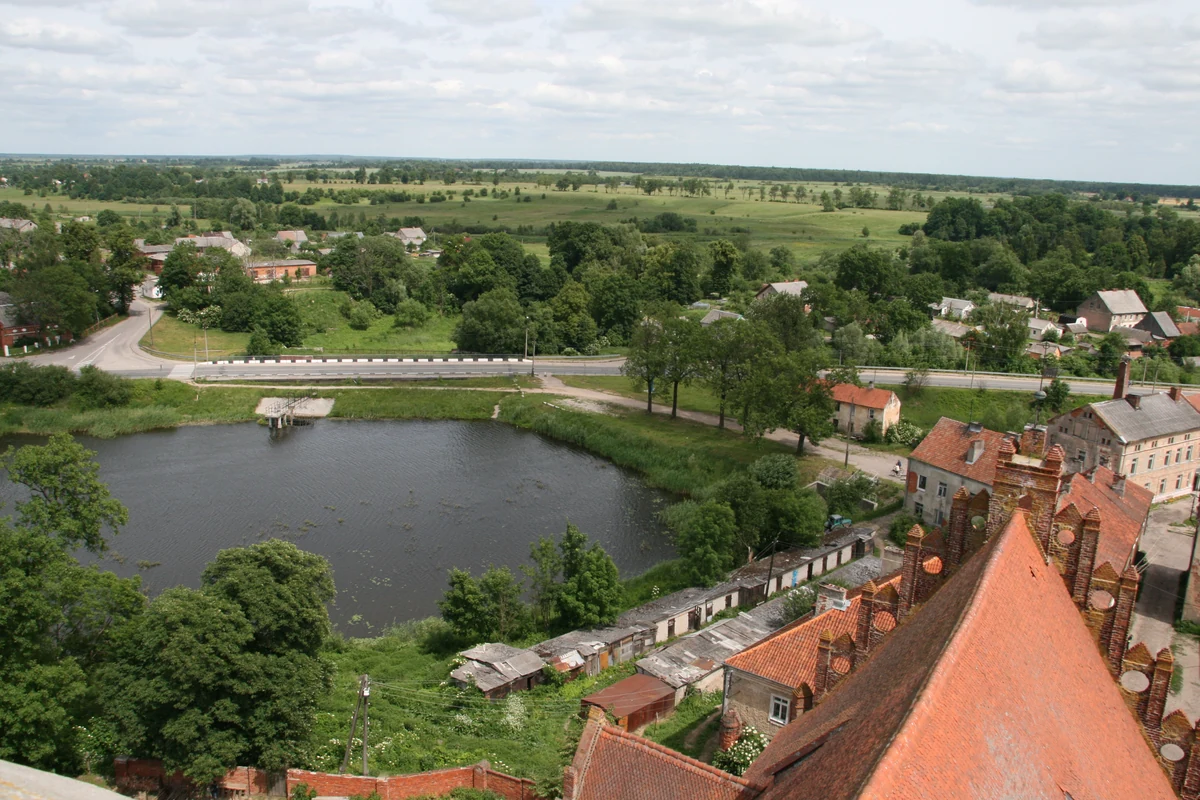
Friedland, founded in 1312 by the Teutonic Order, was a small East Prussian town built on the left bank of the Alle, some 43 kilometres south-east of Königsberg. It had bridges over the river, and that is what made it a prize: through it, Bennigsen could cross back to the left bank and get ahead of the French on the Königsberg road. Today the town is called Pravdinsk and lies in Russia's Kaliningrad Oblast.
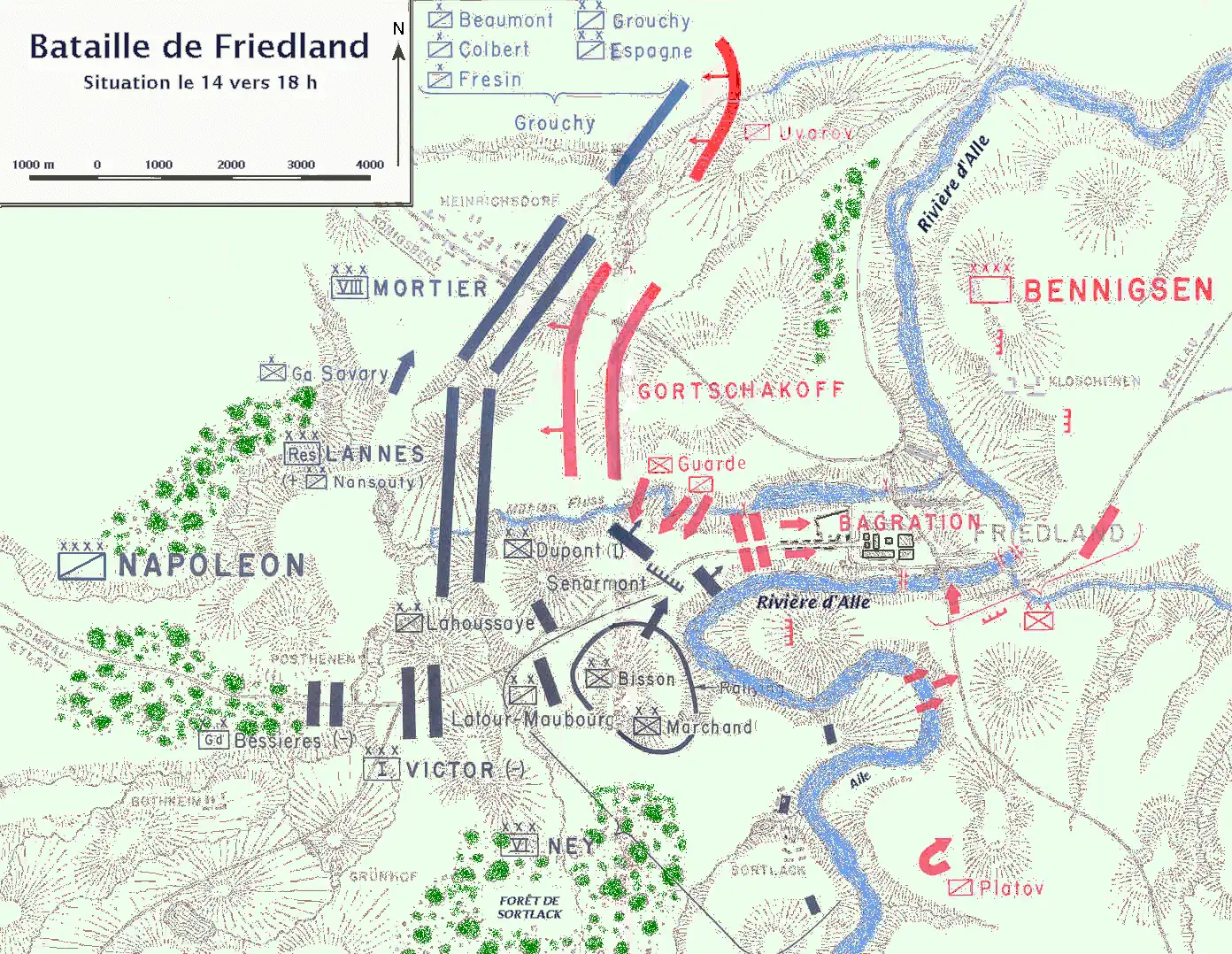
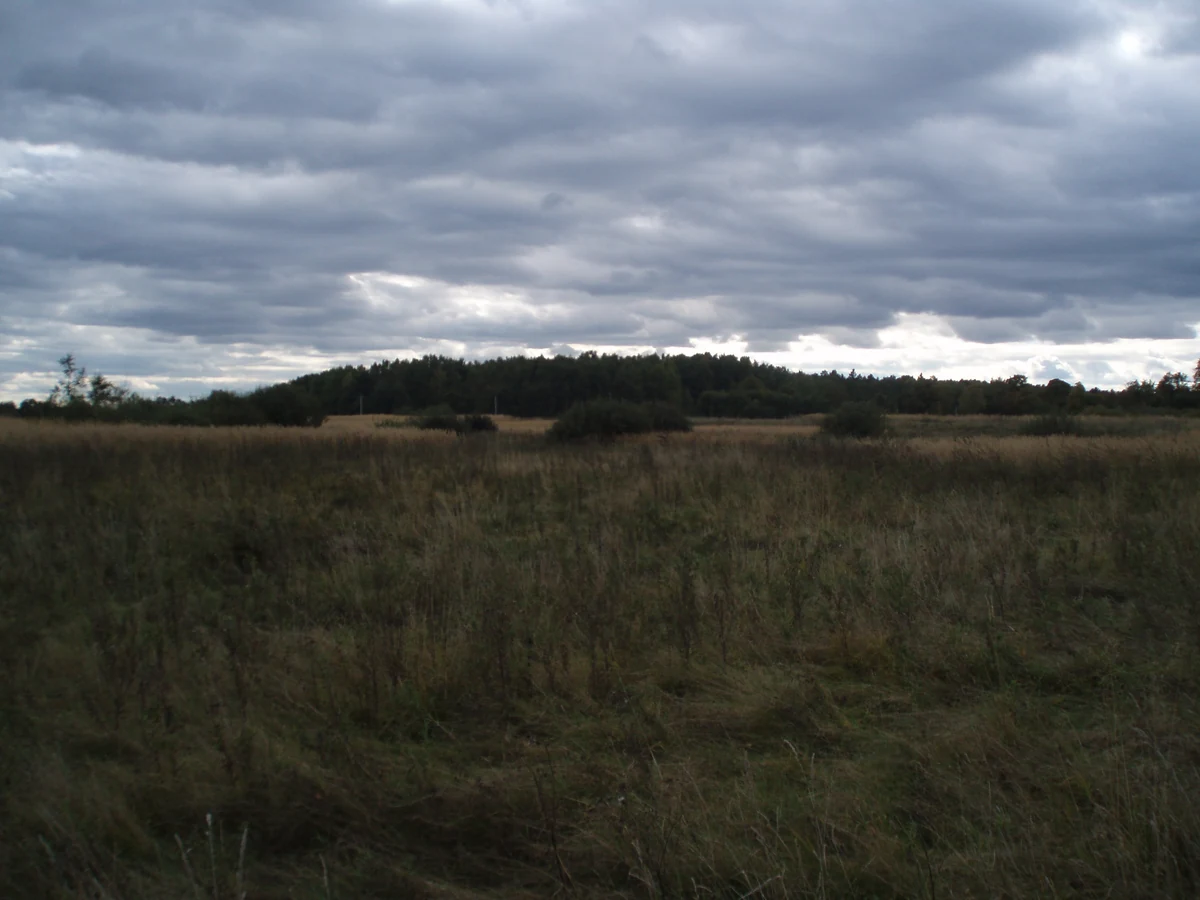
The historian Adolphe Thiers described the ground. The river winds in several loops there: it turns around Friedland and forms an elbow open to the west, with the town at its far end. Coming from the west over wooded hills, the French saw the ground slope gently down to the Alle through fields of rye that stood very high at that season. A stream, the mill stream, runs towards Friedland, forms a small pond there, then flows into the Alle after cutting the plain into two unequal halves. That steep-banked stream would play a decisive part.
Bennigsen's gamble
On 13 June Marshal Lannes's advance guard reached Friedland, where three regiments of French cavalry were already in the town. Prince Golitsyn's Russian cavalry drove them out, and during the night the main Russian army began to cross the Alle and occupy the town.
Bennigsen, ill that day, had only meant to secure his march north. But he thought he saw an opportunity: Lannes's corps seemed isolated, far from the rest of the French army. He decided to bring his troops over to the left bank to crush it, then recross the river before Napoleon arrived. His pontoon bridges were all thrown at Friedland itself or close by, in the bottleneck formed by the town: without realising it, he was shutting his army up in the bend of the Alle.
The forces engaged
The French gradually committed about 80,000 men: Lannes's reserve corps, Mortier's VIII Corps, in which French and Polish troops served, Ney's VI Corps, Victor's I Corps, Bessières's Imperial Guard and a powerful cavalry, with the divisions of Grouchy, Nansouty, Latour-Maubourg and La Houssaye. But much of this force was still on the march on the morning of 14 June.
The Russian army numbered about 60,000 men. Some 46,000 crossed to the left bank and deployed in an arc around Friedland, from Karschau in the north to the Sortlack wood in the south, on a front of five to six kilometres. Prince Bagration commanded the left, between the mill stream and the Alle; Prince Andrei Gorchakov the right, with four divisions; the cavalry was under Uvarov, Golitsyn and Kologrivov. A reserve of about 20,000 men with heavy artillery stayed on the right bank, near Allenau.
Three in the morning: Lannes alone
The first shots rang out at three in the morning, at first light, in the Sortlack wood at the southern end of the plain, between Russian skirmishers and Lannes's voltigeurs, soon relieved by Oudinot's grenadiers. Lannes then had only about 12,000 men. He had placed his artillery on the plateau above the village of Posthenen, posted his grenadiers and voltigeurs between the wood and the village, and given Grouchy's cavalry the right of the wood.
His task was to hold the Russian army in place until the Emperor arrived. He stretched his lines to look stronger and, according to his biographer Ronald Zins, used the tall rye, the copses and the folds of the ground to show or hide his battalions in turn. On his left, Nansouty's cavalry covered the Königsberg road. As the hours passed Lannes pressed Napoleon to hurry; according to the same author, he told his aide-de-camp to ride his horse to death if need be to tell the Emperor that it was the whole Russian army they had on their hands.
The race for Heinrichsdorf
Unable to break out through the wood, the Russians shifted their effort north, towards the Königsberg road. The prize was the village of Heinrichsdorf, which commanded that road. Grouchy took it, rallying Nansouty, who had been forced back; driven off in turn by Russian cavalry, he was freed by a fresh charge from Nansouty, who pushed the Russian horsemen back towards Friedland. General Albert's grenadier brigade, of Verdier's division, occupied Heinrichsdorf, and Dupas's division of Mortier's corps came into line between that village and Posthenen. Further north, Mortier's troops drove the Cossacks out of the village of Schwonau.
By about nine o'clock some 17,000 French faced 45,000 to 46,000 Russians. But the Russians, with their backs to the Alle, had left the French holding the key positions, and their two wings could only communicate with difficulty across the stream. Bennigsen largely confined himself to a cannonade and skirmishing: the chance to crush Lannes had gone.
Noon: Napoleon arrives
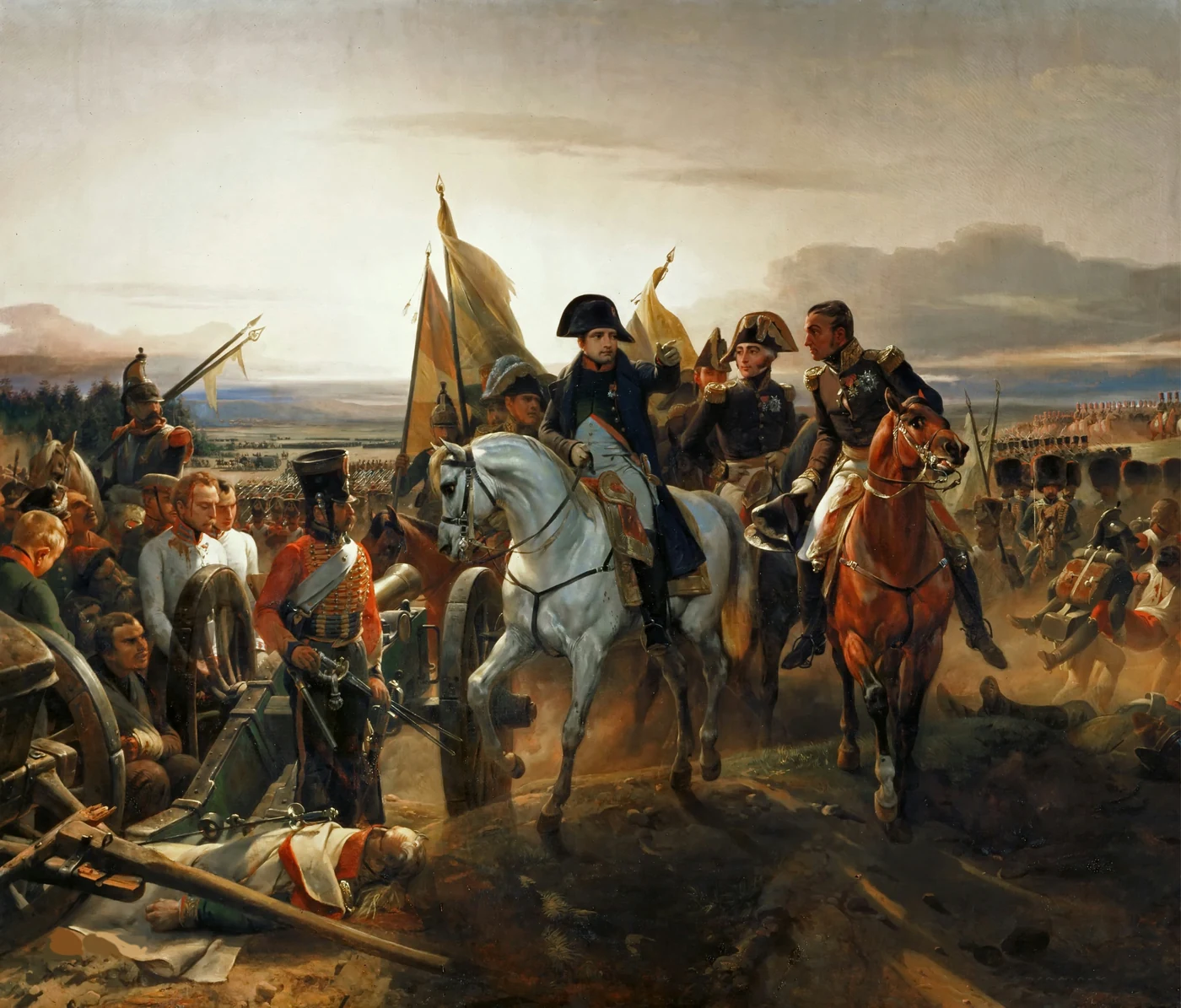
Napoleon arrived shortly after noon with his staff and took command. He directed the battle from a wooden platform set up in the park of the Posthenen estate. Some of his lieutenants, it is said, suggested putting off the attack until the next day; he is supposed to have replied that one does not catch the enemy twice in such a blunder. 14 June was also the seventh anniversary of Marengo.
His orders were simple. Ney would take the right, between Posthenen and the Sortlack wood; Lannes would hold the centre; Mortier the left, at Heinrichsdorf; Victor's I Corps and the Guard would form the reserve behind Posthenen; the cavalry would mass towards Heinrichsdorf. The main attack would fall on the Russian left, which Napoleon saw was cramped in the narrow tongue of land between the Alle and the mill stream. The aim was to break through to the bridges of Friedland: once the town was taken, the Russians would have no way out.
An afternoon to deploy
For several more hours both armies held their positions. Each side had large detachments out towards Königsberg, and Napoleon was waiting for his last troops: the Guard and I Corps only arrived at about four o'clock. Meanwhile the artillery covered the deployment of the columns as they came up.
From the bell tower of Friedland's church, Russian officers reported to Bennigsen that strong columns were approaching from the west; the cheers greeting the Emperor could be heard as far as the Russian outposts. Bennigsen at last understood the danger of his position and ordered a retreat. It was too late: recrossing the Alle by a few bridges, under the eyes of an army that now outnumbered his own, was impossible without a fight. According to French accounts, Napoleon then pointed Friedland out to Ney and ordered him to march on it without looking about him and to seize the bridges.
17:30: Ney's assault
At 17:30 several rapid salvoes from a twenty-gun battery broke the silence: it was the signal. Ney came out of the Sortlack wood and attacked Bagration's Russian left. Marchand's division advanced on the right, Bisson's on the left, followed by Latour-Maubourg's dragoons. The Russians fell back before them; Marchand wheeled to the right to drive the troops near Sortlack into the Alle.
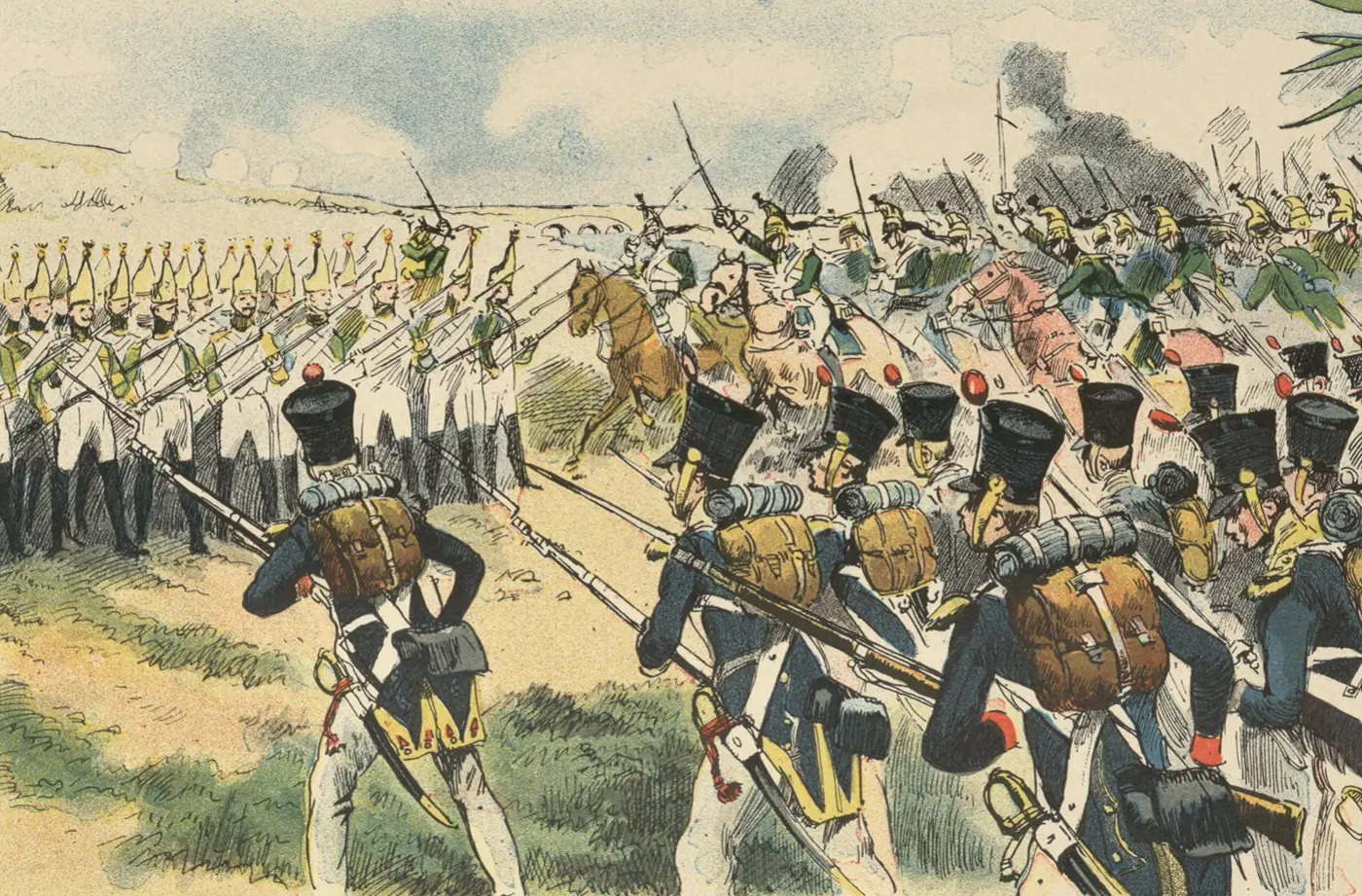
Bennigsen saw an opening in this movement. He sent Cossacks and Kologrivov's cavalry regiments into the gap opening between the two French divisions. The charge failed: Latour-Maubourg's dragoons met it head-on and threw it back.
The attack stalls
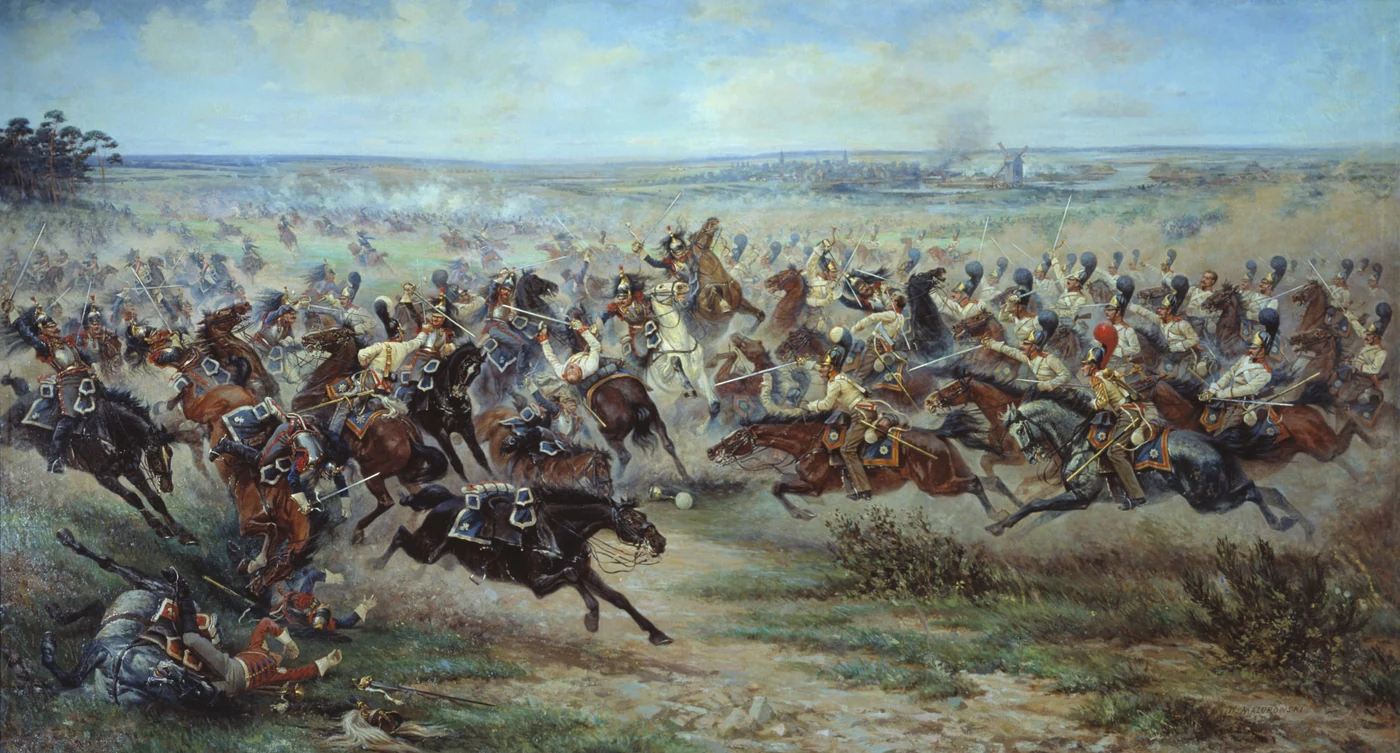
Ney's momentum soon broke. On the right bank of the Alle, the batteries of the Russian 14th Division, held in reserve, took the French columns in flank, and Bennigsen threw a fresh mass of cavalry at them. The horsemen of the Russian Guard, the Chevalier Guards above all, distinguished themselves by charging into the packed ranks of the attackers. Part of Ney's corps fell to the fire of the batteries and the sabres of the cavalry; his divisions fell back in disorder.
This was the critical moment of the day. As at Eylau, the approach of night seemed bound to prevent a decisive success. But this was June, the ground was firm, and Napoleon still had fresh reserves.
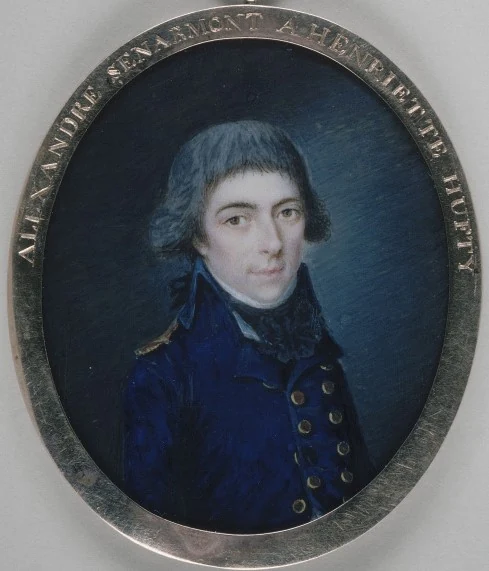
Sénarmont: artillery at close quarters
Napoleon now committed Victor's I Corps. Dupont's division led, supported by Latour-Maubourg's dragoons, and drove the Russian squadrons back onto their infantry. Above all, General Alexandre-Antoine de Sénarmont, commanding the corps artillery, pushed forward some thirty guns — thirty to thirty-six depending on the source — and brought them closer and closer, in successive bounds, to the Russian mass crammed into the bend of the Alle.
The reported ranges show how bold the move was: the battery opened at about 1,600 metres, then at 150, and ended, according to the Russian account, at some sixty paces. At that range canister cut down whole ranks; the remnants of Russian cavalry trying to relieve the infantry suffered the same fate. Within minutes the defence of the Russian left collapsed. Napoleon would use this concentration of massed artillery, pushed to close range, again at Wagram, at Borodino and in 1813.
Bagration's retreat
Having received the order to retreat, Bagration formed his troops into columns to cross the bridges and sent his artillery off first. The columns stretched out along the road to Friedland — today Kutuzov Street in Pravdinsk — and the French gunners, moving their battery closer still, pounded them with roundshot and shells, then fired canister at the crossings.
The rearguard was sacrificed to hold on. The Izmailovsky Guard and the Pavlovsk grenadiers charged again and again with the bayonet. The chief of the Pavlovsk grenadiers, Major General Nikolai Mazovsky, wounded in the arm and the leg, had himself carried by two grenadiers in front of his regiment to lead it into one last attack; he was killed, by canister according to most accounts. Bagration himself, sword in hand, strove to keep order. The Pavlovsk grenadiers, the last to withdraw, defended the town gates to cover the crossing.
Friedland in flames
At about 20:00 Ney's exhausted troops pursued the broken regiments of the Russian left into the streets of burning Friedland and seized the castle. But they could not take the crossings: as they withdrew, the Russians had set their bridges on fire.
Meanwhile Lannes and Mortier, who until then had held the Russian centre and right under the fire of their guns, launched their infantry on seeing the town ablaze. Dupont's division distinguished itself a second time: it forded the mill stream and struck the flank of the Russian centre, which resisted stubbornly before gradually giving way.
Gorchakov's wing trapped
The plight of the Russian right, under Prince Gorchakov, was worse still. Separated from Bagration by the mill stream and pond, it was cut off once Ney reached the town. Gorchakov decided to fight his way to the bridges: his troops crossed the stream, burst back into burning Friedland, drove the French out with the bayonet and reached the river — only to find that hardly a bridge was left.
Officers searched for fords downstream; they found some, and the troops plunged in under fire. Lannes and Mortier, constantly reinforced, pushed the Russians towards the Alle, where an unknown number of soldiers drowned. By about 21:00 the last were across, among them Dokhturov's 7th Division. Two artillery companies, covered by General Lambert's Alexandria Hussars, followed the left bank through the night as far as Allenburg and crossed the Alle there in the morning with their guns. At about 23:00 the guns fell silent. The French, who had marched all day before fighting, were in no state to pursue.
The toll
Casualty figures vary widely. On the French side the official figures give 1,645 killed and 8,995 wounded, some 10,000 men out of action; other estimates range from 7,000 to 12,000. On the Russian side, foreign historians generally put losses at 20,000 to 25,000 men, Russian authors at 10,000 to 15,000. Two Russian generals were killed, Mazovsky among them.
The French announced the capture of 80 guns and 12,000 prisoners. Russian testimony strongly disputes these figures: General Yermolov, who was serving in the Russian artillery, and Bennigsen himself maintained that only a few guns had been left behind, disabled or stuck in the river. The British envoy Hutchinson, who was at Russian headquarters, wrote that words failed him to describe the bravery of the Russian troops, who would have won had courage alone been enough.
The military outcome, however, is not in dispute: the Russian army had been driven off the left bank in disorder and had lost a considerable part of its strength. On 16 June Königsberg surrendered to Marshal Soult, who found large stores and thousands of Russian wounded there.
From Friedland to Tilsit
The defeat convinced the Russian leadership that peace was necessary. In the days that followed, Tsar Alexander I sent envoys to Napoleon, and the armies halted on the Niemen. On 25 June the two emperors met on a raft moored in the middle of the river. Alexander is said to have greeted Napoleon by telling him that he hated the English as much as he did; Napoleon is said to have replied that in that case peace was made.
The Treaties of Tilsit were signed on 7 July with Russia and on 9 July with Prussia. Russia became France's ally and joined the Continental System against Britain. Prussia lost nearly half its territory: its lands west of the Elbe formed the Kingdom of Westphalia, given to Jérôme Bonaparte, and its gains from the partitions of Poland the Duchy of Warsaw, assigned to the King of Saxony. Some historians see Friedland and Tilsit as the height of Napoleon's empire: no continental power any longer challenged French domination.
Rewards and figures of the day
For his decisive part, Victor was raised to the rank of Marshal of the Empire on 13 July 1807. According to the Russian account, Napoleon promised General Dupont the marshal's baton for his next feat of arms. On the Russian side, Bagration received from the tsar a gold sword set with diamonds. Friedland was also the occasion of the first award of the Badge of Distinction of the Military Order, the future soldiers' St George Cross, created a few months earlier: number 1 went to Yegor Mitrokhin, a non-commissioned officer of the Chevalier Guard.
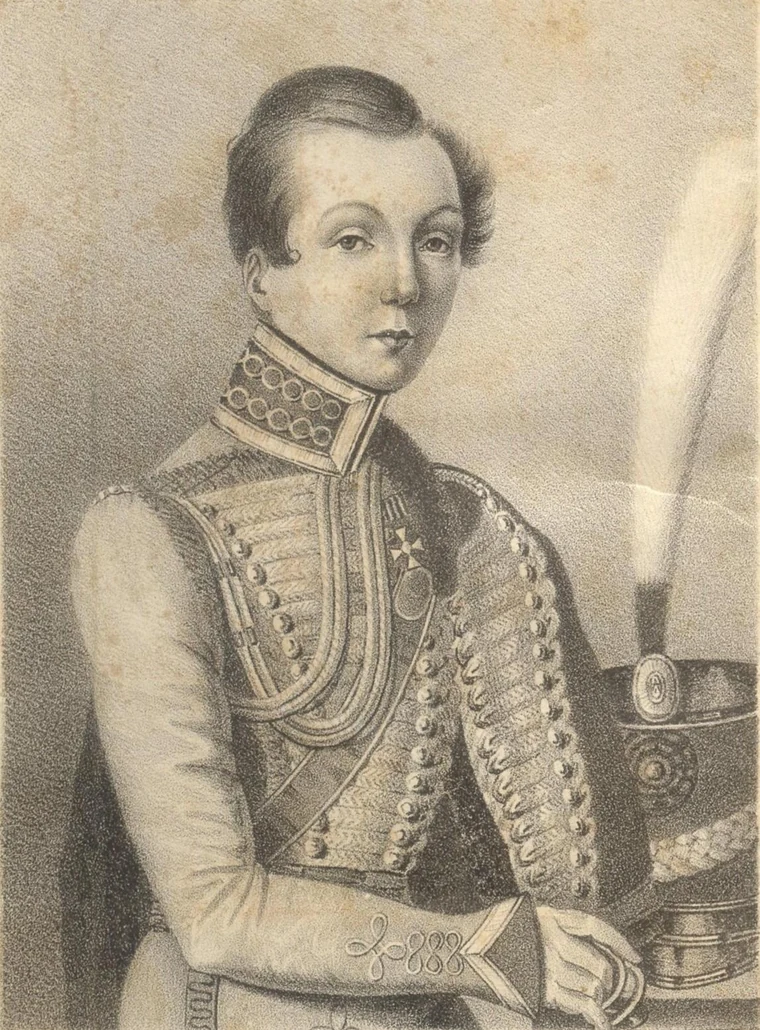
Among the Russian combatants was a young woman of twenty-four, Nadezhda Durova, who had enlisted in a cavalry regiment under the name of Alexander Sokolov; she became the first woman officer in the Russian army and later described this "cruel and fatal battle" in her memoirs. The soldier-poet Denis Davydov and the future general Alexei Yermolov also fought at Friedland.
Meissonier and the imagined battle
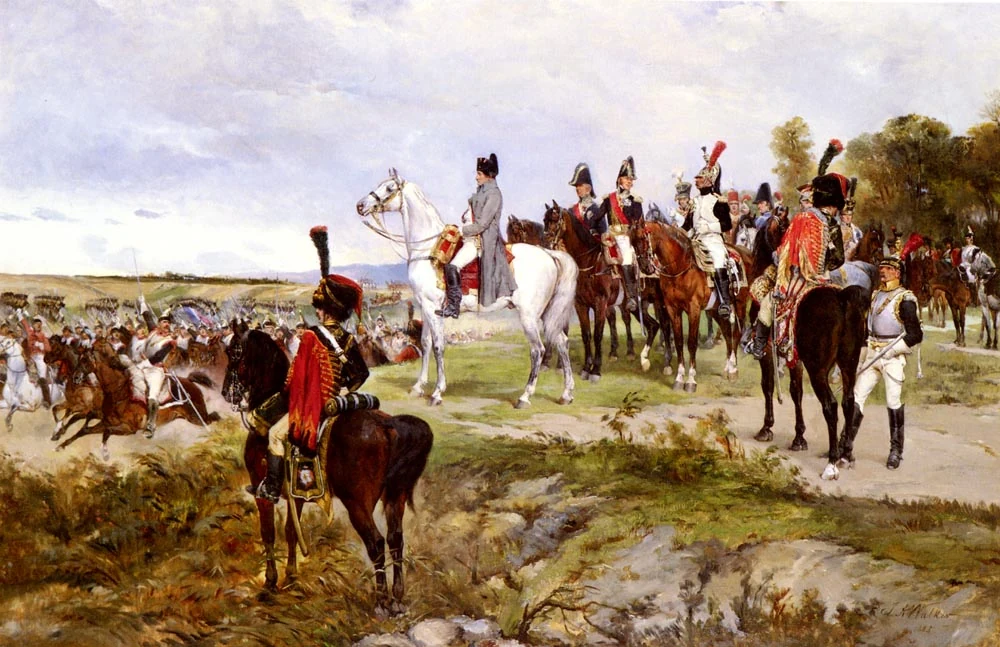
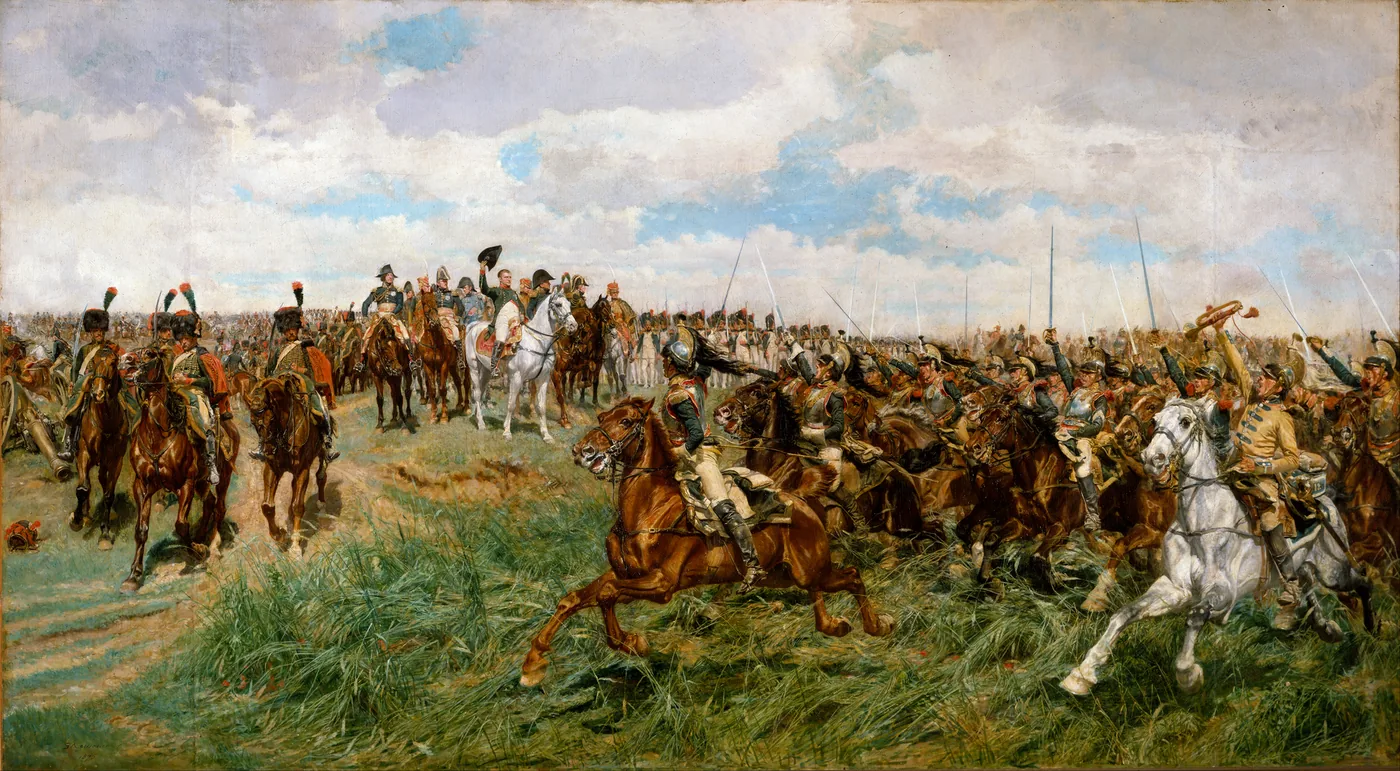
Friedland inspired one of the most famous paintings of the nineteenth century. Ernest Meissonier worked for fourteen years, from 1861 to 1875, on 1807, Friedland, his most ambitious canvas, now in the Metropolitan Museum of Art in New York. It shows Napoleon on a white horse, bicorne raised, surrounded among others by Berthier, Bessières, Duroc and Nansouty, saluting cuirassiers who gallop past. Meissonier began with the sky and made separate studies of every horse and man, using wax models.
The painting caused a sensation, but it also had its critics. Manet is said to have joked that everything in it looked made of steel except the cuirasses. The critic Henry Houssaye pointed out above all that the scene was imaginary: Napoleon held no review of his troops at Friedland.
Pravdinsk, the memory of a battle
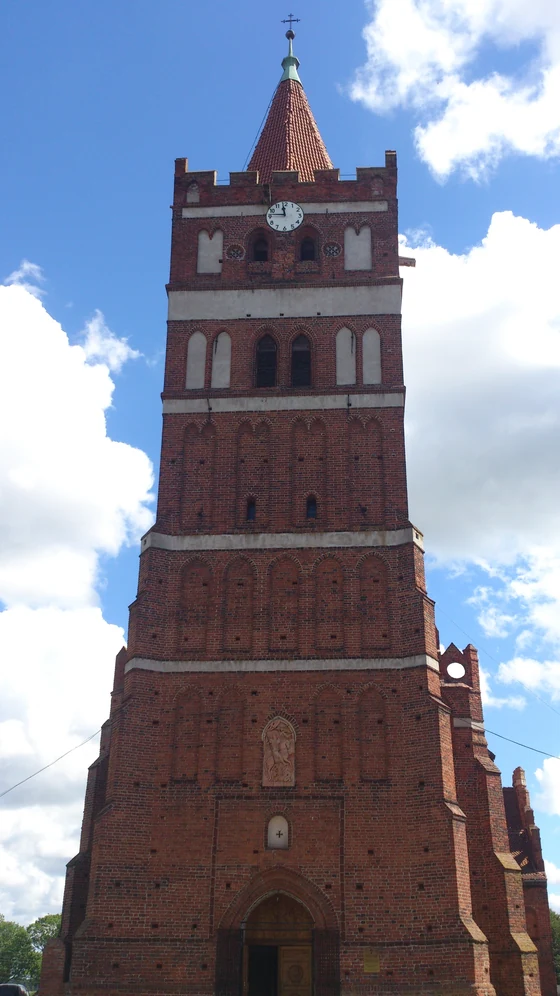
Friedland became Soviet in 1945 and took the name Pravdinsk in 1946. St George's church, founded in 1313 and rebuilt in brick in the fourteenth century, whose bell tower served Russian officers as an observation post on 14 June 1807, was used as a warehouse from 1961 to 1991; it is now an Orthodox church.
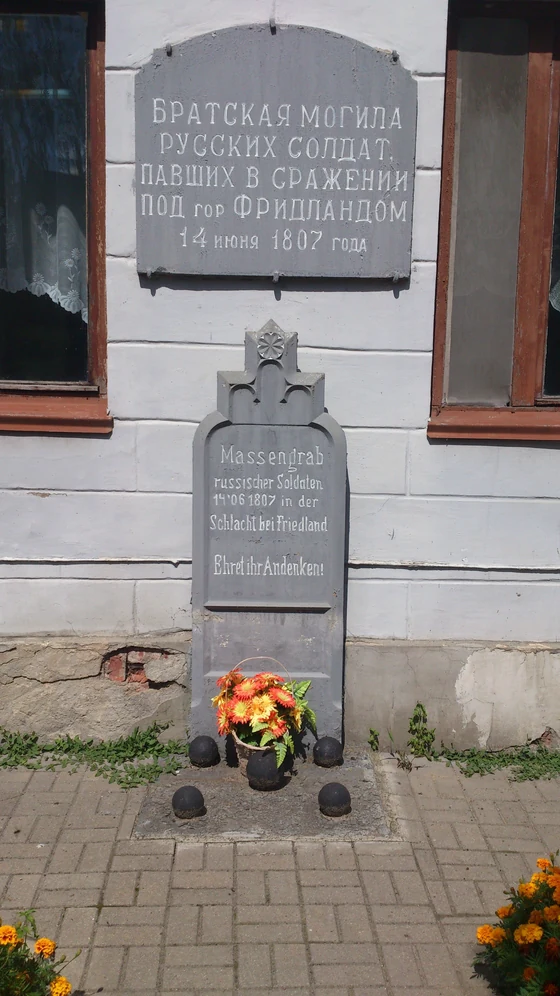
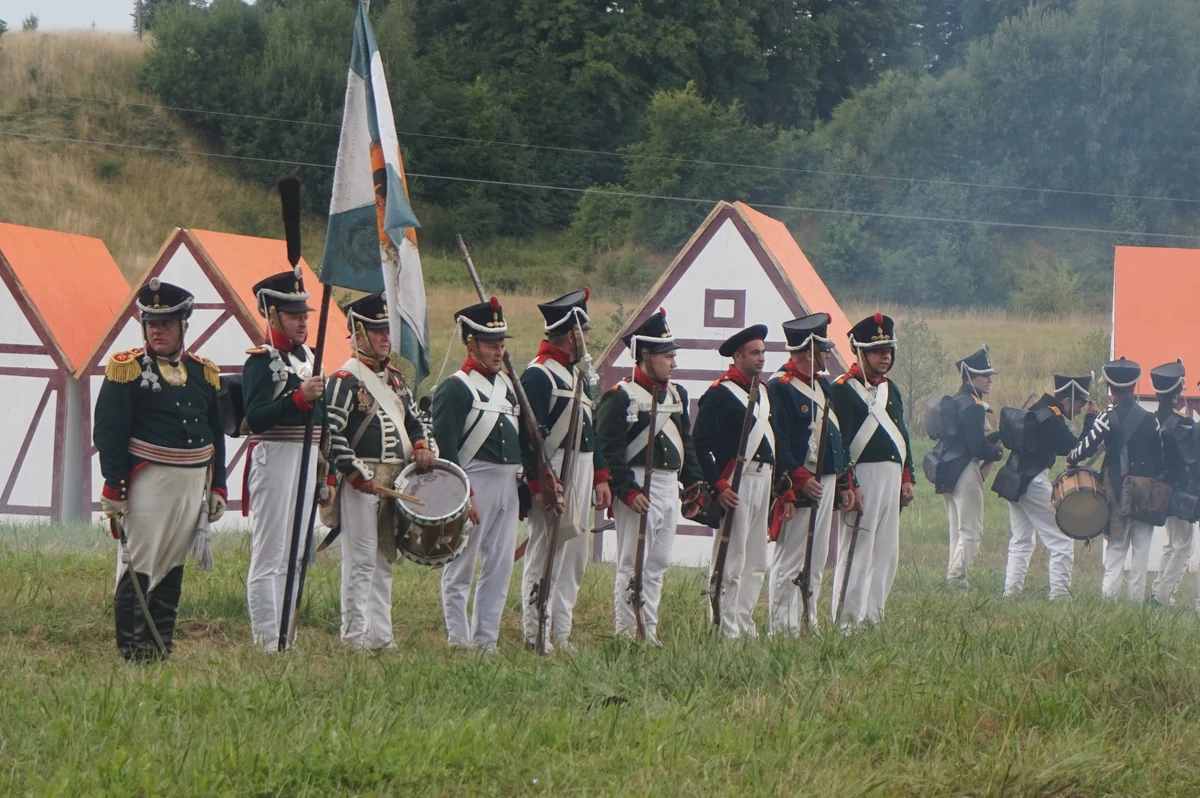
Several places keep the memory of the Russian soldiers. On the front of the former hospital, where the wounded were treated and at whose foot those who died there were buried, two plaques in Russian and German mark the mass grave of the soldiers who fell in 1807. In the town park an obelisk of 1868 marks General Mazovsky's grave; it replaced a chapel put up by the Friedland town council, and its inscription contains two mistakes, among them the general's name, spelled "Makovsky". A monument to the Russian soldiers was raised in 1992 at Domnovo, the former Domnau. In 2001 a French Napoleonic centre placed a plaque on the house where the Emperor stayed in June 1807. Since 2007 re-enactments of the battle have been held at Pravdinsk.
In France, Friedland is among the victories carved on the Arc de Triomphe de l'Étoile, and the boulevard Beaujon, near the arch, was renamed avenue de Friedland in 1864.
Discover other battles
 Inconclusive
 Read the account
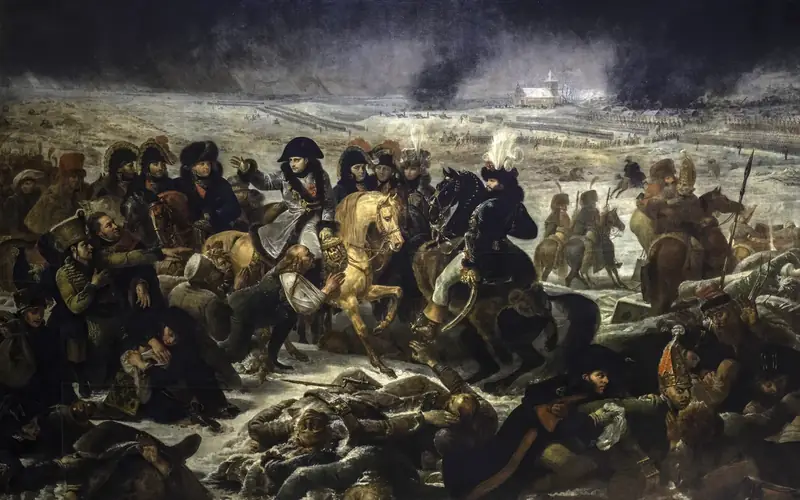
Eylau
7-8 February 1807
Preussisch Eylau (Bagrationovsk), East Prussia
 Victory
 Read the account
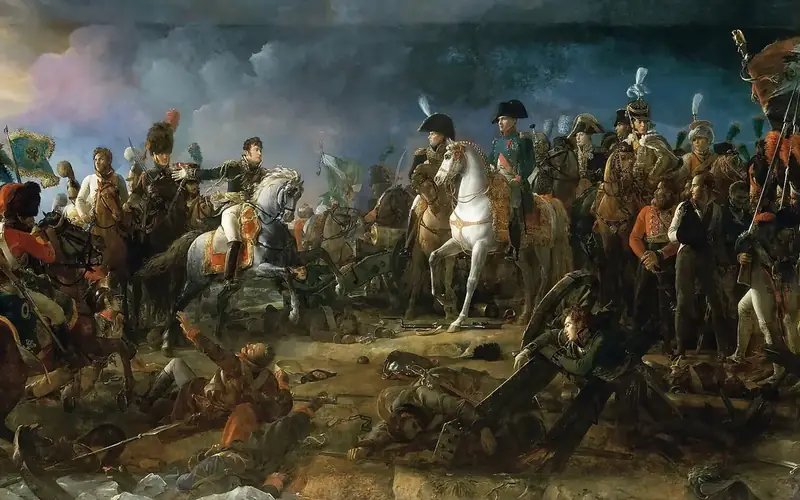
Austerlitz
2 December 1805
Pratzen plateau, Moravia (Czech Republic)
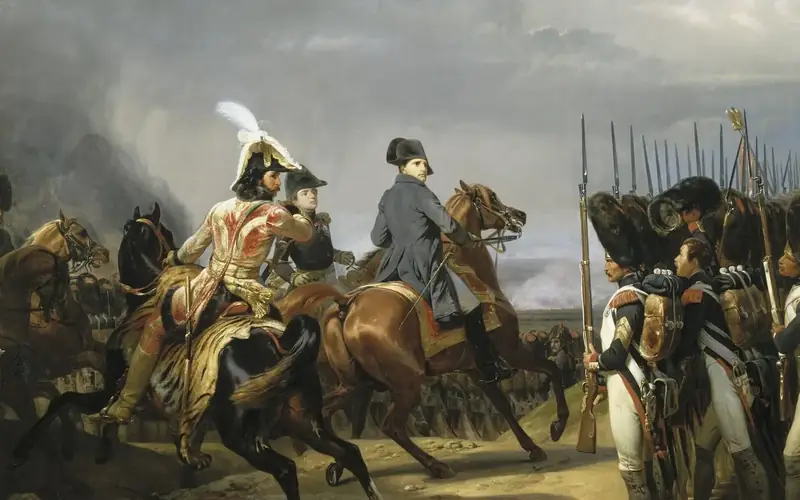 Victory
 Read the account
Jena
14 October 1806
Vierzehnheiligen, near Jena (Thuringia, Germany)
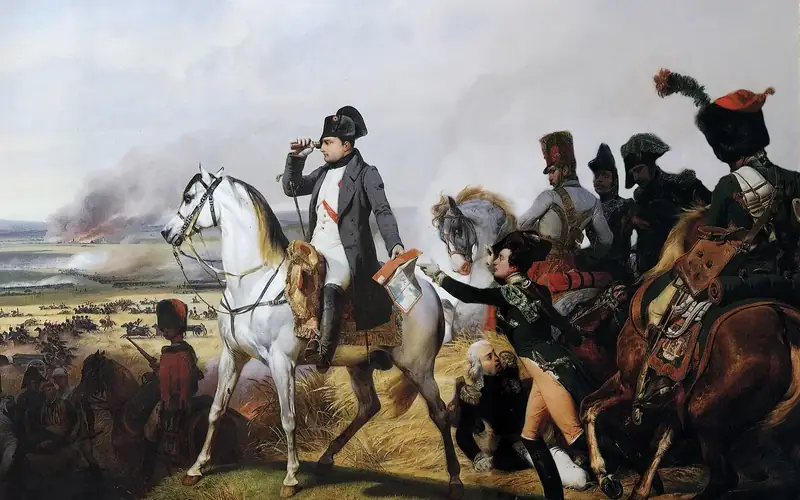 Victory
 Read the account
Wagram
5-6 July 1809
Deutsch-Wagram, north-east of Vienna (Lower Austria)
Go further
Recommended books to dig deeper (affiliate links)

Napoleon the Great
Andrew Roberts · 2014
A monumental biography drawing on Napoleon’s 33,000 surviving letters, admiring but rigorous.
See on Amazon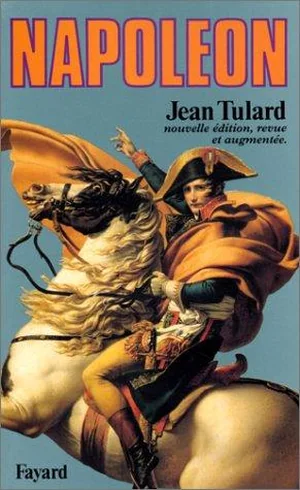
Napoléon ou le mythe du sauveur
Jean Tulard · 1977
The book that reshaped how the man is read: how France gave itself a saviour, and what it cost.
See on Amazon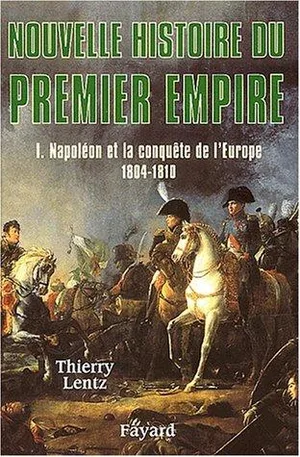
Nouvelle histoire du Premier Empire
Thierry Lentz · 2002-2010
Four reference volumes on institutions, diplomacy and collapse: the scholarly synthesis of the subject.
See on AmazonAs an Amazon Associate, this site earns from qualifying purchases.
Support the encyclopedia
Napoleon Empire is an independent project. Your contribution helps grow the content and keep the site running.
DonateSecure payment on the platform you choose.