The Battle of Marengo, fought on 14 June 1800 in the plain east of Alessandria, pitted First Consul Bonaparte’s Army of Reserve against General Melas’s Austrian army. Surprised in the morning by an attack he had thought impossible, Bonaparte gave up five kilometres of ground in six hours; Melas, slightly wounded, took the victory for granted and rode back to Alessandria. Late in the afternoon the arrival of Desaix’s division and a charge by Kellermann’s heavy cavalry into the flank of the Austrian column reversed the day. Melas signed the convention of Alessandria the very next day and evacuated north-western Italy; the victory, promptly rewritten in the bulletins, secured the power born of 18 Brumaire.
Forces at play
Outcome: Decisive French victory

French Republic
- Bonaparte
- Berthier
- Desaix
- Victor
- Lannes
- Kellermann fils
About 22,000 men and some fifteen guns in the morning; 6,000 more men and nine guns with Desaix in the evening
Casualties: About 4,700 killed and wounded and 900 missing or captured, including General Desaix

Austria
- Mélas
- Zach
- Ott
- Kaim
About 30,000 men and some hundred guns
Casualties: 6,500 to 9,400 killed and wounded depending on the source, nearly 8,000 prisoners, 40 guns and fifteen colours
Battle coordinates
Marengo
Coordinates 44.8862° N · 8.6829° E
Interactive tactical map
Follow the battle hour by hour — hover over or tap a unit for its details.
Out of Alessandria
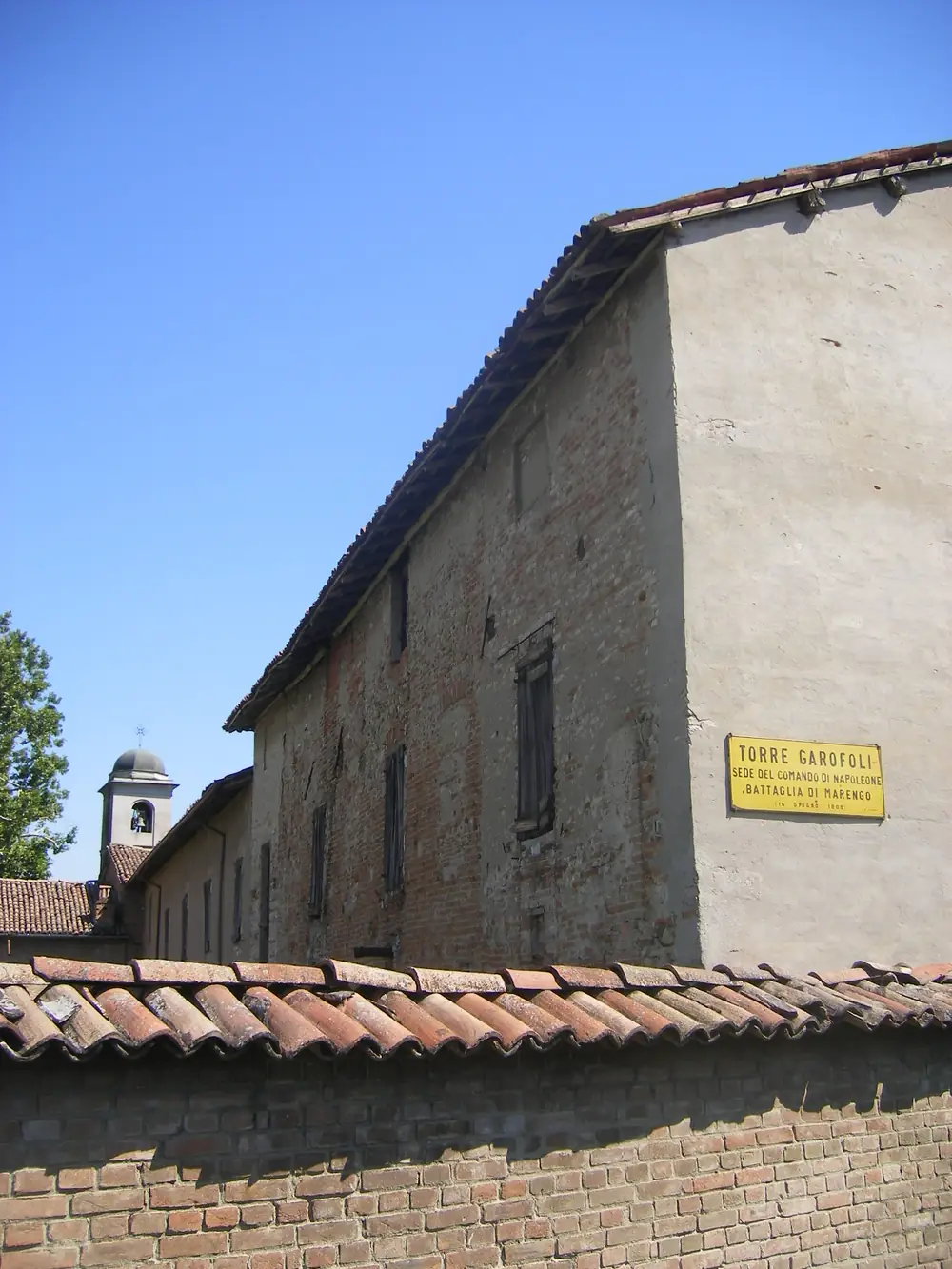
The Austrian army leaves Alessandria and files over two bridges thrown across a bend of the Bormida. The bridgehead is narrow and the staff work poor: the first shots are not fired until about 8 a.m., and the attack is not really launched until 9. Opposite, Victor’s corps deployed the day before along the Fontanone, with Lannes further north-east; Bonaparte is some ten kilometres away at Torre Garofoli, still believing the Austrians to be retreating.
Deceived by a double agent, Bonaparte has scattered his army: Desaix is marching south to Novi Ligure, La Poype north on the far bank of the Po.
Positions reconstructed from accounts of the battle and placed on the actual locations of the villages; the farms that have since disappeared are sited from period maps. Timings, on which sources do not always agree, are indicative.
Battle narrative
The Second Coalition and 18 Brumaire
In 1799 revolutionary France came close to losing the war. The Second Coalition, built around Britain, Austria and Russia, went back on the offensive on every front. In Italy the Russian general Suvorov inflicted a series of defeats on the French armies and drove them back to the Alps; the Directory's conquests there were lost. The allies were less successful in Holland and Switzerland, and their coalition was undermined by mutual mistrust.
It was in this context that Bonaparte, back from Egypt, overthrew the Directory on 18 and 19 Brumaire Year VIII (9 and 10 November 1799) and became First Consul. His power was new and contested, and he needed a victory to consolidate it. Italy, where his reputation had been made four years earlier, would be the stage.
The Italian trap of spring 1800
At the beginning of 1800 the French position in Italy was critical. In February the Austrian general Michael von Melas had cut the French army in two: he was besieging Genoa, where Masséna had dug in, and had driven Suchet back beyond the Var. First Consul since the coup of Brumaire, Bonaparte needed a victory to secure a still fragile power.
He devised a wide-ranging combination. At Dijon he assembled an Army of the Reserve, officially commanded by Berthier, while letting it be believed that the main effort would be made in Germany by Moreau. Moreau was to drive back the Austrian army on the Danube, cut it off from the Tyrol to prevent reinforcements reaching Italy, then detach southwards, over the Saint-Gotthard, some 17,000 men of Lecourbe's corps. Meanwhile the Army of the Reserve was to cross the Alps and fall on Melas's rear while he was busy before Genoa and on the Var.
Crossing the Alps
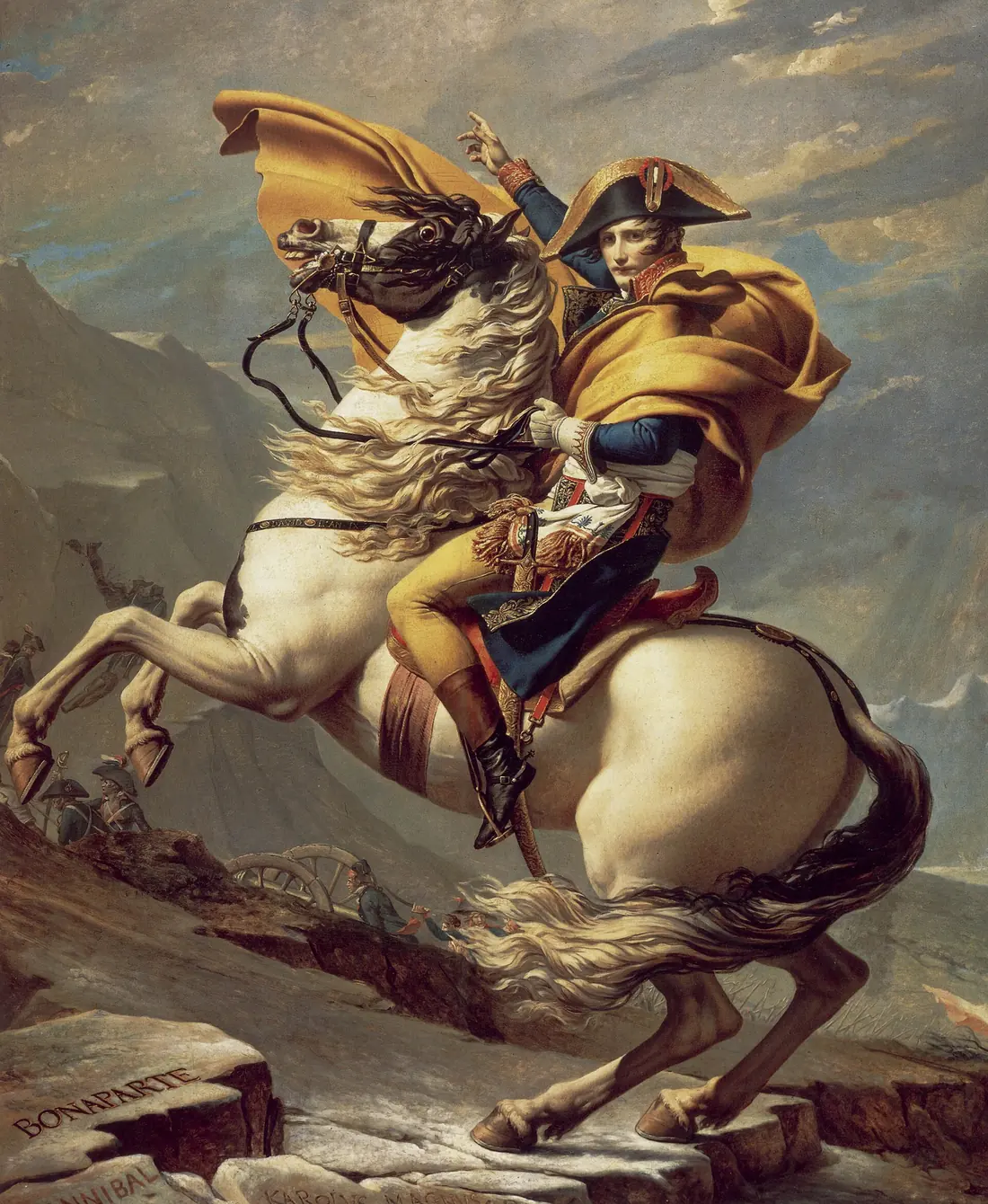
Moreau was slow to launch his offensive, which delayed the crossing of the Alps. On 23 May the Army of the Reserve finally emerged onto the plains of Piedmont by the Little and Great St Bernard passes, almost before they were open: the surprise was complete. Bonaparte, whom David would soon depict on a rearing horse, crossed the pass on a mule.
On 2 June Murat's advance guard entered Milan. The French secured the line of the Po as far as the Stradella defile, cutting the main Austrian supply route eastwards. But on 4 June Masséna capitulated at Genoa: the pincer movement became impossible and considerable Austrian forces were freed. Bonaparte changed his plan and looked for a decisive battle between Alessandria and Tortona.
Montebello and overconfidence
On 9 June, at Montebello near the Stradella, Lannes halted and beat part of the retreating Austrians under O'Reilly, joined by Ott's troops coming up from Genoa. The victory made Bonaparte overconfident: he convinced himself that Melas would not attack and that the Austrians were already thinking of retreat. Melas, for his part, gathered at Alessandria the troops he had been holding near Nice and Genoa.
The Austrians in fact meant to fight their way out eastwards. To deceive the French they used a double agent known as François Toli, who advised Bonaparte to march by Sale, north of the plain: the main imperial army would then pass through Marengo and fall on the French left flank. On 13 June a council of war approved the breakout plan; the alternative would have been to withdraw along the Po, abandoning Piedmont without a fight. Yet by giving up the San Giuliano plain, where his superior cavalry might have made the difference, Melas probably made a mistake.
Not knowing where Melas was and fearing he might escape, Bonaparte spread his army in a wide net: Desaix went south towards Novi Ligure with Boudet's division, La Poype north on the other bank of the Po, other divisions further north still. When Victor, supported by Murat's cavalry, drove O'Reilly's brigade out of the village of Marengo, the First Consul thought his reading confirmed.
The battlefield
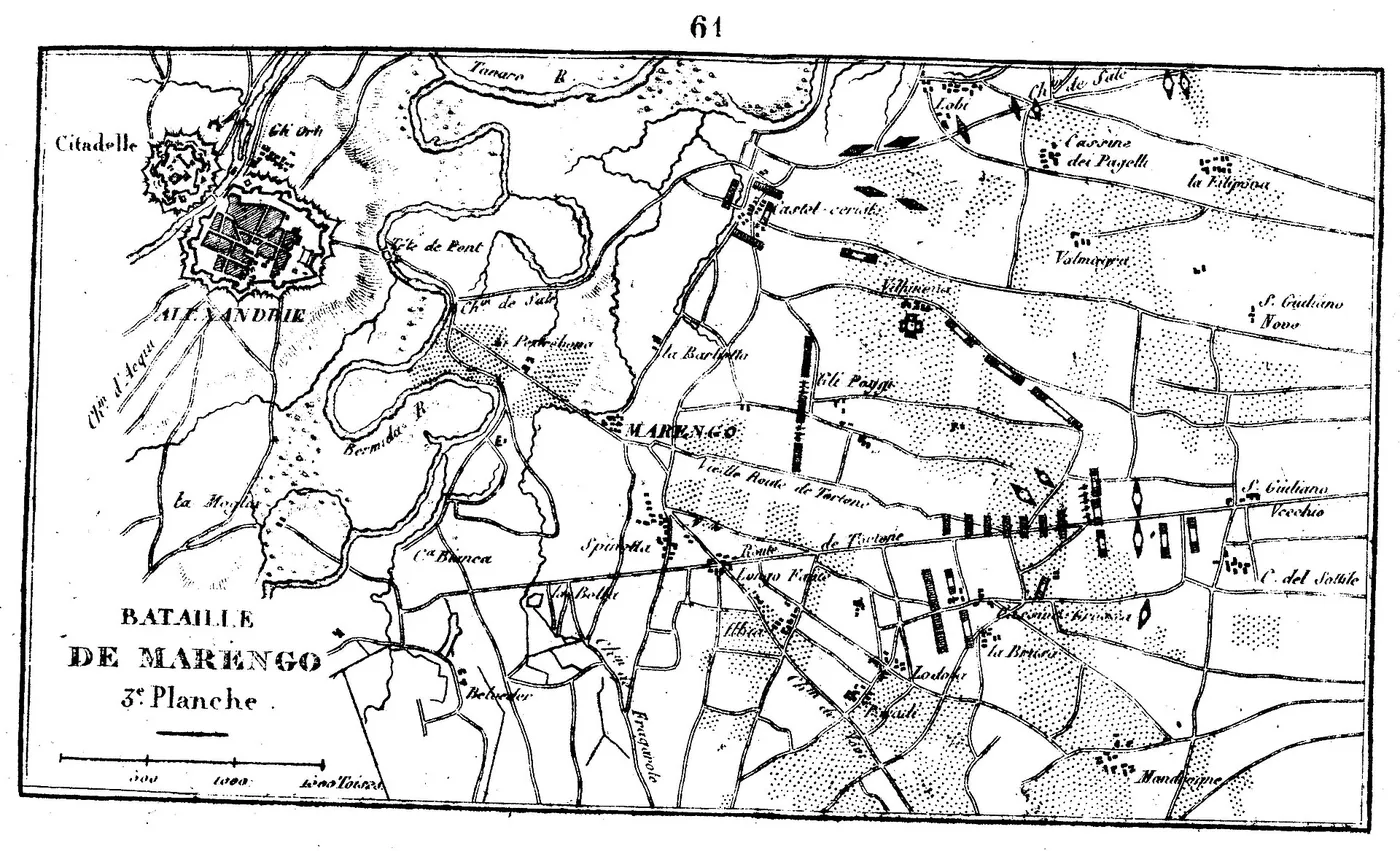
The battle was fought east of Alessandria, on a plain crossed by the Bormida, on which the Austrians had established a bridgehead. Three places formed a triangle: Marengo to the west, Castelceriolo to the north and San Giuliano Vecchio to the east. Between Marengo and the Bormida ran a steep-banked stream, the Fontanone, which would play a decisive part. The plain was dotted with sturdy farms such as Pedrabona, La Stortiglione and La Barbotta, and covered, towards the east, with vines slung between mulberry trees. Bonaparte had set up his headquarters much further east, at Torre Garofoli.
The opposing forces
On the morning of 14 June, 30,000 Austrians with about a hundred guns faced some 22,000 French who had only fifteen; Desaix's arrival would bring some 6,000 men and nine pieces in the evening. The imperial army in Italy had come exhausted out of the 1799 campaign: casualties and disease had reduced some regiments to 300 men and the equipment remained mismatched. Melas divided it into three groups before the Bormida: Ott in the north with Gottesheim's advance guard and the divisions of Schellenberg and Vogelsang; O'Reilly in the south; and himself in the centre with the divisions of Hadik, Kaim, Morzin and Elsnitz.
On the French side, the Army of the Reserve had been rebuilt in France by Bonaparte, who began by overhauling the supply system; a good part of its troops came from the army that had put down the rebellion in the Vendée, topped up with veterans. In front of Marengo stood Victor's corps, with Gardanne's and Chambarlhac's divisions, supported on the left by Kellermann's cavalry; to the north-east, Lannes's corps with Watrin's division and Champeaux's cavalry; to the east, Monnier's division and the Consular Guard formed the reserve. It was Victor who would take the shock.
Six in the morning: out of Alessandria
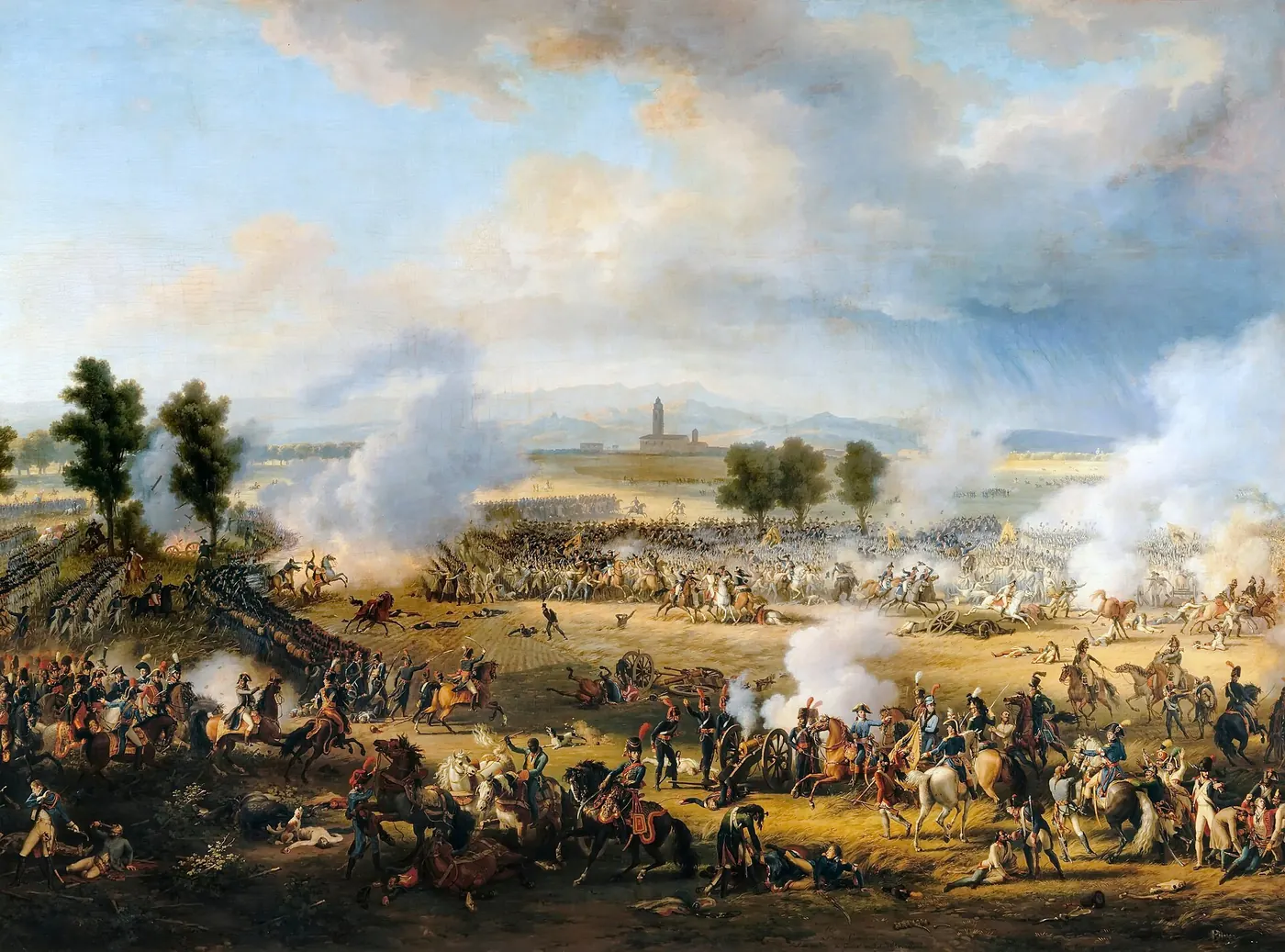
The Austrian movement began around 6 a.m. The whole army had to file through a narrow bridgehead, over two bridges thrown across a bend of the Bormida, and poor staff work slowed everything: the first shots rang out around 8 a.m., but the attack was not really launched until 9.
Colonel Frimont's 1,200-strong advance guard and O'Reilly's division, about 3,300 men, pushed back the French outposts, took Pedrabona farm and formed the Austrian right as they moved south towards La Stortiglione. In the centre some 18,000 men marched on Marengo, where Gardanne's infantry halted them in front of the Fontanone. To the north, Ott's 7,500 men waited for the road to clear before making for Castelceriolo, a move that threatened both to envelop the French right and to cut the road to Milan.
The assault on the Fontanone
Gardanne's men held on for a long time, delaying the Austrian deployment. When the division was exhausted, Victor pulled it back behind the stream and committed Chambarlhac's, whose commander lost his nerve and left the field. Melas first sent in Hadik's division: funnelled by the boggy ground and the stream, it was caught in a crossfire and repulsed, its commander killed. Kaim's division failed in turn by 11 a.m. Morzin's elite grenadiers were then thrown against the village.
At the same moment Melas made a serious mistake. On a report received around 9 a.m. that Suchet's corps was approaching from Acqui Terme, he sent Nimptsch's brigade of 2,300 hussars and two batteries back over the Bormida. Not only did this movement further clog the crossing of his left wing, but the brigade, some thirty kilometres away, would take no part in the battle.
Bonaparte understands
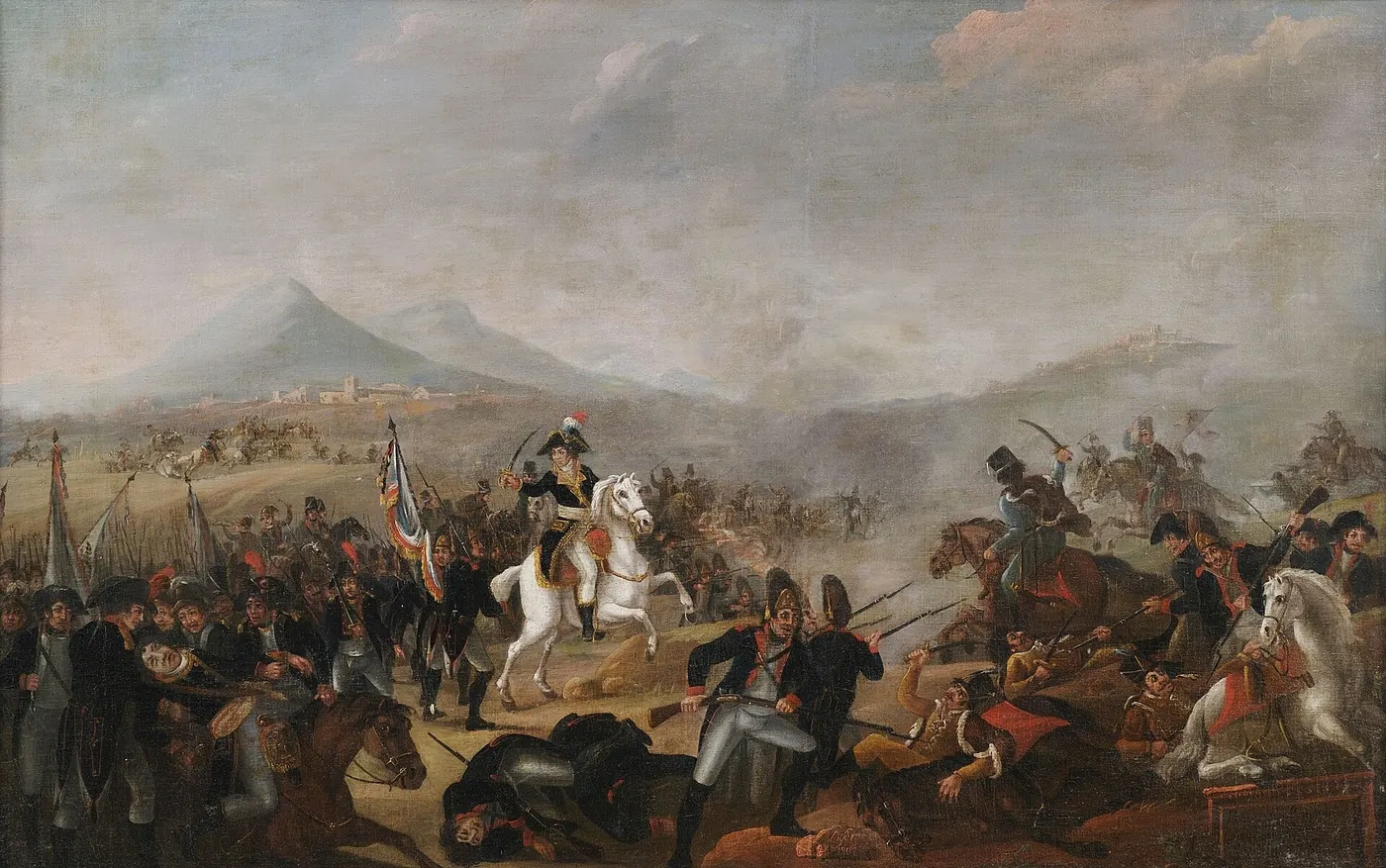
Only around 10 a.m. did Bonaparte realise that the Austrian activity was not a screening manoeuvre to cover a retreat, but the main attack. By 11 he was on the field. He sent recall orders to his detachments, above all to Desaix, and brought up his last reserves. Monnier's division and the Consular Guard were committed to extend and shore up the French right, rather than to relieve Marengo, where Victor's men were beginning to run short of ammunition.
On the left, Kellermann's heavy cavalry and the 8th Dragoons smashed Pilatti's light dragoon brigade, which was trying to cross the Fontanone to outflank Victor. North of Marengo, Bellegarde's battalions had crossed the stream and occupied La Barbotta farm; Watrin's infantry drove them out before being stopped by the Austrian artillery. On the right, General Champeaux was killed trying to check Ott's column, which took Castelceriolo around 11:30 a.m. and pressed the French flank.
Breakthrough on the Fontanone
Around 12:30 p.m. Kaim attacked again, this time against the wings of Victor's position. The Austrians threw a footbridge over the Fontanone under cover of their reserve artillery, and Lattermann's grenadiers crossed to attack Rivaud's demi-brigades in Marengo. Rivaud retook the village for a time, but O'Reilly carried La Stortiglione around 2 p.m. and, in the north, Ott prepared to send Schellenberg's column forward. Victor's position became untenable: he fell back south-east into the vines, Lannes matching his movement. The garrison of Marengo farm was abandoned; around 2:30 p.m. Melas took it at the head of two squadrons.
Captain Coignet, an eyewitness, would describe a retreat held together by a thread: "We were retreating in good order, but the battalions were visibly thinning, all ready to give way had it not been for the steadiness of the officers."
The Consular Guard in the vines
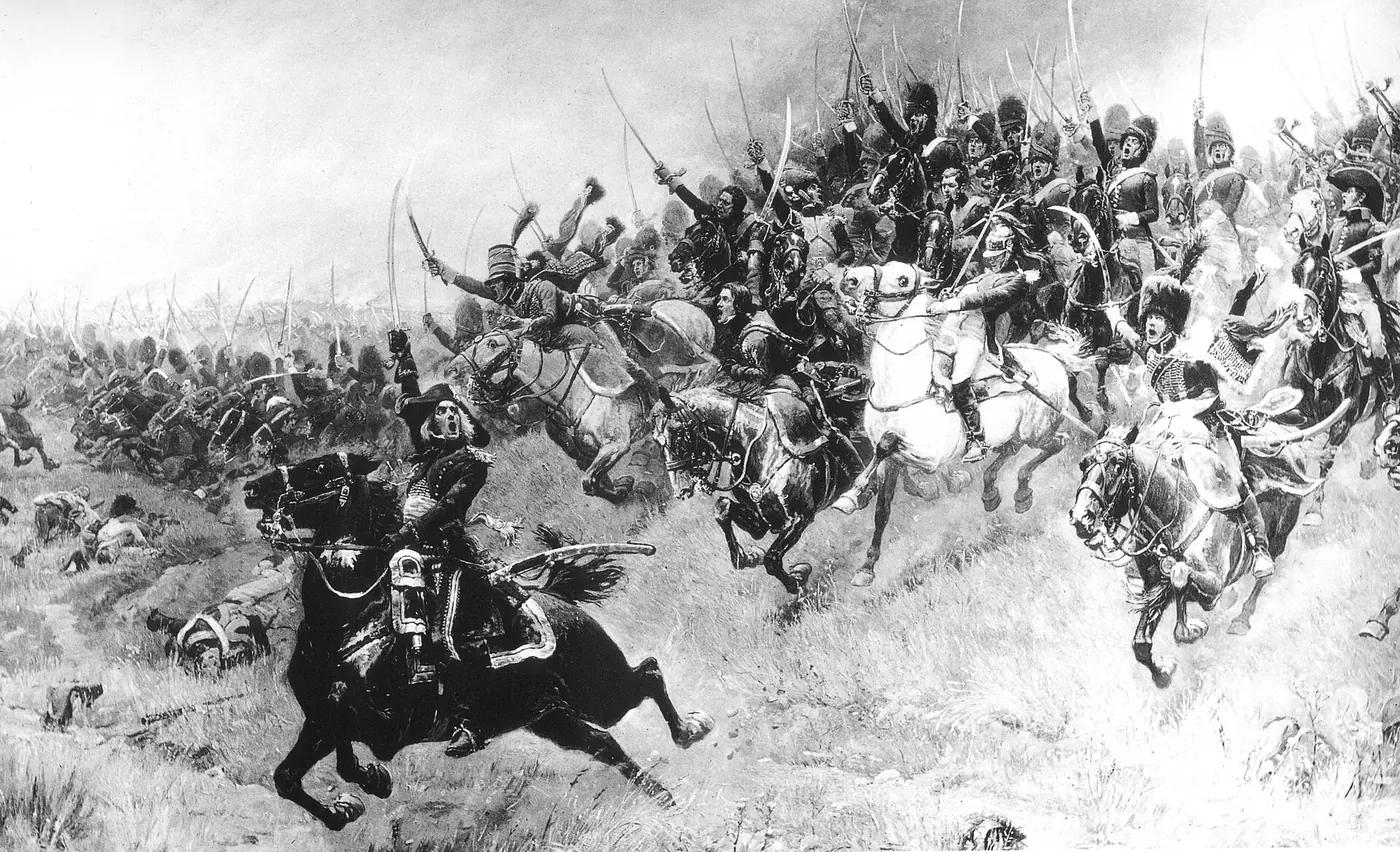
Around 2 p.m. the French attacked Castelceriolo and delayed Schellenberg's column by harrying its tail, but Ott, supported by Frimont, defeated Monnier and drove two-thirds of his division back to the north-east. At the same time Marengo fell, and the whole French army had to give ground. As the Austrians crossed the Fontanone, their artillery pounded the French infantry in the vines.
To buy time, Bonaparte committed the main battalion of the Consular Guard and its artillery, tasked with taking Schellenberg's column in the flank. Having driven off Austrian dragoons with what was left of Champeaux's cavalry, now led by Murat, the Guard engaged the head of the column. Around 4 p.m., after a quarter of an hour's firefight, it was surprised and destroyed by Frimont's cavalry. The French fell back three kilometres and regrouped in front of San Giuliano.
Melas thinks he has won
For the Austrians the battle was won. Melas, seventy-one years old and slightly wounded after two horses had been killed under him, handed the conduct of operations to his chief of staff, General Zach, assisted by Kaim, and set off for Alessandria. The Austrian centre formed at Spinetta into a huge pursuit column, with Saint-Julien's advance guard at its head, and moved off along the San Giuliano road.
But the wings followed badly, and the imperial army took the shape of a crescent with a thinly stretched centre. On the right, O'Reilly wasted time chasing a French detachment of 300 men under Dampierre, who were finally captured, and so drifted away from the main body. On the left, Ott dared not press, a small brigade of French cavalry hovering north of his lines.
Desaix, back from Egypt
The man Bonaparte was waiting for was no stranger. Louis Charles Antoine Desaix had distinguished himself in Egypt, where he conquered Upper Egypt with a handful of troops and earned from his enemies themselves the nickname of the "Just Sultan". Recalled after the Convention of El-Arish, he sailed for Europe on 3 March 1800; at Livorno the British admiral Keith declared him a prisoner in breach of the agreements, until a higher order released him. From Toulon he wrote to the First Consul and left for the Army of Italy without even seeing his family in Auvergne again. He joined the army the day before the battle.
"There is still time to win another"
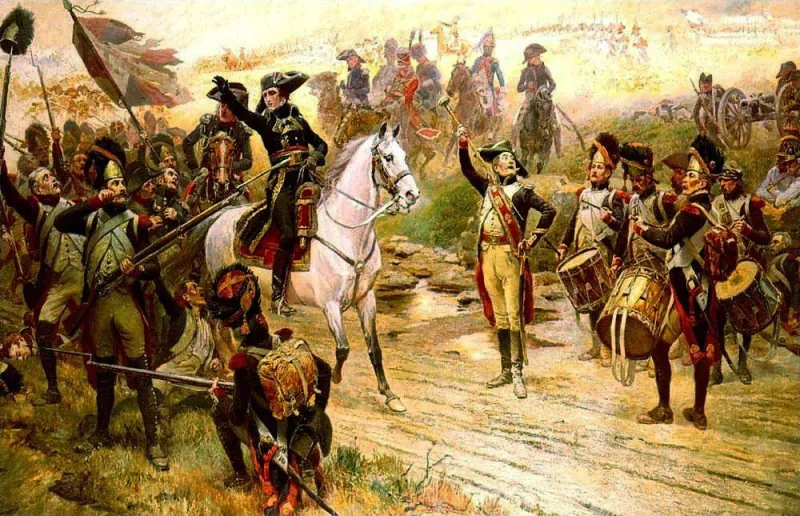
Desaix, recalled that morning, had hurried his march and reached a crossroads north of Cascinagrossa, three kilometres west of San Giuliano. Shortly before 5 p.m. he reported in person: his column, Boudet's division, was not far behind. He is said to have answered Bonaparte's question about the situation with the words: "This battle is lost; there is still time to win another."
The fresh troops deployed quickly in front of San Giuliano, while the Austrians were slow to attack. The 9th Light demi-brigade surprised the head of Saint-Julien's column at the edge of the vines, then withdrew in good order for half an hour to Desaix's position, where Guénand's brigade had been placed to the north, the rest of the army — Monnier and Lannes — forming up further north still. The Austrians brought three batteries into line north of the road; General Marmont massed the remaining French guns and opened fire on the column.
Kellermann's charge
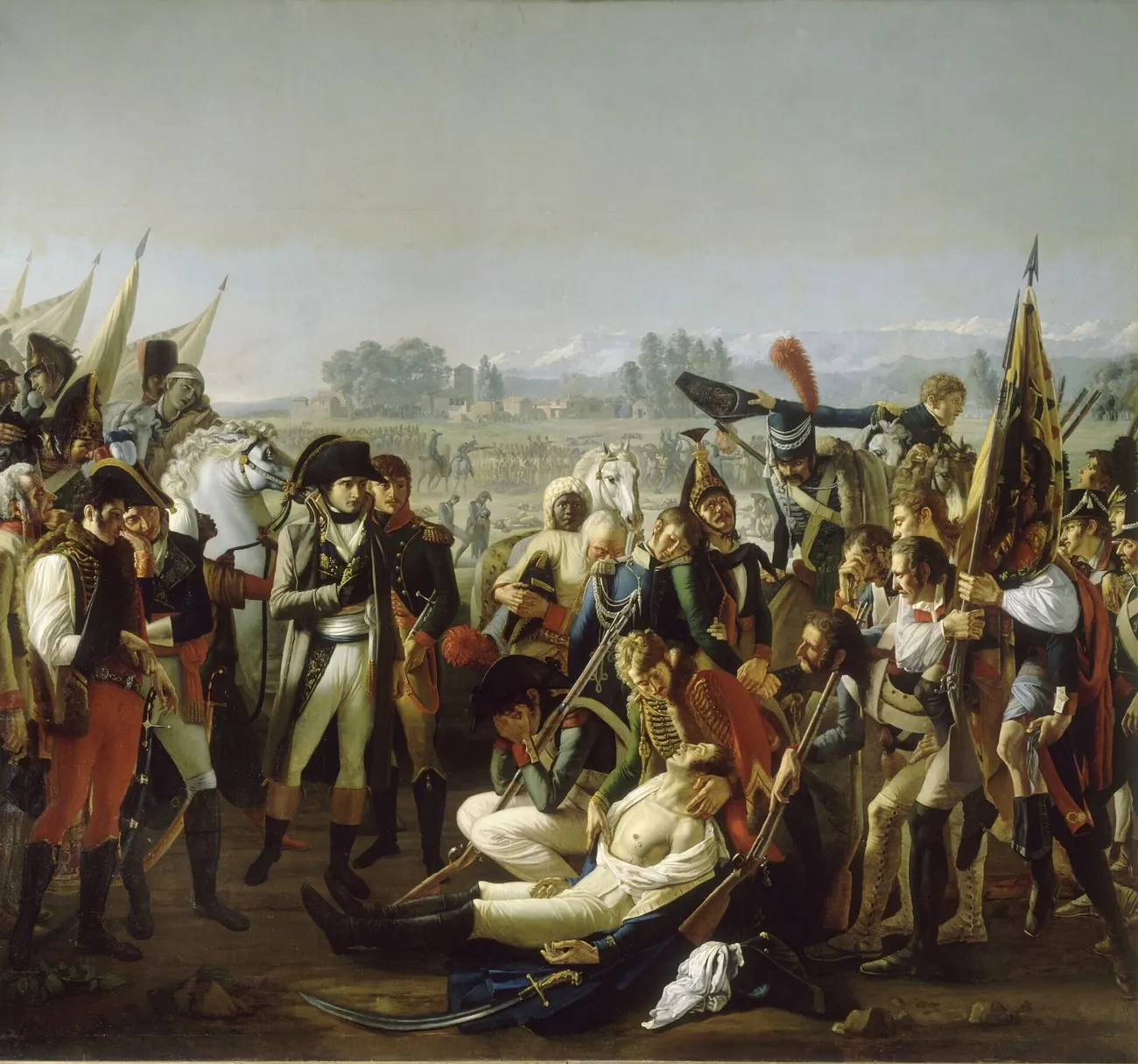
Boudet's division advanced in line against the head of the column and broke Saint-Julien's brigade. Zach sent in Lattermann's grenadiers. The 9th Light halted to receive the attack, Marmont's guns fired grapeshot at close range, and an Austrian ammunition limber exploded. In the confusion Lattermann's formation was charged on its left flank by Kellermann's heavy cavalry, about 400 sabres, and fell apart. Zach and at least 2,000 men were taken prisoner. It was at that decisive moment that Desaix, carried forward, was struck by a bullet full in the chest and killed. He was thirty-one, and had joined the army only the day before the battle.
Murat and Kellermann at once turned on the Liechtenstein Dragoons, too slow to react, and routed them; the fugitives swept away Pilatti's squadrons. Seeing the cavalry streaming back, the exhausted Austrian infantry gave way, the gun teams fled, and the whole French line advanced westwards. The second grenadier brigade under Weidenfeld and a few squadrons that had kept their order delayed Boudet long enough for O'Reilly's cavalry to return: with Frimont they held a last position around Marengo as night fell, allowing the Austrian centre to recross the Bormida. Ott, unable to intervene, found his road blocked at Castelceriolo but fought his way through to the bridgehead.
The toll
The Austrians fell back on Alessandria having lost about half the forces they had committed. The figures vary from source to source: fifteen colours, 40 guns, nearly 8,000 prisoners, and between 6,500 and 9,400 killed and wounded, among them General Hadik. French losses were considerably lower — of the order of 4,700 killed and wounded and 900 missing or captured — but they included Desaix. Lannes's division counted fourteen officers killed and 40 per cent of its strength out of action. The French kept the battlefield and the initiative.
The Convention of Alessandria
Bonaparte had to get back to Paris as quickly as possible. The next morning he sent Berthier to Austrian headquarters: twenty-four hours after the battle, Melas entered into negotiations. The Convention of Alessandria required the Austrians to suspend operations in Italy and to evacuate the north-west of the peninsula as far as the Ticino; Turin was handed back in exchange for permission to withdraw the imperial army. With a single success, the First Consul recovered the fortresses of Lombardy and Piedmont that the coalition had taken at the cost of long and murderous sieges.
Politically the effect was greater still. The generals who had been hostile to him could see that his luck had not deserted him: he had done better than Schérer, Joubert, Championnet or Moreau, none of whom had struck a decisive blow at the coalition. Moreau's victory at Hohenlinden in December, which really ended the war, would be played down by Bonaparte, now posing as the saviour of the fatherland. He rejected the overtures of the future Louis XVIII, who saw the Consulate as a transition towards the restoration of the monarchy, and could begin to reshape France.
A political victory
Militarily, Marengo was no masterpiece. Bonaparte had scattered his army on the word of a spy, he had been surprised, and he had left his left wing to fight almost alone for six hours; without Desaix's forced march the day was lost. What the battle did show was the solidity of an army that gave ground without breaking, the value of artillery concentrated at the right moment, and the effect of a cavalry charge launched against an exposed flank.
Its consequences, on the other hand, were considerable. In a single afternoon northern Italy changed hands and the Second Coalition lost its most promising front. Above all, the First Consul returned to Paris a victor: it was at Marengo, as much as at the ballot box, that the solidity of his power was sealed. The fighting nevertheless went on in Germany, until the Peace of Lunéville was signed in February 1801.
Manufacturing a victory
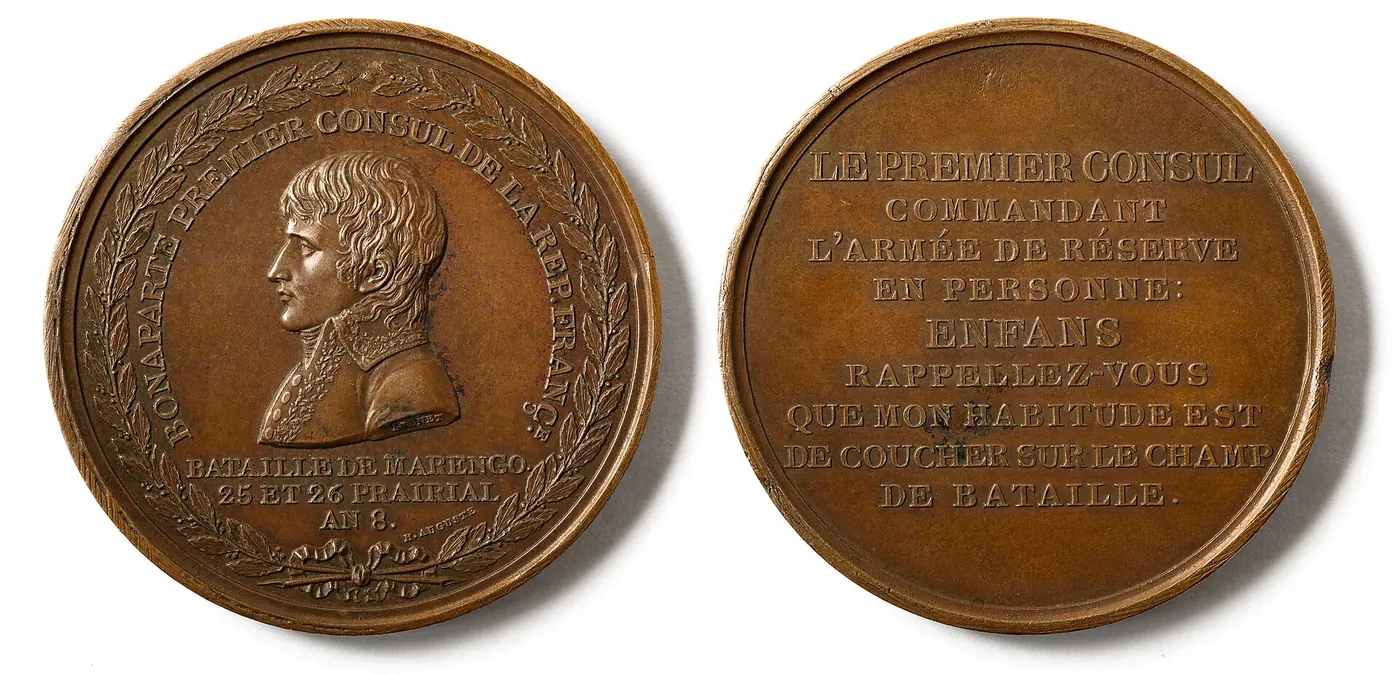
A victory won by a hair's breadth, Marengo was rewritten at once. The army bulletin, then three successive "official reports" published under the Consulate and the Empire, turned the day into a deliberate manoeuvre in which the Guard and the 72nd demi-brigade, under the First Consul's direct command, played a glorious part.
Contemporary testimony says otherwise. That very evening Melas wrote to Vienna that "Kellermann's charge" had thrown his men into flight and that this sudden reversal had finished off his troops' courage; Murat wrote to Berthier that he had to single out Kellermann, whose charge had tipped the balance. Yet the bulletin published the next day put forward instead the charge of Bessières at the head of the Guard grenadiers. In 1804 Berthier's Relation de la bataille de Marengo presented the French retreat as a mere "wheeling movement" meant to give Desaix time to deploy, and claimed that Desaix's troops had been waiting in reserve — which is false, since they arrived late. Marmont in his Memoirs, Captain Coignet and Captain Gervais recalled on the contrary that the army had several times been on the brink of defeat.
Remembering Marengo
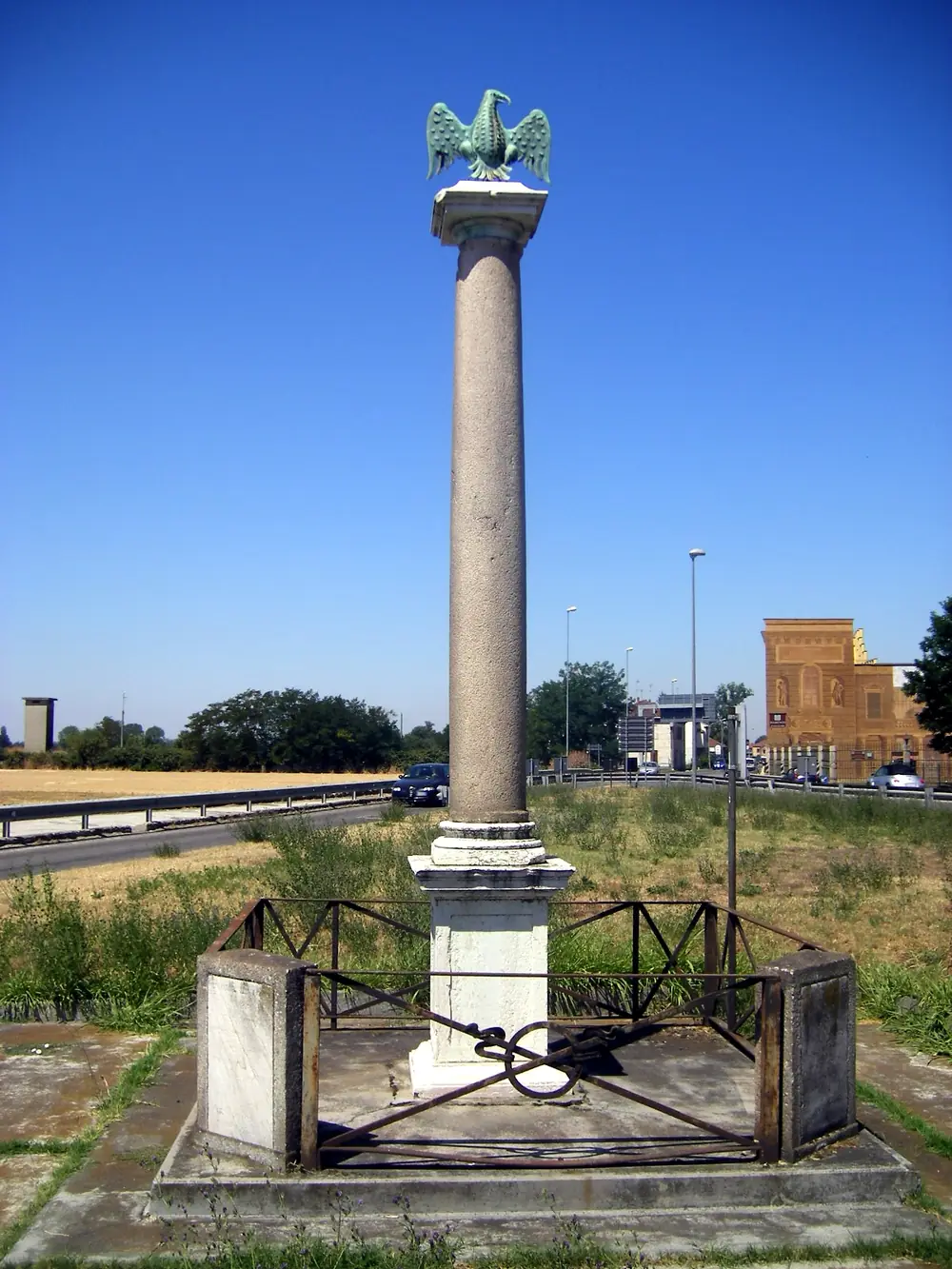
Once emperor, Napoleon made sure the victory would not be forgotten. He commissioned General Chasseloup to raise a pyramid on the battlefield. On 5 May 1805 a ceremony was held there: seated under a tent with the Empress Joséphine, the Emperor reviewed the troops, and Chasseloup presented him with the foundation stone, inscribed with a dedication "to the shades of the defenders of the fatherland who perished on the day of Marengo". The monument was part of an outsized scheme, a "city of Victories" whose avenues, named after the Italian battles, would have converged on the pyramid. The project was abandoned in 1815 and the stones taken away by the local peasants; the column raised in 1801 was itself removed, then restored in 1922.
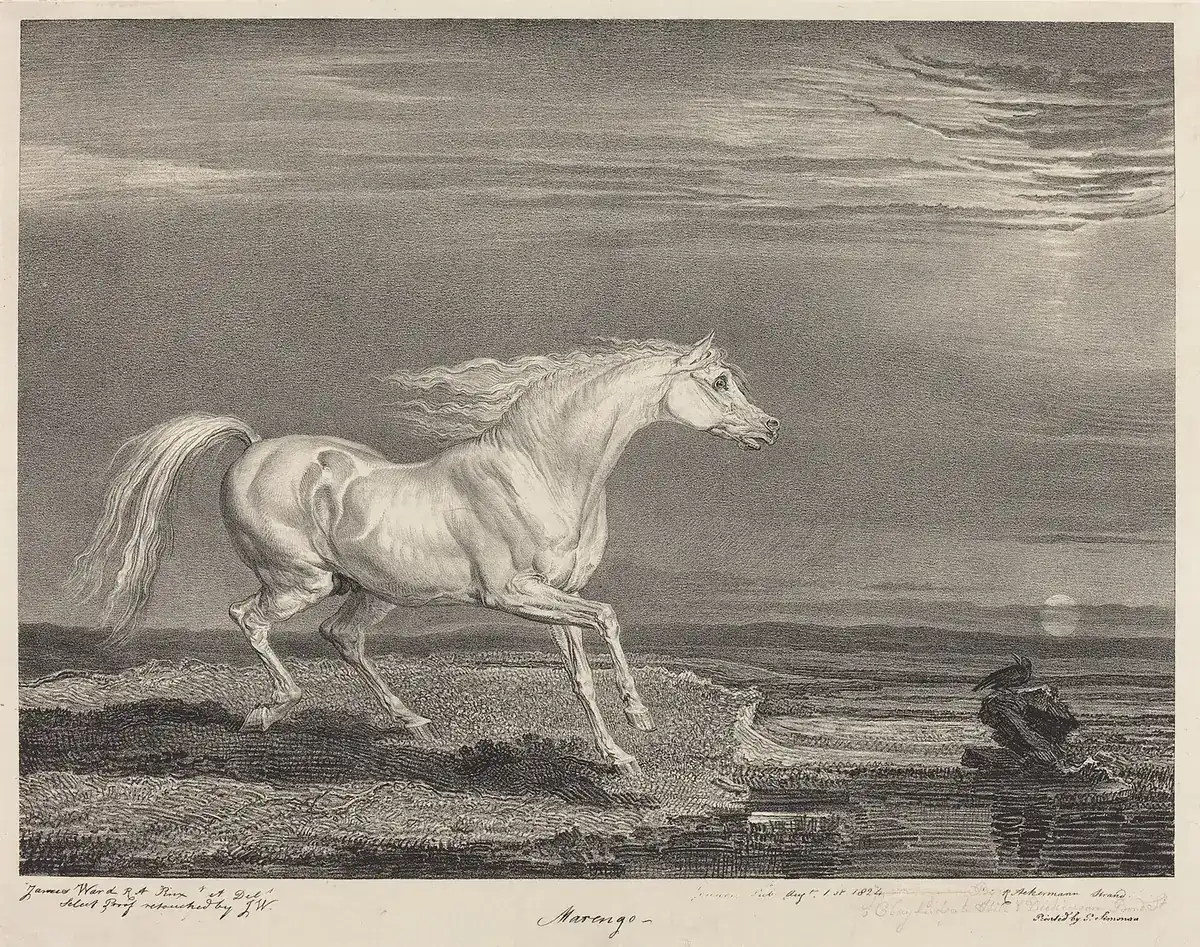
The name of Marengo spread everywhere. In 1802 the annexation of Piedmont gave rise to the department of Marengo, with Alessandria as its capital; several ships of the navy were renamed; in Paris a street took the name of Marengo in 1854. Tradition has it that the grey horse Napoleon rode that day, and which is said to have carried him as far as Waterloo, was also called Marengo: the records of the imperial stables, however, make no mention of it, and a skeleton presented as his is now displayed at the National Army Museum in London. Cooking joined in: chicken Marengo, fried in oil with tomatoes and onions, is credited to Dunan, Bonaparte's cook, who is said to have improvised the dish on the evening of the battle. And in 1900 Puccini made the news of Marengo the dramatic pivot of the second act of Tosca.
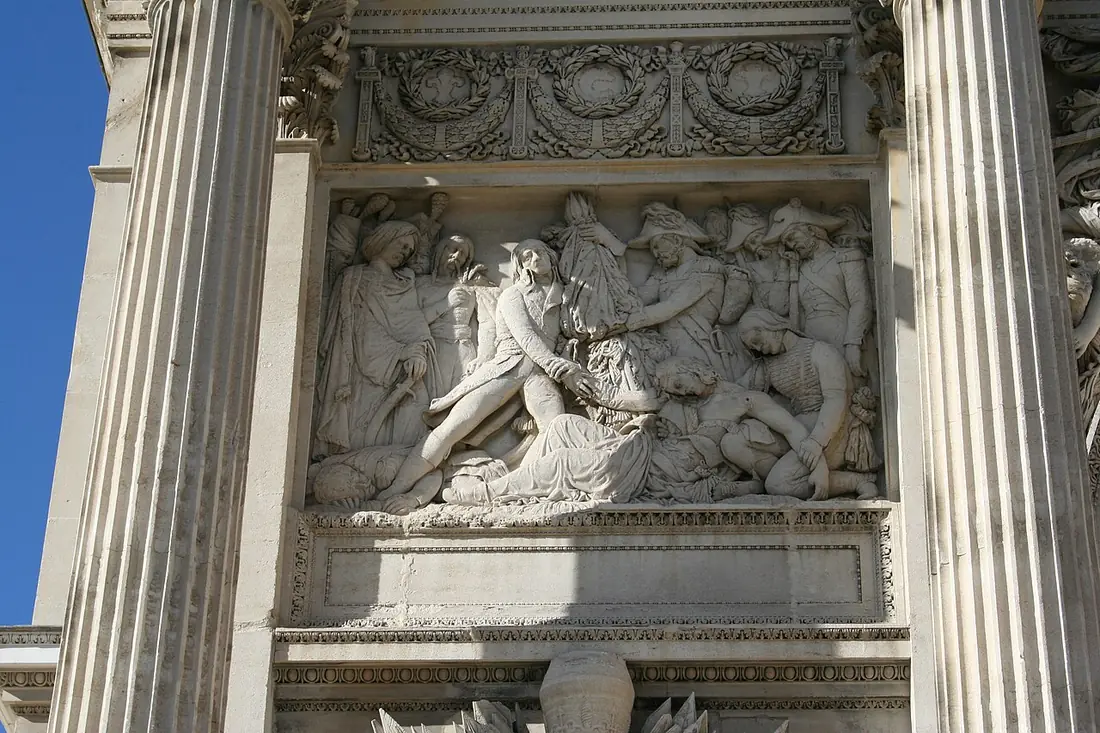
On the ground, the memory is as Italian as it is French. The museum of the battle is housed in the Villa Delavo at Spinetta Marengo, in the middle of the ground that was fought over, and re-enactments are held there. Desaix rests far from the plain: deeply affected by his death, Bonaparte had his body taken to the hospice of the Great St Bernard, where it was buried in the chapel.
Discover other battles
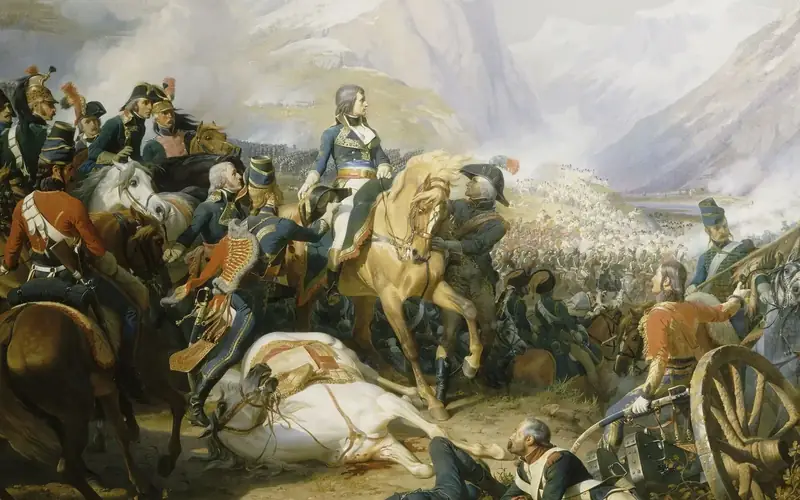 Victory
 Read the account
Rivoli
14 January 1797
Rivoli Veronese, Veneto
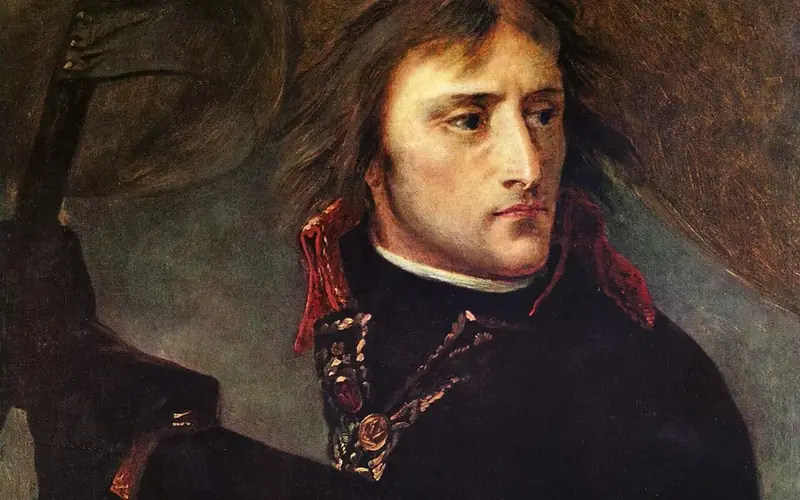 Victory
 Read the account
Bridge of Arcole
15-17 November 1796
Arcole, Veneto
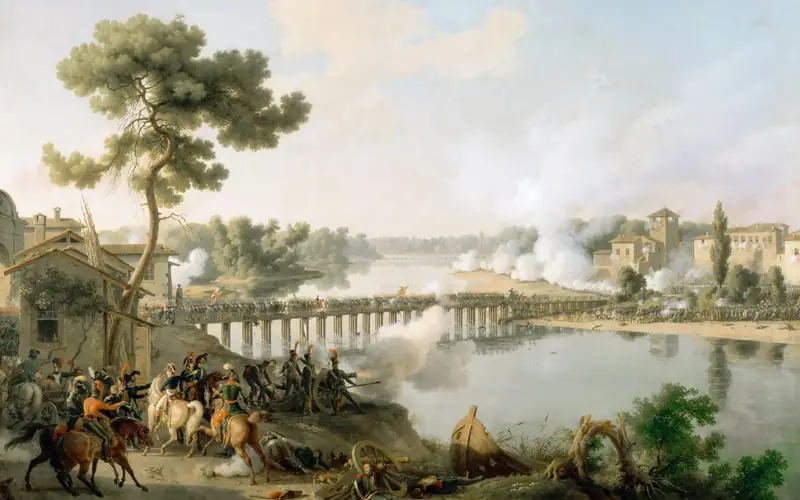 Victory
 Read the account
Bridge of Lodi
10 May 1796
Lodi, Lombardy
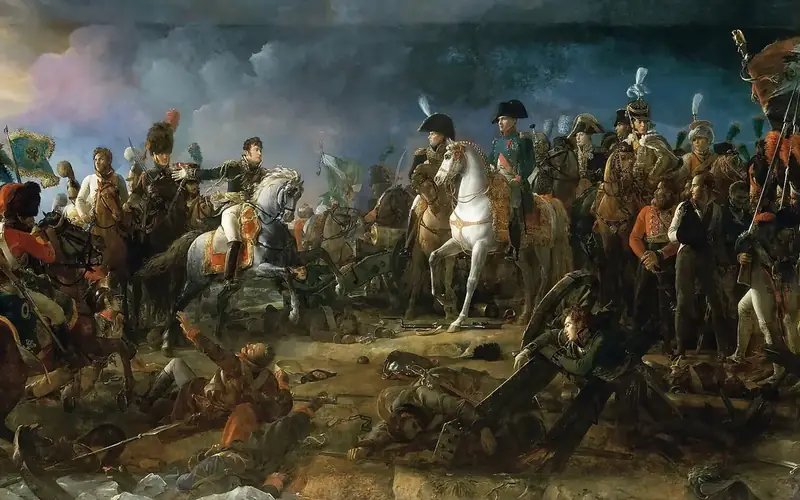 Victory
 Read the account
Austerlitz
2 December 1805
Pratzen plateau, Moravia (Czech Republic)
Go further
Recommended books to dig deeper (affiliate links)

Napoleon the Great
Andrew Roberts · 2014
A monumental biography drawing on Napoleon’s 33,000 surviving letters, admiring but rigorous.
See on Amazon
Napoléon ou le mythe du sauveur
Jean Tulard · 1977
The book that reshaped how the man is read: how France gave itself a saviour, and what it cost.
See on Amazon
Nouvelle histoire du Premier Empire
Thierry Lentz · 2002-2010
Four reference volumes on institutions, diplomacy and collapse: the scholarly synthesis of the subject.
See on AmazonAs an Amazon Associate, this site earns from qualifying purchases.
Support the encyclopedia
Napoleon Empire is an independent project. Your contribution helps grow the content and keep the site running.
DonateSecure payment on the platform you choose.