The Battle of Eylau, fought on 7 and 8 February 1807 in East Prussia, pitted the Grande Armée against Bennigsen’s Russians, joined late in the day by a Prussian corps. In a blizzard Augereau’s VII Corps drifted in front of the great Russian battery and lost 5,200 men in minutes; the French centre, all but broken, was saved only by a charge of more than ten thousand horsemen led by Murat. The Prussian L’Estocq’s counter-attack then halted Davout, and Ney arrived only after dark. Bennigsen withdrew towards Königsberg: Napoleon was left master of a battlefield covered with dead, but the battle, one of the bloodiest of the Empire, settled nothing and dented the myth of his invincibility.
Forces at play
Outcome: Indecisive battle

France
- Napoléon
- Soult
- Augereau
- Murat
- Davout
- Ney
- Bessières
48,000 to 49,000 men and about 300 guns on the morning of 8 February, close to 75,000 once Davout and Ney arrived
Casualties: 10,000 to 25,000 killed, wounded and missing depending on the source; 23 generals out of action, eight of them dead

Russia · Prussia
- Bennigsen
- Bagration
- Barclay de Tolly
- Dokhtourov
- L'Estocq
67,000 Russians and 400 to 460 guns, plus L’Estocq’s 8,500 Prussians in the afternoon
Casualties: 15,000 to 20,000 killed and wounded, 3,000 prisoners, 23 guns and 16 colours lost
Flags: David Liuzzo, Wikimedia Commons
Battle coordinates
Eylau
Coordinates 54.3905° N · 20.6408° E
Interactive tactical map
Follow the battle hour by hour — hover over or tap a unit for its details.
Bagration’s rearguard
Soult’s IV Corps and Murat’s cavalry come up in front of Eylau. Bagration’s rearguard holds the plateau about a mile ahead of the town to let the Russian heavy artillery through; the first French attacks are repulsed. Bennigsen draws up his army north and east of the town, on a 4.5-kilometre line running from Schloditten to Serpallen.
Davout is still nine kilometres away on the Bartenstein road, Ney some thirty kilometres off; Napoleon wants to wait for the next day.
Positions reconstructed from accounts of the battle and placed on the actual sites of the villages, which have since been renamed. Corps still on the march (Davout, Ney, L’Estocq) are shown at the edge of the map, on the side they were coming from. Timings, on which the sources do not always agree, are indicative.
Battle narrative
After Jena, the war moves east
In the autumn of 1806 the Prussian army collapsed at Jena and Auerstedt, and the Grande Armée occupied Berlin and then the main cities of Germany. That left the Russians, who had entered Poland to help their ally. They were at first commanded by the aged Field Marshal Kamensky, who refused battle and fell back, leaving the French to cross the Vistula almost unopposed. Resistance stiffened on the Wkra: the French seized a crossing at Czarnowo on 23 December, then fought two fierce engagements at Pułtusk and Gołymin on 26 December 1806. The thaw had turned the Polish roads into quagmires, and Napoleon put his army into winter quarters.
The campaign looked like being over for the season. It did not last a month.
Bennigsen's winter offensive
In January 1807 the new Russian commander, Levin August von Bennigsen, tried to surprise the French left wing by shifting the bulk of his army north into East Prussia, with a Prussian corps covering his right. He first ran into elements of Marshal Ney's VI Corps, which had pushed its cantonments well north of its assigned zone, against the Emperor's orders. The Russians then rolled down on Bernadotte's isolated I Corps: the fighting at Mohrungen on 25 January allowed him to break clear and pull back to the south-west.
Napoleon saw an opportunity. He ordered Bernadotte to give ground before Bennigsen to draw him on, and sent the rest of the Grande Armée north to envelop the Russian left wing and cut its line of retreat to the east. Chance ruined the plan: Cossacks intercepted an officer carrying the orders intended for Bernadotte and passed them to Prince Bagration. Bernadotte himself never received them; Bennigsen, forewarned, at once ordered a retreat on Jonkowo.
The pursuit: Bergfried, Hoff, Ziegelhof
There followed a pursuit of several days in bitter cold. On 3 February, at Bergfried on the Alle, Leval's division clashed with Nikolay Kamensky's 14th Russian Division; the French reported 306 casualties and claimed to have inflicted 1,100. Bennigsen marched by night to Wolfsdorf, then fell back to the north-east. On 6 February his rearguard fought a short and very bloody action at Hoff, in which each side lost about 2,000 men. The next day another affair flared up at Ziegelhof between the rearguard of Bagration and Barclay de Tolly and the corps of Murat and Soult.
During this pursuit the Grande Armée had become more spread out than was Napoleon's custom — the state of the roads, the winter and the ease of the Prussian campaign all played their part. Bennigsen's forces, by contrast, were already concentrated. After several aborted attempts to stand, the Russian general chose to halt in front of the small town of Preussisch Eylau.
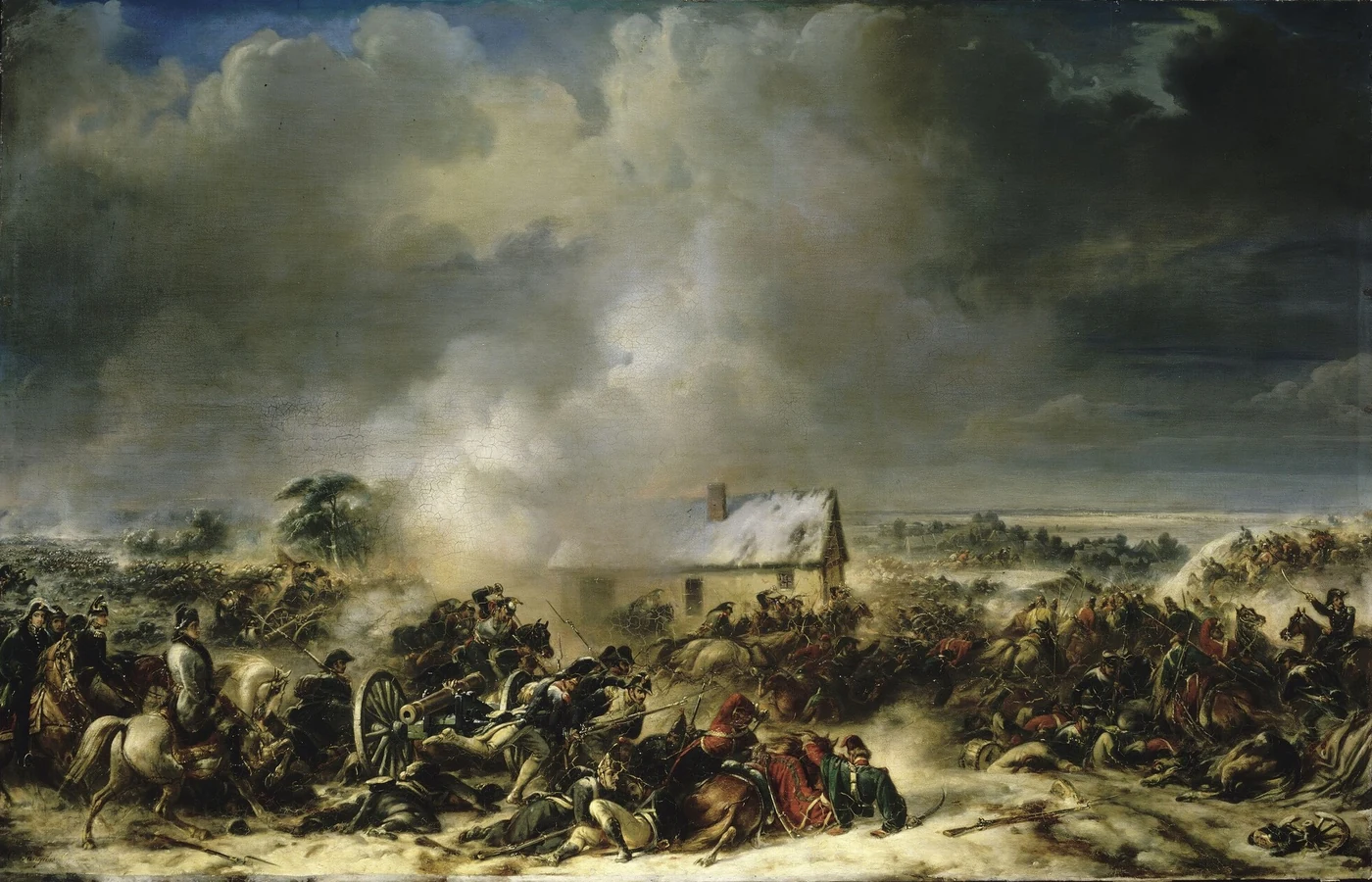
The ground: a plateau, frozen ponds, snow
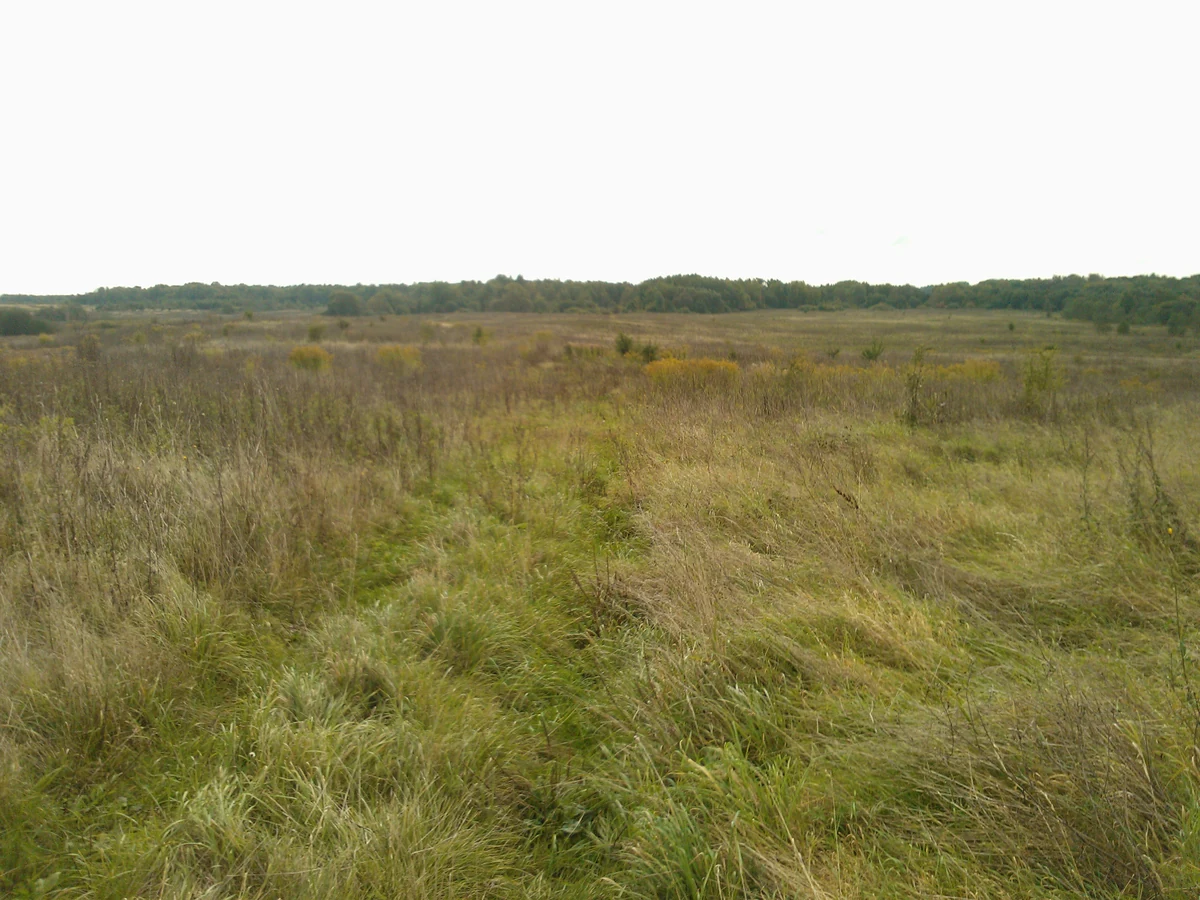
Preussisch Eylau — today Bagrationovsk, in Kaliningrad Oblast — was a small town that had grown up around a castle of the Teutonic Order founded in 1325. The road to Königsberg ran through it, and that was the road Bennigsen meant to block. The battlefield is a gently rolling plateau, cut by frozen ponds and woods, with two parallel ridges facing one another on either side of the town.
Bennigsen deployed his army north and east of the town, on a rise commanding the approaches some 600 metres from the last houses. His line, about 4.5 kilometres long, ran from Schloditten in the north-west to Serpallen in the south-east. The French held the plateau west of the town, between Eylau and the hamlet of Rothenen. Behind the Russian lines lay the villages that would give their names to the phases of the battle: Klein Sausgarten, the Auklappen wood, Kutschitten. Snow had been falling on and off for days; on 8 February it would fall almost without a break.
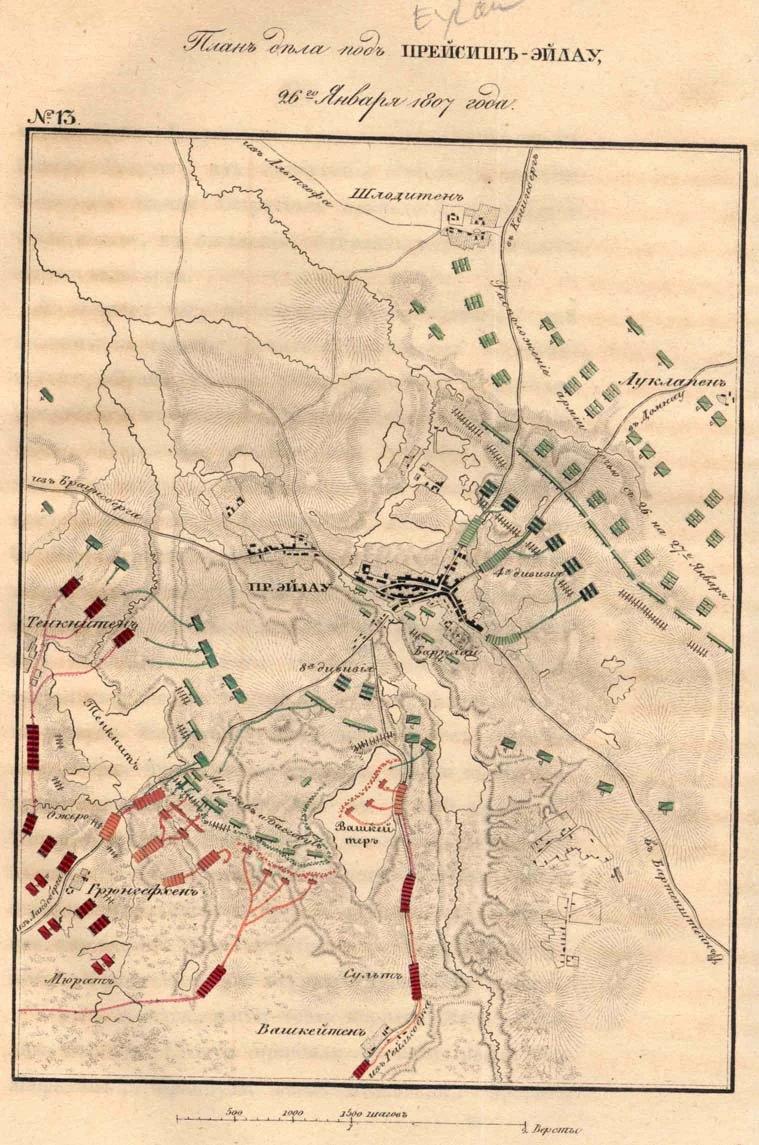
The forces engaged
The figures vary from one source to another, but the order of magnitude is constant: on the morning of 8 February the Russians were more numerous and had far more guns. Bennigsen fielded some 67,000 men; authors count between 400 and 460 pieces of artillery. Facing him, Napoleon had only 48,000 to 49,000 soldiers and about 300 guns: the Guard (9,000 men), Soult's IV Corps (16,750), Augereau's VII Corps (14,500) and Murat's reserve cavalry (15,200) — strengths recorded on the evening of 6 February and already reduced by the fighting of the 7th.
Everything therefore depended on reinforcements. The Russians expected only one corps, that of the Prussian general L'Estocq, about 8,500 strong — six Prussian battalions, three Russian battalions, some thirty squadrons and a few batteries, according to the Russian historian Kolyubakin. The French expected two: Davout's III Corps, the victors of Auerstedt now down to about 15,000 men, halted nine kilometres away on the Bartenstein road, and Ney's VI Corps, about 14,000 men, bivouacked some thirty kilometres off near Landsberg. Bernadotte's I Corps was too far away to appear.
On the Russian side Sacken and Essen held the centre, Tuchkov the right north of Eylau, Ostermann-Tolstoy the left to the south-east, Dokhturov commanded the reserve, Golitsyn the cavalry and Ataman Platov the Cossacks.
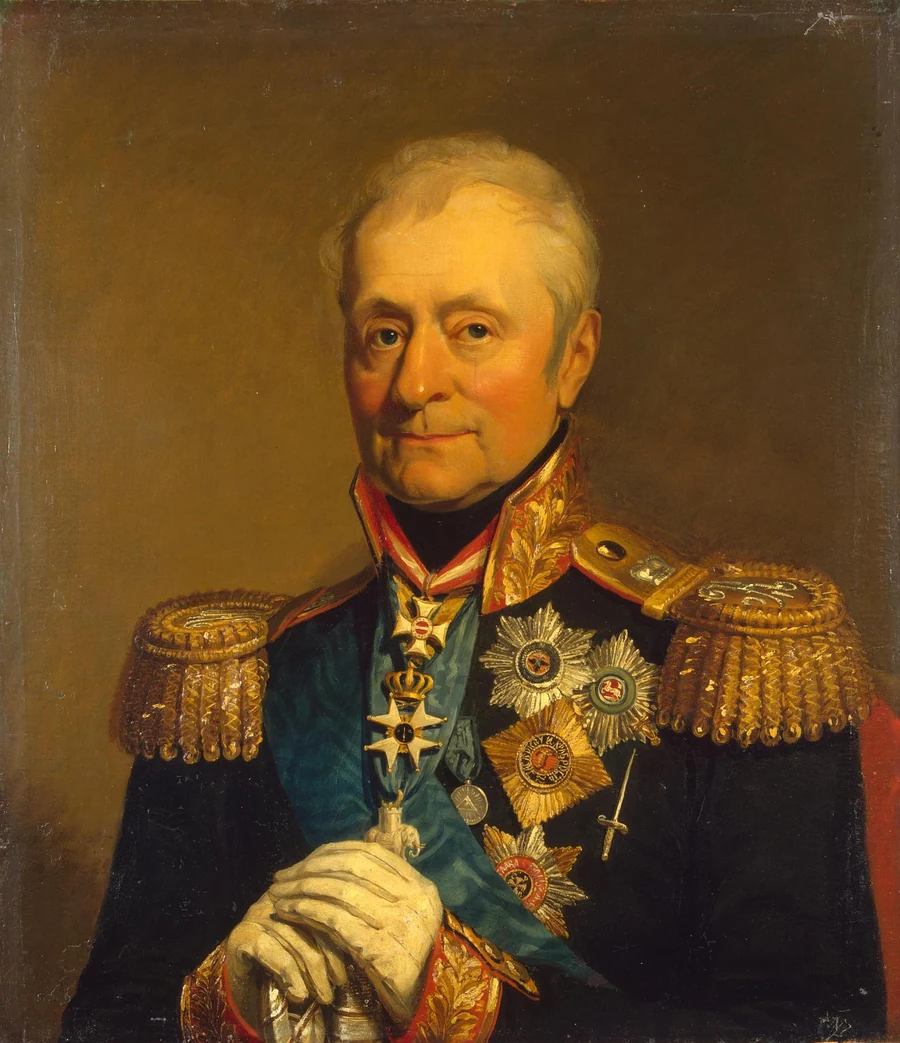
7 February: the battle Napoleon did not want
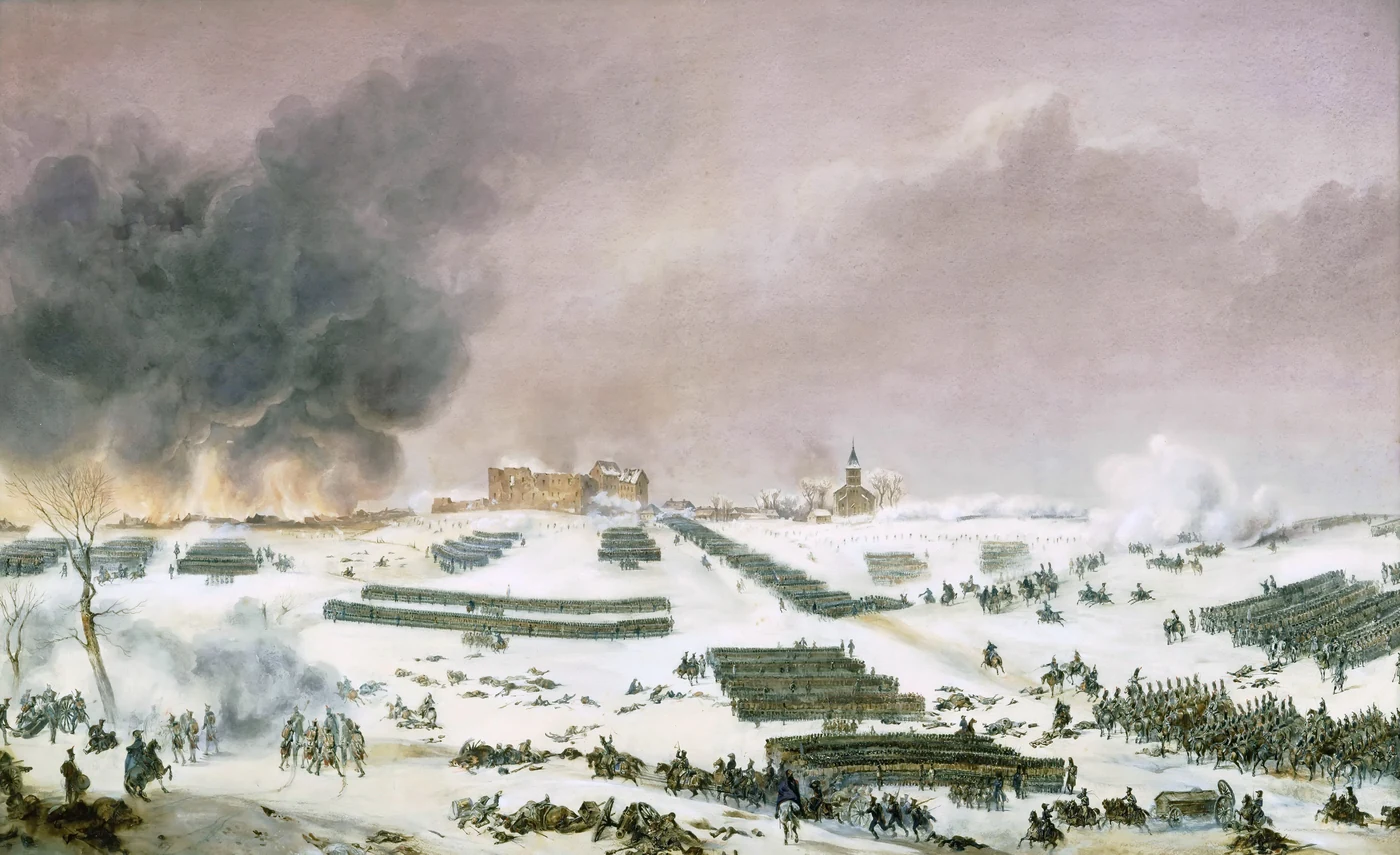
The first French troops — Soult's IV Corps and Murat's cavalry — reached the ground before Eylau at about 14:00 on 7 February. Bagration's rearguard held the plateau about a mile in front of the town, its task being to gain time for the Russian heavy artillery to pass through. The first French attacks were repulsed; then, under pressure from far superior forces, Bagration withdrew in good order, covered in the town itself by a detachment under Barclay de Tolly.
What happened next is one of the disputed points of the day. Napoleon would later maintain that he had ordered the attack on the town, both to pin the Russians and to shelter his soldiers from the cold. Other evidence, however, suggests the affair began without orders. The German account has it that some French baggage wagons, carrying part of the Emperor's own luggage, strayed into Eylau, where the men began unloading; Russian units then infiltrated the town, and the noise of the fighting drew Soult's troops in as well. Marbot, for his part, records Napoleon telling Augereau that he disliked night fighting and would rather wait for Davout on the right and Ney on the left before attacking.
The struggle for the town turned into a battle. Bennigsen ordered Bagration to retake Eylau with the 4th Division; the prince led the assault himself, in three columns. Jomini wrote that Barclay de Tolly, supported by Golitsyn's division, occupied the town twice and gave it up only after a third attack, to Legrand's division; Russian accounts insist instead that "night put an end to the battle" and that the town remained theirs. Around 22:00 Bennigsen pulled his troops back a few hundred metres and left Eylau to the French; he would afterwards claim he had meant to lure the enemy onto his centre. Each side had lost about 4,000 men, among them Barclay de Tolly, shot in the arm, and the French general Lochet, killed.
The night of 7-8 February
Although they held the town, most of the French spent the night in the open, as did all the Russians. Both armies went without food: the Russians through disorganisation, the French because the convoys had not come up. The testimony on both sides says much the same thing. A Russian officer wrote that every mile covered in the last few days had cost a thousand men, that the soldier "crawls like a ghost" and slept as he marched; a Frenchman noted that the army had never been in so sorry a state, faces yellowed by bivouac smoke, eyes red, uniforms black with soot.
During the night Bennigsen withdrew some units from his front line to strengthen his reserve, which shortened his right wing. The next morning he would fear that the French might discover how thin it had become.
The morning artillery duel
At 05:00 Napoleon learned that the Russian army was drawn up in two lines within cannon shot of Eylau. Day broke with no improvement: the snow would fall all day. It was the Russians who opened fire, on Bennigsen's order, and the French artillery replied. The duel lasted for hours and, against expectation, went better for the French, whose batteries were more widely dispersed.
The ground had much to do with it: the French lines sheltered behind the houses of Eylau and Rothenen, and a share of the Russian roundshot was lost in walls or fell short, while French gunners struck unobstructed at dense Russian masses standing in the open. The future general Denis Davydov, then a young officer, would describe the "clouds of roundshot" that furrowed the ranks of both armies in every direction.
The guns also made up Napoleon's mind: until then he had still believed the Russians were retreating. Messengers set out to recall Ney to Eylau — the order left headquarters only at 08:00, and the snow, which muffled the sound of the guns, prevented the marshal from grasping any sooner what was afoot.
Davout comes into line in the south
The leading columns of III Corps began to appear on the French right during the morning — the sources place their arrival between 09:00 and midday. Davout's advance guard attacked Serpallen, at the tip of the Russian left; behind it came the divisions of Friant, Morand and Gudin at forced march. With these 15,000 men the Grande Armée roughly matched its opponent's strength.
Napoleon wanted this enveloping move to succeed. To pin the Russians and forestall the attack he believed imminent against Eylau, he decided to strike at the centre with Augereau's VII Corps, supported by Saint-Hilaire's division taken from Soult.
The blizzard and the destruction of VII Corps
Augereau was very ill and had to be helped into the saddle. His two divisions — Desjardins on the right, Heudelet on the left — passed south of the Eylau cemetery, deployed and advanced through deep snow, supported by the corps artillery in battery 400 metres in front of the cemetery.
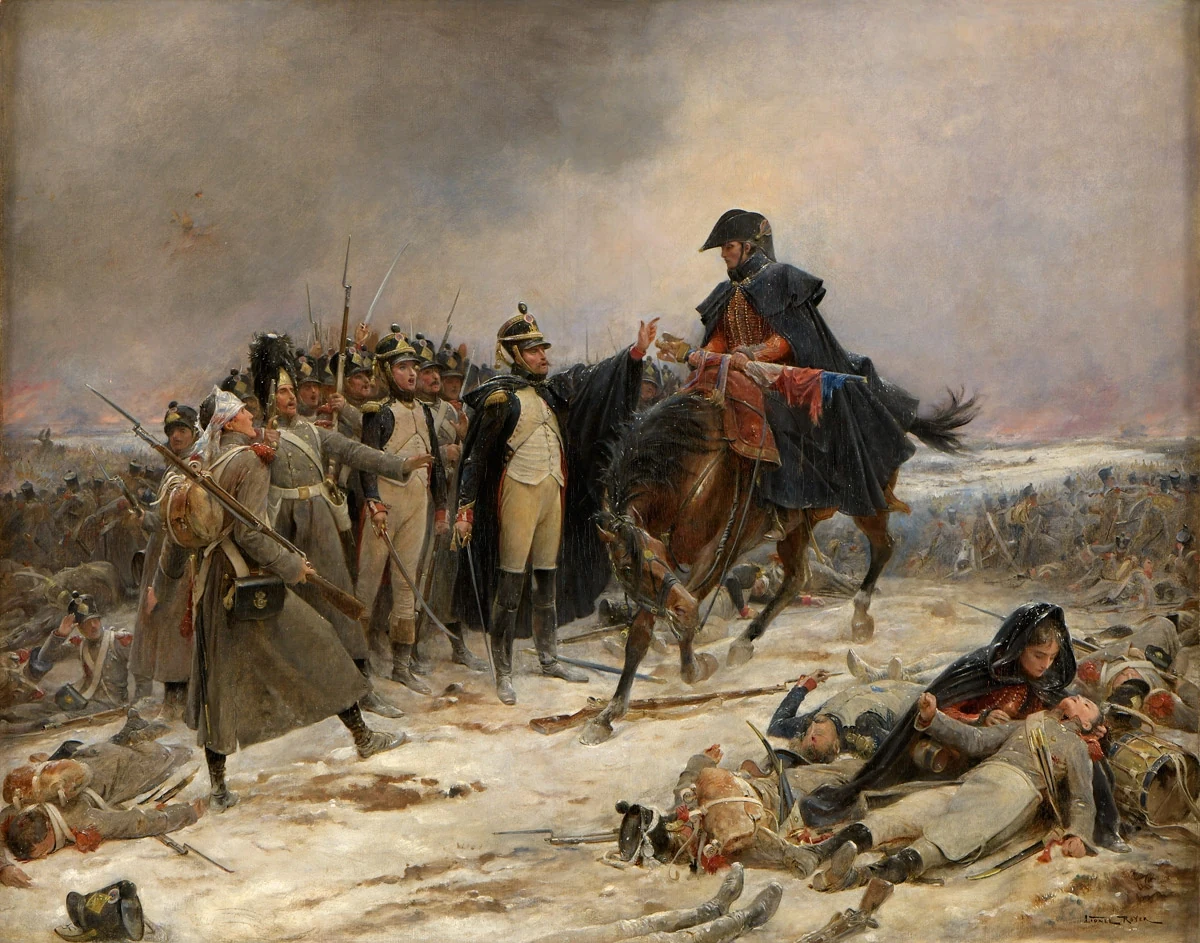
It was then that a squall of snow swept over the battlefield. Blinded, the columns lost their direction and drifted slowly to the left, following the slope of the ground. They found themselves a few hundred paces away, in flank, in front of the great Russian centre battery — 70 or 72 guns according to the source — firing at point-blank range. In a few minutes VII Corps lost 5,200 men; the official tally recorded by the British historian Francis Petre gives 929 killed and 4,271 wounded. General Desjardins was killed, Heudelet and Augereau wounded. Saint-Hilaire's division, which had marched on alone in the right direction, was in turn assailed by Russian cavalry and reserve infantry and lost heavily.
The 14th of the Line, a square of corpses
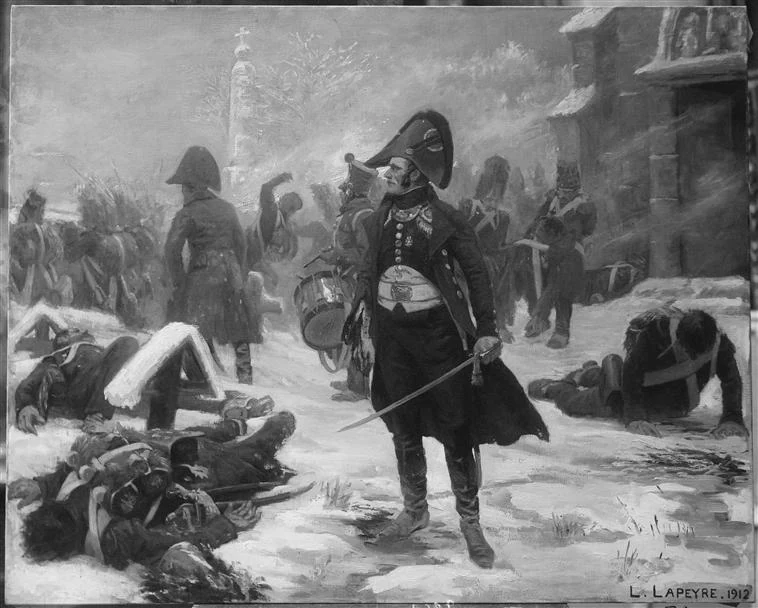
In this disaster one regiment could not withdraw: the 14th of the Line, left isolated on a knoll. It formed square and fought to the end, refusing to surrender; its position, it is said, was marked by a square of corpses.
The episode is known above all from the Memoirs of Captain Marcellin de Marbot, then aide-de-camp to Augereau, published long after the event. He relates that, several messengers having failed, he alone got through to the regiment; that the battalion commander told him he saw no way of saving his men and charged him with carrying back to the Emperor the farewell of the 14th and the eagle it could no longer defend. Marbot regained the French lines with the colour under his coat, wounded in the melee. As so often with memoirs written decades later, the detail of the story belongs to its author; the destruction of the regiment, however, is attested by sources on both sides.
The Russians reach the cemetery
Bennigsen exploited the breach. Augereau fell back on Eylau with three or four thousand survivors; Russian infantry and cavalry followed and broke into the French centre. Russian artillery concentrated its fire on the Eylau cemetery, where Napoleon had stood with the Guard since the start of the battle. Witnesses report that, seeing this column come on, the Emperor let fall a word of admiration for the enemy's audacity.
For a moment Napoleon, who was using the church tower as an observation post, came close to being captured: his staff officers held the attackers off just long enough for a few battalions of the Old Guard to be brought up. Ordered to charge with the bayonet and not to fire, and with Bruyère's light cavalry taking the Russian column in the rear, they all but destroyed it. For four hours, even so, the French centre remained in great disorder, with very few unbroken troops around the Emperor. It is one of the rare battles of the Empire in which the infantry of the Guard was actually engaged.
Murat's great charge
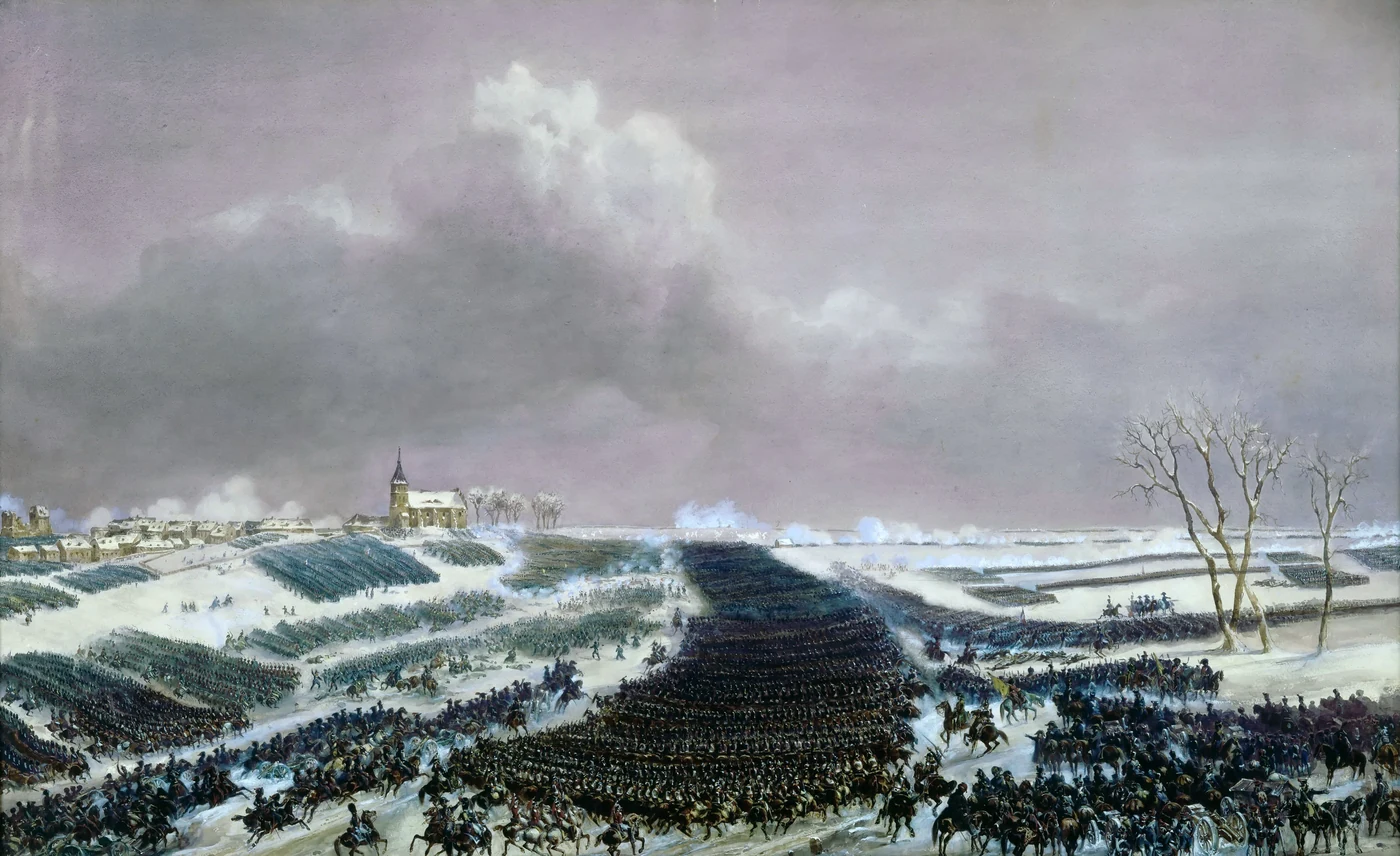
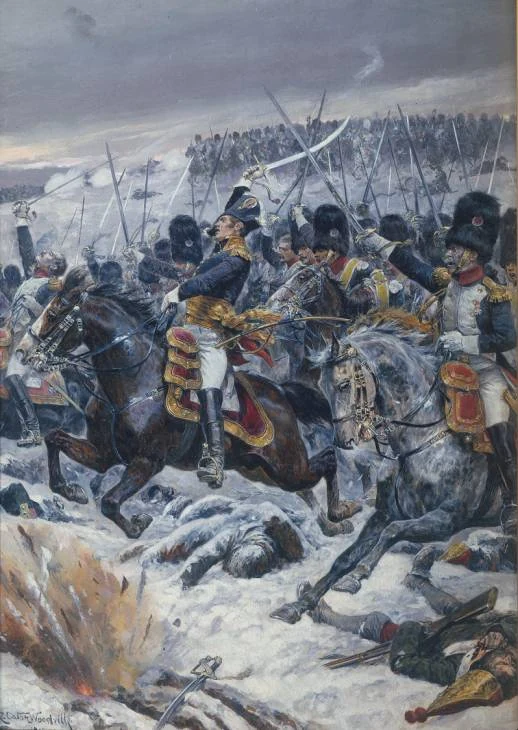
To restore the situation Napoleon had one card left: the reserve cavalry. Murat, reinforced by Bessières with the cavalry of the Guard, launched some 10,700 to 11,000 horsemen — Grouchy's dragoons and d'Hautpoul's cuirassiers forming a single column of more than 7,000 sabres in 64 squadrons.
The charge went through the Russian infantry around Eylau, then split. Grouchy's dragoons took in flank the Russian cavalry that was crushing Saint-Hilaire's division and scattered it; Murat then wheeled towards the centre, where d'Hautpoul's cuirassiers broke through both Russian infantry lines, sabred the gunners at their pieces and only came to a halt more than two kilometres on, in front of the reserves. A second wave — Guard cavalry and dragoons — charged the Russians as they tried to reform, and then the whole mass turned about and rode back through the enemy lines, covered by the squadrons of the Guard.
Murat lost 1,000 to 1,500 trained troopers, and General d'Hautpoul was mortally wounded: his thigh shattered, he refused the amputation offered by the surgeon Larrey and died on 14 February. But the charge had relieved Augereau, Saint-Hilaire and Soult, and paralysed the Russians long enough for Davout to deploy. Rarely had French cavalry played so decisive a part; for the first time it was riding the best horses in Europe, requisitioned after the conquest of Prussia.
Lepic, Dahlmann and the cavalry of the Guard
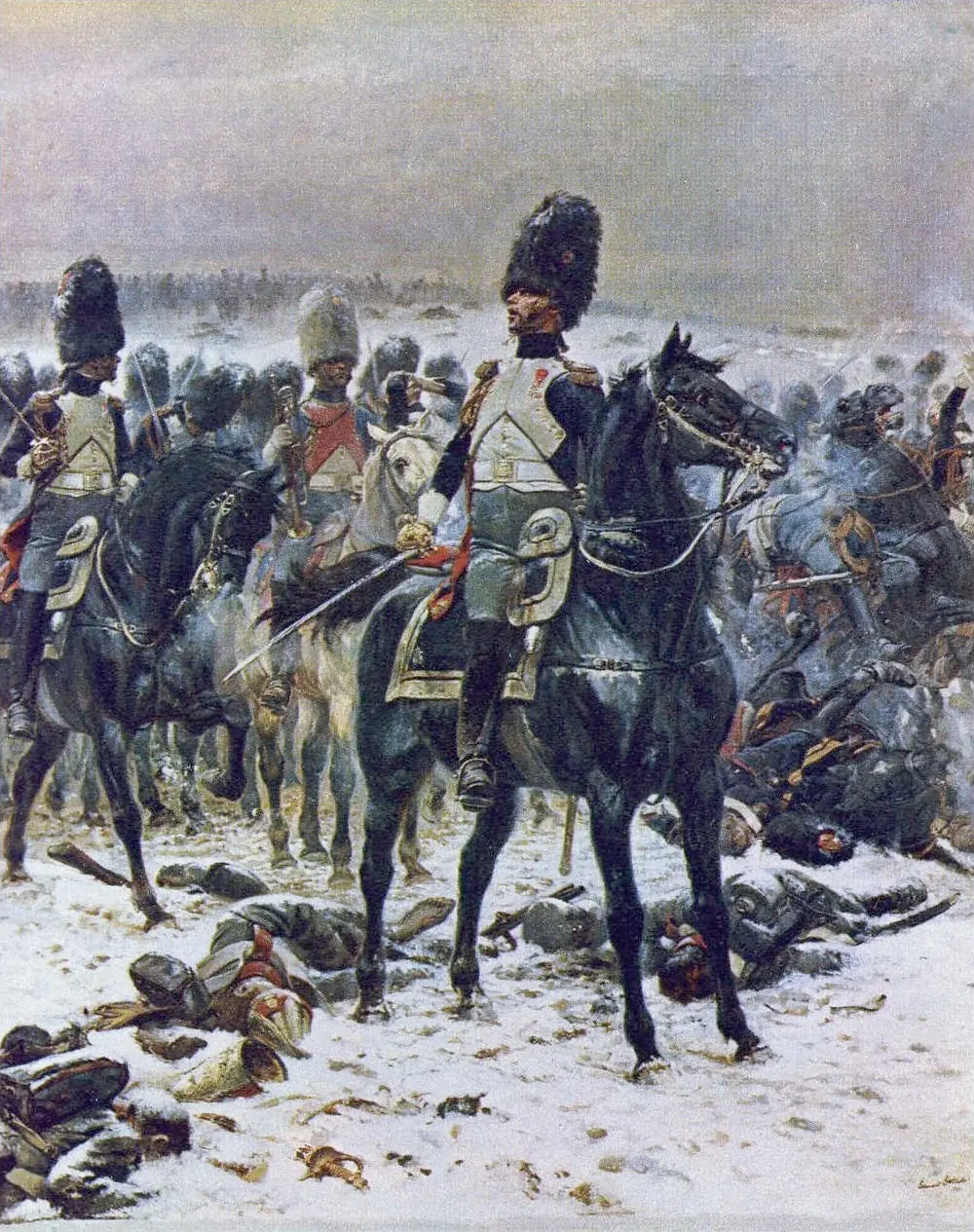
Two figures of the Guard have remained attached to this charge. Colonel-Major Louis Lepic led the horse grenadiers; the soldier Billon, a witness, records that under roundshot that "carried off men and beasts" Lepic shouted to his troopers: "Heads up, grapeshot is not shit!" The regiment overthrew a line of infantry, took a battery, then, lost in the snow, found itself surrounded. To the Russian officer who came to invite him to surrender, Lepic is said to have replied, pointing to his grenadiers: "Look at those faces, and tell me whether they look as if they wanted to surrender!" The regiment, closed up in column by platoons, rode through all three Russian lines and came back — to be met by mistake with musketry from its own side, which killed two grenadiers. Napoleon, who had thought him lost, made him a general of brigade on 13 February.
General Nicolas Dahlmann, leading the chasseurs à cheval of the Guard, was mortally wounded the same day. Like the words attributed to Lepic, these scenes come to us from memoirs and veterans' accounts, often written long afterwards: they tell us about the memory of the Guard as much as about the battle.
Davout bends back the Russian left
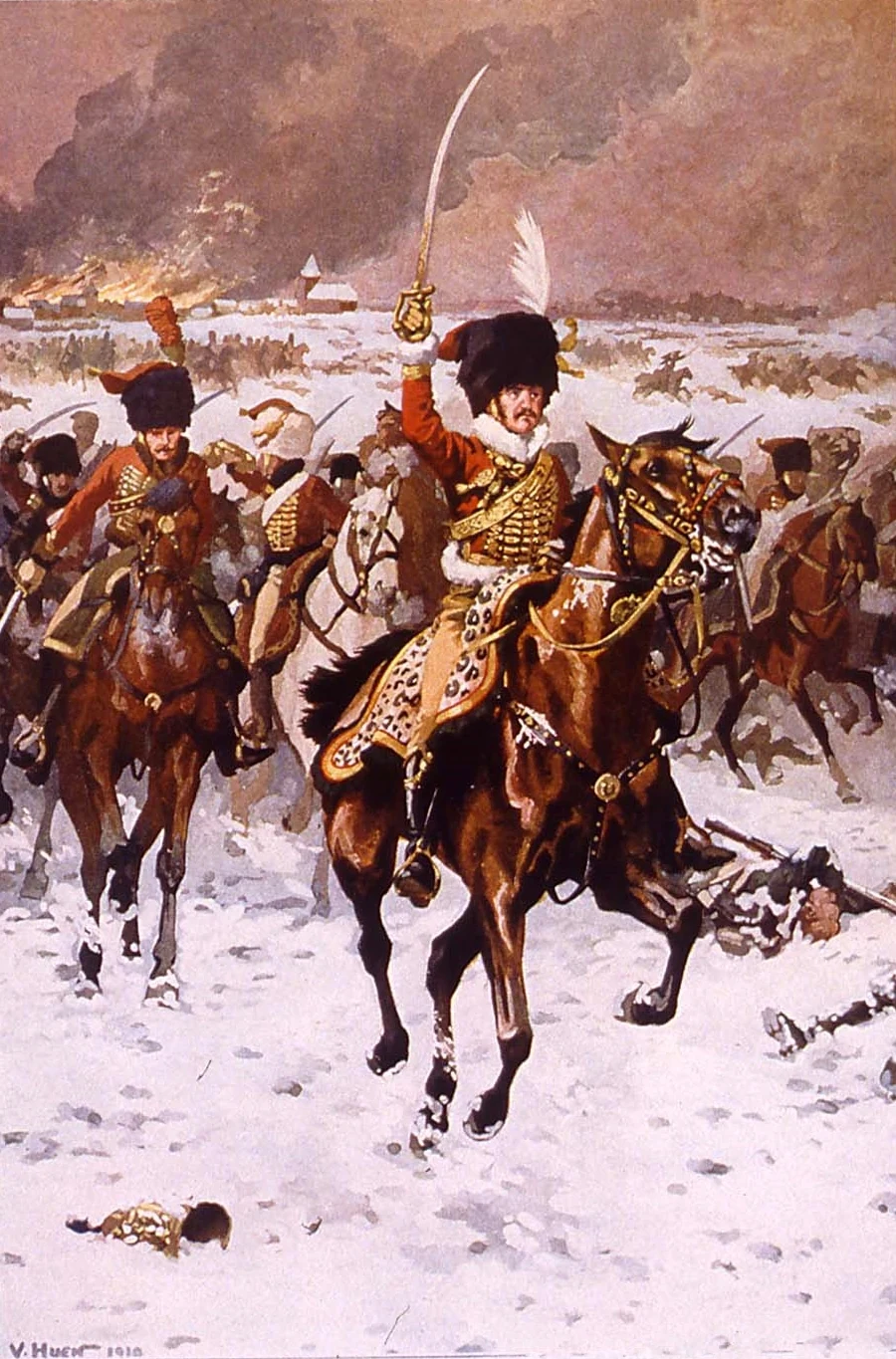
While the centre came apart and was then restored, the decisive fighting took place to the south-east. Davout's regiments, supported by Saint-Hilaire's division and by light cavalry, attacked Serpallen and Klein Sausgarten. Both villages changed hands several times. At the cost of very heavy losses the French took the heights that command this sector, drove the Russians out of the village, then pushed on towards the Auklappen wood and the village of Kutschitten.
The Russian left was forced back so far that it ended up at a right angle to the centre. By about 15:30 it seemed on the point of breaking. Bennigsen, threatened with being cut off from his line of retreat towards the Niemen, progressively thinned his centre to feed his left. Davout, alert to the danger, had a battery placed on the heights of Klein Sausgarten and rallied his troops in person.
L'Estocq, or the day saved
For several critical hours Bennigsen could not be found: he had gone himself to hurry the march of the Prussian corps. L'Estocq, who had left part of his troops to hold off Ney and had lost nearly a third of his strength in the pursuit, came up by the Russian right, crossed the whole rear of the position and appeared on the left, gathering Russian stragglers on the way. At 16:00, with about 8,500 men and the support of 36 guns of the Russian horse artillery — the companies of Yermolov, Yashvil and Bogdanov — he counter-attacked Davout's exposed right flank, retook Kutschitten and threatened to outflank the French.
The Russians, heartened, attacked again. For three hours Davout was halted and then forced back to a line running from Kutschitten to the Auklappen wood; his guns finally drove the Prussians back into the woods. Night and exhaustion ended the fighting on that side. The monument later raised on the battlefield would carry L'Estocq's name before the others': for the Prussians, his march had saved the day.
Ney arrives after dark
At about 19:00 the guns sounded at last in the north: the leading division of VI Corps, delayed by L'Estocq's rearguard, came out on the Russian right and rear and attacked at once. Bennigsen counter-attacked; the fighting went on, bitterly, until 22:00, after which both sides drew off a little.
A council of war then opened in the Russian camp. Several generals argued for a third day of battle. At 23:00 Bennigsen decided to retreat. Covered by the Cossacks, the Russian army withdrew in silence towards Königsberg; the exhausted French did not notice until 03:00 and were in no condition to pursue.
A battlefield without a victor
On the morning of 9 February the French were masters of a plateau covered with frozen dead. The losses were enormous and the estimates widely divergent. For the Russians, figures of 15,000 to 20,000 killed and wounded are given, plus 3,000 prisoners, 23 guns and 16 colours lost; the Russian historian Bogdanovich counts 8,000 killed and 18,000 wounded, his compatriot Bezotosny 7,000 and 18,000. For the French the figures range from 10,000 to 15,000 in some authors, up to 25,000 for Chandler or Bogdanovich, while the German historian Horst Schulz reconstructs 4,893 killed, 23,598 wounded and 1,152 missing. The 58th bulletin of the Grande Armée announced 1,900 killed and 5,700 wounded: no one believes that any longer.
What is certain is the bloodletting among the senior officers: 23 French generals out of action, eight of them killed or dead of their wounds — d'Hautpoul, Dahlmann, Desjardins, Binot, Lochet, Varé, Bonnet d'Honnières, and the Emperor's aide-de-camp Corbineau. On the Russian side no general was killed and some fifteen were wounded or concussed. Riding over the field the next morning, Ney is said to have exclaimed: "What a massacre! And without result!"
Napoleon stayed ten days on the spot. His headquarters remained in a house on the Landsbergerstrasse from 7 to 17 February, and he had the care of the wounded organised, which was not his habit. The surgeon-in-chief Larrey fed the wounded on broth and a bœuf à la mode made with the flesh of young horses: the good results would later lead him to promote the eating of horsemeat in France. When the army fell back behind the Passarge, Cossacks in pursuit recovered or captured 2,000 French wounded.
What the battle changed
Eylau was the first serious check to the Grande Armée: the myth of Napoleon's invincibility came out of it badly dented. By failing to destroy the Russian army, the battle only prolonged the war; it would take both sides more than three months to recover.
Napoleon at once sent General Bertrand to offer the King of Prussia a separate peace: French withdrawal and borders restored. Berlin, wishing to stay tied to Saint Petersburg, refused; on 26 April 1807 Russia and Prussia undertook at Bartenstein to carry on the struggle together. The decision came on 14 June 1807 at Friedland, a clear French victory that brought Tsar Alexander I to the negotiating table. The Treaties of Tilsit, in July, were far harsher on Prussia than the February offer: she lost nearly half her territory.
Gros, Balzac, Hugo: Eylau in pictures and in words
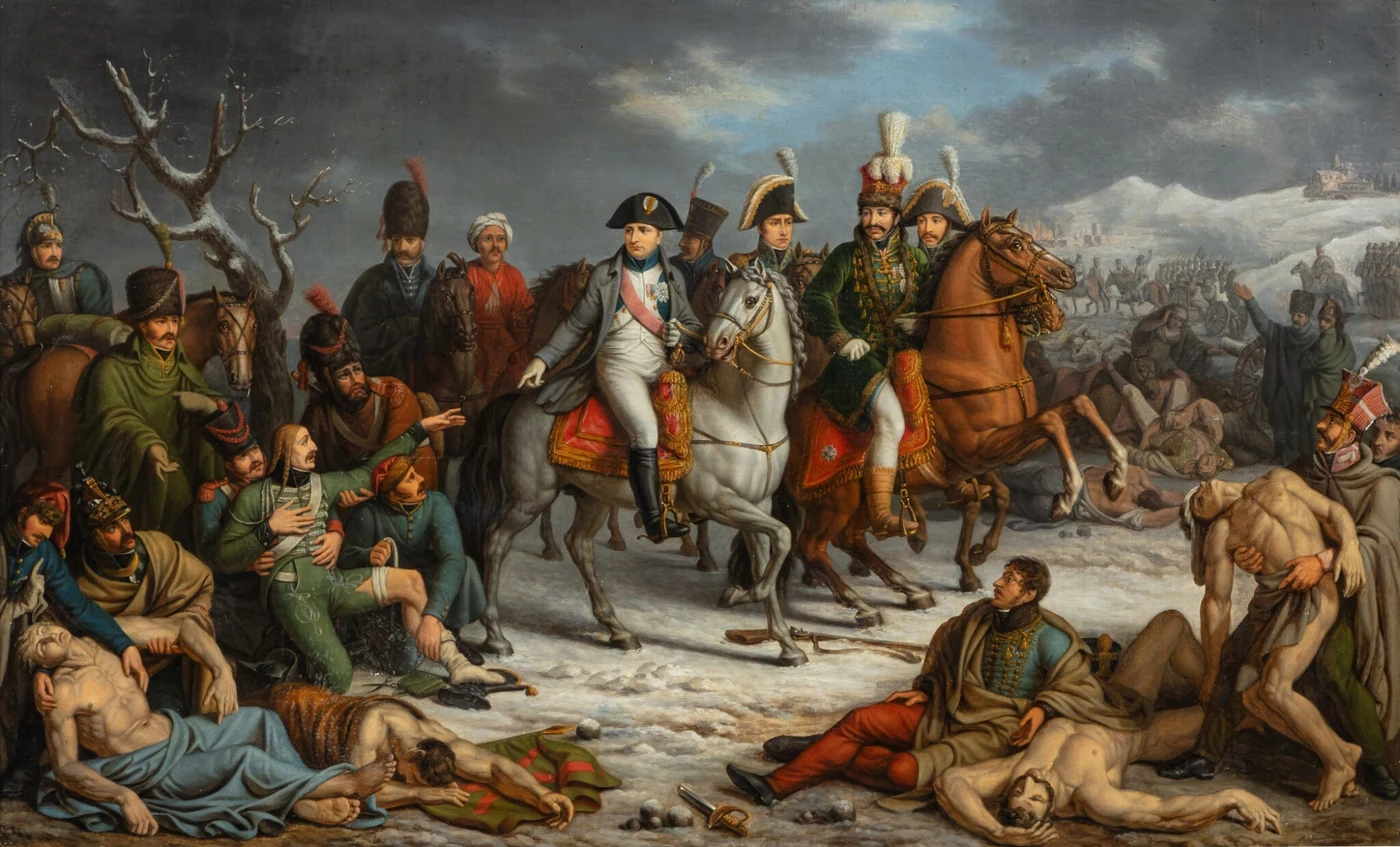
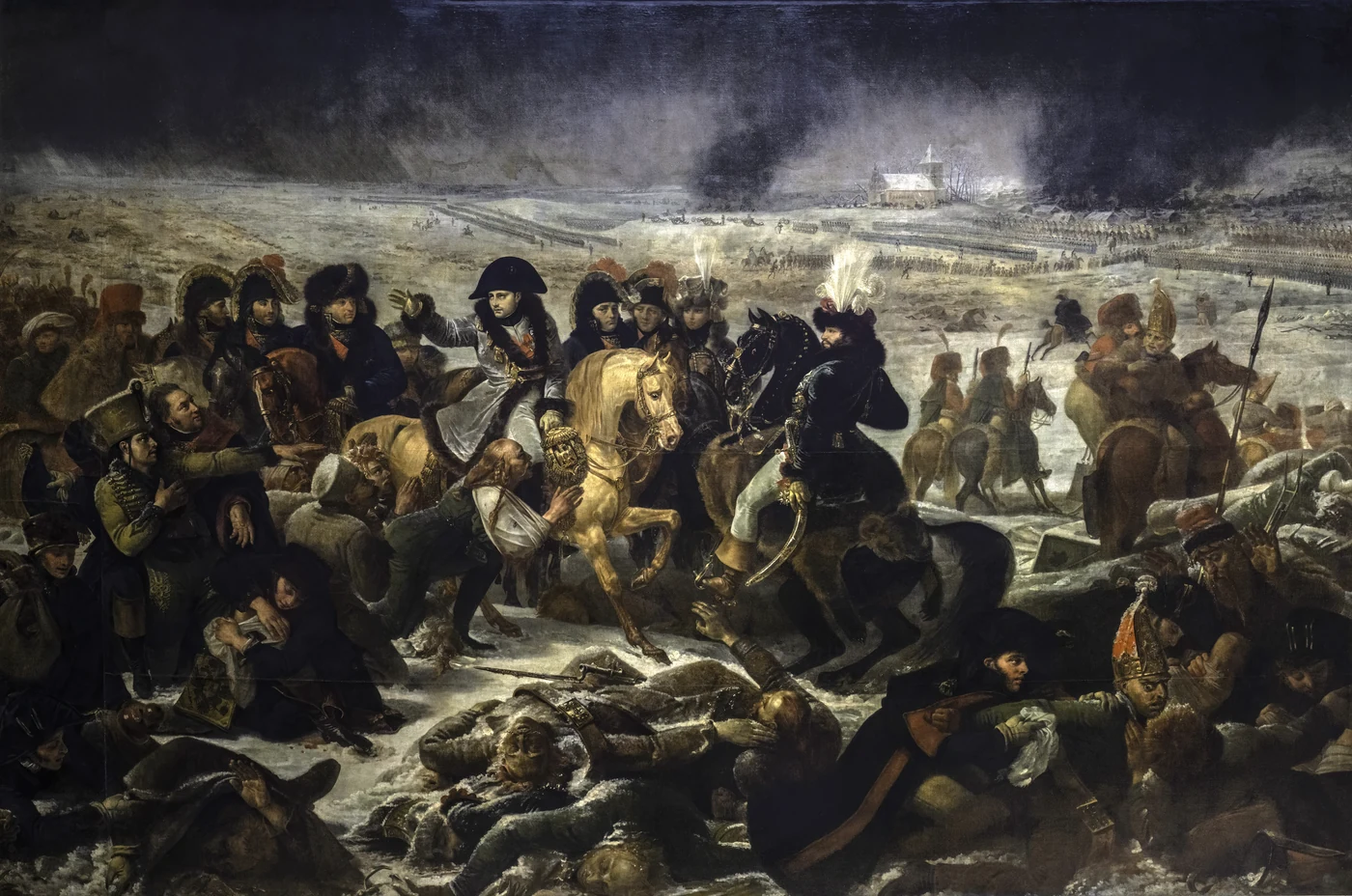
The battle produced one of the major works of Empire painting. Antoine-Jean Gros won the competition opened to depict it and painted, during the winter of 1807-1808, Napoleon on the Battlefield of Eylau, an immense canvas 5.2 by 7.8 metres shown at the Salon of 1808 and now in the Louvre. The director of the Musée Napoléon, Vivant Denon, had laid down most of the programme: the moment, the number of figures, the corpses in the foreground. The realism of those bodies no doubt went beyond his recommendations: police informers at the Salon suspected the painting of making war unpopular. Napoleon, however, liked it and gave the painter his own cross of the Legion of Honour. An earlier version, of 1807, has belonged since 1988 to the Toledo Museum of Art in the United States.
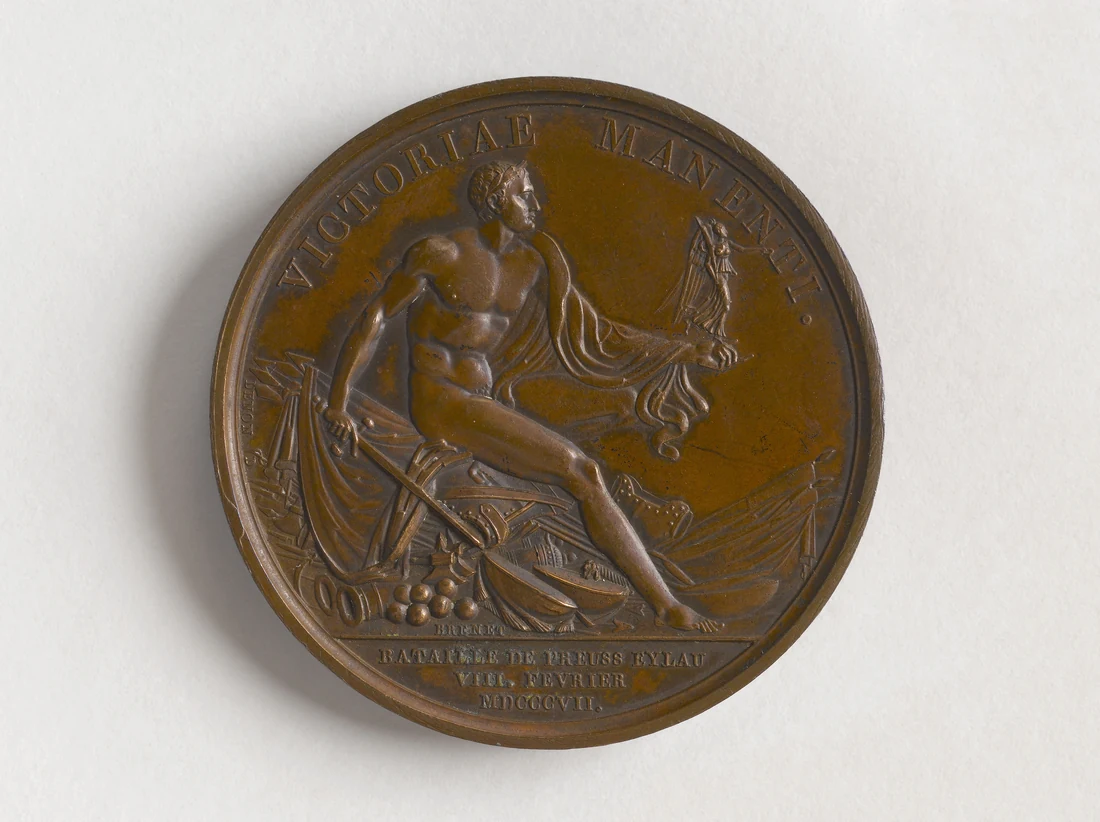
Literature took hold of the battle too. The hero of Balzac's Colonel Chabert (1832) is left for dead in the great cavalry charge at Eylau and reappears in Paris under the Restoration, to the dismay of his remarried widow. Victor Hugo dedicated Le Cimetière d'Eylau, a poem in La Légende des siècles (1874), to his uncle Louis-Joseph Hugo, a captain in the 55th of the Line. As early as 1807 a broadsheet song in Breton, signed François Guenveur, told the story of the battle.
Russian, Prussian and German memory
In Russia the battle was honoured at once. The news had barely reached Saint Petersburg when the Badge of Distinction of the Military Order of St George was instituted for soldiers and non-commissioned officers; on 31 August 1807 a cross "For the victory at Preussisch Eylau" was created for officers. Eighteen officers received the Order of St George 3rd class and thirty-three the 4th class; Bennigsen was given the Order of St Andrew and a life pension of 12,000 roubles.
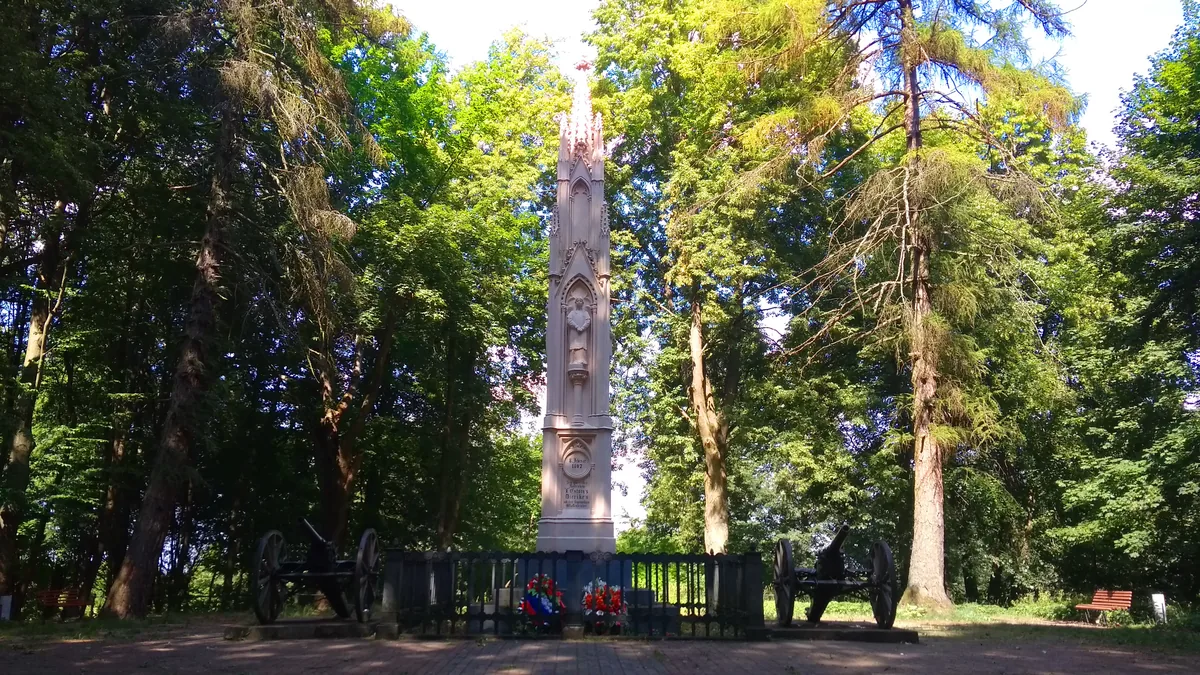
In 1856, on the initiative of King Frederick William IV of Prussia, a neo-Gothic obelisk by the architect Friedrich August Stüler was raised on the south-eastern edge of the town in honour of the Prussian and Russian troops. Its inscription is dedicated "to the glorious memory of L'Estocq, Dierike and their brothers in arms"; since it carries bas-reliefs of Bennigsen, L'Estocq and Dierike, it is also called the monument of the three generals. It is today listed as a monument of the Russian federal heritage.
The town itself has changed name and country. Preussisch Eylau became Soviet in 1945 and was renamed Bagrationovsk on 7 September 1946, in honour of General Bagration, who had commanded the Russian rearguard on 7 February 1807. A bust of the general, by the sculptor Oksana Avramchenko, was set up on the central square in 1954, and the local history museum devotes a large part of its rooms to the battle. The fourteenth-century church, damaged in 1807, served as a stable and then a workshop; of the Teutonic castle only ruins remain. In Paris the avenue d'Eylau keeps the memory of the day; in Berlin an Eylauer Strasse was opened in 1901.
Discover other battles
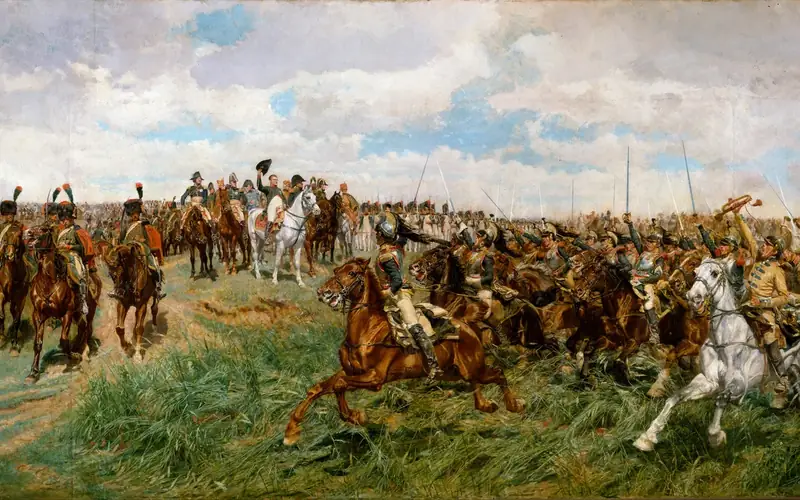 Victory
 Read the account
Friedland
14 June 1807
Friedland (Pravdinsk), East Prussia
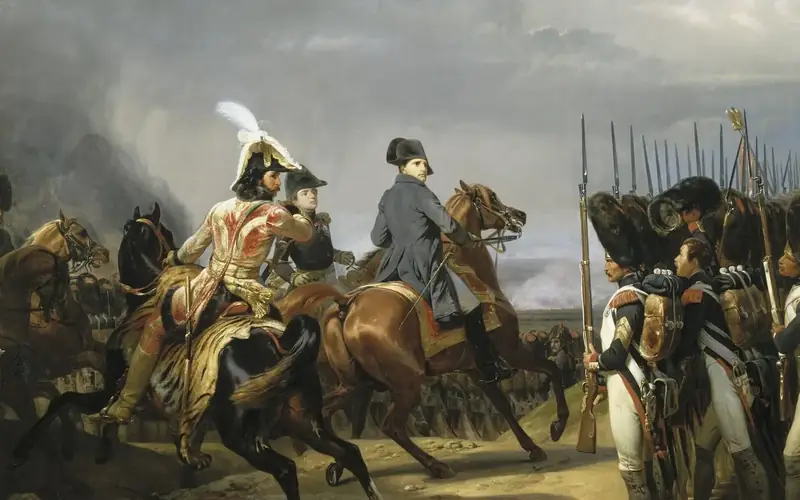 Victory
 Read the account
Jena
14 October 1806
Vierzehnheiligen, near Jena (Thuringia, Germany)
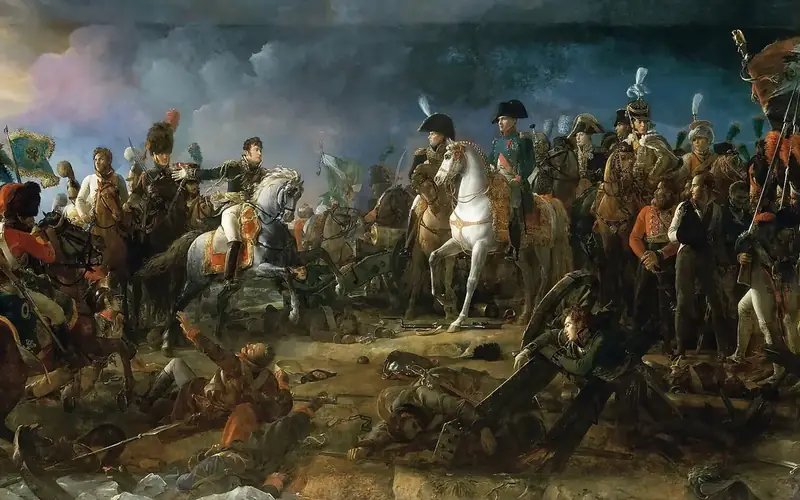 Victory
 Read the account
Austerlitz
2 December 1805
Pratzen plateau, Moravia (Czech Republic)
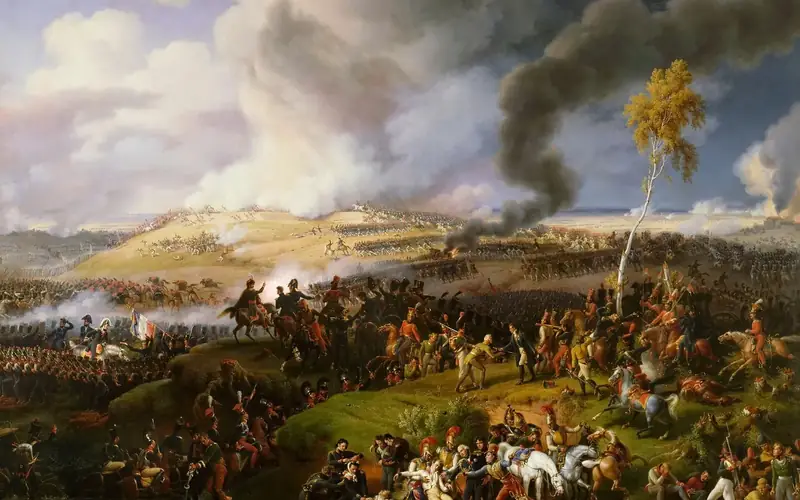 Victory
 Read the account
Borodino (Battle of the Moskva)
7 September 1812
Borodino, west of Moscow (Russia)
Go further
Recommended books to dig deeper (affiliate links)

Napoleon the Great
Andrew Roberts · 2014
A monumental biography drawing on Napoleon’s 33,000 surviving letters, admiring but rigorous.
See on Amazon
Napoléon ou le mythe du sauveur
Jean Tulard · 1977
The book that reshaped how the man is read: how France gave itself a saviour, and what it cost.
See on Amazon
Nouvelle histoire du Premier Empire
Thierry Lentz · 2002-2010
Four reference volumes on institutions, diplomacy and collapse: the scholarly synthesis of the subject.
See on AmazonAs an Amazon Associate, this site earns from qualifying purchases.
Support the encyclopedia
Napoleon Empire is an independent project. Your contribution helps grow the content and keep the site running.
DonateSecure payment on the platform you choose.