Two emperors met alone on a raft anchored in mid-river and divided Europe between them. Five years later the same river was crossed by six hundred thousand men.
Historical context
After the indecisive and bloody Eylau, the victory of Friedland on 14 June 1807 brought Russia to its knees. Alexander asked for an armistice. A meeting place had to be found: the town of Tilsit was held by the French, the far bank by the Russians. So a raft was built in mid-Niemen bearing two pavilions, the French one marked with an N, the Russian with an A.
On 25 June the two emperors came aboard from their own banks at the same second and embraced before the two armies drawn up. They stayed alone for two hours. Alexander is said to have opened with a line that became famous: I shall hate the English as much as you do. The King of Prussia, whose kingdom was at stake, waited on the bank in the rain and was admitted only the next day.
The treaties of 7 and 9 July redrew the continent. Prussia lost half its territory and population; the Duchy of Warsaw and the Kingdom of Westphalia were created; Russia recognised all the French conquests and joined the Continental Blockade. Queen Louise came in person to plead for Magdeburg; she got compliments and nothing else.
This is the summit of the reign: two men deciding Europe's fate between them. The construction rested only on their understanding, and the understanding came apart over the blockade, Poland and the East. In June 1812 the Grande Armée crossed the Niemen a few dozen kilometres from the raft. Tilsit is now called Sovetsk and lies in Russia, on a border the treaties of 1807 had not foreseen.
Go further
Recommended books to dig deeper (affiliate links)
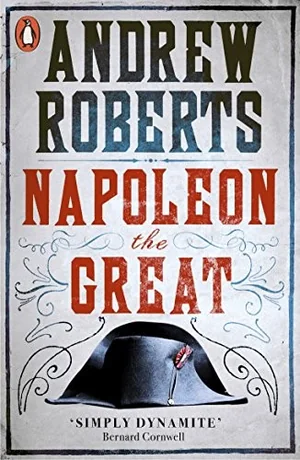
Napoleon the Great
Andrew Roberts · 2014
A monumental biography drawing on Napoleon’s 33,000 surviving letters, admiring but rigorous.
See on Amazon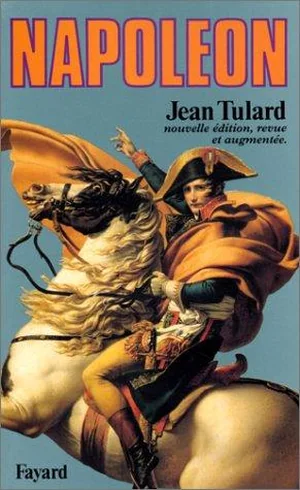
Napoléon ou le mythe du sauveur
Jean Tulard · 1977
The book that reshaped how the man is read: how France gave itself a saviour, and what it cost.
See on Amazon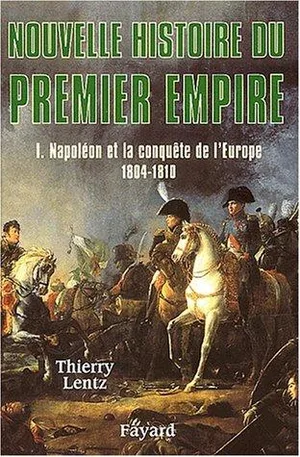
Nouvelle histoire du Premier Empire
Thierry Lentz · 2002-2010
Four reference volumes on institutions, diplomacy and collapse: the scholarly synthesis of the subject.
See on AmazonAs an Amazon Associate, this site earns from qualifying purchases.
Support the encyclopedia
Napoleon Empire is an independent project. Your contribution helps grow the content and keep the site running.
DonateSecure payment on the platform you choose.