Four months after Eylau, the same Russian army was crushed in a river loop. The town is now called Pravdinsk; the place gave its name to a Paris quay.
Historical context
The ground made the battle. Bennigsen had taken his army across the Alle to attack an isolated French corps and found himself backed into a loop of the river, with the town of Friedland and a few bridges as his only way out. Napoleon, arriving during the day of 14 June 1807, saw the mistake on the map and waited for the Russians to finish shutting themselves in.
Ney broke the left wing, Senarmont's artillery pushed its batteries to a hundred and fifty metres and fired canister into the massed columns. The bridges burned, the Russian army lost twenty thousand men. The date was not indifferent: it was the anniversary of Marengo, and the Emperor had pointed it out before the action.
Friedland is now Pravdinsk, in the Russian oblast of Kaliningrad. The town has kept its fourteenth-century brick Gothic church, which served as a hospital during the battle, and a few old buildings; a monument recalls the fighting. The landscape of the Alle loop, farmland again, can still be read fairly well from the heights.
The consequence was immediate and considerable. Five days later Alexander asked for an armistice; eleven days later the two emperors met on a raft at Tilsit, sixty kilometres away. It is the only battle of the Empire that led directly to a reversal of alliances. In Paris, the neighbouring quay was named quai de Friedland in 1808 — becoming an avenue in 1864.
Go further
Recommended books to dig deeper (affiliate links)
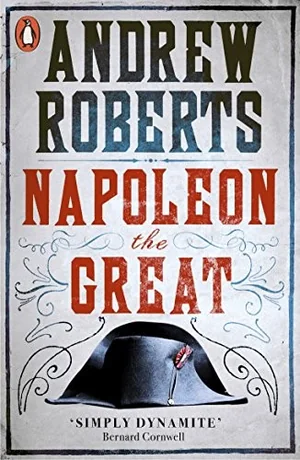
Napoleon the Great
Andrew Roberts · 2014
A monumental biography drawing on Napoleon’s 33,000 surviving letters, admiring but rigorous.
See on Amazon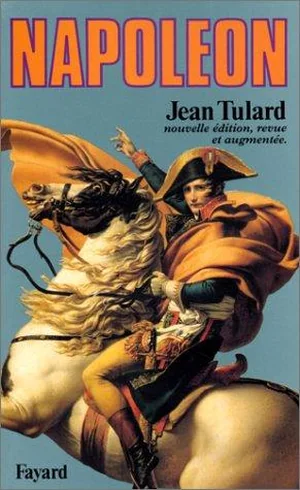
Napoléon ou le mythe du sauveur
Jean Tulard · 1977
The book that reshaped how the man is read: how France gave itself a saviour, and what it cost.
See on Amazon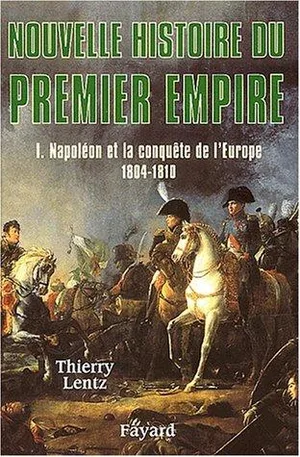
Nouvelle histoire du Premier Empire
Thierry Lentz · 2002-2010
Four reference volumes on institutions, diplomacy and collapse: the scholarly synthesis of the subject.
See on AmazonAs an Amazon Associate, this site earns from qualifying purchases.
Support the encyclopedia
Napoleon Empire is an independent project. Your contribution helps grow the content and keep the site running.
DonateSecure payment on the platform you choose.