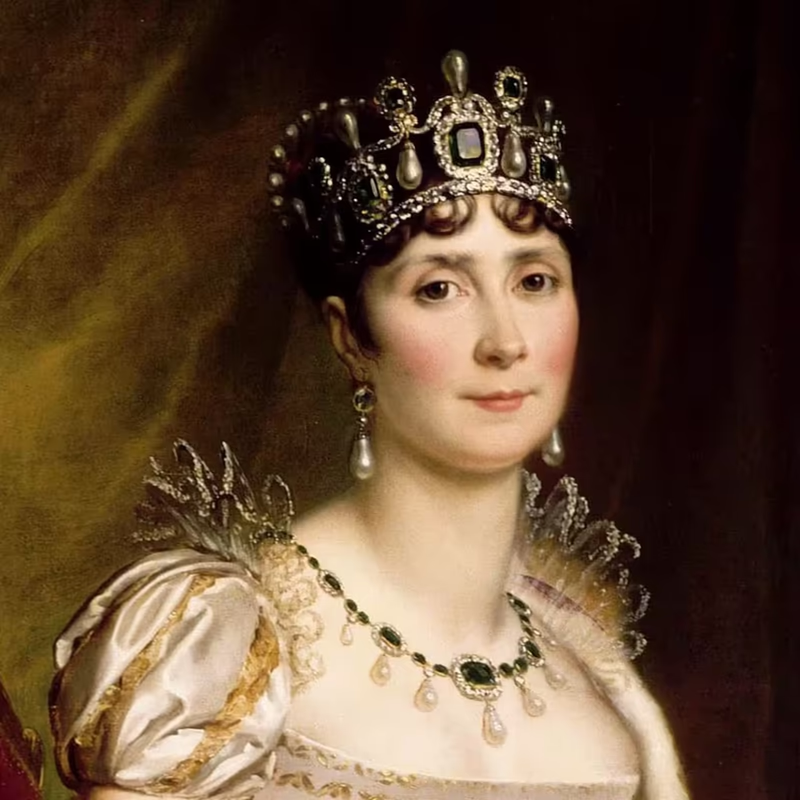
Born at Trois-Îlets in Martinique, widowed by the Terror, mistress of Barras, she married Napoleon Bonaparte in 1796 and became Empress of the French on 2 December 1804. Repudiated in 1809 for dynastic reasons, she died at Malmaison in 1814, loved by Napoleon until Saint Helena.
Martinican Origins
Marie Josèphe Rose Tascher de La Pagerie was born at Trois-Îlets, Martinique, on 23 June 1763, on a sugar plantation half-ruined by debt. Her father, Joseph-Gaspard Tascher, was an affable, indebted Creole gentleman, more fond of rum than account books. Her mother, Rose-Claire des Vergers de Sannois, bore with bitterness the weight of a shrinking fortune. Young Rose grew up between the slave quarters, the smell of burning bagasse, and the evening storms cracking the sky above Morne Aca. She spoke Creole before French, galloped barefoot, picked mangoes. She was cheerful, a touch idle, her beauty already noticed — that golden complexion, that smile she hid behind her hand to conceal teeth ruined by plantation sweets.
Tradition — reported by all her biographers, though dates and identities vary — holds that a fortune-teller predicted her destiny in her youth: « You will be unhappy in your first marriage, but your second will give you a rank beyond anything you can imagine. You will be more than a queen. » The girl laughed. Joséphine, decades later, would repeat this to her ladies-in-waiting — always with a smile, but never with complete disbelief.
At sixteen, she left Martinique to marry the Vicomte Alexandre de Beauharnais, a Creole officer of noble birth to whom her uncle had promised her. Alexandre was handsome, superficially cultivated, a devotee of philosophical salons — and fundamentally inconstant. He left for Guadeloupe, abandoned his wife, pursued affairs, and even contested Hortense's legitimacy. Rose obtained a legal separation in 1785, learned to manage alone in Paris with two children — Eugène, born in 1781, Hortense in 1783 — and a nonexistent dowry. She ran a small salon, tended her connections, deployed a nonchalant charm that necessity had honed into a weapon.
The Revolution overturned everything. Alexandre de Beauharnais, elected deputy of the nobility, embraced the new ideas and commanded an army. In 1794, denounced for lifting the siege of Mainz, he went to the scaffold on 23 July — two days before Robespierre's fall, a cruel irony. Rose, imprisoned at the Carmes convent with other aristocrats, shared her cell with Thérésia Cabarrus, the future Mme Tallien, one of the most influential women of the Directory. Every morning, the sound of the tumbrel in the courtyard. Rose showed a composure that astonished the guards: she joked, charmed, made herself indispensable. Freed after Thermidor, a widow at thirty-one, penniless but well-connected, she took the name Joséphine — more mysterious than Rose — and entered the circle of Barras, the Directory's strongman, whose favoured guest she became, and perhaps for a time his mistress. Surviving in that convulsive Paris of balls and mourning: that was the art she had learned at the Carmes.
The Letters from Italy
In October 1795, in Barras's salon at the Luxembourg, Joséphine encountered a small Corsican general with grey eyes of unsettling intensity. Napoleon Bonaparte — she may have caught a glimpse of him after 13 Vendémiaire, when he cannonaded the royalists on the steps of Saint-Roch — pressed his suit with an ardour that disconcerted her. He was twenty-six, she thirty-two; he was penniless and obscure, she had a name, connections, the aura of a woman of the world. He was ardent to the point of obsession; she was affable, distant, without passion. She hesitated. Barras, wanting to attach a promising soldier and rid himself of an awkward liaison, arranged matters. The civil marriage was celebrated on 9 March 1796, in the rue d'Antin, late in the evening — almost in secret. Napoleon had fudged his age, adding a year; Joséphine had subtracted four. On the register, she signed for the first time « Joséphine Bonaparte ». Forty-eight hours later, he left for the Army of Italy.
What he would accomplish in eighteen months exceeded comprehension — Lodi, Arcola, Rivoli, the fall of Venice, the Treaty of Campo Formio. And all the while, he wrote. Letters without real precedent in the epistolary history of war: feverish, obsessive, sometimes delirious. In March 1796, from the Piedmontese front: « I do not pass a day without loving you; I do not pass a night without clasping you in my arms. I do not take a cup of tea without cursing the glory and ambition that keep me far from the soul of my life. » In April, as she delayed replying: « Sweet and incomparable Joséphine, what a strange effect you have on my heart! You leave, I suffer; you return, I rejoice anew. » Historians have counted more than two hundred letters from the Italian campaign alone. They constitute one of the most intense love correspondence collections of the eighteenth century.
Joséphine read these letters with the distracted tenderness of women who know they are adored but do not yet know whether they love. She replied late, with kind and lukewarm words that drove Napoleon wild with impatience. For the truth was that in Paris, she was openly linked with Hippolyte Charles, a cavalry captain of neat uniform and easy laughter — the exact opposite of Bonaparte. Charles even accompanied Joséphine when she finally deigned to join her husband in Milan in July 1796, after months of refusal. Napoleon's letters then changed in tone: the supplication gave way to a new bitterness. Rumour had crossed the Alps.
In 1798, he left for Egypt without her. The affair with Charles resumed barely after her husband had left Toulon. When Bonaparte returned in catastrophe in October 1799 — abandoning his army on the Nile, convinced the Republic was collapsing — he knew everything. He arrived at the rue de la Victoire. The door was closed. His furniture stood in the staircase. The crisis was terrible: he refused to see her, contemplated divorce, spoke of her with a coldness that chilled his aides-de-camp. Eugène, eighteen years old, threw himself at his knees and begged. Hortense sobbed behind the door. Joséphine wept all night, collapsed, implored. He gave in. But as he had sensed — and as she dimly felt — something was broken. The letters from Italy would have no sequel. That chapter was closed.
The First Consul's Wife
On the 18 Brumaire, Joséphine kept to the background. The coup was Napoleon's, Lucien's and Sieyès's; not hers. But in the weeks that followed, in the shadows of the salons, she played a role historians have long underestimated: she received the former nobles returned from emigration, she reassured the women of the Faubourg Saint-Germain, she built the bridge between the Ancien Régime and the new power. She was the human face of a regime still perceived as military and brutal. Her address book, her friendships across all factions, earned Napoleon a social legitimacy he could not have purchased at any price.
When Bonaparte installed himself at the Tuileries in February 1800, the scene is famous. Walking through the royal apartments with Joséphine on his arm, he said laughingly: « Little bourgeoise, tonight we sleep in the bed of kings. » She replied, smiling deadpan: « Alone, my friend, if you please. » The Tuileries was vast, cold, haunted by Louis XVI's ghost. Joséphine, who loved human-scaled interiors, plant boxes and sofas, struggled with this palace. She redecorated her apartments with the Empire's finest cabinet-makers — Jacob-Desmalter, Percier, Fontaine —, made the galleries liveable, filled every reception with flowers.
But her true kingdom remained Malmaison, purchased in April 1799 for 325,000 francs — a sum she did not have, during the Egyptian expedition, without Napoleon's knowledge. His letter upon discovery was terse: « How could you have spent such a sum? » She did not really answer. She decorated and embellished without cease: heated greenhouses growing banana trees, Persian roses, Java lilies, Australian mimosas; a rose garden that would eventually count two hundred and fifty catalogued varieties. She commissioned Pierre-Joseph Redouté, the « Raphael of flowers », to draw her rarest roses — the resulting plates, published between 1817 and 1824 under the title Les Roses, would remain the absolute reference in ornamental botany for two centuries. Joséphine financed all this herself. Her debts in 1802 exceeded a million livres; by 1807, they approached two million. Napoleon paid, grumbled, then paid again. She ordered twenty gowns where ten would have sufficed, cashmere shawls at twelve thousand francs each, diamond parures between two campaigns.
What money could not buy was peace with the Bonaparte clan. The brothers — Joseph Bonaparte, Lucien, Louis — tolerated her to varying degrees. Their father, Charles Bonaparte, had died at Montpellier in 1785, before the Revolution and long before the Tuileries; only Letizia embodied the Corsican root in the flesh. Lucien detested her and said so. The sisters were relentless: Élisa found her pretentious, Pauline could not bear being upstaged in a salon, Caroline — the most dangerous — had been working methodically for years toward her downfall. Letizia, the mother, had never attended the civil marriage and called Joséphine « that woman » in private. They resented everything: her age (six years older than Napoleon), her spending, her former lovers, and above all her failure to produce an heir. For the question of divorce was raised as early as 1803. Napoleon thought about it, discussed it with Cambacérès, let the matter float. Joséphine learned of it, panicked, consulted astrologers, prayed. She played her only available card: being irreplaceable. « You are made to govern men », she told Napoleon in a remark reported by her lady-in-waiting Claire de Rémusat. « I am made to protect you from women. » For now, he kept Joséphine.
Empress of the French
On 2 December 1804, in Notre-Dame Cathedral, Napoleon crowned himself, then placed the imperial crown on Joséphine's head. Jacques-Louis David captured the scene on a canvas nine metres seventy wide: she kneels, hands joined, eyes lowered, while the Emperor raises his arms above her. The imperial sisters held her mantle of purple velvet — twenty-two metres embroidered with golden bees. The account of Claire de Rémusat, lady-in-waiting and direct witness, recounts that three of them let the mantle fall to make her stumble. Napoleon silenced them with a glance; they took up the fabric without a word. Joséphine did not flinch. To Hortense, after the ceremony, she whispered: « If only our friends from Martinique could see me now! » In that whisper lay the full distance travelled from the Creole plantation.
Joséphine reigned over the court with an art that neither Caroline nor Élisa would ever forgive her. She set the fashions Europe copied: antique-style gowns of silk muslin, cashmere shawls from the Orient, hairstyles inspired by Roman cameos. She patronised artists — Gérard, Prud'hon, Isabey received commissions and recommendations —, practised a discreet but effective form of arts patronage. At Malmaison, the greenhouses held five hundred plant species from around the world; kangaroos and emus wandered the park, gifts from naturalists on Napoleonic expeditions. Her receptions rivalled the Tuileries in elegance. Her debts rivalled the budgets of certain armies.
But catastrophe approached, quietly. In December 1806, Éléonore Denuelle de La Plaigne — a young woman recommended by Caroline Murat, in what looks like a carefully laid trap — gave birth to a son of Napoleon's: Léon. The conclusion imposed itself on the entire court: if the Emperor could have a child, it was Joséphine who was sterile. Napoleon knew it. He continued to love his wife — with a worn, habitual love — but the dynastic question now had an answer. Fouché, in 1807, raised the subject directly during a walk in the gardens of Fontainebleau: she must be divorced, the interest of the State demanded it. Joséphine sent him to the devil. Napoleon learned of the approach and reprimanded his minister, but the machine was in motion and everyone knew it.
The defeat at Wagram in July 1809 precipitated matters. A defeated Austria sought to stabilise peace through a dynastic marriage. Metternich knew that an archduchess in the Emperor's bed was worth more than a treaty. Napoleon told his secretary Méneval: « I sacrifice my feelings for the good of France. » On the evening of 30 November 1809, he summoned Joséphine to his study at the Tuileries and announced his decision. She collapsed. She had to be carried to her room, having fainted in the corridor. Napoleon came down, held her in his arms, raised her up. The witnesses withdrew. What these two said to each other that night remained between them forever.
On the 15th of December, in the grand salon of the Tuileries, they took turns reading their consent to the annulment of the religious marriage. Napoleon read in a steady voice; Joséphine read in a broken voice, stopped, resumed. « I declare that... overwhelmed by his kindness... I give him the greatest proof of attachment and devotion that any woman could give her husband. » Sniffling could be heard through the room. Ney wept. Berthier studied his feet. Napoleon wept too. She kept her title of Empress, Malmaison, the Château de Navarre in Normandy, an endowment of three million francs annually. She wrote to her son Eugène: « I am broken. But broken without shame. »
Final Years
Withdrawn to Malmaison, Joséphine did not sink into bitterness — perhaps her greatest victory. She maintained a small but loyal court: Eugène, Hortense, the old intimates, a few ladies-in-waiting. Napoleon visited regularly, sometimes on horseback and unescorted, entering through the small garden gate. The servants would disappear. They walked through the rose garden. What these two said to each other on such walks, no one recorded with precision. Claire de Rémusat, no longer present, noted later that Napoleon seemed, in those moments, to recover something he found nowhere else: an oldness, an intimacy without protocol. He wrote to her from Vienna after Wagram, from Moscow during the Russian campaign — brief, informative letters, almost conjugal in their ordinariness.
She devoted herself more than ever to her passions. The Malmaison rose garden reached its fullest glory under the botanist Bonpland — Humboldt's companion, whom Joséphine had helped support. She funded botanical expeditions from her own pocket, had rare species acclimatised under the frosts of the Île-de-France: Mexican dahlias, Japanese camellias, Louisiana magnolias. Her collection of Dutch and Flemish paintings grew; she bought in London and Amsterdam through dealers whom wars did not stop. In 1813, with the Empire faltering, her debts still stood at two million. She would die leaving them to her children.
News of Russia, then of the German campaign, then of the invasion, reached Malmaison filtered and softened, but Joséphine understood its meaning. In March 1814, the Coalition approached Paris. She refused to flee. On the 29th, Tsar Alexander I — who had known her by reputation for years and treated her with almost respectful curiosity — came to Malmaison. She showed him the greenhouses, the roses imported from Persia, explained the varieties. The Tsar, it is said, was genuinely moved: « Madame, I have come to pay you homage. » On 24 May, she invited Alexander and the King of Prussia to dine in that same garden she had spent fifteen years building. She was cheerful, witnesses noted. Almost light.
Three days later, feverish, she took to her bed. Diphtheritic angina, most likely — the physicians of the day did not distinguish clearly. Bloodlettings only weakened what remained. She died on 29 May 1814, aged fifty-one, with Hortense and Eugène at her side. Napoleon, on the island of Elba, received the news eight days later. Those close to him described a man prostrate, shut in his room for two days. To Las Cases, on Saint Helena, he said: « Joséphine was the woman of my life. She had a natural charm, a gentleness of soul I rarely encountered. She loved me — not the Emperor. » This is not entirely accurate, but it is what he came to believe. What is true is that among all the names witnesses heard him speak on Saint Helena — Wagram, Austerlitz, Egypt, the King of Rome — one alone returned with a particular inflection. Joséphine. She rests at the church of Saint-Pierre-Saint-Paul in Rueil-Malmaison, under a white marble slab, hands joined as on the day of the coronation. Bonapartists came to lay flowers on her grave long after the Empire fell — not for the Empress, but for the woman.
Discover other characters
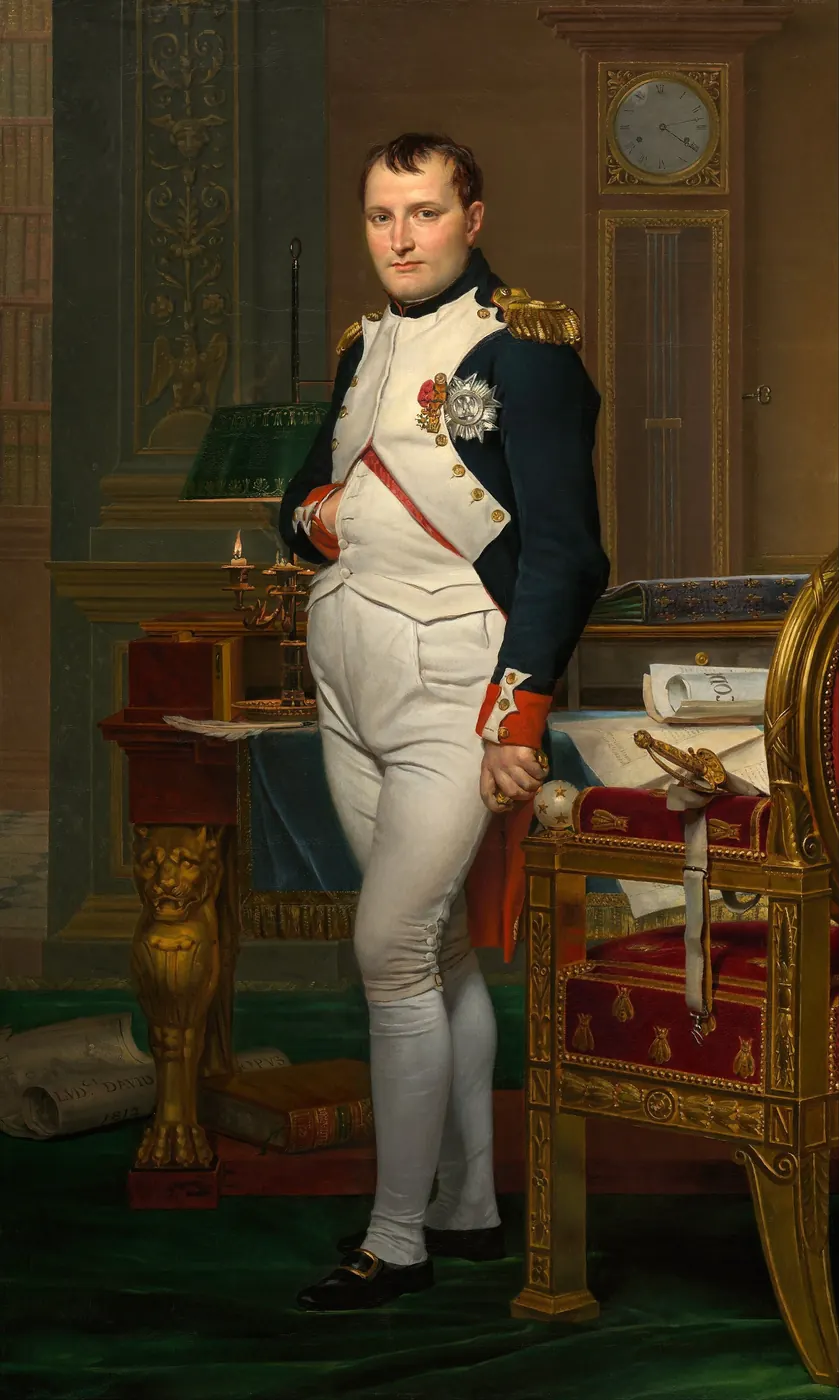
Napoleon Bonaparte
Emperor of the French
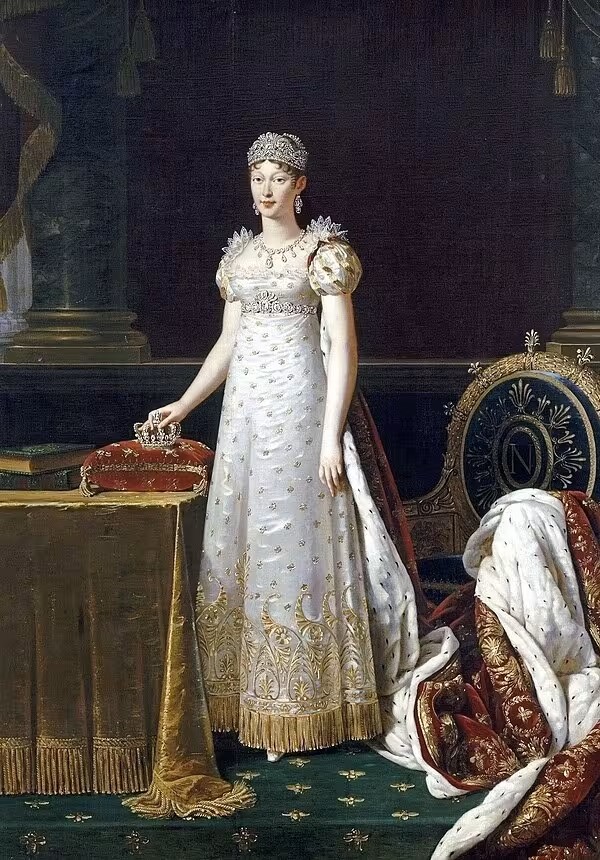
Marie Louise of Austria
Empress of the French
Eugène de Beauharnais
Viceroy of Italy
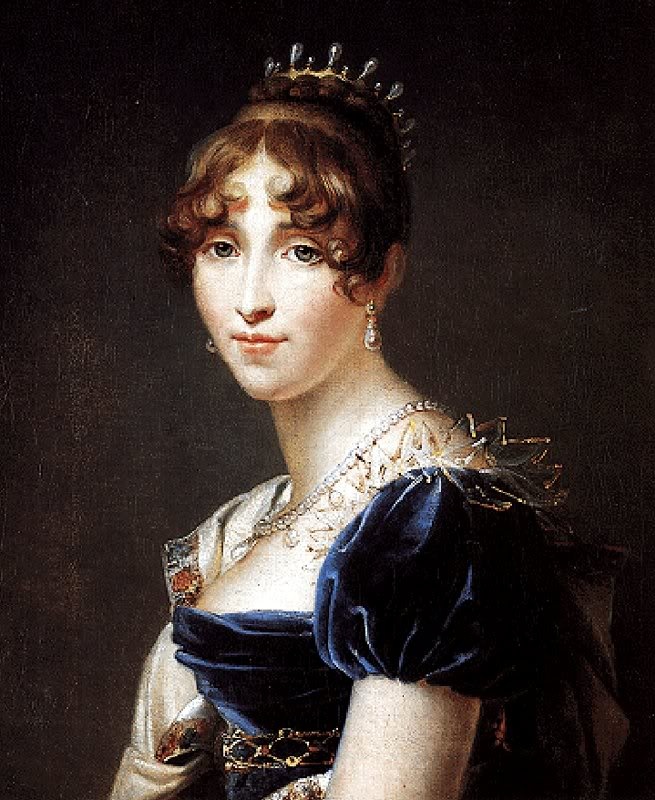
Hortense de Beauharnais
Queen of Holland
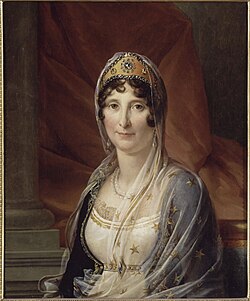
Letizia Bonaparte
Madame Mère
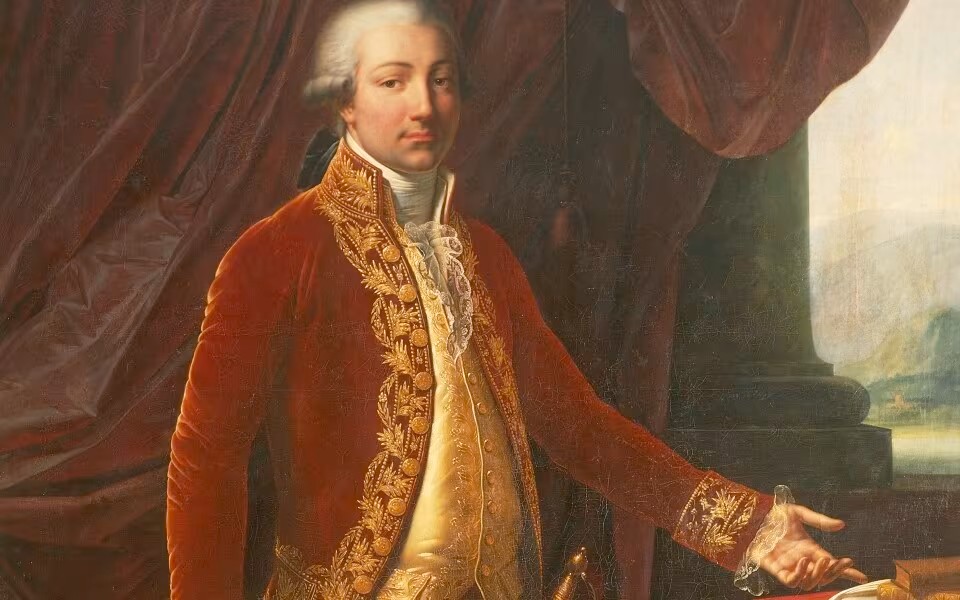
Charles Bonaparte
Lawyer, royal assessor at Ajaccio, Corsican gentleman
Go further
Recommended books to dig deeper (affiliate links)

Napoleon the Great
Andrew Roberts · 2014
A monumental biography drawing on Napoleon’s 33,000 surviving letters, admiring but rigorous.
See on Amazon
Napoléon ou le mythe du sauveur
Jean Tulard · 1977
The book that reshaped how the man is read: how France gave itself a saviour, and what it cost.
See on Amazon
Nouvelle histoire du Premier Empire
Thierry Lentz · 2002-2010
Four reference volumes on institutions, diplomacy and collapse: the scholarly synthesis of the subject.
See on AmazonAs an Amazon Associate, this site earns from qualifying purchases.
Support the encyclopedia
Napoleon Empire is an independent project. Your contribution helps grow the content and keep the site running.
DonateSecure payment on the platform you choose.