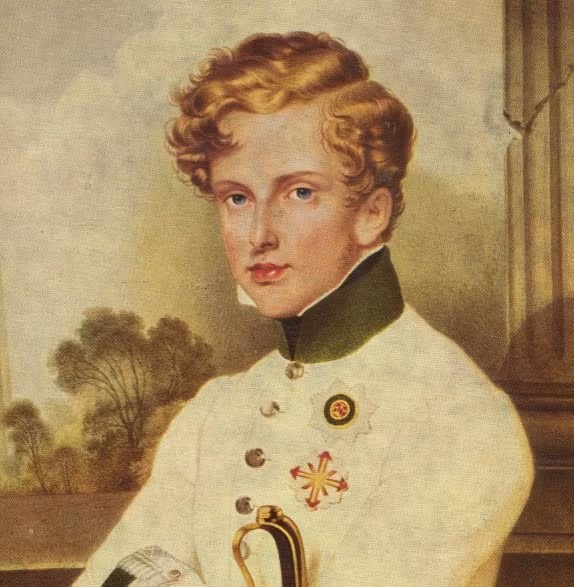
Born at the Tuileries at the heart of the Empire, son of Napoleon and Marie Louise, paternal grandson of Charles Bonaparte, he bore from the cradle the title King of Rome — a dynastic promise that treaties and the Habsburgs would dismantle. A hostage to raison d'état in Vienna, made into Franz, Duke of Reichstadt without army or realm, he died at twenty-one without ever exercising power; Bonapartists made him the "Eaglet", Rostand the hero of tears, and the Paris Dome his last neighbour in death.
"King of Rome": The Empire's Child-Title
Napoleon Francis Charles Joseph Bonaparte was born at the Tuileries on 20 March 1811, around nine in the morning, after more than twelve hours of labour the doctors at one moment feared might cost Marie Louise her life. Napoleon waited in the next room, unable to read a dispatch; when a son was announced, he entered, kissed the child, then the Empress. The title King of Rome — chosen before the birth — is not merely a court nickname: it places the heir in the continuity of the Holy Roman Empire, needles the Bourbons, and tells Europe the Bonaparte dynasty now has a male body. Twenty-two cannon shots from the Invalides, Te Deums, medals with his effigy: the whole apparatus of state celebrates what Josephine could not give.
On 9 June 1811, the baptism at Notre-Dame unfolded almost excessive pomp: thousands of guests, processions, goldsmith's work, the Pope absent at Savona but invoked in the liturgy. The child is a diplomatic stake before he is a baby; already busts, official portraits, gifts from allied or rival courts make him the living symbol of imperial permanence. Between Saint-Cloud, Compiègne, and Rambouillet, the little prince grows up under governesses, the Duchess of Montesquiou, tutors' lessons; Napoleon, between campaigns, sits him on his knee during councils, walks him, speaks to him as to a future sovereign. He is said to have said « Papa » before « Mamma » — a tasty anecdote for memorialists, fragile truth for historians, but revealing of the paternal fantasy around this child-king.
Artists — Isabey, Gérard, Bosio — multiply images of the King of Rome in miniature dress, National Guard uniform, parade child. At two, in 1813, he already follows his mother on the circuits of power. Then comes the spring of 1814: invasion, abdication at Fontainebleau, evacuation to Blois and Rambouillet. He is three when he is shipped east with Marie Louise. He will not see his father again; the world promised him — the one where his name held a line on the map — closes like a book shelved before the chapter's end.
From Rambouillet to Schönbrunn: Austria's Silence
Treaties and families shared the child like a state asset. Marie Louise brought the King of Rome back to the Habsburg empire; Napoleon at Fontainebleau abdicated to offer him a title — the gesture is fine in form, vain in fact: the Allies decided otherwise. In Vienna, little Franz — Germanised, Austrianised, the imperial first name erased from official usage when protocol demanded — must learn to be an archduke, not a French dauphin. French is spoken more quietly in the salons that watch him; tutors are chosen for loyalty to Francis I, not for nostalgia for the Tuileries.
Metternich grasped the stake: as long as the father's memory lived, the son would remain symbolic currency for the Bonapartists. The mother, soon sovereign at Parma, could not or would not always stand against the chancellor and time: visits were spaced, filtered, sometimes painful — Marie Louise was blamed for it, and the princess caught between two monarchies was also excused. The child grew up in the polished cold of courts, between the confused memory of an imperial voice and the duty to be a good Austrian subject.
During the Hundred Days, Paris and the abdication named "Napoleon II" — Emperor on paper for a few days of a tragic comedy whose protagonist played with toy soldiers at Schönbrunn. Waterloo closed the bracket. Henceforth the word "Empire" must leave his public mouth; the King of Rome became a memory to be fenced in, a portrait filed on the Habsburg side, not the legions'.
Duke of Reichstadt: The Uniform Without a Battle
In 1818, the title Duke of Reichstadt — borrowed from a lesser Bohemian lordship — was granted him as a rank label: it rings in cartographers' ears, not crowds'. He was given an officer's education: manoeuvres, horsemanship, fencing, Prussian or Austrian discipline according to the tutors; he was expected to be brave, not to command. He sometimes excelled in drills; generals who met him on a parade ground noted an elegant, nervous young man, conscious of his name.
In private, he read what he was not advised to: campaign accounts, correspondence, memories of the Empire filtered through controlled visitors. He questioned old soldiers who had served under his father; he dreamed of Egypt, the Berezina, Austerlitz — battles he had seen only in engravings. Romantic melancholy is not far: a prince without an army, a sovereign without subjects, a Bonaparte in the white uniform of the Emperor of Austria. Police reports and court letters describe alternation of filial pride and resignation, sometimes biting irony when he looked at himself in the mirror of titles.
Metternich and the court kept watch: no overly visible French network, no flirt with conspiracies stirring Italy or France in the 1820s. The Duke of Reichstadt was free to walk in the gardens of Schönbrunn, not to choose his fate. Thomas Lawrence, in 1818-1819, fixed the face of this young man with a gaze too old for his twenties — portrait of a caged eagle, before illness hollowed his cheeks.
Consumption and Absence
From 1831, tuberculosis — that "phthisis" that gnawed chests and centuries — took hold. Rainy manoeuvres, damp rooms, moral climate as much as Vienna's air were invoked; blood on the handkerchief did not forgive. Doctors piled on bleedings, potions, diets; the science of the age ran behind death. Marie Louise was warned; testimonies clash — came too late, prevented by the court, maternal distance maintained by years of separation and politics. What is certain is the final scene: a palace chamber, dawn on 22 July 1832, an agony without the brilliance of the battlefield but the same inner violence. He died at twenty-one, in a world that still spoke of him as a possible emperor and treated him as a boarder.
In Vienna, burial in the Capuchin Crypt, under the name Franz, Duke of Reichstadt, completed the sealing of a double identity: Napoleon's son for legend, archduke for the stone. French newspapers, when news crossed borders, mixed compassion and calculation — the "Eaglet" fell before taking flight, and pamphlets already vied in pathetic images.
Eaglet, Crypt, and Dome
Literary posterity turned destiny into myth before history could cool it. Edmond Rostand, in 1900, gave the "Eaglet" a verse of tears and revolt — the play made generations weep who had not known the Empire; it fixed an image stronger than many monographs. The nickname lent itself to national melancholy: the giant's son who had no time to become a man, the dynasty reduced to a sigh in a Schönbrunn chamber.
Nineteenth-century Bonapartists made the Duke of Reichstadt a symbol — not a model of government, but proof that France still had a name to invoke when regimes crumbled. Under the Second Empire memory was cultivated; under the Third Republic the myth was politicised or diverted according to camp. Then came 1940: the transfer of the coffin to the Invalides, willed by the Hitler regime as a rallying gesture, placed Napoleon II beside Napoleon I under the golden dome — the porphyry slab offered by Mussolini adds a layer of historical ambiguity to a filial rapprochement the son had not chosen.
Even today, visiting the Dome means seeing two neighbouring sarcophagi that tell two centuries: one for him who conquered Europe, the other for him who had no time to cross a province. Napoleon II remains the figure of the "never came to pass" — throne promised, dreamed, written on acts he did not sign; child-king become password for French passions, and young silhouette in the shadow of a father too great for any inheritance.
Discover other characters
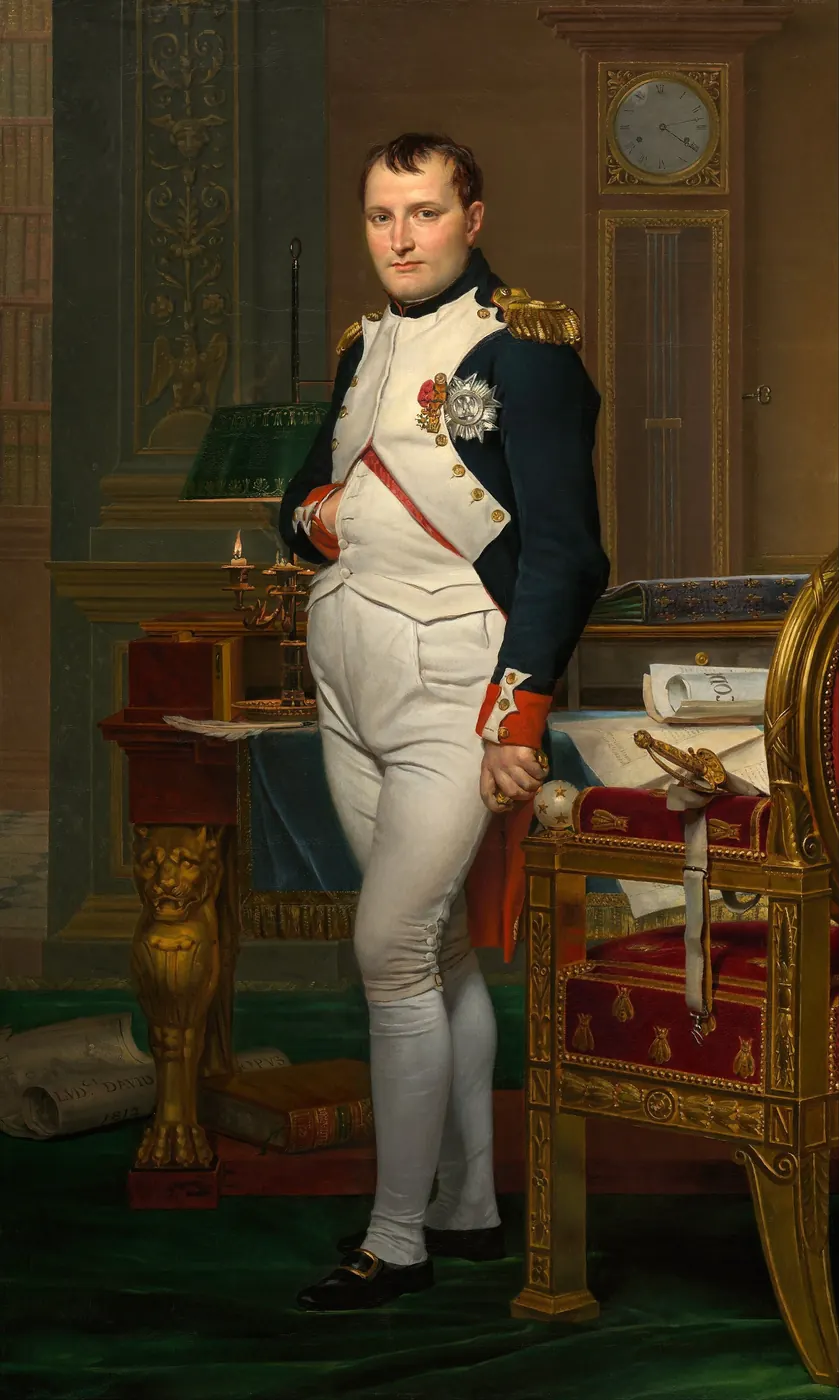
Napoleon Bonaparte
Emperor of the French
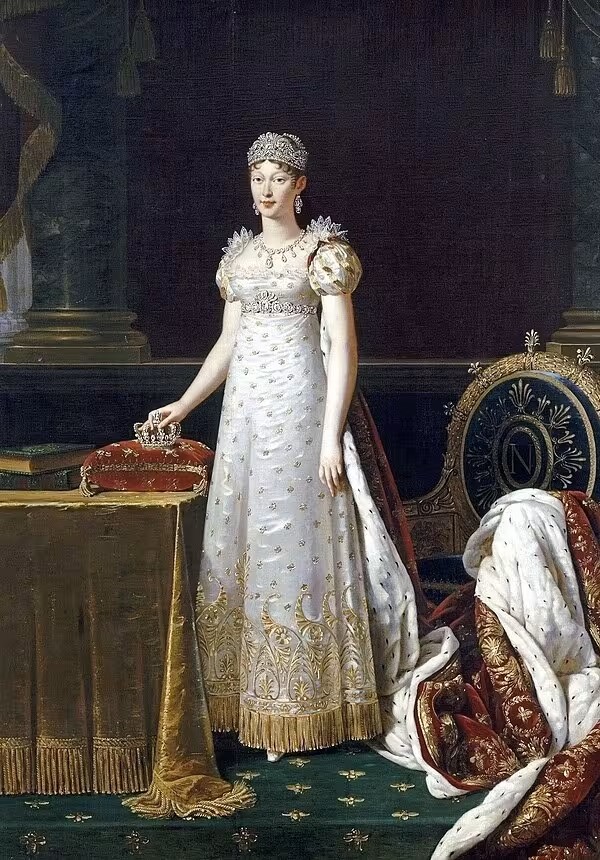
Marie Louise of Austria
Empress of the French
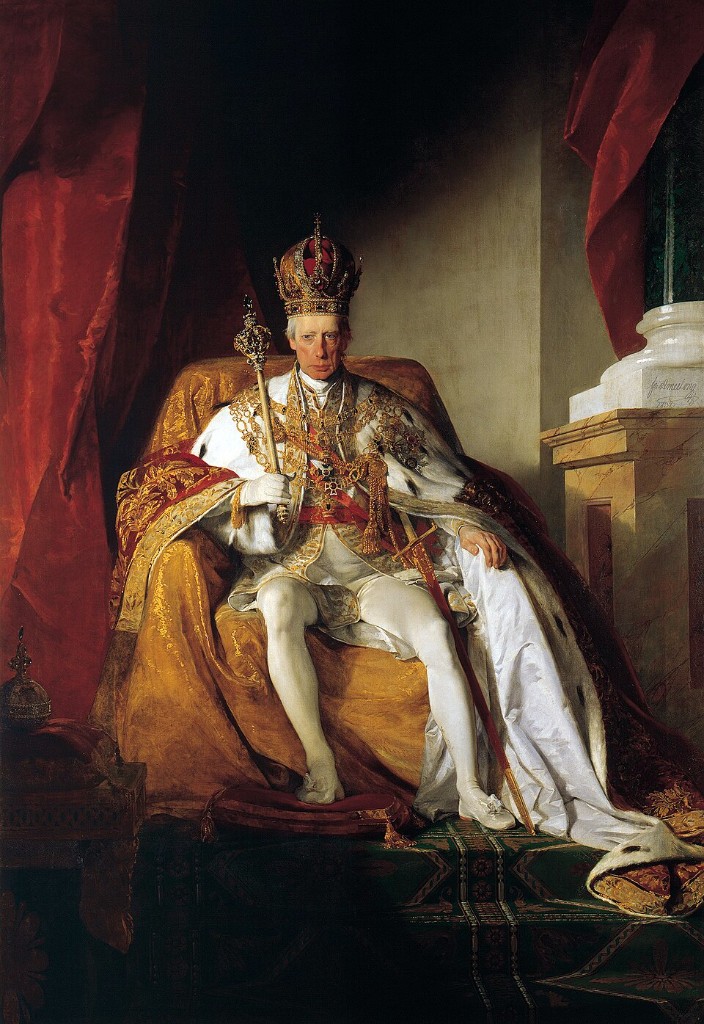
Francis II / Francis I, Emperor of Austria
Last Emperor of the Holy Roman Empire (1792–1806), Emperor of Austria (1804–1835)
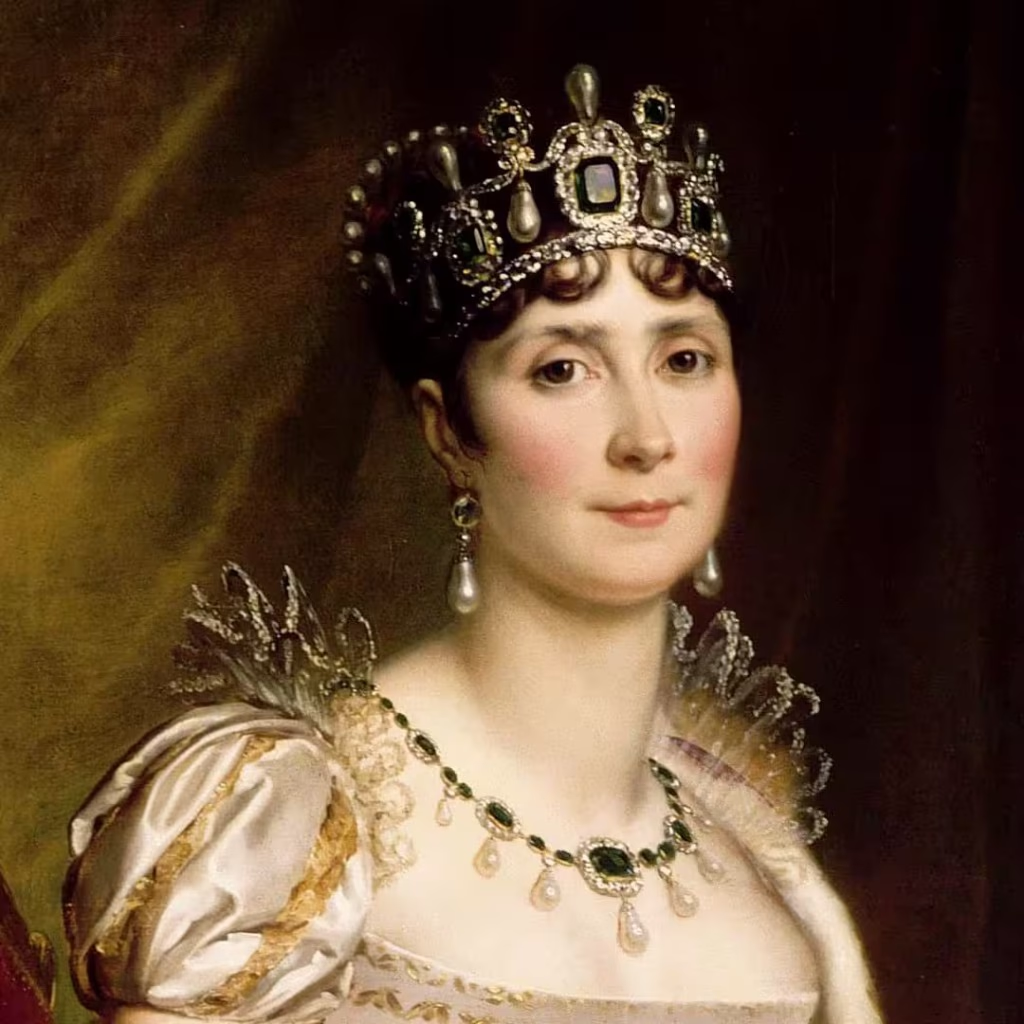
Joséphine de Beauharnais
Empress of the French
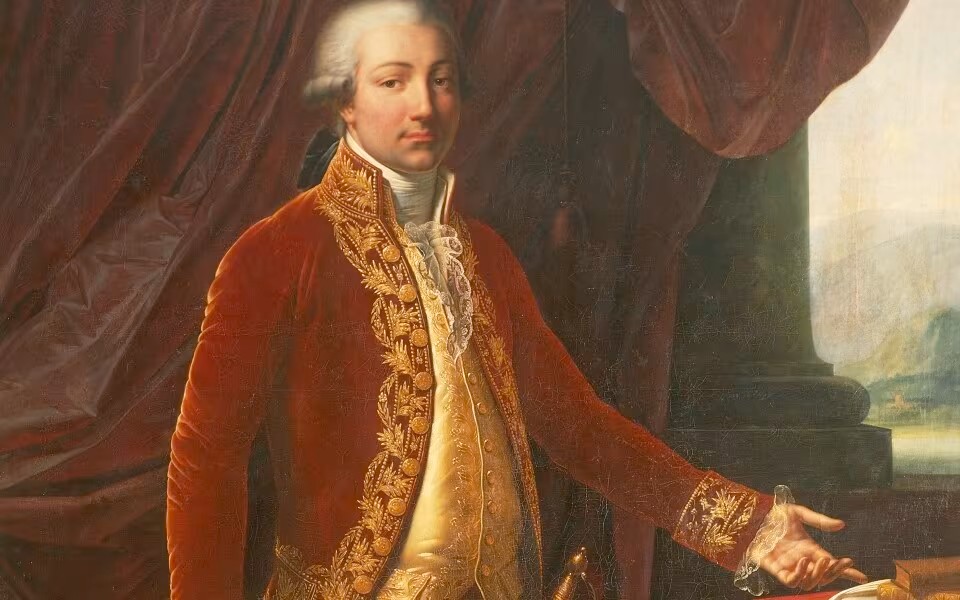
Charles Bonaparte
Lawyer, royal assessor at Ajaccio, Corsican gentleman
Eugène de Beauharnais
Viceroy of Italy
Go further
Recommended books to dig deeper (affiliate links)
Napoleon the Great
Andrew Roberts · 2014
A monumental biography drawing on Napoleon’s 33,000 surviving letters, admiring but rigorous.
See on Amazon
Napoléon ou le mythe du sauveur
Jean Tulard · 1977
The book that reshaped how the man is read: how France gave itself a saviour, and what it cost.
See on Amazon
Nouvelle histoire du Premier Empire
Thierry Lentz · 2002-2010
Four reference volumes on institutions, diplomacy and collapse: the scholarly synthesis of the subject.
See on AmazonAs an Amazon Associate, this site earns from qualifying purchases.
Support the encyclopedia
Napoleon Empire is an independent project. Your contribution helps grow the content and keep the site running.
DonateSecure payment on the platform you choose.