On 5 October 1795 an unemployed general turned cannon on the royalist rising outside Saint-Roch, in the Rue Saint-Honoré. The day pulled him out of obscurity: six months later he had the Army of Italy.
Historical context
The dying Convention wanted to impose the decree of two thirds, reserving two thirds of the future legislature's seats for its own members. The Paris sections, where royalists had regained control, rose. On 12 Vendémiaire twenty-five thousand insurgents marched on the Tuileries; the Convention had five thousand men to oppose them. Barras, charged with the defence, remembered a young Corsican general in disgrace since Thermidor and sent for him.
Bonaparte accepted on one condition: a free hand. During the night he sent a squadron commander named Murat to fetch the forty guns parked at the Sablons camp in Neuilly; they arrived ahead of the insurgents, who had had the same idea. He then placed the artillery at the approaches to the Tuileries, one of which, the Rue Saint-Honoré, is overlooked by the façade and great staircase of the church of Saint-Roch.
On the evening of 13 Vendémiaire the sectional columns came on and refused to disperse. Grapeshot fired at point-blank range. In under an hour the rising was broken; about three hundred were killed. The marks on the façade of Saint-Roch, still visible, have become one of the few material traces of the Revolution in the Paris streetscape.
Days later Bonaparte was a divisional general and commander-in-chief of the Army of the Interior, at twenty-six. It was in the salons of this period that he met Joséphine; in March 1796 he was given the Army of Italy. From that day he drew a lesson he applied all his life: a riot is an artillery problem.
Go further
Recommended books to dig deeper (affiliate links)
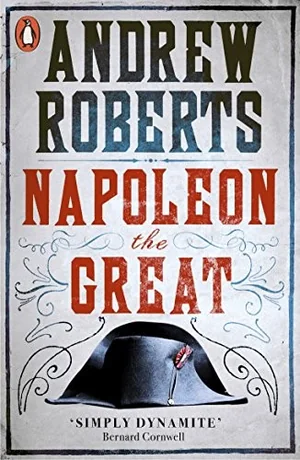
Napoleon the Great
Andrew Roberts · 2014
A monumental biography drawing on Napoleon’s 33,000 surviving letters, admiring but rigorous.
See on Amazon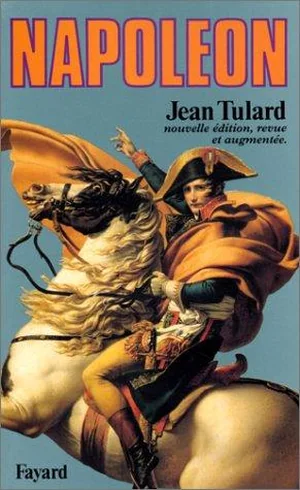
Napoléon ou le mythe du sauveur
Jean Tulard · 1977
The book that reshaped how the man is read: how France gave itself a saviour, and what it cost.
See on Amazon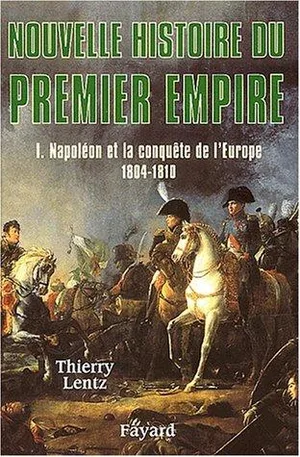
Nouvelle histoire du Premier Empire
Thierry Lentz · 2002-2010
Four reference volumes on institutions, diplomacy and collapse: the scholarly synthesis of the subject.
See on AmazonAs an Amazon Associate, this site earns from qualifying purchases.
Support the encyclopedia
Napoleon Empire is an independent project. Your contribution helps grow the content and keep the site running.
DonateSecure payment on the platform you choose.