Striking England in India
Unable to land across the Channel, the Directory accepted Bonaparte's eastern project: to cut London's route to India and found a replacement colony. The expedition sailed from Toulon on 19 May 1798 with nearly forty thousand men, four hundred ships and one hundred and sixty-seven scholars — mathematicians, draughtsmen and engineers, among them Monge and Berthollet.
Malta was taken on the way in three days. The fleet escaped Nelson by luck as much as by cunning and landed before Alexandria on 1 July.
Victory on land, disaster at sea
On 21 July, within sight of the Pyramids, the French squares broke the Mameluke cavalry of Murad Bey: Cairo fell. But on the night of 1-2 August, Nelson surprised Brueys's squadron at anchor in Aboukir Bay and destroyed it; the Orient blew up with her admiral. The Army of the Orient was now the prisoner of its own conquest, with no way home.
Bonaparte administered: an Institute of Egypt, an Arabic printing press, a land survey, hospitals, a project for a canal between the two seas. He also crushed the Cairo revolt of October 1798 with severity.
Syria, then abandonment
The Syrian campaign, launched in February 1799 against the Ottomans, bogged down before Acre, defended by Djezzar Pasha and Sidney Smith's ships. After two months of siege, plague and eight failed assaults, the army had to fall back; the massacre of the Jaffa prisoners and the alleged poisoning of the plague-stricken would long pursue the general's reputation.
On 23 August 1799, informed of the defeats in Europe, Bonaparte secretly left Egypt, handing command to Kléber. The army capitulated in 1801. A complete military failure, the expedition nevertheless brought back the Rosetta Stone and the Description de l'Égypte: it founded Egyptology and, in France, the legend of a general returned from the East.
See also
Go further
Recommended books to dig deeper (affiliate links)
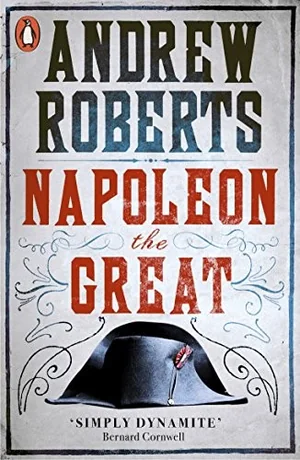
Napoleon the Great
Andrew Roberts · 2014
A monumental biography drawing on Napoleon’s 33,000 surviving letters, admiring but rigorous.
See on Amazon
Napoléon ou le mythe du sauveur
Jean Tulard · 1977
The book that reshaped how the man is read: how France gave itself a saviour, and what it cost.
See on Amazon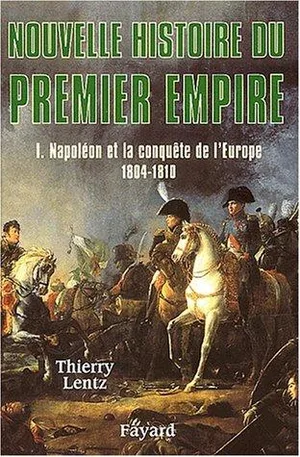
Nouvelle histoire du Premier Empire
Thierry Lentz · 2002-2010
Four reference volumes on institutions, diplomacy and collapse: the scholarly synthesis of the subject.
See on AmazonAs an Amazon Associate, this site earns from qualifying purchases.
Support the encyclopedia
Napoleon Empire is an independent project. Your contribution helps grow the content and keep the site running.
DonateSecure payment on the platform you choose.