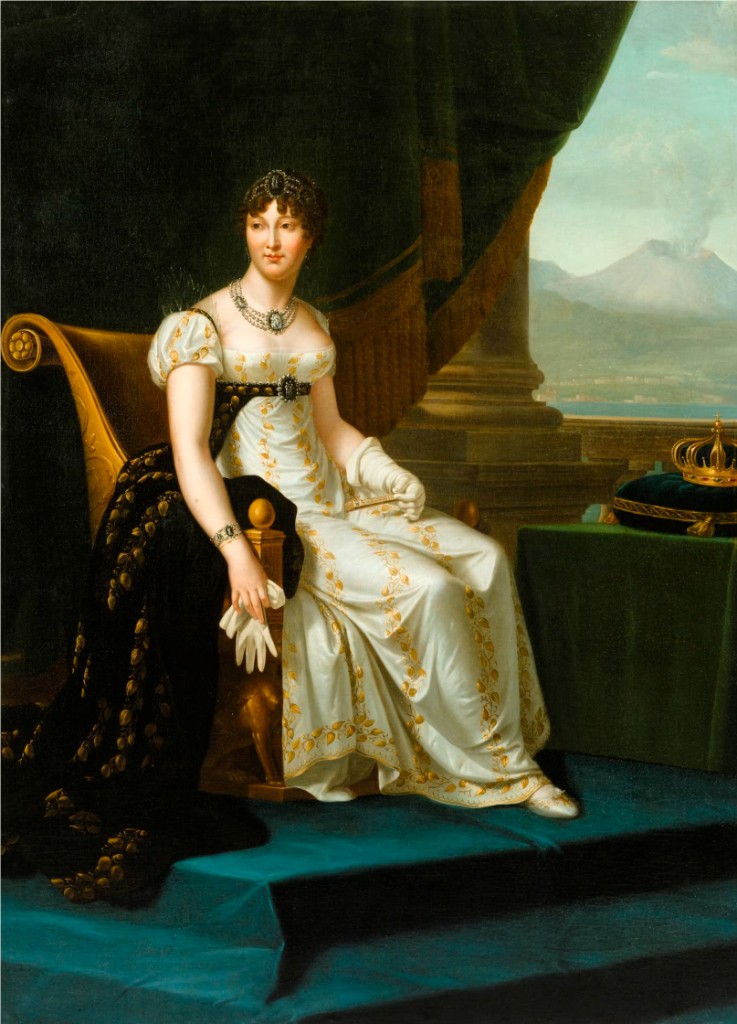
Born in Ajaccio in 1782, Maria Annunziata Bonaparte — Caroline — married General Joachim Murat in 1800 and made him a marshal then a king. Grand Duchess of Berg, Queen of Naples at twenty-six, she governed as much as her husband: patronage, Pompeii, parallel diplomacy in Vienna. A feared figure at the imperial court, she intrigued against Josephine; historians credit her with a role in the Denuelle affair that hastened the divorce. Architect of the 1814 secret treaty with Austria, she survived Murat's fall and execution at Pizzo, died Countess of Lipona in Florence in 1839 — the sister who wagered the Bonaparte name against the Empire, and lost the bet.
From Marseille to the Mortefontaine Ball
Maria Annunziata Bonaparte was born at Ajaccio on 25 March 1782, the seventh child of Charles Bonaparte and Letizia — baby Jerome Bonaparte did not yet exist. Her father died in 1785; the family slid into hardship, Marseille, then the improbable ascent when General Bonaparte became France's strongman. At seventeen, 18 Brumaire had happened: Caroline entered the Tuileries with a predator's eye, not a dazzled provincial's. She was neither Pauline Bonaparte's absolute beauty nor Elisa Bonaparte's living library; she was the strategist who read alcoves as well as maps.
Joachim Murat, an innkeeper's son from La Bastide-Fortunière, emerged from the Italian and Egyptian campaigns with a lion's mane, hussar uniforms, and blazing courage. Salons sneered: marry a Gascon commoner? Caroline saw further — a loyal sword, ambition mirroring her own. The civil marriage was celebrated on 18 January 1800 at Mortefontaine, at Joseph Bonaparte's estate: polar cold, sleigh on snow, torchlit procession. Murat was thirty-two, she eighteen. Napoleon, who needed Murat, approved without enthusiasm. Josephine, whom Caroline openly scorned, smiled thinly. Chroniclers already noted the new princess would not content herself with being a marshal's wife: she meant to be the soul of his fortune.
Under the Consulate and Empire, Caroline spun her web. She pushed Murat toward glorious posts — cavalry, spectacular charges at Abukir, at Eylau. In 1804 he was a marshal; in 1805 Grand Admiral (a prestige title rather than a naval one). She frequented Pauline Bonaparte, rivalled Elisa Bonaparte, avoided Letizia when she could, aligned with the Emperor when she must. The couple was no fairy tale: Murat's infidelities set tongues wagging; Caroline answered with politics. When Napoleon created the Grand Duchy of Berg and Cleves in 1806, Murat ascended with her — a laboratory where she learned to sign decrees, receive resigned Prussian ministers, turn splendour into the language of power.
Naples, a Crown Negotiated
Joseph Bonaparte had ruled Naples before leaving for poisoned Spain in 1808. The throne of the Two Sicilies stood empty; Napoleon hesitated between Eugene de Beauharnais, Louis Bonaparte, perhaps other arrangements. Murat demanded; Caroline lobbied with ministerial tenacity. The blunt argument: Murat's cavalry had made Poland, the marriage joined Corsican blood to republican steel. On 1 August 1808, imperial decree: Joachim Murat was king. Caroline, at twenty-six, became queen the day she entered Naples, 6 September, under triumphal arches of greenery and the mixed glances of a Neapolitan aristocracy that remembered the Bourbons.
She did not play ornament. When Murat went on campaign, she presided over council, co-signed acts, received ambassadors with cool calculation. The royal palace, inherited from the Bourbons, thrummed with balls and operas; she commissioned full-scale court portraits — including monumental canvases before the bay and Vesuvius — that fixed her face as sovereign for eternity — high forehead, appraising gaze. At Pompeii, excavations begun under Joseph Bonaparte took new scale: she funded, visited, brought mosaics and bronzes into her antechambers. This was no dilettante: propaganda through antiquity, the idea that the Murats descended in direct line from the greats of the Mediterranean world.
In Paris, the court watched « Queen Caroline » with fascination mixed with fear. The Bonaparte sisters detested her in chorus for her arrogance; Josephine had borne her barbs for years. Modern historians link her circle to Éléonore Denuelle de La Plaigne's arrival near the Emperor — she whose child, Léon, would prove in 1806 that Napoleon could father. Causal chains remain debated; the court climate is clear: Caroline embodied the princesses' revolt against the sterile Empress. When the divorce of 1809 sealed Joséphine's fall, few tears flowed in the Naples apartments.
The Kingdom Between Splendour and Carbonari
Caroline modernised what she could: roads, schooling, administration modelled on the imperial pattern, taxes feeding both Naples and her brother-in-law's war. Conscription tore sons from families; the Carbonari, in cellars and lodges, muttered against the French king and queen. She knew it — informants slipped her names. Repression alternated with token concessions; the Murats' throne rested on Austrian and French bayonets more than on popular love.
In 1812 she married her eldest daughter Laetitia to the Prince of Monaco: a minor alliance on Europe's map, a major symbol for a new dynasty seeking marriages wherever a crown might hold. Court festivities rivalled Paris; so did debts. Murat returned from Russia with the Grande Armée's remnants — a marked man, less dazzling, more nervous. Caroline read in the bulletins what everyone read: the Empire had passed the peak of its arc.
From the spring of 1813 she sent emissaries to Vienna. Metternich, cold as Carrara marble, listened: a Murat on the Coalition's side in exchange for a guarantee of the Neapolitan throne? The gamble was risky — betray Napoleon too soon and lose all margin. Caroline pressed: better to negotiate alive than die loyal. Murat hesitated, sworn to the Emperor, spurred by military glory. Defeats in Germany convinced him. Behind the scenes, she had prepared contacts, drafted arguments, held conversations no protocol would officialise. The Queen of Naples had become her husband's foreign minister — and soon his survival's.
The January Treaty and the Emperor's Fury
On 11 January 1814, Murat signed a secret treaty with Austria: thirty thousand Neapolitan men in exchange for a promise to keep the kingdom in the new Europe. Caroline had woven the web; she knew every clause. Napoleon, still fighting in Champagne, learned the news and exploded. « Murat! The basest of men! » — the phrase ran through staffs, salons, memoirs. For him, his brother-in-law's betrayal was a family wound as much as a military defection. For her, it was the price of saving a throne: Ferdinand IV, the Bourbon ousted in 1806, still hovered; without Austrian paper, the Murats were ghosts on a cardboard throne.
The April 1814 abdication paradoxically spared the couple: the Allies delayed, Naples remained Muratian in unstable balance. Caroline thought she had it right. She did not yet guess the worst — that her husband, king through Napoleon, could never breathe without comparing himself to his shadow. In Vienna she was watched; in Paris she was erased from Bonapartist hearts. She lived this interlude as a victory: she had saved the crown. History would say she paid with the blood of fraternal alliance.
Pizzo, Lipona, and the Florentine Silence
On 26 February 1815, Napoleon left Elba. Caroline understood before Murat that the game had changed: if the Bourbons won definitively, the Murats had no title. Murat, panicking, switched again: proclamation at Rimini, march against the Austrians, dream of being the Italian hero of the hour. Caroline tried to slow him — she sensed the military trap —; he no longer listened, locked in his legend of the invincible horseman. On 2 May 1815, at Tolentino, the Neapolitan army was crushed. It was humiliation without grandeur: neither Austerlitz nor Rivoli, just a rout of a prince in too great a hurry.
Murat fled, disguised himself, wandered through Calabria, still believed he could reach France. On 8 October he was recognised at Pizzo. Ferdinand's tribunal condemned him. On 13 October, facing the sea, the guns fired. « Soldiers, do your duty. » Caroline was not there — she had left Naples in time, children in hand, pride intact on the surface and rage beneath. Emperor Francis I granted her the title of Countess of Lipona — a diplomatic anagram of Napoli — and a pension that bought silence.
Trieste, then Florence, villa in Campo di Marte: she would never set foot in France again. Bonapartists blamed her for the betrayal of 1814; legitimists did not forgive her for having been queen. She died on 18 May 1839, aged fifty-seven, surrounded by an impoverished but proud family. Buried in Florence, she would join the Bonaparte cemetery at Ajaccio in 1969 — as if Corsica, in the end, claimed the one who had reached too high for a name already too heavy. Caroline remains proof that a woman of the Empire could hold the strings of a war; she also bears the stain of having cut some of those strings when the wind turned.
Discover other characters
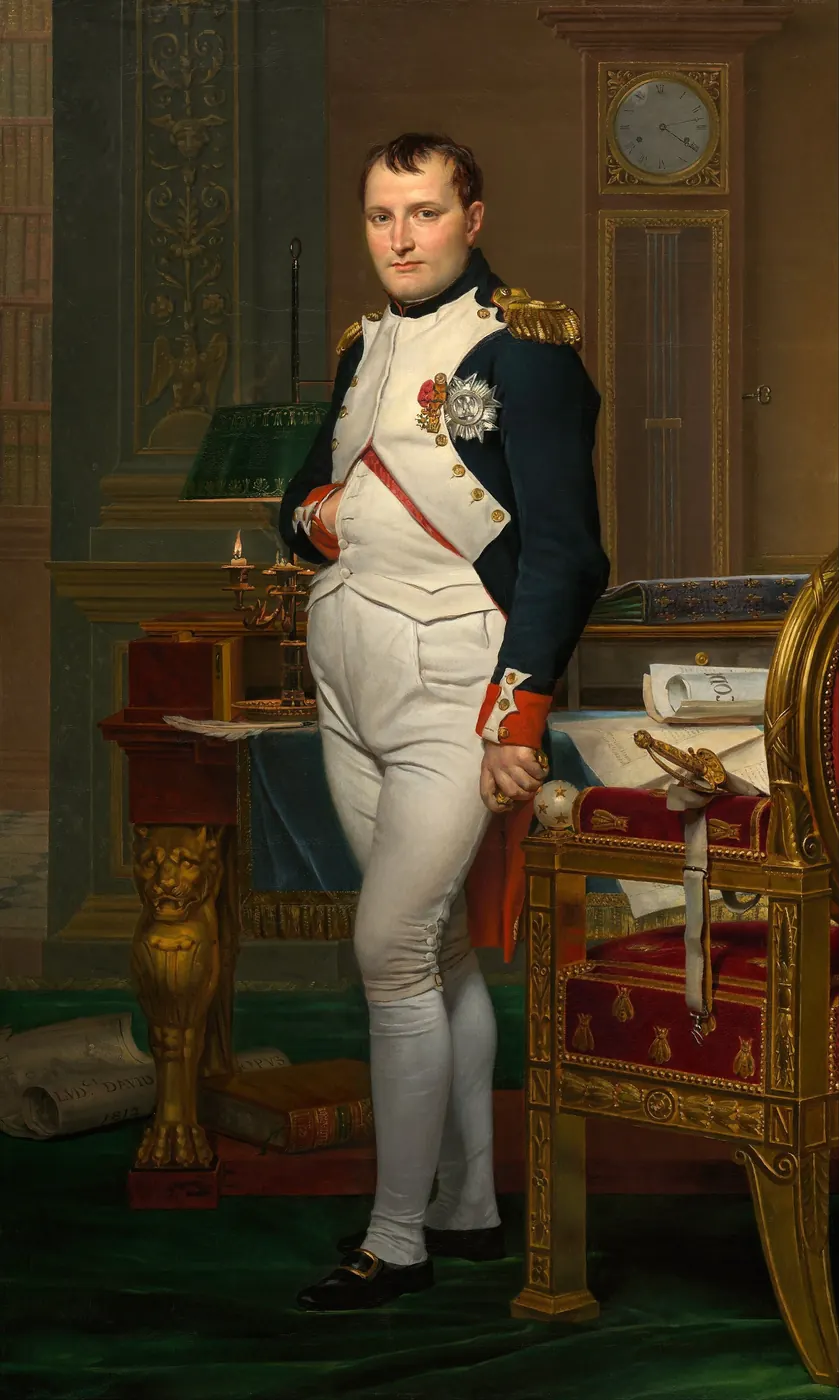
Napoleon Bonaparte
Emperor of the French
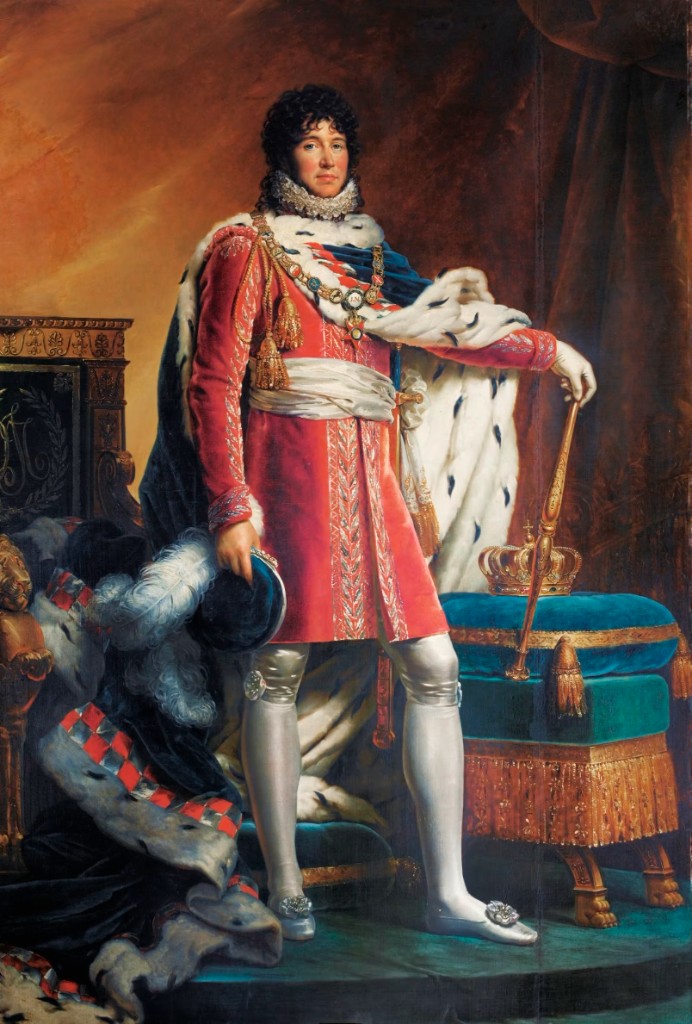
Joachim Murat
Marshal of the Empire, King of Naples
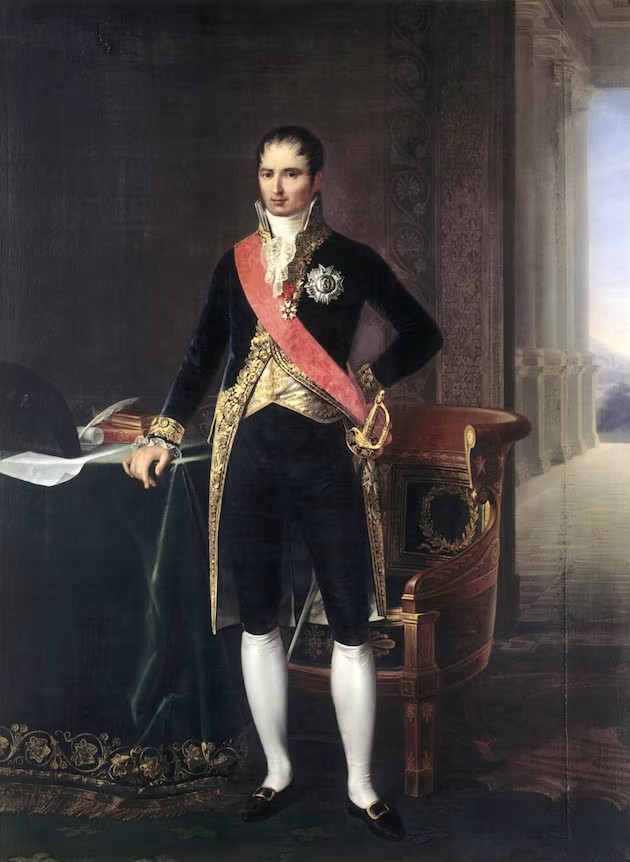
Joseph Bonaparte
King of Naples, then of Spain
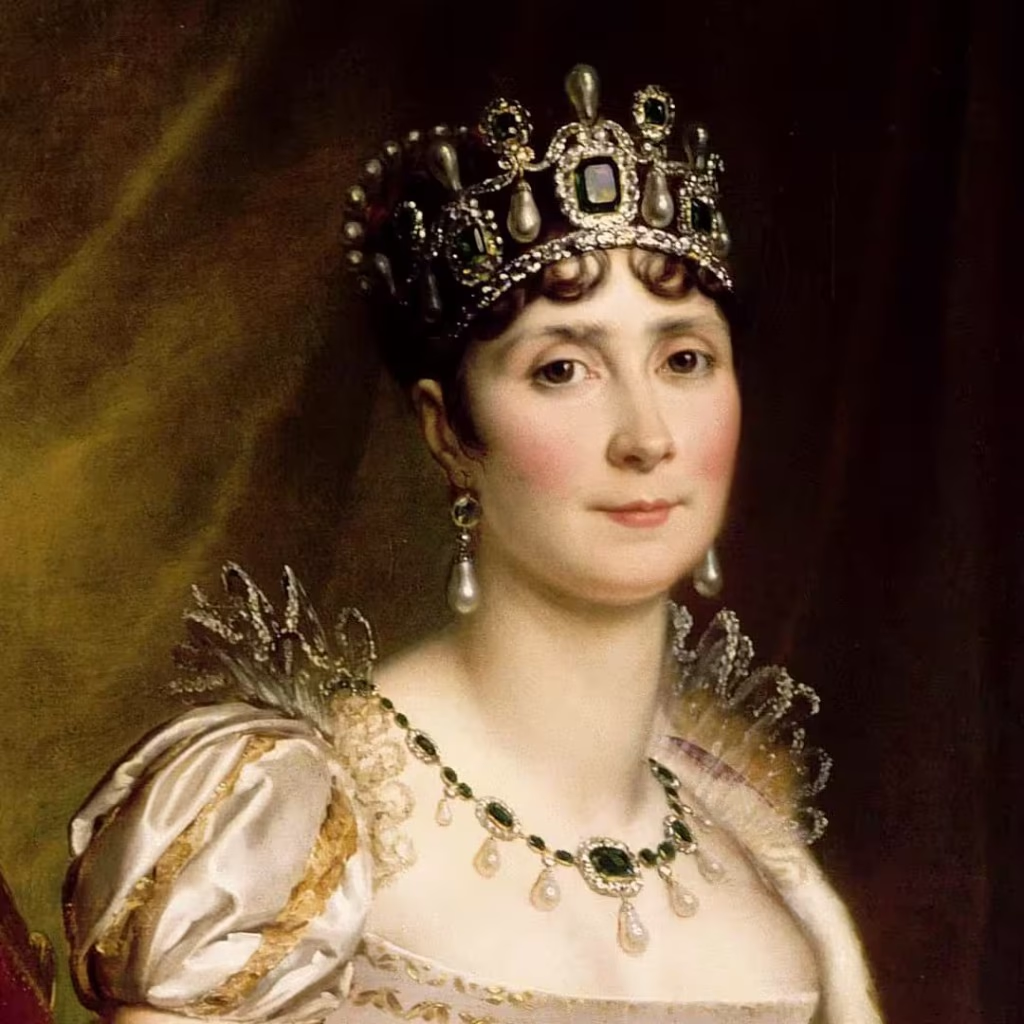
Joséphine de Beauharnais
Empress of the French
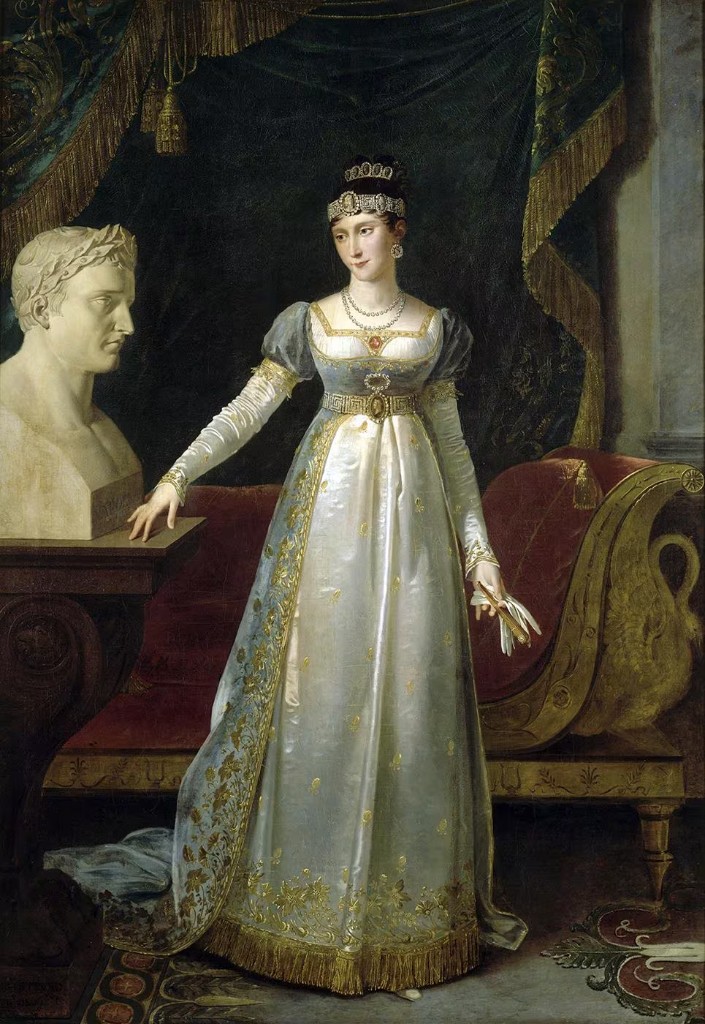
Pauline Bonaparte
Princess Borghese
Letizia Bonaparte
Madame Mère
Go further
Recommended books to dig deeper (affiliate links)

Napoleon the Great
Andrew Roberts · 2014
A monumental biography drawing on Napoleon’s 33,000 surviving letters, admiring but rigorous.
See on Amazon
Napoléon ou le mythe du sauveur
Jean Tulard · 1977
The book that reshaped how the man is read: how France gave itself a saviour, and what it cost.
See on Amazon
Nouvelle histoire du Premier Empire
Thierry Lentz · 2002-2010
Four reference volumes on institutions, diplomacy and collapse: the scholarly synthesis of the subject.
See on AmazonAs an Amazon Associate, this site earns from qualifying purchases.
Support the encyclopedia
Napoleon Empire is an independent project. Your contribution helps grow the content and keep the site running.
DonateSecure payment on the platform you choose.