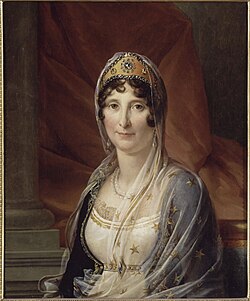
Maria Letizia Ramolino was born in Ajaccio in 1750 into a family tied to Tuscan nobility; on 2 June 1764 she married Charles-Marie Bonaparte and bore thirteen children, eight of whom reached adulthood — Joseph, Napoleon, Lucien, Élisa, Louis, Pauline, Caroline, and Jerome. Widowed in 1785, she alone kept the Corsican then French household through the Revolution, the flight of 1793, and the Bonaparte rise. Under the Empire she embodied "Madame Mère", a moral authority and devout figure whom Jacques-Louis David painted in solemn mourning splendour. After 1815 she lived in Rome under Austrian protection, blind and infirm in her last years, and died in 1836; her remains were moved to the imperial chapel at Ajaccio in keeping with Bonapartist memory and Napoleon III's wishes.
Youth, a Corsican marriage, and revolutionary trials
Maria Letizia Ramolino was born in Ajaccio on 24 August 1750 — sometimes 1749 in the registers — into a family tradition and alliances placed within Tuscan-rooted nobility, long settled in Corsica. Her father, Giovanni Geronimo Ramolino, known as Jean-Jérôme, served as an officer and held inspection duties for the island's roads and bridges. Widowed in 1755, her mother Angela Maria Pietrasanta married François Fesch, an engineer-officer in Genoese service: from that union came Joseph Fesch, Letizia's half-brother and future cardinal. The girl Napoleon would later call "beautiful as the day" married Charles-Marie Buonaparte on 2 June 1764, when he was eighteen and fresh from law studies at Pisa; she was about fourteen or fifteen, in keeping with island marriage custom. The couple would have thirteen children; eight would survive the fevers and bereavements of the age.
Corsica shifted into the French sphere while the household filled. In 1768, Louis XV bought the island from the Genoese; Charles first followed Pasquale Paoli, then judged that resistance could not prevail. Letizia shared flights through the maquis, nights in the mountains, before rallying to the kingdom's authorities. Joseph was born at Corte in January 1768; in August 1769, in the house on Ajaccio's strada Malerba, she gave birth to Napoleon — barely nineteen months between eldest and second son, as if the siblings had first to trace the furrow before the younger would later set the century alight. The family budget buckled under so many mouths to feed; Charles's earnings as lawyer and royal assessor remained modest. Count Marbeuf, the governor, smoothed scholarships and patronage for the eldest boys on the mainland — a channel without which Joseph and Napoleon would never have reached the kingdom's colleges.
On 24 February 1785, Charles died of stomach cancer at Montpellier, where he had sought treatment. Letizia was thirty-four or thirty-five by the records. The death in 1791 of Archdeacon Lucien Buonaparte, the paternal uncle who managed part of the family interests, removed a crucial support. She ran the Milelli property, the mulberry nursery, watched every expense; family chronicles stress her thrift and self-denial to clothe and teach the younger children. The Revolution reopened Corsican wounds: Napoleon wavered between loyalty to Paoli and service to the Republic; when conflict erupted in spring 1793, Paoli's supporters burned her Ajaccio house and ravaged the fields.
Letizia embarked at Calvi with the youngest children, landed at Toulon on 13 June 1793, then had to flee federalist unrest for Marseilles, where legend — no doubt exaggerated but telling of want — has her daughters washing linen at the fountain. Corsican refugee networks and the Hôtel de Cypières gave her a foothold before Bonaparte's military fortune restored the clan's prospects. She did not "make" the Empire with the sword; she survived miscarriages, debt, and exile to become, later, the most celebrated maternal face in Europe.
Madame Mère under the Consulate and Empire
The Directory found Letizia busy marrying off her daughters by family calculation rather than applauding every feat of her soldier eldest son. On 1 May 1797 she pressed Napoleon into Élisa's marriage to Félix Baciocchi; Joseph's union with Julie Clary had given her lasting satisfaction. The brutal lesson came on 9 March 1796: Napoleon married Joséphine de Beauharnais in Paris without warning her. The shock was real between the Corsican matron, strict and barely literate, and the former Merveilleuse of the Directory. At her son's bidding, she sent Joséphine a polite letter — often copied from a draft he supplied, for she wrote with difficulty. At Mombello in 1797, the meeting stayed at icy courtesy; temperaments did not bridge.
The 18 Brumaire coup changed the scale of the world without changing the mother's reserve. Lodged with Fesch on the rue du Mont-Blanc, she watched Napoleon as First Consul at the Tuileries with mingled anxiety and pride. She refused to attend the coronation of 2 December 1804 at Notre-Dame — "too many people, too much spectacle" — yet appears on David's vast canvas, seated among the imperial family, black veil and purple mantle, silent witness as the crown was set on Joséphine. Back in Paris the following month, she settled on the rue Saint-Dominique, at the Hôtel de Brienne bought back from Lucien, and meant to stay out of the palace: court, noise, and scrutiny weighed on her more than honours.
The decree of 23 March 1805 promoted her to "Her Imperial Highness Madame, Mother of the Emperor". In ceremony, "Madame Mère" sat to the sovereign's right while the Empress kept the left — symbolic hierarchy that fixed for the court the throne's dual feminine pole. She had an allowance of 300,000 francs, a large household — almoners, ladies of the bedchamber, chamberlains — and a role as protector of the Sisters of Charity funded by 500,000 francs to distribute. Petitions poured in; she read or had them summarised, decided with a severity that fed her reputation for authority.
In June 1805, Napoleon gave her the Château de Pont-sur-Seine; in 1808, a life annuity of a million was assigned on funds once tied to Jerome. She saved, capitalised, clutched her purse — courtiers cried miser; the phrase "May it last!", perhaps apocryphal, matched her financial caution. She subsidised disgraced Lucien, tried to mediate the quarrels between Louis and Napoleon, did not mourn Joséphine's repudiation in 1809. For Marie Louise, she skipped the Compiègne theatre but attended required festivities. The portrait David finished in 1807 shows her in black, widow's crown, steady gaze: not the coronation's accomplice, but the matriarch who had seen everything — and counted everything.
Exile, Rome, and final years
In March 1814, Allied troops burned the Château de Pont; Letizia left Paris on 29 March in Marie Louise's wake, obtained a passport for Italy at Tours, and joined Cardinal Fesch at Lyon. Crossing the Mont-Cenis brought her to Rome, where Pius VII temporarily housed the Bonapartes at the Palazzo Falconieri. Permitted to join Elba, she landed at Portoferraio on 2 August 1814 and lodged near Napoleon, surrounding him with simple affection, far from vanished splendour. After the escape she reached Naples, then, despite countless obstacles, Paris on 1 June 1815; seventeen days later, Waterloo closed the Hundred Days chapter. Ill, she left the capital in July with Fesch, forced once more to leave her son to fate.
Under Austrian protection, she settled permanently in Rome. News of deportation to Saint Helena plunged her into vain efforts to obtain leave to follow; with Fesch she tried to send priests whose usefulness would disappoint family hopes. Watched by agents of Louis XVIII, hostile to any Bonapartist revival, she purchased the Palazzo Rinuccini in 1818. Word of Napoleon's death in July 1821 left her prostrate for weeks. Among her children, she had thus outlived Napoleon (1821), Élisa (1820), and Pauline (1825); Caroline (1839), Lucien (1840), Joseph (1844), Louis (1846), and Jerome (1860) survived her — the actual order of deaths does not always match legend.
Her last years mingled blindness, infirmity, and dignity. She still received Roman society, watched over minor family alliances, read the gazettes with her women's help. On 2 February 1836 she died, aged eighty-five or eighty-six by the sources. First buried at the Corneto convent near Civitavecchia, she was transferred to Ajaccio in 1851 on the orders of Prince-President Louis-Napoleon — her grandson — and laid in 1859 in the imperial chapel built to hold Bonaparte memory. Las Cases, who knew the Emperor at Saint Helena, praised in her "a soul strong and tempered by the greatest events".
From flight through the maquis to the Louvre's tapestries, from Marseilles' fountain to Roman salons, Letizia Ramolino bore a dynasty's story without ever holding a throne. Her name remains tied to Napoleon's less through politics than through a motherhood turned symbol — austere, pious, stubborn — in the imagination of the First Empire and beyond.
Legacy, historiography, and site of memory
From the 1840s, Bonapartist memory claimed Letizia as a keystone of the family legend: prints, serials, and popular tales fixed the image of the mother in deep mourning, sometimes inflating her thrift into caricature of an "imperial larder". The transfer of her remains to Ajaccio in 1851, then their placement in 1859 in the imperial chapel — under the prince-president who became emperor — set her body at the centre of a memorial scheme where Corsica, Napoleonic cult, and Second Empire dynastic assertion intersect.
Recent scholarship has softened the stereotype: the widow who saved and invested reads less as a gratuitous miser than as a manager of scarce means, facing debt, revolutionary uncertainty, and the swings of a military rise. David's portrait remains the visual canon of a woman who refused the coronation's theatre yet accepted being painted at the heart of the official scene.
Novels, film, and exhibitions still use the title "Madame Mère"; in Ajaccio, heritage trails link her name to that of the younger son who carried the clan to the height of Europe, without erasing Joseph, the elder, whose royal offices remind us she bore both the King of Naples and the Emperor of the French.
Discover other characters
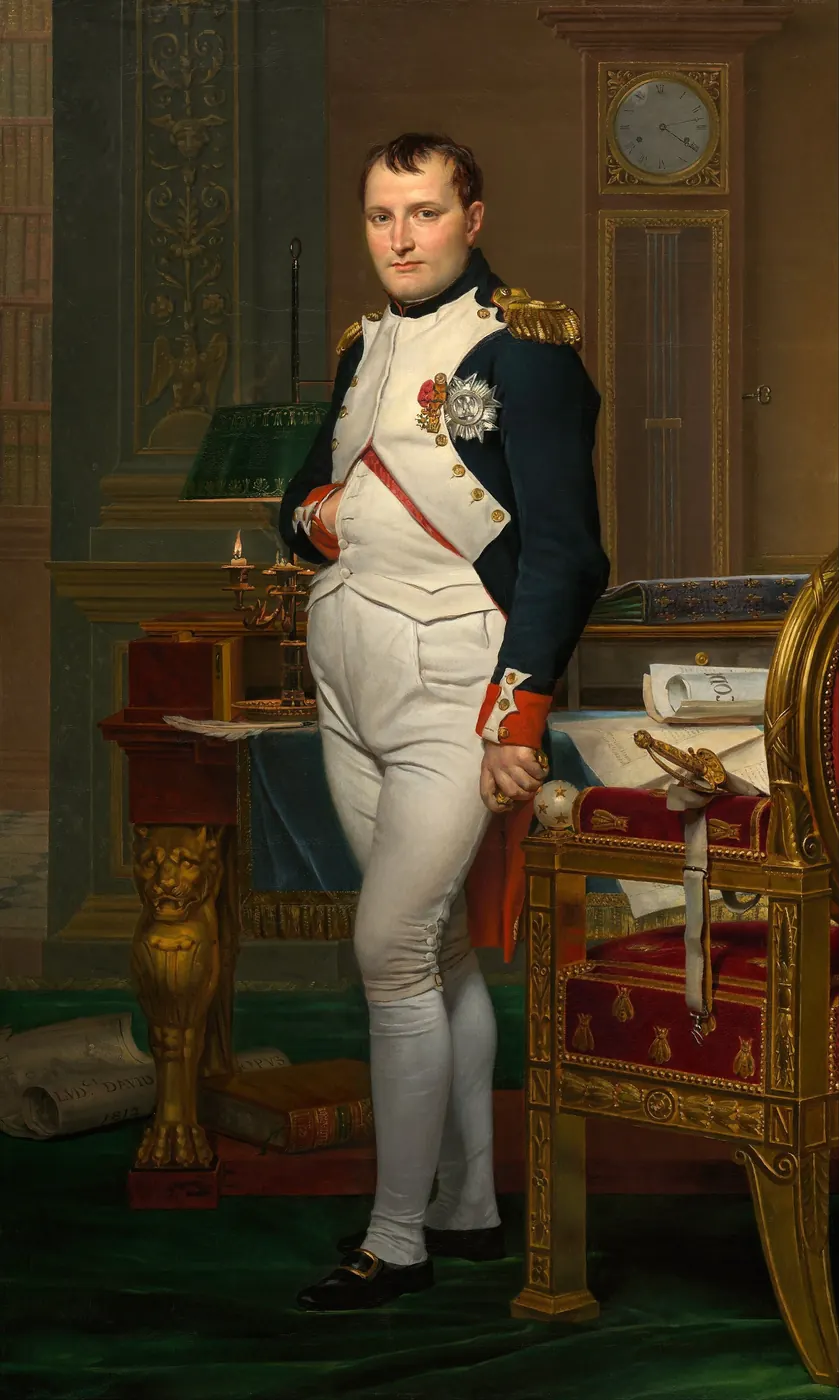
Napoleon Bonaparte
Emperor of the French
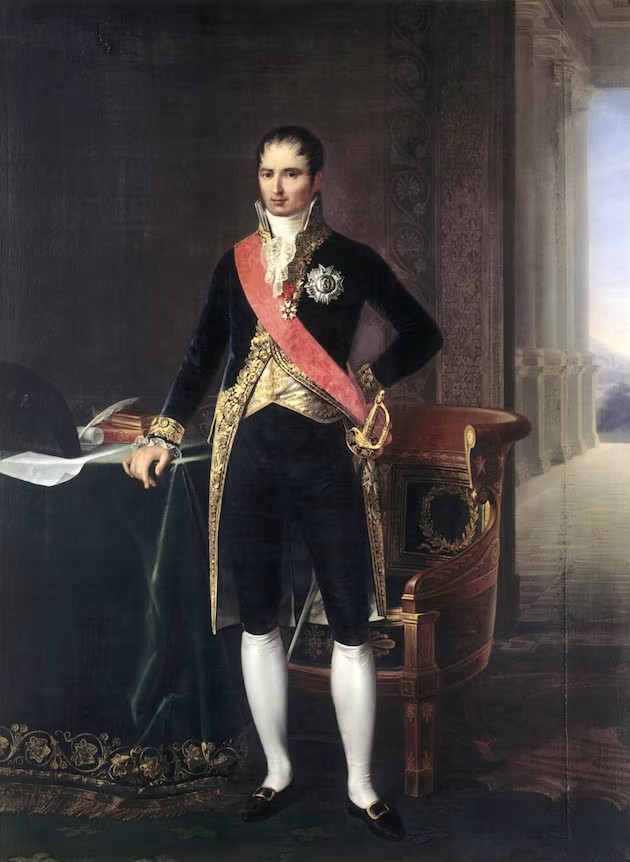
Joseph Bonaparte
King of Naples, then of Spain

Lucien Bonaparte
French prince
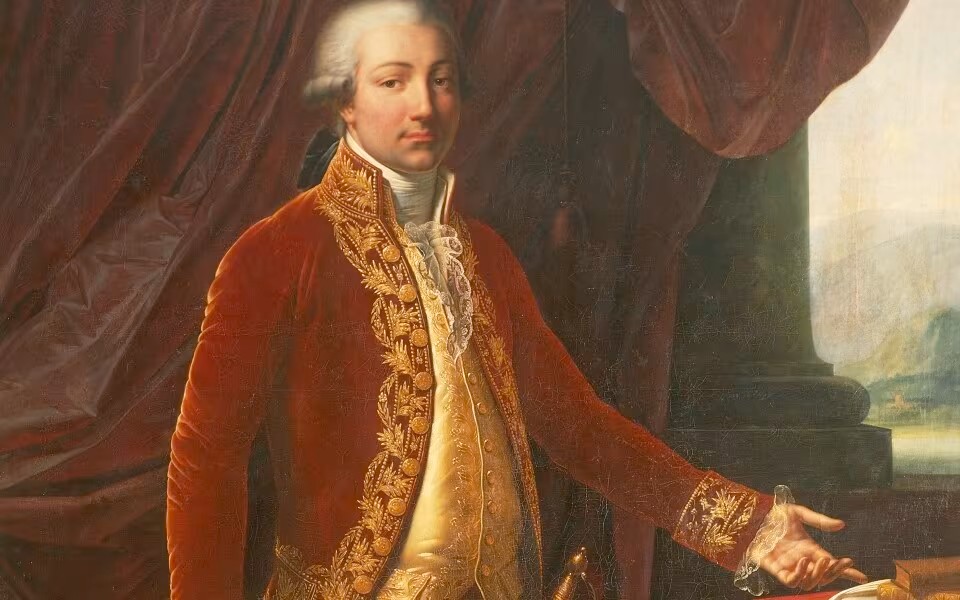
Charles Bonaparte
Lawyer, royal assessor at Ajaccio, Corsican gentleman
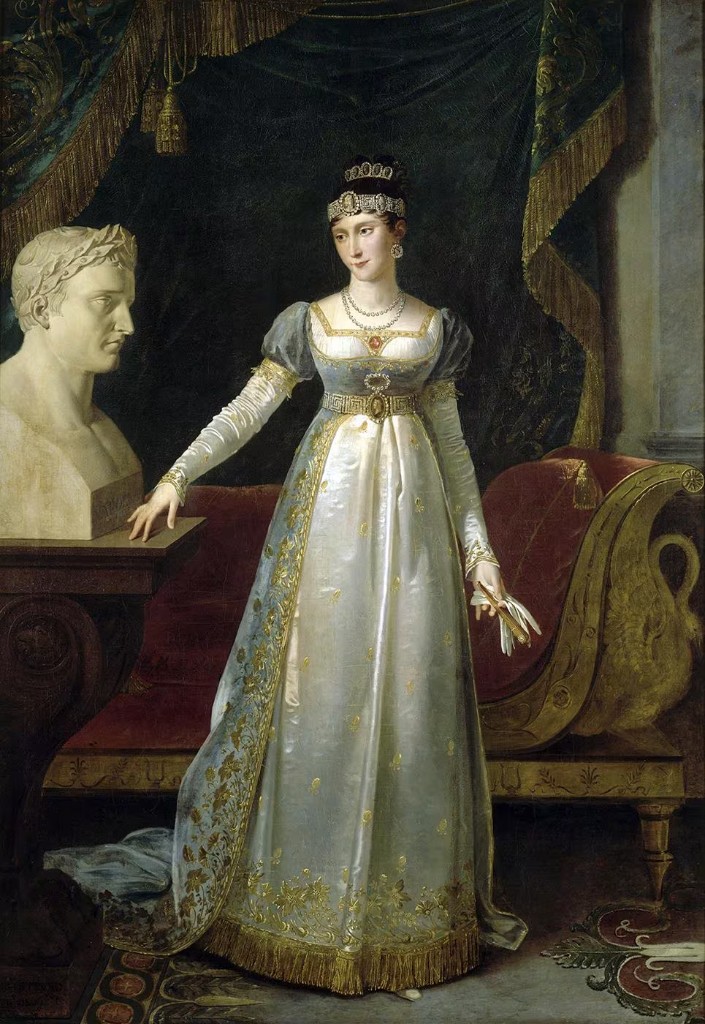
Pauline Bonaparte
Princess Borghese
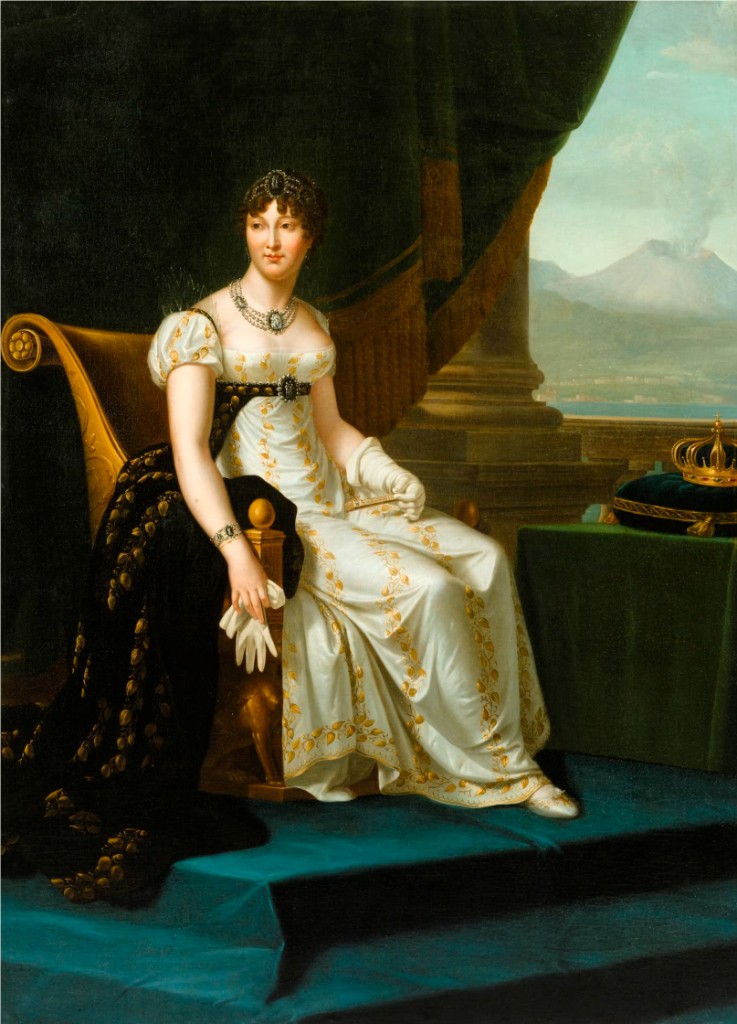
Caroline Bonaparte
Queen of Naples
Go further
Recommended books to dig deeper (affiliate links)

Napoleon the Great
Andrew Roberts · 2014
A monumental biography drawing on Napoleon’s 33,000 surviving letters, admiring but rigorous.
See on Amazon
Napoléon ou le mythe du sauveur
Jean Tulard · 1977
The book that reshaped how the man is read: how France gave itself a saviour, and what it cost.
See on Amazon
Nouvelle histoire du Premier Empire
Thierry Lentz · 2002-2010
Four reference volumes on institutions, diplomacy and collapse: the scholarly synthesis of the subject.
See on AmazonAs an Amazon Associate, this site earns from qualifying purchases.
Support the encyclopedia
Napoleon Empire is an independent project. Your contribution helps grow the content and keep the site running.
DonateSecure payment on the platform you choose.