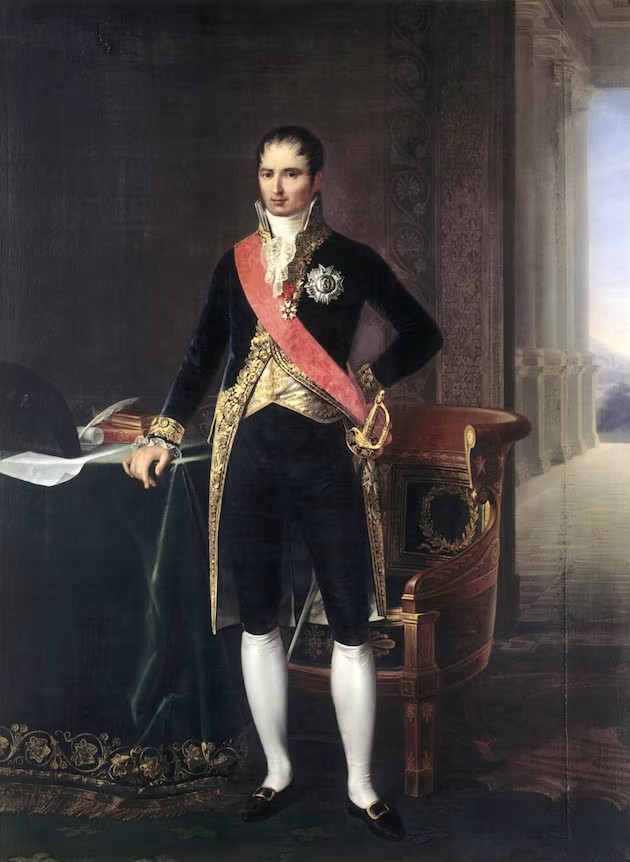
Born at Corte a year before Napoleon, lawyer then deputy, he sealed the Clary alliance: Julie became his wife, Désirée — his sister-in-law — was once engaged to the future Emperor before marrying Bernadotte. Quiet craftsman of 18 Brumaire, negotiator of the Treaty of Mortefontaine (1800) and party to the Concordat talks, Grand Elector under the Empire: the brother given thankless tasks, from the impossible peace with London (1806) to imposed thrones — Naples (1806), where he governed with surprising gentleness, then Spain (1808), where guerrillas, Wellington, and imperial dispatches denied him all legitimacy. After the rout at Vitoria, exile; in the United States, the mask of Count Survilliers, a colossal fortune, memoirs; death at Florence in 1844, buried at the Invalides near Napoleon in 1862.
Elder of the Bonaparte House
Joseph Bonaparte was born at Corte, Corsica, on 7 January 1768 — exactly one year before Napoleon, as if primogeniture had first to plough a straight furrow before the younger brother set the century alight. Eldest son of Charles Bonaparte and Letizia Ramolino, he grew up under the double command of a ruined Corsican gentleman and a mother of steel: gravity, example, caution were expected of him. He went to study law at the University of Pisa, absorbed texts, rhetoric, the taste for a file closed cleanly; back home, he enrolled at the Ajaccio bar with a somewhat cold bearing that Lucien and Napoleon mocked in private while still leaning on him whenever family business grew tangled.
The Revolution seized him as it seized a whole generation of ambitious provincials: in 1792 he was elected deputy to the Legislative Assembly for Corsica. He defended the island's interests, wove the threads that bound the Bonapartes to the clubs, the generals, the shifting fortunes of the day. He was not the military prodigy; he was the lawyer who knew how to address notables, draft an address, calm a chamber. In August 1794, at Marseille, he married Marie-Julie Clary — daughter of the merchant François Clary, elder sister of Désirée, whom Napoleon had courted before Joséphine and who would later marry Jean-Baptiste Bernadotte. The marriage sealed a mercantile and political alliance; the Clary dowry and Mediterranean network fed a family already moving toward power.
Joseph was neither Lucien's electrifying tribune nor his younger brother's thunderbolt sword: he was the brother consulted for combinations, who sometimes tempered and often yielded. Later Napoleon would use him as unofficial minister of thankless tasks — negotiations, substitute thrones, missions where glory was absent and failure likely. Joseph accepted with a wounded pride hidden behind the mask of the dutiful eldest.
Brumaire, Mortefontaine, and the Grand Elector
On 18 Brumaire Year VIII, Joseph was not on the rostrum at Saint-Cloud where Lucien drew his sword before the grenadiers; nor was he on the parade horse of the conqueror of Italy. He was in the wings of the corridors, among hesitant deputies, financiers to be reassured, newspapers to be nudged. Memorialists give few lines to this work of persuasion; yet without those prepared voices the coup would have seemed even more bluntly military. When the Consulate took shape, Joseph became a natural interlocutor of the new power — not through brilliance, but through habit of procedure and men.
In 1800, the First Consul entrusted him with a mission that tasted of peace rather than battlefield: to negotiate with the United States the Treaty of Mortefontaine, ending the naval « quasi-war » born of revolutionary and commercial tension between the two republics. The text, signed in September, restored workable diplomatic relations; for Joseph it was a victory of pen and patience — the kind of success Napoleon mentioned briefly before turning back to the roster of generals. The following year Joseph took part in the talks that prepared the Concordat: he was not alone at the Roman table, but he was there in the game of concessions and wording, down to the July 1801 agreement that reconciled the regime with the clergy.
The Empire raised him French prince, senator, then Grand Elector of the Empire — a resonant, almost Carolingian title that made him one of the great dignitaries of the new order without giving him the sword. In 1806 Napoleon named him plenipotentiary to attempt a general peace with England; talks at the Élysée and exchanges with Lord Lauderdale foundered on colonial trade, maritime borders, the pride of both cabinets. The failure was not humiliating for Joseph; it was symptomatic: henceforth his brother would entrust him not with peace but with thrones — poisoned gifts.
Naples: The Snatched Interlude
In 1806, after Austerlitz and the collapse of the Third Coalition, the Kingdom of Naples tilted into the French orbit. Ferdinand IV of the Bourbons fled to Sicily under British protection; Napoleon deposed the dynasty and placed Joseph on a throne he had not chosen but strove to fill with conscience. He landed in February in a wary capital — the Neapolitans had seen ephemeral republics, occupations, the reprisals of 1799; the memory of the Parthenopean Republic still burned. Joseph did not play the grumbling conqueror: he surrounded himself with native ministers, launched a bold fiscal and agrarian reform for the age, attacked residual feudalities, seized part of monastic property for treasury and schools, reorganised justice on the Civil Code model.
He founded lycées, reopened or expanded the university, created a museum; he invited scholars and artists, frequented academies, showed himself at fairs and markets with a curiosity Neapolitan chroniclers noted with surprise. Julie, a discreet queen, held a salon where French officers and local notables mingled. Gradually opinion softened: this king might not be a Bourbon, but neither was he a brutal prefect. Stendhal would later cross the legend of an « enlightened » Joseph; Goya, passing through in 1808, sketched a court less suffocating than Madrid's.
In March 1808 the imperial machine recalled the elder brother to order: the Spanish business required a family sovereign, and Murat coveted Naples. Joseph had to leave the gulf he had begun to love. He told those close to him a phrase that would remain famous: « I leave a people who loved me for a people who will hate me. » Caroline and Joachim Murat succeeded him; Joseph climbed toward the Pyrenees with the dull anguish of one who already knew the next crown would be not a reward but a disguised punishment.
Joseph-Napoleon, King Without a Kingdom
In Madrid he took the regnal name Joseph-Napoleon — as if adding his brother's forename could legitimise what no Spanish tradition recognised. On 2 May 1808 the capital exploded: riot against the Guard's Mamelukes, shootings on the Dos de Mayo square, immediate repression. Goya etched for posterity the victims' faces and those of anonymous executioners; Joseph, in the palace, learned that Spain was not governed like an Italian province. Guerrilla war flooded the roads: partidas, priests from the pulpit, peasants falling on isolated convoys. To the north Wellington landed in Portugal; French marshals won battles they could not turn into pacification.
Joseph attempted the impossible synthesis: Bayonne Constitution, abolition of the Inquisition, relative press freedom, introduction of the Civil Code, closure of convents — measures Madrid liberals might have applauded in another context, but which here sounded like coercive export of the French model. He wanted to be king by right; the Cortes denied, elites in exile, the shadow of Ferdinand VII captive at Bayonne made him an intruder suspended between two legitimacies. Napoleon, from Paris or German camps, sent orders that contradicted the day before: advance, retreat, concentrate troops, save men for Russia. Joseph wrote, begged, resigned several times in his letters; his brother always sent him back to the empty throne.
Anglo-Portuguese victories — Talavera, then especially Salamanca — opened the peninsula; on 21 June 1813, at Vitoria, the army of King Joseph-Napoleon — in truth the imperial army hitched to his person — was crushed. Flight in the saddle, treasury abandoned, carriage left on the road, Prado paintings carried off then lost in chaos: the image of a debonair sovereign laid low by geography and history would circle Europe. Joseph returned to France crownless, but with a cold dignity that irritated those who wished to see him break.
Survilliers, Memoirs, and the Invalides Tomb
In 1814 Joseph shared the fate of the fallen imperial family; he drifted between Switzerland and Italy, watched, suspected, still treated as a prince by some and a pariah by others. The Hundred Days found him in an ambiguous posture: loyal to the memory of the Empire, sidelined from the government of the return. After Waterloo, France closed, Europe hostile, he chose the Atlantic. Under the name Count of Survilliers — a toponym borrowed from family land — he landed in the United States with part of the treasure saved from Vitoria, feeding legends of gold sunk in the ocean and trials of opinion.
Near Bordentown, New Jersey, then at Point Breeze near Philadelphia, he built a lavish residence: parks, library, collections, salon thronged with Bonapartist exiles, curiosity-seekers, businessmen. He moved in Philadelphia business circles — including banker Stephen Girard —, maintained dense correspondence with his family, wrote Memoirs defending his Neapolitan policy and minimising — not always convincingly — his Spanish mistakes. Americans called him « Mr Bonaparte » with a republican familiarity that disoriented and consoled him.
In 1841 family reasons and health brought him back to Europe; he settled in Tuscany. He died at Florence on 28 July 1844, aged seventy-six, after long signing his letters « Joseph Napoleon, King of Spain » — ghost title, painful obsession. The Second Empire and Bonapartist memory would finally give him a burial worthy of the name: in 1862 his body was transferred to the Invalides, neighbour to Napoleon I's. The eldest rejoined the younger in the marble and gold of the dome — not the Emperor's equal in history, but companion of the same imperial shadow.
Discover other characters
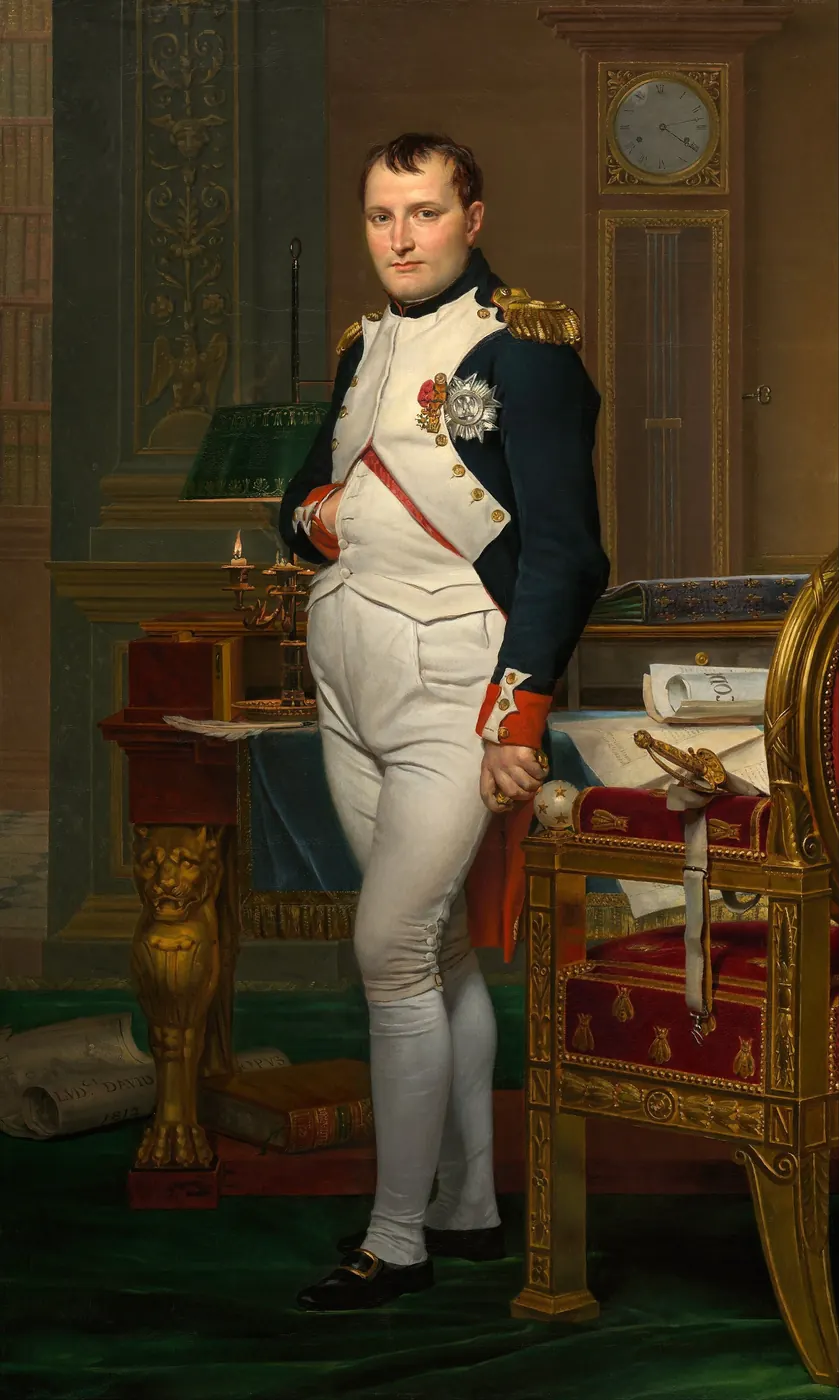
Napoleon Bonaparte
Emperor of the French
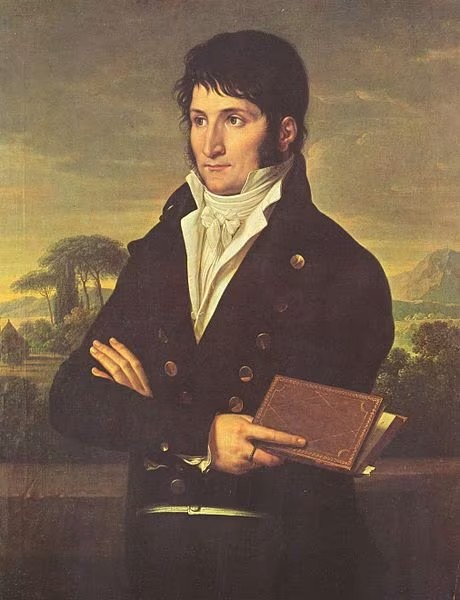
Lucien Bonaparte
French prince
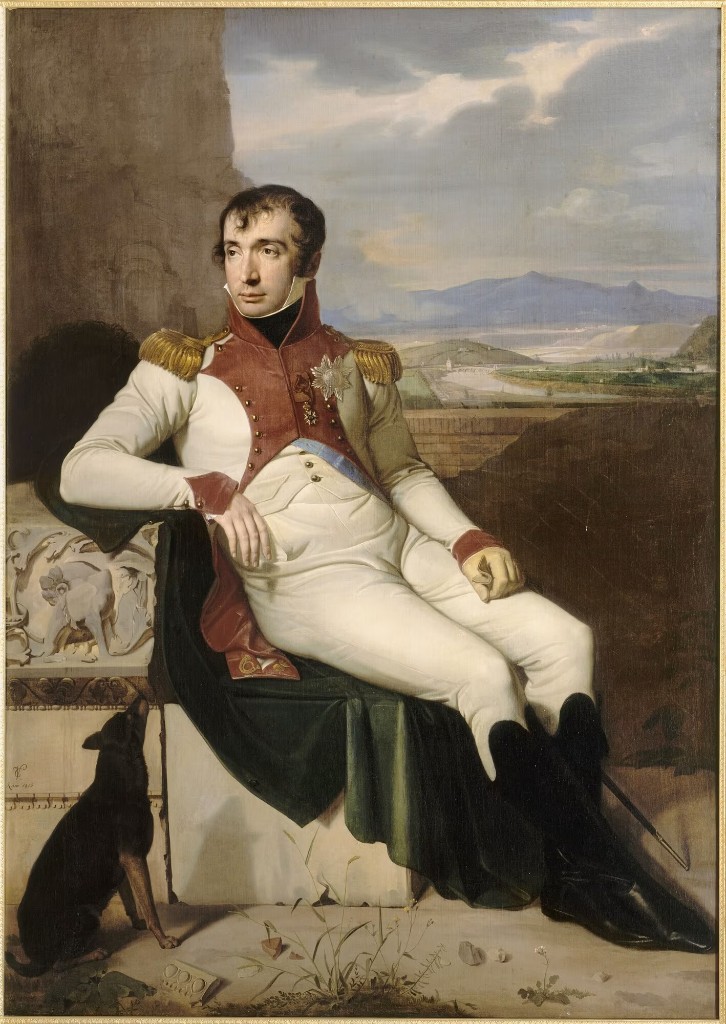
Louis Bonaparte
King of Holland
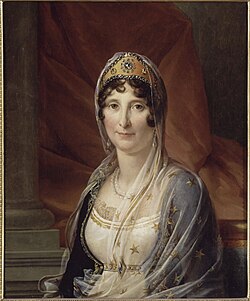
Letizia Bonaparte
Madame Mère
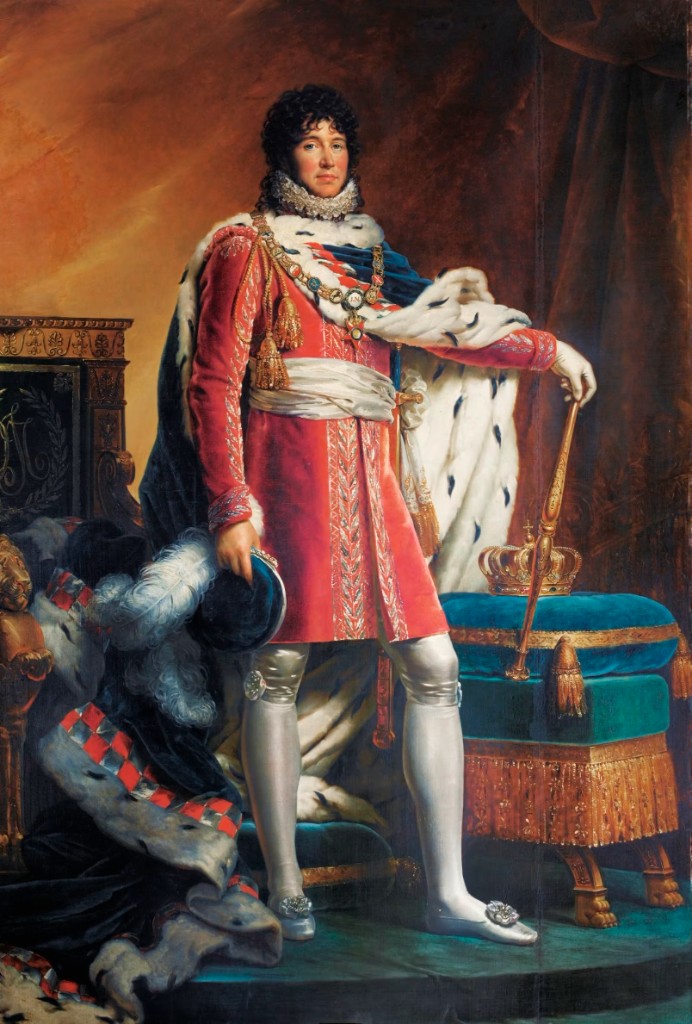
Joachim Murat
Marshal of the Empire, King of Naples
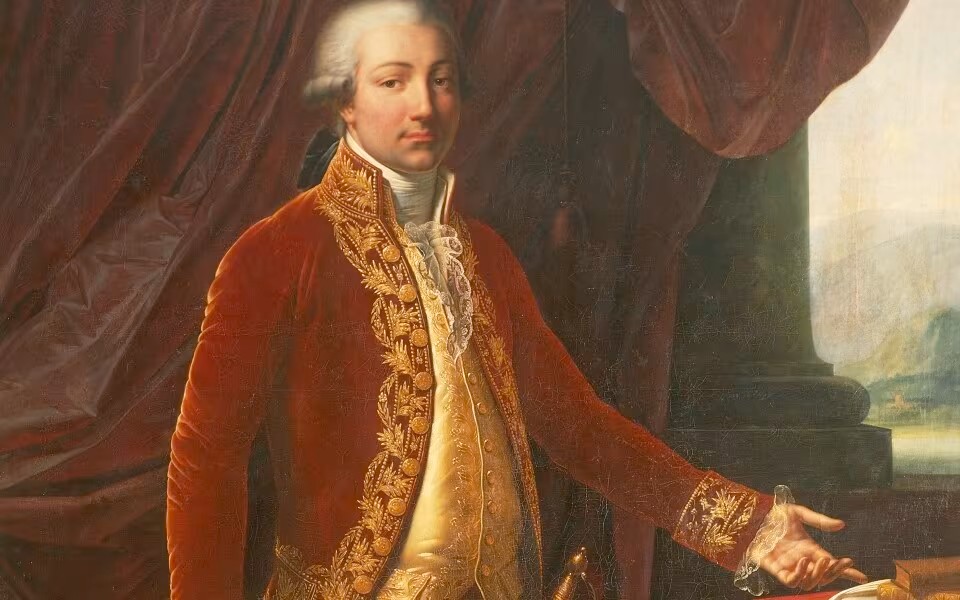
Charles Bonaparte
Lawyer, royal assessor at Ajaccio, Corsican gentleman
Go further
Recommended books to dig deeper (affiliate links)

Napoleon the Great
Andrew Roberts · 2014
A monumental biography drawing on Napoleon’s 33,000 surviving letters, admiring but rigorous.
See on Amazon
Napoléon ou le mythe du sauveur
Jean Tulard · 1977
The book that reshaped how the man is read: how France gave itself a saviour, and what it cost.
See on Amazon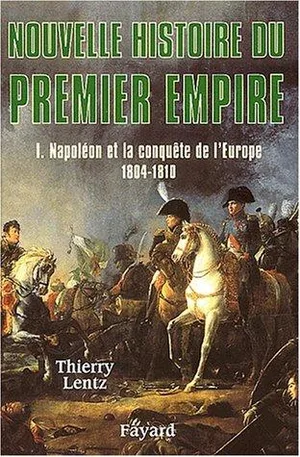
Nouvelle histoire du Premier Empire
Thierry Lentz · 2002-2010
Four reference volumes on institutions, diplomacy and collapse: the scholarly synthesis of the subject.
See on AmazonAs an Amazon Associate, this site earns from qualifying purchases.
Support the encyclopedia
Napoleon Empire is an independent project. Your contribution helps grow the content and keep the site running.
DonateSecure payment on the platform you choose.