Twenty-five thousand dead and wounded for a battlefield held at nightfall and nothing else. The place is now called Bagrationovsk and lies in the Russian enclave of Kaliningrad.
Historical context
Preussisch Eylau was a small East Prussian town between frozen lakes and open plain. On 8 February 1807 a snowstorm blinded both armies: Augereau's corps, marching by compass, drifted off course and was destroyed at point-blank range by Russian artillery. Murat saved the day with eighty squadrons, the largest cavalry charge of the century.
The town is now called Bagrationovsk, after the Russian general Bagration; it has been Russian since 1945 and lies in Kaliningrad oblast, on the Polish border. The landscape — flat fields, copses, ponds — has changed little, but nothing guides the visitor. A few monuments and a commemorative plaque recall the battle; the building where Napoleon is said to have set up his command post is still pointed out.
The next day the Emperor rode over a field covered with snow and bodies. No bulletin could present this as a victory: the Russians had withdrawn in order, the French army was exhausted, losses were comparable on both sides. It was the Empire's first great carnage without result, and the army understood as much.
The answer came from painting. In 1807 the government held a competition to depict the day; Antoine-Jean Gros won with an immense canvas in which Napoleon, on horseback among the wounded, raises his hand in a gesture of compassion. A victory could not be painted, so an emperor who suffers was painted instead — the regime's first great visual lie, and one of its finest.
Go further
Recommended books to dig deeper (affiliate links)
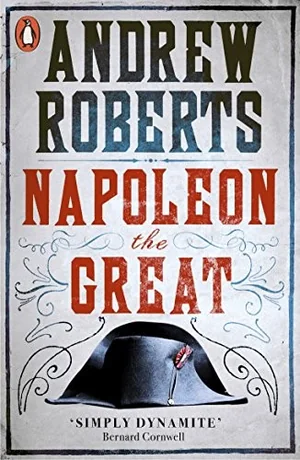
Napoleon the Great
Andrew Roberts · 2014
A monumental biography drawing on Napoleon’s 33,000 surviving letters, admiring but rigorous.
See on Amazon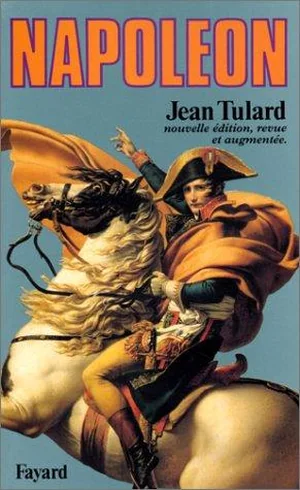
Napoléon ou le mythe du sauveur
Jean Tulard · 1977
The book that reshaped how the man is read: how France gave itself a saviour, and what it cost.
See on Amazon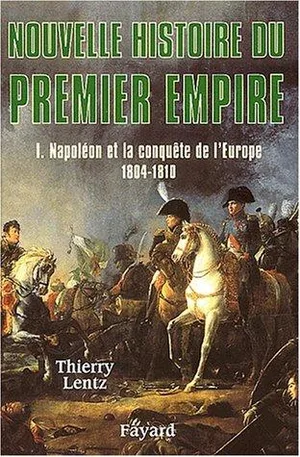
Nouvelle histoire du Premier Empire
Thierry Lentz · 2002-2010
Four reference volumes on institutions, diplomacy and collapse: the scholarly synthesis of the subject.
See on AmazonAs an Amazon Associate, this site earns from qualifying purchases.
Support the encyclopedia
Napoleon Empire is an independent project. Your contribution helps grow the content and keep the site running.
DonateSecure payment on the platform you choose.