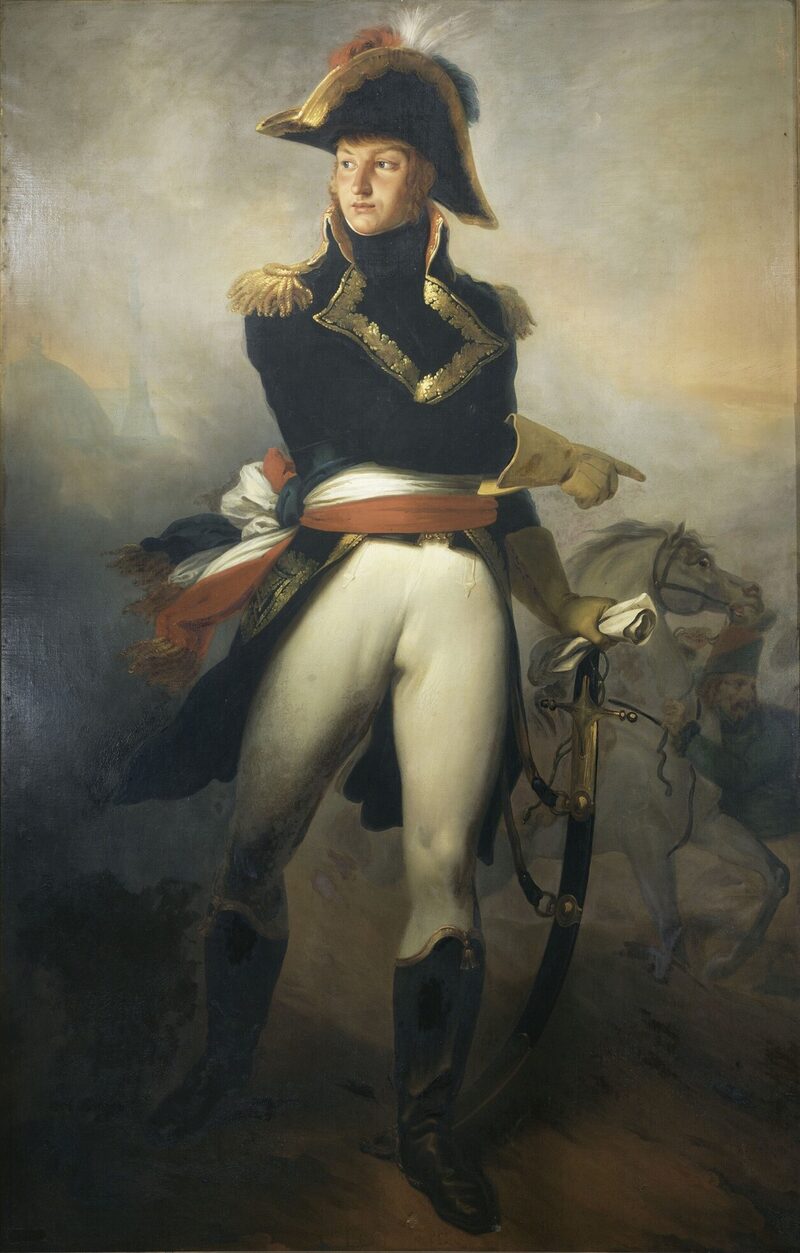
Jean-Andoche Junot (1771-1813), Duke of Abrantes, holds an awkward place in the imperial gallery: the very first companion, never made a marshal. The son of a merchant turned forest warden at Bussy-le-Grand in the Côte-d'Or, he enlisted on 1 September 1791 as a grenadier in his department's 2nd volunteer battalion; a sabre cut to the head before Longwy on 11 June 1792 opened a series of wounds that followed him to the end. The armies of the North and then of the Rhine earned him the nickname « la Tempête », the Tempest. At the siege of Toulon in the autumn of 1793 the grenadier sergeant met the young artillery officer Bonaparte: the encounter settled an entire career. Deputy second lieutenant on the artillery staff on 1 October 1793, lieutenant and provisional aide-de-camp on 17 January 1794, he became first aide-de-camp to the commander-in-chief of the Army of Italy on 11 March 1796, and in that role crossed Italy, Malta and Egypt. The Consulate gave him command of the Paris garrison on 27 July 1800; general of division on 20 November 1801, military governor of the capital, Grand Eagle of the Legion of Honour on 2 February 1805, he then moved to the Lisbon legation. The autumn of 1807 gave him his chance: entering Spain on 18 October, he reached Lisbon on 30 November, governed Portugal from 1 February 1808 and received the title of Duke of Abrantes on 19 March. On 21 August 1808 at Vimeiro, Arthur Wellesley inflicted a defeat that the Convention of Cintra, signed on 30 August, turned into a negotiated evacuation: the army sailed home in British ships and the duke's reputation never recovered. Zaragoza, Gefrees, Astorga, the lines of Torres Vedras and the retreat of 1811 then showed him as a subordinate, under Lannes and later under Masséna. In Russia, on 19 August 1812 at Valutino, the Westphalian and Württemberg VIII Corps he had just taken over stood still while Barclay de Tolly's rearguard slipped away: Murat promised him glory and the baton in vain, Napoleon judged him without indulgence. Removed from command in February 1813, appointed governor of the Illyrian Provinces, replaced as early as 10 June, he sank into a mental crisis his contemporaries described without mercy; sent home to Montbard, he injured himself gravely there and died on 29 July 1813, aged forty-one. The memoirs of his widow, Laure Permon, Duchess of Abrantes, did the rest: they lodged in French memory a Junot far more novelistic than the stubborn, worn and finally diminished officer the service records describe.
Bussy-le-Grand, Longwy, Toulon: the making of a loyalty
Jean-Andoche Junot was born on 25 September 1771 at Bussy-le-Grand, a village in the Côte-d'Or a few leagues from Montbard. His father, Michel Junot, a merchant, forest warden and tenant of the Comte de Buffon, belonged to the rural middle class that the Revolution would propel upward without warning. On 1 September 1791 the son enlisted as a grenadier in the 2nd volunteer battalion of the Côte-d'Or: nothing in that departure yet distinguished his record from those of thousands of young men marching to the frontiers. Rank would follow war, and war came quickly.
It marked him physically in the first summer. On 11 June 1792, before Longwy, a sabre cut opened his head; he was made sergeant of grenadiers on 2 July. The campaigns of 1793 took him to the Army of the North and then to the Army of the Rhine, where his comrades nicknamed him « la Tempête », the Tempest — an ambiguous tribute to a loud, sometimes untidy, always available courage. On 16 May 1793 a bullet struck him again. At twenty-two Junot already had a veteran's medical file and the reputation of a man sent wherever speed mattered.
The siege of Toulon, in the autumn of 1793, was the pivot of his life. The city, handed over to the Anglo-Spanish squadrons, drew in an ill-supplied republican army whose artillery passed under the direction of a still unknown Corsican officer. Memoir tradition — later fed by the recollections of the Duchess of Abrantes — embroidered their meeting with an anecdote about a note dictated under fire: it belongs to the grey zone where family testimony blends into legend. The service records are sober and decisive: on 1 October 1793 Junot was appointed deputy second lieutenant on the artillery staff.
What followed was a steady promotion in the shadow of a single man. Lieutenant and provisional aide-de-camp to Bonaparte on 17 January 1794, he stayed attached to his person through the uncertain months after Thermidor, when the general in disgrace was looking for employment. Captain in the 1st Hussars on 13 February 1795, confirmed as aide-de-camp on 2 August, squadron commander in the 3rd Dragoons on 24 December of the same year, Junot rose at exactly the pace of his chief's fortune. That dependence made his career; from this date it also drew its limit.
Italy, Malta, Egypt: first aide-de-camp to General Bonaparte
On 11 March 1796 Junot became first aide-de-camp to the commander-in-chief of the Army of Italy. The post was in no way honorary: it meant carrying orders across a theatre where columns marched separately, reconnoitring roads and fords, and bringing back reliable information within a deadline no one debated. The first aide-de-camp was also a political filter, the man who listened to divisional generals complain and chose what to repeat. Junot excelled at the physical half of the job and cared little for the other: contemporaries granted him absolute loyalty and short judgement.
Rewards followed. Provisional colonel on 10 May 1796, he was confirmed on 4 September, after an episode that sums up his style: on 3 August 1796 at Desenzano del Garda, on the shore of Lake Garda, he took six sabre cuts in a cavalry mêlée. On 9 April 1797, sent on a mission to Venice, he carried to the Serenissima the peremptory language of a victor who no longer needed to humour the republics of the old order. Between the charge and the ultimatum, the aide-de-camp was learning a political trade he would never fully master.
The Egyptian expedition took him further still. He was at the capture of Malta, then at the Battle of the Pyramids on 21 July 1798, and took part in suppressing the Cairo revolt. On 9 January 1799 he was appointed provisional general of brigade: at twenty-seven, the former grenadier from the Côte-d'Or held a command. The East also left him quarrels: a duel cost him another wound, and behind the dry chronology of the service records one senses a touchy, free-spending officer convinced that closeness to the commander-in-chief amounted to a claim.
That closeness, however, failed him at the decisive moment. When Bonaparte returned to France in the autumn of 1799 and overthrew the Directory on 18 Brumaire, Junot was still in the Levant. Captured at sea by the British, then released, he landed at Marseille only on 14 June 1800 — the very day Marengo was decided without him. Twice in eight months, the man who owed everything to his presence beside the chief had been absent from the hours in which the roles of the coming Empire were handed out. The marshalates of 1804 would be settled among those who had been there.
The Paris command, Laure Permon and the Lisbon legation
Junot's return was nevertheless rewarded. On 27 July 1800 he was given command of the Paris garrison: a post of trust, less glorious than an army command but strategic in a regime just born of a coup and fearing the next one. Three months later, on 30 October 1800, he married Laure Permon, seventeen years old, from a Corsican family linked to the Bonapartes since their Marseille years. The marriage placed the couple at the heart of the consular circle; it would also give posterity one of the most widely read — and most disputed — accounts of imperial society.
General of division on 20 November 1801, Junot was military governor of Paris during the years in which the Consulate became an Empire. The office mixed garrison duty, policing, ceremony, watch over the faubourgs and the management of rumour: it set its holder at the junction of the military and the political, exactly where his bluntness told against him. He lost the post to Murat, the sovereign's brother-in-law and a far better courtier. On 2 February 1805 the Grand Eagle of the Legion of Honour came to offset disgrace with an honour, a frequent imperial device and rarely a sufficient one.
That same year Junot left for Lisbon, replacing Lannes at the head of the French legation. The mission was less diplomatic than coercive: he was to obtain from the court of John VI the closure of its ports to the British, that is, to ask a small Atlantic kingdom to give up its vital trade. Junot found a cautious country, a monarchy playing for time, a nobility counting the months. He had neither the taste nor the means for patience; by its very failure the episode prepared the military intervention of 1807.
The family grew through these years at the rhythm of his postings: Joséphine was born in Paris on 2 January 1802, Constance on 9 July 1803, Louis Napoléon on 25 September 1807 — on the eve of the Portuguese campaign — and Andoche Alfred at Ciudad Rodrigo on 25 November 1810, in the middle of the Spanish war. The two sons would hold the ducal title in turn. Laure kept a salon, then took up a pen: her memoirs made her an indispensable source and a partial judge of everyone her husband served or fought.
Lisbon, Vimeiro, Cintra: the proconsul undone
In the autumn of 1807 Napoleon decided to close Portugal by force. Junot took command of the corps assembled at Bayonne, entered Spain on 18 October and pushed through the Beira in conditions that destroyed his infantry before any fighting: broken roads, rain, empty villages, convoys left behind. He reached Lisbon on 30 November 1807 with an exhausted vanguard and no artillery. The royal family had sailed for Brazil; he entered a capital without a sovereign, which was at once a complete political success and a trap, since he inherited a whole country to administer with a marching army.
Governor-general of Portugal on 1 February 1808, Junot governed for eight months. He levied heavy contributions, dissolved the Portuguese army, tried to win over part of the elite, and watched opinion harden as the occupation dragged on. The Spanish rising of spring 1808 changed the scale of the problem: communications with France ran through a country in insurrection, and the garrisons in Portugal found themselves isolated. On 19 March 1808 the Emperor granted him the title of Duke of Abrantes, after the fortress commanding the Tagus: the reward arrived at the exact moment the position became untenable.
In August a British expeditionary force landed north of Lisbon. Junot marched to meet it and attacked on 21 August 1808 at Vimeiro. His columns came frontally against a position Wellesley had set on high ground, supported by Portuguese skirmishers and well-handled artillery; the assaults broke, the British cavalry pursued, and the battle was lost before noon. Vimeiro was no numerical disaster, but it was a clear defeat, inflicted by a general whom nobody in Paris yet knew.
The Convention of Cintra, signed on 30 August 1808, turned that defeat into a scandal in both camps. The French evacuated Portugal with their arms, their baggage and part of their plunder, carried to Rochefort by the British navy; the arrangement was so favourable to the losers that an inquiry was opened in London against the generals who had signed it. Junot saved his corps, probably the best service he could render; yet he came home marked by the suspicion of having negotiated his own comfort. In an army where reputation is currency, such a suspicion is never repaid.
What followed was played out in subordinate roles. Back in Spain, he commanded the 8th and then the 3rd Corps before Zaragoza, where the siege he opened in December 1808 was taken over by Lannes, whose grip carried the city in February 1809. Sent to Germany, he was beaten at Gefrees by Kienmayer on 8 July 1809 and had to fall back on Amberg. He redeemed himself in Spain: the siege of Astorga, conducted from 21 March to 22 April 1810, ended in the capitulation of Santocildes's garrison. Then came the Portuguese campaign under Masséna — Sobral in October 1810 before the lines of Torres Vedras, Rio Maior on 19 January 1811, where a bullet went through his forehead, and the general retreat after Fuentes de Oñoro on 5 May 1811. At forty, Junot was a tested subordinate no longer considered for a command-in-chief.
Valutino, Illyria, Montbard: the last year
The Russian campaign gave Junot one last chance, born of a disgrace that was not his own. On 28 July 1812 he took over the VIII Corps, a Westphalian and Württemberg formation Jérôme Bonaparte had just left after a command dispute with Davout. The corps had already melted away: forced marches, heat, sickness, horses lost. Junot thus inherited a weakened German force he barely knew, in an army where allied corps were closely watched and harshly judged.
On 17 and 18 August Smolensk fell after two days of fighting that left the city in flames. On 19 August at Valutino — Lubino to the Russians — the Grande Armée had its chance to cut off Barclay de Tolly's rearguard. The plan was simple: Ney would attack the heights frontally while the VIII Corps crossed the Dnieper at Prudishchevo and struck the southern flank of the Russian column. Ney engaged, took the heights, and General Gudin was mortally wounded there. Junot hesitated all day: he cited the absence of precise written instructions and the weakness of his Westphalians. He did not attack. Murat, riding over to push him on, promised him glory and the marshal's baton; nothing moved him. The Russians slipped away in the night.
Napoleon arrived on 20 August. He rewarded Gudin's division and the III Corps, then judged Junot with a harshness the witnesses remembered: the affair of Valutino closed the question of the marshalate for good. At Borodino on 7 September 1812 the VIII Corps behaved properly and its commander did his job without brilliance or fault; but the measure had been taken. In the retreat, and in the reckonings that followed, Junot was no longer a prospect: he was an officer employed for want of better and to be removed as soon as possible.
February 1813 brought that removal, wrapped in an apparent promotion: the governorship-general of the Illyrian Provinces, the Adriatic territory the Empire had administered since 1809 and which demanded a solid proconsul. Junot was no longer one. His behaviour broke down within weeks — incoherent talk, extravagant decisions, public scenes the reports describe without mercy. On 10 June 1813 Napoleon replaced him with Fouché. The medicine of the day spoke of insanity; military literature has since invoked the two head wounds, Longwy in 1792 and Rio Maior in 1811, though no retrospective diagnosis can be held as established.
Brought back to his native Burgundy, to his father's house at Montbard, Junot was placed on the retired list on 22 July 1813. A week later, in a fit, he threw himself from a window and broke his leg; an amputation was attempted and infection carried him off. He died on 29 July 1813, aged forty-one, and lies at Montbard, a monument being raised to him later at Père-Lachaise, in the 24th division. His son Louis Napoléon became second Duke of Abrantes and died without issue in 1851; the third, Andoche Alfred, born in the middle of the Spanish war, was killed at Solferino on 24 June 1859. Laure, widowed at twenty-eight, outlived her husband by a quarter of a century and wrote the version that would prevail: her Mémoires, published by Ladvocat from 1831 to 1835 in eighteen volumes, imposed not the soldier worn out by twenty years of marching, but the companion of Toulon whom history punished for having been loyal longer than he was adroit.
Discover other characters
Napoleon Bonaparte
Emperor of the French
Arthur Wellesley, 1st Duke of Wellington
British general, victor of Waterloo, Prime Minister
André Masséna
Marshal of the Empire, Prince of Essling
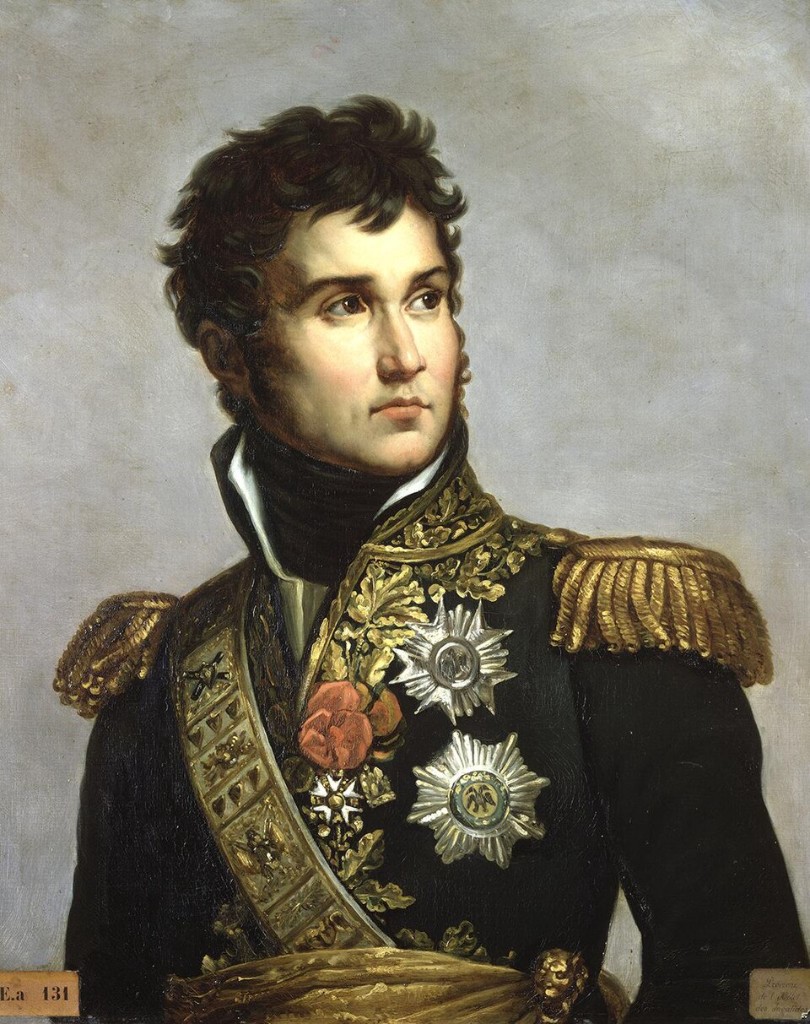
Jean Lannes
Marshal of the Empire, Duke of Montebello
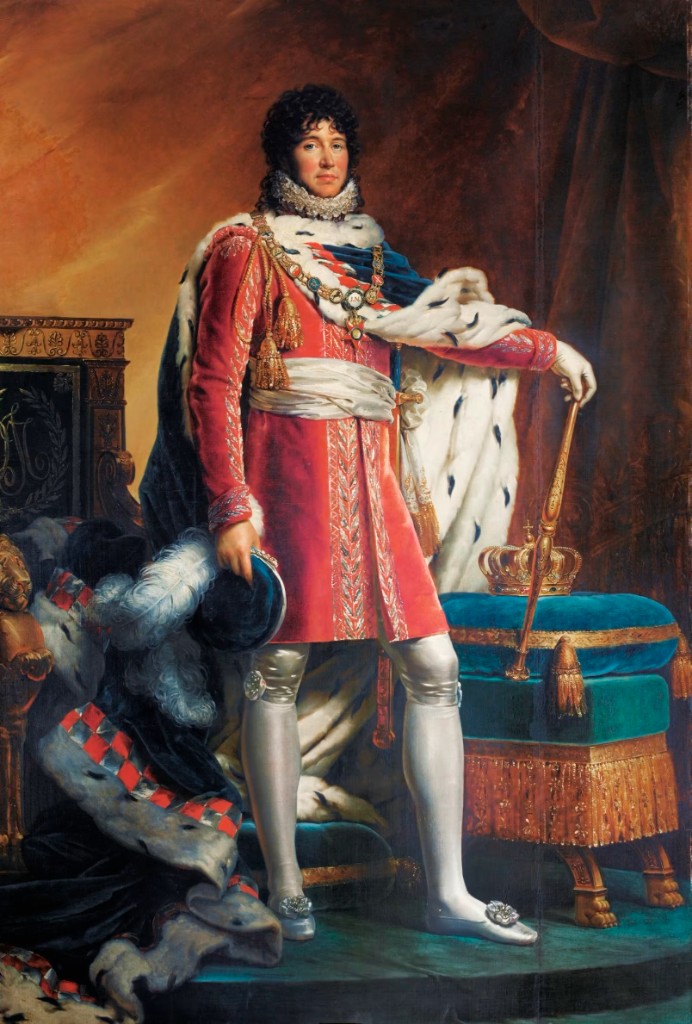
Joachim Murat
Marshal of the Empire, King of Naples
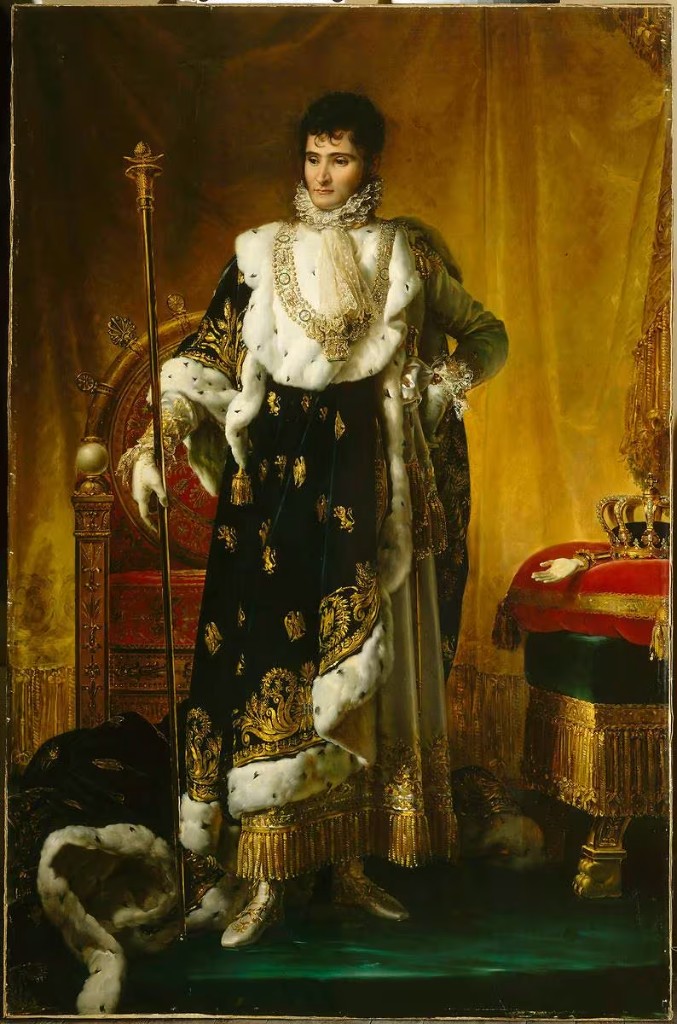
Jerome Bonaparte
King of Westphalia
Go further
Recommended books to dig deeper (affiliate links)

Napoleon the Great
Andrew Roberts · 2014
A monumental biography drawing on Napoleon’s 33,000 surviving letters, admiring but rigorous.
See on Amazon
Napoléon ou le mythe du sauveur
Jean Tulard · 1977
The book that reshaped how the man is read: how France gave itself a saviour, and what it cost.
See on Amazon
Nouvelle histoire du Premier Empire
Thierry Lentz · 2002-2010
Four reference volumes on institutions, diplomacy and collapse: the scholarly synthesis of the subject.
See on AmazonAs an Amazon Associate, this site earns from qualifying purchases.
Support the encyclopedia
Napoleon Empire is an independent project. Your contribution helps grow the content and keep the site running.
DonateSecure payment on the platform you choose.