From September to December 1793 the Republic's army besieged Toulon, which the insurgents had handed over to the British and Spanish fleet. By targeting the forts that commanded the roadstead rather than the town itself, a young artillery officer, Napoleon Bonaparte, played a decisive part in driving out the Allies: he came out of it a brigadier general, aged twenty-four.
Forces at play
Outcome: Decisive Republican victory
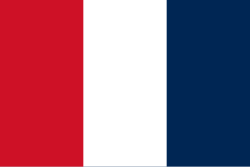
French Republic
- Dugommier
- Carteaux
- La Poype
- Bonaparte
About 32,000 men by the end of the siege
Casualties: 1,700 to 2,000 killed and wounded according to the sources
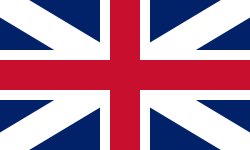
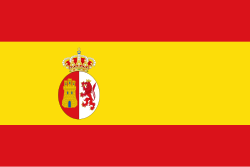

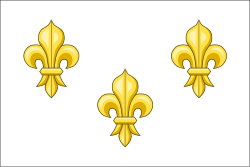
United Kingdom · Spain · Naples · Sardinia · Toulon royalists
- Samuel Hood
- O'Hara
- Lángara
- Gravina
22,000 to 23,000 men and 74 ships
Casualties: 2,100 to 4,000 killed and wounded according to the sources
Flags: FDRMRZUSA, CC BY-SA 4.0, Wikimedia Commons
Battle coordinates
Siege of Toulon
Coordinates 43.1242° N · 5.9280° E
Battle narrative
Toulon handed to the Allies
In the spring and summer of 1793, the elimination of the Girondins in Paris set off Federalist revolts in Lyon, Avignon, Nîmes and Marseille. In Toulon the Federalists drove out the Jacobins, but the Royalists, numerous in the fleet, soon gained the upper hand. Fear of famine and news of Republican reprisals at Marseille did the rest: the insurgents called for help from the British and Spanish fleet cruising offshore.
On 28 August 1793 Admirals Samuel Hood and Juan de Lángara landed British, Spanish, Neapolitan and Piedmontese troops; on the 29th their fleet entered the roadstead. On 1 October Louis XVII, the child held prisoner in the Temple, was proclaimed king. For the Republic the blow was terrible: Toulon was its great Mediterranean arsenal and sheltered some twenty-six ships of the line, about a third of the French navy.
A badly begun siege
After retaking Avignon and Marseille, General Carteaux's Republican army arrived before Toulon on 8 September. It was joined by troops of the Army of Italy under General La Poype, operating to the east towards Mont Faron, and by some 3,000 sailors who had stayed loyal to the Republic. But command was divided, the revolutionary battalions lacked siege equipment and trained gunners, and the first attacks, poorly coordinated, failed.
The Allied position was fragile all the same. Its troops, from four different nations, answered to separate governments, and the British and Spanish distrusted each other over the fate of the French fleet. Their perimeter, very long, was hard to hold everywhere.
Captain Bonaparte's plan
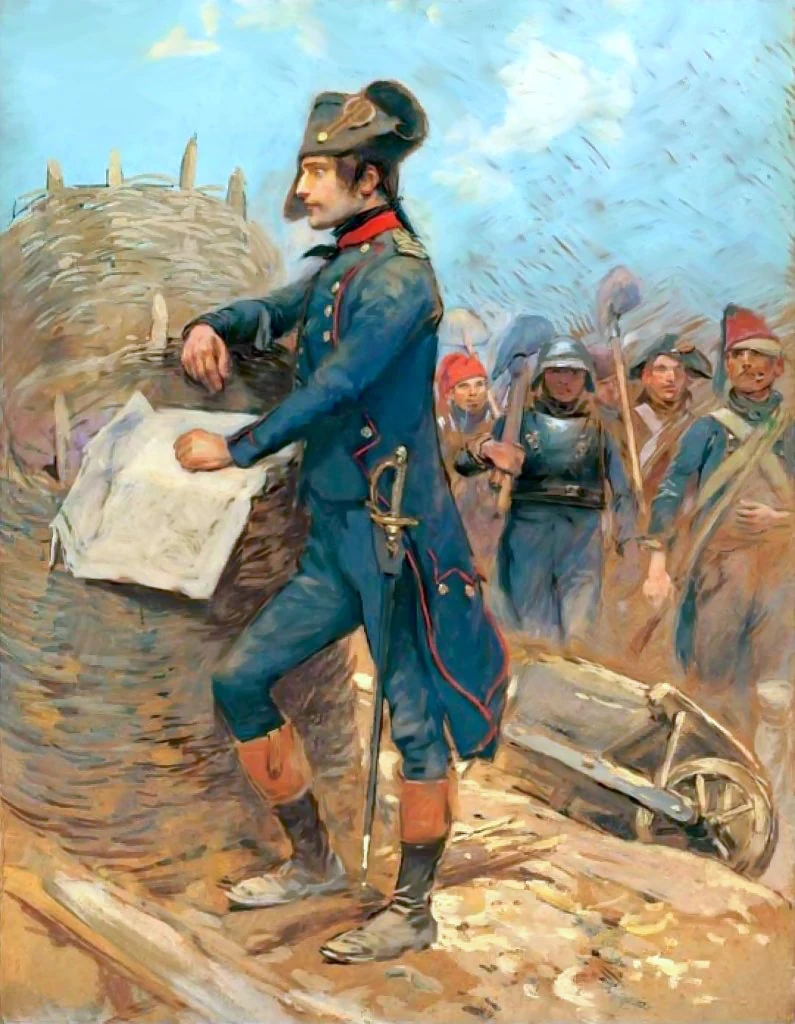
Carteaux's artillery chief, Dommartin, having been wounded, the Convention's representatives on mission, among them the Corsican Saliceti and Augustin Robespierre, imposed on him a young artillery captain who happened to be passing through: Napoleon Bonaparte, aged twenty-four. He gathered guns from Marseille, Avignon and the Army of Italy, requisitioned teams and ammunition and trained infantrymen to serve the pieces: by December the army had more than a hundred guns.
Above all, he saw where to strike. There was no need to storm the town: it was enough to seize, on the Caire heights, the forts of L'Éguillette and Balaguier, which commanded the passage between the inner and outer roadsteads. Under the fire of guns placed there the Allied fleet would have to leave, and the garrison, cut off from supply by sea, with it. A first attempt, too weak, failed on 22 September; alerted, the British built Fort Mulgrave on the height, which the French nicknamed "Little Gibraltar". Bonaparte, promoted chef de bataillon on 19 October, multiplied the batteries facing the defences.
Dugommier and the assault on Little Gibraltar
Carteaux was dismissed on 11 November; his successor, Doppet, a former doctor, failed before Fort Mulgrave and gave way to General Dugommier, a professional soldier who adopted Bonaparte's plan. New batteries, named "the Jacobins", "the Men without Fear" or "the Chasse-Coquins", tightened the grip. On 30 November a British sortie took the Convention battery, but a counter-attack led by Dugommier and Bonaparte drove it back and captured Lieutenant-General O'Hara, who had led it.
During the night of 17-18 December, in pouring rain, Dugommier launched the general assault. The main column attacked Fort Mulgrave while La Poype struck in the east. The rain made muskets of little use, and the fighting was mostly with the bayonet; Bonaparte was wounded by a bayonet thrust in the thigh. By morning the Republicans held L'Éguillette and Balaguier and could fire on both roadsteads.
Evacuation and the burning of the fleet
On 18 December Hood and the Allied commanders decided to evacuate. The town walls had not been breached, but the fleet could no longer stay in the roadstead, and the garrison could not hold without it. British parties under Captain Sidney Smith, and Spanish ones, tried to destroy the arsenal and the French ships: part of the fleet burned, and the Allies took away several ships, among them the 118-gun Commerce de Marseille. A good part of the fleet nevertheless escaped destruction and would be repaired. Some 15,000 Toulonnais boarded the Allied ships to flee the town.
Repression and "Port-la-Montagne"
The Republicans entered Toulon on 19 December. The representatives on mission Barras and Fréron directed a bloody repression: an estimated 700 to 800 people were summarily shot on the Champ-de-Mars, before the revolutionary commission handed down nearly 300 further sentences. On 24 December the Convention decreed that "the infamous name of Toulon is abolished": the town would be called Port-la-Montagne. It recovered its name after the fall of Robespierre.
The start of a career
On 22 December 1793 Bonaparte was promoted brigadier general, at twenty-four, and left for Nice to command the artillery of the Army of Italy. The siege is often presented as his "first victory". The phrase reflects Toulon's importance in his career, but it obscures the part played by Dugommier, who was in command, by La Poype and by thousands of soldiers and sailors: Bonaparte's exceptional contribution was to organise the artillery and to point relentlessly to the Caire heights as the decisive objective.
Go further
Recommended books to dig deeper (affiliate links)

Napoleon the Great
Andrew Roberts · 2014
A monumental biography drawing on Napoleon’s 33,000 surviving letters, admiring but rigorous.
See on Amazon
Napoléon ou le mythe du sauveur
Jean Tulard · 1977
The book that reshaped how the man is read: how France gave itself a saviour, and what it cost.
See on Amazon
Nouvelle histoire du Premier Empire
Thierry Lentz · 2002-2010
Four reference volumes on institutions, diplomacy and collapse: the scholarly synthesis of the subject.
See on AmazonAs an Amazon Associate, this site earns from qualifying purchases.
Support the encyclopedia
Napoleon Empire is an independent project. Your contribution helps grow the content and keep the site running.
DonateSecure payment on the platform you choose.