On his way to Egypt, Bonaparte took Malta in three days and ended two hundred and sixty-eight years of rule by the knights. Six years later the island would break the Peace of Amiens.
Historical context
On 9 June 1798 the fleet of the Egyptian expedition — nearly four hundred sail — appeared off Valletta and asked to take on water. Grand Master Ferdinand von Hompesch limited access to four ships at a time; that was the pretext awaited. Landings began on the 10th at several points on the island.
The place was among the most fortified in Europe, but the order no longer had the means to defend it: the French knights, about half the strength, refused to fire on their compatriots, and the Maltese population no longer supported a bankrupt religious aristocracy. Hompesch capitulated on 12 June and abdicated. It was the end of a sovereign state more than two and a half centuries old.
Bonaparte stayed six days and governed as though he had six years. He abolished slavery and freed the galley captives, suppressed the Inquisition and noble titles, created primary schools and a university, reorganised finances and hospitals. He also had the order's treasure seized and loaded aboard L'Orient — which would explode at Aboukir seven weeks later with part of the spoils.
The garrison left under Vaubois found itself isolated after the fleet's destruction. The Maltese rose in September 1798, the British blockaded the island, and the garrison capitulated in September 1800. Malta stayed English; London's refusal to evacuate it, contrary to the treaty, would be the immediate cause of the renewed war in May 1803.
Go further
Recommended books to dig deeper (affiliate links)

Napoleon the Great
Andrew Roberts · 2014
A monumental biography drawing on Napoleon’s 33,000 surviving letters, admiring but rigorous.
See on Amazon
Napoléon ou le mythe du sauveur
Jean Tulard · 1977
The book that reshaped how the man is read: how France gave itself a saviour, and what it cost.
See on Amazon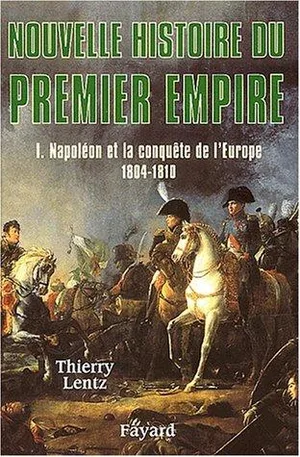
Nouvelle histoire du Premier Empire
Thierry Lentz · 2002-2010
Four reference volumes on institutions, diplomacy and collapse: the scholarly synthesis of the subject.
See on AmazonAs an Amazon Associate, this site earns from qualifying purchases.
Support the encyclopedia
Napoleon Empire is an independent project. Your contribution helps grow the content and keep the site running.
DonateSecure payment on the platform you choose.