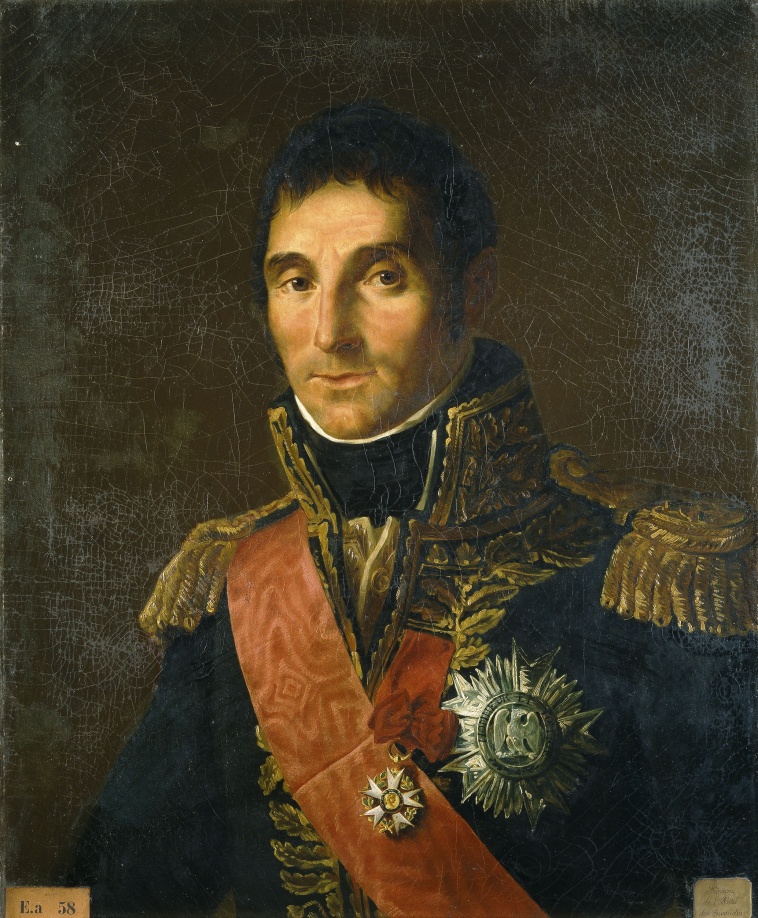
André Masséna (1758-1817), Duke of Rivoli and Prince of Essling, ranks among the greatest captains of the Revolution and Empire. Dubbed by Bonaparte « the Darling Child of Victory » after Rivoli, he saved the Republic at Zurich in September 1799, endured the siege of Genoa in 1800, became a marshal in 1804, and held the left wing at Essling then Wagram in 1809. Failure before the Lines of Torres Vedras and Wellington (1810-1811) brought disgrace; having rallied to the Bourbons, he died a peer of France in 1817. As famous for wealth and avarice as for tactical genius, he embodies the Napoleonic marshal between boldness, endurance, and human limits. Often thought less of an administrator than Davout or Soult, he remains, in close or mountain country, the officer of stubborn pinning who buys the rest of the army time for the decisive stroke.
From Savoyard Nice to Rivoli: forging the tactician
André Masséna was born at Nice on 6 May 1758 — the city then belonged to the Kingdom of Sardinia. His father Jules, a tanner, died early; his mother raised the children in want. In 1775 he enlisted in the Royal Italian regiment, served until 1789, left as a sergeant, ran a hardware business at Antibes, and married within modest circles. The Revolution opened promotion: Var volunteers in 1791, captain in 1792, brigadier general in 1793. He was the « pike general », without staff-college glitter but with instinct for ground, tempo, and the cost of fire.
He fought in Italy under Schérer then under Bonaparte. At Loano in November 1795 he led an attack that opened the road to Genoa. During the 1796-1797 campaign he distinguished himself at Lodi, Arcola, and Rivoli. On 14 January 1797 he pinned Alvinczy's Austrians on the plateau until Bonaparte concentrated the decisive mass — the founding gesture of the nickname « the Darling Child of Victory ». Masséna embodied the divisional general who bore the main weight while the commander-in-chief closed the plan.
The Italian years taught hunger, marching, and the economy of all-out war: contributions, « regulated » plunder, rivalry between corps. Contemporaries portrayed him as greedy and harsh, but formidable under fire. He amassed fortune, made enemies among intendants and in salons, remained indispensable to Bonaparte as long as battle called. That tension — avarice and tactical talent — would mark his whole life.
Between 1798 and 1799 he moved between fronts: Switzerland, Italy, pressure from the Second Coalition. When the Republic faltered, he received in Helvetia an army worn by losses and desertion. In those conditions he would soon have to seize the initiative against superior forces at Zurich — the stuff of republican myth.
Before 1799 Masséna was already more than a division commander: he showed that the French Revolution exported not only ideas but officers able to match the professionals of Austria and Russia. Rivoli and the Italian school were the foundation; Zurich and Genoa would be the public proof.
Between campaigns he wove military and supplier networks: claims on Italian contributions, Swiss placements, land purchases. Directory inquiries watched him; Brumaire found him popular in the ranks, more ambiguous in antechambers. Bonaparte, who read bulletins as closely as balance sheets, kept him in the front line: victory smothered many a mess-hall rumour.
His reputation as an « organised » plunderer fed northern Italian civil commissioners' reports; yet under fire soldiers often preferred a greedy but present chief to a parade general far from the balls. That moral ambiguity followed him to the Empire: his courage was rarely denied, his bank account and food trafficking more often.
Zurich and Genoa — Republic saved, Consul tested
On 25 and 26 September 1799, at the Second Battle of Zurich, Masséna defeated Korsakov's isolated corps and upset the Austro-Russian scheme in Switzerland. Suvorov, who had crossed the Alps, arrived too late to reverse the outcome; the French south-western front drew breath. The Directory awarded him arms of honour; the press compared the victory to classic great days — propaganda, but also deep relief in Paris.
Strategically, Zurich was more than a local fight: it broke the coalition's logic of simultaneous pressure. Masséna recomposed fragments, accepted costs, gained time on the enemy. The army remained exhausted; his prestige rose. Bonaparte, back from Egypt and bound for 18 Brumaire, would exploit that fame — and cloud it when politics required.
In 1800 Masséna lived the opposite of offensive glory: at Genoa, besieged by Melas's Austrians, with a starving population and a garrison at breaking point. He distributed minimal rations, allowed sorties, sustained street fighting. On 4 June he capitulated with the honours of war — two weeks before Marengo. Historians have debated since: would Melas have weakened the reserve more if the siege had lasted longer? The Consular narrative presents Masséna's resistance as a factor that gave breathing room to the Italian campaign of 1800.
The Helvetic theatre mixed cols, contested bridges, and risk of encirclement: Masséna had to work around Hotze's fall on the Linth and the scattering of French corps after earlier reverses. The second day consolidated the advantage; prisoners and booty fed the tale of an « resurrected » army the Consulate would exploit to cement its own narrative of national rescue.
François Bouchot's painting (1835), in the Gallery of Battles at Versailles, fixes Zurich as an equestrian scene and masses in collision — a heroic reading that omits real dust and desertions but shapes European memory of Masséna as saviour of the frontier.
Marshal of the Empire, Essling, Wagram, Prince of Essling
In 1804 Masséna was among the first eighteen Marshals of the Empire — consecration of a career forged at Rivoli, in Switzerland, and at Genoa. At Austerlitz (1805) he commanded the IV Corps; the Grand Army valued his ability to hold flanks and absorb hours of shock. Later campaigns in Poland and Silesia confirmed him as a reliable army commander, even as jealousy and rumours about his fortune grew in the marshals' circle.
In 1809, during the War of the Fifth Coalition, at the Danube crossing and the Battle of Aspern-Essling (21-22 May), Masséna held the left wing around the village of Essling. The bridges gave under floods and fire; reinforcements failed. He played the role of « plug » against Austrian assaults. Those days saw Lannes die beside the army — symbol of the price of the bridgehead. Napoleon evacuated the north bank; Essling remained a bloody draw.
On 5 and 6 July, at Wagram, Masséna again held the left on the Marchfeld while the centre and other corps prepared the decision. The second day broke Archduke Charles's resistance; Masséna was raised Prince of Essling — a title tied to May's fighting. At fifty-one, wounded, marked by life, he was no longer the general of 1799, but had not exhausted his political usefulness.
Between Essling and Wagram, imperial diplomacy and logistics prepared the mass trial: partial Austrian withdrawal on the Marchfeld before the renewal, artillery concentration, junction of corps. Despite fatigue, Masséna remained the man of the wing exposed to enemy reserve counter-attacks. The Wagram demonstration pushed Vienna toward Schönbrunn and sealed the Fifth Coalition in the field as much as at the negotiators' table.
Horace Vernet's monumental « Wagram » (1836, Versailles) places Napoleon at the storm's centre; for Masséna's biography it evokes the scale of the battle where holding the flanks and artillery masses made success possible — visual memory of the violence of the Danubian fields.
Spain, Army of Portugal, Torres Vedras
After 1809 Masséna commanded in the peninsula — a theatre where regulars, guerrillas, and logistics gnawed Napoleonic rules. In 1810 the Emperor gave him the Army of Portugal with orders to drive out Wellington and take Lisbon. In September he crossed the frontier; at Bussaco (27 September) he won a tactical duel, but the opponent withdrew in good order without multiplying losses.
Wellington fell back behind the Lines of Torres Vedras — a system of fortifications and sea supply that French intelligence had underestimated. Masséna halted before them; autumn rains, epidemics, and empty stores wore down the Grand Army. Months of immobility punished the besieger more than the besieged. The Coalition ate from the sea; the French starved in the mud.
In March 1811 Masséna ordered retreat — a strategic admission Napoleon read as personal weakness. The remark about « his mistress's eyes » mixed court gossip with a wish to discredit a veteran who no longer served the imperial narrative. Masséna lost command; he would have no decisive role in 1812 or 1813.
Before the Lusitanian command, Masséna had faced in Spain the war of garrisons, partidas, and interior lines: Ciudad Rodrigo, the occupier's political tightrope, constant friction between rival marshals. That experience did not spare him misjudgment before the British Atlantic: Wellington had built a regional defence tied to the coast and sea supply, not merely a ridge to take at the bayonet.
Portugal marked the point where tactical virtue hit war economy and engineering: no Rivoli or Zurich, but duration, supply, and political isolation. For Wellington, Torres Vedras was a calling card; for Masséna, an inglorious but militarily understandable end to independent high command.
Peer of France, Restoration, death, and judgment
In 1814 Masséna swore allegiance to Louis XVIII; he became a peer of France and governor of the 8th military division at Marseille — a post of control and symbolism more than of great operations. He avoided the Hundred Days; he died not on a battlefield but from liver disease on 4 April 1817 in Paris, with state funeral honours mixing republican and imperial glory.
His fortune — land, paintings, former spoils — remained matter for polemic in memoirs and public opinion: marshal of liberation wars or profiteer? Nineteenth-century historiography swung between admiration for Zurich and Genoa and reproach for avarice and Portugal; recent work stresses structural factors of the Peninsular War and tempers purely moral verdicts.
Napoleon, on Saint Helena, is said to have called him « the first of the marshals for boldness, perseverance, strength of character » — a phrase that, despite later quarrels, attests the Emperor's military esteem. The contrast with the humiliations of 1811 measures the gap between personal memory and political need of the moment.
In nineteenth-century military culture Masséna supplied textbook cases for stubborn defence and holding a wing: Zurich and the siege of Genoa featured as often as Wagram, while Portugal became a lesson in Allied sea power and defensive engineering. In the Napoleonic school of fire he also embodied the general who absorbed frontal pressure while manoeuvre closed elsewhere — a logic visible at Rivoli, reprised on another scale at Essling.
Popular fiction and theatre often magnified the image of the gilded marshal surrounded by gossip, sometimes at the expense of the officer who read a bulletin like a balance sheet and reckoned, siege after siege, the real cost of rations and ammunition.
The funeral gathered surviving marshals and peers; official eulogy stressed loyalty to the constitutional monarchy more than battles where Masséna was no longer in the line — 1812, 1813, Leipzig. Bonapartist memory recycled Zurich as founding act of a « saved » fatherland and Genoa as a test of constance; Portugal fed critics of an Empire that had overstretched its logistical means.
Masséna's name is inscribed on the Arc de Triomphe; he remains in textbooks beside Davout, Lannes, and Ney. His biography links popular ascent to the Empire's shadows — archetype of the Napoleonic marshal between battlefield genius and human frailty.
Discover other characters
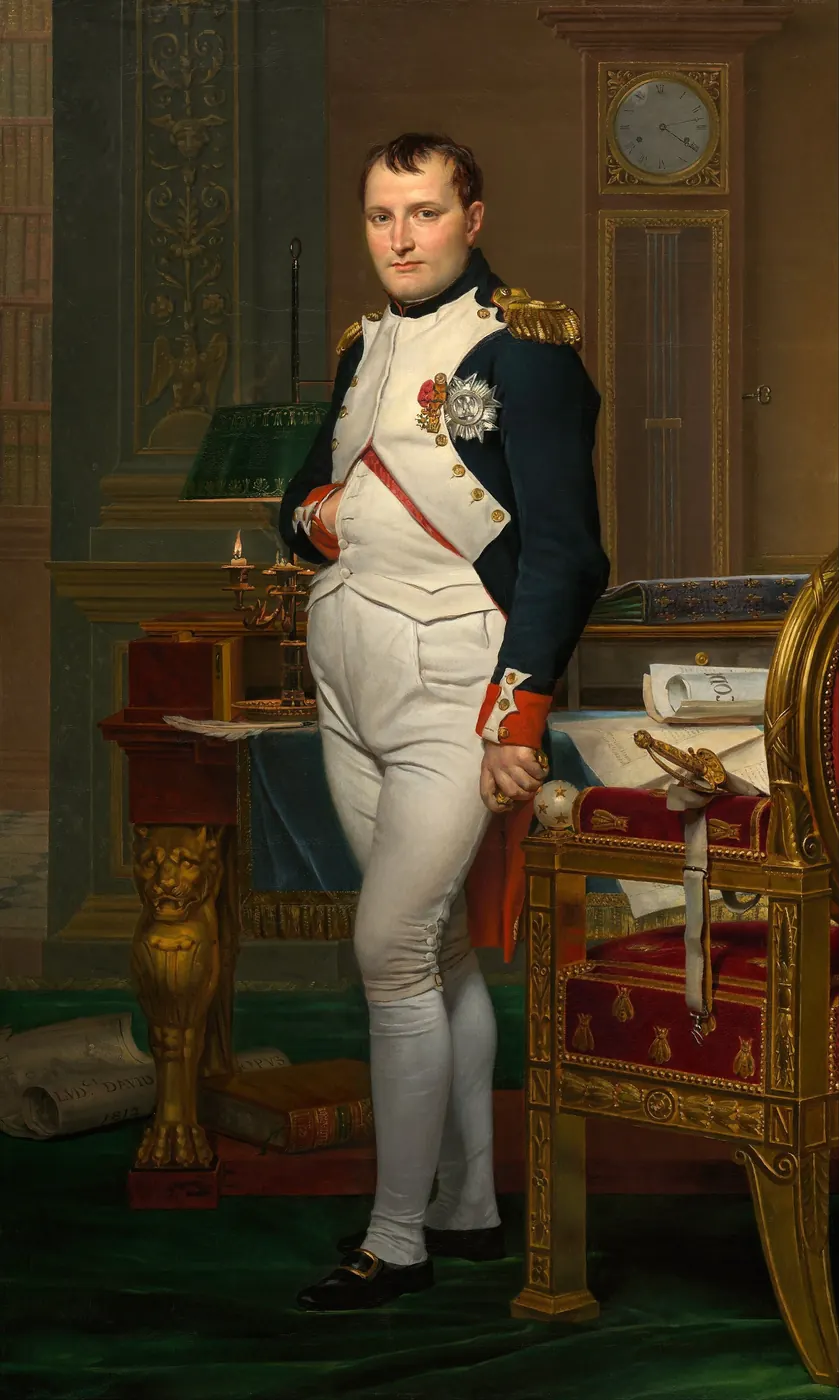
Napoleon Bonaparte
Emperor of the French
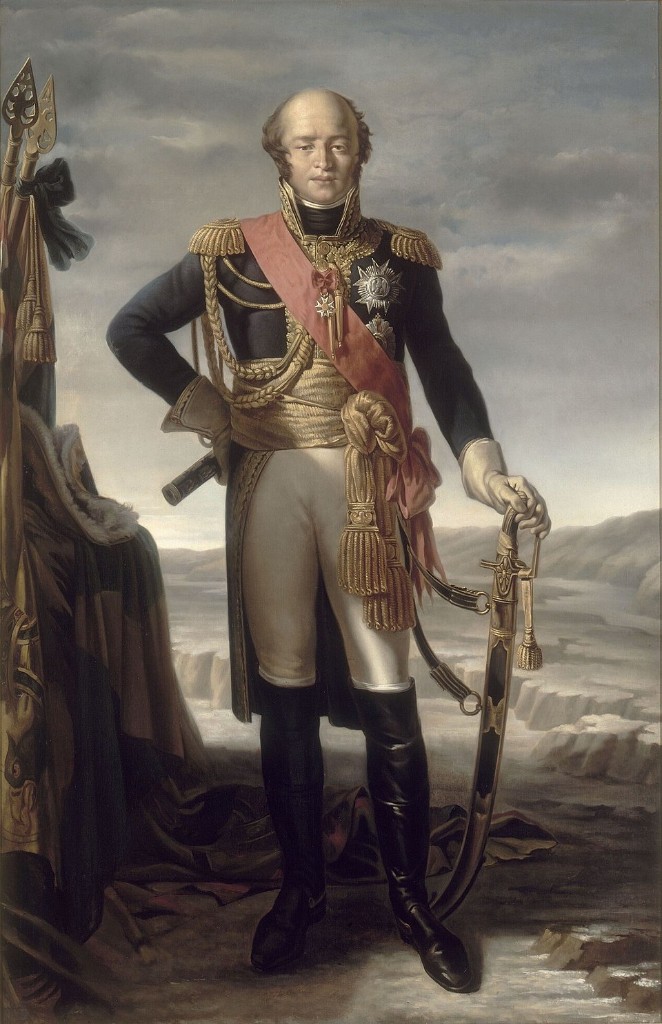
Louis-Nicolas Davout
Marshal of the Empire, Prince of Eckmühl
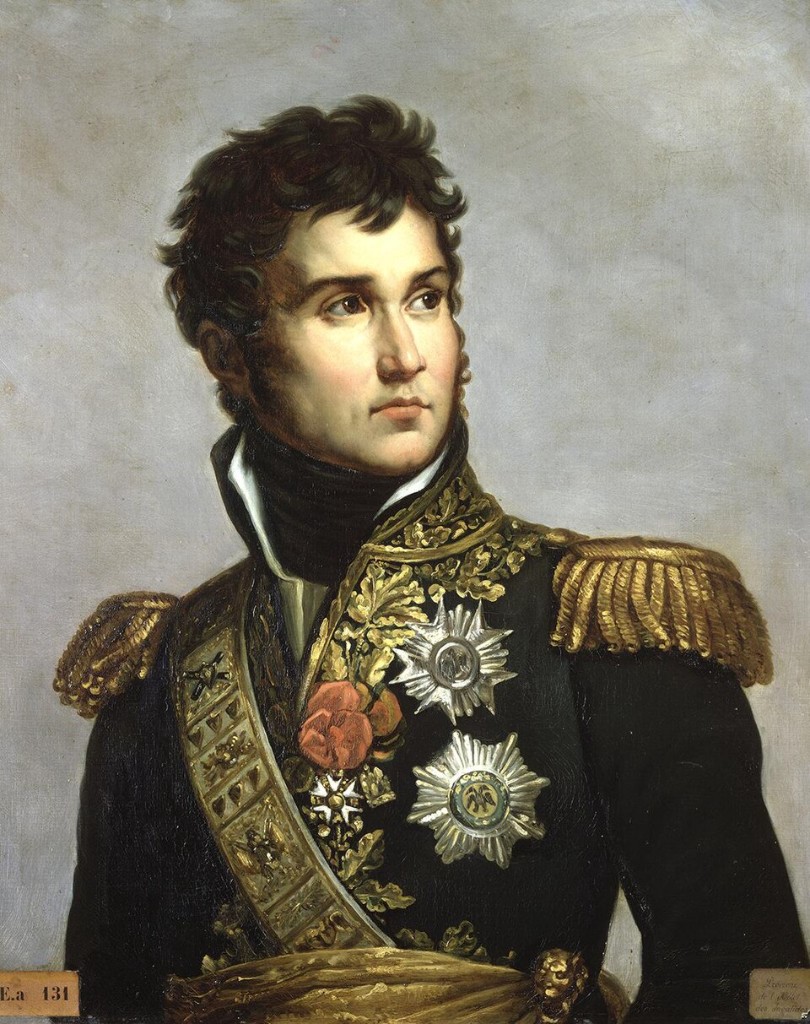
Jean Lannes
Marshal of the Empire, Duke of Montebello
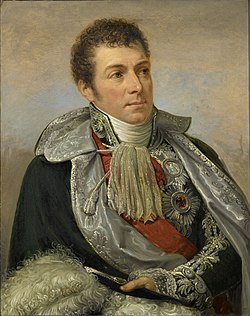
Louis-Alexandre Berthier
Marshal of the Empire, Prince of Neuchâtel and of Wagram, major-general of the Grande Armée (1805–1814)
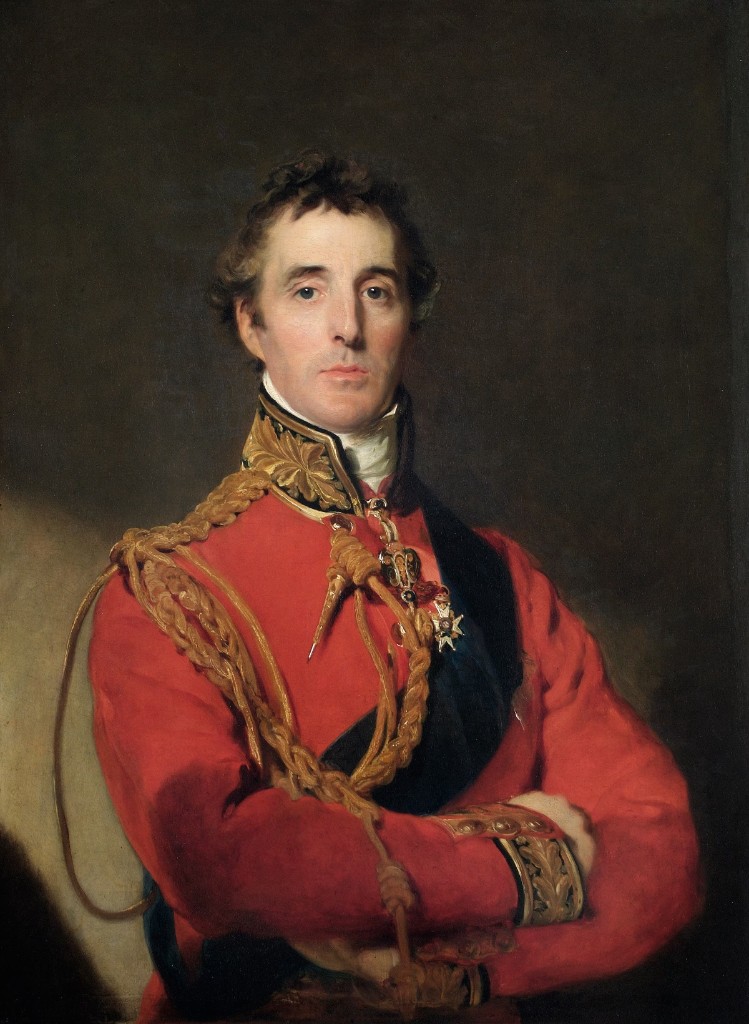
Arthur Wellesley, 1st Duke of Wellington
British general, victor of Waterloo, Prime Minister
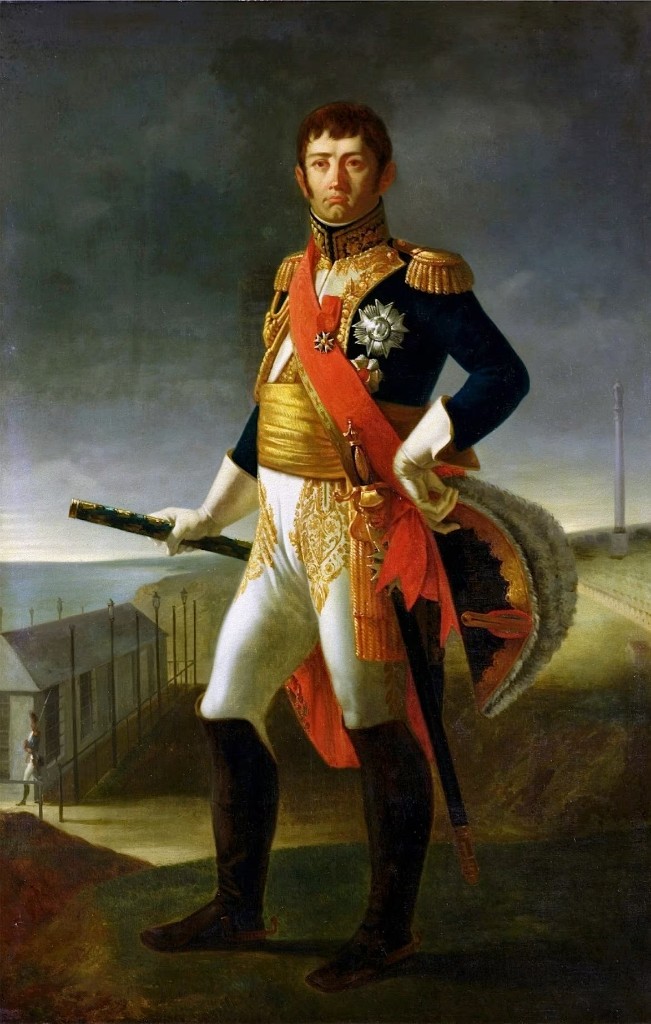
Jean-de-Dieu Soult
Marshal of the Empire, Duke of Dalmatia
Go further
Recommended books to dig deeper (affiliate links)

Napoleon the Great
Andrew Roberts · 2014
A monumental biography drawing on Napoleon’s 33,000 surviving letters, admiring but rigorous.
See on Amazon
Napoléon ou le mythe du sauveur
Jean Tulard · 1977
The book that reshaped how the man is read: how France gave itself a saviour, and what it cost.
See on Amazon
Nouvelle histoire du Premier Empire
Thierry Lentz · 2002-2010
Four reference volumes on institutions, diplomacy and collapse: the scholarly synthesis of the subject.
See on AmazonAs an Amazon Associate, this site earns from qualifying purchases.
Support the encyclopedia
Napoleon Empire is an independent project. Your contribution helps grow the content and keep the site running.
DonateSecure payment on the platform you choose.