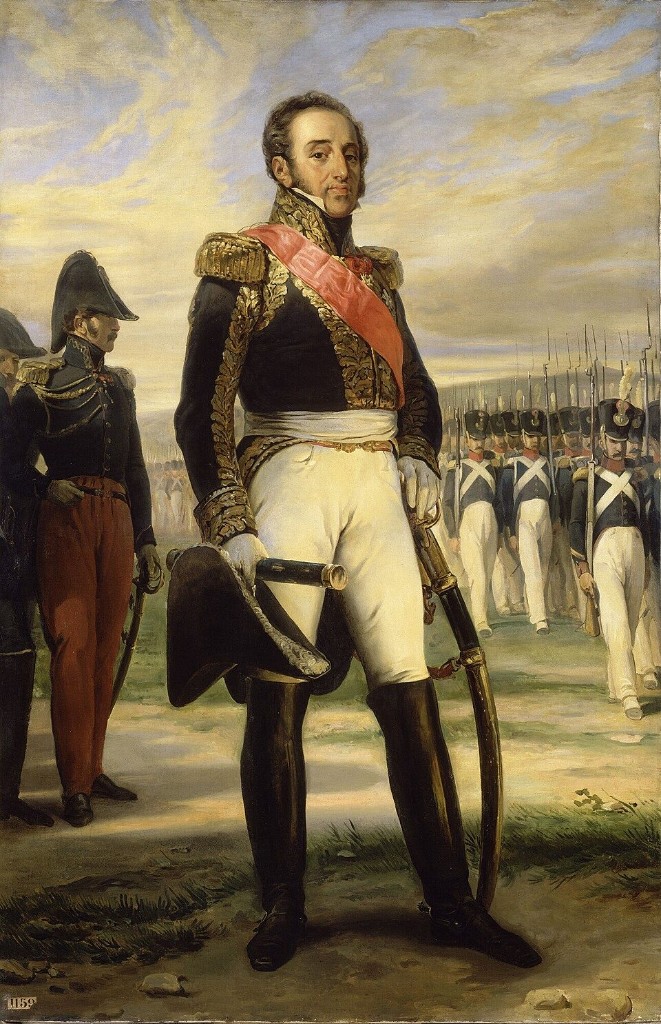
Louis-Gabriel Suchet (1770-1826), son of a Lyon silk merchant, embodies the Republican then imperial rise of the staff-trained officer without high birth who made his mark through siege, logistics and prolonged occupation. Trained in the Italian armies with André Masséna, forged at the 1800 siege of Genoa, he became in Spain one of the few generals able to combine military conquest and rear-area government: Aragon after the sieges of Zaragoza, then extension toward Catalonia and the Levant. Victory at the Albufera on 21 May 1811 over Hispano-British forces in the Valencian marshes earned him the title Duke of Albufera and, in July 1811, the marshal's baton — reward for a decade of Peninsular campaigns where so many others bogged down. The capture of Valencia in January 1812 crowned his relative dominance over part of Spain still defiant elsewhere, while Joseph Bonaparte struggled to embody Napoleonic monarchy in Madrid. The Empire's fall found him still locally strong; he evacuated methodically. In the Hundred Days he sided with Louis XVIII rather than Napoleon — a choice of safety and weariness of adventures without a net. Peer of France, military governor, he died in 1826 at Saint-Joseph near Marseille, leaving memoirs on Spain that still feed historiographic debate. Recent work crosses Spanish archives, imperial correspondence and guerrilla studies to place Suchet between administrative « pacifier » and agent of a costly imperial occupation.
Lyon, the Revolution, and the Italian School
Louis-Gabriel Suchet was born in Lyon on 2 March 1770, into mercantile bourgeoisie tied to the silk trade — a milieu that counted money, contracts and deadlines rather than court titles. The child was not born to command armies; yet the Revolution opened paths the Ancien Régime would have reserved for others. He enlisted, rose from NCO to officer, learned in the field what manuals omit: holding a company under fire, enforcing discipline when pay was late, turning sometimes distant staff orders into concrete movement.
The Italian campaigns placed him under André Masséna, a general feared for his demands and survival instinct. Suchet did not shine there with staff elegance; he gained a reputation for holding his men, counting caissons and promising troops no supplies the roads would not deliver. That sobriety became a trademark: in an army whose bulletins glorified cavalry charges, siege and supply line remained the foundation without which nothing held.
The 1800 siege of Genoa was the decisive public test: the city besieged by the Austrians, famine, prolonged resistance, final capitulation with honours for the garrison. Masséna emerged in paradoxical glory; Suchet beside him acquired the certificate of tenacity Napoleon, First Consul then Emperor, read as a reliability record. Not yet Austerlitz glory; proof an officer could bear the weight of endless days under bombs.
Under Consulate and Empire, postings alternated plain manoeuvres and occupation missions. Suchet rose to divisional general, received brigades, learned to coordinate artillery and infantry on broken ground. Imperial bulletins often starred other names; correspondence archives show regular exchange with Berthier and the intendance — sign of a « manager » profile as much as « one-day tactician ».
When the Empire stretched fronts to the Iberian Peninsula after 1808's intervention, several experienced generals were already engaged in Spain and Portugal. Suchet's posting to Aragon was not a trumpet-heralded spectacular promotion: it was a thankless mission in a theatre where lines of communication broke, partisans cut convoys and every city taken could rebel the next day.
Arriving in that theatre, he brought Italian experience of siege and fortress, but had to adapt it to a Spanish society mobilised by popular war and distrust of the French occupier. The contrast between staff map and alley reality would define the rest of his career.
Aragon — Zaragoza, Guerrilla, and Military Government
Aragon became for the Empire a laboratory of prolonged violence: insurrections, column marches, reprisals, broken negotiations. Zaragoza in 1808 and again in 1808-1809 offered the world an image of bitter urban resistance: barricades, convents turned bastions, house-to-house fighting. French and Spanish, civilian and military losses ran to thousands. For Suchet, who gradually took command in chief in Aragon, taking the place was not only tactical success: it entered a phase where lasting presence had to be imposed without being cut to pieces by guerrilla war.
Romantic manuals celebrated the defending hero; French correspondence stressed troop exhaustion, difficulty telling combatants from population, cost in ammunition and time. Suchet attempted a rare balance: firmness against armed bands, administrative measures to restore some economic circulation, relative protection of notables willing to collaborate without promising impossible peace. Aragon did not become a French province; it became a zone where the occupier kept unusual grip while elsewhere the Empire stalled or retreated.
Guerrilla — a term that fixed in European language an older form of war — forced Suchet to permanent guard on roads, heavy escorts, garrisons that could not scatter without risk. He answered with clearing operations, advanced posts, sometimes harsh examples Spanish memory kept as symbols of oppression. Modern historiography debates: how far was « pacification » calculated, how far dictated by immediate military need?
In strictly Napoleonic terms, Suchet embodied the general who could speak to intendants as well as fortress commanders. He demanded supplies, reinforcements, siege artillery; he knew Joseph Bonaparte in Madrid lacked popular legitimacy as « intruder » king. His relative success lay in not confusing city taken with population adhesion: he sought hold, not crowd enthusiasm.
Relations with other Peninsular marshals and generals were not always harmonious: jealousies, conflicting priorities, Paris orders that did not match the ground. Suchet had to negotiate junctions, share scarce resources, avoid isolation as Anglo-Portuguese coalitions advanced elsewhere. Wellington, on another sector, waged a war of alliances and Torres Vedras lines; Suchet held another movement of the same bloody oratorio.
When global pressure on the Empire rose after 1810-1811, Aragon remained a pocket where the tricolour still flew with unusual coherence — before European strategy condemned any local victory to obsolescence. Suchet carried that lucidity in his reports: holding Zaragoza or Lleida was not enough if the whole imperial system cracked.
Catalonia, Montserrat, and Impossible Junctions
From 1809-1810 Suchet extended operations into Catalonia: taking places, manoeuvring against Spanish corps and militias, trying to cut insurgents off from mountain refuges. The capture of Lleida, that of Tortosa, operations around Tarragona structured slow progress paid in sieges and fixed garrisons. Every city taken required a detachment to hold it; every detachment weakened the mass available for offensive manoeuvre.
The Montserrat massif became a geographic symbol of resistance: religious houses, hermitages, narrow paths where regular columns lost advantage. Suchet did not turn the mountain into an imperial park; he sought to neutralise logistic nodes, prevent band junctions, impose controlled passes. These campaigns resembled post war more than pitched battle on Italian or German plains.
Napoleon's orders, concerned with Europe as a whole, swung between demand for vigorous offensive and implicit recognition of material limits. Suchet wrote reports where figures — men, guns, caissons — stood as argument. That dry accounting rhetoric distinguished him from marshals whose personal bulletins fed flamboyant legend; it earned trust from an emperor who hated surprises on corps' real state.
Tensions with other French commanders in Spain sometimes burst into the open: precedence quarrels, mutual accusations of slowness, court jealousies. Suchet, soon titled Duke of Albufera, was not immune to reputation games; he compensated with territorial results Paris could map. On the chart, a coastal strip and partly held interior meant more to the Minister of War than promises of « envelopment » never realised.
Economic war was part of the picture: requisitions, currencies, partial blockade, collapse of traditional trade. Suchet sometimes tried to moderate troop excess to preserve future revenue; discipline varied by unit, fatigue, presence or absence of honest officers. Civil populations paid the main price: between two armies, survival trumped ideological loyalty.
In the background, news of setbacks elsewhere — Moscow, Leipzig to come — reached Spanish garrisons late and in fragments. Suchet was already mentally preparing orderly retreat lines, aware no local victory would save an empire whose strategic margin shrank.
Albufera, the Marshal’s Baton, and the Fall of Valencia
On 21 May 1811 near Valencia, Suchet faced a Hispano-British coalition commanded notably by General Joaquín Blake, in an allied deployment sometimes disorderly against French concentration. The ground skirted the Albufera lagoon: marshes, dykes, narrow paths where cavalry struggled and infantry had to advance in iron discipline lest it dissolve under fire. French victory was not simple manoeuvre triumph: it came from logistic preparation and execution suited to terrain constraints.
Napoleon from Paris followed the Spanish theatre with intermittent but real attention: every « clean » success there was rare enough to celebrate. The Duke of Albufera title tied Suchet to his victory's geography — classic Napoleonic usage where ducal rank recalled a glory day as much as it rewarded the servant. In July 1811 promotion to Marshal of the Empire followed in short order: it crowned nearly twenty years' service without major fault, and consecrated a Peninsular war specialist when the Empire most needed one.
Conquest of the Levant accelerated: Valencia, Alicante, Murcia — cities and ports whose capture offered bases, stores, sometimes credit with central administration. Suchet's entry into Valencia in January 1812 after siege and negotiation became symbolic: the marshal appeared as master of a great coastal city, surrounded by disciplined troops, under a population's gaze mixed of relief, fear and hatred. Period images fixed the scene for local memory and French propaganda.
Politically Joseph Bonaparte remained king in Madrid on fragile legitimacy; Suchet did not replace paper monarchy with perfect administration, but offered Napoleonic Spain a fragment where decrees could still circulate, taxes partly raised. It was an illusion of normalisation in a torn country; it lasted as long as the European balance held.
Anglo-Spanish forces kept fighting elsewhere; Wellington was not on this sector at the same moment, but overall pressure on the French in Spain did not slacken. Suchet knew his Valencian successes did not shift the Portuguese front line or London's decisions. He still organised coastal defences, local counter-attacks, tried to break Spanish concentrations before they grew.
When news of the disastrous Russian campaign and early German setbacks began to filter, morale in Iberian garrisons suffered silent erosion. Suchet prepared evacuation plans, studied ports, calculated what could be embarked. The Marshal of Albufera was already, in 1812-1813, a man thinking retreat without saying it loudly in bulletins.
Fall of the Empire, Hundred Days, and Memory under the Restoration
1814 defeat and Napoleon's abdication overturned all Spanish positions. Suchet, who had kept a more coherent command structure than many others, had to negotiate surrenders, evacuate places, save materiel and men. Retreat order was not a panicked scramble: archives show precise instructions on embarkation priorities and conduct toward local populations now assured of French reversal.
During the Hundred Days Suchet chose Louis XVIII over the Emperor's return. That choice, often called conservative, matched exhaustion, career calculation and the Spanish lesson: adventures without diplomatic network or viable rear line cost too dear. He was not alone among senior officers betting Bourbon restoration as French state continuity rather than one last Napoleonic gamble.
Under the Second Restoration Suchet received honours: peer of France, military governor, presence at ceremonies of monarchy restored. His name is on the Arc de Triomphe — integration into the pantheon of victorious generals on the nineteenth-century official grid. Later liberals and Bonapartists read that path variously: for some administrative honesty; for others a form of betrayal of the eagle.
He published memoirs of his Spanish campaigns: a work consulted by nineteenth-century military historians, criticised for French angle but valuable for operational detail. Adversary narratives — Spanish, British — offer indispensable counterpoints; current research favours cross-checking sources rather than one national story.
Suchet died on 3 January 1826 at Saint-Joseph near Marseille after a career crossing Revolution, Consulate, Empire and Restoration. Funerals mixed monarchical symbols and memories of officers who had served under him in Catalonia or Aragon. For Empire Napoléon he remains proof a marshal could still « win differently » — by siege, administrative map and slow conquest of cities — where others left only names tied to disaster or chaotic retreat.
Discover other characters
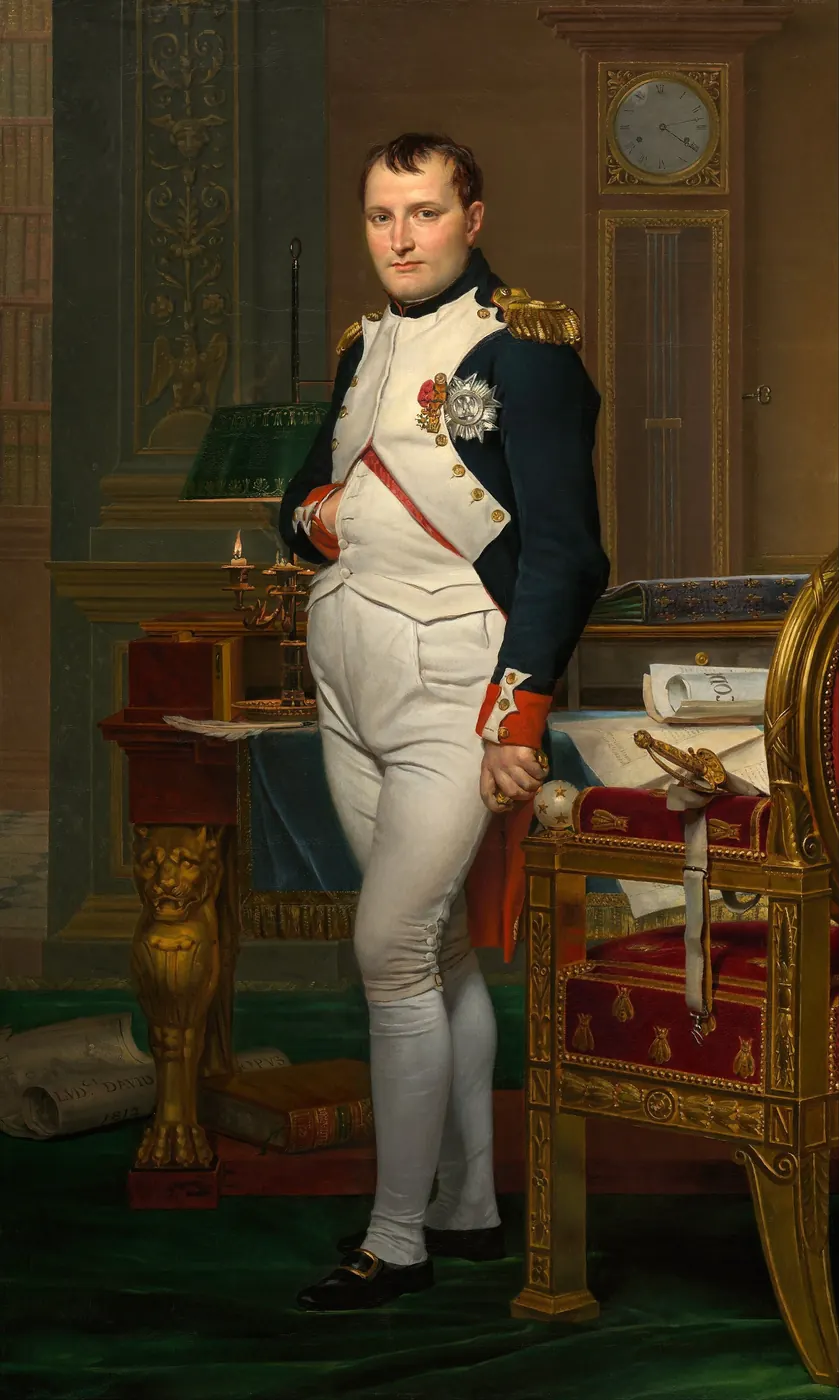
Napoleon Bonaparte
Emperor of the French
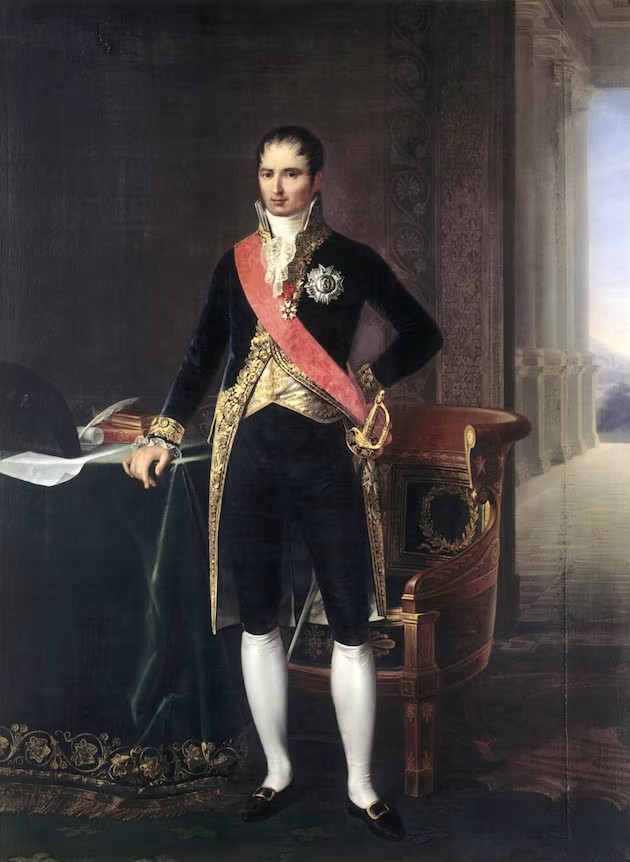
Joseph Bonaparte
King of Naples, then of Spain
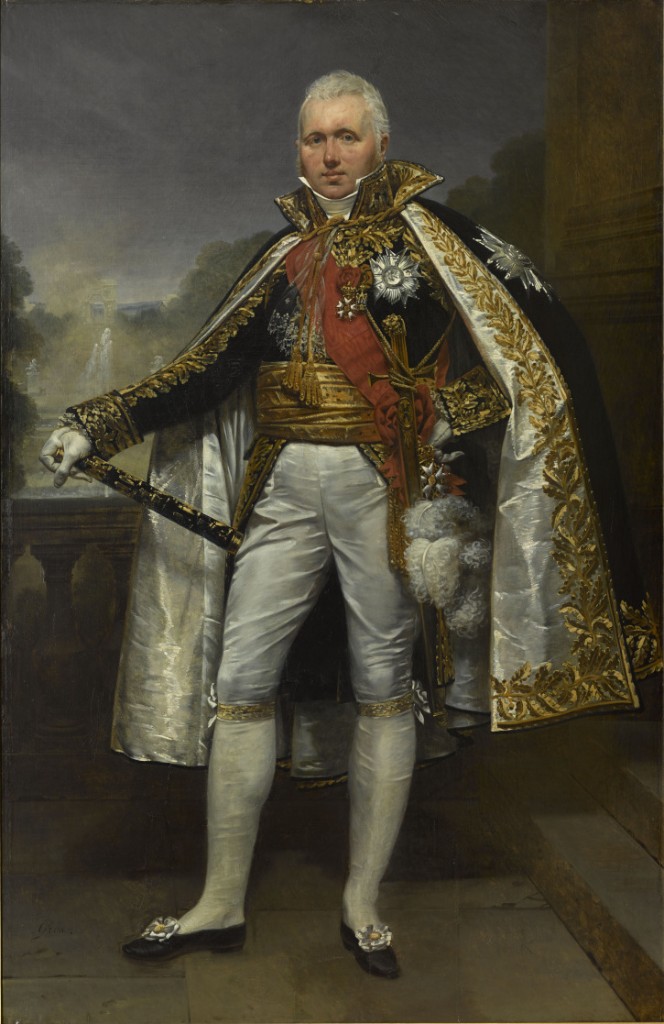
Claude Victor-Perrin
Marshal of the Empire, Duke of Bellune
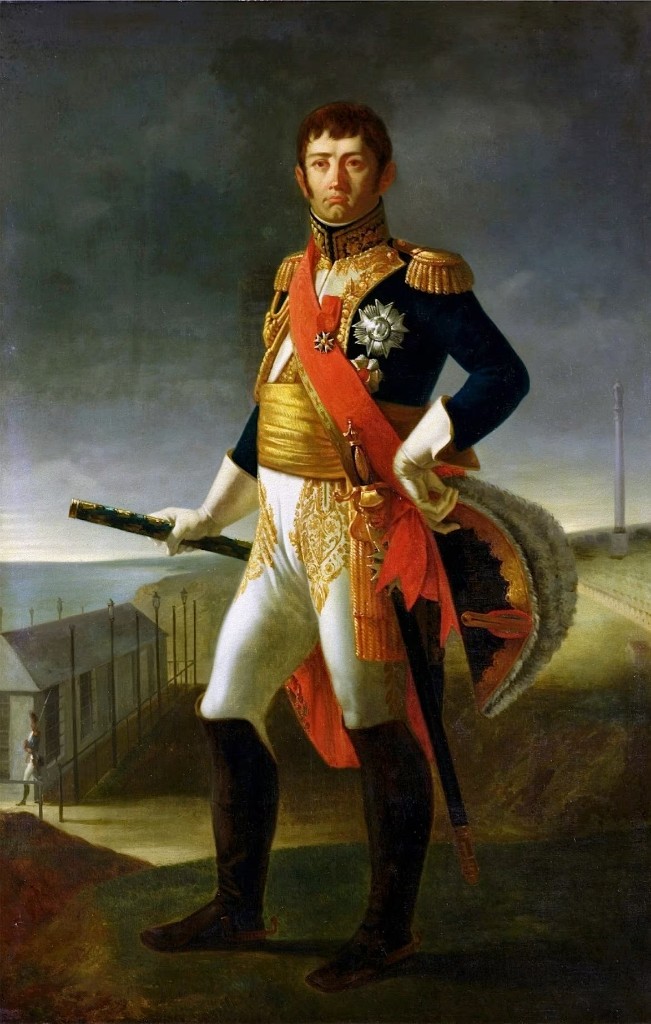
Jean-de-Dieu Soult
Marshal of the Empire, Duke of Dalmatia
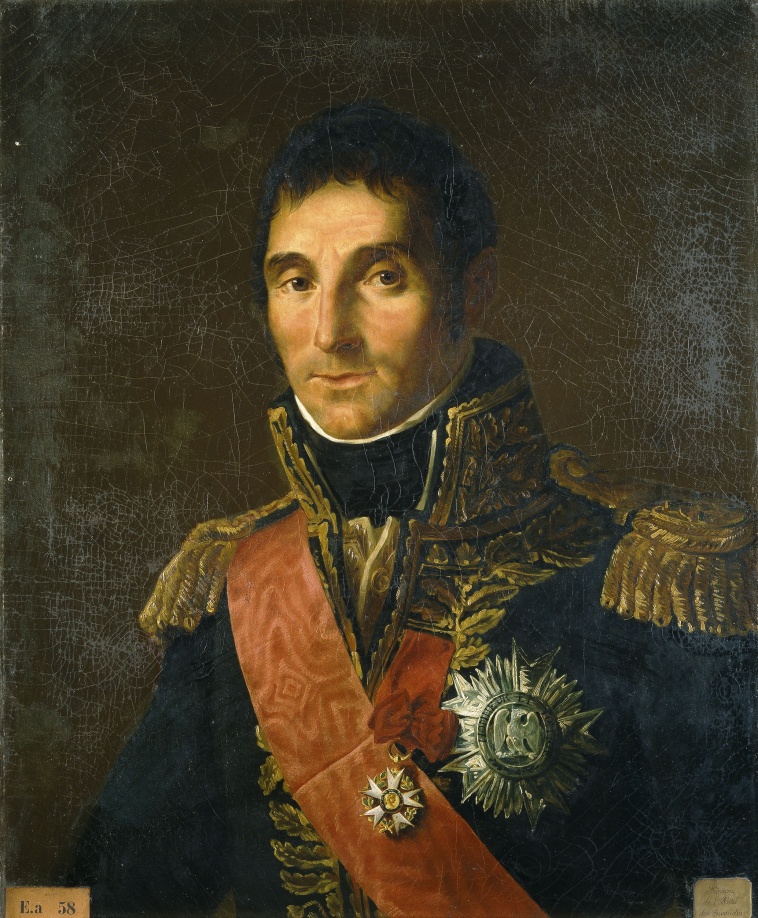
André Masséna
Marshal of the Empire, Prince of Essling
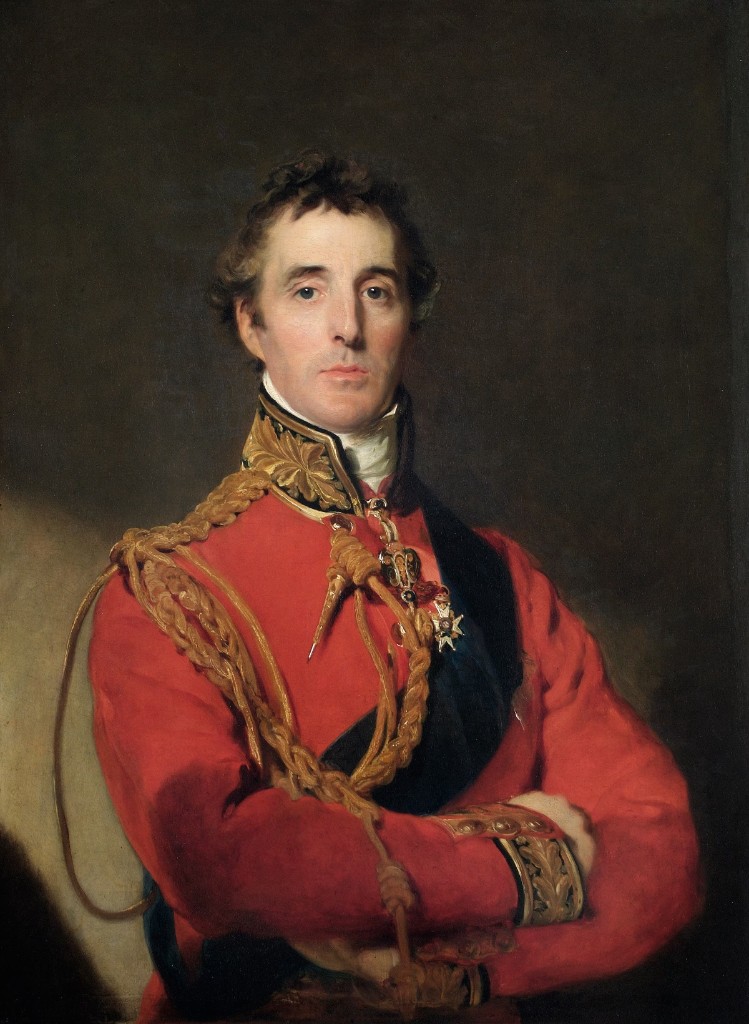
Arthur Wellesley, 1st Duke of Wellington
British general, victor of Waterloo, Prime Minister
Go further
Recommended books to dig deeper (affiliate links)

Napoleon the Great
Andrew Roberts · 2014
A monumental biography drawing on Napoleon’s 33,000 surviving letters, admiring but rigorous.
See on Amazon
Napoléon ou le mythe du sauveur
Jean Tulard · 1977
The book that reshaped how the man is read: how France gave itself a saviour, and what it cost.
See on Amazon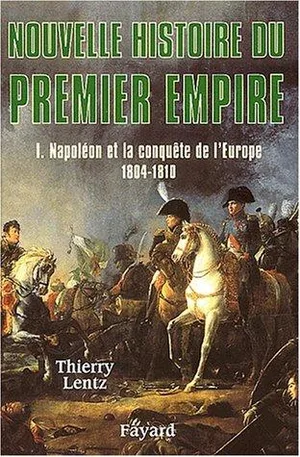
Nouvelle histoire du Premier Empire
Thierry Lentz · 2002-2010
Four reference volumes on institutions, diplomacy and collapse: the scholarly synthesis of the subject.
See on AmazonAs an Amazon Associate, this site earns from qualifying purchases.
Support the encyclopedia
Napoleon Empire is an independent project. Your contribution helps grow the content and keep the site running.
DonateSecure payment on the platform you choose.