Marengo and Hohenlinden
The First Consul needed peace to secure a regime born of a coup. He won it by arms: on 14 June 1800 at Marengo, a battle lost until five in the afternoon was reversed by the arrival of Desaix — who died there — and Kellermann's charge. On 3 December Moreau crushed the Austrians at Hohenlinden and marched on Vienna.
The treaty
Signed at Lunéville by Joseph Bonaparte and Count Cobenzl, the treaty confirmed Campo Formio and went further: the Rhine became France's frontier, and Austria recognised the Batavian, Helvetic, Cisalpine and Ligurian republics, all within the French orbit. Francis II signed not only for himself but in the name of the Holy Roman Empire.
A pacified continent
The Second Coalition was dead: England stood alone and would have to treat in turn at Amiens. At home, peace gave the Consulate immense political capital, which made possible the Concordat, the Civil Code and, eighteen months later, the Consulate for life.
See also
Go further
Recommended books to dig deeper (affiliate links)

Napoleon the Great
Andrew Roberts · 2014
A monumental biography drawing on Napoleon’s 33,000 surviving letters, admiring but rigorous.
See on Amazon
Napoléon ou le mythe du sauveur
Jean Tulard · 1977
The book that reshaped how the man is read: how France gave itself a saviour, and what it cost.
See on Amazon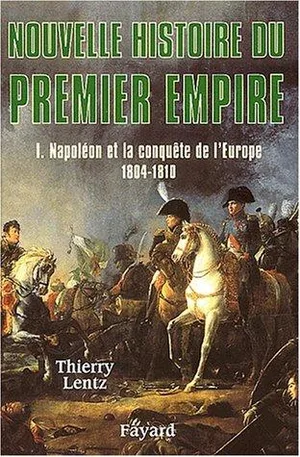
Nouvelle histoire du Premier Empire
Thierry Lentz · 2002-2010
Four reference volumes on institutions, diplomacy and collapse: the scholarly synthesis of the subject.
See on AmazonAs an Amazon Associate, this site earns from qualifying purchases.
Support the encyclopedia
Napoleon Empire is an independent project. Your contribution helps grow the content and keep the site running.
DonateSecure payment on the platform you choose.