Birth of III Corps and Davout's method
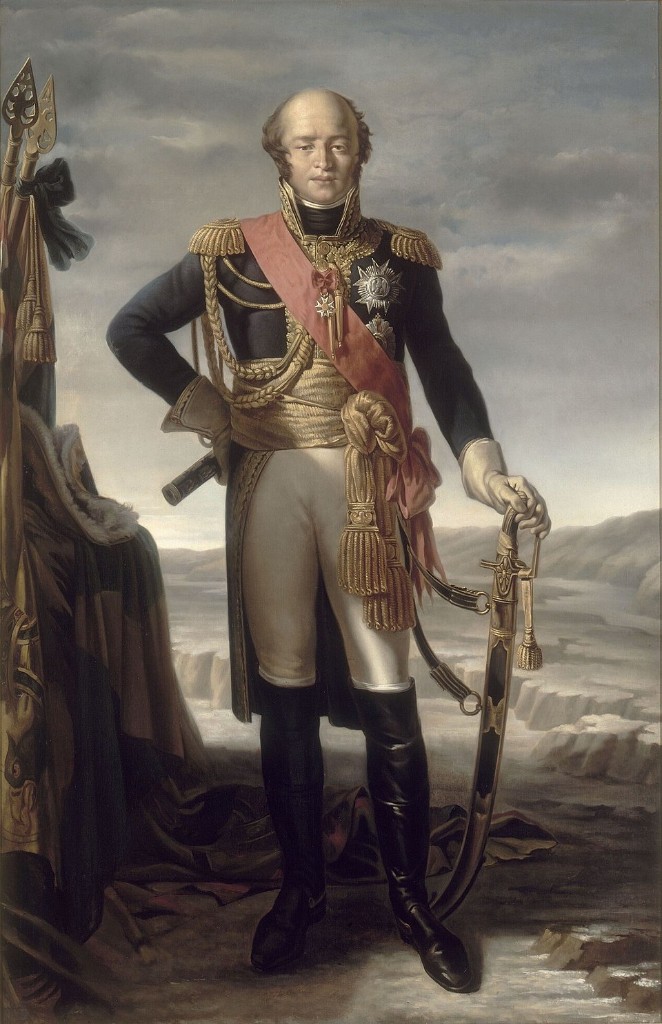
Formed at the Camp of Boulogne and then committed in the 1805 campaign, III Army Corps received as commander Louis-Nicolas Davout, the youngest of the 1804 marshals. Around him crystallised three infantry divisions — Morand's, Friant's and Gudin's — flanked by light cavalry and carefully served artillery. Strength varied by campaign between twenty and thirty thousand men, but staff quality and marching discipline often outweighed raw numbers.
Davout imposed a rare staff culture: frequent inspections, musketry drill, store discipline, night marches without disorder. Contemporaries judged him severe; soldiers, once under fire, discovered a chief who did not abandon them. Napoleon, wary of improvisation, found in him the executor able to hold an isolated sector without waiting for detailed orders.
The nickname 'tenth legion' — an allusion to Caesar's Legio X — was not salon flattery: it measured the strategic trust placed in a corps able to act as a miniature army, with its own reserves and artillery.
Austerlitz: the right wing under pressure
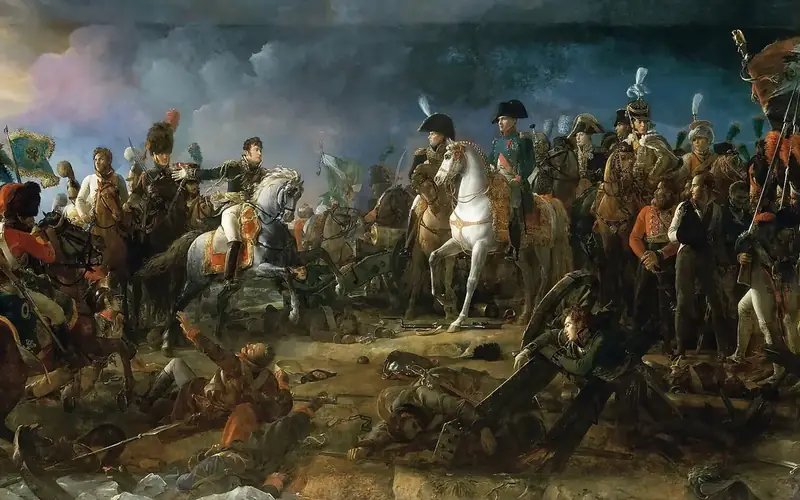
On 2 December 1805, while Soult climbed the Pratzen plateau with IV Corps, Davout held the French right around Telnitz and Sokolnitz. His divisions, arrived after a forced march from Vienna, had to contain the Austro-Russian mass that believed it was enveloping a deliberately weakened French flank. The fighting there was bitter, almost obscure in the morning fog, yet decisive: without that resistance Napoleon's plan collapsed.
Friant and the regiments engaged in the Goldbach villages absorbed successive shocks. Davout did not seek the media glory of the plateau; he bought the time needed for the Coalition centre to break. The day of the Three Emperors was therefore also that of a corps that held while the rest of the army manoeuvred.
Bulletins celebrated the Pratzen; staffs retained the right-wing lesson: without a solid corps to fix the enemy, the central manoeuvre remains a textbook dream.
Auerstedt, 14 October 1806
On the same day as Jena, where Napoleon crushed part of the Prussian army, Davout and III Corps met near Auerstedt the bulk of the Duke of Brunswick's forces. Roughly twenty-seven thousand French faced nearly twice as many opponents. Brunswick was mortally wounded; King Frederick William III was present; the Prussian machine, heir to Frederick II, still believed in its moral superiority.
Davout deployed his divisions in echelon, multiplied squares against cavalry, refused to yield. Gudin, Friant and Morand held under hellish fire. By day's end the Prussian army was in rout. Napoleon, at first incredulous at the reports, eventually recognised a victory worthy of ranking among the Empire's greatest. Davout became Duke of Auerstedt.
Auerstedt fixed for a long time the image of III Corps: not a mass meant for spectacular assault, but an instrument of methodical combat, able to win alone when fortune separated the columns.
Poland, Eylau and the 1807 campaign
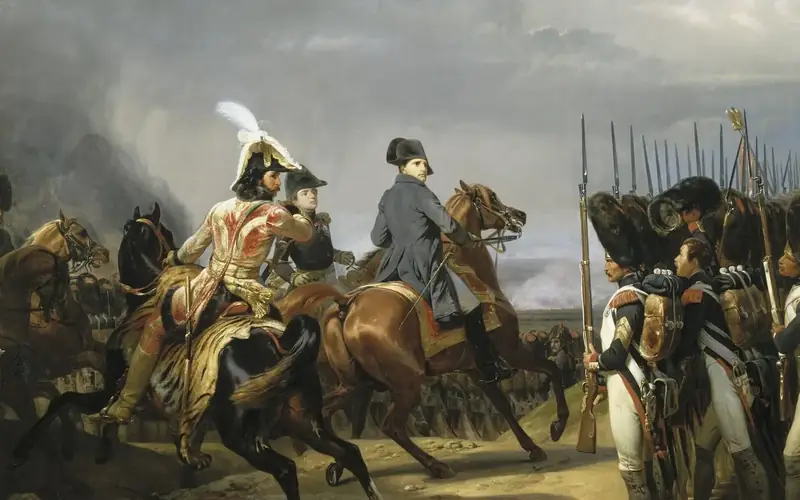
After Prussia's fall, III Corps entered Poland. Czarnowo, Pułtusk and Golymin marked a winter of marches through mud and snow. On 8 February 1807 at Eylau, Davout formed the French right wing and pressed Bennigsen's Russians while the centre wavered and Murat launched his great cavalry charge. The day remained indecisive and bloody; Davout's corps, like the rest of the Grande Armée, paid a terrible toll.
The rest of the campaign — through Friedland and Tilsit — confirmed III Corps among the operational pillars. Its divisional generals became names known to European staffs: to face Davout was to face a discipline that did not relax after victory.
Eckmühl, Wagram and the end of the Davout era at III Corps
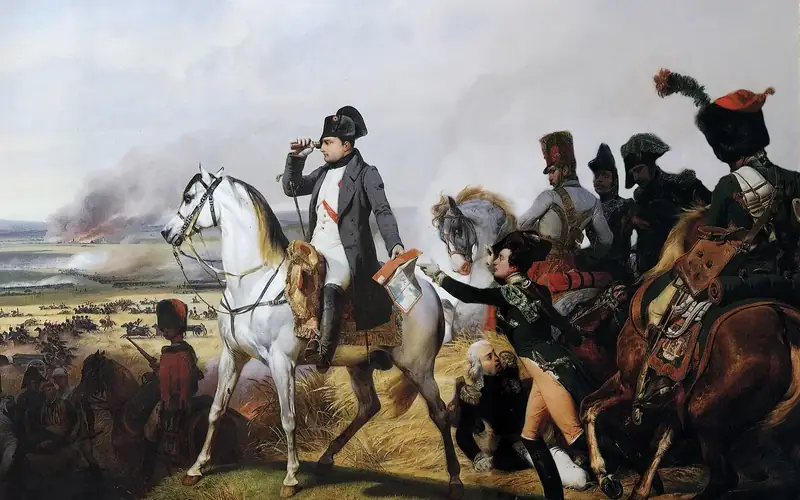
In 1809 against Austria, Davout and III Corps played a central role at Eckmühl (22 April): the enveloping manoeuvre and pressure on Archduke Charles opened the road to Regensburg and then Vienna. At Wagram in July the corps still took part in the campaign's decisive fighting. Davout received the title Prince of Eckmühl.
After 1809, Grande Armée reorganisations redistributed corps numbers. In 1812, during the invasion of Russia, Davout commanded I Corps — largely composed of veterans of his former divisions — while III Corps was entrusted to Ney. The tradition of discipline and fire forged in III Corps thus survived under another number; Borodino and the murderous retreat carried away a generation of cadres trained under Davout.
The III Corps of 1805-1809 remains, in military memory, the model of the autonomous corps: strong enough to win alone, disciplined enough to serve an overall plan without scattering into individual glory.