From the Camp of Boulogne to the Rhine
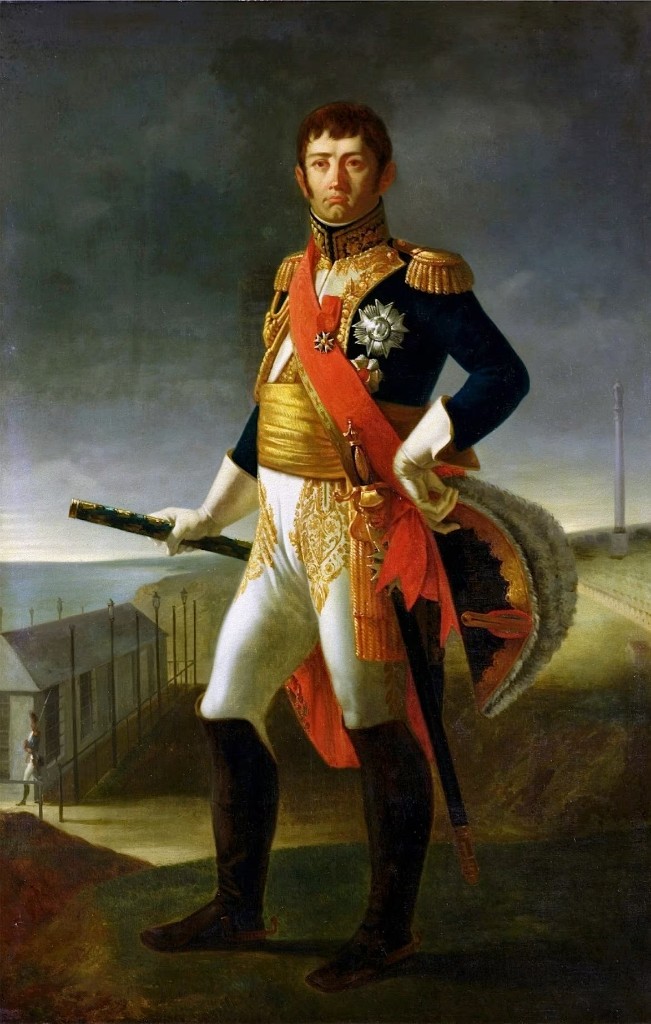
When the Grande Armée left the Channel coast in 1805, Jean-de-Dieu Soult received IV Corps. It was not I Corps — entrusted to Bernadotte — nor Davout's III: it was IV, destined to form the extended centre of major dispositions. Three to four infantry divisions, divisional artillery, covering light cavalry: the classic Napoleonic corps architecture.
Soult, already a marshal since 1804, brought a reputation for precise execution forged on the Rhine and in Italy. Crossing the Rhine at Speyer, descending on the Danube, contributing to Mack's envelopment before Ulm: so many stages where IV Corps learned to march fast without losing cohesion. The autumn campaign prepared the Moravian clash.
Staffs already noted what would make the corps's glory at Austerlitz: the ability to remain relatively withdrawn, then to surge at the exact moment the enemy had stripped the critical point.
Austerlitz: the Pratzen moment
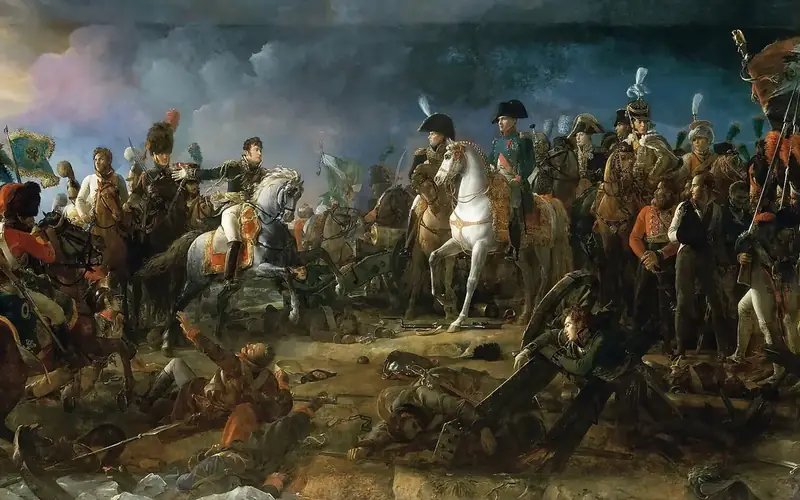
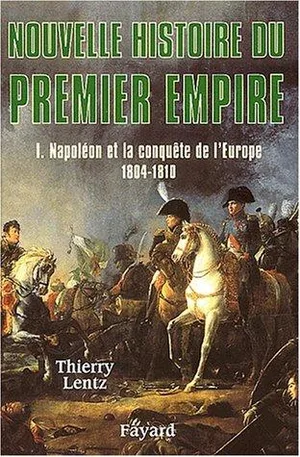
On 2 December 1805, Napoleon deliberately drew the Austro-Russians off the Pratzen plateau by ostentatiously weakening his right wing. When the fog lifted and the Coalition descended toward Telnitz and Sokolnitz, the order fell: Soult and IV Corps must climb. Saint-Hilaire's and Vandamme's divisions scaled the slopes, fell on columns still in march order, and broke the enemy centre.
In less than an hour the plateau changed hands. The Coalition army was cut; Alexander I and Kutuzov suddenly found themselves under fire. Napoleon would call Soult 'the foremost manoeuvrer in Europe' — a phrase applying as much to the marshal as to the machine he drove that day.
To confuse this movement with I Corps would be an error: Bernadotte later helped hold the heights, but it was IV that carried the initial assault on the Pratzen. Popular memory has sometimes amalgamated the numbers; military history clearly distinguishes the roles.
Jena and the destruction of Prussia
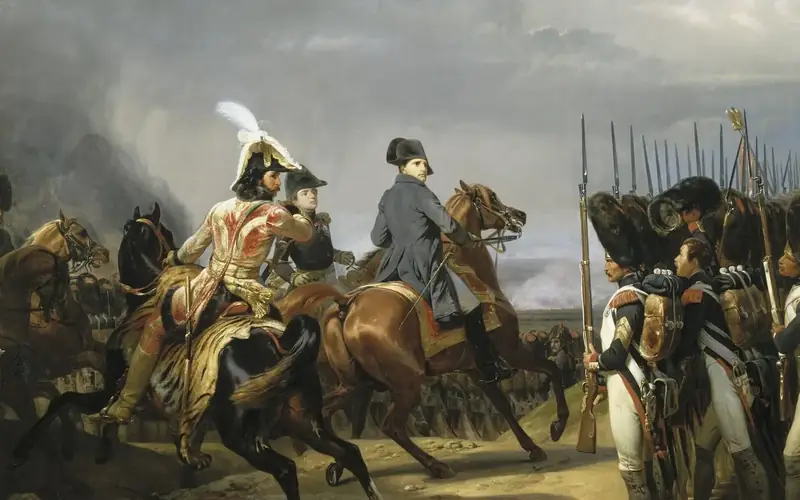
In October 1806, IV Corps formed the French right wing at Jena. While Lannes and Ney pressed the centre and Davout, isolated, won at Auerstedt, Soult contributed to envelopment and pursuit. Frederick William's army collapsed in weeks; Berlin fell; IV Corps chained marches and fights in Silesia then toward Poland.
This campaign confirmed Soult's style: continuous pressure, geometric objectives, little theatre. The corps needed no baroque legends; it produced measurable results on the map.
Eylau and the limits of winter
On 8 February 1807 at Eylau, IV Corps held part of the French disposition facing Bennigsen. Snowstorm, Augereau's partial failure, Murat's great charge: the day was a bloody chaos in which clear victory escaped both sides. Soult and his divisions suffered like the rest of the army; the sequel toward Heilsberg and Friedland prolonged the wear before Tilsit.
Eylau recalls that even an elite execution corps can be caught in a battle of attrition where terrain, climate and chance weigh as much as the plan.
Spain, legacy and posterity of IV Corps
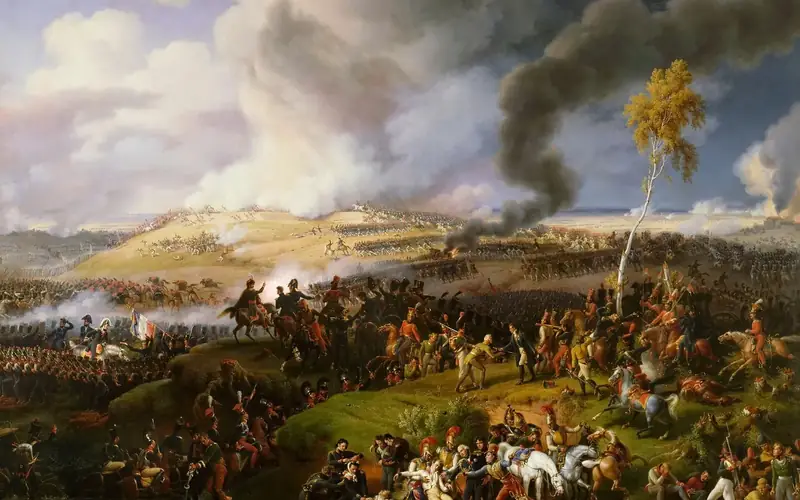
In 1808 Soult left for the Iberian Peninsula, where he commanded notably II Corps — not IV. Corunna, Andalusia and Albuera belong to another page of his biography. IV Corps itself survived reorganisations: in 1812, under Eugène de Beauharnais, it was largely composed of Kingdom of Italy troops and fought at Borodino on the French left wing.
Thus the 'IV' number crossed the Empire under different chiefs, but the founding glory remains that of 1805-1807: Pratzen, Jena, the Polish winter. For Empire Napoléon, Soult's IV Corps embodies the decisive manoeuvre — the one that, once the hour has come, leaves the enemy no time to reform.
Nineteenth-century staff colleges would still study the Pratzen timing as a textbook case: a corps held in hand, a clear order, execution without useless threne.