Lannes and V Corps: the vanguard embodied
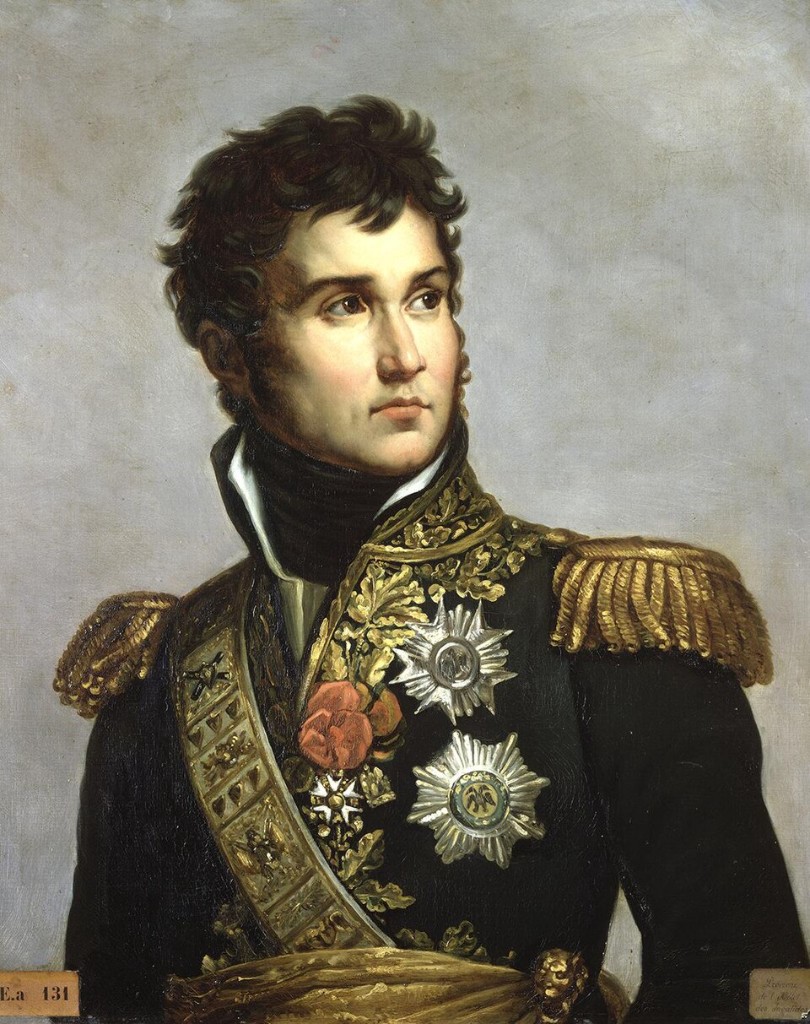
Jean Lannes, brusque and loyal Gascon, received command of V Corps in 1805. Napoleon, who valued him like few other marshals, gladly gave him missions that meant opening the road, forcing a passage, holding until the masses arrived. The corps mixed seasoned infantry divisions, light cavalry and artillery ready to deploy fast.
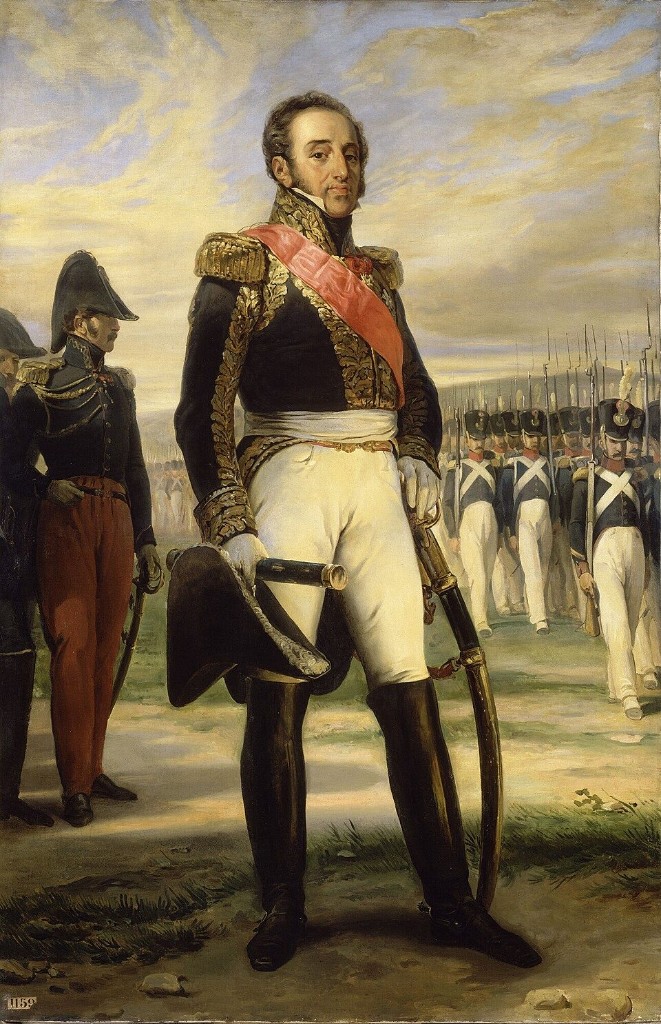
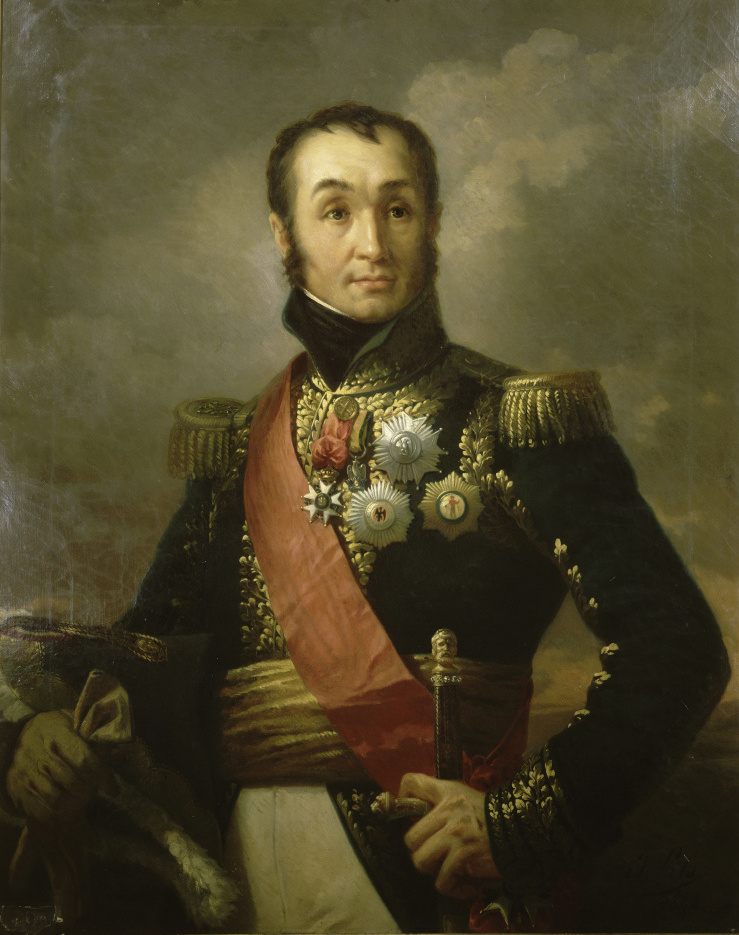
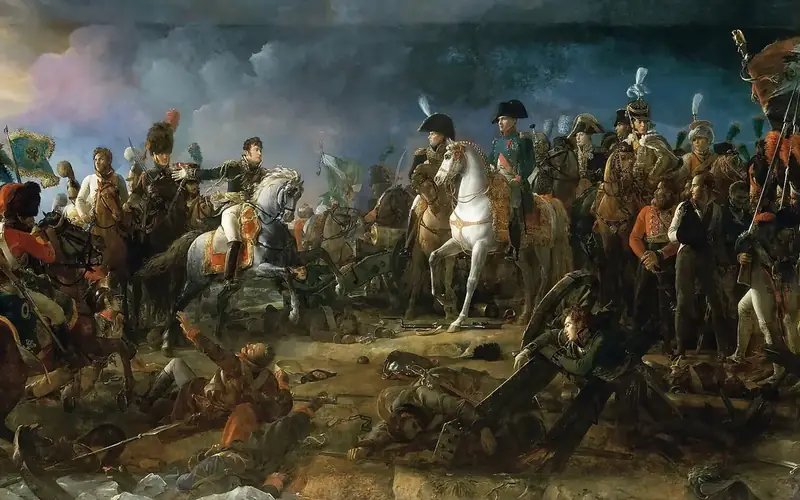
At Austerlitz, Lannes commanded the French left wing: while Soult struck the centre and Davout held the right, V Corps fixed and shoved the Coalition disposition on its sector. Five days later, for reasons still debated, Lannes briefly left the army; Lefebvre took interim command. The episode does not erase the corps's place in the victory of the Three Emperors.
Lannes's style — proximity to the fire, direct language, demands on divisional generals — stamped V Corps with a vanguard culture: one marched far ahead, one often fought first.
Saalfeld and Jena: Prussia's gate
On 10 October 1806 at Saalfeld, V Corps met the Prussian-Saxon vanguard of Prince Louis Ferdinand of Prussia. Lannes prevailed; the prince fell in action. Four days later at Jena, V Corps formed the French centre, first seized the Landgrafenberg the day before, then took part in annihilating the opposing army. Pursuit carried the columns to the Baltic; Stettin fell.
These days fixed the image of a corps able to engage an enemy vanguard alone then slot into the main battle without losing time. Lannes did not wait for everything to be ready: he created the conditions for what followed.
Poland, Pułtusk and Friedland
In Poland, V Corps struck the Russians at Pułtusk (26 December 1806); Lannes was wounded. In spring 1807 he returned to the fire: Heilsberg, then Friedland on 14 June. At Friedland, Lannes held with his corps — serving as bait — against Bennigsen until Napoleon and the rest of the Grande Armée arrived. Four hours of methodical resistance preceded the Russian crushing.
Friedland illustrates V Corps's role: not only to charge, but to fix, endure, open the time window in which the imperial plan could close. Rewards followed — the duchy of Montebello — and soon Spain.
Spain: Tudela, Zaragoza
Sent to the Peninsula, Lannes defeated the Spanish at Tudela (23 November 1808) then directed the siege of Zaragoza, whose capitulation in February 1809 ended urban resistance of rare violence. V Corps, or troops under his authority depending on the phase, discovered a war of streets, fortified convents and an armed population — far from Germany's open fields.
Zaragoza marked Lannes: glory there brushed horror. Recalled for the 1809 Austrian campaign, he brought back a bitter experience of irregular war and modern sieges.
Essling: the marshal's death
In April–May 1809, Lannes fought at Abensberg, Landshut, Eckmühl and Regensburg. At Aspern-Essling (21–22 May) he commanded the right wing — then at the head of the provisional II Corps of the Army of Germany, no longer the V Corps of 1805–1807. On 22 May a cannonball smashed one knee and tore the other leg. Amputated, he agonised for several days; Napoleon attended his last moments. Lannes died on 31 May 1809 in Vienna: the first marshal of the Empire killed in action.
Lannes's disappearance robbed the Empire of its human vanguard. V Corps continued under other chiefs, but the legend remained tied to the Gascon who opened the roads. For Empire Napoléon, the Lannes–V Corps pair embodies controlled audacity: strike early, hold long, die in the front rank.
Soldiers who had marched behind him from Saalfeld to Friedland kept the memory of a chief who swore like them and charged like them — a rare combination in the imperial hierarchy.