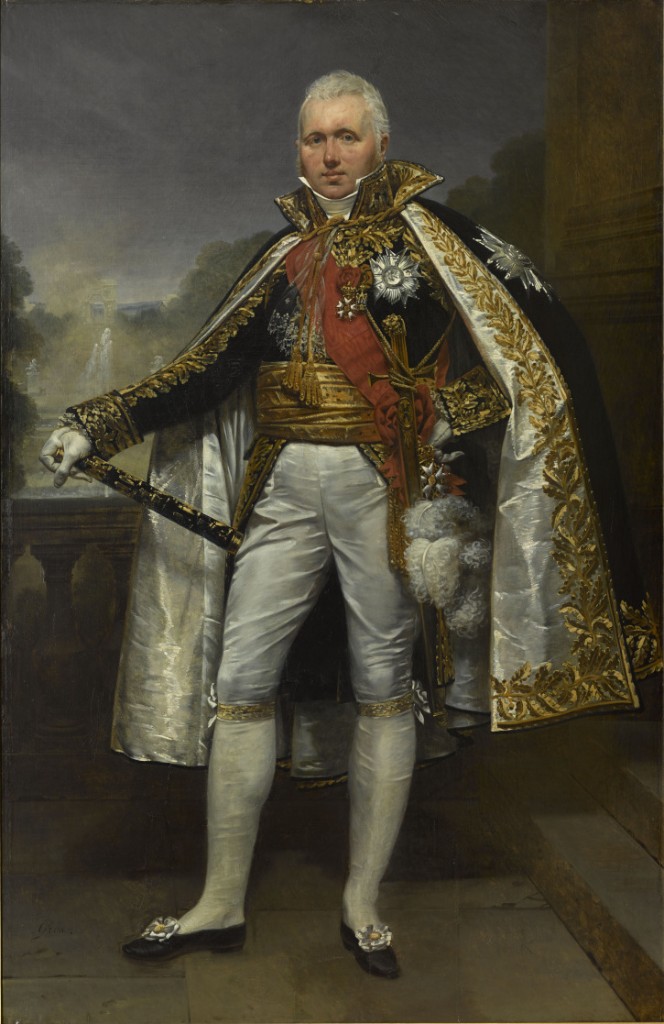
Claude Victor-Perrin (1764-1841), Duke of Belluno and Marshal of the Empire from 13 July 1807, embodies the Republican rise from line soldier to grand imperial command without the media dazzle of a Murat or Ney. Son of a Langres-plateau bourgeois tied to royal domain administration, he enlisted as a drummer in the Grenoble artillery regiment in 1781; the Revolution and the siege of Toulon threw him beside Captain Bonaparte — wounded at L'Éguillette, promoted brigadier on the field. The Italian campaigns and Consulate made him a reliable divisional general at Marengo, where his dawn hold on the wing bought decisive time before Desaix and Kellermann; missions in the Batavian Republic and aborted Louisiana schemes show a career as diplomatic as purely combative. Recalled to the Grand Army in 1806, he rose to Friedland, replacing the wounded Bernadotte and launching the charge that broke Bennigsen — exchanged for Blücher after capture by partisan Schill in January 1807. Spain with Joseph Bonaparte mixed Medellín, Talavera against Wellington and the siege of Cádiz; the 9th Corps in Russia placed him on the southern flank in 1812, then at the Berezina with Ney. Leipzig, the 1814 campaign in France, a severe wound at Craonne in March 1814, Bourbon loyalty in the Hundred Days, the Ministry of War in 1821 and refusal to swear to Louis Philippe in 1830 compose a late life as officer of state more than tribune. His Memoirs, dry and ledger-like, offer a counter-reading of bulletins; he died in Paris on 1 March 1841, inscribed on the Arc de Triomphe among the silent architects of the Napoleonic machine. Preserved orders for Spain and the 1812 9th Corps show a commander caught between contradictory priorities; at Lamarche, busts and inscriptions recall the tale of the two million refused in Berlin — a mark of probity that coexists with polemics over the Peninsular War. Recent scholarship has reassessed his part at Talavera and the Berezina: the name on the Arc invites readers to pair biography with maps and gauge the gap between public fame and real field responsibility, beyond heroic tales alone.
Lamarche, Grenoble drummer, Toulon and the Marengo line
Claude Victor-Perrin was born at Lamarche in the Vosges on 7 December 1764; family tradition ties him to bourgeois families of the Langres plateau, where Charles Perrin held functions linked to royal domains. On 16 October 1781, aged seventeen, he enlisted as a drummer in the Grenoble artillery regiment: gun drill, column pace and limber noise shaped his apprenticeship well before 1789's slogans.
The Revolution drew him back from civilian life in Valence to the frontiers; adjutant, then Italy with the Republic's armies. The 1793 siege of Toulon fixed the pivot: beside artillery captain Bonaparte, he took part in recapturing the city; grievously wounded at L'Éguillette, he was promoted brigadier on the field — entry into the circle of men the Convention forged in months of victory and purge.
The eastern Pyrenees under Pérignon, then return to Italy with Bonaparte, completed the profile: sieges, plain battles, pursuit along the Adige. At Marengo on 14 June 1800 his division held the wing at dawn against Mélas; not the evening flashes — Desaix, Kellermann — but hours of grinding combat that preserved the front long enough for the counter-stroke. The First Consul noted the name: Victor was not the tactical lightning bolt but the steady blade.
Under the Consulate, command of the Batavian army and Louisiana designs — fleets ice-bound, fragile Peace of Amiens — showed a general able to negotiate as well as manoeuvre. In 1804, « placed on half-pay » like other officers awaiting reassignment, he waited without breaking with the regime.
The relaunch came from Denmark: plenipotentiary mission and observation in the Baltic, another face of Napoleonic war than victory paintings. When the Grand Army set out again in 1806, Victor had already crossed Revolution, Consulate and secondary diplomacy; he returned as a senior officer whose reliability the Emperor could count.
Jena, Schill, Friedland — marshal on 13 July 1807
Back in the Grand Army in autumn 1806, Victor rose fast: staff of Lannes's corps, Saalfeld, Jena — wounded by canister, he still pursued the Prussians. In January 1807 a coup de théâtre: en route to Stettin, Prussian partisan Ferdinand von Schill captured him with a handful of jägers. Napoleon almost immediately exchanged the prisoner for Blücher: generals' worth was negotiated like fortresses, and the Emperor showed he ranked Victor in that strategic stock.
On 14 June 1807 at Friedland, Victor replaced the wounded Bernadotte at the head of I Corps. He launched the victorious charge against Bennigsen's Russian centre: the Alle pinned columns against the water, French guns compressed enemy ranks. Eight days later Tilsit sealed peace with Alexander. On 13 July Napoleon raised Victor to Marshal of the Empire — not on Wagram's field, still in the future, but on Friedland's blood.
The title Duke of Belluno followed in 1808, an Italian name recalling transalpine campaigns. Governor of Berlin, he refused two million in gold a grateful city offered; the tale, carved in marble at Lamarche, says the man: pride in probity, distance from courtly ostentation.
At this stage Victor embodied the « technical » marshal: neither 18 Brumaire comrade nor Tuileries favourite, but one without whom staff maps would not hold. Napoleon, who knew how to count, knew it; he would never grant him Lannes's tenderness, but would soon entrust him with one of the most thankless theatres — the Iberian Peninsula.
Historians often stress the contrast between Friedland's tactical clarity and the Spanish quagmire: Victor left a set-piece battle where mass and timing decided for a war of partisans, broken supply lines and hostile public opinion. The summer 1808 transfer marked a new risk curve.
Joseph Bonaparte, Spain, and Wellington’s line
From August 1808 Victor commanded I Corps in Spain: Bayonne, Vitoria, victory at Espinosa, but also Somosierra where the Polish Guard charge had to break the deadlock. With Joseph Bonaparte king in Madrid he followed Uclès, Medellín — brilliant days for imperial propaganda — then the push west and clash on 27-28 July 1809 at Talavera against Wellington's Anglo-Spanish force. The Emperor, handing out Hanoverian estates, did not forget marshals under fire: loyalty under bullets trumped the Peninsula's strategic ambiguity.
The marshal pushed into Andalusia: the endless siege of Cádiz, a local victory at Barrosa in 1811 without finishing the British naval blockade. This was no personal failure in the sense of humiliating surrender; it was a war where neither map nor division count sufficed to beat insurrection, terrain and the Royal Navy.
Parisian polemics sometimes stigmatised generals as « too slow » or « too cautious »; in the ranks, soldiers distinguished those who held under partisan fire. Victor, in his memoirs, would keep a corps commander's tone — neither systematic excuse nor bravado — distinct from Spanish or English nationalist narratives.
Archives of the Army of Spain show contradictory orders between Madrid, Paris and rival marshals: Soult, Masséna, Ney crossed Victor on a theatre where commanders' egos complicated already infernal logistics. Inter-corps coordination remained the blind spot of many Napoleonic operations in the peninsula.
In April 1812 orders came: leave Iberia for the Grand Army's 9th Corps, reserve between Vilna and Smolensk. Spain receded in the rear-view mirror; Russia imposed another scale of distance, climate and loss. Victor carried experience of a conflict where set-piece battle was only one episode among months of presence warfare.
Russia, Berezina, Leipzig — rearguard and the 1814 campaign
In 1812 Victor marched on Russia at the head of the 9th Corps on the Grand Army's southern flank. His mission: keep contact with allied Austrian corps, cover approaches, keep the Russians from turning the wing. This was not the centre of Borodino where Napoleon massed weight and artillery against Kutuzov; without such flanks, however, the imperial scheme would have shattered. Victor closed ranks, endured dust and shortage. When Moscow burned and the retreat began, his corps helped preserve military coherence amid chaos.
The Berezina remained the ultimate name of that epic. Victor was not the bridge-builder — Eblé's role — but on 25 November 1812 he covered the retreat, held Wittgenstein, defended access to the Studianka bridges while thousands of infantry crossed ice and water. Napoleon on Saint Helena would acknowledge that « at the Berezina crossing, he made very good use of his corps ».
In 1813, II Corps in Saxony: Dresden, Wachau, Leipzig — centre and south of the French front. Retreat toward the Elbe heralded continental collapse; the 1814 campaign brought Victor to Brienne, La Rothière, Mormant. At Montereau in February 1814 a delay earned imperial anger and temporary removal; pardon and Young Guard followed — the military machine still used its marshals to the last day.
At Craonne on 7 March a musket ball put him out of action for months. Abdication found him convalescent; he swore to Louis XVIII and followed the king to Ghent during the Hundred Days without rallying the Emperor back from Elba — a choice of dynastic loyalty Bonapartist legend would read variously.
Under the Restoration, the 1821 Ministry of War marked civil peak: reorganise cadres, budgets, garrisons in a monarchy trying to absorb Napoleonic heritage without letting it explode. Under Charles X he kept honours; in 1830 refusal to swear to Louis Philippe removed him from the active scene. He died on 1 March 1841 in Paris, aged seventy-six.
Memoirs, probity, posterity — the officer off the central canvas
Memoirs published after his death offered a reading unlike imperial bulletins. The tone was dry, sometimes sharp: little flourish, many figures, distances, losses, marching days. One felt the general who measured every victory by blood paid. He did not dishonour Napoleon — too much professional respect — but dissected strategic errors, Spanish overreach, the Russian campaign as a series of excessive gambles.
His private life stayed in shadow: husband, father, collector of military books, hunting in the Vosges when peace allowed. The Duke of Belluno embodied a military France that still believed in technical merit, staff maps, written orders — all that Napoleonic legend focused on dazzling genius tends to skip.
Twentieth-century historians used his writings to nuance one-sided propaganda tales; nineteenth-century novelists preferred Ney and Murat. Victor occupied the margin of David's canvas: officers who held the line while the master painted the heroic gesture.
His name survives in streets, museum captions, work on the Peninsular War and 1812. The Arc de Triomphe inscribes collective memory; site visitors can rediscover him as the officer who crossed three regimes without betraying his oath — constancy less spectacular than courage under guns, but rare across a whole life.
The record of a marshal like Victor reminds us the Napoleonic epic combines tactical dazzle and rearguard endurance, Friedland's glory and the Berezina's night, ministerial splendour and final discretion: the Empire is not only eagles on parade but men who count losses when bulletins fall silent.
Discover other characters
Napoleon Bonaparte
Emperor of the French
Joseph Bonaparte
King of Naples, then of Spain
Arthur Wellesley, 1st Duke of Wellington
British general, victor of Waterloo, Prime Minister
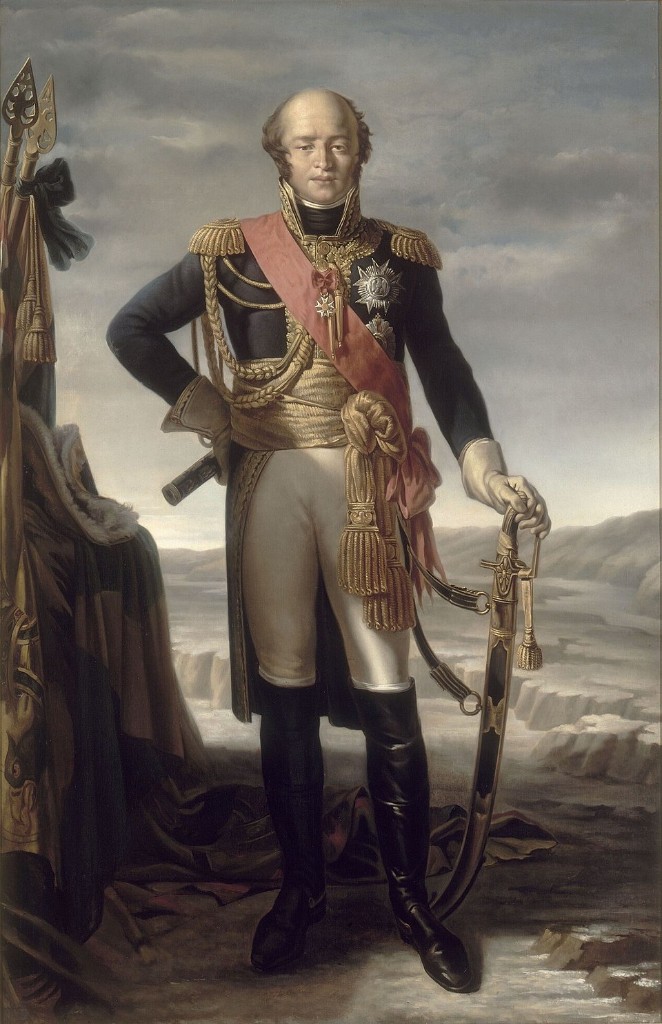
Louis-Nicolas Davout
Marshal of the Empire, Prince of Eckmühl
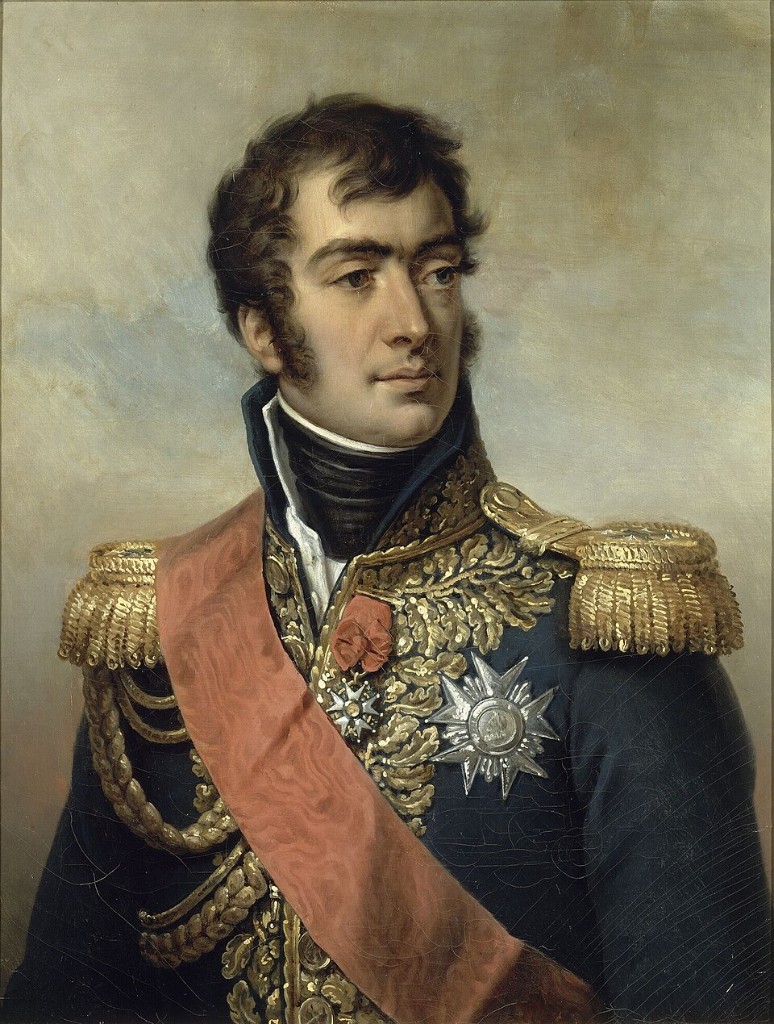
Auguste de Marmont
Marshal of the Empire, Duke of Ragusa
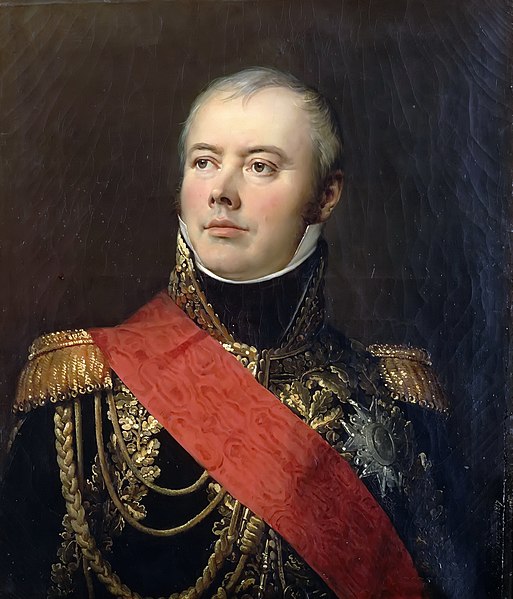
Jacques Macdonald
Marshal of the Empire, Duke of Taranto
Go further
Recommended books to dig deeper (affiliate links)
Napoleon the Great
Andrew Roberts · 2014
A monumental biography drawing on Napoleon’s 33,000 surviving letters, admiring but rigorous.
See on Amazon
Napoléon ou le mythe du sauveur
Jean Tulard · 1977
The book that reshaped how the man is read: how France gave itself a saviour, and what it cost.
See on Amazon
Nouvelle histoire du Premier Empire
Thierry Lentz · 2002-2010
Four reference volumes on institutions, diplomacy and collapse: the scholarly synthesis of the subject.
See on AmazonAs an Amazon Associate, this site earns from qualifying purchases.
Support the encyclopedia
Napoleon Empire is an independent project. Your contribution helps grow the content and keep the site running.
DonateSecure payment on the platform you choose.