The Grande Armée entered Vilnius on 28 June 1812, full of Polish hopes; it came back through on 9 December, reduced to a few thousand men. Mass graves found in 2001 gave that disaster material proof.
Historical context
Vilnius was the first large city the Grande Armée reached after crossing the Niemen. Napoleon stayed eighteen days, from 28 June to 16 July 1812 — a long time for a campaign built on speed. He set up a provisional government commission for Lithuania and let hopes of the grand duchy's restoration grow, but stopped short of proclaiming Polish independence so as not to close the door on peace with the Tsar.
The army was already melting away before the first real battle. Crushing heat then freezing storms, foul water, dysentery, no forage: reports speak of tens of thousands lost to sickness and more than ten thousand horses dead in three weeks. The Lithuanian logistics on which the whole plan rested did not hold.
The return, six months later, was worse than anything the city had known. On 9 December the survivors crushed against the gates; full storehouses were plundered in chaos, men died of cold in front of depots they had just broken open. It was minus thirty. Murat, left in command when Napoleon set off for Paris, abandoned the city on the 10th and fell back on Kovno.
In 2001, excavation work in the Šiaurės miestelis district uncovered a pit containing more than three thousand bodies. Regimental buttons, remnants of uniforms, the ages of the skeletons: identification was immediate. Two centuries on, Vilnius gave the soldiers of the Grande Armée an official burial in its Antakalnis cemetery.
Go further
Recommended books to dig deeper (affiliate links)

Napoleon the Great
Andrew Roberts · 2014
A monumental biography drawing on Napoleon’s 33,000 surviving letters, admiring but rigorous.
See on Amazon
Napoléon ou le mythe du sauveur
Jean Tulard · 1977
The book that reshaped how the man is read: how France gave itself a saviour, and what it cost.
See on Amazon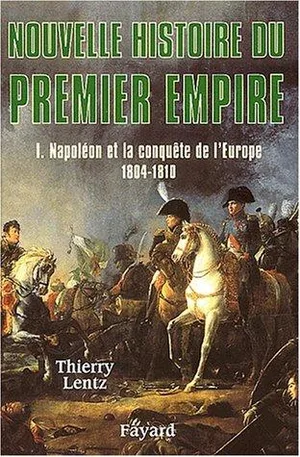
Nouvelle histoire du Premier Empire
Thierry Lentz · 2002-2010
Four reference volumes on institutions, diplomacy and collapse: the scholarly synthesis of the subject.
See on AmazonAs an Amazon Associate, this site earns from qualifying purchases.
Support the encyclopedia
Napoleon Empire is an independent project. Your contribution helps grow the content and keep the site running.
DonateSecure payment on the platform you choose.