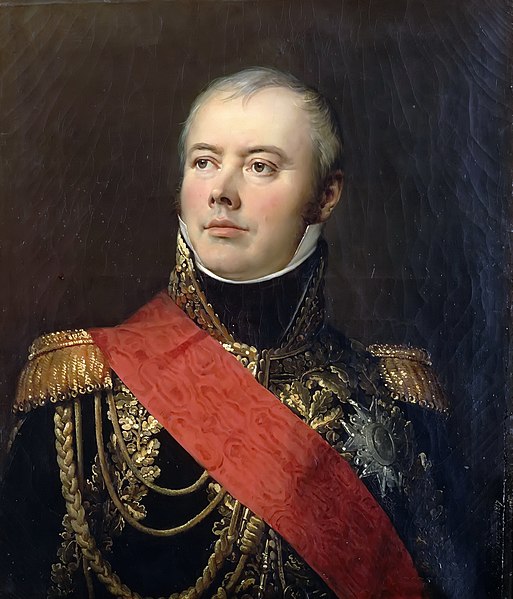
Jacques Étienne Joseph Alexandre Macdonald (1765-1840), Duke of Taranto and Marshal of the Empire, embodied a singularity among the imperial marshals: son of a squire of the MacDonald clan of Uist who took refuge in France after Culloden, he grew up between Highland memory and a career in the French army. The Revolution opened the ranks; he distinguished himself at Jemappes, in Italy and on the Rhine, but it was the orderly defeat facing Suvorov on the Trebbia (1799) that revealed his temperament — disciplined retreats rather than isolated flashes of genius. His supposed closeness to Moreau, condemned in 1804, kept him sidelined for years: Napoleon mistrusted the Scottish general too tied to military opposition. On 6 July 1809, on the Marchfeld, the Emperor entrusted him with the famous column of tens of thousands of men crossing the plain under Austrian artillery fire; the victory at Wagram earned him the baton on the battlefield and the title of Duke of Taranto. In 1812 he commanded the X Corps toward Riga; in 1813, in Silesia, the disaster at the Katzbach against Blücher exhausted him without removing him from the game: he fought again at Leipzig and tried to swim the Elster during the retreat. Loyal to the Bourbons in 1814-1815, he avoided Ney's fate, became a peer of France, Grand Chancellor of the Legion of Honour, and died in 1840 after memoirs portraying a Napoleon who was brilliant but sometimes unjust toward his servants. Modern military historians often stress the contrast between the popular image of the Wagram column and the whole career of a man shaped as much by political alliances as by tactical skill; Macdonald nonetheless remains one of the few marshals promoted on the field at the very moment victory was decided, a symbol of brutal, spectacular imperial recognition. His path also illuminates the ethnic and social diversity of the Empire's great captains: son of an exile, without great fortune or court clientele, he owed each promotion to prolonged service and the chances of war; his longevity under the Restoration places him finally among the witnesses of the passage from Revolution to the July Monarchy. The 1813 campaign in Silesia and Prussia, where Blücher dealt him a severe defeat at the Katzbach, completes the picture of a marshal capable both of triumph on the Marchfeld and of the ordeal of a disillusioned European retreat. Military records and officers' memoirs now allow almost day-by-day tracing of that dual facet of his career under the Empire. That also helps make modern sense of a life both heroic and nuanced.
The Jacobite heritage — From Clan MacDonald to the French Army
Jacques Macdonald was born at Sancerre, in the Cher, on 17 November 1765. His father, Neil MacEachain MacDonald, was a squire of the MacDonald clan of Uist, in Scotland. After Bonnie Prince Charlie's defeat at Culloden (1746), Neil had followed Prince Charles Edward Stuart in his flight to France, where he settled as a tutor and language teacher. The family established itself among the minor French nobility, but Jacques grew up with the memory of the Highlands and the awareness of belonging to two worlds: that of the Jacobite exiles and that of the officers of the Ancien Régime.
Enlisted in the Irish Foreign Legion — a corps with Jacobite traditions — then in the royal army, Macdonald bridged his Nordic heritage with the career the Revolution would reshape. In 1792, he joined the Army of the North and fought at Jemappes under Dumouriez. When the Convention purged generals suspected of aristocratic sympathies, Macdonald escaped accusations thanks to his reputation as a competent officer and his foreign origins: French nobility was not attributed to him. He rose rapidly through the ranks. In 1798, he commanded in Italy in place of Championnet, then served under Moreau on the Rhine.
The bulletins of the Army of Italy and the Rhine presented him as a divisional general able to execute complex orders on extended theatres without seeking the media glory of spectacular charges. His superiors valued his tactical sobriety: he held positions, rallied battalions after a setback, avoided panics that decimated retreats. This reputation as a « steady general » would be both an asset and, later, a reason for mistrust from a Napoleon who sometimes preferred brilliance to composure.
In 1799, the Italian campaign gave him the most exposed corps: at the Trebbia, he faced Suvorov. The defeat was crushing — Macdonald retreated before the old Russian general's tactical genius — but he brought his troops back in order, avoiding complete disaster. This methodical retreat, in a desperate situation, revealed his true nature: he was not a general of the lightning breakthrough, but a tenacious organiser who won through endurance. Losses were heavy; yet the French army retained enough cohesion to continue the war elsewhere.
The early Consulate years, however, kept him at the margins. Suspected of being too close to Moreau — condemned for conspiracy in 1804 — he languished in secondary postings: military governor, peripheral missions, absence from the great ceremonies of the nascent marshalate. Napoleon held a grudge. Macdonald's posthumous memoirs stress this period of professional humiliation: an officer formed in the Revolutionary campaigns reduced to ceremonial functions while others, less marked by Moreau's shadow, reached army commands.
It would take until 1809 and a unique opportunity for the general to regain the Emperor's favour. Meanwhile Macdonald had served in southern Italy and administered territories where the title of « Duke of Taranto », which he would receive after Wagram, already had geographical resonance: the Adriatic, garrisons, the logistics of a war mixing French troops, Italian allies and local resistance. This path prepared the future marshal for missions where mass and artillery decided as much as manoeuvre elegance.
Between disgrace and revival — Italy, the Rhine and the road to 1809
Macdonald's relative disgrace between 1804 and 1808 did not erase his administrative skills. He supervised fortresses, secondary troop movements, inspections entrusted to generals deemed reliable but politically « lukewarm ». In Paris salons he was sometimes described as too Scottish to be fully Napoleonic, too French to be a foreigner: a reductive label masking the reality of an officer who executed without princely ambition.
Militarily, those years of sidelining paradoxically spared him the mistakes of the Spanish campaigns or the first engagements of the War of the Fifth Coalition where other generals used up their credit. Macdonald watched the Danubian escalation from afar; when Archduke Charles pushed back early French attempts on the Danube, the Empire needed every experienced cadre. Promotion lists lengthened; personal grudges sometimes had to yield to strategic necessity.
In 1809 Napoleon engaged Austria in a campaign where each day on the river and the Marchfeld cost thousands of lives. Macdonald received a corps command in this reassembled army: no longer the isolated general of 1804, but a commander of three divisions whom the Emperor would place at the heart of one of the most debated manoeuvres of his career. Historians still debate the losses-to-advantage ratio; for contemporaries the question was simple — accept massive sacrifice to break the Austrian centre before Hungarian reinforcements arrived?
Macdonald prepared his troops with the attention to detail for which he was known: supply, column alignment, coordination with siege and field artillery. Subaltern officers knew he promised no stroll; they also knew he would not abandon them to shine alone before the Emperor. That dual reputation — demanding but present — would matter when the column moved off under Archduke Charles's concentrated battery fire.
The days before Wagram were a succession of marches, river crossings and artillery duels on Lobau island and the Danube banks. Macdonald liaised with Berthier, with neighbouring marshals, adjusted timings Napoleon set to the quarter-hour. Nothing in the order texts was left to chance; yet weather, visibility and infantry morale remained variables no staff fully controlled.
When the Emperor fixed the plan for the great central attack, Macdonald became the instrument of that decision. He did not design it alone; he assumed its execution at the cost of his future reputation: the soldiers dying in tight ranks on the plateau did not measure historical controversy — they saw a mounted general leading them into fire. That image would found the Wagram myth as much as casualty figures.
Artillery historians stress that Wagram also illustrates saturation warfare: numerous batteries, prolonged fire, shells bursting at tight formations' edge. Macdonald was no cannon theorist; he applied a Napoleonic doctrine where mass and will offset tactical fragility. For the future marshal that day would remain the paradox of personal glory built on a tactic he himself, in later writings, described with almost clinical clarity about the price paid by the infantry.
Wagram — The legendary column and the marshal’s baton
On 5 July 1809, the Grand Army crossed the Danube at the island of Lobau. The following day, the two armies clashed on the Marchfeld plain north of Vienna. Archduke Charles had stretched a line of 120,000 men across a 25-kilometre front. In the centre, the Austrians held the villages of Wagram, Aderklaa and Süssenbrunn. Napoleon sought to break through this line before Archduke John could reinforce his brother from Hungary. He needed to strike hard and fast.
It was in this context that Macdonald received the mission that would change his life. He would command a column of forty thousand men — three divisions — arrayed in a massive square formation roughly two thousand men across and twenty ranks deep. The objective: cross the open plain, weather the crossfire of Austrian artillery, and break through the Archduke's centre. The manoeuvre was perilous in the extreme. Staff officers deemed it suicidal. The column would have to advance under a hail of cannonballs across several kilometres of bare terrain.
Macdonald executed it. On 6 July, at midday, the column moved off. The losses were terrifying: between five and eight thousand men fell in a few hours, killed or wounded by Austrian fire. But the mass advanced. It disrupted the enemy centre, enabling Davout to outflank on the right and Masséna to manoeuvre on the left. The Archduke ordered a retreat. Wagram was a decisive victory. Napoleon galloped towards Macdonald, embraced him and handed him the marshal's baton on the battlefield. He told him — according to several accounts — : « I owe you this victory. » Macdonald also received the title of Duke of Taranto, a reference to the Italian port city he had administered in previous campaigns.
The contemporary engraving that fixed the battle image shows smoke, confused lines, overlapping batteries: it conveys the scale of the clash more than a minute-by-minute chronicle. For posterity Wagram remains one of the deadliest encounters of the Napoleonic age; for Macdonald it was public consecration after years in the shadow. Older marshals watched this sudden promotion; some murmured, others acknowledged that the column's sacrifice bought overall success.
Caring for the wounded, tallying the missing, pursuing the enemy toward Znaim filled the following days. Macdonald moved from suspected general to duke and marshal: entry into imperial nobility, honorary offices, presence at ceremonies where imperial power architecture displayed its marshals as pillars of the throne. He did not become a courtier: memoirs stress his sometimes awkward frankness in council.
His troops, bled white but victorious, held him in admiration mingled with awe. The soldier of the Grand Army long remembered the Marchfeld crossing: a brutal lesson on the price of the white baton and the Scottish name of the man who carried the order through.
Russia, the Katzbach and Leipzig — The Empire in retreat
In 1812, Macdonald commanded the X Corps during the Russian campaign, on the northern flank towards Riga. Without managing to take the port city, he held his position methodically and brought his men back during the retreat without the disordered panic that decimated other corps. His secondary mission — pinning Russian forces far from the main theatre — appears in reports as properly fulfilled, even if the overall invasion strategy collapsed after Moscow.
In 1813, following the Grand Army's debacle, Napoleon entrusted Macdonald with the command of a forces group in Silesia, facing Prussia and Blücher's army — the old hussar, as he was nicknamed, tireless, aggressive, driven by a visceral hatred of Napoleonic France. Summer rains turned rivers into deadly obstacles; mud immobilised field artillery.
On 26 August 1813, Macdonald received orders to attack. His situation was difficult: his troops were exhausted, incessant rain had turned the Katzbach into a torrent, the artillery was bogged down in mud and practically unusable. Blücher attacked first, outflanking the French on both sides simultaneously. The battle quickly turned into disaster. Caught between the river and the Prussians, the French soldiers could neither form their ranks nor manoeuvre. Thousands drowned while fleeing across the swollen river. The defeat was total: Macdonald lost tens of thousands of men — killed, wounded, prisoners — and a considerable number of guns. It was one of the worst defeats of the German campaign.
Napoleon did not publicly blame him. Orders had been given, circumstances had been unfavourable, Blücher had proved faster and more brutal than expected. Macdonald rebuilt his forces and participated in the Battle of the Nations at Leipzig (16-19 October 1813). The immensity of the battlefield, the presence of multiple Coalition armies, the exhaustion of French corps after years of incessant war gave Leipzig symbolic dimension: Europe united against the Empire.
During Leipzig's catastrophic retreat, when the bridge over the Elster was blown prematurely, Macdonald attempted to swim across the river — he survived. The tale, often cited in marshal anthologies, illustrates both the chaos of the final hours and the personal tenacity of a man who refused to be trapped on the wrong bank. Later paintings and engravings crystallised this scene as metaphor for Napoleonic collapse.
In 1814, he defended the Empire's frontiers with desperate courage, falling back before the Coalition armies converging on Paris. Capitulation could not be avoided. Macdonald was no longer the single-day hero of Wagram; he was one of the last ramparts of a military system that had consumed its human reserves.
Staff archives preserve fragmented orders showing the difficulty of coordinating exhausted corps on several axes: Macdonald liaised with Soult, with Marmont, tried to buy time against adversaries who now mastered grand-coalition logistics. Each calculated retreat bought Paris hours but cost whole regiments; the marshal knew it and noted it with cold clarity in his reports, without dramatising his own figure — a tone distinct from imperial bulletins of the victorious years.
Loyalty to the Bourbons and the marshal’s retirement
In April 1814, Napoleon abdicated at Fontainebleau. Macdonald was among the marshals present during those painful days. He accompanied Empress Marie-Louise and her son towards Vienna, a mission he accomplished with exemplary discretion. When Louis XVIII ascended the throne, Macdonald swore an oath of loyalty. His relations with the imperial regime had never been free of ambiguity — the sidelining of the 1804-1808 years, caused by his supposed closeness to Moreau, had left him with an underlying bitterness — but he chose Bourbon legitimacy without ostentation or apparent calculation.
In March 1815, Napoleon landed at the Gulf of Juan and marched towards Paris in less than twenty days. Macdonald was with King Louis XVIII when the latter fled to Ghent. This choice, unlike Ney's dramatic rejoining of the Eagle before dying before a firing squad, earned him retention of his functions after Waterloo. Louis XVIII made him a peer of France and appointed him Grand Chancellor of the Legion of Honour, first Governor of Lyon and then Inspector General of Troops. This honourable end to his career, amid the discreet splendours of the restored monarchy, contrasted with the fate of his former companions: Ney before the firing squad, Murat executed at Pizzo, Davout in disgrace then painfully rehabilitated.
Macdonald took part in rebuilding Bourbon military cadres: inspections, reports on garrison condition, memoranda on corps organisation. He wrote not only for history; he also sought to defend his conception of service — loyalty to France included, even when the flag changed. The political debates of the 1820s-1830s rarely placed him centre stage; his renown remained that of Wagram's soldier more than statesman.
Under the July Monarchy he kept an aura of credible survivor: neither Bonapartist martyr nor Ragusa figure of the 1814 betrayal. Young officers asked him to speak on campaigns; amateur historians cited his Memoirs as a source on the marshalate's inner workings.
Macdonald died at Courcelles-le-Roi, in the Loiret, on 25 September 1840. He left posthumous memoirs — Souvenirs du maréchal Macdonald — which give a nuanced portrait of Napoleon: an undeniable genius, but a sometimes unjust master, capable of abandoning his most loyal servants when politics demanded it. Posterity has retained the Wagram column, that moment of collective bravery when tens of thousands of men advanced under fire on the orders of a Jacobite's son with two homelands — French at heart, Scottish by blood, marshal through sacrifice.
Nineteenth-century schoolbooks and patriotic literature sometimes simplified his career into a chain of heroic episodes, obscuring the Moreau-related disgrace and the German defeats; recent scholarship instead places Macdonald within the texture of rivalries between generals, political choices in 1814-1815 and veterans' cross-memoirs. His name appears on the Arc de Triomphe; streets and squares still bear « Macdonald » or « Taranto » in several French towns — urban traces of imperial glory become local heritage, regardless of controversy over Wagram's human cost.
Discover other characters
Napoleon Bonaparte
Emperor of the French
Louis-Nicolas Davout
Marshal of the Empire, Prince of Eckmühl
André Masséna
Marshal of the Empire, Prince of Essling
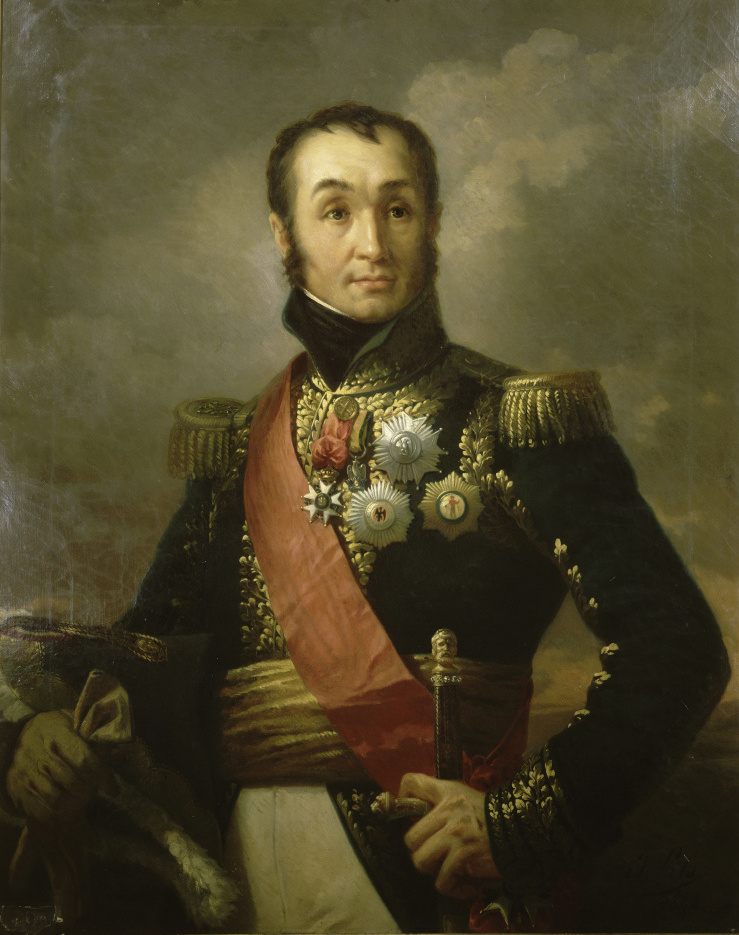
Nicolas Charles Oudinot
Marshal of the Empire, Duke of Reggio
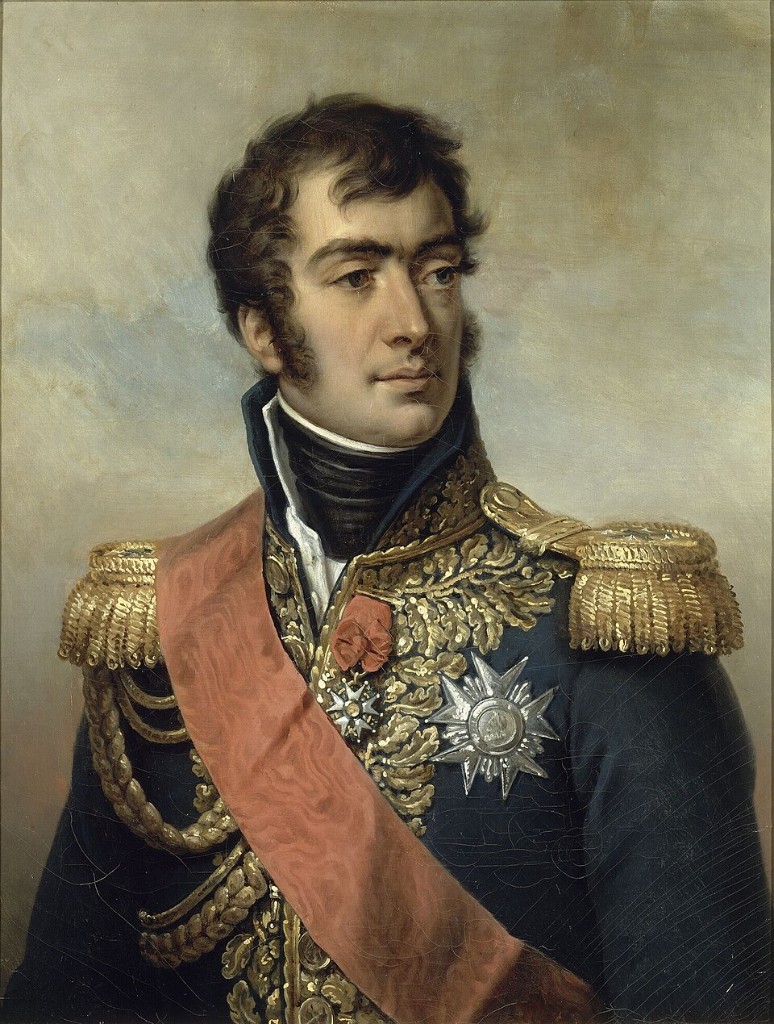
Auguste de Marmont
Marshal of the Empire, Duke of Ragusa
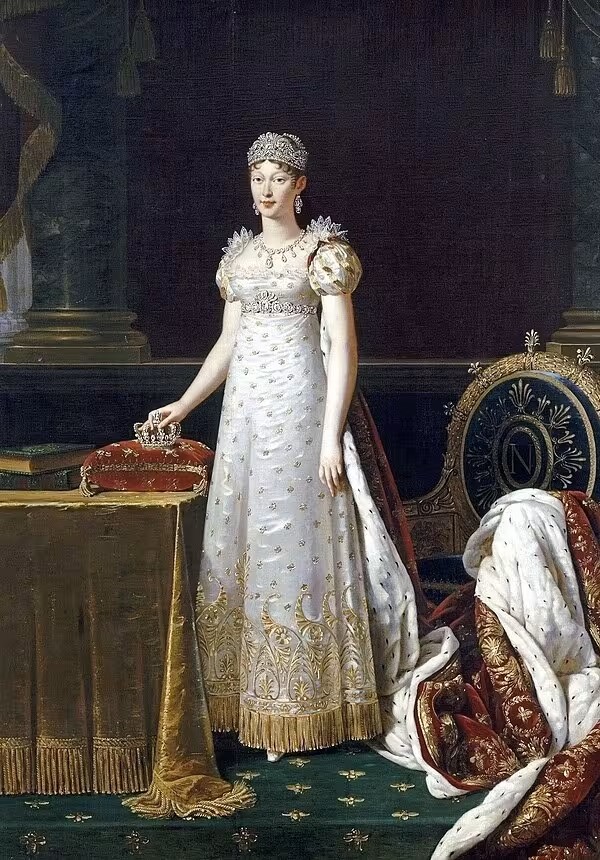
Marie Louise of Austria
Empress of the French
Go further
Recommended books to dig deeper (affiliate links)
Napoleon the Great
Andrew Roberts · 2014
A monumental biography drawing on Napoleon’s 33,000 surviving letters, admiring but rigorous.
See on Amazon
Napoléon ou le mythe du sauveur
Jean Tulard · 1977
The book that reshaped how the man is read: how France gave itself a saviour, and what it cost.
See on Amazon
Nouvelle histoire du Premier Empire
Thierry Lentz · 2002-2010
Four reference volumes on institutions, diplomacy and collapse: the scholarly synthesis of the subject.
See on AmazonAs an Amazon Associate, this site earns from qualifying purchases.
Support the encyclopedia
Napoleon Empire is an independent project. Your contribution helps grow the content and keep the site running.
DonateSecure payment on the platform you choose.