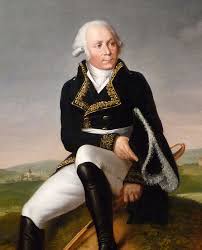
François Christophe Kellermann (1735-1820), son of an officer of Saxon stock settled in Alsace, embodies the path of a Louis XV soldier turned republican symbol before integration into the imperial pantheon. Trained in eighteenth-century wars, he rose slowly through Ancien Régime ranks to fortress and garrison responsibility. The Revolution thrust him to command of large formations: on 20 September 1792 on the heights of Valmy he held the French centre against the Prussian army of the Duke of Brunswick in a « cannonade » grown legendary — the day the cry « Long live the Nation! », traditionally tied to his name, entered French political culture. This was no crushing victory in the classical sense; it was a strategic check that saved the young Republic from immediate collapse. The following years mixed border campaigns, wounds, Paris intrigue and rivalry with other generals of the Dumouriez-Jourdan generation. Bonaparte, consolidating power after Brumaire, needed to anchor the newborn Empire in 1792's memory: on 19 May 1804 Kellermann was among the first Marshals of the Empire; the Duke of Valmy title (1808) sanctified the battle that founded his glory. Senator, occasional president of the Senate, inspector of National Guard reserves, he lived under the Empire a second career as institutional elder rather than field captain. His son, François Étienne Kellermann, would shine at the head of heavy cavalry at Marengo, Wagram or Borodino — two namesakes for one military dynasty bulletins sometimes conflated. Kellermann died in Paris on 23 September 1820, aged eighty-five; buried in Père Lachaise Cemetery, he left a name carved on the Arc de Triomphe, bridge between Revolution and Napoleonic state. For Empire Napoléon he proves a marshal could embody national continuity as much as a cuirassier charge.
Strasbourg, Alsace, and the Eighteenth-Century School of War
François Christophe Kellermann was born in Strasbourg on 28 May 1735, into a family where the profession of arms passed with a sense of service and frontier awareness — Alsace, hinge between empires, kingdoms and principalities, forged officers used to reading the map in terms of passes, fortresses and supply routes.
The young Kellermann entered the king's troops early: campaigns of the Seven Years' War and rotations between garrisons taught him siege patience, linear discipline and respect for hierarchies the Revolution would shake without abolishing entirely. He was not the brilliant cadet salons discussed before age; he was the officer who rose step by step, learned field lessons and accumulated experience 1789's storms would suddenly make precious.
On the Revolution's eve Kellermann already held territorial command posts: governor of Strasbourg in 1788, in the administrative chain of the day — a role juggling military authority, urban police and relations with civic bodies. That immersion in running a major border city prepared him for 1789-1792 dilemmas, when the army had to defend the fatherland, work with assemblies and avoid being swallowed by factions.
When the monarchy faltered and coalitions formed against Revolutionary France, Kellermann was neither Jacobin doctrinaire nor court nostalgic: he embodied the career officer who chose the republican law camp once the king faltered, because oath and sense of state converged on frontier defence rather than émigré adventure.
In 1791 he commanded the so-called Army of the Centre, soon renamed Army of the Moselle — a major mass on a theatre where Austrians and coalition partners tested the solidity of first mass levies. Not yet Valmy; it was the breaking-in of a national army in the making, with motley uniforms, insufficient guns and generals learning under fire what Ancien Régime manuals had not foreseen.
Valmy, 20 September 1792 — The Cannonade and « Long Live the Nation! »
On 20 September 1792 on the heights of Valmy in Champagne, the Prussian army of the Duke of Brunswick and French forces under overall command of Charles-François Dumouriez clashed in an artillery duel manuals call a « cannonade » rather than pitched battle in the Napoleonic sense. Kellermann held the French centre: still green infantry, volunteers mixed with line regiments, guns that had to be set on the plateau to answer Prussian fire without breaking formation.
Tradition — and Dumouriez in his memoirs — credit Kellermann with the cry « Long live the Nation! », launched as troops held under Prussian roundshot. Modern historiography debates exact paternity of the gesture and the word's immediate reach; less disputed is symbolic effect: a republican army that does not scatter before monarchical Europe becomes living proof that France in 1792 could resist.
Brunswick did not win the decisive battle he hoped; losses stayed limited beside Austerlitz or Waterloo, yet the day changed strategic reading: invasion ceased to look like a stroll to Paris. In following weeks Dumouriez chained other operations; Valmy remains the name posterity uses for the threshold where coalition monarchy was checked.
Nineteenth-century canvases, engravings and paintings after Horace Vernet or monumental copies for Versailles fixed the image of a bearded Kellermann, revolutionary-style hat, surrounded by smoke and flags — iconography mixing overall fidelity and artistic convention. For Empire Napoléon these images work as atmosphere documents: they show how France wanted to tell itself its first great republican field day.
Valmy did not yet make Kellermann a Marshal of Empire: it made him the general whose name would attach to a Marne locality as Wagram or Jena would to others. The Duke of Valmy title, promised later by Napoleon, wrote that geography into imperial state nobility — typical regime usage where grand-ducal rank recalled a battle as much as it rewarded a servant.
In strictly military terms the cannonade taught the psychological value of holding under fire: winning without spectacular envelopment, earning enemy respect through line density and volley regularity. Revolutionary armies would repeat the lesson, sometimes at the cost of massacres on less celebrated days.
Alps, Rhine, Wounds, and Rivalries from Terror to Brumaire
After Valmy Kellermann did not vanish in static glory: he chained commands on the Army of the Alps, missions on the Rhine, logistic and political responsibility in a Republic where the Committee of Public Safety watched generals with growing suspicion. The least ill-explained retreat could mean suspicion; the least victory, momentary cult.
In 1793 at the Battle of Hondschoote he was severely wounded in the neck — a wound marking body as much as career: the old soldier now bore the scar of a war that did not forgive commanders who showed in the front rank. Months of convalescence and reassignment sidelined him from the media foreground in favour of younger generals or those more aggressive in the race for bulletins.
Rivalry with Dumouriez, then the latter's 1793 defection, blurred the politico-military landscape: Kellermann had to prove republican loyalty in a context where every « Ancien Régime » general was viewed askance. Archives show tense exchanges with the ministry, requests for ammunition and shoes revealing armies' real state more than Convention speeches.
Under the Directory Kellermann regained inspection and reserve-organisation roles: less spectacular than Bonaparte's Italian campaigns, yet essential to holding Rhine lines while the young Corsican general took the limelight elsewhere. That division of roles foreshadowed Empire: manoeuvre stars on one side, rear-area and Senate tutors on the other.
The coup of 18 Brumaire Year VIII found Kellermann in ambiguous position for Bonapartist posterity: he was not in General Bonaparte's intimate circle, yet he organised no armed resistance. Like many senior officers he chose consular stability over Directory chaos — by calculation, exhaustion, moderate republican conviction, per historians' readings.
That political flexibility, far from unique, explains how a man of 1792 could still preside in uniform at Empire ceremonies in 1810 without seeming renegade to all military society: national continuity trumped partisan labels when the regime could celebrate Valmy as common foundation.
1804: Marshal of the Empire, Duke of Valmy, and Senate Life
On 19 May 1804 the first Marshal of the Empire list paired legendary names — Masséna, Berthier, Davout — with older figures whose presence displayed revolutionary continuity. Kellermann was among them: Napoleon's gesture was political as much as honourable; it told armies and Europe the imperial regime did not disown 1792, claimed Valmy as cornerstone of its military legitimacy.
The Consular then Imperial Senate became the main theatre of Kellermann's later career: sessions, commissions, rotating presidency, ceremonies mixing diplomats, former Conventionnels and semi-retired generals. He commanded no field corps there; he embodied living memory of border wars, useful when notables needed reassuring about the new order's stability.
In 1808 the Duke of Valmy title finished tying the marshal's name to 20 September 1792: not a medieval fief; a rank in the Empire's grand dignitary hierarchy, with income, protocol and court duties. Kellermann found noble consecration compatible with a career born under Louis XV — a path many officers of his generation only partly achieved.
Inspection of the reserve National Guard or related missions — by administrative phase — placed him at the heart of levée issues, bourgeois militias and articulation between standing army and armed nation. Under the Empire the question did not vanish: it bureaucratised, with regulations the old marshal knew better than some young marshals from camp alone.
Solemn entries, Te Deums, imperial festivals mobilised Kellermann as tribune figure: white beard, embroidered uniform, presence that photographed poorly but official engraving favoured. He became one of the public faces of the link between imperial eagle and tricolour cockade — symbolic usage dear to Napoleon when flattering opinion without abandoning personal authority.
This « off-campaign » period fed negative legend of the salon marshal; reality was more nuanced: without experienced cadres holding institutions and reserves, the Empire's great armies lacked flesh and interior chains of command. Kellermann contributed through his Revolutionary Ancien Régime know-how — fertile paradox for the historian.
François Étienne: Two Kellermanns for a Cavalry Dynasty
François Étienne Kellermann (1770-1835), the marshal's son, rose under the Empire to the highest posts of line cavalry — divisional general, Count of Valmy in his own right, figure of the massed charges structuring Napoleonic tactics. At Marengo, Wagram, Borodino his name appeared in dispatches as shorthand for cuirassier column head or decisive counter-attack.
Bulletins and press of the day sometimes confused father and son: same surname, same Valmy connection, same dress uniform at ceremonies. Military historians clearly separate the two trajectories: one symbolises 1792 and institution; the other embodies tactical apogee of imperial cavalry under the First Empire.
The father followed the son's career with the double gaze of family head and marshal: pride in victories, worry over losses, awareness that family glory also rested on fallen horses and decimated squadrons. That professional complicity crossed regimes: under the Restoration François Étienne still served the monarchy with baggage gained under the eagle.
For Empire Napoléon the Kellermann dynasty illustrated the army's social verticality: a son could surpass the father on the battlefield while remaining in the institutional shadow of the one Senate and primary school celebrated as « saviour of Valmy ».
Memoirs, correspondence and command studies cross both figures to analyse trade transmission, patronage networks and reputation management in an officer corps where family inheritance counted as much as individual merit trumpeted in bulletins.
Death at Père Lachaise, Schoolbook Memory, and the Revolutionary Line
François Christophe Kellermann died in Paris on 23 September 1820, aged eighty-five, in a Bourbon France that needed both to erase the Empire and appropriate republican symbols useful to national legitimacy. Funerals mixed monarchical rites and veteran tributes: the « hero of Valmy » was no longer a political threat; he was a figure of patrimonial consensus.
His burial in Père Lachaise Cemetery — rather than under the Invalides dome — placed the marshal in nineteenth-century bourgeois and civic memory beside men of letters, scientists and other generals whose tombs became tour stops. Division and funerary monument fixed for guidebooks a geography of remembrance less military than Napoleon I's, yet more accessible to the public.
Third Republic schoolbooks made Valmy a founding episode: date to learn, map to colour, Kellermann's portrait beside Danton's or Marat's per curriculum. That pedagogy built a « revolution-battle-nation » line where the marshal played soldier of the fatherland avant la lettre, regardless of nuance later research brought to the cannonade itself.
Recent historiography situates Valmy in the First Coalition war, analyses Prussian logistics, sometimes relativises tactical scale of French success on 20 September — without erasing the myth's cultural weight. Kellermann remains the name the wider public keeps for « the first check to invasion ».
For Empire Napoléon his career sums a lesson: nineteenth-century French military glory drew both from Napoleonic victories and revolutionary days the Empire knew how to fold into state narrative. Kellermann, marshal without an Austerlitz to his credit, embodies it — Valmy's soldier become duke and peer of the century of armies.
Discover other characters
Napoleon Bonaparte
Emperor of the French
Bon-Adrien Jannot de Moncey
Marshal of the Empire, Duke of Conegliano
Jean-Baptiste Jourdan
Marshal of the Empire, Count Jourdan
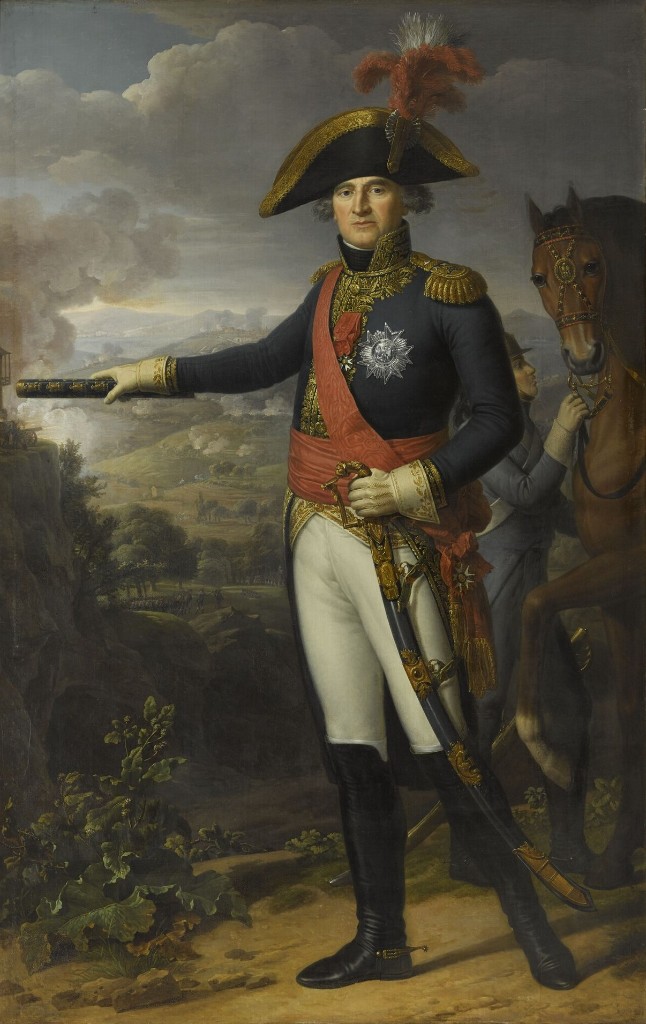
Jean-Mathieu-Philibert Sérurier
Marshal of the Empire, Count Sérurier
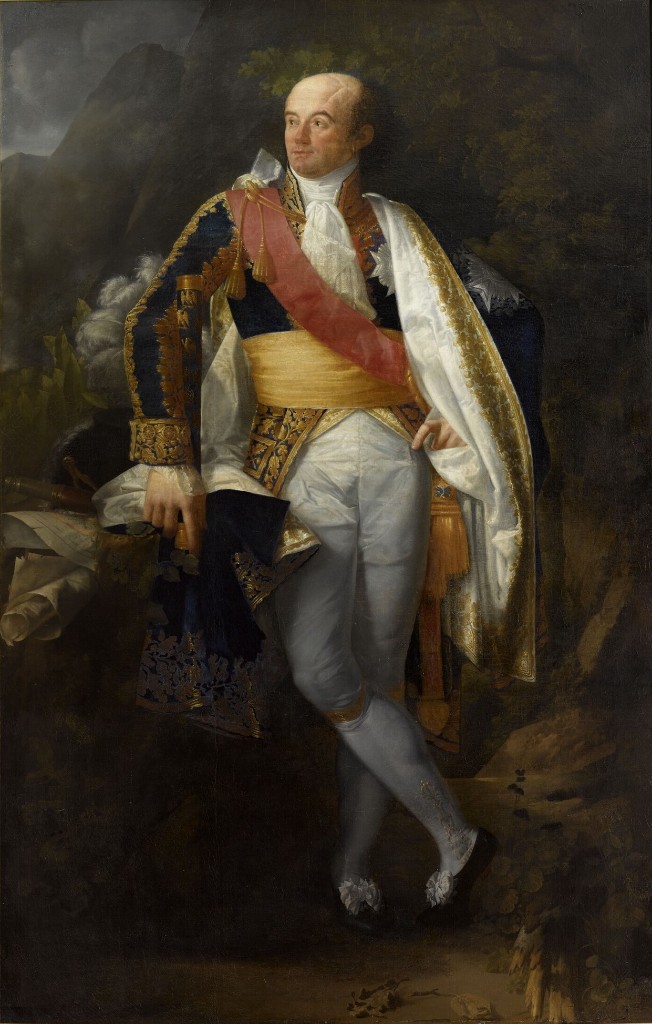
Dominique-Catherine de Pérignon
Marshal of the Empire, Count then Duke of Grand-Fayt
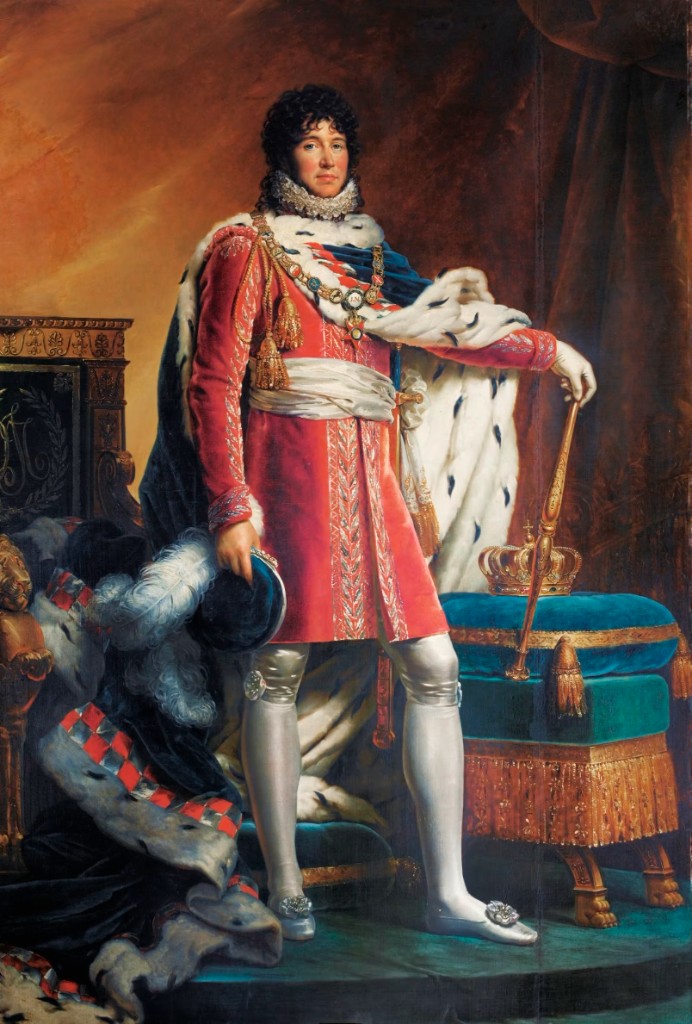
Joachim Murat
Marshal of the Empire, King of Naples
Go further
Recommended books to dig deeper (affiliate links)
Napoleon the Great
Andrew Roberts · 2014
A monumental biography drawing on Napoleon’s 33,000 surviving letters, admiring but rigorous.
See on Amazon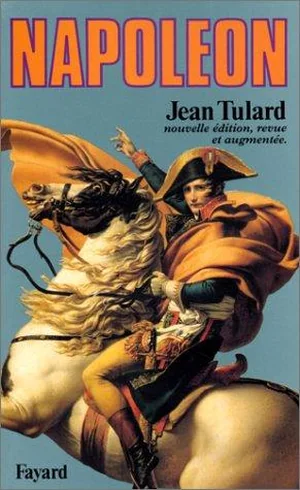
Napoléon ou le mythe du sauveur
Jean Tulard · 1977
The book that reshaped how the man is read: how France gave itself a saviour, and what it cost.
See on Amazon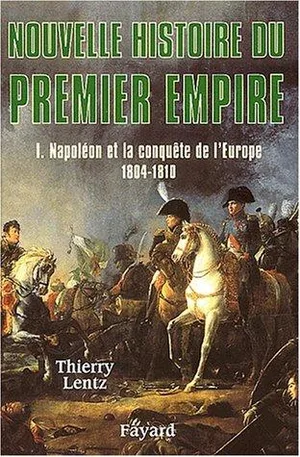
Nouvelle histoire du Premier Empire
Thierry Lentz · 2002-2010
Four reference volumes on institutions, diplomacy and collapse: the scholarly synthesis of the subject.
See on AmazonAs an Amazon Associate, this site earns from qualifying purchases.
Support the encyclopedia
Napoleon Empire is an independent project. Your contribution helps grow the content and keep the site running.
DonateSecure payment on the platform you choose.