Origins and creation
The Imperial Guard dragoon regiment was created in 1806, at a moment when Napoleon was systematically expanding his elite reserve. Placed under Empress Joséphine’s patronage, it soon received the familiar name ‘Empress’s Dragoons’, which remained attached to the unit in collective memory and common usage even after the divorce of 1809.
Creation met a tactical and symbolic need: to give the Guard a dragoon cavalry able to fight mounted and, if required, on foot, while displaying the dynastic link with the sovereign.
From the following campaigns the regiment joined Guard cavalry columns under Bessières’s general authority.
Organisation and strength
Like other mounted Guard regiments, the dragoons were organised in squadrons. Strengths, according to reviews and years, sat in an order of magnitude comparable to other Guard cavalry formations — around a thousand men in favourable periods, fewer after losses.
General officers such as Arrighi de Casanova appear in the corps’ history. Superior command of Guard cavalry remained the frame in which the regiment manoeuvred alongside horse grenadiers and horse chasseurs.
In status the Empress’s Dragoons belonged to the Imperial Guard at the most prestigious level, even if the fine Old/Middle Guard distinction for certain cavalry units is nuanced by specialists.
Uniform, arms and recruitment
The most famous uniform detail is the pink facing (piping and lapels), which made the regiment immediately identifiable in paintings and period descriptions. Dragoon helmet, green coat, boots: the silhouette mixed line-dragoon codes with Guard luxury.
Arms combined the dragoon sabre, pistols and, according to missions, the musket or carbine allowing dismounted combat. That versatility justified a dragoon unit within a Guard already rich in pure cavalry.
Recruitment selected dragoon troopers or equivalent formations of sufficient stature and service to claim Guard status. The pull of imperial patronage reinforced the prestige of transfer.
Deeds of arms
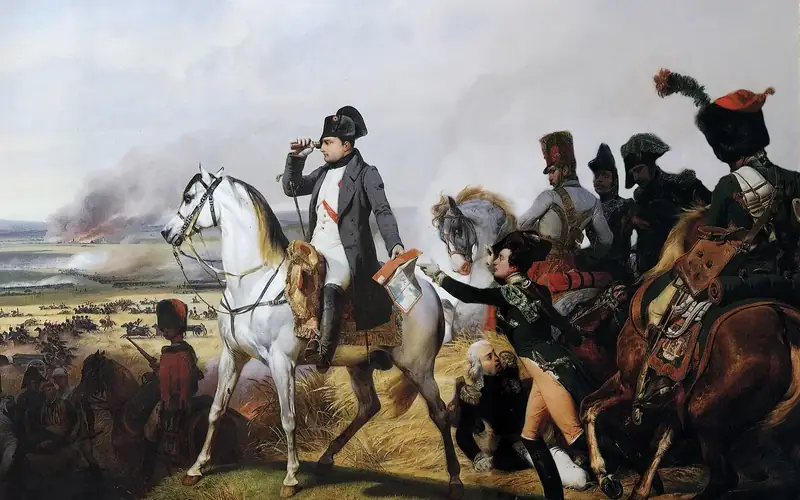
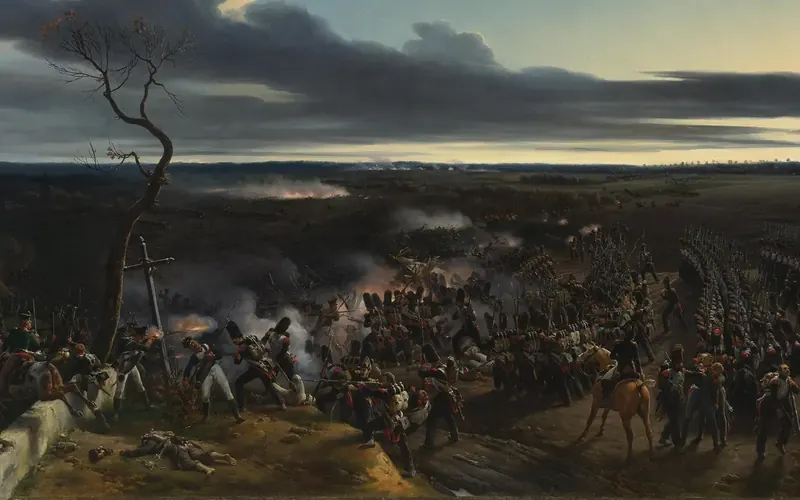
Engaged from the 1806-1807 campaigns, the Guard dragoons took part in Prussian and Polish operations in the wake of the mounted reserve. They were present in the Wagram deployment in 1809.
In Spain and on other secondary theatres, Guard cavalry detachments — dragoons included according to periods — appear in escort or elite reinforcement missions, without every squadron being systematically documented in every affair.
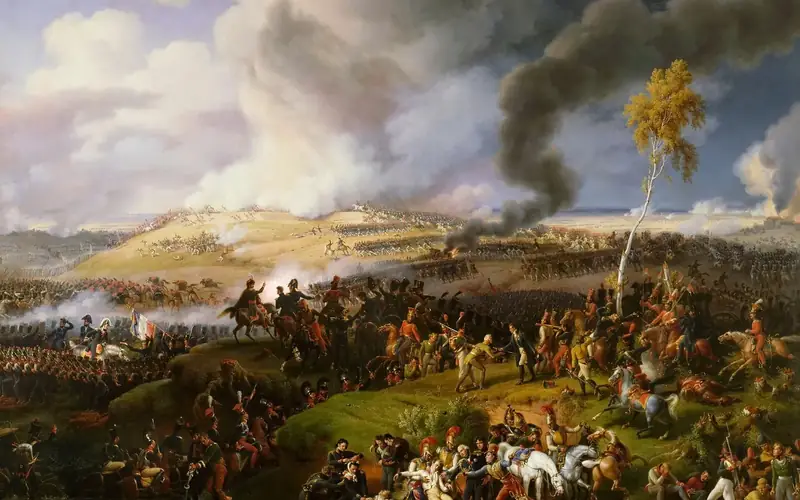
At Borodino and during the Russian campaign they suffered like all cavalry the horse crisis. In 1813-1814, reconstituted as best they could, they returned to charges and covering retreats.
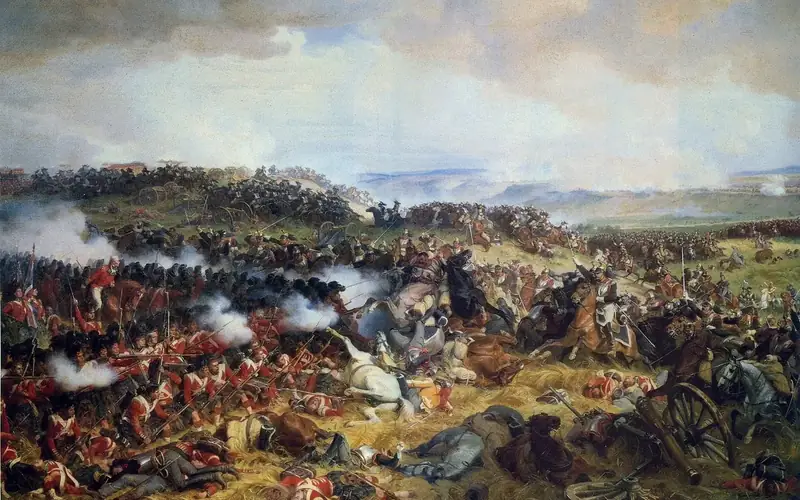
At Waterloo Guard cavalry — Empress’s Dragoons included in the mounted deployment — charged without managing to break Allied squares. The day closed a decade of prestige under fire.
Legacy and memory
The name ‘Empress’s Dragoons’ has survived in historiography and uniformology more surely than many official titles. It recalls that the Guard was not only a war machine but a theatre of dynastic legitimacy.
Today pink facings and Guard dragoon helmets remain among the most sought-after pieces in Napoleonic collections.